Posts Tagged ‘Visceral’

1st August 2025

Christopher Nosnibor

The other day, while riffling through my record collection, I found a few LPs and 12” I had quite forgotten owning, including a promo copy of ‘Chance’ by Red Lorry Yellow Lorry. Stapled to the plain black die-cut cover of this white-label record with the title hand-written in biro, is a press release which simply reads ‘I know this is what you’ve all been waiting for….. Yep. The new Red Lorry Yellow Lorry single It’s called “Chance” and as usual it’s on Red Rhino Records. It’s very good’ and is signed ‘Yours condescendingly’.

You just don’t get press releases like that any more – especially not typed in all block caps and photocopied.

I appreciate the effort that goes into a good press release, and a solid band bio, because it does help me as a reviewer get a sense of context, of what a band’s about, what an album’s about. But the counterpoint to that is that there’s so much detail being spoon-fed, there’s less room for creative interpretation. The fact of the music industry has changed radically since the 80s and 90s, the days of the weekly inkies, the time before the Internet.

There simply was no way of ‘doing research’. And writers had tight deadlines. And so they just riffed to fill the column inches. Facts were hazy, critiques were often based on first impressions and knocked out in an hour after an extended liquid lunch. Names, dates, titles weren’t always accurate. And fans scoffed at the errors – and still do when clippings are posted online – but that was the nature of the beast.

Now, misspell the name of the bassist or give the wrong year for their debut EP, or somesuch and PRs, labels, and bands are onto you straight away asking for corrections. In a competitive market – I often report that on average, I receive around fifty submissions a day – simply getting coverage is a massive feat. This is certainly not to say that those times past were better – simply different, and I simply navigate my way to this release via this route to demonstrate the ways in which things have changed in the years since I started out writing about music in the 90s. It’s also altogether rarer now to find negative reviews, and while a part of this is due to the overwhelming amount of music being released meaning that reviewers are generally more inclined to spend what time they have promoting music they like, there’s also a certain element of fear of there being a social media pile-on, or having their supply of gratis music cut off. But artists and their labels and PR really need to accept that they’re not going to please all the people all the time, and sometimes, it’s necessary to call out an act with dodgy politics or whatever, or to simply call a turd a turd.

Anyway. Before I’ve even hit play, I’ve learned that this release by MOTHS is ‘a visceral journey through the Seven Deadly Sins, with each track embodying a facet of indulgence, obsession, and self-destruction — from the corrosive jealousy of “Envy” to the insatiable hunger of “Gluttony” and the rage of “Wrath”. The album plunges listeners into a dark, immersive experience where desire spirals into chaos’, and that ‘Diving deeper into heavier territory, MOTHS fuse elements of death and black metal with their signature blend of progressive, psychedelic, doom, and stoner metal, crafting a sound that’s both aggressive and atmospheric. With every step forward, MOTHS continues to explore new sounds and challenge genre boundaries, proving that music has no limits when driven by passion and innovation.’

I feel as if my work is already done. I can pour myself a large vodka and kick back, right? Well, I could. But that’s not my style. At least not the kicking back part. Large vodka in hand, I brace myself for the sonic onslaught… to be faced with some tinkering banjo or acoustic guitar giving country licks that are pure blues / Americana. And it gets jazzier and groovier as it goes on. What the fuck is this?

‘Sloth’ slides into ‘Envy’, a slippery, sultry alt-rock cut where the vocals are bathed in reverb, and the lo-fi production belies the fact that this is a vaguely jazzed-up take on grungy emo, at times coming on like Paramore recorded on a 90s cassette four-track. The haziness of the recording is actually something of a positive, but these are songs which require a slicker, fuller production. As a consequence, these takes sound more like demos than final versions.

The murky rawness works better on ‘Greed’, which brings rabid, raw-throated, growling black metal elements to the vaguely gothic metal compositions. It segues into ‘Pride’ which goes full-throttle skin-peeling abrasion before suddenly going commercial rock with fancy licks at the midpoint. I like ZZ Top, as it happens. I just wasn’t expecting a riff from Eliminator here.

‘Pride’ does take things full heavy, a prime slice of sludgy doom, and ‘Lust’ is, without question, a slugging slab of doominess, with some fancy fretwork thrown in on top. There’s certainly a lot going on here, and most of it works. MOTHS certainly bring some megalithic riffs and a lot of fire to an album that may be unpredictable in places, but is, overall, solid and with no shortfall of gutsy, guitar-driven heft.

AA
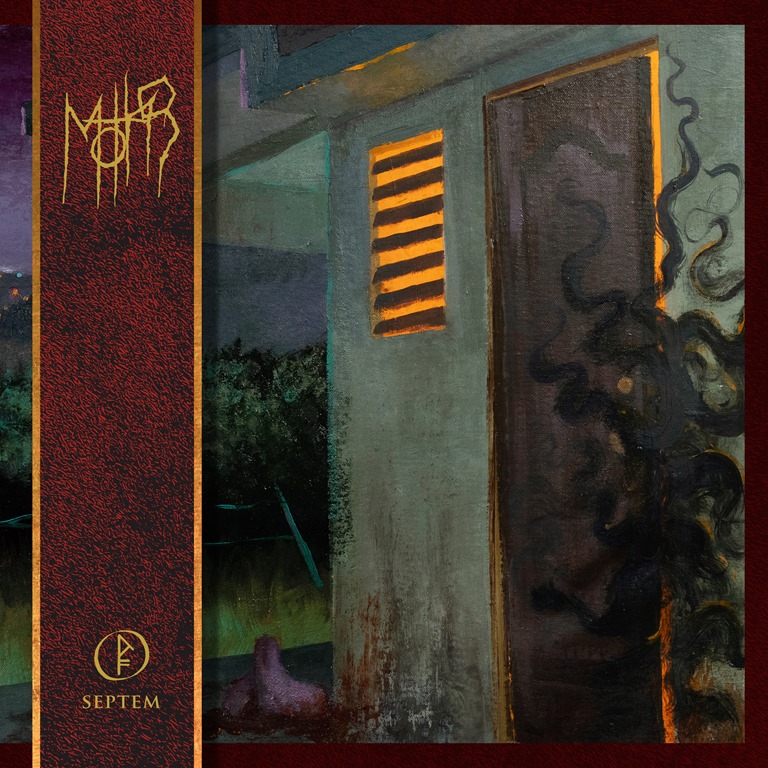
MOTHS - cover

With every movement of American Standard, Uniform peels off a new layer and tells the story inside of the one that came before it.  It’s Uniform’s most intimate work to date, tackling themes of self-destruction and with a particular focus on vocalist Michael Berdan‘s lifelong struggle with bulimia nervosa. His lyrics sink down into the core of the innermost self, the small human being crushed in the grip of sickness. His bandmates join him, applying majestic droning that becomes both mechanical and omniscient. As the rhythms continually pulverise, Uniform gives themselves over to the grinding gears of an uncaring universe.

The thematic content behind American Standard can be divided down the middle into two distinct sections. While the A-side of the record deals with an individual who exists in a purgatorial state of physical and psychic crisis, the B-side serves to address how a lifetime of dealing with an eating disorder has impacted those around him.

Permanent Embrace,” available today, is the album’s final statement. Berdan tells, “It touches on a facet of the disease that I’m incredibly wary of facing. Built on a narrative foundation laid out by author and lyrical collaborator Maggie Siebert, the song revolves around the idea of a person holding a loved one as an emotional hostage. Seeing perverse beauty in a story about a car crash, the narrator relates the analogy of two automobiles twisted together to that of his last standing relationship. As he has broken down over time, so has the one who continues to stand by him. The object of his manipulative guilt trips remains locked in a hopeless situation, terrified of what he may do to himself if they were to finally leave.

The music reflects the psychic violence of the lyrics, as riffs and rhythms that wouldn’t feel out of place in the Unsane catalog careen into giant synth melodies before collapsing into itself. This is kind of our misguided interpretation of what Faith No More were doing on ‘Angel Dust’, and we hope that our tip of the hat to those masters of madness can hold a candle to their horrific splendor.”

For “Permanent Embrace,” Uniform teamed up with director Sean Stout on the single’s compelling visual. Stout tells, "Without sounding trite, when we first read Mike’s lyrics to the record our reaction was extremely visceral. They are brutally introspective and beautiful at times and we wanted to try visually to convey that range of emotion in a sequence of single images that unfold narratively and potentially shift their own meaning over time. Our concept was to intertwine images of an outer world-overgrown, rusting and moving on in its decay-with an inter-world that is largely going through the same process as a result, but is markedly separate as well. We never see one observe or interact with the other, yet they are the same and of the same world."

Watch the video for ‘Permanent Embrace’ here:

AA

Uniform wants to find what’s underneath. And what’s underneath the underneath. And what’s under that.
American Standard begins with a shock. A voice, a room, a face in a mirror. In the mirror stares a visage, doubled and staring back. Each line comes back to him: reflected and refracted in the unsympathetic glass. Forget for a moment that Berdan has been destroying his throat in Uniform for over a decade. Forget his highly stylised delivery on the band’s acclaimed collaborative work (alongside experimental doom titans The Body and Japanese heavy rock powerhouse Boris). Forget the entire tradition of abrasive vocals in aggressive music. Look for what’s underneath the songs, the form, and the style.

To help peel away this narrative of eating disorders, self-hatred, delusion, mania, and ultimate discovery, Berdan sought assistance from a towering pair of outsider literary figures. Alongside B.R. Yeager (author of the modern cult-classic Negative Space) and Maggie Siebert (the mind behind the contemporary body horror masterpiece Bonding), the three writers eviscerate the personal material to present a portrait of mental and physical illness as vividly terrifying as anything in the present-day canon. The result is an acute articulation of a state beyond simple agony, capturing the thrilling transcendence and deliverance that sickness can bring in the process.

American Standard is surely Uniform’s most thematically accomplished and musically self assured album to date. Sections spiral and explode. Motifs drift off into obscurity before reasserting themselves with new power. Genres collide and burst open, forming something idiosyncratic and new. There’s a grandeur, due in part to the addition of Interpol bassist Brad Truax alongside the percussive push and pull of returning drummer Michael Sharp and longtime touring drummer Michael Blume, marking his Uniform recorded debut here. However, this magnificence is most clearly attributable to the scale and power of guitarist and founder Ben Greenberg’s arrangements, matching ever elegantly to the intense lyrical subject matter.

Underneath it all, what remains is trust. A record of this range and depth, a piece of art so far out on a ledge, can only be attempted with an extreme and almost foolish amount of understanding between collaborators. American Standard stands firmly on the bedrock that Uniform’s two original members, Michael Berdan and Ben Greenberg, have been building on for over a decade.

In Greenberg’s words, “When we started this record, Berdan told me: ‘I trust you to come up with a solid foundation for this, however you envision this thing. I want you to realize it completely, because I believe in you.’ So I wanted to write something overwhelming and all-encompassing for Berdan to lead his narrative through… because I trust and believe in him.” For an album to defy simple genre exercises and become a work of art, the musicians behind it must push themselves so far beyond the frayed ends of an established comfort zone that they might never return. Without a shred of doubt, American Standard is a work of art, agonising in its honesty and relentless in its pursuit of sonic transcendence. It is hideous. It is beautiful. It is necessary.

240528_Uniform_Press-07-99028a051405143c

Press Photo By Joshua Zucker-Pluda & Sean Stout
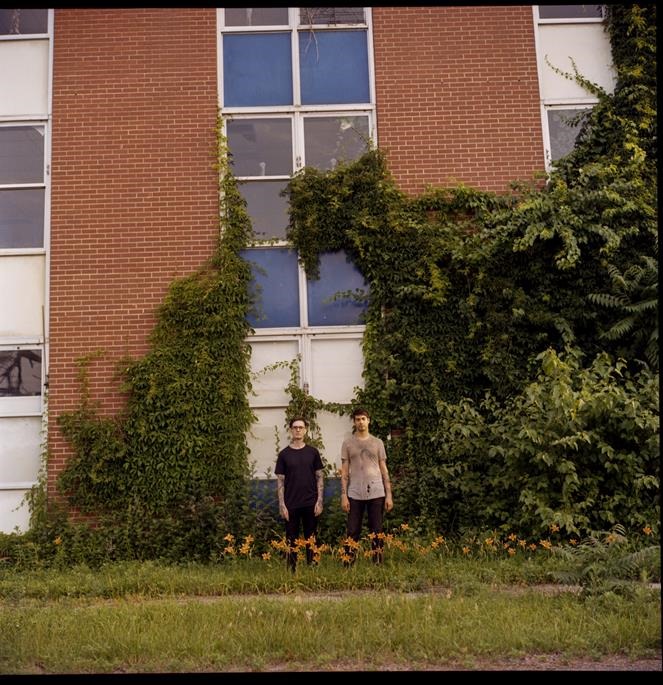
Pictured: Founding Members Ben Greenberg (Guitar), Michael Berdan (Vocals)
Not Pictured: Mike Sharp (Drums), Brad Truax (Bass), Michael Blume (Drums)

Roulette Records – 19th July 2024

Christopher Nosnibor

“I fucking hate how lame we’ve all become” yells Peter Chisholm by way of a hook which is almost guaranteed not to get this single mainstream radio airplay – as if it was ever likely in the first place. But the best music rarely on mainstream radio anyway. Nirvana, Therapy?, RATM breaking the singles charts at a certain point in the early 90s was a revolutionary moment in cultural terms, but ultimately, it was but a brief incursion which represented a mere moment in time, and whatever you may read about grunge taking over the world and breaking down walls, you’d never catch Tad or Mudhoney or Nymphs on the airwaves. This is not how the world works, and you’re never going to hear LiVES on R1 – especially not now.

Much as I loathed that sycophantic blowhard Zane Lowe, his show was pretty much the last bastion of alternative on mainstream radio, and while we do still – fortunately, and for now – have 6Music, it’s not the same, and 6Music really isn’t what it was, either. It’s not simply me being a miserable, nostalgic old sod: we’ve lost something, culturally, and that’s a fact.

But I digress – but not without justification. Because LiVES deserve to be heard, far and wide. ‘Cancelled’ is no right-wing supporting rant or moan about being cancelled. In fact, it’s quite the opposite. So you won’t find LiVES bleating about how right-on acts stole their slots or how being edgy has deprived them of a platform, in the way the likes of Ricky Gervais and John Cleese do, completely, and bewilderingly, without irony.

Chisholm states: “‘Cancelled’ is about my feeling of disenfranchisement of online and political society, my total despondence and hatred of the right AND the left… far right and postmodernism attitudes. They claim to be decent whilst being indecent, tolerant whilst being intolerant… always outraged, self righteous, aggressive, violent…they are swimming in hypocrisy and can’t see it. Meanwhile the real elite destroy the world around us, seemingly unnoticed whilst we fight amongst ourselves. I hate them all!!”

The frankly dismal turnout at this week’s election in the UK is a signifier of massive disinterest in politics as a whole, and Chisholm’s loathing of both sides is commonplace. ‘They’re all as bad as each other’, people moan. It doesn’t help that it’s become increasingly difficult to differentiate between the two, especially where the main parties are concerned. But cause for concern is not that Reform bagged five seats in parliament, but the fact they scored 14% of the vote, evidencing a massive surge in right-wing sentiment in the country.

‘Our final hour is a shitshow shower’ he spits as he calls out the calls out hypocrisy over a monster churning riff as cartoon images of Trump, Johnson, and Farage drift in and out of shape in the accompanying video. And if ‘Cancelled’ is the 2024 howl of disaffected nihilism that marks parallels with 1994, then it should also be seen as an awakening, a call a neglected generation to come together with a single voice and call for something better. And ‘Cancelled’ is nihilistic, and it’s angry. The guitars buzz and grind, and the rhythm section is monster-weighty and it’s the perfect backdrop to a snarling dissection of the world as is and just how hard it is to navigate. I’m drowning…. I’m drowing…’

It’s hard to argue that the right have surged forward, or that they’re a bunch of cunts, and it’s hard to ignore that the left have made a significant shift to the right. It’s also hard to deny, for anyone with ears, that this is a big gutsy riff-driven tune. Dig it.

AA

LPJ1200S

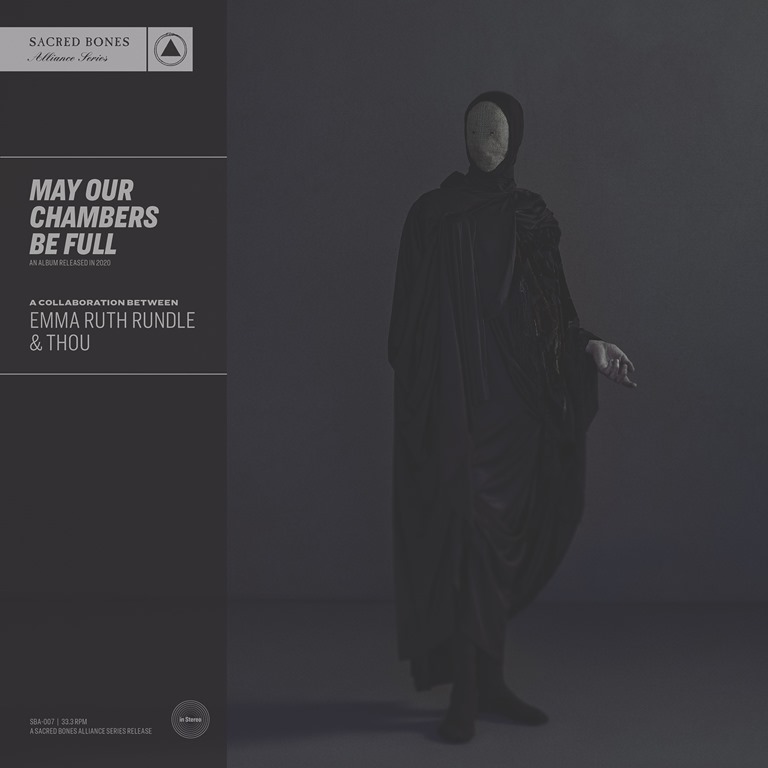
Sacred Bones – 30th October 2020

Christopher Nosnibor

This collaborative release is as interesting as it is unexpected. Coming from the heavier and of the guitar-driven spectrum, it isn’t that the coming together of Emma Right Rundle and Thou is entirely unfitting, but it is unquestionably intriguing. The coming together of two such powerful forces has, unsurprisingly, yielded a work that is yet more powerful still.

As the press release observes, ‘while Emma Ruth Rundle’s standard fare is a blend of post-rock-infused folk music, and Thou is typically known for its downtuned, doomy sludge, the conjoining of the two artists has created a record more in the vein of the early ‘90s Seattle sound and later ‘90s episodes of Alternative Nation.’

Needless to say, it’s pretty heavy in places, and not just sonically, although the guitars – more of which shortly – feel heavy enough to shatter rocks, and again, to refer to the liner notes is to reaffirm this as they note how ‘The lyrical content of the album is a marriage of mental trauma, existential crises, and the ecstatic tradition of the expressionist dance movement. “Excessive sorrow laughs. Excessive joy weeps.” Melodic, melancholic, heavy, visceral.’

The grunge influence in this album is apparent and significant, and it’s nearly all in the riffage – but this is an album with rang and depth as well as some serious heft.

‘Killing Floor’ sees the trudging guitar riff emerging from the swirling fog of an atmospheric instrumental intro that borders on shoegaze, Rundle’s voice rises majestically from the thickly distorted power chords and Earth-like picking, and never has she sounded more commanding, more subtly powerful, and never has she come closer to sounding like Chelsea Wolf. And yet, never has she sounded more unique: Bryan Funk’s strained guttural vocal snarls are utterly gut-ripping and contrast with her majestic, emotionally-rich intonation. It’s one of those songs that suck you straight in, and instantly, you’re drawn into the maelstrom.

The album’s shortest song, ‘Monolith’ is a raging beast of a tune a skull-crushing battering of overloading guitars that comes on like a grunge juggernaut, balancing melody with a density that you feel batter against your chest. ‘Ancestral Recall’ swings between brooding ethereality and raging metal, grace and abrasion, but for the most part, it’s little short of absolutely fucking terrifying, a banshee scream howling into a wall of churning guitar noise that’s utterly punishing.

In contrast to the full-on barrage, there are hints of the goth-folk of early All About Eve on the slower, more sedate ‘Magickal Cost’, and once again, the rich, lilting qualities of Emma’s voice comes to the fore. But when the levee breaks around the midpoint, all hell breaks loose, as multi-layered guitars swerve and bend through a tempest of raging noise and a deluge of percussion. The contrasts, cast simultaneously, are stunning and pack all the impact.

The album’s final cut, ‘The Valley’ is deep, a slow-builder with supple violins teetering hesitantly behind rolling drums and soft swell of clean, echo-soaked guitar. It’s by far the most conventional-sounding song on the album, with the folk-infused rock flavour of Fleetwood Mac being more to the fore than anything remotely alternative – but then the last minute and a half is unbridled sonic annihilation as all of the pent-up fury is unleased.

It’s a fitting final to an absolutely stunning album, an album which explores a broad sonic and emotional range to hit hard in the delivery.

AA

489981

Southern Lord – 29th September 2017

Christopher Nosnibor

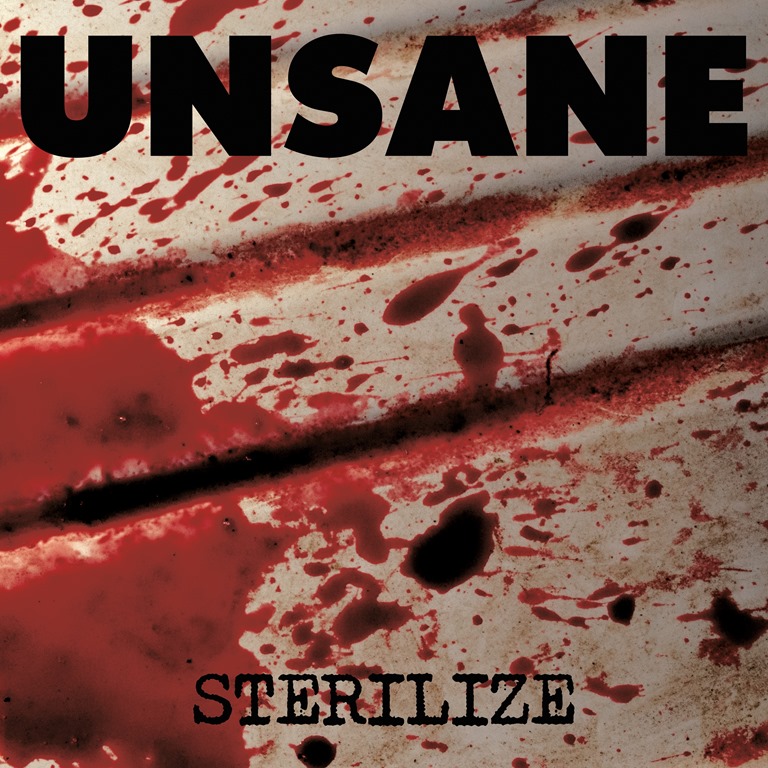
It’s been five years since Wreck appeared on Alternative Tentacles. So what have Unsane been doing in the intervening period? Gazing at their navels, taking up yoga and discovering a serene spirituality as a means of dealing with the anguish of life in the modern world? As if. They’ve been distilling their brutal rage into even more intensely bleak slabs of sonic nihilism. And, naturally, it’s housed in appropriately unsubtle, gore-soaked artwork. Unsane’s album covers are nothing if not distinct: while so many metal album covers which display hematomaniac tendencies are highly stylised and revel in the intended shock value, Unsane’s covers are all the more shocking by view of their clinicality, resembling crime scene photos than works of art. This is in many ways true of the music itself: there’s a functionality, a bluntness about it, and no sense of there being any indulgence or show.

Everything about Sterilize is stark, uncompromising, and connotes post-industrial, post-everything society, the dehumanising effects of merely trying to exist in the capitalist world where everyone gets pushed further and further down for the benefit of the few. It’s the soundtrack to life being sucked from the soul, the sonic encapsulation of desolate fury.

The grey steel assault of ‘Factory’ sets the tone and tempo: screeching feedback whistles through the grey, grain of the guitars and sludgy bass. From thereon in, the ferocious howls of anguish and packed in tight, back-to-back.

The song titles are also functional, direct, descriptive. Again, there’s no fluff, and little joy, to be found around ‘We’re Fucked’, ‘A Slow Reaction’ or ‘Distance’. Everything is paired back to the bare essentials and compacted for maximum impact. This includes the blues-based sound that defines Unsane: it’s crunched up, compressed, stomped into submission, meaning that while there is a certain swing to it, it’s limited to the most concise and precise form.

‘The Grind’ is aptly titled and brings a thunderous deluge of guitar; ‘Aberration’ is built around a simple four-chord trudge; and ‘No Reprieve’ sums up the album as a whole. You don’t listen to Unsane for variety, either across a given album, or their output overall. You listen to Unsane to vent, to experience a relentless viscerality. There’s something almost self-flagellatory about listening to an Unsane album in its entirety. At a certain point, the initial sense of catharsis is replaced by a crushing claustrophobia. This isn’t to say it’s an unpleasant experience, but is indicative of the effect of such sustained intensity. It’s as exhausting, mentally and physically, as the exertions of daily life on the treadmill, a punishment as reward.

When they slow the pace a shade, the weight is turned up, and when they hit a groove, it’s explosive and blistering. The tripwire guitar that stretches its sinews over the sludgy trudge of ‘Lung’ only raises the tension, and closer ‘Avail’ draws a heavy curtain of screaming anguish on proceedings with distorted vocals tearing across a rumbling bassline and savage guitars.

There’s a desperation and urgency about Sterilize which ensures that it crackles from beginning to end. Everything seethes, spits and scrapes and there’s not a moment’s relief. It’s this intensity which makes Sterilize as strong as any Unsane release. It’s mercilessly harrowing, but is ultimately satisfying in a perverse, sadistic sense.

AAA

hi3000x3000RGB