Posts Tagged ‘trauma’

Midira Records / Cruel Nature Records – 24th October 2025

Christopher Nosnibor

A new Nadja release is always cause for a pique of interest. Excitement doesn’t feel like quite the right term for an act who create such dense, dark, brooding soundscapes. Centred around the duo of Leah Buckareff and Aidan Baker, each release marks a shift thanks to the contribution of a range of guest performers, and cut is no exception – and this time, following the instrumental epic that was Labyrinthine (2022) – we have vocals, from not just Baker and Buckareff, but also Tristen Bakker, Oskar Bakker-Blair and Lane Shi Otayonii, among others. They certainly bring a lot of guests to a party which features just four tracks. But that is ’just’ four tracks which each occupy an entire side of vinyl on a double LP. As with Labyrinthine, these are compositions which span ten to sixteen minutes, and utilise that timeframe to maximum effect. They don’t hurry things, with slow, tapering drones interweaving, the emphasis on the atmosphere and the detail over the impact. And yet, despite this, or even perhaps because of this, the impact is strong, albeit in more subtle ways.

Their comments on the album are illuminating, explaining that ‘Thematically, cut explores trauma and physio-/psychological stress, as well as possible tools and means of overcoming these stressors, of which the music itself (sonic sublimation) might be one… Musically, while Nadja retains their signature wall-of-noise doomgaze sound, they also explore quieter, more introspective moments as well as new/different instrumentation, with harp, French horn, and saxophone featuring for the first time on one of the band’s recordings’.

‘It’s Cold When You Cut Me’ is stark, bleak, minimal. The air feels dead, it’s suffocating. The sparse percussion rattles along, but the drones are glacial. Five minutes in, rumbling bass and heavy beats roll in, and by the mid-point there are crushing waves of lugubrious noise worthy of Swans, but overlaid with trilling brass and woodwind, jazz in slow-mo, the honk of migrating birds and trilling abstraction.

But this is just a gentle introduction ahead of the thunderous grind of ‘Dark, No Knowledge’, which begins with atmospheric whirlings and even hints of Eastern esotericism, voices rising in the distance, atop wisps and rumbles, echoes and murmurings, before the dense, sludgy, post everything doom drone cascades in like a mudslide. It’s low and it’s slow, crawling like larva. buzzes and rumbles sustain for an eternity. You can actually feel your stomach drop in response to the bass frequencies.

The sound seems to get thicker and murkier as the album progresses, and if ‘She Ate His Dreams From the Inside & Spat Out The Frozen Fucking Bones’ isn’t nearly as abrasive as the title may suggest, its slow repetitious form is truly hypnotic as it trudges its way along.it possesses a rare density which matches its delicacy, and comparisons to latter-day Swans stand in terms of positioning the piece. There are thick, distorted tones grinding like earthworks through the airier overtones, and the contrast brings something magical and soothing. Then ‘Omenformation’ crashes in like a tsunami. The volume leaps, the density leaps, and you find yourself blown away by a sonic force strong enough to knock the air out of your lungs. The dingy, booming bass alone is enough to send you to the ground. The drums are immense. In fact, everything about this is almost inarticulable, as Nadja scale up the sound to beyond that of mere mortal beings. This is music with a physical force and a power beyond words, beyond contrivance. It’s archaic, occult, primal in its power. This is a track which treads through a series of movements, the last of which is crushing in its weight.

It’s true that cut possesses all of the sounds which are recognisable as being concomitant with Nadja’s distinctive dense, doomgaze stylings, and a lot of the vocals are as much additional layers rather than clearly enunciated words, and as such, add further depth – and a certain human aspect to the overall sound. The result is a work which speaks to that level of the psyche beyond words, which conveys trauma and physio-/psychological stress, and which offers a degree of relief through an experience which is wholly immersive and immensely powerful.

AA

a1598661613_10

Nadja2025

Photo: Hugues de Castillo

Mortality Tables – 22nd November 2024

Christopher Nosnibor

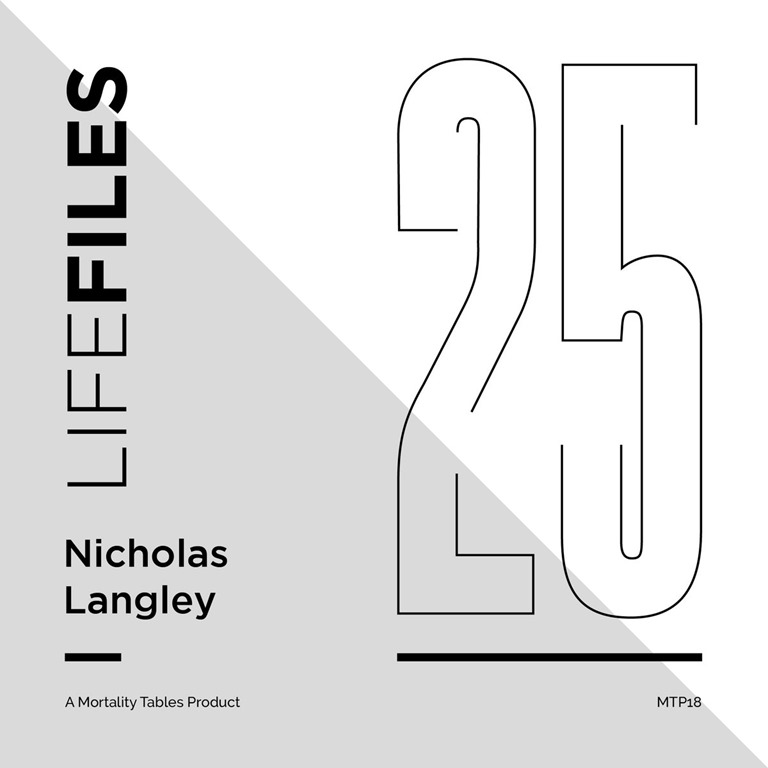
Matthew’s Hand by Nicholas Langley is the twenty-fifth instalment in Mortality Tables’ LIFEFILES series, now in its third season. The principles of this ongoing project are simple: ‘Recordings of places, people, objects, moments in time, environments and quotidian events are shared with a range of artists working across different disciplines. Those artists are free to respond to the recordings in any way they like.’

Simple principles, but in actuality, giving free reign to the artist to respond to the source material offers near-infinite possibilities. And so it is that Nicholas Langley presents to six-minute pieces in the form of ‘Milton Keynes University Hospital, 3 April 2024’ and ‘Milton Keynes University Hospital, 17 April 2024’.

Label head Mat Smith provides the following context for the source material for this release: ‘On 2 April 2024, I fell over while walking near Smithfield Market on my way to work, and broke my hand. The two recordings used by Nicholas were both made at Milton Keynes University Hospital – the first while waiting for an x-ray that confirmed the fracture the following day, and then two weeks later while in the waiting room for the cast to be removed.’

I’ll spare the tale of the time I fell and broke my ribs and shredded my hand one night, but shall move to the point that for some of us, the reaction to an event which contains an element of shock and even mild trauma is to document it. Having photographed my bleeding palm, and recorded the horrendous roar of the oxygen machines which were installed in our living room for the final nights my wife was with us, I can only conclude that recording these things creates a separation which enables us to process them as being ‘media’, for wont of a better term, rather than the painful reality of our actual lives. I certainly prefer this rationale to the idea that it’s a sociopathic impulse to revel in experiences of trauma and pain.

‘Matthew’s Hand’ captures the ambient chatter and clatter of a waiting room, at least initially, before this fades out to be replaced with something that one might describe as echo-soaked abstract synth jazz. Langley applies the principles of dub reggae, but without the percussion. The sonic experience is in some ways like the lived experience of the waiting room, as the chatter dims into the distance and your head slowly swims in a sea of overwhelmed strangeness as you wish you were elsewhere.

Someone recounts the grim tale of someone who was close to a mortar explosion at the beginning of ‘A Mortar Went Off Near Him’, before heavy elongated, humming drones enter the mix, and Langley builds a dense soundscape of whistles, hums, and whooshes which owes as much to early 80s industrial as it does to more contemporary dark ambience. A monotonous throb emerges, and it’s overlaid with scrawls of feedback and sharp, needling treble. Ultimately, little happens over the course of its seven-minute duration but somehow, you feel the effect.

Taken together, the two tracks have an impact which somehow extends beyond their sound alone.

AA

a1808514016_10

Sacred Bones – 23rd August 2024

Christopher Nosnibor

You know that when the bio for an album’s release is prefaced by a trigger warning, this is going to be some pretty powerful stuff. But this being a Uniform album, it almost goes without saying. Since their inception, they have gone all-out on every level, with the harshest noise providing the backdrop while Michael Berdan strips his skin to make the most brutal, unbridled, rawest expositions of the human condition, invariably born out of his own personal traumas.

I’ve often wheeled out the line that in the personal lies the universal, and even where there’s no direct correlation in terms of shared experience, the articulation of extreme emotions often provides a vessel whereby the outpouring of an individual’s catharsis offers a chalice into which others may pour the flow of their own emotional stigmata. If the metaphor seems a shade overwrought, bear with me.

Uniform is, unquestionably, a vehicle through which Berden vents endless pain and anguish. He’s a troubled person, and he’s open about this, to the extent that it’s more than just a but uncomfortable. But this isn’t some kind of trauma porn ride: the appeal of Uniform is this raw honesty, the absence of filter. You know – and feel – this is real. It’s not a case of manipulating the listener’s emotions, but an example of creativity as a vital outlet, a survival mechanism, even. It doesn’t exist for anyone’s entertainment. And with each release, Uniform, seem to find new heights of intensity, and new levels of sonic brutality, while dredging new emotional depths.

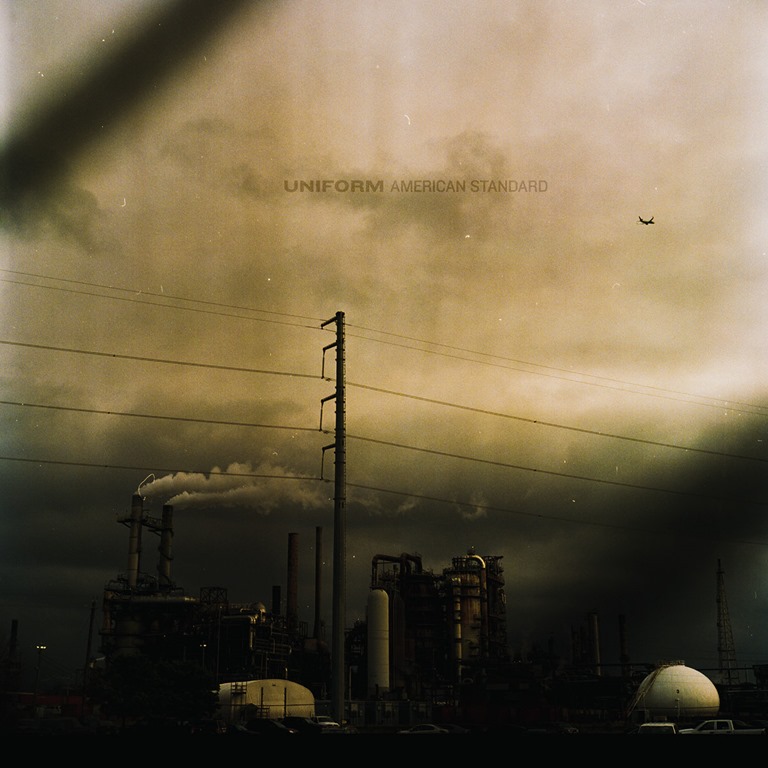
Shame felt like a gut-wrenching pinnacle which would be difficult, if not impossible, to surpass – but then, so did The Long Walk. In this context, it should come as only small surprise that American Standard goes even harder and harsher, but the simple fact is it would hardly seem possible. But here we are.

In the run-up to the release, Berden has spoken / written openly and in detail about his struggles with bulimia, and the fact that over many years of managing alcoholism and having come to a point whereby this is no longer a taboo topic, breaking down this particular wall has felt altogether harder.

Even the preceding singles, ‘Permanent Embrace’ and ‘This is Not a Prayer’, could not have provided anything like adequate forewarning of the intensity of the album as a whole.

I shall quote, while I take a moment and steel myself for this:

“The following songs are about a lifetime of making myself vomit,” Berdan writes in the personal essay that accompanies the album. His pain is so apparent, so immediate, that it feels like hearing someone scream for the very first time. “There’s meat on my face, that hangs off my face, sweats like I sweat, cries like I cry.” The music finally begins with those words, not in a glorious crash and clatter but in the tones of a gurgling drain. This is the sound of liquid moving through pipes that are full to the point of bursting with things usually hidden inside of stomachs and behind mental walls.

It all starts with an admission. Beneath the harrowing screams, there’s the pain of bulimia nervosa. There’s the pain of a sickness that is as physical as it is psychological. This is a kind of coming out. This is a kind of emergence. A far cry from edgy provocation or high school level transgression, this is something truly unacceptable.

As one might fear, this is just the beginning. As Don Delillo once wrote, “There are stories within stories.”

American Standard contains only four tracks, but the first, the title track, is fully twenty-one minutes long is the definition of harrowing. It’s a massive departure, in that with perhaps the exception of their 2015 debut, their compositions have conformed to the fairly defined structures, often with verse and chorus structures built around chord sequences and the arrangement of the percussion.

After an intro that can only be described as a scream of pain, ‘American Standard’ lurches into life as a churning throb of noise, and Berden’s bonne-rattling roar is only just audible amidst the pulverising fizz. When the power chords kick in, they’re like a full-on slam to the guts. Around the nine-minute mark, some keys enter the mix and there’s almost a redemptive tone, at least in the music, but Berden’s vocals continue to articulate the upper reaches of anguish. This is a different kind of purging from the subject matter – a flaying, emotional purging, a release of all of the years of torture and self-flagellation, distilled to the highest potency. It’s the barely human sound of breaking, breaking, emptying, over and over. The lyrics may not be easy to decipher, but the excruciating pain Berden articulates in their delivery is unmistakeable as he howls his larynx to bleeding shreds amidst a thunderous cacophony worthy of Swans live performances. If it’s not the heaviest shit you’ve heard all year… well. Just making it to the end of the title track is a thoroughly draining experience that leaves you feeling utterly spent.

The pounding machine-gun drumming, squalling, atonal synths and booming bass blasts of ‘This is Not a Prayer’ offer no respite, the layers of vocals, all screaming in pain, is beyond punishing: you feel your chest tightening and breath growing shorter with each intake, your throat clenching. The sheer physicality of the piece – which they sustain for a relentless six and a half minutes – is a panic attack in a can.

If the introduction to ‘Clemency’ swirls into ambience, it’s a bilious, nauseating brew of sulphur and fumes that festers just long enough to unsettle before the hardest percussion and the dirtiest guitars lurch in and everything becomes intensely claustrophobic. Again, there’s no oxygen, you’re constructed by the density and sheer relentlessness of it all. And it slams away like a lump hammer for almost eight minutes. The arrival of ‘Permanent Embrace’ feels like relief, of only for its brevity. There are some uplifting synths in the mix, but it’s the most savage finale they could have mustered.

The last time a record affected me this intensely in a physical way was over thirty years ago, when at the age of fifteen or thereabouts, having been introduced to Swans by way of Children of God, I picked up a copy of Cop at a record fair. I found it hard to conceive the record was actually revolving at 33rpm: it felt more like three, as time stood still and I felt my body being compressed by its crushing weight.

American Standard is certainly anything but standard. It goes beyond – way beyond – harrowing, or heavy, in any sense that words can easily convey. It’s the hardest listen. It simply hurts. But you know that this was the album they had to make. Forget your discomfort, and feel the pain.

AA

a2313479398_10

Industrial band, LIVERNOIS recently unleashed their new EP, :ablation:. The term "ablation", the surgical removal of flesh, serves as a metaphor for closure in the context of the EP’s concept.

:ablation:. as an album, wrestles with the human reaction to trauma. More specifically, the EP addresses the responses that tend to be stigmatized and shunned by an increasingly repressed, and emotionally-paralyzed state.

The intent herein was to walk a fine line between violence and vulnerability. The sounds echo between precision and senselessly screaming into the void.

Check ‘Hekk Closet’ here:

AA

3c63b579-0665-de4d-9946-d980886f794b

Septaphonic Records – 7th October 2022

Christopher Nosnibor

While Dystopian Future Movies’ ‘difficult’ second album, Inviolate, took a full three years to land after debut Time, their third, War of the Ether crashed in after just over two, and it’s an immense sonic documents that the Nottingham trio have compiled in this time.

Back in the spring of 2020, I wrote of Inviolate that ‘Everything about Inviolate is bigger, bolder, more pronounced and yet more nuanced, shaper and more keenly felt and articulated. And every corner of the album is imbued with a sense of enormity, both sonic and emotional: Inviolate feels major-scale, from the driving riffs to the heartfelt human intensity.’ That amplification is again true of War of the Ether. Dystopian Future Moves’ previous releases amply demonstrate a band with both an interest in and a knack for the cinematographic, the dramatic, so it stands to reason that they should extend these focal elements here.

This time around they’ve drawn inspiration from little-reported but truly horrifying events which took place at the former Catholic-run Tuam Mother and Baby Home in songwriter Caroline Cawley’s native Ireland, where 796 skeletons found in the grounds after suspicions were raised by a local historian in 2012. As the press release explains, ‘to hide the shame of pregnancy outside of wedlock, women were sent to homes like this all over the country – forcibly separated from their mothers, many of the children died in infancy due to neglect, and some were trafficked for adoption to the US. The country is still dealing with the fallout from these discoveries.’

War of the Ether is not a joyful record. It is, however, a record with real depth, and imbued with real emotion, as well as an aching sense of tragedy. And, as has been established as Dystopian Future Movies’ signature style, it’s an album which balances riffs and restraint, and is built on atmosphere and menace. They promise an album that ‘explores a wide range of genres from prog and shoegaze to doom-metal, noise-rock and folk,’ and don’t disappoint.

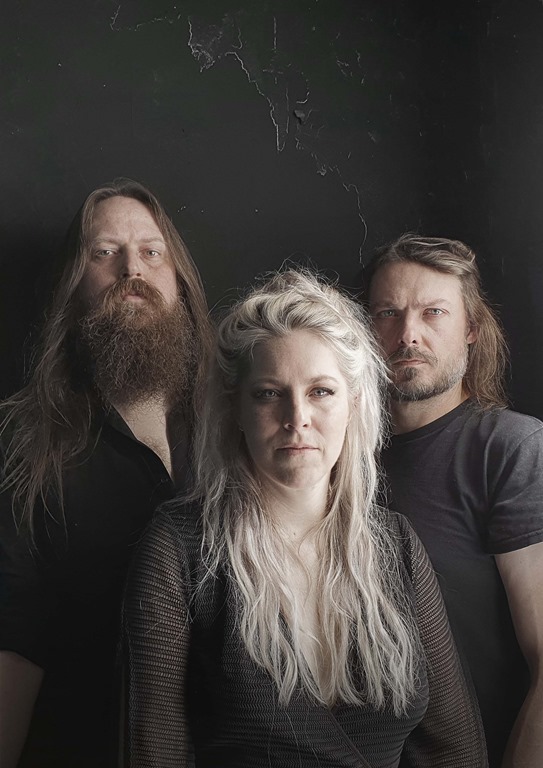
DFM 3 Portrait Photo 2000px WEBSIZE

War of the Ether opens – somewhat daringly – with the ten-minute spoken word crawler that is ‘She From Up the Drombán Hill’. For the most part, it’s sparse and spare, tingling guitars gently rippling behind the narrative – but there are bursts off noise, and it swells and grows and when it kicks in, it kicks in hard with piledriving riffage. The dynamics absolutely blow you away – exactly as intended. ‘Critical mass’ is appropriately titles, starting out with a haunting, echoed clean guitar and delicate drums rolling in the distance as a backdrop to Cawley’s aching, melodic vocal as it stretches and soars, and ‘The veneer’ is a magnificent slow-burner that builds to a shimmering sustained crescendo which unusually fades at the end. Against the weight of the subject matter and brooding instrumentation, it feels somewhat frivolous to focus on a fade, but it serves to highlight the many ways DFM are outside trends and exist in their own space. This is never more apparent than on the dreamy but serrated buzzing shoegaze of the title track.

For all its darkness, War of the Ether is a remarkably accessible album – not on account of its myriad hooks and killer choruses, but because it is simply so strong on melody and so utterly captivating. And because, as they demonstrate admirably on ‘No Matter’, the album’s shortest and most overtly structured song – they do have a real knack for snagging the listener with the combination of tunefulness and megalithic riffery. And then, the final track, the eight-and-a-half-minute ‘A Decent Class of Girl’ brings together all aspects of the album in a powerful accumulation of sedate, strolling psychedelia and climactic crescendos that optimise the impact of both.

Magical, majestic, and immensely widescreen, the scope of War of the Ether is simply breathtaking, and leaves you feeling stunned. Awesome in the literal sense.

AA

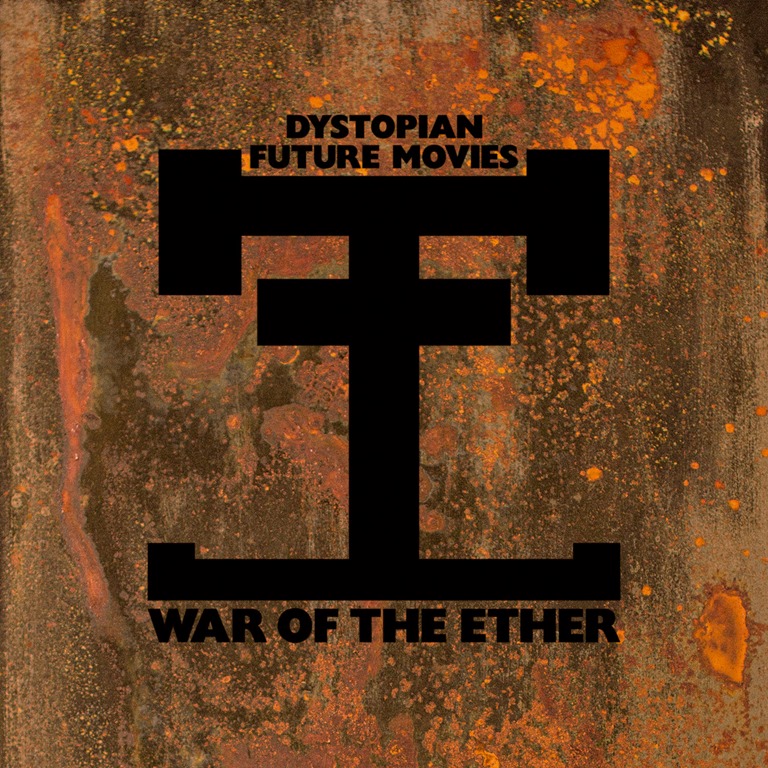
DFM 3 Album Cover Artwork 1500px

Fabrique Records FAB073 – 17th January 2020

Christopher Nosnibor

As the press text summarises, ‘Cusp is a collection of compositions taken from the soundtrack for the film STRESS by Florian Baron. The feature-length documentary gives voice to five young veterans, their experiences and trauma’. It was never going to be light or upbeat, and immediately, the sounds emanating from the speakers are unsettling, disturbing: blasts and reverberating crashes echo all around over slow, elongated drones, and ‘It’s Happening’ washes into the slow ebb and flow surges of synth that form ‘Them or Me’.

It may be good to talk, but those of us who haven’t been there simply cannot relate, cannot compute or comprehend the meaning, the pain, the anguish. It’s a world beyond and it would be a mistake and an insult to pretend otherwise. Anything, from sympathy to empathy feels like an underestimation and an undersale, a devaluement. Perhaps it’s an act of solipsism: the suffering in the mind of another is unknowable. This renders the territory Cusp and the film it soundtracks difficult on a number of levels.

Trauma is by no means entertainment, and while I haven’t seen the film, Irmirt’s handling is impressive in its subtlety, and it’s understandable why she was awarded the German Documentary Film Music Award in 2019. The jury remarked how in her soundtrack, she ‘dissolves the boundaries between sound design and musical composition in a virtuoso and at the same time self-evident way, thus creating a sound cosmos that, through uncompromising reduction, generates brutal knowledge.’

The best soundtracks are always understated, and compliment, rather than dominate the visuals they accompany, and Cusp, which takes fragments of the soundtrack as a whole – with eight tracks, half of which are only around the two-minute mark, this is a distillation of a broader experience, and it works well.

It is dark, unsettling, but nothing is overdone. And that’s why it works.

AA

Jana Irmirt - Cusp