Posts Tagged ‘texture’

Thrill Jockey – 19th April 2024

Christopher Nosnibor

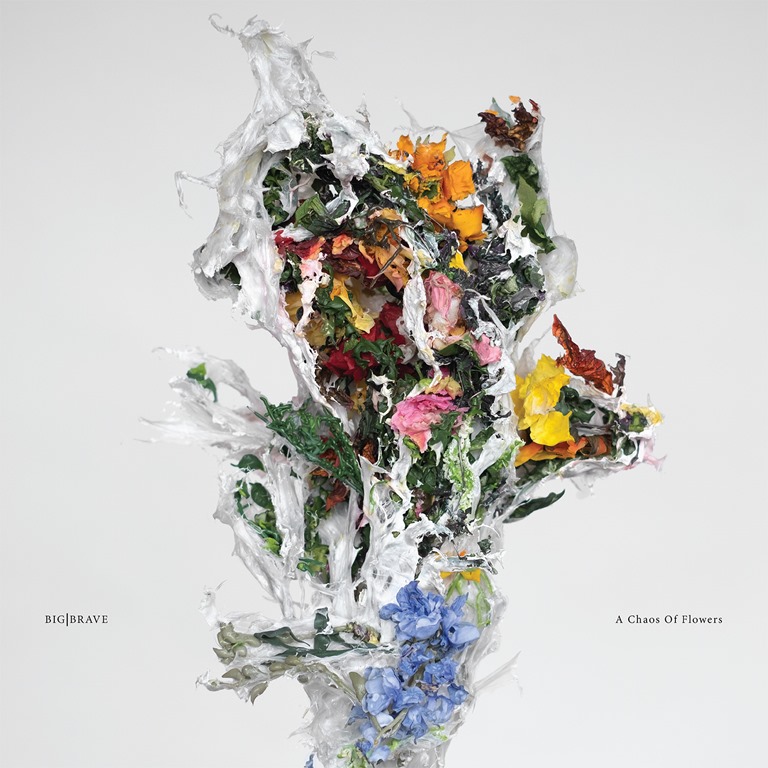
There’s been a quite staggering trajectory to the work of BIG|BRAVE: with each release they achieve an even greater level of intensity, which seems to be unsurpassable – until the next album. They’ve come a long way from their minimal ambient / folk beginnings. The instrumentation has remained minimal, but cranked out ear-splitting decibels, they’ve developed a way of creating a lot from comparatively little, and unlike many guitar bands, they’re not afraid of space. There is starkness, there is silence, there is separation between the instruments, and much room to breathe between slow, thunderous beats and crushing chords which collide at the pace of tectonic plates.

Vital was aptly titled, and marked a new peak in the articulation of raw emotional turmoil. It seemed improbable that nature morte could equal it, and yet it did, and went beyond, a desperate, feral edge pushing its emotive force to a higher level.

Coming a mere fourteen months after nature morte, and some substantial touring, how could they possibly sustain that kind of intensity? It seems improbable, but it’s happened. A Chaos Of Flowers is graceful, delicate, even folksy – but also eye-poppingly intense, cranium-splittingly loud, and utterly devastating.

The tracks released ahead of A Chaos Of Flowers hinted that this new album, beyond what seems human, would once again match its predecessor. ‘I Felt a Funeral’, which is also the album’s opening track, has strong folksy vibes… until the sonorous guitar tones enter. There are hints of late Earth about his, the way the resonant tones of pure sustain simply hang in the air. But dissonance builds, and there’s an awkwardness to this scratchy, imperfect beauty. The way Mathieu Ball’s guitar scratches and scrapes and builds to a blustering squall of dense, twisted noise is remarkable, building from nothing to an all-consuming howl. Yet at the same time, there’s restraint: it’s as if he’s pulling on a least to restrain this ferocious monster in his hands.

Currents – and volume – build. You’ve never heard guitar like this before. It brings the crushing weight of the drone of Sunn O))). And the thunderous relentless repetition of early Swans, but delivered with a breathy ethereal sparseness that’s difficult to place. And then there are the vocals. Not since first hearing Cranes in the early 90s have I heard a vocal so otherworldly.

The guitar feedback yearns heavy and hard in the final minutes of ‘not speaking of the ways’, a track which starts heavy and only grows in both weight and intensity. Robin Wattie’s voice is half adrift in a sea of reverb and drifting, almost drowning, in a tidal flow of guitar noise, for which you’d be hard-pressed to find a comparison. I’ve fried, struggled, failed. You can toss Sunn O))), Earth, MWWB around in the bag of references, but none really come especially close to conveying the experience of A Chaos Of Flowers.

The songs are shorter than on recent predecessors, and overall, the mood of A Chaos Of Flowers is different – dare I even say prettier than the last couple of albums. There’s a musicality and gentility about this album which marks something of a shift, and single ‘canon: in canon’ is the perfect evidence of this. One may say that ‘heavy’ is relative in terms of distortion and volume, but there is more to it than that. Many of the songs on A Chaos Of Flowers are delicate, graceful, sparse, with acoustic guitar and slow-twisting feedback dominating the sound of each track. There’s a levity, an accessibility, which is at the heart of every song here. Much of it isn’t overtly heavy… but this is an album which will crush your soul.

If A Chaos Of Flowers is intentionally less noisy than its predecessors, it’s no less big on impact. Raging, ragged chords nag away, until ‘chanson pour mon ombe (song for marie part iii)’ brings bleak, tones which cut to the core and explodes in to the most obliterative noise close to the end: this is the absolute definition of climactic finale.

There’s a rawness, a primitive, elemental quality to their music which has defined their previous albums, and this remains in A Chaos Of Flowers. You arrive at the end feeling weakened, short on breath, emotionally drained. I ask myself, how did I get here, so sapped-feeling? The answer lies in the force of this immense album. A Chaos Of Flowers is devastating in its power, and BIG|BRAVE reached a new summit – once again. The deeper and darker they go, the better they get.

AA

AA

641805

Belgian shoegaze outfit Newmoon are back with ‘Crazing’, the 3rd single taken from their brand-new album Temporary Light, set for release on March 22nd, 2024 through [PIAS] Recordings (EU) and Manifesto Records (US).

“Crazing is one of the noisier songs on this album”, singer-guitarist Bert Cannaerts explains. “We’re always looking for that one melody that hides within a song. With Crazing we wanted to try our hand at a song that incorporates loads of guitar textures but still feels melodic and airy. On one hand it has these dark and droning fuzzed out guitars but on the other hand it sounds fresh and uplifting. The song exists on the edge of dark and gloomy with a hint of brightness and optimism. The exact spot where we like our music to sit”, he adds.

Watch the video here:

AA

Newmoon

Kranky – 13th October 2023

Christopher Nosnibor

One thing I’ve learned as I’ve grown older (apart from the fact you never grow younger, despite the fact that I was amused to recently stumble upon the ‘people also ask’ Google question prompt ‘Is Benjamin Button a true story?’), is that a diversified appreciation of music is particularly useful as you come to recognise the diversified nuances of mood. Adherents to a single genre: how do they deal? How do they find the right soundtrack?

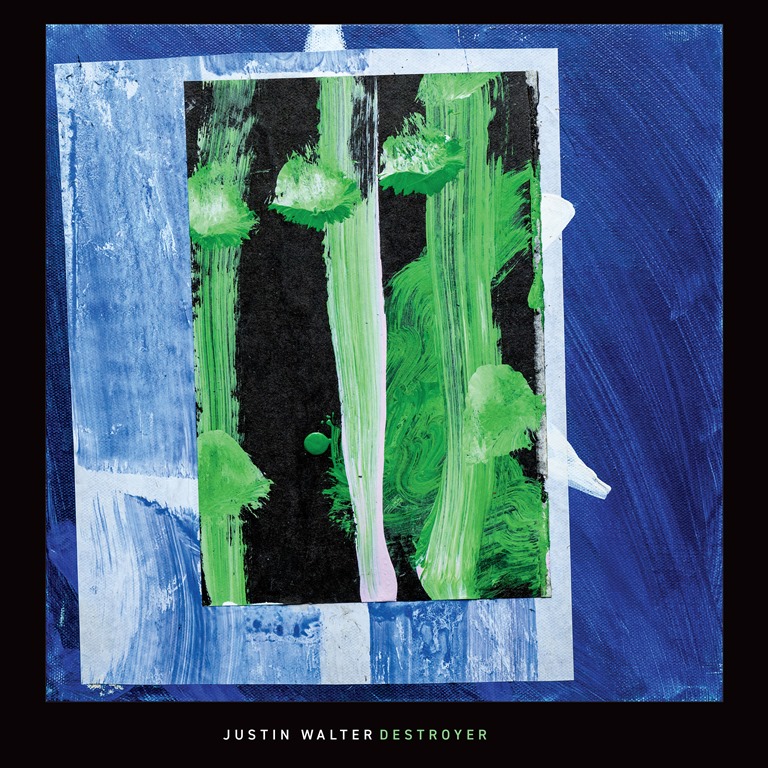
I’m not previously familiar with the music of Justin Walter, but the accompanying notes inform me that it ‘veers between nebulous and numinous, coaxed from the translucent tonalities of his signature instrument, the EVI (Electronic Valve Instrument)’ and that ‘Destroyer, his latest, and third for Kranky, marks his most multifaceted work yet. Inspired by minimalistic urges (evading grandiosity, condensing scope, embracing spatial restraint) tempered with the drama of triptychs (becoming, destruction, aftermath), the album’s 11 tracks thread.’

If the album’s title implies aggression and obliteration, it’s overtly organic analogue synth vibes are quite the opposite. That isn’t to say it’s all shades of mellowness, because Walter weaves in extraneous noise and all sorts and messes with the dials to render soft tones bent and broken, twisted and warped to create a less than silky-smooth air of tranquillity at times. But at others, there are some simply magnificent passages where you feel calm and at ease. The title track is exemplary: it’s an ambient work at heart, soft, supple, gentle, but with serrated edges and spiny burrs that occasionally break through the surface.

Walter obviously has a clear sense of flow. The eleven pieces on Destroyer flow seamlessly from one to the next, and as a consequence, Destroyer feels like an album, despite the contrasts which present themselves across the work. The flow begins with an instant attention-grab in the wibbly shape of ‘For Us’, which blasts in with a blaring drone over which phasey noodles tangle over in ever-increasing layers with adrenalizing effect. While the majority of the album is rather softer, a defining feature of the composition is the exploration of interplay between tones and timbres and the notes their timings gradually shift to create the subtlest of tensions. This is particularly noticeable duribg the second half of the album, which feels slower, softer, and more soporific than the first half. Close your eyes, exhale slowly, and you really start to absorb Destroyer. And you have every reason to do that.

‘Cliff the Cloudcatcher’ is a gentle, bubbling synth piece, while the eight-minute ‘Inner Voices’ is a mellifluous movement in many directions simultaneously, which pulls together to take form, becoming graceful, and in places the sounds mimic woodwind, but sculpted into something otherly… backwards, perhaps, and the sounds bend and push and pull – gently, but they do – before a darker turn around two minutes in brings shade, clouds thickening and becoming denser.

Destroyer distinguishes itself from so many other ambient-orientated works by virtue of its dynamics. There are some thick, tones and dense blankets of noise which present themselves, often emerging from cloud-like drifts of near-nothing. But these moments of rising tension resolve to easy washes and ripples of sound, to cloud-like softness.

And this is the album’s real accomplishment, in that is balances many shades, many tones, many textures. Those darker passages serve to remind that life isn’t all easy or plain sailing, and that plans can go wrong. You can set the controls for plain sailing, but there will always be disturbance, disruption. Whatever you plan or expect, there will always be deviation.

AA

114931

Unsounds Records – 15th June 2023

Christopher Nosnibor

These are certainly three names to conjure with as prominent features of the experimental scene. Anne-James Chaton and Andy Moor have collaborated on numerous albums, and I personally discovered them via the Transfer series in 2011, around the same time as Chaton’s Evenements 09, which I found fascinating in its contemporary application of loops and with its parallels to the cut-up technique and Burroughs’ and Gysin’s tape experiments of the late 50s and early 90s.

As the biography which accompanies the release of this lates outing explains, ‘the duo Andy Moor and Anne-James Chaton continue their conversation with a new set of digital singles, diving this time into the rich language of the traditional metiers. The Handmade series is an homage to crahftsmanship through an exploration of the lexicons specific to bakery and pastry making, jewellery, joinery and wrought iron making, that will unfold over the course of 4 thematic volumes. With guest Yannis Kyriakides on electronics they create works where abstract notions mix with tangible ones by linking the arts of the hand with sound and poetry.’

The Moor / Kyriakides collaboration A Life is a Billion Heartbeats proved to be a gripping work for quite different reasons, and one thing that’s always a feature of any work featuring Moor is his versatility, as well as the fact that he doesn’t use the guitar in a remotely conventional fashion.

The two tracks on this single really do showcase the strengths of all three artists, and shows just how collaboration and collectivism can amplify individual powers.

But never mistake ‘art’, however obscure or experimental, for something which is always entirely serious: This, the first of the ‘Handmade’ series – projected to comprise four digital singles, to subsequently be released as a CD album and download, akin to the Transfer series, sees them taking on ‘the vocabulary of pastry making… Side A «Garniture» offers a curious anthology of poetry written by mixing the actions of the pastry chef, units of measurement and figures of speech. On Side B, «Sur Mesure» deploys all the richness of the culinary language when it comes to expressing the scarse [sic] or the plentiful’.

Truth be told, for a non-French speaker, the linguistic twists and any humour associated with the juxtaposition of subject matter and context with delivery are lost beyond the cover art, leaving simply the sonic experience – but this alone is more than enough. Chaton’s monotone spoken word is nonchalant and gives nothing away, while Moor peels off shards of dissonance from his guitar amidst drones and hums and clanks and a distant but insistent clattering percussion. Feedback and irregular discordant chanks and un-chords all crash and slide across one another in an irregular latticework of noise.

‘Sur Mesure’ is less challenging, less overtly difficult and dissonant, and sees the three employ the same elements but to an altogether more subdued and atmospheric effect, making for a good contrast against ‘Garniture’.

There’s no doubt that most would simply file this under ‘weird shit’, but it’s a strong experimental work which delves deep into dynamics, tones, and unusual juxtapositions, and really prods at the neural pathways in the most unexpected ways.

(Click the image for audio)

77U_art

Ipecac Recordings – 28th April 2023

Christopher Nosnibor

As their bio explains most succinctly, ‘Spotlights occupy the space between a push-and-pull of jarring metallic catharsis and sweeping distortion. Even as either side vies for supremacy, neither extreme ever completely tightens its grip, allowing waves of melodic vocals and expressive sonic sorcery to breathe in the middle. This deft balancing act has enabled the trio—husband-and-wife Mario Quintero [guitar, vocals, keys] and Sarah Quintero [bass, vocals] joined by Chris Enriquez [drums]—to carve a singular lane. Armed with an uncanny ability to wield darkness or light, the trio’s fourth full-length offering, Alchemy for the Dead [Ipecac Recordings], finds them exploring something we all face, yet few embrace…’

Expanding on this, Mario explains the album’s overarching theme, which the title alludes to: “One of the major parts of our lives, is the fact we’re all going to die,” he says “Most people are terrified of it, some people learn to look forward to it, and some see it as a way out of their misery. Various cultures view it differently. There isn’t necessarily a story to the album as a whole, but each song deals with the theme of death. It could be fantasy such as bringing a loved one back to life or darker moments like suicide and deep depression.”

It’s a fact that, at least in Western culture, death remains perhaps the last taboo, something of which even the dying tend not to talk about, not properly.

It was back in 2018 that I first encountered Spotlights: their cover of ‘Faith’ by The Cure from their Hanging by Faith EP was an instant grab. This was a band that really ‘got’ the atmospherics of the track and captured the essence of what, for many, myself included, remains as an untouchable trilogy of albums, 17 Seconds, Faith, and Pornography.

Alchemy For The Dead doesn’t sound like any Cure album specifically, but still takes cues in terms of weighty atmosphere. Following a gentle introduction that borders on dark synth pop, it’s not long before the blasting power chords crash in, thick and dark and heavy. And the thick, processed bass on ‘Sunset Burial’ blends with a rippling guitar that’s richly evocative and reminiscent of Oceansise at their best. But when they break into monolithic crescendos of distortion, I’m reminded more of the likes of Amenra, of BIG ¦ BRAVE.

There are some extravagant guitar breaks, but somehow, they’re as forgivable as the more processed prog passages, which in the hands of any other band would likely sound pretentious: Spotlights sound emotionally engaged and sincere without pomp or excessive theatricality: this isn’t something that’s easy to define, not least of all because it’s such a fine line when weighing up musical that’s so reliant on technical proficiency and very much ‘produced’. And the production is very much integral here: the arrangements require this level of separation and clarity. But this is where it’s important to distinguish between production and overproduction, and it’s testament to Mario’s skills at the desk that he’s realised the band’s vision so well. The bass really dominates the sound, which is so thick, rich, and textured, and also explores a broad dynamic range: the quiet passages are delicate, the loud ones as explosive as a detonation at a quarry.

Similarly while the songs tend to stretch beyond the five-minute mark, there’s nothing that feels indulgent or overlong here. ‘Repeat the Silence’ builds on a simple repeated sequence almost reminiscent of Swans’ compositions, but thunders into a bold, grungy chorus that’s more Soundgarden.

The album’s shortest song, the three-and-a-half-minute ‘Ballad in the Mirror’ is also the most overtly commercial, a straight-up quiet/loud grunge blast, and the riffage is colossal.

‘Crawling Towards the Light’ marries monster riffage with Joy Division-esque synths, and somewhere between Movement-era New Order and Smashing Pumpkins, but rendered distinctive by the propulsive drumming which drives the track which builds to a roaring climax.

The seven-minute title track is sparse and suffocating. It has a nostalgic quality that’s hard to define, and it’s perhaps something that’s only likely to punch the gut of nineties teens in this specific way, but it’s understated and emotive, and then the guitars crash in and it’s fucking immense and… well, what a way to conclude an album.

Alchemy For The Dead is a huge work, an album that draws its own parameters and digs new trenches around genre definitions before bulldozing them to the ground with riffs. Complex, detailed, and unique, Alchemy For The Dead is something special.

AA

SPOTLIGHTS_AFTD_LP FULL.png

Keplar Keplar – 3rd March 2023

Christopher Nosnibor

However much you think you know about music, there is always more to learn. And so it transpired that Holo was first released in 1998 and is ‘one of those rare records that managed to carve out a niche of its own while also building bridges to variety of genres like Chicago-style post-rock, the ambient mysticism of projects like Rapoon or the music made at the intersection of shoegaze, and electronic music in the late 1990s.’

Where have I been? Living in a cultural vacuum? Hardly. And yet this is my first encounter with KILN. And I’ve not heard of Rapoon and have no knowledge of Chicago-style post-rock either. Chicago house, I’m aware of, but… well, I daresay I’m not alone, and so this reissue off Holo may well prove to provide an introduction, and an entry point to the trio’s supposedly niche-carving brand of ambience.

It’s an album that’s rich in detail and texture, from clanking, clattering tin can percussion and big sweeps of amorphous sonic clouds that wash and crash in waves.

It’s hard to decipher precisely what’s what – is that a didgeridoo or just a digital drone? It’s impossible to unravel the layers and determine the individual sources as glugs and gurgles slide in between soft dulcimer-like notes and easy beats that bubble between all kinds of textures and tones which drift and slide and groan and drone in and out of the ever-shifting fabric of this fascinating album. Guitars and extraneous sounds flit and flicker in and out while instant drums nag and boom. At times it’s new age, at times it’s more tribal, and Holo pushes ambience in numerous directions.

There are segments – interludes, breaks, fragments – where this is a catalogue of challenging source materials melted together. At others, it’s altogether less challenging and simply washes of you in a soft breeze.

For an album that’s so chilled, there is much happening on Holo¸ and as much as it is an album to chill to, first and foremost it’s an album to explore.

AA

KeplarRev13LP_front

Constellation – 20th May 2022

Christopher Nosnibor

The first collaborative full-length album by Automatisme (the Canadian musician and conceptual artist William Jourdain) and Swiss field recordist, ambient musician, visual artist and writer/academic Stefan Paulus, Gap/Void is nothing if not a deep, immersive sonic experience.

While the origins of many albums are largely unremarkable and barely worthy of reading, let alone comment, Gap/Void is a strong exception, and for that reason, it feels appropriate to quote at length:

Paulus approached Jourdain with a proposal based on his field recordings made during numerous mountain expeditions in the Swiss Alps, the Caucasus, and north of the Arctic Circle—documenting stormy weather, high alpine winds, avalanches, and sounds emanating from glaciers and from the insides of crevices and caves. Paulus created ambient noisescapes from these recordings by splicing and folding them into hundreds of layers of sound: an analog to the geological strata of their geographic sources. The resulting audio mixes, compounding a multiplicity of spatio-temporal excursions, were then further encased in drones using the natural tone series (the traditional zäuerli or wordless yodels of northeastern Switzerland), the monotonic standing drone of Lamonte Young’s Dream Syndicate, and the mass chords of early 1970s Kosmische Musik as points of reference. Paulus sent these extended ambient/noise pieces to Jourdain as source material for the latter’s bespoke Automatisme techniques, where variable tempo and glitch systems forge more overt minimal techno/IDM works.

‘Hey, how about an Arctic trek?’ doesn’t really sound like a pitch for a musical collaboration, and pitched to a TV producer, it would probably have been a series with its own self-made soundtrack – although for TV they’d have probably wanted some celebrities slogging across the barren wastes lugging audio gear or something stupid.

The first of the album’s ten tracks is the twelve-minute ‘Säntis’, where an insistent and overtly synthesised loop thrums against a slow ambient swirl before an insistent uptempo kick drum beat thumps in and for a spell things go techno… before becoming derailed. The tempos are all over, the ebbs and flows run in different times and tempos and before long it becomes quite overwhelming, disorientating as the layers build… and then everything falls away and you’re left with the rumbling sound of the wind scouring the bleak, barren ground. It sounds harsh and inhospitable, it sounds dark and unsettling, and yet it feels less tense and is somehow less agitating than the preceding pulse-quickening sensory overload.

Things do settle a little as the album progresses, and by the arrival of the third track, ‘Uble Schlucht’, we’re into something of a more straightforward Krautrock style, dominated by bubbling synths and motorik grooves. But, at the same time, it’s a soundscape of shifting terrain, of snowdrifts and undulations, crags and cervices.

There’s a restlessness about Gap/Void that means it’s impossible to settle, that keeps you on edge in a way. The compositions – particularly the way the percussion is eternally evolving, in a continual flux, more a series of palpitations and panic attacks than a pulsating heartbeat – are tense, ever-moving, with a flicker-filled urgency that offers little respite.

‘Blau Schnee’ goes all out on the deep bass and low-end murkiness, the beats and bass melting into one another, while ‘Stoos’ goes ultra-sparse and is so minimal it borders on the microtonal, before an off-tempo beat bounds in and trips the wire.

The pieces on the second half of the album are rather shorter, with none over the six-minute mark, but the sound and sensation remain similar, with crackling electronics dominating and beats that poke at the innards – sometimes subtly, others less so. But it never really lets up, and while very little of Gap/Void gives even the vaguest hint of its source and origins, it does convey a certain sense off desolation, of isolation. Soon, we will all live in desert, and it will sound like this.

AA

cover Automatisme Stefan Paulus - Gap Void

Crónica – 26th April 20222

Christopher Nosnibor

Having seen various videos of Gintas K’s improvisations, involving a keyboard and a dusty old Lenovo ThinkPad running some custom software, it’s apparent that his approach to composition is nothing if not unusual, and it’s matched by the results.

His Crónica debut, Lengvai / 60 x one minute audio colours of 2kHz sound was sixteen years ago, and his return to the label is a very different offering, although as has been a common factor throughout his career, Lėti – Lithuanian for slow – consists of comparatively short pieces – and here, the majority are four minutes long or less. Less is more, and what’s more, Gintas K invariably manages to pack more into a couple of minutes than many artists do in half an hour. Here, we have a set of eleven short pieces ‘created from recording and improvising in studio followed by extensive mixing and editing using software.’ There’s no more detail than that: some artists accompany their releases with essays explaining the creative process and the algorithms of the software and so on, but Gintas K simply leaves the music for the listener to engage with and to ponder.

Where Lėti is something of a departure is in the emphasis on the editing and mixing of the material and the fact that, as the title suggests, the arrangements are a little more sedate. The signature crackles and pops, chines and static are all present and correct, but there’s a sense of deliberation as we’re led through ethereal planes of delicate chimes and tinkling tones that resonate and hang in the air, drifting in open expanses, with time and space to reverberate and slowly decay. With this more measured feel, melodies become more apparent, with simple motifs, repeated, giving ‘Hallucination’ a sense of structure and, I suppose you might actually say ‘tune’.

It isn’t that Gintas’ works lack tunefulness as such, but that any tune is surrounded by froth and extranea, and so much is going on it’s often hard to miss. Listening to Lėti is a fairly calm, even soothing experience, at least for the most part, conjuring a mood of reflection, of contemplation. The album’s longest piece, the seven-minute ‘Various’ brings a dense wave of sound that surges and swells slowly like a turning tide. There’s almost a stately grandeur to it, but then, there’s a rattling kind of a buzz that’s something of a distraction, and a glitch that nags away and seems to accelerate. These little headfucks are quintessential Gintas K, and Lėti isn’t all soft and sweet: ‘Savage’ brings thick, fuzzing distortion and discomfort.

The flurries of sound, the babble of bubbling bleeps and bloops that are his standard fare are slowed to sparse, irregular drips in a cave on ‘Variation’, and the application of reverb is impressively nuanced, to the point that the reverbs almost become music in their own right. ‘Atmosphere’ and ‘Ambient’ are appropriately titled, while ‘Nice Pomp’ would comfortably serve as a soundtrack to a slow-motion film of a moon landing or somesuch, and again none of the pieces are without depth or detail, as the layers and slivers of sound that intersect create so much more than mere surface.

Lėti is a genuinely pleasant and pleasurable listening experience, but is most certainly isn’t straightforward or simple in what it delivers. There are many sonic nuggets to unearth, and so many tones and textures along the way, that what is, superficially ‘less’ is, in actual fact, a whole lot more.

AA

Crónica185_front

Room40 – RM4130 – 13th August 2021

Christopher Nosnibor

I’m still recovering from the last Celer release I covered – the four-disc Future Predictions, released only last summer. It wasn’t harsh or sonically challenging: it was just really, really long. This one, however, is rather shorter, comprising twelve tracks with a running time of just twenty-nine minutes.

It is, notably a departure. As the press notes detail, with In Light Of Blues, ‘[Will] Long pivots away from long-form works to create a series of vignettes that capture the essence of his aesthetics interests. The record condenses and refines his compositional methodologies forming each piece as an acoustic miniature speckled in hazy harmony and evocative tonality’.

As such, as much as In Light Of Blues is a departure, it is also very much a continuation of his previous work, while concentrating it down to shorter snippets – but with no loss of power or depth. Long’s comments on the reason for this departure are illuminating:

‘It was months ago, but it could have been weeks, days, or even hours since then. I stopped wanting to hear loops, I wanted to stop it. I added brass; trumpets, trombones, and more horns. I cut it out like words from a book, and sewed it back together. Burroughs. These movements are merely to stay alive, to stay moving.’

In citing [William] Burroughs, Long’s observation that ‘You wake up from a truck horn passing in the early morning hours on the nearby freeway, or from a dream that you can’t tell was a nightmare or a loving memory… Someone walks by on the street wearing the same perfume. I drew out each place, each scene, and put the story there. It might have been with you, or without you. All I know is that you were there somehow the whole time, even if you weren’t’ marks a striking parallel with some of Burroughs’ statements on the way the cut-up technique was an attempt to being art closer to life: “every time you walk down the street, your stream of consciousness is cut by random factors… take a walk down a city street… you have seen half a person cut in two by a car, bits and pieces of street signs and advertisements, reflections from shop windows – a montage of fragments”.

While the pieces on In Light Of Blues are composed from a montage of fragments, instead of jarring against one another and crossing over one another to replicate the blizzard of simultaneity that is life, they blur together to create a slow-creeping sonic mist. The details are obscured, the edges indistinct, the definition vague to almost absent. Some of the pieces are fragments in themselves: the second of the three ‘Melancholy Movement’ compositions is only fractionally over a minute long, and there are a number of pieces of similarly brief duration.

Time appears to be something of a leading preoccupation on In Light Of Blues, as titles including ‘Days Before the Change’, ‘In the Intimate Hours’, ‘After All Time’, and ‘Precious Past Hours’ indicate. The titles suggest a certain urgency, an anxiety, even, over the passing of time that’s not necessarily apparent in the music itself. But as is so often the case, with ambient / abstract musical forms, the music conveys only some aspects of the full meaning or intention, and beneath comparatively tranquil surfaces often lie more trouble currents, and there are numerous billows of darker, denser sound which rumble and stir, evoking brewing storms amidst the soft layers of the pieces here.

Perhaps this is the real pleasure – and perhaps also the purpose – of In Light Of Blues. It’s an album that can simply be allowed to drift along in the background, the darker clouds occasionally tugging the attention while, in the main, it may pass largely without the demand for focus. But closer attention yields greater rewards, in the sonic depths and subtle textures that reveal themselves through that engagement, and to seek the space beneath the surface, to explore its context and origins and consider what it may mean beyond the surface yields more still.

AA

RM4130_front