Posts Tagged ‘tense’

Rare Vitamin Records – 23rd August 2024

Christopher Nosnibor

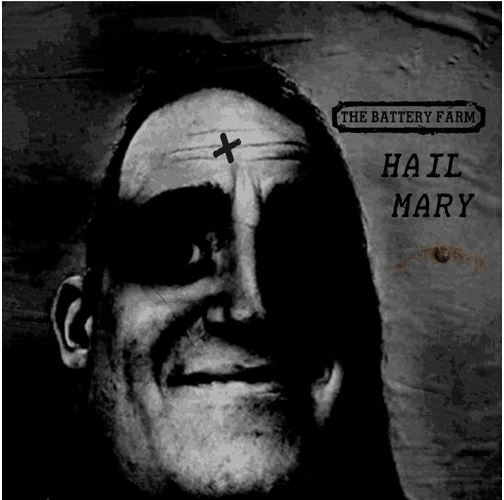
Ramping up the anticipation for their upcoming album, hot on the heels of ‘O God’, The Battery Farm slam down a second single in the form of ‘Hail Mary’. One of the physical formats happens to be a rather nifty mini-CD. I’m rather partial to these as objects – so much so that I released a double-pack of EPs on 3” CD recently. Back when CDs singles were a standard format – and more often than not as a standard and limited edition, alongside a 7”, 12”, and cassette single, back in the early 90s at the peak of releasing as many formats as was humanly conceivable in order to milk fans and maximise copies sold for chart placement – the mini CD offered a format that was both practical and novel: with a capacity of around twenty-three minutes, they provided just the right amount of playing surface and so not only seemed less wasteful than a 5” disc with its seventy-odd minutes space, but they looked dinky, too. The challenge was always how to package them, though: I have 3” singles by The Sisters of Mercy from the late 80s in 5” jewel cases, complete with plastic adaptors for those whose CD player trays didn’t have a 3” divot, although this sort of seemed to defeat the object of the object, if you get my point, while the ‘battery pack’ style limited editions of the singles from the second album by Garbage were as stupid as they were cool, inasmuch as to play the things, you had to trash the packaging – which was probably the idea as an artistic wheeze, presenting fans and collectors with the dilemma of whether to play or preserve it (or buy two).

Of course, while presentation matters, it’s ultimately the content that counts, and with ‘Hail Mary’, The Battery Farm continue the trajectory of ‘O God’, with some sparse, jittery, slightly mathy instrumentation providing a tension-building lead-in before things kick in hard with a fat, buzzing bass around the mid-point.

‘Get this thing the fuck away from me,’ Benjamin Corry snarls with in a thick northern accent, dripping with vitriol, his throat full of phlegm and gravel, and in no time at all, the anguished vocals are spluttering out through a whirling cacophony of noise. It hits like a punch in the guts, and every spittle-flecked syllable feels like it’s being coughed up from the furthermost recesses of Corry’s soul. And yet, amidst it all, there’s a nagging riff, thumping beat you can really get down to, and even a snippet of backing vocal adding a bit of harmony.

For The Battery Farm, B-sides represent an opportunity to explore and experiment, and ‘2 Shackwell Road’ is no exception, with a collage of vocal samples looping across a stammering drum ‘n’ bass beat which gives way to a low-end rumble and occasional blasts of industrial noise. The result is strange and disturbing.

Taken together, the two singles thus far likely give us a fair indication of what we can expect from the album, Dark Web, due in November. It threatens something stark, uncomfortable, a psychologically demanding set of songs which go deep into dark territories, and promises to be their strongest work to date.

AA
Battery Farm - Hail

The Helen Scarsdale Agency – 14th June 2024

Christopher Nosnibor

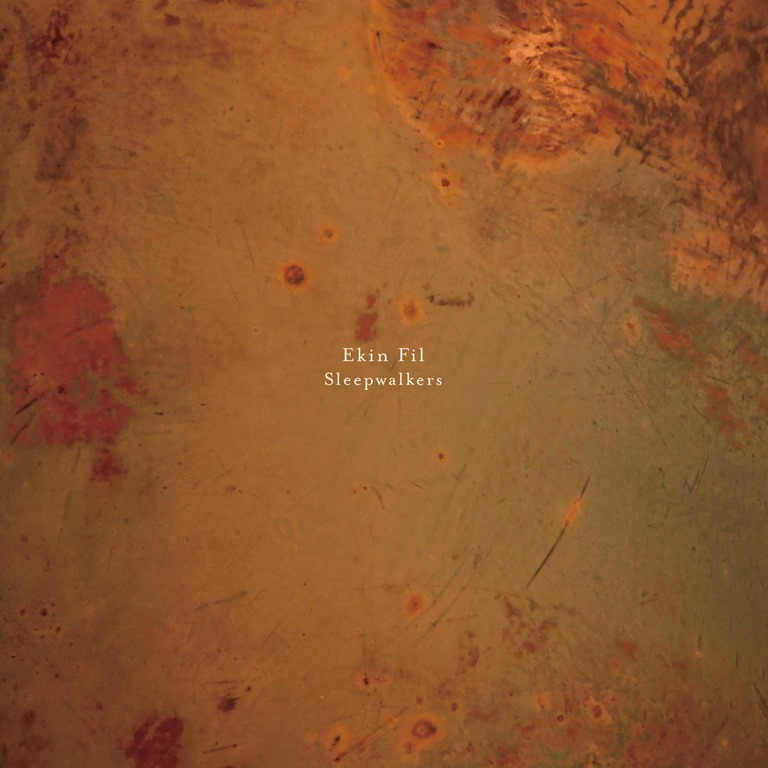
For some time now, The Helen Scarsdale Agency has homed some quite challenging experimental noise and industrial-orientated releases. It seems somewhat incongruous, the name suggesting they’re a stuffy literary agency or something.

The notes which accompany this latest offering from Ekin Fil are instructive and informative, in terms of expectation and context, and as such, worth reproducing here:

‘The drone-pop consternations of Ekin Fil emerge through vaporous tone and forlorn, distant song, as if plucked from a dream. These exist on their own accord, moving with their own internal logic of an emotion heaviness that belies any the passing observation of this as mere shoegazing ambience. Her songs, her compositions find themselves adjacent the fragmented etherealization of Elisabeth Fraser’s voice from a forgotten scene of a particular David Lynch film, as a ASMR trigger for Proustian recollection. Something profound. Something hidden. Something desolately sad.’

Do I want to feel something sad? This is a question I asked myself in all seriousness. Everyone has felt deep, desolate, profound sadness at some point, to varying depths and degrees, and while wading through the mires of a recent bereavement I find I can be set off easily and unexpectedly. But sadness is necessary, and is sometimes something to be embraced. To embrace sadness is not the same as to wallow, and to face sadness squarely is to accept its presence, and perhaps begin to make peace with it. And only in making peace with it is it possible to begin to move on.

The album’s first piece, ‘Sonuna Kadar’ is a billowing cloud of thick ambience, suffocating, disorientating. Occasional chimes do little to light the way, and the vocals drift, lost, lonely through this tentative space. Things grow darker still with ‘Stone Cold’: long noes echo out like sirens, and soft, fizzy-edged notes ripple before being absorbed by cruising waves of thick, heavy sound. The organ is almost without question the heaviest of sounds, a droning, wheezing sound that has the capacity to be uplifting, but, more often than not, is slow a d mouthful. It’s a synthesized organ drone with slowly throbs away on ‘Reflection’, too lugubrious, soporific effect.

Vocals echo as if reverberating in caverns, cathedrals, while the instrumentation is abstract, its direction unfathomable. ‘Sleepwalkers (Version 2)’ is heavy with atmosphere, and the experience is haunting.

The absence of percussion or structure renders these pieces formless, rootless, shapeless, and consequently they hang like heavy cloaks which drag the head down to the ground, and, staring at your feet you contemplate the weight of the world.

Sleepwalkers is one of those albums which seems to build in effect cumulatively over its duration, and wile it’s not overtly heavy with, say, distortion or volume, it brings a weight that drags you down, and the final composition, the ten-minute ‘Gone Gone’ pulls the shoulders down.

Listening to Sleepwalkers doesn’t fill me with sadness, as much as a sense of unease. It does unquestionably bring a sense of weight, but on listening I feel a sense of uneasiness and uncertainty more than anything. But music presents much of what you pitch in and bring to it. With Sleepwalkers, Ekin Fill presents music with open doors. What will you bring?

AA

a0105911352_10

10ft Records – 24th May 2024

Christopher Nosnibor

Percy have been going since the mid-90s, but didn’t get to release an album till 2013. They’ve maintained a steady flow since then, particularly since the solidification of their current lineup in 2017 with New Phase being their fifth album in and their fourth in six years.

‘Workmanlike’ isn’t a criticism when it comes to certain bands, when their solid and consistent output and regular gigging is central to their way of working and to their identity, and while it’s not an exclusively northern thing, The Fall and The Wedding Present are bands which immediately spring to mind as acts who deliver albums like it’s a job. Said albums may all share a certain commonality, but push those tight parameters each time, and if Percy can be guaranteed to sound like Percy, then it’s all to the good.

New Phase is an apt title for an album which sees them take a lunge into darker territory, both sonically and lyrically. A fair few of the songs have featured in their live setlist over the last year or two, giving a fair indication of the direction they were heading with the new material, but to hear these songs all together and as full-realised studio recordings has a different kind of impact. On New Phase, they sound invigorated, vivified, but also tense, paranoid, embattled. Colin Howard’s lyrics are less given to social critique and instead present scenes of horror, of personal torment and heightened anxiety. Whatever the fuck’s been going down in his life or neighbourhood, or whatever grim stuff he’s been streaming on Netflix, the resultant art is powerful. The musical accompaniment captures the same uneasy mood of high tension and darkness.

‘Sink Estate Agents Satanic Rites’ is – remarkably – their most Fall-like track to date, a jagged paranoid spasm that’s dragged from the space between Grotesque and Slates. It’s tense, uncomfortable, and there’s something weird about the production that pulls in different directions and renders it even more difficult, and vaguely gothic in the early post-punk sense, too.

‘Blackout’ has hints of early Arctic Monkeys lurking amidst its clanging mess of guitars and panic-filled lyrics which narrate a bleak tale of alcoholic excess ‘there’s bloodstains on the floor / there’s bloodstains on the wall / and someone’s banging on the door… and then it hit me’.

Narrative is a strong feature of the lyrics, as is nowhere more evident than on the nightmarish ‘I Can Hear Orgies’. Are these auditory hallucinations or is weird shit going down round Colin’s way? Or is it a side effects of the meds?

The title track is raw, ragged, angular, more Shellac or Bilge Pump or even Part Chimp than The Fall, bringing a new level of aggression and noise to Percy’s repertoire.

More conventional Percy territory is covered in ‘Thinking of Jacking It In Again’, ‘Do You Think I’m on the Spectrum?’ and ‘Last Train to Selby’, delving back into the world of work and sociopolitical matters and delivered with powerhouse drumming and choppy, clanging Gang of Four guitars – and of course a dash of Fall-like rockabilly, because it’s Percy. ‘Wah-wah-wah-wah’ Howard signs off. ‘Greedy People’ is a classic Percy swipe at an obvious target, but as Colin spits ‘It’s not about the money / it’s about the principle’, there’s a palpable anger, articulated as much though discordant guitar.

New Phase marks a step up for Percy, and in many ways. They sustain the tension across the duration of the album’s ten tracks, with only the six-minute closer, ‘Afterlife’ calming down and taking a more synth-led dimension, but still presenting a bleakness and heavy melancholy that fits with the album as a whole. The production is tight and solid, bringing to life the album’s sonic and lyrical tensions.

New Phase is a magnificently awkward, challenging, angular set, and perhaps Percy’s least commercial, least overtly ‘indie’ album to date. But for my money, it’s also their best-realised, most authentic, and most exhilarating album yet.

AA

a0857077590_10

Room40 – 2nd June 2023

Christopher Nosnibor

I’ve been engrossed by Lawrence English’s works for some years now, and my appreciation of him and his methods were only enhanced when I conducted an interview with him about ten years ago for a now-defunct site (so many are now: the idea that once online it’s there forever has been proven false, and we’re all sitting, bewildered by as rapidly-vanishing archive of the recent past), where we touched on cut-ups and William Burroughs and I was struck by the depth of his knowledge and references.

But I have grave concerns around future history, or the future of history. While the move to digital was hailed as a move toward permanence, incorruptibility, the opposite has proved true. No-one writes anything down anymore, no-one produces additional. tape copies. If your hard-drive gets fucked, so does your entire library. The Cloud? Do you even know where it is? Does it even exist?

While we reflect on this, let us also consider this album and its slow gestation. David Toop is another artist I’ve spent some time listening to, and writing about, including his Breathing Spirit Forms three-way collaboration with Akio Suzuki and Lawrence English, but this is the first time just the pair of them have worked together, and Lawrence explains its evolution as follows: ‘Over the years, David and I have shared an interest in both the material and immaterial implications of sound (amongst other things). Moreover we’ve connected many times on matters which lies at the fringes of how we might choose to think about audition, our interests seeking in the affective realm that haunts, rather than describes, experience. The Shell That Speaks The Sea very much resonates from this shared fascination… I’m not exactly sure when we first mooted this duet, but I sense its initial trace is now more than a decade ago. I tend to live by the motto of ‘right place, right time’ and I believe David likely also subscribes to this methodology. A couple of years ago, David and I reignited the duet conversation and began exchanging materials. As a jumping off point, I explored a series of field recordings that, for me at least, captured something of this affective haunting that I mentioned previously’.

And haunting it is: ghosts of memories and fragments of half-recollections lurk and loom amidst the thick, dark shadows forged by the unsettling sounds. The title suggests an album of soft ambient washes, a gentle tidal swash, a soothing, tranquil work. It is not.

‘Abyssal Tracker’ is remarkably atmospheric in a sparse, gloomy, sense, and provides a fitting introduction to the duo’s idiosyncratic work, compiling sighs and vocal rasps over elongated strains of feedback and a suffocating atmosphere. Shrill shrieks echo out over eerie notes and a scratching insectoid clamour in the trebly range. Thuds ripple beneath the surface: there is so much texture and detail here, you find yourself looking about nervously, seeking the various sources and to see what’s over your shoulder, or hovering above your head.

Clanks and clatters and clanks and thuds are the dominant features of this album, and is lasers fire into the abyss of emptiness on the dense and disturbing ‘Reading Bones’, which scratches and scrapes, while there are earth-churning low-range disturbances – and words, but they’re indecipherable, spoken in low, whispering grunts, and it’s impossible to decipher even the language, sounding as it does like an ancient incantation.

It’s not all quite so skin-pricklingly tense, but much of it is: ‘Mouth Cave’ is dark, dank, low and rumbling, but has textures and what sounds like the trickle of running water spattering in the background amidst the cavernous gloom, and if ‘Whistling in the Dark’ sounds like a simplistic description, it’s accurate – but also suspenseful, scary and bordering on horror tropes; the whistling is deranged and floats through a heavy, crackling doomy drone. There are more ominous mutterings amidst the creeping darkness of ‘The Chair’s Story’, which feels like casting a look back through the ages through a thick fog at scenes of torture and pain and great sorrow and forward, to a laser-bleeping future.

As I seem to be prone to lately, I found myself nodding through fatigue but also, simultaneously, tense and alert during The Shell That Speaks The Sea, an album which possesses vast sonic expanses and a bleak, oppressive atmosphere. Each track offers something different, and this only accentuates the ‘otherness’ of the music this album contains; it’s like walking through a series of disturbing dreams, whereby each scene presents a new unfamiliar setting, and there are hints of BBC Radiophonic Workshop and vintage sci-fi about this incredibly imaginative work.

It may have taken a long time to piece together, but the results make the labour more than worthwhile.

AA

RM4205_front

Their debut extended-play release, the ‘PLAYTEST’ EP finds the Yorkshire noiseniks delivering 5 tracks of ferocious, Doomsday-baiting post-punk ripe for our times. From the cataclysmic Dune-inspired ‘Spice King’, to the slithering gothic-rock stylings of ‘Wee Van Bee’, or the intense industrial clamour of ‘Smother’; the band make their mark with a dark, brooding collection of songs that meld the gothic and euphoric with invigorating results.

Opening this Pandora’s box is the pulse-quickening ‘Fractured’, which is also out now. A song about dual-identities and the dawning realisation of deception when it’s been staring you in the face, lead vocalist Jamie explains of the track: “’Fractured’ channels the complicated relationship of having a double-life paraded right in front of your eyes, understanding its insidiousness but ultimately fearing the fire of confrontation.”

Listen here:

AA

FF

Kranky – 7th April 2023

Christopher Nosnibor

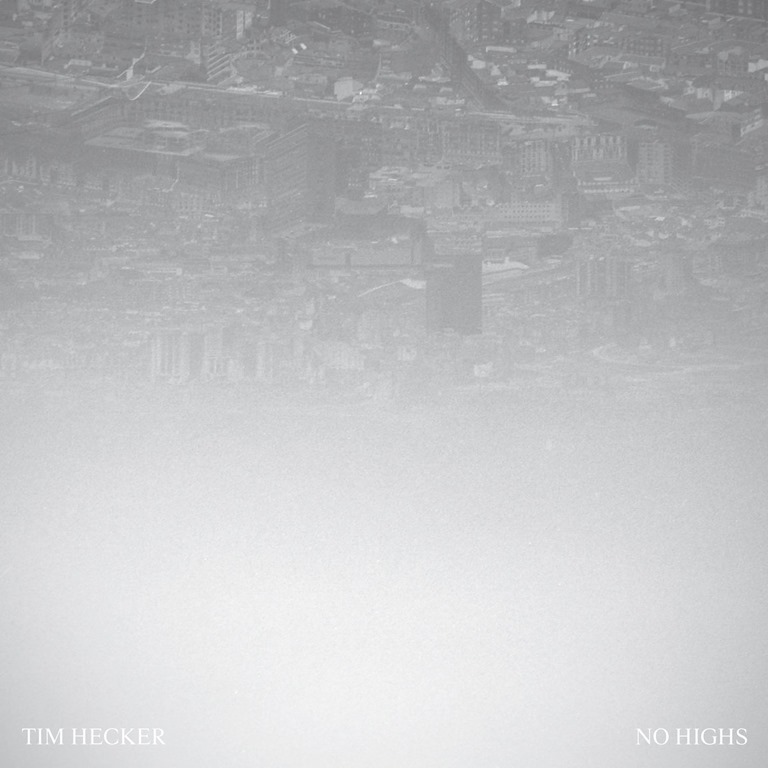
I had been warned. A fellow reviewer who received this before me had said that this album had made him feel ‘unwell’. It was a compliment, of course. This comes as little surprise: Tim Hecker is an artist capable of creating the most intense and all-encompassing experiences, and while the live performance I attended in 2014 may not have made me feel ill, it did make me feel pretty weird, detached, disorientated. As the only artist I have ever known to use more smoke than The Sisters of Mercy and Sunn O))) combined, filling the room to the extent that it was impossible see your own hand in front of your face, let alone the person next to you, Hecker made me feel uncomfortable, and in some way a little scared in a claustrophobic way.

I’ve had a few records which have had a physical effect on me: listening to PJ Harvey’s Rid of Me for the first time with a brutal hangover is one standout experience, its raw and up-front lurching guitars punching my head and stomach simultaneously with puke-inducing results which went far beyond the post-booze discomfort. Because listening to music is not a passive activity, and as well as requiring focus, it would seem also degree of compassion – you feel its force physically as well as psychologically.

The notes which accompany Tim Hecker’s latest album are bold, to say the least, describing the Canadian composer as ‘a beacon of unease against the deluge of false positive capitalist ambient currently in vogue’ and continues, ‘Whether taken as warning or promise, No Highs delivers – this is music of austerity and ambiguity, purgatorial and seasick. A jagged anti-relaxant for our medicated age, rough-hewn and undefined.’

Clearly, this is exactly what I need, having felt tense and on edge, unable to catch my breath properly for several days now. If the album’s title sets the initial expectation, the track titles reinforce the album’s mood: ‘Monotony’; Pulse Depression’; ‘Anxiety’; ‘In Your Mind’; ‘Total Garbage’ – all the shades of dark, of bleak, of miserable, of self-questioning, panic.

The aforementioned ‘Monotony’ pings a single note back and forth for almost eight and a half minutes. Drones build sonorously behind it and swarm the mind as the volume grows and then shrinks again, and the buzzing and extranea become siren-like. And so, there is movement behind the tedious repetition, but it’s tense and unsettling. Moments of levity which appear to suggest tranquillity is within reach prove to offer nothing but false hope as we’re soon plunged into the gloaming, or otherwise into glitchy, lurching passages of unease. Soft sounds which ought to be mellow and soothing are rendered uncomfortable, or mournful, or both.

‘Lotus Light’ initially intimates a Krautrock pulsation, but some bending frequencies and melting notes swiftly take this trip on a rapid descent. If the lotus flower is supposed to signify rebirth and enlightenment, then this is one which is wilting, poisoned, and if eating the lotus is supposed to provide a conduit to pleasure, this is the soundtrack to picking the wrong plant, as everything rushes forward too fast and you’re not in control. You don’t feel right: you feel drugged, delirious.

‘In Your Mind’ picks and stabs away with tempo changes galore, surging and sweeping this way and that, echoing reverberations around the cranial cavities before booming stabs of synth blast through the drifting haze, before ‘Monotony II’ returns like a waking memory of a traumatic dream from the night before. The trilling saxophone does nothing to calm the mind or the mood. And over the course of more than eight minutes, ‘Anxiety’ recreates the experience if that increasing heartrate and the clenching of every muscle perfectly. That is to say, it’s brilliant, and also brilliantly difficult, and potentially triggering to some. The flickering, fluttering electronic throbs are practically Jean Michelle Jarre reimagined as a fibrillation.

No Highs is a difficult album, but how difficult depends on our headspace: from a certain perspective, it’s a cinematic electronic set, but from various others it’s the soundtrack to being unable to settle, to relentless tension, to jitters and fretting, and worse. The notes oscillate and you clench; sudden spurts of sound burst and you jump momentarily., before ‘Sense Suppression’ pulls you down, slowly, into a sea of sound, before the album drifts away to nothing on the drifting tides of ‘Living Spa Water’.

No Highs is sad and dark and deeply affecting, and not necessarily in the ways you’d expect. Listen and share the suffering.

AA

a2157297652_10

This is it Forever – 25th March 2022

Christopher Nosnibor

There are many artists who can boast bodies of work that are solid, and illuminated by outstanding gems along the way, but there are few artists with bosies of work as consistent as worriedaboutsatan. Fifteen years into the project’s existence, that’s a significant achievement. Some artists go off the boil or seem to struggle with maintaining that level once they achieve a certain degree of success, whether it’s simply through a perceived pressure to deliver something or create something that will replicate whatever it was that achieved that success, or simply diminishing returns, but worriedaboutsatan, despite having tracks featured on Coronation Street and Adam Curtis’ Hypernormalisation documentary, not to mention radio play on both 6Music and Radio 1, and the very vocal support of one Ian Rankin, remain unstinting in their path.

Operating solo since 2019, Gavin Miller has maintained a constant flow of output: so constant that since Providence last May, Miller’s slipped out a brace of album-length single track releases (Circles I and Circles II) and an EP Live from the Studio that entirely bypassed me while I was, well, I don’t know, what was I doing?

The thing about consistency is that it absolutely does not equate to sameness, and worriedaboutsatan’s output is defined by its evolution, incorporating wide-ranging stylistic elements from delicate post-rock to pounding beats within the overall sphere of haunting, reflective ambience of varying shades of darkness and light. And while satan’s sounds exist in a rarefied space all of their own, no-one lives in a complete bubble. We live in dark times, and not insensitive to this, this latest offering finds Gavin channelling that global turbulence through his work.

Bloodsport promises a departure, and it delivers. Miller describes it as ‘still very much a worriedaboutsatan album, albeit a fairly angry one.’ It’s a fair summary. The intro piece, ‘Je Suis Désolé’ is a classically ‘electronic’ composition with oscillating waves cutting across one another, but the treble tones sound like sharpening knives, and it has an edge that scrapes at the skull quite unexpectedly.

Making a linguistic and stylistic switch, ‘Bis Ich Komme’ is slow and dubby, a dense bass and backed-off beats holding the structure of a drifting ambience, before it solidifies and hardens around the mid-point. There’s a tension, a simmering aggression in the tone of the barbed synths, something uncomfortable and uncertain in the samples, before jungle beats hammer through the woozy, stomach-clenching undulations like machine gun fire

Released ahead of the album as an EP with three remixes, ‘Sigourney Weaver Fanclub President’ is the theoretical lead single, and it’s a brooding eight-and-a-half minutes of echoes guitar sustain and crashing sheet metal. It’s the sound of shattering destruction and trepidation. It’s classic ‘satan in that it’s all the layers, all the atmosphere, but it’s also steelier, with a certain bite previously unheard.

The two parts of the centrepiece, ‘An Absolute Living Hell’ are definitive and are a statement in themselves. Dark, dank, oppressive, bass-heavy and bursting with shards of extraneous noise, rippling in deep, deep echo, this diptych is the soundtrack to this bleak moment in time. ‘Part 2’ goes full industrial with a throbbing bass and crashing percussion worthy of Test Dept or Neubauten.

The stark robotix of the brief but claustrophobic ‘Perfekt’ makes for possibly the least WAS-like track of their career, before the metronomic thud of ‘Slur They Words’, dives headlong into the territory darkest hi-hop: the origins of the vocals are unclear, but they’re abrasive, and ‘Apex Redditor’ draws the curtain in a bleak fashion, but with a redemptive hint of a rippling piano and twitchy percussion that – I hope – alludes the prospect of a new dawn. Because surely, surely, there has to be a light at the end of this tunnel.

AA

a2575977490_10

4th September 2019

There are two ways of going about reviewing albums: the easy way and the hard way. The easy way is to crib to the max from the press release, paint yourself as an expert on every artist however obscure they may be, while making on-point comparisons suggested by the band and their PR. The hard way is to ignore all that, listen painstakingly and go out on a limb on your opinions based purely on instinct and past experience. The hard way is to appreciate that however much you yearn to wrote objective reviews, no-one ever responds to music in a purely objective way, and reviews which take a truly objective stance are incredibly tedious to read – and to write for that matter.

So I know nothing about Kristeen Young, and expect that the cover art doesn’t really convey much of what she or her music is about. Then again, expectations exist to be confounded, and while The SubSet isn’t about goth dressmaking, the somewhat baffling choice of image is in keeping with Young’s quirky style.

‘Less Than’ crashes in by way of a starter with everything all at once: Eastern-inspired grooves collide against electronic bleepery while her vocals allude to Kate Bush in their delivery – and that’s a defining feature as she squeaks and soars her way through the album’s ten tracks. It’s an effective style that’s well-suited to the music.

Experimentalism is a prominent factor on The SubSet, and the fact there are hit-and-miss elements are par for the course and in no way detract from the overall experience: ‘Everyday Subtraction’ begins as a rather mediocre mid-pace dance cut, but steps up the drama as Young shifts her vocals unexpectedly into full-on operatic mode, while ‘In 3rd Grade’ is a tense, driving electropop shoegaze effort that throws in nods to early Garbage (back when they were exciting), before playing out on a delicate piano and soft, subtle bass and a sudden, unexpected burst of noise. When I say ‘hit and miss’, there really isn’t much miss: it’s just that some moments are more striking and distinctive than others, and Young strikes what’s probably an appropriate balance between weird and accessible to afford herself the potential of a wider audience.

‘Pretty Twogether’ is vintage electropop with a warping twist and some extraneous noise, propelled by glitchy percussion, while ‘Marine Combo Dadd’ is a semi acappella shanty with dreamy, psychedelic overtones, and it sounds incongruous, that’s because it is: once gets the impression Kristeen Young revels in creating moments of uncanniness, of oddness that are only a fraction removed from the familiar, but far enough to sit just the little bit uncomfortably. It’s a strength she works to, and well.

If The SubSet is a wildly unpredictable affair, it’s all the better for it.

AA

999434