Posts Tagged ‘Teleost’

Christopher Nosnibor

It’s a cold and very wet Thursday night in December. The kind of night that would validate the narrative that music venues go bust because they’re not supported, and people want to see bands they know over local acts and so on – if the place had been quiet. But there’s nothing quiet about tonight., in terms of turnout or decibels. Ok, it’s not rammed, but it’s respectably busy, and as for the volume… These guys take it all the way to eleven.

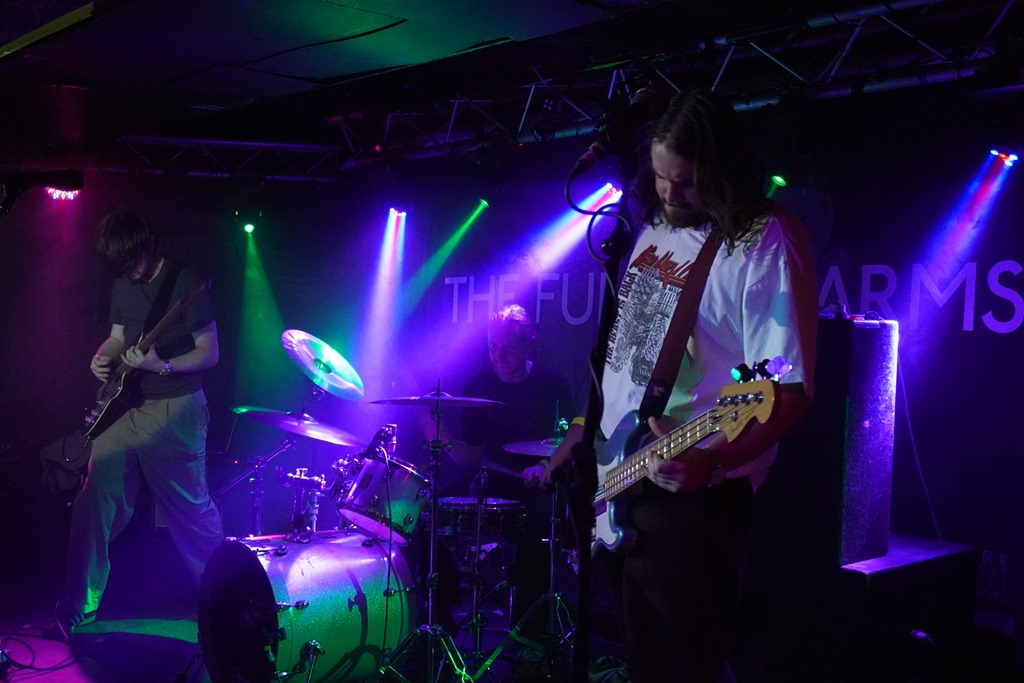
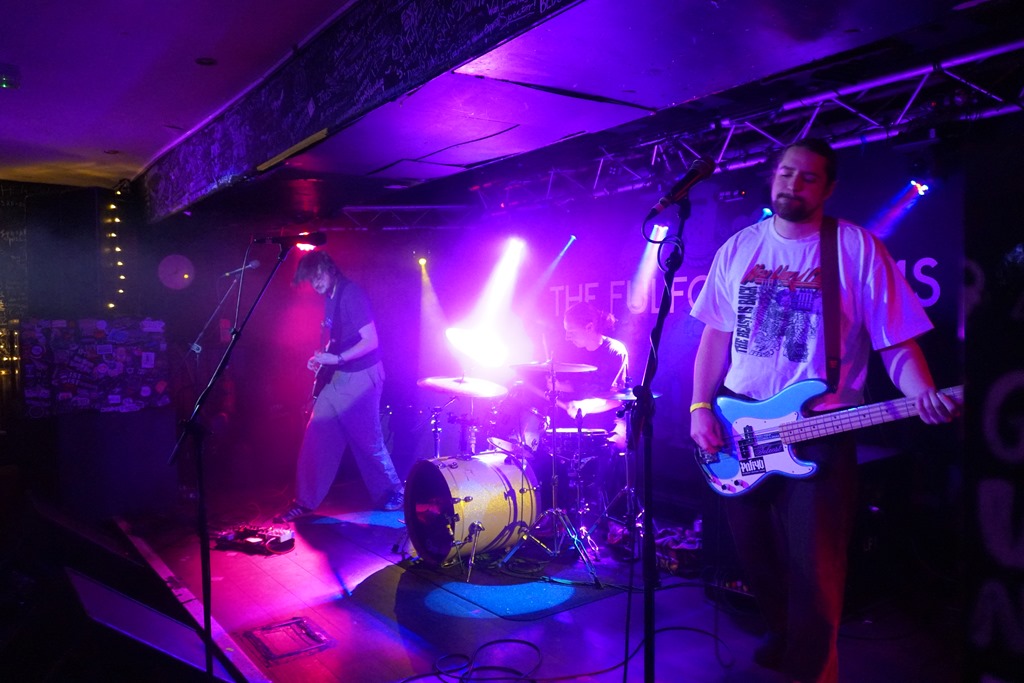
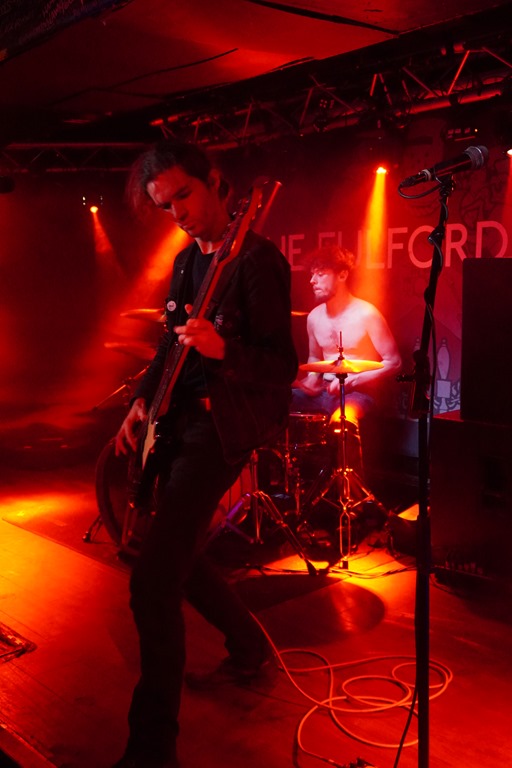
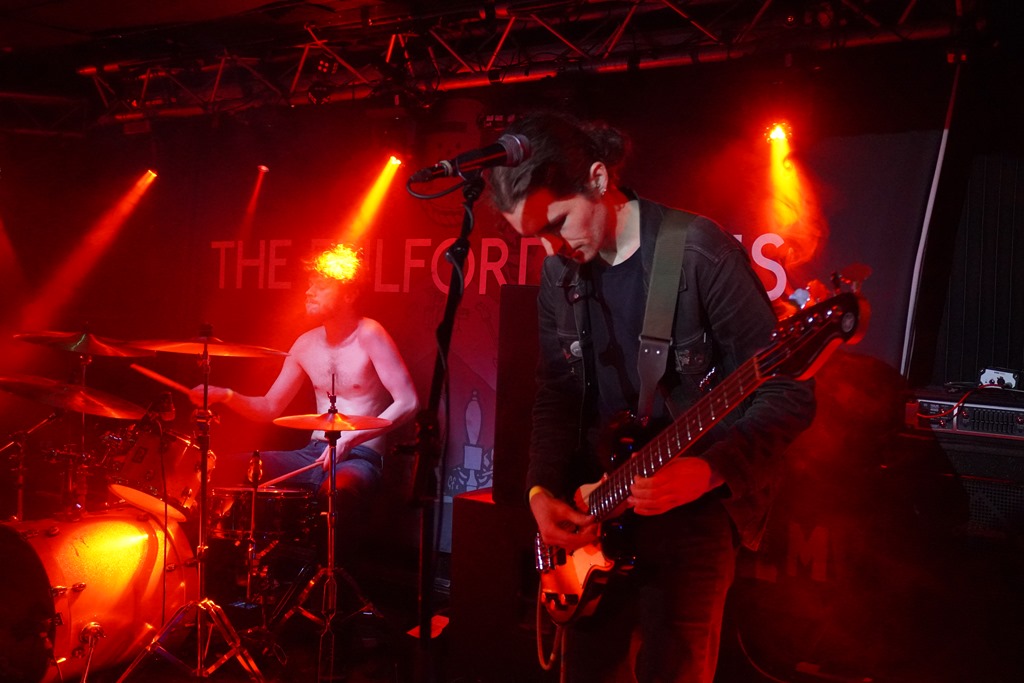
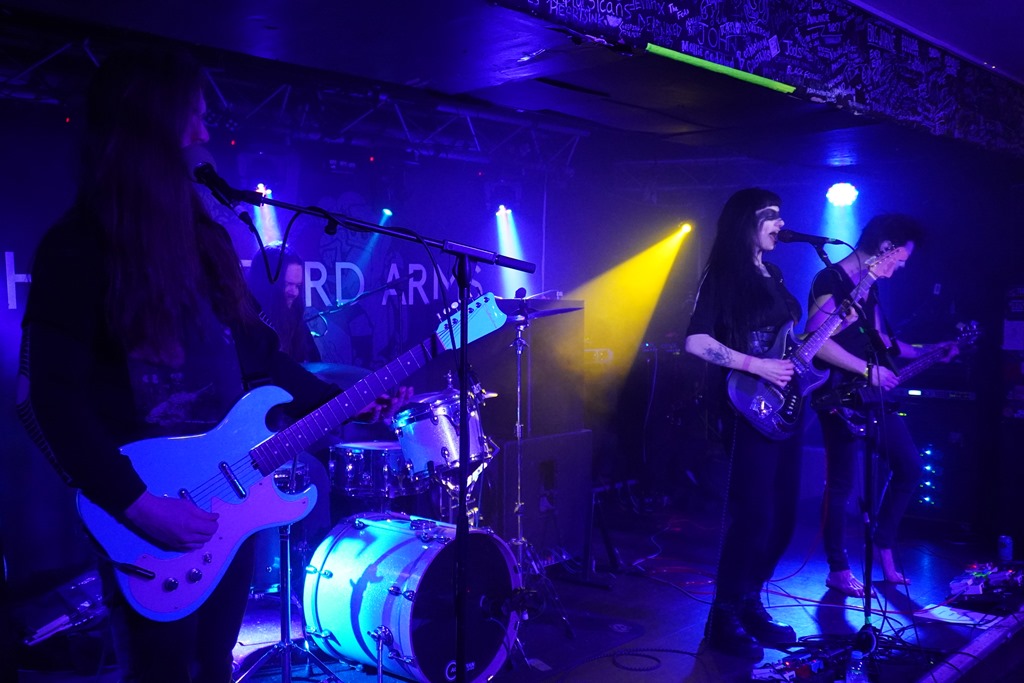
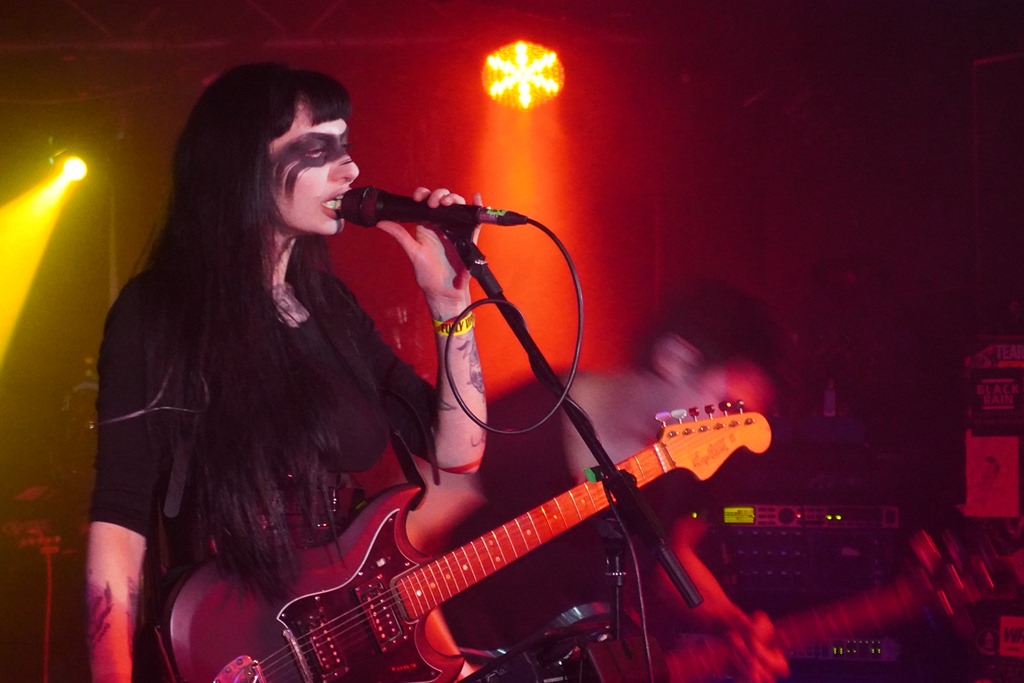
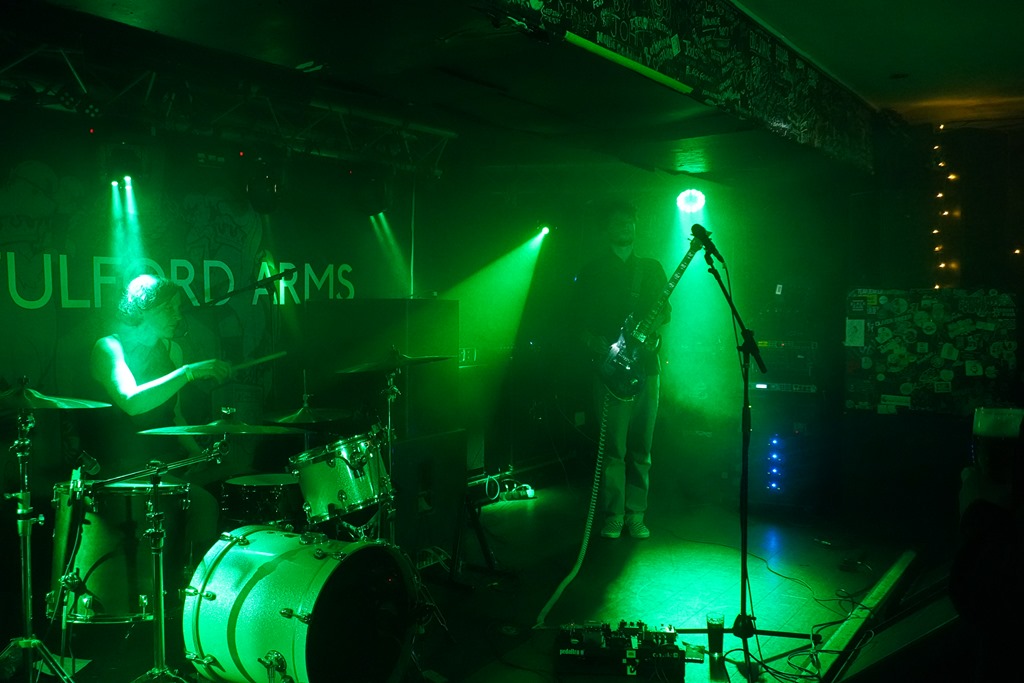
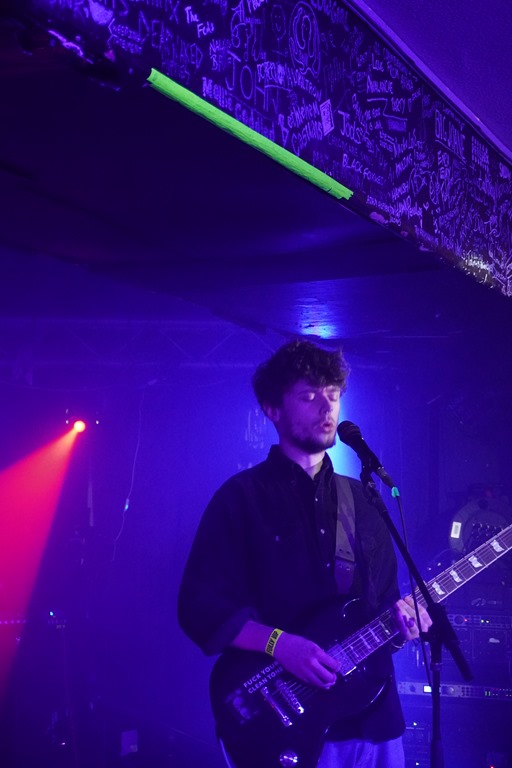
The promoter’s strategy of booking a local / student / uni band to open up is one that rarely fails, and there’s a significant turnout early doors for ATKRTV. It helps that they’re good, albeit an acquired taste and not your average uni band. Operating in the classic power trio format, their primary inspirations are clearly US noise rock and grunge – there’s a bit of the Jesus Lizard here, a dash of Sonic Youth and Shellac there – as well as UK 90s noise that makes nods to the likes of Fudge Tunnel and Terminal Cheesecake – but there’s a lot going on, with hints of avant jazz in the blend, too. They’re a bit rough round the edges, but there is a musical style which is forgiving of this, and the jagged jarring juxtapositions of squalling guitar work with some meaty bass work evidences a technical ability beneath the surface of the feedback-strewn tempest. And while the banter might need some work, the songs are a glorious angular explosive racket, and they give them a hundred percent. And this is why it’s always worth getting down early doors. Every headliner was a support act once, after all.

DSC05224DSC05185

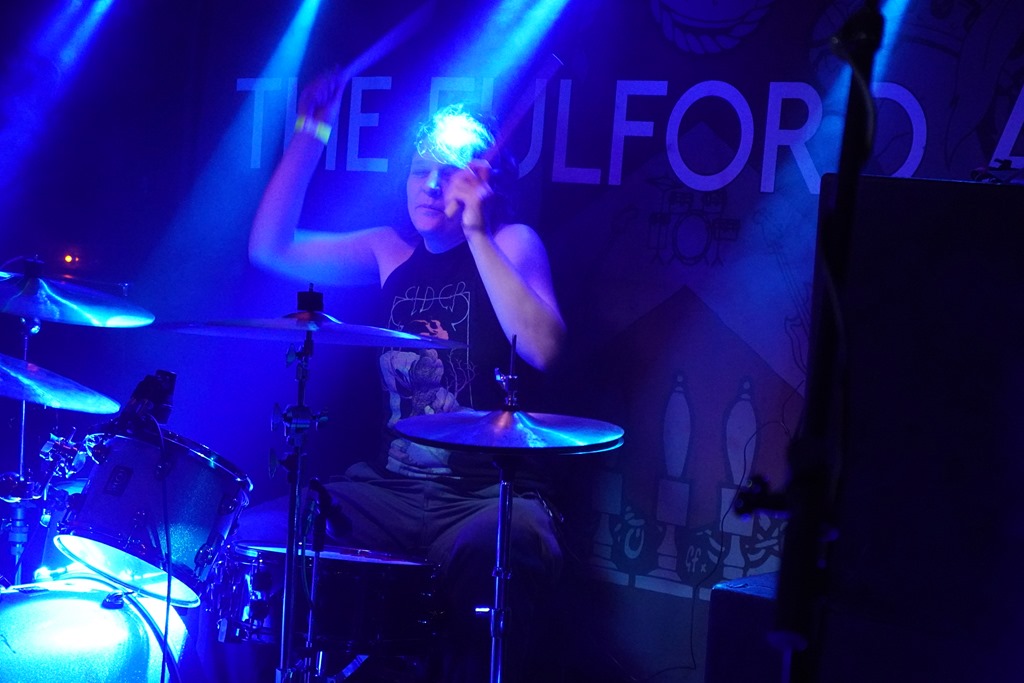
In my recent review of that debut album, Atavism, I commented on how the challenge would be for them to replicate the live sound in the studio. This is because their life sound is simply immense. There really is no other word for it. And this is not volume simply for the sake of it: this is volume as an expression, volume which renders the music physical, volume without which certain frequencies and tonalities, so integral to their sound, would not be achievable. Their performance in this same venue back in February was spellbinding, and I came tonight in the hope of replicating that experience. And oh yes, I did, and then some: Teleost seemed to take things to the next next level tonight.

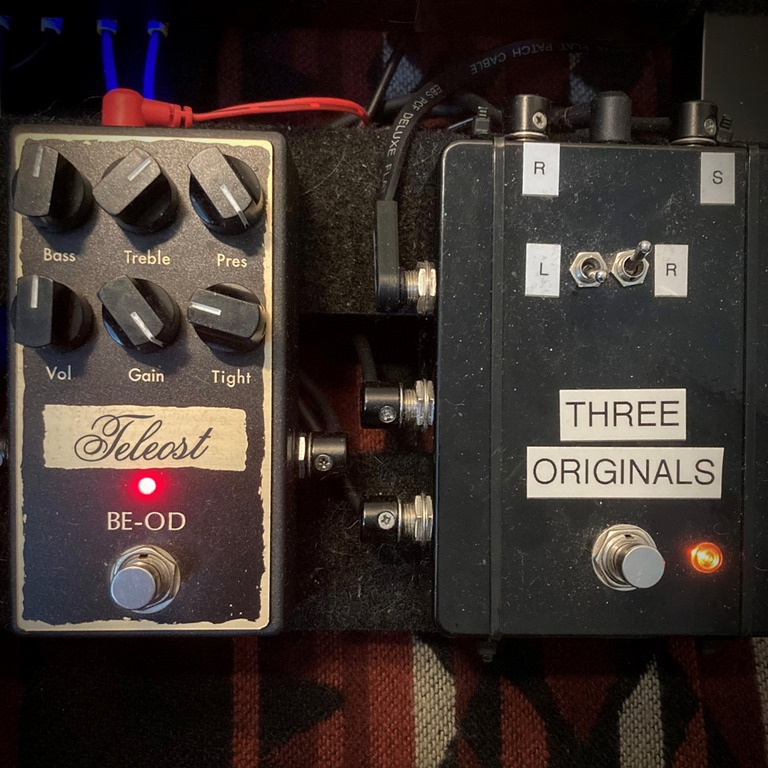
Theirs is a subtly different take on the whole droning doom / stoner form, incorporating almost folky elements in the way that more recent Earth albums do. And instead of being solely about bludgeoning riffery – and hell, there’s plenty of that – there’s a rare attention to detail, not just in the delicate picking and soft cymbal splashes in the quieter moments, but in the full-spectrum sonic experience they conjure. And yes, conjure is the word: this is a world of magic made with a mystical blend of musicianship, amps, pedals, and something else quite indefinable. The way Leo Hancill uses a standard guitar, played through a substantial but not extravagant pedal set and two amps, to cover the range of both guitar and bass is spectacular in itself, but what really makes their sound unique, and it’s so easy to lose yourself in the timbre and texture, the way the sounds reverberate against one another to create this sensurround experience.

DSC05272DSC05244DSC05267

Teleost

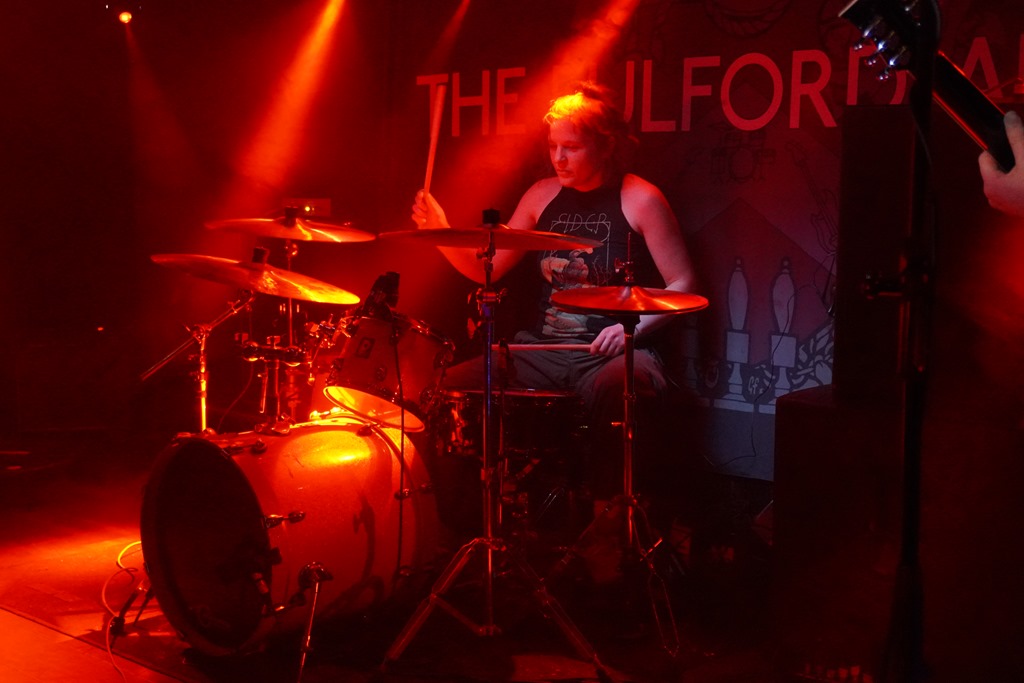
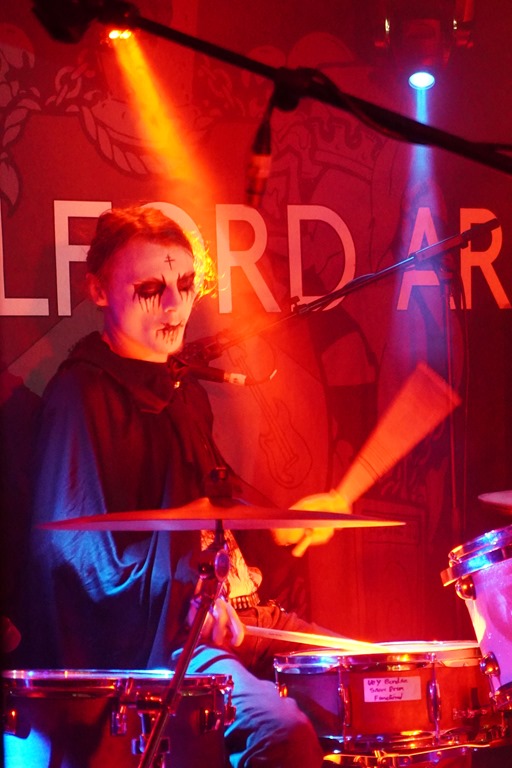
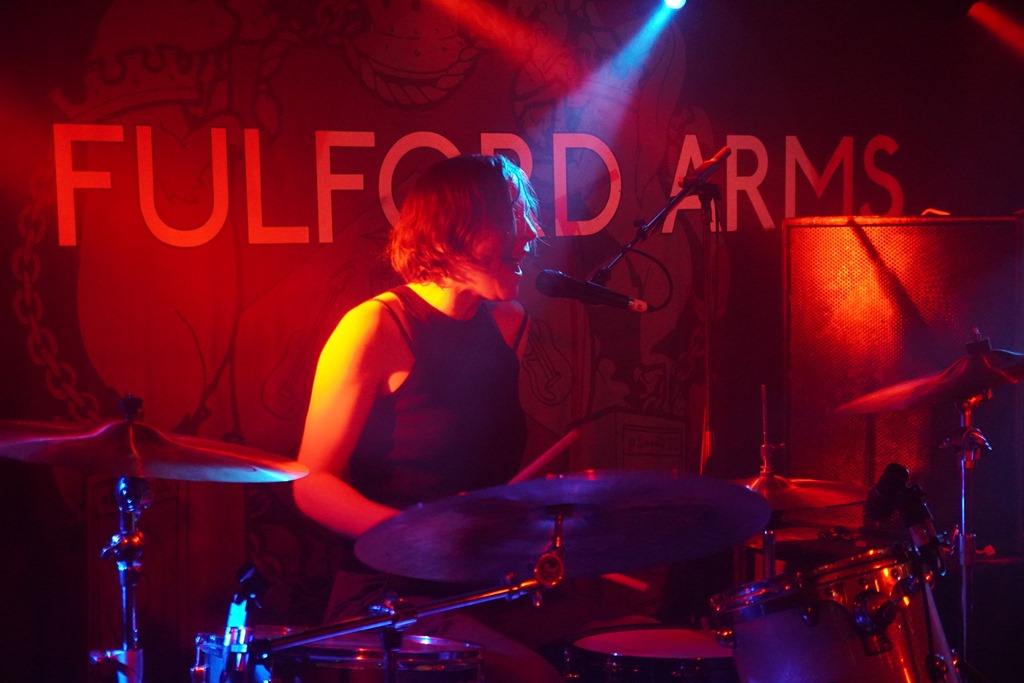
Once again, I find myself truly mesmerised by Cat Redfern’s ultra slow drumming. What’s most remarkable is how effortless she makes it appear. Granted, her sticks are batons, but she is still an immensely hard hitter please with absolute precision. Yet she plays with an order of serenity, her expression calm, almost a smile, although it’s clear that’s behind this is intense concentration, and perhaps an element of telepathy between herself and Leo. Certainly the intuition between pair is remarkable, and no amount of rehearsal alone can achieve this level of tightness. The way they navigate the peaks and troughs, spinning elongated quiet passages, where they reduce everything to a hushed hum and the tinkle of a cymbal before bringing in a cataclysmic riff with pinhead precision is nothing short of phenomenal. And for all the noise, the experience is remarkably calming.

Before Teleost, there was PAK40. But with basis / vocalist Andy Glen now resident in Germany, and Leo Hancill living in Glasgow, activity from this former York duo is now extremely rare. That they’re touring with Teleost, having released a new EP simultaneous with the Teleost album makes economical sense, but also represents a significant feat of co-ordination.

It’s not difficult to identify the origins of Teleost when listening to pack 40. They’re certainly slow and heavy. But their style draws more overtly on the Sabbath-based doom sludge template, and there much more overtly metal. In places, they present a sort of blackened New Age metal hybrid. There’s also something more direct about their drum / bass combination. But oh, that bass. The thick, tearing distortion when the riffs kick in are agonisingly close to brown note territory: you feel your ribs rattle and your skin quivering.

In contrast to Cat Redfern’s zen drumming, Leo drums with his face, and in contrast to Hanclil’s slow nodding guitar style, Andy Glen goes all out with some unrestrained headbanging as he unleashes the most pulverising bass riffs. PAK40 are harder, and more abrasive. And this is why the double-header works: for all of their similarities, the two bands bring different shades of heavy. And they’re both intense, physical forces.

DSC05300DSC05280

PAK40

I babble some shit to people on the way out. I think I got away with it, because everyone is equally dazed. We’ve been blitzed, blown out of our minds and shaken out of our skins tonight by a musical experience that borders on transcendental. It’s a cut above your average wet Thursday night in December, for sure.

1st December 2025

Christopher Nosnibor

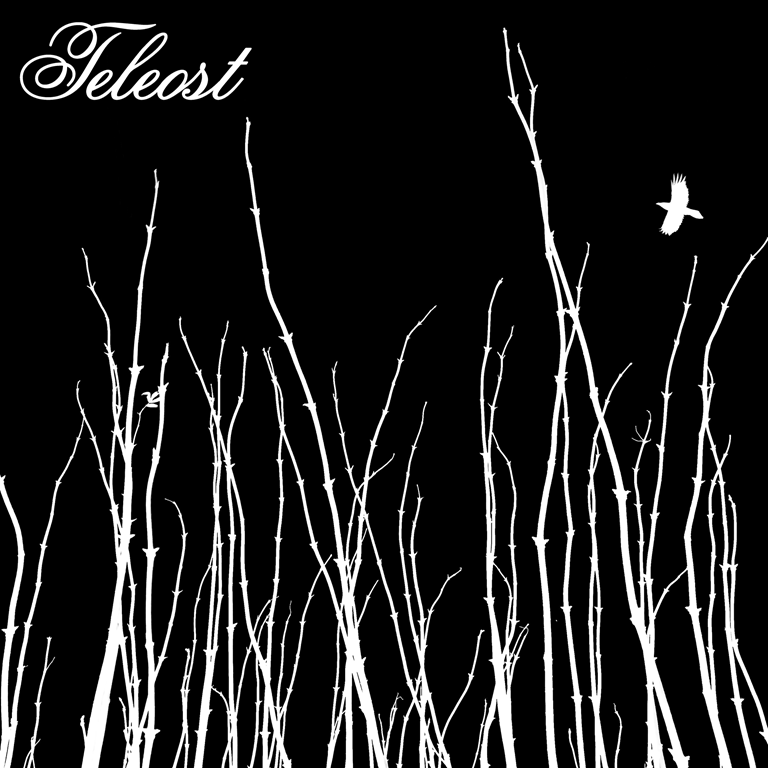
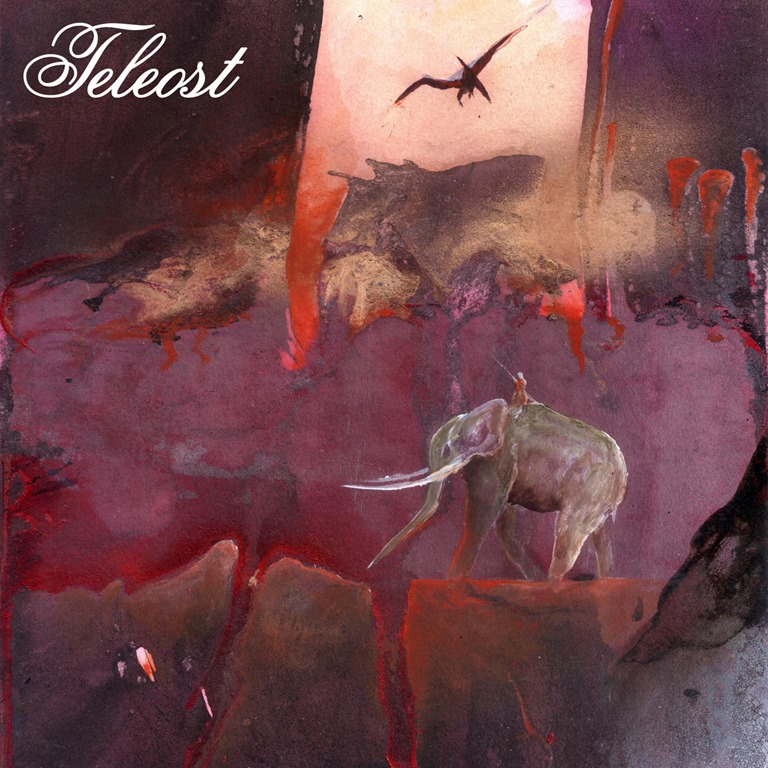
Since relocating to Glasgow, Teleost have been forging ahead, first with the release of the Three Originals EP at the start of the year, and now, bookending 2025 – which has seen the duo venturing out live more often – with their full-length debut. And it’s definitely got length: five tracks spanning a full fifty minutes. But it’s got girth, too. Atavism is everything they promised from their early shows – amplified. In every way. With five tracks, and a running time of some fifty minutes, Teleost have really explored the epic space they conjure with their monolithic, crawling riffery, pushing out further than ever before – and with more gear than ever before.

Despite there only being two of them, you have to wonder how they fit all that kit into a studio, let alone a van. They’re not quite at the point of Stephen O’Malley – who had to play to the edge of the stage at the Brudenell when playing solo in Leeds some years ago because the backline barely fit – but at the rate they’re amassing equipment, it’s probably only a matter of time. But this isn’t the accumulation of stuff for the sake of it: this is a band obsessed with perfecting its sound, and then going beyond and taking it to the next level. Volume is integral to that, in the way that it is for Sunn O))) and Swans – and again, not for its own sake, but for the purpose of rendering the sound a physical, multisensory experience. And also because volume facilitates the creation of tones and frequencies simply not possible at lower volumes.

The challenge for any band who rely on these quite specific conditions live is to recreate not only the sound, but the sensory experience, the full impact, when recorded. Recording compresses, diminishes, boxes in and packages something immense, compacting it to something… contained, confined, in a way that a live show simply isn’t. Live, there is movement, there is the air displaced from the speakers, there are vibrations, there is an immediacy and margin for error, all of which are absent from that ‘definitive’ documented version.

‘Volcano’ conjures atmosphere in spades, a whistling wind and tinkling cymbals delicately hover around a softly-picked intro, before a minute or so in, BAM! The pedals go on and the riff lands, and hard – as do the drums. Slow, deliberate, atomic detonations which punctuate the laval sludge of the guitar, which brings enough low-end distortion to bury an entire empire. The vocals are way down in the mix and bathed in reverb, becoming another instrument rather than a focal point. The pulverizing weight suddenly takes an explosive turn for the heavier around the mid-point, and you begin to fear for your speakers. How is this even possible? They do pair it back in the final minutes, and venture into the earthy, atmospheric, timbre-led meanderings of Neurosis. By way of an opening, this twelve minute track is beyond monumental.

They may have accelerated their work rate, but certainly not the tempos of their tunes: ‘Bari’ – which may or may not hark back to the band’s genesis, when they performed as Uncle Bari – rides in on a wall of feedback and then grinds low and slow. They really take their time here, with ten full minutes of jarring, jolting riffery that’s as dense as osmium. Turn it u and you can feel the hairs in your ears quiver and your cells begin to vibrate.

Where Teleost stand apart from other purveyors of slow, droning doom is in their attention to those textures which are grainy, thick, and each chord stroke hits like a tsunami making land reach, a full body blow that almost knocks you off your feet.

But for all of the annihilative volume and organ-bursting weight, Atavism is not an angry or remotely violent record: these are compositions concerned with a transcendent escape, and this is nowhere more apparent than on the mid-album mellow-out, ‘Life’, which offers strong parallels to more recent Earth releases. A slow, hypnotic guitar motif is carried by rolling cymbal-dominated drums. I find myself yawning, not through boredom, but relaxation – until four and a half minutes in when they bring the noise once more, and do so with the most devastating force.

AA

Penultimate track, ‘Djinn’ is contemplative, reflective at first and then goes on an all-out blow-out, seemingly more intense and more explosive than anything before it. While growling droning rumbling is the album’s defining feature, there does very much feel like there’s an arc of growing intensity over its course. Here, the vocals feel more skywardly-tilted, more uplifting in their aim to escape from the planet, and closer, ‘Canyon’ returns to the mesmeric, slow-creeping Earth-like explorations before slamming all the needles into the red. The result is twelve minutes of magnificent calm juxtaposed with earth-shattering riff heaven.

The fidelity is fantastic, the perfect realisation of their head-blastingly huge live sound captured. The chug and trudge cuts through with a ribcage-rattling density, and there is nothing else but this in your head. You mind is empty, all other thought blown away. It’s a perfect escape. And this is – at least in its field – a perfect album.

AA

a0002754035_10

3rd January 2025

Christopher Nosnibor

Only the middle of March and I’m running behind on releases, so my apologies to Teleost for letting this one slip down the pile, especially as I’d been looking forward to it for some time. Even their earliest live shows, Before rebranding as Teleost, the duo, consisting of Leo Hancill and Cat Redfern, showed a rare musical chemistry, resulting in music of huge, immersive power. Recent shows, such as their recent York homecoming show with Cwfen, demonstrated that they have reached a whole other level of almost transcendental drone, a place where sound becomes a physical force.

But the challenge for any band who are so strong as a live unit, is how successfully can that be translated via the record medium. To commit the sound to tape – or digital recording – is in some way to compress and contain it, to reduce it to two – or even one – dimension. A recording is essentially a listening experience, without the visual element, without the klick drum or the low frequences vibrating your ribs, and all of the other stuff. So how have Teleost faced up to that challenge? Remarkably well. No doubt recording the guitar and drums live has helped retain the huge sound of the live experience. No slickening, studio polishing, just that huge sound caught in real-time, and Pedro at The Audio Lounge in Glasgow has done a remarkable job, clearly understanding what the band are about.

Three Originals opens with the ponderous grind of ‘Forget’, where a sustained whistle of reverby feedback is rapidly consumed by the first thick, sludgy chord: the distortion is speaker-decimatingly dense, and there’s so much low-end you feel it in the lower colon. It’s pure Sunn O))), of course, but then the ultra-heavy drums crash in and the vocals start… Hancill’s approach to singing is very much about rendering his voice an additional instrument rather than the focal point, and the elongated enunciations convey an almost abstractly spiritual sensation.

The first time I saw Earth was following their return with Angels of Darkness, Demons of Light I, and I spent the entire show completely hypnotised by Adrienne Davies’ slow drumming. It was an experience I shall never forget: it was if time slowed down, and empires could rise and fall between each beat. I haven’t experienced anything similar since, until Teleost. And once you’ve had such a powerful visual experience in a musical context, it’s not only impossible to forget it, but it becomes integrated with hearing the band. And so it is that on listening to Three Originals, I find myself reliving that experience. It’s clear where Teleost draw their influences, but in amalgamating that low, slow drone of Sunn O))) with the more nuanced, tectonic crawling groove of latter-day Earth, they offer something that is distinct and different.

The seven-and-a-half-minute ‘Ether’ blasts in and the sheer density of that guitar is pulverizing. It simply does not sound like two people, let alone that it’s one guitar and no bass. There’s a delicate mid-section consisting of a clean guitar break before the landslide of distortion hits once more. Final track, ‘Throwaway’ is anything but, another sprawling, seven-minute monster dominated by gut-churning sludge and yawning yelps of feedback, while the vocals drift plaintively in the background.

Three Originals is without doubt their strongest work to date, my only complaint being that it simply isn’t long enough. But then, if each track was fifteen minutes long, it still wouldn’t be. In the field of doomy droney heaviosity, Three Originals is in a league of its own.

AA

a1823302603_10

Christopher Nosnibor

On arrival, it looks like Nu Jorvik have pulled and been replaced by Makhlon, and at somewhat short notice, but it’s hard to grumble when you’ve got three heavy bands for six measly quid and the headliners are guaranteed to be worth double that on their own.

There’s lots of leather, studs, long coats, and long hair in the gathered crowd, it turns out those sporting corpse paint – perhaps not entirely surprisingly – belong to the first band who are straight-up black metal.

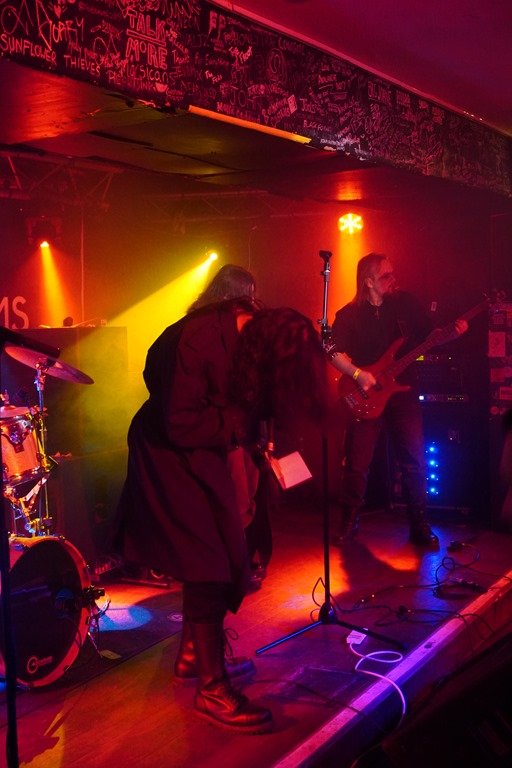
Makhlon’s singer has Neil from The Young Ones vibes. He’s about 7ft tall and wearing a Lordi T-shirt, but snarls full-on Satanic rasping vocals from behind his nicely-washed jet-black hair. The lead guitarist and front man swap roles for the last two songs – both of which are epic in scope, with some nice tempo changes, and they really step up the fury. It’s quite amusing to see him clutching a notebook in the arm which is thrust forward and enwrapped in a spike-covered vambrace, and checking the lyrics, as if it’s possible to decipher a single syllable. But this is all good: time was when York was wall-to-wall indie, folk, and Americana. Now… now we have homegrown acts like this, and the thing with black metal is that it only works when the band and its members are one hundred percent committed to the cause. These guys are, and while they may be fairly new, they’re tight, they can really play, and they give it everything.

DSC00987DSC00992DSC00999

Makhlon

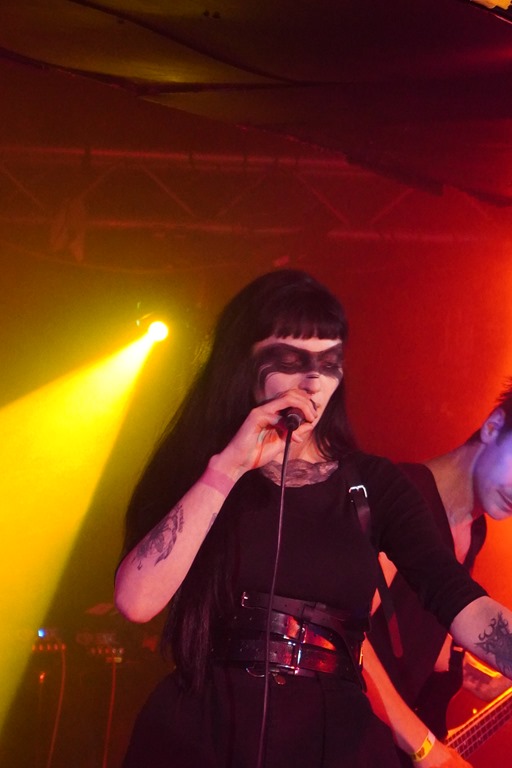
Cwfen – pronounced ‘Coven’ – aren’t Welsh, but in fact Scottish, and this is their first trip south of the border. It seems that since relocating to Glasgow, Teleost have been making some good friends. And Cwfyn are good alright… Woah, yes, they’re good. They are heavy, so heavy, as well as melodic but also ferocious. There’s a lot going on, all held together by a supremely dense bass. The ‘occult metal four- piece’ may be the coming together of artists who’ve been around a few years, but the fact they’ve only been playing as a unit for a couple of years is remarkable, as they really have everything nailed. They’re both visually and sonically compelling: Siobhan’s fierce presence provides an obvious focal point, but the way everything melds instrumentally is breathtaking. The third song in their five-song set slows things, and brings some nice reverb and chorus textures. Piling into the penultimate song, the crushing ‘Penance’, which features on their debut release, they sound absolutely fucking immense. The closer, the slow-burning, slightly gothy ‘Embers’ is truly epic. With their debut album in the pipeline, this is a band to get excited about.

DSC01013DSC01026DSC01029

Cwfen

I’m already excited about Teleost, and the fact that there’s such a turnout on a cold Thursday night says the people of York are extremely pleased to welcome them home. Having knocked about in various bands / projects previously, with Cat Redfern fronting Redfyrn on guitar and vocals, before pairing with Leo Hancill to form Uncle Bari, who would mutate into the ultimate riff-monster that is Teleost, they departed for Glasgow, leaving a uniquely Teleost-shaped hole at the heavier end of the scene.

Absence not only makes the heart grow fonder, but it’s apparent they’ve spent their time getting even more immense since they left.

DSC01042DSC01067DSC01072

Teleost

They’re a band to watch with your eyes closed. Not because they aren’t good to watch, but because their sound is so immersive. Teleost have perfected that Earth-like tectonic crawl. Imagine Earth 2 with drums and vocals. Or, perhaps, Sunn O)))’s Life Metal with percussion. Each chord hangs for an entire orbit, the drums crash at a tidal pace, and with oceanic, crushing weight. Somehow, Leo Hancil’s guitar sounds like three guitars and a bass, and it looks like he’s actually running through two or even three separate cabs. It’s not quite Stephen O’Malley’s backline, but it’s substantial. And you’re never going to get a sound like that just going through a 15-watt amp, however you mic it up. They play low and slow, and Cat plays with drumsticks as thick as rounders bats, yielding a truly thunderous drum sound. In fact, to open your eyes is to reveal a mesmerising spectacle: two musicians playing with intense focus and a rare intuition, and Redfern’s slow, deliberate drumming is phenomenal, and the whole experience is completely hypnotic. They play over the scheduled time, and then, by popular demand, treat us to an encore with an as-yet-unreleased song. Everyone is absolutely rooted to the spot, currents of sound buffeting around us.

Teleost’s influences may be obvious, but they’re at the point where they’re every bit as good as their forebears. The future is theirs. But tonight is ours. We can only hope they visit again soon.