Posts Tagged ‘Single Review’

Icons Creating Evil Art – 4th August 2023

Christopher Nosnibor

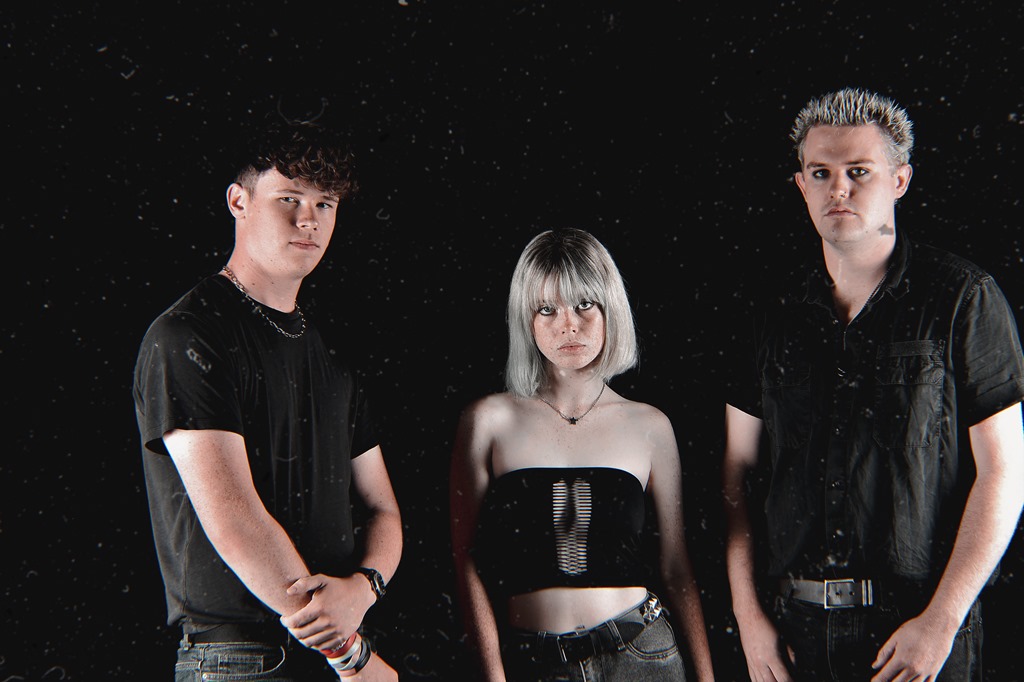
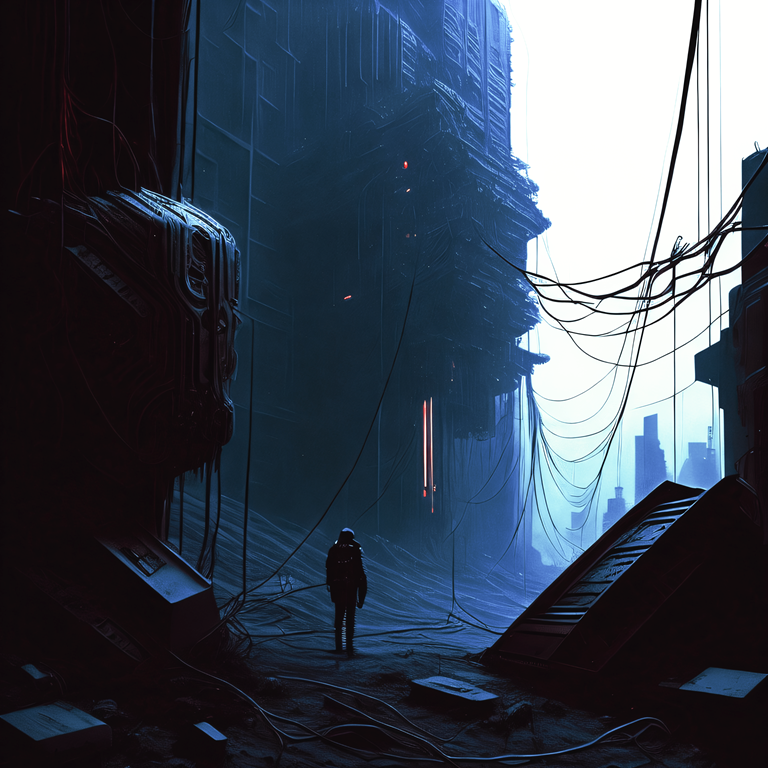
The third single from Swedish act Darkplace is their first to feature vocals, and is not a cover of the Gary Numan hit.

The band are described as ‘a mysterious new Swedish dark dream pop/post-punk group whose forthcoming debut album, About The End Of The World, is a conceptual work inspired by the bleak landscape of the Stockholm suburbs that birthed them.’ They go on to say ‘for the members of this highly secretive group, it is not just about the music. They perceive themselves as more an art project that happens to be exploring and commenting on the state of the world through their chosen mediums of music and video.’

Is a band mysterious if they tell you they are, or does that undermine the mystery? Surely a lack of disclosure is mysterious in itself? If I’m overthinking, it’s almost certainly a consequence of their overexplaining, although I am entirely on board with the idea of an act taking their art seriously to the point of fully inhabiting that space. When it comes to concept-based creations, you have to fully believe in it, otherwise, how can you expect anyone else to?

When it comes to Darkplace, context counts for a great deal, and to provide this, I shall quote liberally here: ‘Centred around an alternative reality – or is it just a grim present and future? – the album is being unveiled gradually via a series of videos based on animated digital paintings for each of its tracks… Their new single, ‘Cars’ […] sees the story move on to a man who travels north following cryptic messages written on highway signs that only show up in the blast of his headlights. Is he the only person who can see them and follow the trail? Darkplace cryptically state that “trying to escape this psychotic, slow burning apocalypse is not easy. Nowhere is safe. These weird structures and phenomena seem to occur everywhere, all over the world. Nowhere is safe!”

Perhaps somewhat ironically, the slow-burning apocalypse of which they write is accelerating at a pace no-one can keep up with, and half the planet is on fire now, quite literally, although this afternoon I read of hailstorms of biblical proportions in Germany and Italy, smashing car windscreen and requiring snow ploughs to clear the streets. It really does feel like the end of the world, and there’s a strong chance that is truly is.

Detached from the narrative of the album, ‘Cars’ stands well as a standalone single. It’s a taut, dark (of course) slice of post-punk inspired tunage, and while its lineage is clearly one that can be traced to the early 80s, it’s equally indebted to the school of the early 00s, which brought us Interpol and White Lies. What goes around comes around, and here in 2023, times are the bleakest they’ve been since the early 80s, with the added bonus of climate change threatening the collapse of civilisation and life as we know it. It’s dreamy but driven by an insistent beat and nagging guitar lines, and if the vocals, floating in reverb, evoke The Charlatans or Slowdive, and there’s perhaps a hint of Doves in the mix, the energy is more reminiscent of early Editors. Lyrically, it’s anything but uplifting, but the musical counterpoint really sweeps you along, making for an exhilarating three minutes.

AA

fc7f46444f143114c333beafb3be754b3b51910f

28th July 2023

Christopher Nosnibor

Funny how time goes. Precisely two weeks short of a year ago today, I reviewed Bedroom Tax’s debut single ‘Kin’, against a backdrop of a heatwave and wild fires in the UK, and increasing level of panic over fuel costs ahead of the winter in prospect. And we thought things looked bleak then. No heatwave in the UK this year: instead, we’ve spent the last three months swinging between regular summer weather and days that more closely resemble October while the rest of the world burns, and we long for the days when it was only the cost of energy and Lurpak that were heading into the stratosphere.

Bedroom Tax are one of many bands with sociopolitical leanings who have adopted names which set their stance out in the simplest of terms. I’m thinking BDRMM, Bedsit, Benefits, bands born in many ways out of frustration and necessity, and their very existence is a statement about the crushing economic climate we live in – at least if you’re a regular person and not in the executive echelon, or otherwise comfortably off thanks to inherited wealth, a backhander from a mate in government, or an MP.

The so-called ‘bedroom tax’, introduced in 2012 is one of many examples of the tory government shafting the poor and the disabled, and as Michael Rosen pointed out in an article for The Guardian in 2014, the bereaved, was found in 2019 to be discriminatory by the European Court of Human Rights. No wonder the government are keen to ditch the ECHR: they keep ruling that their inhumane policies are illegal.

Since releasing ‘Kin’, Bedroom Tax have spent their time reflecting and refining their sound. It’s been time well spent.

‘Bad Behaviour’ is a magnificent melding of post-punk and post-rock with ‘urban’ elements, and possesses both beauty and bleakness simultaneously. Chiming guitars and programmed beats provide the backdrop to the incisive yet flowing rap of the lyrics, poetically dissecting social division and the hand we’re dealt due to privilege or lack of. It’s got bounce and groove, and even a certain noodly indie jangle that’s seen the sound of The Smiths cast through a more current prism that’s still more 2006 than 2023, but there’s a joy in witnessing the bounds of genre time being dismantled, and knowing that Morrissey would fucking hate it.

It’s a progression from the kitchen-sink reflections of ‘Kin’, but at the same time, there’s still that gritty realism, with echoes of The Streets, and the reason Bedroom Tax are so appealing is because there’s no pretence, no artifice: they’re telling it like it is.

And just as punk and post-punk emerged from the desolation of Thatcher’s Britain, so the current wave of acts who hark back to that but with the addition of more contemporary twists are coming from parallel circumstances. Austerity may not be the buzzword of the present, but we never left it: cuts upon cuts by cunts upon cunts are why we are where we are. And acts like Bedroom Tax articulate the everyday realities of life right now. We need these guys.

thumbnail_Bedroom Tax

7th July 2023

Christopher Nosnibor

I recall, when I was growing up, people often being admonished for using the word ‘hate’. ‘It’s such a strong word’, would be the lecture. Usually it was adults telling teens this: no, you don’t ‘hate’ school, you don’t ‘hate’ that band, or that annoying kid in your class. I never saw it as such a big deal. I suppose, on reflection, we were using ‘hate’ in a hyperbolic sense. Now, however, we seem to use the word somewhat less frequently, but feel hate – real hate – being expressed more freely. It’s not pleasant, and while much is said and written about the toxic environments of social media, the real world really isn’t any more pleasant. From toxic work environments to increasingly right-wing governments creating division and stoking hatred of minorities, be they immigrants, the poor, or the disabled, the world we live in is not a nice place to be, and it’s small wonder that mental health issues are at an all-time high.

‘Full of Hate’ isn’t about the outward projection of hate onto individuals or groups, but the inward-focused grapplings of torment, as the accompanying notes explain: ‘The song captures the suffocating feelings of anger and isolation that engulf us and often leave us with a feeling of being confined. Moreover, the song does so within the span of ninety seconds.’

And that it does: they’ve condensed all the intensity of emotion into a minute and a half. Zero fat here. It’s the bass that defines ‘Full of Hate’. By which I mean it’s a 360-degree immersive sound, the thick distortion secondary in impact to the booming frequencies. So dense is the sound that it almost submerges the mechanised drums and growling vocals. The vocals are unexpected, at least on first listen: there’s an association with screaming and full-lunged roaring as giving vent to anger, rage, and catharsis. But on ‘Full of Hate’, the vocals are controlled, focused, all the more difficult to process in context. There are some moments of dodgy autotune, but overall, it’s that sense of keeping a lid on things that suggests psychopathy, and which renders ‘Full Of Hate’ all the darker, all the more intense.

It’s one powerful, tension-blasting minute-and-a-half that’s awkward and uncomfortable, seething rather than foaming as the rage flows.

AA

476853

Blaggers Records – 30th June 2023

Christopher Nosnibor

Earlier this year, JW Paris were the millionth act to cover Chris Isaak’s ‘Wicked Game’ – a song that bombed on initial release in 1989 and only started getting attention when it was featured on the soundtrack to David Lynch’s Wild at Heart, and becoming a hit in 1991. What was interesting about JW Paris’ version is that it was different. It didn’t pussyfoot around being nice and delicate – not that it was insensitive or trashed the original, it just had the guts to be different instead of a predictably, safe, straight copy. And I suppose this sums the band up, really. They do their own thing – and it so happens to be good.

‘Leave It Alone’ is three-and-a-half minutes of choppy post punk with bite – not to mention a yawning guitarline that evokes the essence of Nirvana and The Pixies, straddling a magnificent strolling bassline and exploiting that classic quiet / loud dynamic – but keeping the overdrive in check in favour of a cleaner guitar sound – but with a chorus that’s eminently moshable.

Yes, of course it all pulls me back to the early 90s – no one song or band or anything specific, but that vague, aching haze of what it was like to be there in my late teens and early twenties. There’s some recycled gag about the 60s now being applied to the 90s along the lines of if you can remember the decade, you weren’t there, and there’s an element of truth on a personal level with it being the time I got into beer (and vodka) and live music, but there’s that other key element, namely the passage of time. It’s not even about memory fading: when you’re living life and simply in the midst of things, you don’t stop to take stock or pin a marker on your memory that any given moment in time was something to remember as special. It’s only in hindsight – even if that hindsight is developed in relative proximity to the event – that you often come to appreciate things for what they were. This is, of course, the nature of nostalgia, and why people in their thirties become fixated on the ‘golden age’ of music, movies, and TV, which almost invariably coincides with their late teens and early twenties before the weight of adulthood and the crushing tedium of work and shit took over. But I say this because the further a time recedes into history, the vaguer and more nebulous the recollections become.

It’s not that I can’t pinpoint where bands have leaned on Nirvana or The Pixies for inspiration, but the bigger – and vaguer – picture is that TV and radio and gigs were awash with acts which represented the zeitgeist: it’s impossible to remember all of the little bands who maybe released one single or nothing at all, who played in upstairs rooms in poky pubs, but the period overall is indelibly etched into my memory banks. And this is important, because JW Paris don’t sound like they’ve studied key albums of the time and appropriated accordingly, but have, instead, soaked up the spirit and distilled it into a sweet and powerful shot.

There are layers to this: ‘Take a look at me, am I the person that you wanna be?’ becomes ‘am I who you want to see?’ How much is projection, perception? And not just perception of others, but self-perception. Look in the mirror: are you who you want to see? And how much does that change over time? It’s not always easy to make peace with your former selves.

Speaking on the single, the band say “‘Leave It Alone’ is a deeply personal song that reflects our own inner journey of self-discovery and acceptance… With honest lyrics and a haunting melody, it invites our audience and listeners on an introspective exploration of identity and the longing for inner peace”.

And I guess that’s what the preceding five-hundred-word contemplation is: it’s my introspective exploration, as inspired by the song. A good song does so much more than fill a few minutes with sound: it enters you and takes you places. ‘Leave It Alone’ is a fucking good song.

AA

923819

Well this is appropriately timed. Me, I don’t handle heat especially well. By which I mean that even when my eye sockets don’t feel like they’re stuffed with teasels and I’m not sneezing and wheezing, my brain turns to pulp and my body gradually liquefies once it tips above 20ºC. This means that my dayjob is a struggle, I type and talk bollocks in chats with friends, and I don’t know what I’m doing half the time.

Yes, the heat affects me badly. I lose my appetite. I can’t think. I feel as if I’m existing outside my own body. You can call me a wimp if you like, but it won’t even register. I’m too busy being spaced out and excessively hot to register a coherent opinion. After a fortnight of sweltering, I kinda feel like I’ve lost myself. Me lost me, if you will.

This, then, is the result of two evenings’ work. After things have cooled down, after rain. After I had time to process, digest. And yet still I feel disconnected, outside of my own life.

‘Heat!’ is brilliant and strange, and this new single, ‘taken from their new album RPG out on Upset The Rhythm on July 7th’, is a brilliantly disorientating piece. Warped, woozy bass synth tones bend and glitch in the sparsest of compositions, where birdsong tweets and skitters. Something about the malleability of the notes, the weird pliability of the tones.’

There’s some kind of electro/tribal percussion which thumps and bounced along, and the numerous triptastic aspects paired with the quirky vocals make for something strange and unique.

It’s accompanied by a video that’s like a prehistoric reimagining of some vintage computer game – or the spaces you find when you tip off the track on MarioKart – only it bends and melts and is full of dinosaurs and a whole world of what the fuck. Mystical, magical, strange, this is an entry into another world.

AA

_SSKTEYg

Amelia Read Photography

Unsounds Records – 15th June 2023

Christopher Nosnibor

These are certainly three names to conjure with as prominent features of the experimental scene. Anne-James Chaton and Andy Moor have collaborated on numerous albums, and I personally discovered them via the Transfer series in 2011, around the same time as Chaton’s Evenements 09, which I found fascinating in its contemporary application of loops and with its parallels to the cut-up technique and Burroughs’ and Gysin’s tape experiments of the late 50s and early 90s.

As the biography which accompanies the release of this lates outing explains, ‘the duo Andy Moor and Anne-James Chaton continue their conversation with a new set of digital singles, diving this time into the rich language of the traditional metiers. The Handmade series is an homage to crahftsmanship through an exploration of the lexicons specific to bakery and pastry making, jewellery, joinery and wrought iron making, that will unfold over the course of 4 thematic volumes. With guest Yannis Kyriakides on electronics they create works where abstract notions mix with tangible ones by linking the arts of the hand with sound and poetry.’

The Moor / Kyriakides collaboration A Life is a Billion Heartbeats proved to be a gripping work for quite different reasons, and one thing that’s always a feature of any work featuring Moor is his versatility, as well as the fact that he doesn’t use the guitar in a remotely conventional fashion.

The two tracks on this single really do showcase the strengths of all three artists, and shows just how collaboration and collectivism can amplify individual powers.

But never mistake ‘art’, however obscure or experimental, for something which is always entirely serious: This, the first of the ‘Handmade’ series – projected to comprise four digital singles, to subsequently be released as a CD album and download, akin to the Transfer series, sees them taking on ‘the vocabulary of pastry making… Side A «Garniture» offers a curious anthology of poetry written by mixing the actions of the pastry chef, units of measurement and figures of speech. On Side B, «Sur Mesure» deploys all the richness of the culinary language when it comes to expressing the scarse [sic] or the plentiful’.

Truth be told, for a non-French speaker, the linguistic twists and any humour associated with the juxtaposition of subject matter and context with delivery are lost beyond the cover art, leaving simply the sonic experience – but this alone is more than enough. Chaton’s monotone spoken word is nonchalant and gives nothing away, while Moor peels off shards of dissonance from his guitar amidst drones and hums and clanks and a distant but insistent clattering percussion. Feedback and irregular discordant chanks and un-chords all crash and slide across one another in an irregular latticework of noise.

‘Sur Mesure’ is less challenging, less overtly difficult and dissonant, and sees the three employ the same elements but to an altogether more subdued and atmospheric effect, making for a good contrast against ‘Garniture’.

There’s no doubt that most would simply file this under ‘weird shit’, but it’s a strong experimental work which delves deep into dynamics, tones, and unusual juxtapositions, and really prods at the neural pathways in the most unexpected ways.

(Click the image for audio)

77U_art

1st June 2023

Christopher Nosnibor

Sometimes, things don’t work out. It’s sad, but it’s life. But it’s how you deal with these setbacks that counts. Just over a year ago, I was getting enthusiastic about Warning Signal, a band who looked set to be ones to watch with their full-throttle gritty-industrial pop that was a head-on collision between Nine Inch Nails and Garbage. But, it was not to be.

But Eva Sheldrake is back and kicking it hard fronting new power trio Eville, and while there’s a clearly a shift from her previous project, the key ingredients remain in place, namely hard-edged metallic guitars and a crackling dark energy. ‘Messy’ melds goth and industrial and stitches them together with a pop sensibility, making for a high-impact tune – and again, clocking in at just over two and a half minutes, it’s succinct, and all the better for it, with there being no room for any tracer of flab or indulgent wankery.

‘Messy’, in songwriting terms, is anything but: they’re straight in, a back and forth slap round the chops, and out again before you know what’s hit you. It’s heavy but melodic and catchy, and if there are hints of nu-metal in the mix, there’s a lot more besides.

Jamie Sellers’ production nails it, balancing fizzy distortion with crisp, digital cropping and sharp edges, making it radio-friendly without dulling the serrated edges. Here’s hoping the second bite of the cherry is the one that delivers the pie – or some other failed extended metaphor relating to attaining well-deserved success, because they absolutely deserve it on the strength of this release.

AA

347123297_1197676684264041_4239722450375332471_n

Brooklyn 5-piece Geese have shared ‘Mysterious Love,’ a new track and accompanying music video from their anticipated sophomore album ‘3D Country,’ out June 23 via Partisan Records/Play It Again Sam.

The song fries and bends through the full spectrum of what ‘3D Country’ has to offer – showcasing both the band’s most angular experimentations and their warmest harmonies to date. “Mysterious Love” picks up where previous singles “Cowboy Nudes” and the album’s title track left off, fusing fragments of classic rock into a sound that is wholly the band’s own, while painting a picture of a newer, weirder America.
Geese frontman Cameron Winter explains:

“This song is about a dozen ‘90s rock clichés mixed into one little over-produced package. We like the contrast in mood between the first and second halves. We used to punctuate the very end with one last hit and be done with it, but then one day Max [Bassin, drummer] just kept hitting his drums, and we kept doing the same ending hit for like, two minutes. When we recorded it, there were about 40 hits, but our label begged us to cut them out. We ended up at around 15 after negotiations.”

Watch the video here:

AA

GEESE UK LIVE DATES 2023
03 SEP 2023 / UK / Dorset / End of the Road Festival
06 SEP 2023 / UK / Brighton / Patterns
07 SEP 2023 / UK / Bristol / Thekla
08 SEP 2023 / UK / London / Lafayette
10 SEP 2023 / UK / Glasgow / King Tut’s
12 SEP 2023 / UK / Leeds / Brudenell Social Club
13 SEP 2023 / UK / Manchester / Band on the Wall
14 SEP 2023 / UK / Nottingham / Bodega

5ef54b23-f6bb-15a9-fa94-16bb6cc16058

(credit: Kyle Berger)

19th May 2023

Christopher Nosnibor

A couple of months after the epic grind-influenced outing that was ‘I Am Weak’, Bournemouth-based quartet Solcura return with their fourth single since their debut album, Serotonin, released in 2021, ‘Imposter Syndrome’. They describe it as an ‘absolute rager’ and ‘a result of the miasma of deceit and media tyranny we are all forced to swallow every single day of our lives.’

Music that was so angry and overtly political was rare only a year or so back. Practically every other release was a lockdown project, or addressed the challenges and traumas of lockdown; the isolation, the depression, and it was only natural that that would be the case. Not everyone is over lockdown or has recovered from the impacts of the pandemic and its handling, not by a long shot. Many suffer from levels of anxiety – particularly social anxiety – not experienced before, and many still haven’t got back on track financially, either. So many people got fucked in so many ways, and the likelihood is that it will take years – and years – before people are back to themselves again.

But the mood has definitely shifted, at least here in the UK, and particularly in England. The zeitgeist is no longer one of reflection, and if the mood remains on the downside, it’s no longer directed inward, as the fallout of the Johnson administration has ignited an incendiary rage that eclipses any inward-looking darkness. As the corruption of our government becomes exposed with new revelations practically by the day, from the billions tossed to mega-rich buddies for PPE that either never materialised or was otherwise unfit for purpose, to the crumbling NHS and public network system, while top execs and shareholders gouge immense profits while workers – now striking en mass – are being told there’s no spare cash for wages because of inflation, the swell of anger at the sense not only have we all been had, but that we’re being utterly screwed and lied to, brazenly, has built from a mutter of dissent to a scream of rage.

For a time, Sleaford Mods and Killing Joke were pretty much the only acts telling it like it is, but the explosive rise of Benefits, on paper the band least likely to go massive and hit the festival circuit of all time tells you precisely where we’re at now as a nation. And this is where Solcura are at: they’re pissed off and are going to shout about it.

‘Imposter Syndrome’ finds Solcura exploring some richly atmospheric vibes at the start, with spaced-out, slightly trippy, stumbling guitar and mystical wordless vocals that radiate spiritualism. Then, thirty-odd seconds in, the guitar slams in on hard overdrive and bangs into Soundgarden territory, with a beefy riff. The drums really stand out among it all, the snare a sharp crack that cuts through the thick distortion, with a hint of Therapy? pulling through it all.

The commination of melodic, reverby vocals and chunky riffage also reminds me of early Amplifier, but then there are some dark overtones and screamy backing vocals that are more nu-metal than neo-prog, and the two elements combine to optimal effect. This is some savvy musical alchemy here, and ‘Imposter Syndrome’ is a dense work with depth and dynamics. Yes, it harks back to the early 90s, but that’s another reflection of the time we live in. Recycling is good, especially when it’s done this well. Believe the hype. Believe in Solcura.

IMG_1703

1st May 2023

Christopher Nosnibor

Argonaut are a band who have certainly embraced the potentials of the Internet, making the most of the ability to take ownership of their release schedule and optimising the possibilities for their DIY aesthetic, not limited to home recordings released within a week via Bandcamp and no-fi videos posted to YouTube.

Nathan and Lorna kept things flowing through lockdown with their homespun ‘Videostore’ project, and now they’ve reconvened, the band are making the absolute most of the limitless options of streaming formats.

Historically, an album had to be no more than around forty-five minutes to fit on a 33rpm record: CDs expanded it to seventy-two minutes, which was probably the length of most double albums, only much cheaper. Tapes provided greater duration but less durability, especially over longer formats: the old C120s were dangerously fine, meaning double-play cassettes were things to be handled with care (as the three copies of The Cure’s Concert and Curiosity I lost proved, although however carefully you might handle a cassette, the heads on your tape deck just stropped and chewed stuff out of spite). More recently, CD capacity has expanded to eighty minutes. Every medium has its limitations: digital streaming has limits to quality and you never know if a track or site will remain, and streaming when your Internet connection drops every three minutes is a massive pain the fucking arse. And it perhaps goes without saying that downloading a track just doesn’t have the same buzz as owning something physical like a 7” or even a CD. That’s something that’s difficult to explain to anyone under thirty, who considers physical ‘stuff’ just so much clutter and the prospect of going to a shop an inconvenience. I get it, but I guess it’s hard to feel you’re missing out on something you’ve never experienced.

But what Argonaut have realised is that an album doesn’t have to be a completed article on release, and this is where their latest project is really interesting. Songs from the Black Hat is probably the first ‘open-ended’ album, whereby they just keep adding songs to it with a new song released on the first of each month. Whereas The Wedding Present’s ‘Hit Parade’ project also saw the release of a new single each month, it had a fixed end, on the premise of there being a 7” single released each month – the album, a compilation, was seemingly an afterthought and its parameters were always going to be finite. Songs from the Black Hat as it stands has no parameters, and ‘Save’ is the sixth song and something of a departure, not just in terms of the album, but for Argonaut more broadly.

They’ve built a career on punchy post-punk tunes which are often concise to the sub-three-minute mark. But as they write of ‘Save’, ‘Clocking in at six and a half minutes, ‘Save’ is Argonaut chanelling [sic] nineties indie anthem 12 inch remixes a la MBV and the Telescopes.’ And it is indeed a beast. As they also explain, ‘The lyrics were inspired by the Thai cave rescue and a genuine primary school comprehension test answer to the question ‘why didn’t Grace Darling save everyone at the same time?’

It’s a reverb-soaked behemoth where the echoing drums soon become overtaken by a chubby bass and a yawning synth drone, with multi-layered bubble-gum pop vocals, reminding us that ‘You can’t save everyone’. No doubt our government will be playing this at the airport in Sudan as they turn away citizens with work visas and the like but no physical passport. But facetiousness aside, this is a beautiful and sad song that also bursts with fuzz and reverb, and spins vintage and contemporary together with a rare deftness of craft.

Let’s see what they pull out of the hat next month…

AA

a0955958083_10