Posts Tagged ‘Retro’

Sinners Music Records – 15th May 2023

On reviewing the debut EP by Fashion Tips recently, I commented that the northern noise ‘scene’ was, in effect, more of a community. I suppose this is something that is true of many more niche corners of the musical world, and it’s certainly true of the electronic scene, particularly that which has grown up around the EMOM (Electronic Music Open Mic) nights that take place around the country as a platform for all strains of all things electronic based (several of which I’ve reviewed, and a few of which I’ve performed at). These nights are a broad church, and have not only welcomed me, but opened the doors for myriad collaborations, as well as providing a safe space for testing stuff out as well as an opportunity for seasoned performers and novices alike to connect with an accommodating audience, and this release comes courtesy of Sinners Music Records, established by Ian J Cole, another face familiar to attendees of the York EMOM nights, who also streams the Audiophile radio podcast showcasing weird and wonderful exploratory electronica.

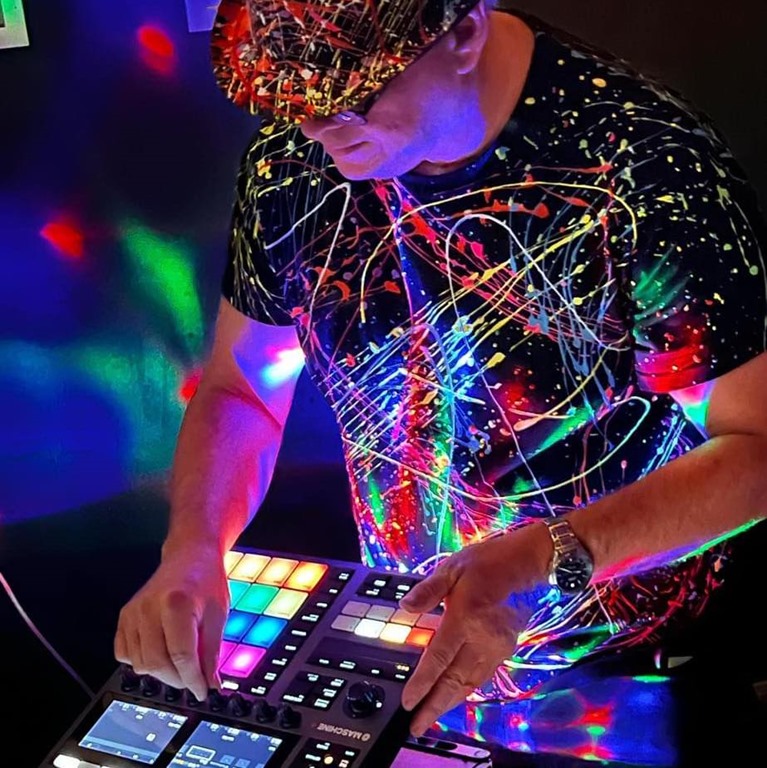
Mho – that’s ohm backwards, and pronounced ‘mo’ – is the musical vehicle of Dave Walker, who’s been a regular face at the EMOM scene, and has become established as being instantly recognisable for his stagewear, with neon-splatter t-shirt and hat. Obviously, these visual props don’t translate to the recordings, which must stand on their own merits – and they very much do.

Over the course of ten tracks, Walker showcases a broad span of styles and sounds, and the compositions are all accomplished and considered. As his bio states, he ‘began his foray into making electronic music at school when he built a Transcendent 2000 synthesiser and a ETI String Synth, as the Polymoog synth cost as much as a house back then’. He’s since switched to more contemporary kit, but his years of experience have led to a nuanced approach to musicmaking: there’s a lot of detail, but nothing’s overdone. Every drop, every time the beats bang back in, every layer, every stutter, every new sound and sample, is perfectly placed – but not in such a way that the precision leads to sterility. Walker’s tunes flow with a rare naturalness, and there are no jarring jolts or awkward lurches between segments.

Predominantly, these pieces are built around conventional piano sounds and broad strokes of synth which fill out broad spaces, and there’s a lot of analogue-style pulsations, too, cut from the cloth of Mike Oldfield and Tangerine Dream.

There’s something familiar that I just can’t quite place about the melody of ‘Nie Rozumiem’ (which will undoubtedly annoy me for days), and elsewhere, ‘Chorale’ brings ambience with low-key beats that washes along nicely, being largely undemanding but pleasant. ‘Eternal’ brings a hint of Eastern promise and a vaguely operatic vocal carried on a soft breeze of shuffling beats and rippling piano.

‘Contact’ and ‘Moon’ appear to be thematically linked, the former bursting with samples and laser-beam bleeps, and it does have quite an 80s feel to it. This, though, is true of much contemporary electronic music which isn’t overtly dance – or EDM and the encroaching Americanism would have it. The latter is a seven—minute sonic exploration that expands through time and space with crackling radio transmissions from the lunar landing of 69.

‘Take it Easy’ is pure 80s retro tootling melting into 90s euphoric trance, and while well-executed, it’s perhaps the least engaging or enticing tracks on the album, but it’s but a brief weakness in an otherwise solid album which concludes with the surprisingly light and accessible spin of ‘I Am With You’ which practically skips along.

With EMOM sets providing just ten to fifteen minutes for artists to showcase their style (these nights are absolutely bloody packed, to the point that despite being ‘open mic’, all slots are usually taken a full month in advance), it’s good to hear the full span of the elements which feature in an Mho set, and even better to hear that Mho has the material for not only a longer set, but a full album which is at once diverse and cohesive.

AA

333455632_2197845260603259_2646669291313228150_nmho1

24th February 2023

Christopher Nosnibor

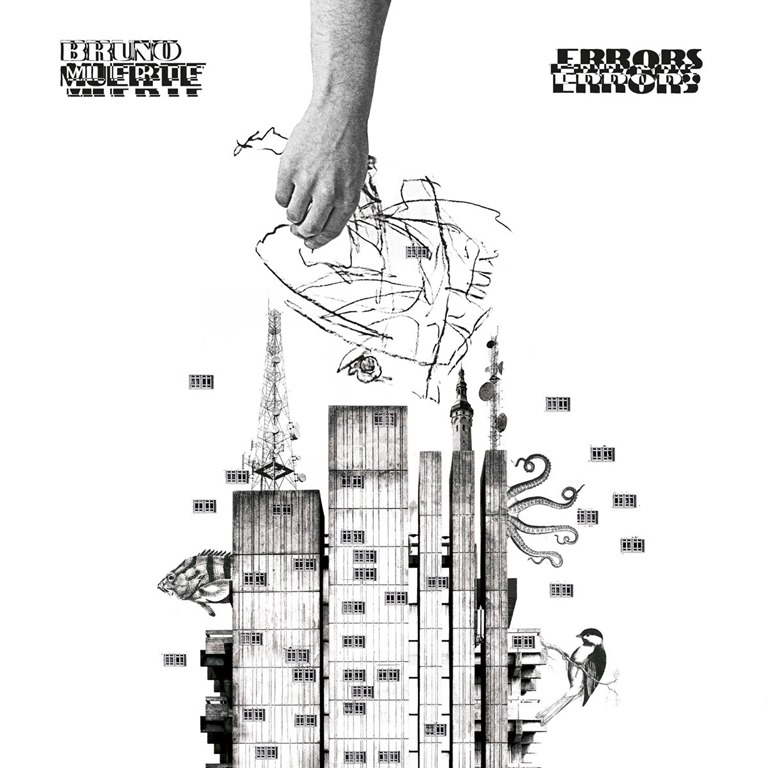
This Oxford based act describe themselves as ‘Techno Western New Wave Electroclash’ and ‘Synth lovers’. Unfortunately for me, this description conjures images of moustachioed hipsters circa 2009. The pair may well, be, choosing to keep their mugs off the record, and I’m all too aware of just how the field of instrumental electronic music is very much the domain of middle-class white guys tinkering with expensive toys. This lack of cultural diversity may be a leading factor in there being so much sameness stylistically.

Sameness isn’t really a criticism one could level at this album, for while it does assimilate many common tropes of contemporary synthesizer music – in that its inspirations are often retro in origin – stylistically, Errors offers a broad range.

‘Science of Errors’ is a punchy piece of electropop with some big, bold proggy sections that surge along in a rush, and it’s a strong start. ‘Conga Cop’ is very much a tune of 80s TV show vintage style. It’s extremely busy in terms of arrangement, stabby synths shooting over a hectic rhythm and samples flying around there and there, before going altogether more minimal on ‘Phil D’Ophear’, a much darker slice of techno where the dense bass dominates. Elsewhere, ‘Wibli Wobli’ packs a driving, energetic groove.

Errors is big on ideas: it’s positively bursting with them, and consequently, there is a lot happening, sometimes, if not all at the same time, then densely packed together, to the point that sometimes it feels as if there’s too much happening. And not all of the ideas necessarily work perfectly: the Clangers whistling over a microtonal waltz on ‘Satomi’ is novel and fun, but little more, but it’s Bruno Muerte’s willingness to experiment and the mix-and-shake approach to making music that’s a large part of the album’s appeal.

As they write in the accompanying notes, ‘One of the basic rules of the universe is that nothing is perfect. Perfection simply doesn’t exist without errors.’ It’s refreshing to hear: Errors, then, is not a quest for perfection, but a celebration of imperfection and the joy of being creative. And ultimately, it’s joy that Errors brings.

AA

a2776445249_10

Allen Epley (Shiner, The Life and Times) has released a video for "Evangeline" off his recent debut solo album Everything, out now on Spartan Records.

“We wanted something simple but stark and beautiful. Having a solo record and figuring out how to do things like videos for it is strange for me because I’m usually doing it with a band. So after many potential scenarios, we decided to just get some simple close up footage in my garage in Evanston. Clayton Brown who made the video, (who was also first drummer in Shiner!) grabbed some beautiful shots of Chicago via the Blue Line and it absolutely matches the kind of sadness and sense of melancholy that the song carries in it. There’s a theme of escaping and wandering throughout the record so this was perfect” – Allen Epley

Watch the video here:

AA

Allen Epley — 2023 Tour Dates

2.28 – Minneapolis, MN @ Ice House

3.1 – Omaha, NE @ Reverb Lounge

3.2 – Kansas City, MO @ The Ship

3.3 – Tolono, IL @ Loose Cobra

3.4 – Springfield, IL @ Broadgauge

3.16 – Chicago, IL @ Beat Kitchen

Allen_1_edit

12th August 2022

James Wells

I have questions. Not least of all, why is the bassist with A.R.T, Tiarnan Mathews known as 10” Tiarnan? I sincerely hope it isn’t because of the obvious, unless it’s ironic. But then, they all have daft nicknames, with lead guitarist Bradley Allen being known as General Sweet Tooth, drummer Scott Gordon as Dijon Mustard, and rhythm guitarist Tom Strange also known rather dubiously as Daddy Strange.

To their credit, they’ve been favourably described as ‘Bowie meets The Killers’ rather than ‘oddball creepy buggers’, which s a plus, or they wouldn’t be getting a review. I’m not prejudiced, just really busy, and give preferential treatment to acts who aren’t a bit sus.

‘Nothing Better to Do’ is pitched as ‘strolling a line between indie rock and glam, whisked together with the charm of the likes of Madness and Dexy’s Midnight Runners’ and I have to admit that this doesn’t sit comfortably. I loved Madness as a kid, but by my mid-teens I not only found them a little wearisome, but had started to take issue with their flag-waving fanbase. Granted, you can’t necessarily blame a band for the fans it attracts, but nevertheless, it can be offputting.

It’s early days for A.R.T, and there’s a lot going on here with a load of 80s indie in the nagging guitar line and a certain needling insistent groove that’s hard to ignore. There are hints of Orange Juice in the mix, not to mention a dash of funk but equally some raucous white soul and a splash of blues, before they chill the vibe with a mega sax break. Why did sax breaks seem to die a death in the 80s? Shit, we need more sax breaks. We need more A.R.T.

AA

A.R.T artwork

12th August 2022

Christopher Nosnibor

It’s 30֠C in the shade up and down the country right now, and everyone is melting. It’s oddly quiet in the office at the back of my house, and had been for a while: some people have gone away on holiday, but most still seem to be at home – because most can’t afford to travel and are still working from home at least half the week – but hardly anyone’s sitting out in their back yards, It’s simply too hot.

You want to know what else is hot? Thins new single by Voodoo Radio. It’s a sizzling serving of primitive pop-flavoured punk that grabs you instantly. To unpack that, pop-punk or punk pop as we’ve come to know it in the contemporary sense is limp, bouncy and lame, but to trace the point where pop and punk converge to the late 70s, we’ve got Buzzcocks, X-Ray Spex, The Adverts , knocking out belting tunes that are bristling with the spiky attitude and gritty guitars of punk as it was emerging, but still packing strong melodies and hooks galore, and it’s in this bracket that Voodoo Radio sit.

There’s no pretence or hidden depth here, no subtext: this is a straight up and direct song that’s pure nostalgia, a fond reminiscence about buying ice creams from ice cream vans, delivered with a sing-song tune with a high sugar content that’s guaranteed to make you bounce off the walls. The video, too, plays on that retro vibe, shot in that 70s solarized colour tone with a proper ice-cream van as the main prop.

But what’s special about the Cumbrian duo is their unashamed exposure of their northern roots, which have never been more celebrated than on ‘Ice Cream Man’, where Paige’s pronunciation is proper gritty with flat vowels and glottal stops galore, and this only accentuates the vibrancy and directness that simply makes this song so much fun. It’s old school, but this comes with added sprinkles, and you won’t hear anything cooler, more fresh, and more exhilarating all heatwave long.

AA

thumbnail_Voodoo Radio

15th July 2022

Christopher Nosnibor

Marking a thematic link to their lockdown project recording as Videostore, Nathan & Lorna continue to show their love of the retro, of the nostalgia, and specifically of the 80s with the second instalment of their ‘80s Actor’ series (released simultaneously with ‘Johnny’).

Shamefully, it took me a while to piece this one together, as I didn’t clock the concept, and simply because while I very much did my growing up in the 80s (being born in ‘75, I feel I lived through the best of the 80s at a good time, seeing the original Star Wars and Indiana Jones movies and Ghostbusters at the cinema, while Duran Duran and A-Ha were in the charts and on the radio (and yes, Kate Bush, too), I was simply ever drawn by anything featuring River Phoenix, and so wasn’t all that distraught in 93. But I’ve subsequently come to realise his iconic worth.

The song itself is something of a departure, the drum machine backed off and pumping away metronomically beneath a shoegazy drone. It’s heartmelting and melancholy, and as such, captures the feeling among fans, as well as conjuring a perfect pool of nostalgic sentiment that’s non-specific, corresponding with that fleeing ache, that momentary tug, where you find yourself yearning for… well, you don’t quite know what, or why, just that something lost in that time past. And all you can do is go with the flow…

AA

a0953913338_16

MFZ Records – 24th June 2022

Christopher Nosnibor

Conceived and recorded between the end of 2021 and the beginning of 2022, this set reflects ‘the everyday troubles Davide [Nicosia, aka Acid Youth], deals with as an individual but also as part of a community’.

The title refers to his ‘desire to get out of the gloom and seek for a reassuring light’, and explores this theme by the vehicle of dance music exploiting the vintage Roland TB-303, produced only for a short time between 1981 and 84. It was supposed to sound like a bass guitar. It didn’t. Of course, it would later come to be appreciated, and Reverse Darkness is a concise encapsulation of the appeal of these vintage analogue machines.

Against shuffling drums – heavy echoed with some thudding bass beats – there are simmering synths that drift and wash, and a flock of fluttering tweets, all underpinned by a thick, bouncing bass groove, ‘Vibrato Brilliance’ is simultaneously sparse yet dense, and Nicosia really starts to warp things up on the dislocated retro-futurist title track.

Acid Youth very much captures not only the sound but also the feel of those early 80s dance cuts, the kind of meandering, gloopy synth works that appeared on soundtracks of movies where computers had green text on little monitors and neon lights were synonymous with the future. Being nine or ten in 1985, it felt exciting; with hindsight, it feels like the future we ended up with is a whole lot less of a rush, but hearing this inspires a kind of nostalgia, not for anything specific, but for a feeling, a sense of a near future, thanks to rapidly evolving technologies, that held near-infinite potential. Setting aside any gloom over the disappointment that those potentials now feel chronically unfulfilled as we stumble through every dystopia ever envisioned rolled into one colossal morass of shit on shit, Reverse Darkness tugs me back to the crackle of excitement that once coursed through culture.

He goes really deep on the uptempo ‘Modded Dub’, full-on bass squelch wobbling and rippling atop an insistent kick drum – but it’s toppy, and really packs a punch towards the chest rather than the gut, and in context creates a different kind of tension by way of the contrast with the thick, bassy bass, and it’s true – they don’t make ‘em like they used to.

MFZ23_art

Christopher Nosnibor

This is probably – no, certainly – one of the oddest events I’ve attended in a while. I came because I wanted to see La Costa Rasa, who I caught a couple or so times in their 90s heyday supporting The Sisters of Mercy at Birmingham NEC and at the Off the Streets Shelter benefit at the Town & Country where The Utah Saints headlined, with a guest vocal appearance from Andrew Eldritch, in ‘93, and because their 1994 album, Autopilot, released via Merciful Release has been an enduring favourite of mine. I had been a shade perturbed by the 80s ‘theme’ element mentioned in the event description, but figured my everyday clothes should pass.

On arrival, I ordered a pint of Lagunitas IPA, got something completely different from what I’d asked for – some lager or other – then headed upstairs – and then the weirdness hit as I commandeered as table just inside the door.

Everyone here seems to know each other, not in a club or college reunion way, but more like a birthday party for someone’s granddad, with three distinct generations, none of whose age brackets correspond with my own. The middle generation all look to be around 50-odd and more, which would probably fit with the clientele of the legendary 80s club venues which provide the night’s theme. Then there are some really decrepit old buggers who look like their parents, and then a bunch of women in their early 20s. No-one looks remotely goth. It’s mostly middle-aged and older men with beer guts in check shirts. Apart from me, sitting here in black jeans, jacket, shades and Stetson. It’s the first time I’ve felt so completely out of place at any gig, let alone a supposedly goth gig. This isn’t a matter of nostalgia not being what it used to be, this is a bewildering experience where I truly have no idea. I feel lost, confused, and with maybe twenty people here early doors, I feel exposed, conspicuous, like I’ve gatecrashed someone’s private do, like… like… Like I’m a miscast extra in a bar scene.

Here’s the convoluted but relevant bit. The evening it pitched as a celebration of legendary Leeds clubs, Le Phonographique, et al, with DJ sets capturing the spirit, as well as live sets from Power to Dream and La Costa Rasa.

La Costa Rasa seem an odd choice for an 80s night, being an overtly 90s band – grunge with a drum machine, as I tend to describe them. Of course, there’s the Merciful Release connection, and Mills is, or was, with legendary F Club and Le Phonographique DJ Claire Shearsby (who is significant in Sister circles as Andrew Eldritch’s ex, and who isn’t one of tonight’s DJs, who spin a mix of 80s tune and more recent stuff like Garbage from their laptops at the back of the room). And despite having released a run of three of singles in the mid-80s, this is Power to Dream’s live debut.

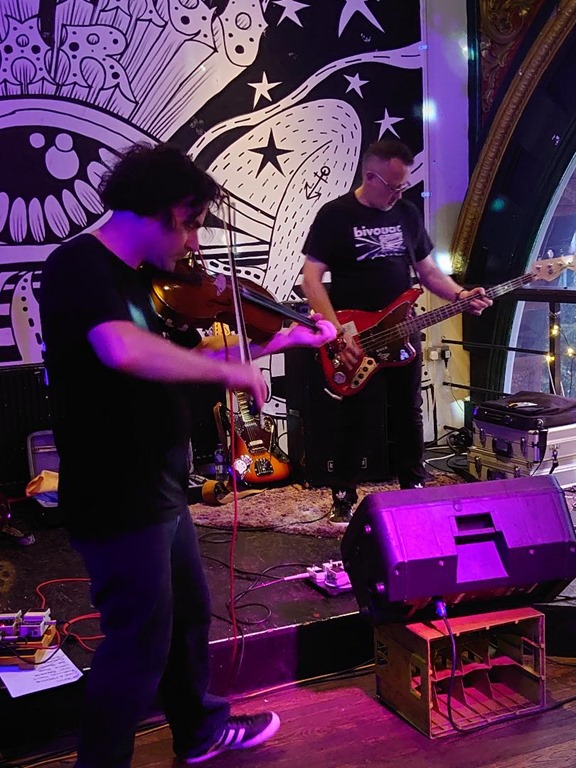
La Costa Rasa’s bassist Jim Fields is wearing a Bivouac t-shirt. It seems fitting that not only has it been almost thirty years since I last saw La Costa Rasa, and about the same since I saw a Bivouac T, and within seconds of their starting La Costa Rasa transport us back to back then with their strolling basslines, wall-of-sound guitars, and thumping sequenced drums.

No-one claps. They all just carry on chatting. A huge Jabba of a grandma sits on a sofa by the stage and bangs her stick on the floor in time – or not- for a bit and waves to the people sitting on the window bench. Eventually, three or four songs in, people seem to catch on that there is a band on.

Only two of the songs in tonight’s set are from Autopilot, the first of these being ‘Like a Machine’ which lands early. Slower than the album version, it’s followed by a raging ‘Burning Idols’.

LCR2LCR1

La Costa Rasa

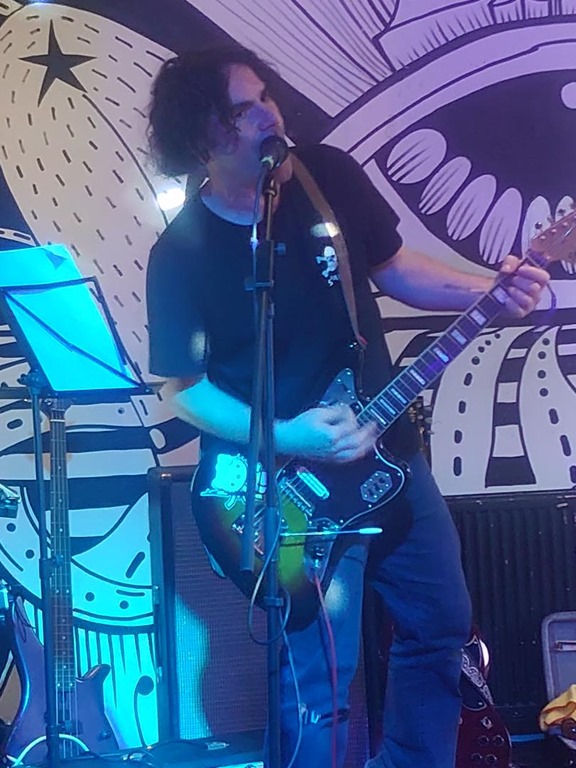
Mills switches to violin for new song ‘White Rose’, a raging industrial stomper, and some guy looking like uncle fester sits on the sofa and starts clapping like a seal for the second half of the set, while mopping his bald head frequently with a handkerchief and waving to some of the oldies on the other side of the room. The closer is a squalling epic where Mills again switches to violin – played through his guitar FX units to build a screaming climactic wall of noise. It’s blistering, and elating to see – and hear – that after all this time, they’ve not lost the fire.

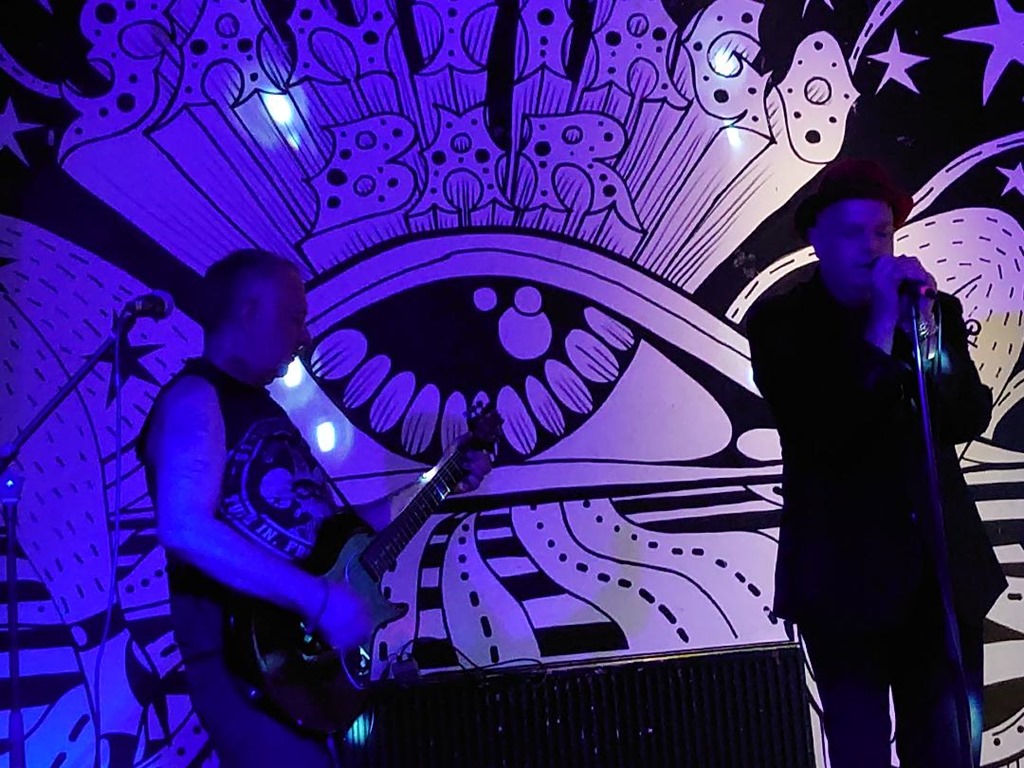
Oops. Sweaty Fester is Terry Macleay, the singer with Power to Dream. He plonks his red felt hat on and steps into character. Well, he tried, but he can’t stop grinning and gurning. He’s one of those flamboyant goths. Grating dense, dark ambience heralds the start of the set. They open with a cover of Alex Harvey’s ‘Faith Healer’, released as their second single back in the day. It’s surprisingly soulful, more Depeche Mode than Foetus.

Dream

Power to Dream

1986 single  ‘Frantic’ is second, and lays down some taut grooves, although the style is somewhere in the region of Culture Club with more funk. ‘Fountain of Youth’ lands ironically. With just trebly guitar and drum machine, they sound really thin, and there’s just way too much vocal. But you can barely hear any of it over the chat. No mean feat when there are about 20 people in the room in total, all at the back. Fuck’s sake, they should turn their hearing aids up, or fuck off.

Guitarist Alex Green plays a solo rendition of Steve Harley’s ‘Sebastian’ while Macleay takes a seat. It’s barely audible above the babble. Terry keeps looking around, irritated, but to no avail, and I’ve seen enough. It’s time to split.

14th February 2022

Christopher Nosnibor

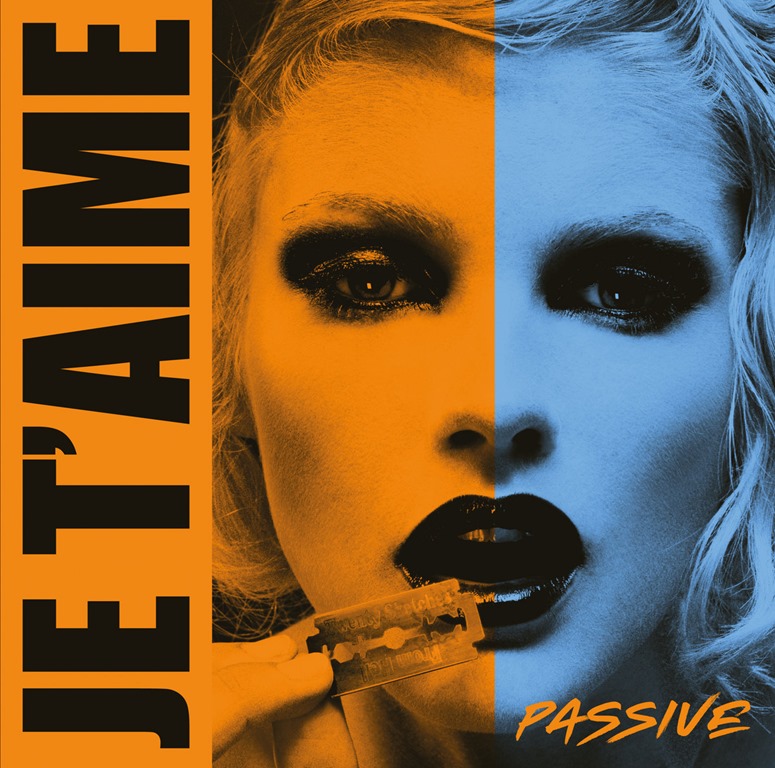
Passive is the second album from French post-punk band Je T’aime, and is the first of a two-part set, which will be completed with the release of Aggressive in the not-too distant future.

The album continues where its predecessor left off, and marks the development of a theme as part of an extended concept work, where we ‘follow the evolution of the same antihero; a common avatar of the three musicians. The tone hardens, the atmosphere becomes more melancholic, and the lyrics embrace bitterness and anger.’ The liner notes explain that Passive ‘continues the theme about the difficulty of growing up. Our main character is constantly caught up in the past, repeats the same mistakes and ends up not being able to move forward in his life. It is no mystery that the band’s music constantly looks for influences in the past 80’s for that reason’.

So many people do get hung up on the past, and seem to hit a point in their life – usually around their early 30s, in my experience – where they simply stop evolving and reach a stasis, a brick wall where they conclude that no good new music has been released since they were in their early 20s and nothing is as good as it used to be. It’s not all memberberries and memes, but there are many agents at play driving an immense nostalgia industry. And it’s easy money: no development required for new ideas when there’s a near-infinite well of past movies and music to plunder and rehash or at least lean on. Would Stranger Things have been the smash that it was if it was set in the present? However great the script, plots or acting, much of its appeal lies in its referencing and recreation of that intangible ‘golden age’. While that ‘golden age’ may depend on when an individual was born, the acceleration of nostalgic revivals and recycling means that kids who weren’t even born in the 80s or 90s are nostalgic for synth pop and grunge by proxy.

Passive is anything but. But what it is, is a dark, heavy slab of dark, bleak, brooding, a mix off sinewy guitars and icy synths with rolling bass and tribal drumming that lands in the domain of early Siouxsie, Pornography­era Cure and The Danse Society around the time of Seduction. The instruments blur into a dense sonic mesh. There’s a tripwire guitarline on ‘Another Day in Hell’, which kids off the album with a gloriously dark, stark, intensity that’s Rozz William’s era Christian Death as if played by X-Mal Deutschland. And if I’m wanking nostalgia over this, it’s less because I miss 1983 (I was 8) than the fact they capture the energy and production of that groundbreaking period with a rare authenticity.

‘Lonely Days’ is a bit more electro-poppy, but has a guitarline that trips along nicely and throws angles and shade. ‘Unleashed’ reminds me more of The Bravery and their take on 80s pop, but then again, The Cure’s influence looms large again, and elsewhere, ‘Stupid Songs’ goes altogether more New Order / Depeche Mode, but then again, more contemporaneously, it’s not a million miles off what Editors were doing on In This Light and On This Evening – and album I found disappointing at first because it felt like derivative 80s electro fare, before the quality of the songs seeped through to convince me.

One thing that’s often overlooked about 80s pop is that dark undercurrents ran through even the most buoyant of tunes from the most chart orientated acts; Duran Duran and Aha, even the music of Nick Kershaw, Howard Jones, A Flock of Seagulls, was cast with shadows flitting beneath that veneer of production. So when they go bouncy disco on ‘Givce Me More Kohl’, the parallels with The Cure’s ‘Let’s Go To Bed’ and ‘The Walk’ are apparent, with a lost and lonely aspect to the vocals, and they go full Disintegration on ‘Marble Heroes’. And that’s cool. It’s poignant, sad, wistful, an emotional cocktail. On Passive, Je T’aime revel in all of those elements of influence and pack them in tight, and they do it so well and with such discipline. They really know what they’re doing: the sound and production is class, and the songs and classic, and the sum of the parts is a truly outstanding album.

AA

a3347450970_10

30th April 2021

Christopher Nosnibor

I had something of what you might call an epiphany of sorts last night. I was cooking dinner, and as is standard, had put the TV on. I usually have it on mute and watch the news with subtitles while listening to a CD, but instead, while chopping veg for a healthy stir-fry, I had a music channel playing 80s hits, and it was good – mostly the early 80s, with some ABC and Aha (‘The Sun Always Shines in TV’ for change) before plummeting into the shit of Bros and Brother Beyond just before I served, at which point it went off. But it was during this unashamed nostalgiafest that I realised that for my daughter, who’s 9, the 80s are further in the past than the 60s were when I was her age. And that at her age, I had no interest in the 60s because it was so far back in history it was tinny, trebly, scratchy, dated, sepiatone or black and white. It was historical relics and I never got why my parents rated anything 60s. I still don’t really have much interest in the main.

But chowing my chow mein, I came to realise that things have changed, largely, one assumes, on account of the Internet. Now, we have truly hit peak postmodern in the sense that the historical is now part of the present, and everything and anything goes. The 60s likely feel a lot less distant and alien to a nine-year-old than to someone like me in their mid-40s, because they’re simply so much more accommodating.

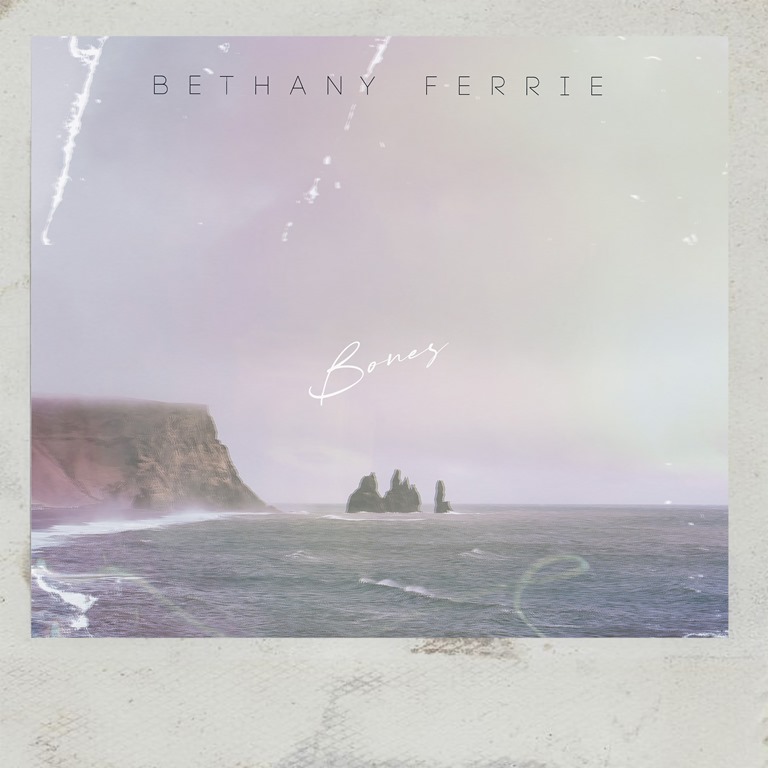
And so it is that 23-year-old singer/songwriter Bethany Ferrie takes in a wide range of influences, from the likes of Fleetwood Mac to Lewis Capaldi, Kings of Leon to Taylor Swift. And also, I’m reminded that no longer is anyone purist in their allegiance to rock, pop, or folk. For those under thirty who can extricate themselves from the mundane bilge of R1 mediocrity, whereby music is so much wallpaper, music is music, and there are only two kinds – good and bad. There’s perhaps a certain naivete in the idea that all of these things sit together, but Bethany demonstrates an admirable songwriting prowess with her new single, ‘Bones’. The piano-led song is low-key, but layered, melodic yet heartfelt. It’s also one of those songs that has a slow, contemplative start, before bursting into a cinematic chorus, aided by some reverby production that really does the scope of the song justice.

Is it alternative? Is it niche? No. Is it commercial? In terms of R1 circa 2004 when Keane’s ‘Something Only We Know’ and playlists were wall-to-wall Coldplay, yes and no. ‘Bones’ isn’t dreary, drab, or manufactured, but does have clear commercial potential.

AA

Final Cover