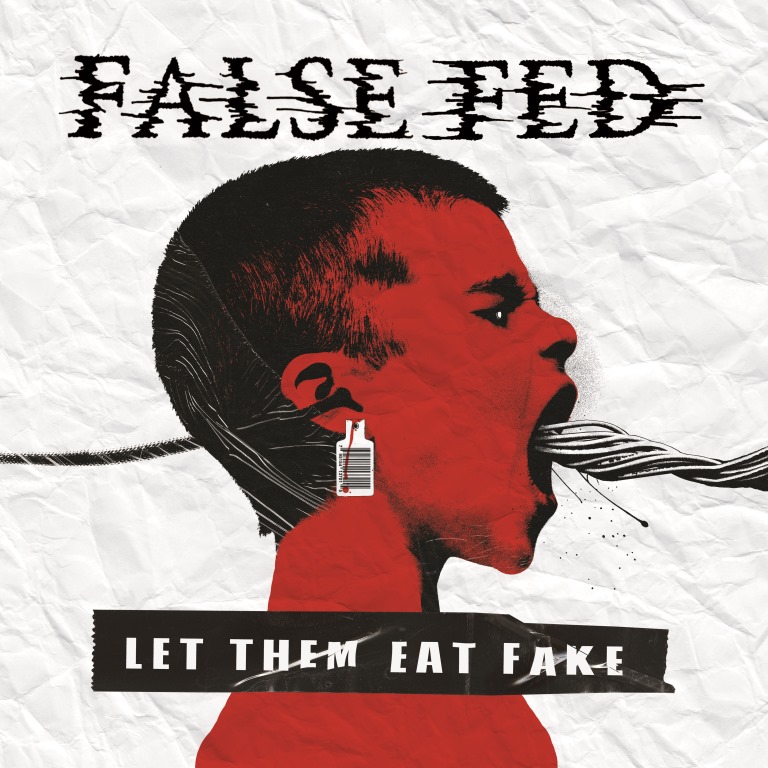
Let Them Eat Fake may be False Fed’s debut, but the members have between them a substantial catalogue of releases. The band comprises Discharge frontman Jeff Janiak, Amebix guitarist Stig C. Miller, Nausea, Ministry and Amebix drummer Roy Mayorga, and JP Parsons, and collectively, we’re told that this album sees them ‘all stepping outside their musical comfort zones to present an album of discomfort and rage in the face of reality’.
The solid, throbbing bass, glacial synth and squirming guitar that mark the album’s opening with ‘Superficial’ may come as something of a surprise given this preface: we’re deep in dark post-punk territory here, and it’s a huge shift from the hard, attacking pace of either Discharge or Ministry, as well as an immense stylistic departure. Janiak’s vocals, too, aren’t hardcore hollering, but a resonant baritone, at least unto he breaks our roaring and raging toward the end. The vibe is more UK goth circa ’86 than anything else, but this is fitting, given the many parallels between now and then. Yes, so much for progress: we’re right back to the 80s in a climate of fear and a new cold war… and not just a cold war. Instead of coming together to make some kind of effort to address the self-made catastrophe of climate crisis, we seem hell-bent on destroying one another.
‘The Tyrant Dies’ is more what you’d expect from this bunch: industrial-strength hardcore punk with a metal edge: the blasting punk fury of Discharge with the gritty heft of Ministry… but then the bridge slows things and we’re back in goth territory – well, goth as filtered through a strain of Rammstein – and the portentous refrain of ‘we will rise’ feels like a call to arms while at the same time calling on the ‘undead, undead, undead’ refrain of ‘Bela Lugosi’s Dead’: it’s time for a resurrection.
This album hits harder as it progresses: the guitars drive harder, the drums roll heavier, and goth, punk, and metal tropes melt together to forge something devastatingly intense. I haven’t heard anything that amalgamates these elements – and so successfully – since Alaric’s End of Mirrors, released in 2016 – also on Neurot.
‘The Big Sleep’ is all driving fury, hell-for-leather drums, chunky, chugging metal guitars, and high-pomp vocals echoing from the chest. Meanwhile, ‘Dreadful Necessities’ comes on like Killing Joke with its taut compressed guitar sound and driving beat. It’s dense, and probably more accurately described as steely grey than dark, since it brings a strong, melodic chorus.
The title – Let Them Eat Fake – may be light-hearted on the surface – but obviously has darker undertones in terms of its reference to class division, and that’s one of the major factors behind the album’s anger. And this is an angry album. Let Them Eat Fake is also an album that has a clear trajectory, and it builds as it progresses, becoming louder, faster, harsher, more angry with each song. By the end, it’s positively incendiary, a full-on roar of fury driven with guitars that burn. And ultimately, it makes sense as an articulation of ‘discomfort and rage in the face of reality’. We’re all feeling it. Reality is pain. Let Them Eat Fake tells is like it is.
Heavy music doesn’t have to be po-faced or excessively serious, and there have been a few comedy metal and noise bands through the years. Lawnmower Deth are one which swiftly spring to mind, but the likes of Municipal Waste, and lesser-known acts like Grindcore Cakemakers also make hard noise while being a far cry from the existential rage more commonly associated with their genres. And that’s good. The world needs variety, and there’s more than one way to alleviate the grimness of life on this sorry planet.
This album from Black Shape is perhaps the absolute antithesis of Godflesh’s seminal Streetcleaner. With the lumbering weight of a runaway bin lorry, Black Shape rumble their way through eleven tracks of bin themed absurdity, utilising their knack for writing material that is as colossally heavy as it is varied and comedic. Most of the tracks are around the two-minute mark, with just a couple of four-minute outliers. On the surface it’s a whole mess of noisy shit, but closer listening soon reveals a wildly varied album which incorporatesjazz, spoken word, nu-metal, rap and thrash.
‘The Beast from the North East’ is a dirty, shouty punk effort – more Anti-Nowhere League than The Pistols. Dense, muscular, with filthy sludge guitars, pant-soiling bass, and a wild solo which occupies half the song’s duration. The production is rough and raw, and this works in its favour: the guitar on ‘I Wanna be a Binman’ positively tears from the speakers, and it’s like being at a gig and standing so close to the PA that your nostrils vibrate. If you’ve never done it, you need to at least once, although earplugs are recommended. You still feel the force without fucking your hearing for the rest of your life. It’s a throbbing stomper reminiscent of Ministry circa Psalm 69. Only instead of burning for the needle, it’s a hard craving for lugging refuse. They pillage every style going here: ‘Dogshit Bin Juice’ takes a turn for the choral in the verses between ball-busting glam stomp riff breaks. It’s hilarious, but also makes you think. You sometimes hear that binmen are pretty well-paid. But would you do this, for any money?
If ‘Put Me in the Bin’ is the most overtly old-school punk cut, the recording is again more industrial, which couldn’t be more at odds with the offbeat, off-the-cuff lyrics, while ‘Once a Binman, Always a Binman’ throws a curveball with a gentle intro and unlikely lift of ‘Love Lift us Up Where We Belong’ before going full-slugging nu-metal / grunge crossover, with the meaty heft of Tad bringing the blue collar grit to proceedings. There are some moments of astute observation and social critique which land quite unexpectedly, but it just goes to show that it’s a mistake to write of a so-called ‘comedy’ album – or indeed any comedy – as shallow, lacking in content, or emotional depth. ‘The Story of How I Died’ brings lilting harp and Pam Ayres style narrative.
Beyond bin-related themes, this is not an album that’s predictable in anyway, lyrically or stylistically, with piano ballads pressed against squalling hardcore assaults. And because of the punk / thrash / metal leanings, and the overall daftness of many of the lyrics and the overall concept, Black Shape’s musicianship is likely to be overlooked. But the range is a measure of immense versatility and competence. Black Shape are the Bill Bailey of dustbins, and BINS is a work of sheer brilliance.
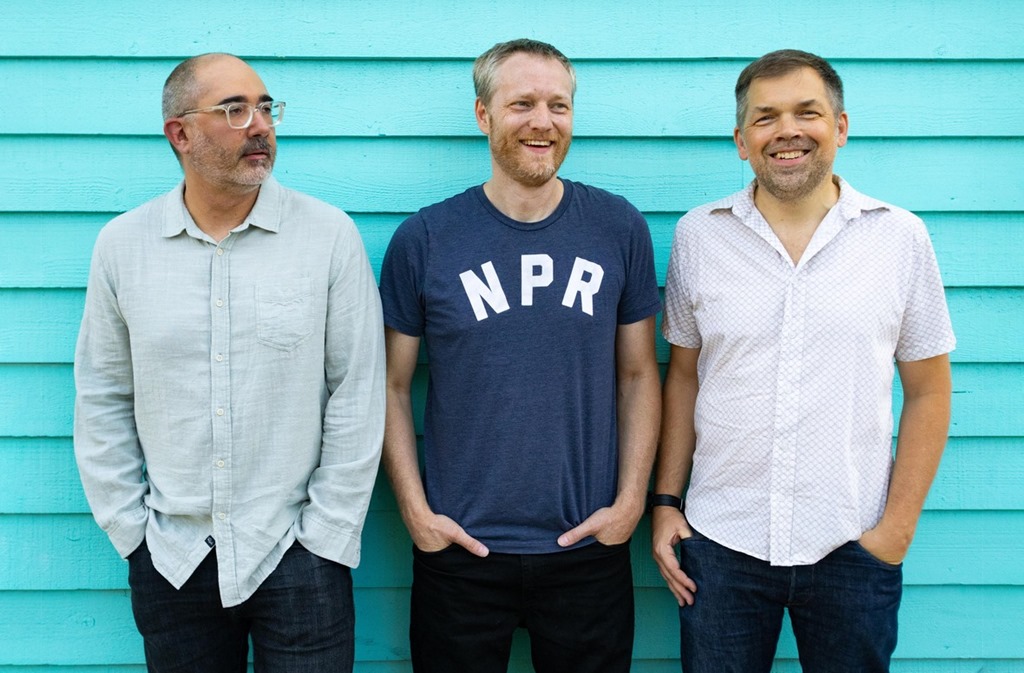
Milliseconds featuring Joe Easley (drums) and Eric Axelson (vocals / bass / synth) of The Dismemberment Plan, and Leigh Thompson (guitar / noises / pedal board) of The Vehicle Birth will release their J Robbins-produced debut LP So This Is How It Happens on October 13 via Spartan Records.
After recently premiering the first single ‘Time and Distance’ on Stereogum, the band is now unveiling the second single ‘Fallingwater.’
I have to confess that with so many submissions, I, like many in the ‘industry’ and also the majority of the public in this era of low-attention and time-constrained living, make instant judgements about not only music, but pretty much anything and everything. I’ll read a headline and not bother with the article, or if I do, may only make it through the first paragraph before my opinion is set and I move on. It’s a habit I annoy even myself with, and it’s a relatively recent habit I’ve developed, which I can pretty much pin to the start of the pandemic, in the days before lockdown when I would be checking the same news sites every couple of minutes to see if there were any new developments, for updates on numbers of cases and deaths.
So about ten seconds into ‘Fallingwater’, I’ve already reached the conclusion it’s limp toss, a slightly emo take on pop-punk, with its cleanish guitar sound and sing-song, slightly nasal vocals. But in the time it takes me to process why I don’t like it, I realise that actually, it has qualities I do like. It’s one of those songs that finds its stride as it progresses, and ultimately reveals itself to have more in common with proper 70s punk than the sanitised fully-adult-guys-bouncing-around-and-making-like-they’re-still fifteen-and-represent-the-youth’ punk-pop shit that’s still being released faster than babies are being born around the globe.
Sure, it’s melodic, but it’s got an edge to it, as well as some nifty unexpected changes which indicate some pretty smart songwriting skills, especially as said changes aren’t awkward or jarring. Having revised my position, I decide that maybe this is a song that warrants some coverage, which I might feel like devoting some time to some discourse, even if some of that discourse is around the process of creating that discourse (or deciding against doing so).
Only then, then, do I consider the accompanying notes – because as much as I can find myself drawn by the pitch, I think that what matters ultimately is the music. Great PR won’t make a shit song amazing – although it does seem that some may be blinded by great PR to the extent that some real crap can go massive, even if briefly by generating some kind of mass delusion, but that’s perhaps for another time.
In explaining the song’s inspiration and style, Axelson says, “Musically we felt like we were tapping into Hüsker Dü and The Kinks when writing this. Those chorus chords especially with the high strings ringing out as a drone definitely owes something to Bob Mould, and the riff in seven that separates sections of the song, feels like some early / mid Kinks, or maybe ‘Alex Chilton’ by the Replacements, but in seven. The weird twist comes in the bridge: initially it was just one voice, but in the studio we layered harmonies and it came out a bit Beach Boys, just maybe not as pretty.”
It isn’t, but then, The Beach Boys were just too clean and pretty, too lightweight and sanitised, whereas with ‘Fallingwater’, Milliseconds still bring some bite – more the spirit of ’77 than anything combining the punchy panache of Buzzcocks with the savvy of Wire to make for three and a half minutes of old-school enjoyment.
Since I was first introduced to Salvation Jayne, back in 2017, I’ve admired their energy, their punchy, punky rock tunes (unashamedly not ‘alt’ and straight-up kicking arse). But what happens when a band loses a pivotal member, particularly under rather messy circumstances? It’s nothing new, of course: Fleetwood Mac’s career after Peter Green was both longer and more commercially successful, and the same is true Pink Floyd after Syd Barrett’s departure and post-Gabriel Genesis. Roxy Music lost Brian Eno early on, and Marillion enjoyed a lengthy career post-Fish… and so on, from Iron Maiden to, er, Queen. Arguably, some of these lineup shifts have marked changes for the better. Others… maybe not so.
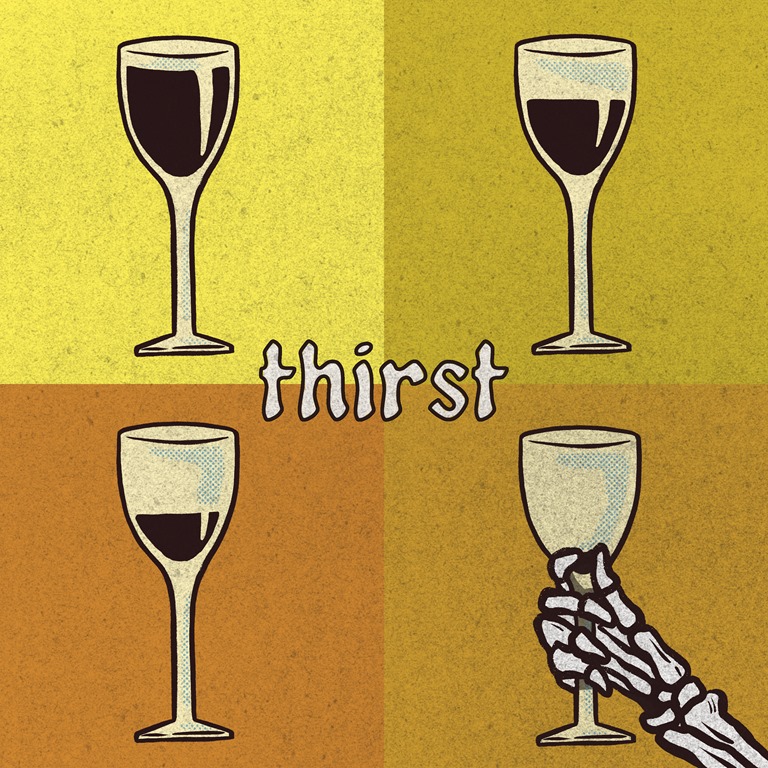
As far as many were concerned, myself included, Salvation Jayne was Chess Smith. Clearly, Salvation Jayne, releasing their first new music since her departure, would disagree, and they’ve forged on and are now clearly facing forwards and evolving. The arrival of Estelle Mey on vocals is swept over briefly in the band bio which announced a change in sound with the new lineup, describing it as ‘intense, dark and dynamic post-punk’.
It crunches in with warping electronics trilling over a murky bass noise that sounds like a bulldozer before slamming in with some serious force, the nagging guitar reminiscent of post-millennium Pitch Shifter and some vaguely nu-metal vibes, but still retaining the powerful pop elements which defined their sound, and it’s certainly a meatier and more aggressive sound they’re showcasing here. Contrasting shouty verses with a more melodic chorus, it’s a tried and tested structural formula, and they really work that dynamic, and it works well.
The layered vocals add unexpected depths and dimensions, and if there are moments where ‘Thirst’ feels crowded, the level of detail means there’s more to explore and it’s an adventure to unravel with subsequent plays and following the initial impact. Yes, Salvation Jayne are back, and they’ve got a big tune here.
Stewart Home’s career to date has been enviably long by any standards, and extremely varied: emerging out of the London punk scene in the 80s, his modus operandi was – and remains – subversion, playing with form and literary theory in equal measure. The idea that a writer who cranked out lowbrow pulpy trash which was littered with references to highbrow theory, smashing the two together in a fashion that was the epitome of postmodernism confused and annoyed a lot of people, but earned him a substantial cult reputation at the same time.
His style and subject matter have evolved significantly over the years, although – some notable exceptions notwithstanding, in particular Tainted Love and The 9 Lives of Ray the Cat he has continued to utilise certain tropes, elements of cliché, and display a truly audacious streak is evident throughout his work. His work is serious / not serious, and he’s serious / not serious about it.
One defining feature of Home’s career is that it has always been forward-facing, often promoting the next book over the one most recently released (and he’s exceptionally dedicated when it comes to promoting his work). Even when reflecting back – as much of his earlier work did, on youthsploitation novels of the 90s did on the culture of the 70s – Home was anything but nostalgic in his angle, presenting as much of a critique as a celebration. Revisionist, parodic, comedic, yes, but not nostalgic.
Even Tainted Love wasn’t really nostalgic, and nor was She’s My Witch, which was fun and frustrating in equal measures, apart from near the end, when it became so, so sad. Home has the infinite capacity to confound expectations: for all of the overt revelling in ‘trash’ writing that most academics would dismiss as not even being within a mile of the field of literature, and for all of his one-dimensional characters who exist simply as vehicles to carry – often quite thin – plots and stand as ciphers for more theoretical ends, Home is clearly a writer capable of emotional depth.
The circumstances of the publication of his most recent novel, Art School Orgy (which is very much not concerned with emotional depth), are worth considering in terms of what they tell us about the relationship between art and society. It would be too easy to pursue the ‘cancel culture’ route of discussion, but this feels like obfuscation of real issues. Times have changed significantly since the time of Home’s early novels, the violent, pulpy, parodic Pure Mania, Slow Death, and Come Before Christ and Murder Love. The perception is that society has opened up and anything goes now, but the fact he struggled to find a publisher willing to take on Art School Orgy suggests the opposite is true. Publishers are fearful. Fearful of recrimination, and fearful of not clearing their margins. It’s the perfect illustration of why art and capitalism are incompatible, and it was this situation which resulted in the book being published by a record label. Despite the music industry being dominated by a handful of huge major labels, independence and DIY in music are lauded, and aren’t subject to the same snobbery which pervaded publishing, which is still moored to old conventions.
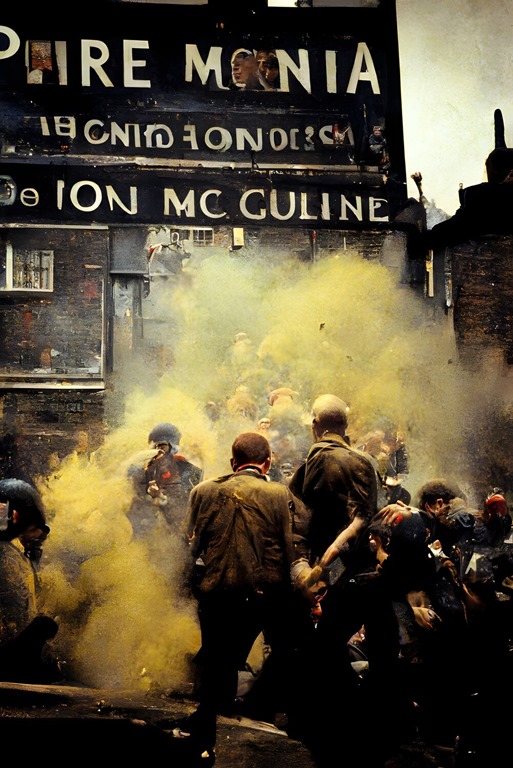
What’s interesting and surprising in some respects about Home’s two forthcoming publications is that they’re both reissues from way back in the past: debut novel Pure Mania, and an obscure and long-deleted CD of punk tunes, Stewart Home Comes in Your Face.
Had Home been touting Pure Mania round agents and publishers now, it’s almost certain none would bite, simply because it doesn’t conform to the extremely narrow prescriptions of what they’re looking for. If it’s not the next Harry Potter or Games of Thrones, or something that will sit beside Karin Slaughter or Lee Child, then most publishers simply aren’t interested. It’s all about the bottom line, and what can sell millions stacked on the three-for-two table at Waterstones.
It had been a while since I’d been in contact with Stewart, other than a few exchanges around the time of my review of Art School Orgy, and even longer since my last interview, so this seemed like the perfect opportunity. What follows is a simple Q&A conducted over email, but on a purely personal level, I feel like we achieved some good riffing on some pertinent topics.
ER: Since the material on the album was written in the 70s and early 80s, and then recorded much later, in the 90s, it must feel quite strange to be promoting Stewart Home Comes in Your Faceand making promo videos now. How do you feel about the songs now with the benefit of so much distance?
SH: At first I found it hard to listen to the songs again. They almost seemed like something someone else had done but they grew on me once I got over the fact that my voice is what it is, and much as I’d love to be able to sing like Aretha Franklin that’s never going to happen. Likewise my guitar playing has always been rudimentary. So once I’d learned to accept my musical limitations once again, I found the songs very funny. It also struck me as hilarious that I should keep returning over decades to tunes that had been knocked up very quickly with little thought about arrangement. A decade and a half and sometimes more between writing and recording, then nearly 4 decades before I thought about making music videos for them.
With the music videos it was interesting to see how much I can get into the pretty juvenile state of mind in which many of the songs were written… I actually had no problem with that. I did a video for ‘Destroy The Family’ first because I saw I could fit that with the coronation by using masks of the royals on myself and a couple of sex dolls. The video I’ve shot for the song ‘Kill’ was even easier. I bought a teddy bear in a charity shop, took it into a wood and had a friend film me stabbing it with a large kitchen knife! I still need to edit explosions and other stuff into that, so it isn’t finished but will be soon. And I don’t want to put the music videos out too close together anyway.
I think the distance I have from the songs really helps. I can take them even less seriously now than I did at the time and that enables me to do things visually with them that I might have thought were too crass back then. I also like the way music sneakily builds online and elsewhere. It’s got much harder for my anti-art videos to gain much traction on YouTube, so music videos seem like they might be a way around that. The old content of the songs becomes something that gets people looking at the new content of the visuals, which is what I’m more taken up with now.
Of course I’m also making non-music videos. In terms of books promo, which the music videos link to as the songs also appear in my reissued novel Pure Mania, here is a series of video book sculptures made by me and artist friends where there is a video on small screen and a shelf with a pile of my books. The sculptures have 15 of my books to start but these are for sale retail and with each book sale, the price of the video sculpture goes up because less is more and you’re getting less. For Defiant Pose, I recite an eight-minute passage from that novel while standing on a Swiss ball and being tickled with a feather, so I’m trying to keep my balance and finish the recitation. So that’s a far more conceptual/live art approach to videos simultaneously connected to my novels.
The promo video for ‘Destroy the Family’ has given an old song a new contemporary relevance. Your position on the monarchy doesn’t really require any kind of interrogation, but do you think that Charles’ accession has raised the levels of anti-monarchy sentiment, particularly when the division between rich and poor (and especially those whose wealth is funded by ‘the taxpayer’) has never been felt more acutely or been more closely scrutinised?
I think we’re a lot closer to seeing the abolition of the monarchy than we were 25 years ago. You could say the image has cracked. When the cops busted up the Sex Pistols boat party promoting their anti-monarchist single in 1977, there was no mainstream sympathetic press coverage. Although the same kind of heavy-handed repression went on with the arrests of those expressing anti-monarchist views at the coronation, the mainstream press clearly can’t get away with the type of coverage it did in 1977. The fact that Charles Windsor is clearly an entitled windbag with dodgy friends and family means that many don’t like him. With the cost-of-living crisis, the ostentatious way the royals flaunt their wealth can only add to the fast-rising tide of anti-monarchist sentiment. It is time to strip the royals of their titles and wealth!
In terms of my performance on film, you can see I have been practicing with the martial arts weapons I use to attack the sex dolls with royal family face masks. That said my staff and sword fighting skill is still a little rough and it isn’t as graceful as it night be although still potentially deadly. So I think that mirrors my guitar playing at the point I wrote the earlier songs and also when I recorded them. I had a seven or eight year break from playing guitar before picking it up again for a few weeks to make those recordings.
AA
You described ‘Destroy the Family’ as ‘super-dumb 2-chord sleaze-bag thud’ (a phrase which appeared in the introduction to the second edition of Cranked Up Really High), and have variously been somewhat critical of the limitations of punk. As you yourself came out of the punk scene, to what extent is your own musical work parodic in its use of tropes and cliché? And to follow on, while songs like ‘Kill’ clearly aren’t ‘serious’, is there an element of catharsis and / or a serious element to simplistic sloganeering?
I think there’s a sympathy for the nihilism late-capitalism breeds in many people but also an attempt to make it clear a ‘blow it up’ or ‘hang them all’ response to exploitation should be moved on from. We all need to rediscover our humanity and reclaim it from the ways in which capitalist alienation have deformed us. But to answer your point, yes there is a certain catharsis in there but it’s undercut. In Kill for example it’s subverted where the words in the chorus are changed from “kill, kill, kill, fucking kill everything” to “kill, kill, kill, practically everything”. Hopefully people get the point that there is no one size fits all one time solution to the world’s problems. We have to keep working at them!
Punk should be fun regardless of musical limitations, What I’m critical of is the art punks who make too much of a fetish of not being able to play. You may as well play as well as you can but that doesn’t mean you have to make it complex. I’m a real fan of super-dumb sleaze-bag 2 chord thud when it rocks, what I don’t like is when it’s leaden.
There are few, if any, genres where authenticity is as highly valued as in punk. You’ve essentially built a career since the early 80s with your zine, Smile to ‘stage an ongoing assault on notions of authenticity’ and have espoused the concept of ‘radical inauthenticity’. Yet ironically, with perhaps one or two notable exceptions, such as Tainted Love, you’ve avoided the mainstream by producing work that’s antagonistic to not only the mainstream, but to academia, and the middle-class, middle-brow readership, while at the same time being too subversive and challenging for – sadly – the vast majority, which suggests you’re perversely authentic. How do you reconcile this?
To use a pat formula, I don’t think I can reconcile it while living under capitalist social relations…. But it could also be seen as a dialectical ploy and one that’s not uncommon in more art school orientated punk rock – although that’s not really the racket I make. Even back in the seventies I thought groups like Wire were operating in that way. Or to take a US example Devo. That said, I think I’m more parodying everything from the Clash to the anarcho-punk scene. One of the reasons other than the music I liked bands like Wire and the punk incarnation of Adam and the Ants, was that they just didn’t seem to take themselves too seriously. In relationship to all the phrase “artificial authenticity as authentic artifice” provides perhaps a more than superficial answer to your question. The Sex Pistols manager Malcolm McLaren used the term glorious failure to describe what he wanted to achieve – but I aim higher, since I intended to reinvent world culture in its entirety, even if that takes a life-time.
In terms of books, aside from Tainted Love I think The 9 Lives Of Ray The Cat Jones and She’s My Witch might have reached a mainstream audience if I didn’t already have the reputation I have. Audiences have a certain expectation of what a Stewart Home or Michael Moorcock book is going to be like and will impose that on everything you do. Because reading a book takes more time than listening to a music track, it is harder in the fiction world than the music world to turn around perceptions of who you are and what you do. If people think they’re not into what you do they’re not going to give a book they might like a chance, whereas they could easily be exposed to some music that didn’t sound as they expect it to be more or less by chance.
Nostalgia ain’t what it used to be, but many of the original first-wave of punk bands are still plugging away on the gig circuit, and while many are doing so to smaller and smaller crowds, some are doing pretty nicely out of it: The Damned, for example, are currently touring the UK’s 2,000 capacity O2 venues before heading Stateside. Would you consider playing your songs live again?
I guess for people who missed those bands first time around there’s an appeal to seeing them now. For me, I don’t want to go and see Slaughter and The Dogs or Menace because I saw them in the 70s. Also the line-ups are mightily changed from back then and the crowds and atmosphere are very different. I’d rather preserve my memories of how it was by not going to see those bands now. As for The Damned, I saw them in 1977 and compared to that I was even a little disappointed by how they were when they reformed after first splitting up in 1978. I saw them as The Doomed and a few times after that back as the Damned, two or three years on from first seeing them and for me they were never as good. Of course, they weren’t bad at all but for me they weren’t as super-phat and groovy as the earlier incarnation of the group.
I actually learned a lot from playing in bands in the 70s and 80s. I can see how a lot of what I’ve done subsequently with spoken word, live art and stand up etc. emerged from how I learned to present myself with punk and reggae bands. But at the same time I’ve no desire to play live again – I’ll probably regret saying that very soon if I find myself just doing it for some reason. But the songs weren’t written for me to sing, I just wanted to play in the band and have someone else sing them. When they got recorded, the musicians around me were saying you have to sing coz you’ve got a profile and they’re your lyrics…. I feel much happier just making music videos for those songs now coz it means I can develop something new with them. I can dig repetition but going back to playing those old songs live just doesn’t appeal to me and hasn’t for a long time, I have been asked to do it!
Pure Mania was your first published novel in 1989, and now commands a pretty hefty price tag on the second-hand market. I suppose as much as it draws on pulp novels, you could call it a punk novel, stylistically as well as in setting. How do you feel your writing has evolved since then?
It’s punk in that it took a reimagining of London 1976/77 punk as its subject and that I had a bricolage approach to writing which is very punk. But at the same time, it’s also a very postmodern novel. Back then I was still learning how that type of novel is constructed, I moved on to anti-narrative after I felt I’d perfected that postmodern simulation of pulp narrative with the follow up books Defiant Pose, Red London, Blow Job and Slow Death. You can also see my prose being honed very quickly, the journalistic approach to sentence construction is clearly smoother in my second novel Defiant Pose. Likewise the narrative/anti-narrative construction becomes slicker but never too slick. I can say that technically my writing improved through practice. But some like rawness best anyway.
I think there was a fairly systematic working through an evolution of material, despite changes in style, up to Mandy, Charlie & Mary-Jane in 2013 – if you discount Tainted Love which was me wanting to fictionalise my mother’s life since no one believed it in non-fictional form. Then with The 9 Lives Of Ray The Cat Jones I went back to Tainted Love and took that fictionalisation of family history in a different direction with a different relative. She’s My Witch riffed on the type of woman my mother was but took someone from my generation down rather than my mother’s – but with plenty of morphic resonance. So I think there are two trajectories in my novels and they fall into two groups. Art School Orgy goes back to the first set of novels and hews closer to the earlier trajectory – it is the book I might have written after Whips & Furs if I hadn’t wanted to write 2002’s 69 Things To Do With A Dead Princess (which was a development of what I’d done in 1997’s Come Before Christ & Murder Love).
Art School Orgy feels very much like a lot of your earlier works in stylistic terms, so I’m assuming the issue for prospective publishers was that the subject was a living artist, and their feared litigation. What were the rejection letters / emails like?
I was only trying independent presses so the rejections weren’t as rude as those I got for my earlier books. Mostly it was a “we’d like to publish you so why do you have to make it so difficult” kind of response. One publisher who doesn’t know me as well as the others said he’d like to do the book but to change the names. Obviously that didn’t work for me. But they feared litigation if the book came out using the names I’d chosen. But so far that hasn’t happened.
AA
A fair few of your earlier books have been translated into Finnish and German. How has the reception been in those nations compared to domestically?
They early books created a much bigger stir in Germany, Finland and Russia than here. In Finland and Russia I had a lot of young female readers, so the audience was also very different. When I had a post box I might go and find a pair of unsolicited used knickers from a Russian fan. In Finland I was the biggest selling writer there for a while in the late-1990s, so I’d had TV crews trailing me around and when I told an old drunk Finnish writer at a literary festival that he should shut up as he was talking through my reading, it became front pages news that I’d beaten him up, although that was an exaggeration. I just gave him a fright by leaning into him and screaming in his ear! I also got asked to appear in a nude celebrity feature in the biggest selling newspaper in Finland, which of course I accepted and I got an all expenses covered trip to Helsinki out of it.
In London I can walk around and no one pays any attention to me but it wasn’t like that in Finland in the 1990s. I went in a record shop to buy some Finnish released records you couldn’t get in London including JMKE, the first Soviet punk band, and they said “You’re Stewart Home you don’t need to buy records!” They gave me everything I wanted to buy and a load of other stuff too as they said I ought to have it. I enjoyed going over to Finland for a week or two and experiencing that sort of thing but I think it would be a drag to experience it full time in London. Anyway, it wouldn’t happen to me in Finland now…. Everything has its moment.
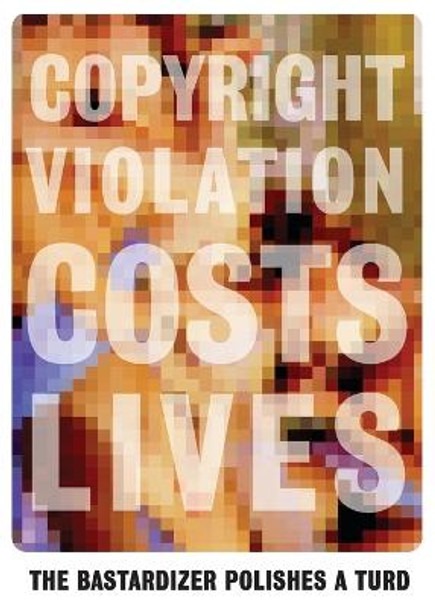
You were recently involved in the publication of Chus Martinez’ novella, The Bastardizer Polishes a Turd, which is a crazy and exciting read. Can you explain Chus Martinez, and also how Simon Strong comes into all of this?
Chus Martinez is a multiple identity project – a lot of different people anonymously producing work credited to the same name – following on in the tradition of projects like Karen Eliot and Luther Blissett. It’s been going in a low key way for over a decade. Chus as a diminutive in Spanish can be either gender and the gendered nature of previous multiple name projects was something those involved with this one wanted to overcome. The Luther Blissett project broke through a lot of earlier blockages but it seemed like gendering was something that still needed to be addressed. Chus Martinez started with a lot of retro-graphics and celebration of the sixties Spanish guitar player Chus Martinez. The first two Chus Martinez novels Copy and Issue came out in 2014 and were published by Simon Strong on his Ledatape Organisation imprint. The novels were written by different people and issued at the same time. Since then Simon has closed down Ledatape, so as there was a new Chus Martinez novel that needed putting out and which Simon had already done the typesetting and graphic design for, so I issued it on my Cripplegate Books. The project involves a lot of different people and although I’m involved, I haven’t yet done a book for it.
The fact that you struggled to find a publisher for Art School Orgy clearly slowed your output in terms of what’s been put out in the public domain, but despite that, you’ve maintained a steady output the last ten years, albeit at a lesser pace that in the mid-late 90s. What’s your method for keeping the flow?
I only write when I have something to say and as there’s plenty that needs addressing in this rotten world we live in, the books keep coming. But I’m constantly writing stuff – not just books and not just fiction. I’d like to write less fiction so I can spend more time on non-fiction. I have another novel written in first draft called Femdom Ninja Lockdown, which was hacked out during lockdown to try and record the experience while also utilising a cut-&-paste composition method closer to IFD and Filmark than Burroughs-style literary cut-ups. I like it but I’m in no rush to get it out. I’ll revise it when it seems like the time is right to publish it. I wasn’t planning on writing a novel, it just seemed unavoidable given the madness of the situation we were all in.
I’ve known a few writers sign up to big contracts with lots of money advanced and it chains them to producing books that they end up hating working on. They’re legally bound to produce these great big books with a literary content when they’d probably rather be writing almost anything else. I’m fortunate never to have been in that position, so I can stay alert to the world and do things that groove me. There is also an issue with those who want an identity as a writer, something that is a terrible drag on actually producing anything interesting. Rather than writing a book because they have something to say, there are way too many people writing novels because they want to appear profound and wise but inevitably they end up coming across as the opposite of that.
I assume you’re still keeping the flow now, so what’s in the pipeline?
Some non-fiction, probably starting with a book on yoga that explores how the term is undefined and defuse, what’s practiced in yoga studios bears no relationship to older Indian meditation traditions that are called the same things. The stretch routines that millions practice as yoga draw heavily on primitive Scandinavian gymnastics but they didn’t receive their confusing name until they were mixed with positive thinking and secularised Christianity dressed up as Hinduism in California at the start of the 20th century. I’ll also look at how the spread of this western yoga is intimately connected to the growth of fascism in the first half of the 20th century. So I’ll provide a corrective to the misplaced idea that some people in the overdeveloped world have that what they practice as “yoga” is a non-political tradition that is thousands of years old and originated in India.
Pure Mania will be published on 17th August 2023 with a brand new cover design in both limited edition hardback, which comes signed by the author and accompanied by an original Necrocard, and paperback, as well as eBook for the first time, via Leamington Books. Stewart Home Comes in Your Face will be released by New Reality Records in September.
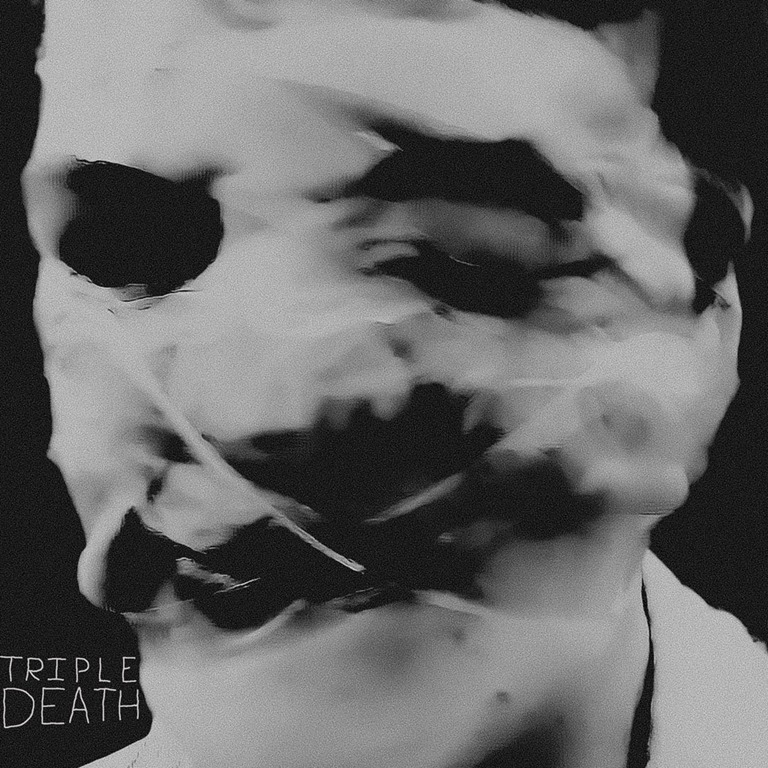
There are few things quite as gratifying as seeing one of your own quotes as the lead on a press release. And so it is that Hull noise punks Bug Facer, who I declared were my new favourite band on the release of their debut single, ‘Horsefly’ in Nov ember, praising them for their ‘claustrophobic, pulverising heaviness that leaves you aching’, rage hard on their debut EP.
What are they angry about? Everything and anything: modern life in general. Triple Death may only contain three tracks and have a running time of less than fourteen minutes, but they pack in the fury with a critical mass. The first cut, ‘Eggshell’ sets the tone, and, they say, ‘explores the idea of cycles with no end and how on an existential level we try to apply meaning to struggle.’ This isn’t just noisy shit: it’s noisy shit with some deep thought involved, and ‘Eggshells’ is low and slow, with a hesitant bassline and swirling guitar that swishes around in a gush of treble, and instrumentally it lands somewhere between The Fall and ‘Budd’ by Rapeman, and it’s completed with howling vocals that sound like every syllable is being torn from James Cooper’s lungs. It’s harsh and harrowing and truly the sound of pain leaving the body.
Theirs is an usual setup, with the drummer and bassist contributing vocals alongside co-founder Cooper who plays guitar. I say play: he and second guitarist Josh Burdette torture their instruments, channelling their angst through mangled chords at high volume. Sonically, their approach is unusual, too: they’re not big on riffs or distortion or driving percussion, the popular cornerstones of angry music of many genres: the sound on Triple Death is steely, grey, murky, creating the kind of oppressive sensation I feel listening to Unsane and Red Lorry Yellow Lorry. It makes you feel tense, twisted up and knotted inside.
Picking up the pace with ‘Prod’, which, with the addition of some gurgling synths, steps into a Krautrock groove, before the guitars lunge in and things get messy, the deranged, raw-throated vocals and serpentine guitar lines interweaving in a thicket of discord flay the nerves without mercy. ‘We are all the cattle… We are all the cattle, is the refrain’. And we feel it.
It’s a reworked version of ‘Horsefly’ that closes the EP off, and it’s a cleaner sound that marks the primary difference from the original release of this six-and-a-half-minute trudger of a tune that has the kind of earthy weight of Neurosis. The guitars chime dolorous doom as the bass and drums hammer hard, heavy, relentlessly thudding, so low and slow as to drag your heart down towards your knees.
The clue, I suppose, is in the name. This isn’t just death: it’s triple death, and Triple Death is grim, gloomy, the soundtrack to battling against the tide of shit on shit, when a trip to the seaside is a game of dodge the turds and a tub of butter costs seven fucking quid. When they tell you that inflation is a global issue but the fuel providers and supermarket chains record bumper profits and immense payouts to execs and shareholders while nurses are querying at food banks… fuck this shit. Triple Death is the soundtrack to telling the world, ‘fuck this shit’. One more time: fuck this shit.
It’s been a while since I attended one of these short Sunday matinee shows, but last time I did – last spring, when Snakerattlers launched their album – I was absolutely sold on the concept of a band or two and a couple of pints after Sunday lunch. Dan Gott – of Snakerattlers, JUKU, and gig promoters Behind the White Door – is one of those people who likes to do something different, and it’s great to see him coming back to this idea.
Since the last time I came to one of these, a lot has happened, and now being a single parent to a primary-school age daughter and with no relatives on the county makes getting out on a night nigh on impossible, so this offered me a rare opportunity to get out for beer and live music. I’m clearly not the only one who digs the short matinee format, with around fifty punters occupying the dark space rather than basking in the beer garden.
Before the show, the partner of one of the guys from Wasted Denim is explaining to their kids, sensibly sporting ear defenders, the process of the soundcheck, and there’s something warming about this kind of environment, and speaks volumes about the bands, the venue, and the organisers.
It’s good for bands, too, opening up the possibility of playing two shows in a day, getting paid twice, and selling merch to two sets of punters. Or simply to get home ein decent time ahead of dayjobs the following morning.
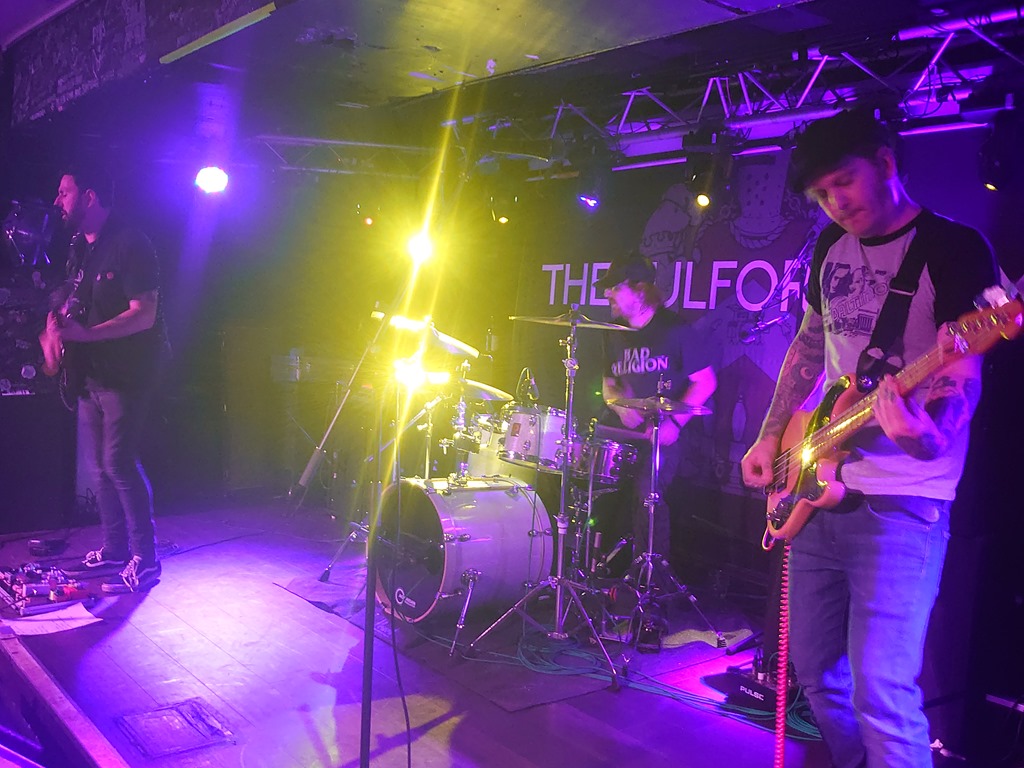
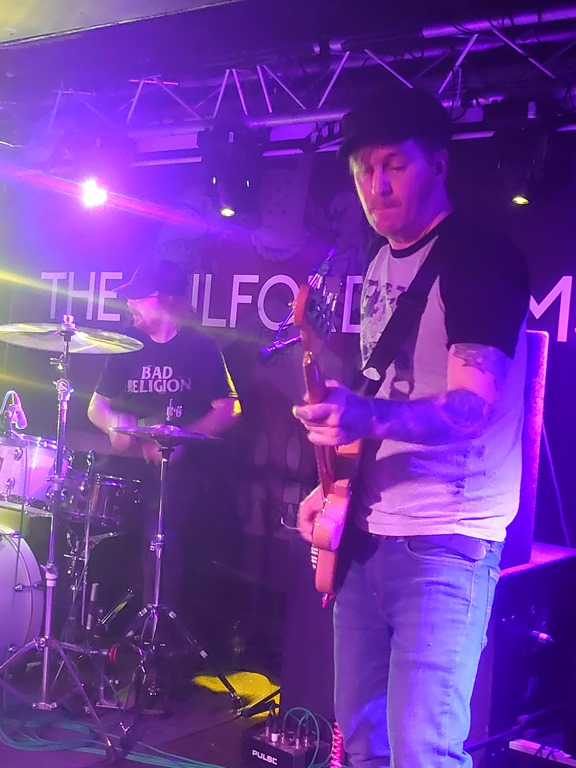
Wasted Denim’s singer has a Black Flag tattoo and the drummer is wearing a Bad Religion T-shirt. The Leeds trip piledrive through the songs – fast, short, Ramones meets The Clash meets The Ruts, all with a gritty hardcore edge – with zeal, blurring together only separated by a call of ‘onetwothreefour!’ Songs like ‘You’re Gross’ and ‘I don’t Wanna be a Dickhead’, introduced as a song about personal wealth, aren’t works of lyrical genius by any stretch, but that’s not what punk’s about. It’s immediate, it’s raw. And they’re as tight as hell. Sure, they only have one tempo – fast – and four chords, but more is just showing off anyway. The set gets faster as it progresses. They’re fun, and seem like decent guys, too.
Wasted Denim
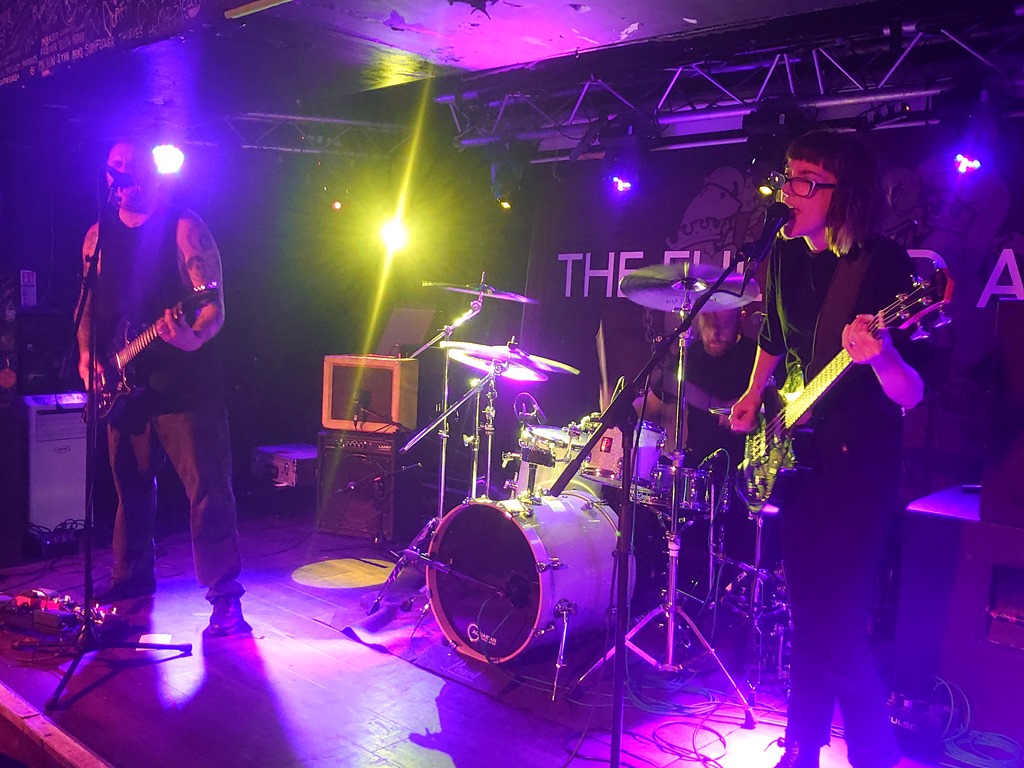
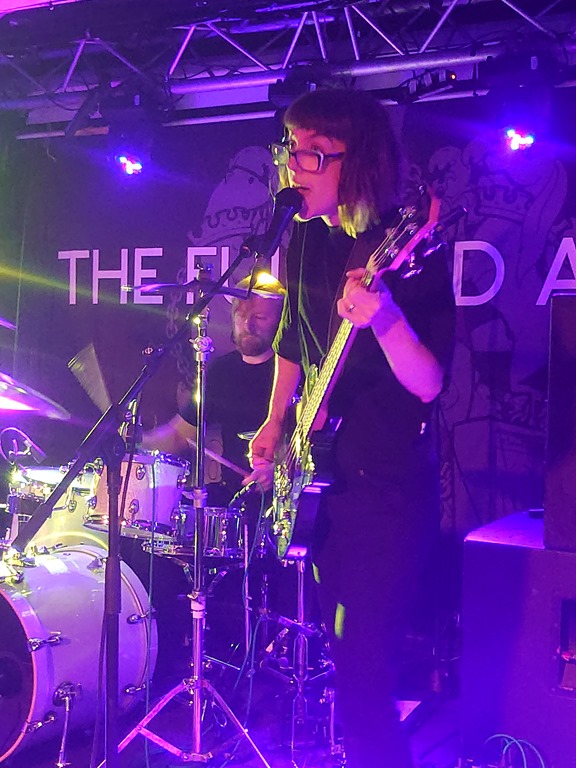
I’d been forewarned that JUKU would be seriously loud, threatening ‘Thunderclap drumming, distorted to holy fuck guitars, massive riffs and a clean feminine vocal cutting through the massive wall of noise.’ With Snakerattlers Dan and Naomi Gott on guitar and bass/vocals respectively, this relatively new quartet are a world away from the duo’s reverb-heavy swamy psychedelic surf-rock. There’s no twang or space to longer here: every second is pure density, the sonic equivalent of driving headlong into a brick wall.
JUKU
And yes, they’re loud as fuck. Opener ‘Hot Mess’ opener is a throbbing stomper of a tune, with monster big balls and massive swagger. ‘Pressure’ ups the pace and the adrenaline. ‘Trigger’ shows a more sensitive side, and more of a pop aesthetic, but it’s still propelled by a monster riff and pulsating rhythm section. Naomi’s vocals are a strong asset – gutsy, but nuanced. ‘I’m no fun’, she sings on ‘No Fun’, which is absolutely storming, and it so happens, a lot of fun. Sharing vocal duties back and forth on ‘We Don’t Belong’, Dan screams his lines adding another layer of dynamics, while ‘Devil Inside’ exploits quiet / loud grunge dynamics to strong effect, before ending the set with the 100mph ‘No No.’
JUKU
At times, New York punk and No Wave leanings come to the fore in a set that’s driving, hard-edged, aggressive. Boasting solid hooks and blistering energy, it’s mint, and Dan taking advantage of being wireless and taking his guitar around the venue as he chugs out beefy chords adds to the energy. They kick out nine songs in twenty-five high-impact minutes. In terms of the set’s structure, it’s faultless: if they record these nine songs and release them in this order, they’ve got a killer album on their hands already. The world needs to hear it.
Another month, another new song from Argonaut, as they continue to expand their open-ended album Songs from the Black Hat.
This time around, ‘We Burn Bright’ is a nifty little tune that brings some indie jangle and a dash of 60s-inspired pop to the band’s quintessential DIY sound. Hear it here:
Death Pill, the hardcore punk trio from Ukraine, released their debut album on 24th February, a year to the day that Russia invaded their country.
Tracking started during Covid and was completed in late 2021, only three tracks were mixed before the war hit. However the band and their production team were able to somehow continue and finished everything including the artwork in 5 months whilst the Russian invasion rolled on. A testament to their drive and single mindedness.
The band are currently mid-way through their ‘Over My Dead Body’ European tour, which defiantly began in Kyiv, Ukraine on 20th May. Now the band have shared a new video for ‘Would You Marry Me’ with the bassist Natalya commenting, “This is a song about a rejected wedding proposal. Mariana wrote it after she proposed to her boyfriend and he turned her down. I shot this video when I moved to Barcelona and my best friend came to visit me. She became the main character, and I did the whole production. It took me about 72 hours to finalize the idea, shoot and edit it. I put my pain and suffering into this video, it’s a reflection and experience of personal rejections, dedicated to all the broken hearts.”
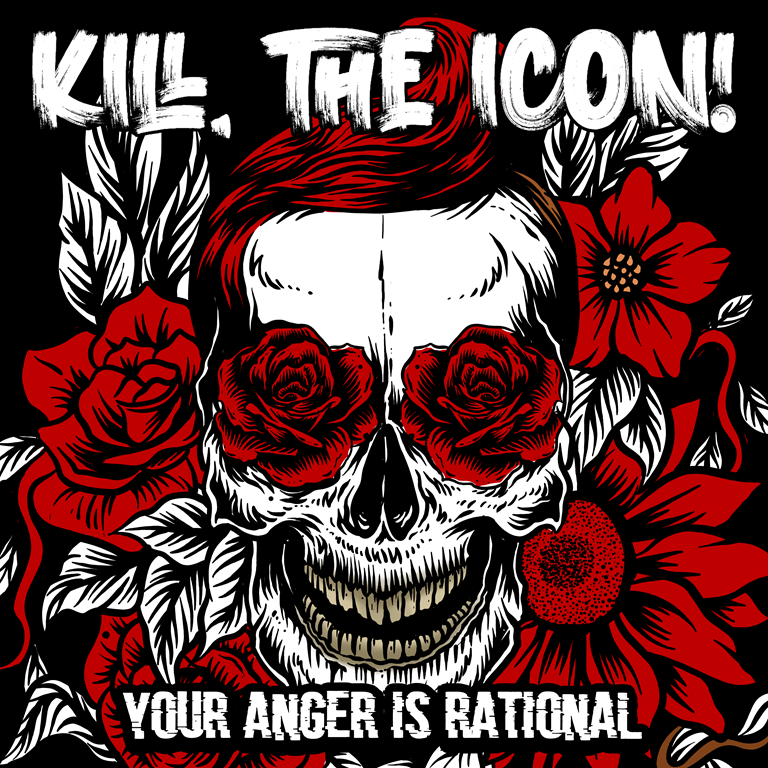
London ‘synth-punk passion project’ Kill, The Icon, fronted by NHS Dr Nishant Joshi have been building their presence nicely in recent with a series of strong singles, kicking off with ‘Buddhist Monk’ in late 2021, and the trio have been kicking ass with pissed-off, politically-charged sonic blasts ever since, and gaining significant airplay and critical acclaim in the process.
The bio and background, for those unfamiliar with the band, is worth visiting, as the context of the music is important. As much as Kill, The Icon are a part of a growing swell of artists who are using their music to not only channel their frustration and to voice their dissent – in a way which can’t get them arrested, at least not at the moment, no doubt to Suella Braverman’s irritation – Joshi is also very much an activist.
Joshi made national headlines during the pandemic, being the first frontline NHS doctor to go public with concerns that staff were not being protected. In true punk rock style Joshi and his wife then launched a legal challenge against the government. They won the case, making huge change and were recognised by The FA and England’s football team. Fueled with frustration, in the summer of 2020 KILL, THE ICON! was born as an extension of Joshi’s activism.
You certainly couldn’t accuse these guys of being all mouth and no action, but of course, the power of music as a unifying force should never be underestimated, particularly when our government’s modus operandi is to divide enfeeble the populace. It wasn’t just Brexit, which say the country not so much split and cleaved in twain: now there is a war being waged on benefit claimants (or scroungers and fraudsters, as they’re portrayed, dehumanising society’s most vulnerable in the process); a war on woke (anyone who is opposed to racism, misogyny, homophobia is the enemy); a war on migration… everything is cut between ‘us’ and ‘them’, and the smaller the splinters, the less the likelihood of meaningful, coherent opposition, especially when even so much as having a placard in your car boot is likely to lead to a pre-emptive arrest.
While the four tracks on Your Anger is Rational have been released as singles in the run-up to its release, with ‘Danny Is A Hate Preacher’ landing just ahead of the release date, packaging them together as an EP presents a precise statement of what they’re about.
It’s ‘Heavy Heart’ that’s up first, a no-messing ballsy banger that calls out the racism that’s not only rife but seemingly accepted post-Brexit, and the second track, the gothy ‘Deathwish’ (accompanied by the first AI promo video) steps up on this, with its refrain of ‘No blacks! No dogs! No Irish!’. ‘They used to whisper / And now they shout’, Joshi observes, and sadly it’s true. For a time, it felt like we had progressed from the casual racism of our grandparents – I remember feeling uncomfortable hearing my late grandmother talk – without malice – about ‘darkies’ and ‘coloureds’, and feeling a certain lightness of being at the sense we had moved on, stamping out the BNP and becoming more inclusive… but then the right has risen again with Farage and UKIP and Britain First and Stephen Yaxley-Lennon and in the blink of an eye there are flag-waving racist cunts everywhere and Christ it’s fucking ugly.
And as much as Your Anger is Rational is a unified work musically, it’s lyrically and thematically that it really comes together. With a hard, driving bass to the fore, ‘Danny Is A Hate Preacher’ explores how indoctrination from an early age spawns the next generation of wrongheadedness, how violence begets violence, and I’m reminded of Larkin’s ‘This Be the Verse’. Your parents really do fuck you up. And now it’s not just parents taking kids to racist rallies, kids are being moulded by ‘influencers’ like Andrew Tate, and again, adults are buying into and propagating this obnoxious shit too: I’ve had to defriend a number of people on Facebook for sharing his content. My anger is, indeed, rational: we’re surrounded by cunts.
The last track, ‘Protect the Band’ is slower, more measured, but again, it’s a bass-dominated grinder with a monster groove, and it’s all pinned tightly together with some sturdy drumming and it’s a magnificent dismantlement of corporate hierarchies and the way they oppress workers into subservience. Protect the brand! But will the brand protect its staff? Will it fuck.
As much as Kill, the Icon are punk in aesthetic and sentiment, they’re very much new wave in their sound and approach. And while they’re strong on the punchy slogans and lyrical repetitions, KTI are more articulate and more nuanced than your average rabble-rousing punkers.
There isn’t a weak track in here. Musically, sonically, lyrically, they’ve got everything nailed and it’s tight: there’s no waste, everything is measured and weighed for maximum impact, but it’s still delivered with a coolness and a real groove, which makes this absolutely killer work.

 Aural Aggravation