Posts Tagged ‘Post Rock’

DROTT have released hypnotic new single and video ‘Arch of Gloom’. The song can now be streamed/downloaded on all platforms . The video was directed and edited by Jens Kristian Rimau.

The band comments on ‘Arch of Gloom’: “At the end of a dark and bouncy road lies the Arch of Gloom. Through persistent bass and drums, Arch of Gloom is driven to the point of desperate collapse by a haunting guitar solo. Mesmerizing in its mystical attraction, it hypnotizes desperate souls into a surrealistic dance before they are lured down the abyss to face the verdict of Orcus.”

DROTT is comprised of Arve Isdal (Enslaved), Ivar Thormodsæter (Ulver) and Matias Monsen and hails from Bergen in the west coast of Norway. With their varied musical background ranging from metal and jazz to classical music, they create the genre which can only be described as DROTT. Inspired by forces of nature, superstition and spirituality the trio explores light within darkness through their music. 

The group, recently established (2020), released their self-titled EP in March 2021 and received great reviews. It established the Drott’s instrumental Progressive Rock sound as a breath of fresh air in the genre! Their first full-length Orcus album takes Drott in a new creative and artistic direction. With 10 tracks they dive deeper into sonic, experimental landscapes!

Check the video here:

AA

Drott - Credit Jens Kristian  - 14

Pic: Jens Kristian Rimau

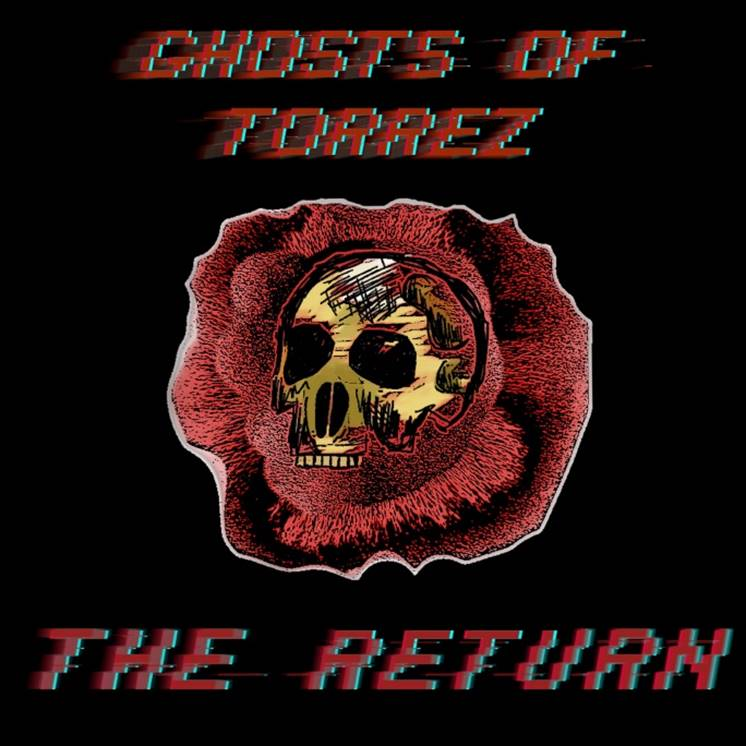
Enigmatic animal-mask-clad folk-horror band Ghosts of Torrez have resurfaced with new single, ‘The Return’, out now on Prank Monkey Records.

Watch the video here:

AA

GOT

Enigmatic animal-mask-clad experimental-folk-horror band Ghosts of Torrez first appeared on the scene in 2017, under the name of Bong Torrez, receiving some interest due to featuring on the horror animation short "The Place", described by Horror News Net as "Simply Gorgeous".

Since then, they’ve been beavering away on a number of tunes, taking their time until resurfacing this year with a new name and a slightly more electronic, psych sound from their indie, folk roots.

‘The Return’ is the first release from these secluded sessions and has already won the Audition show poll on Amazing Radio as well as featuring on Fresh On The Net’s Eclectic Picks playlist. The track is an intriguing cinematic instrumental piece, swathed in a mysterious darkness that’s underpinned by intricate acoustic arpeggios and a solemn drum machine.

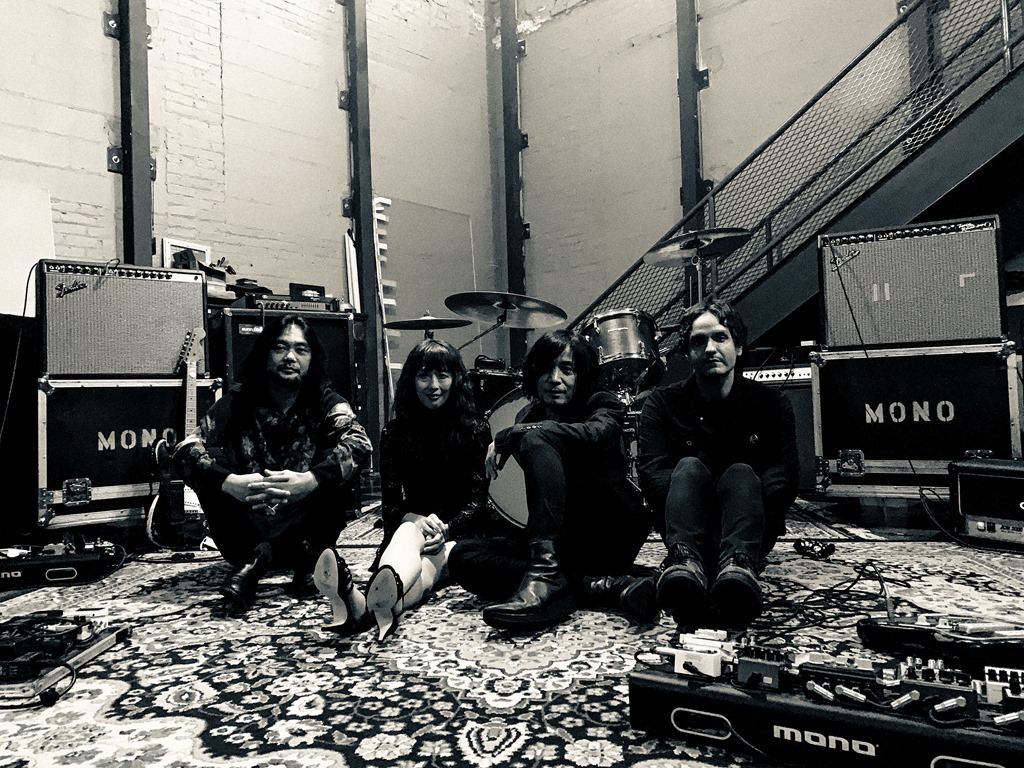
Following the first film/single, ‘Riptide’, Japanese instrumental rock band MONO unveils ‘Innocence’, the second film/single from the band’s 11th album, Pilgrimage of the Soul.

As with ‘Riptide’, the film for ‘Innocence’ was directed by the Spanish film collective, Alison Group. Watch the short film now:

Recorded and mixed – cautiously, anxiously, yet optimistically – during the height of the COVID- 19 pandemic in the summer of 2020, with one of the band’s longtime partners, Steve Albini, Pilgrimage of the Soul is aptly named as it not only represents the peaks and valleys where MONO are now as they enter their third decade, but also charts their long, steady journey to this time and place.

Continuing the subtle but profound creative progression in the MONO canon that began with Nowhere Now Here (2019), Pilgrimage of the Soul is the most dynamic MONO album to date (and that’s saying a lot). But where MONO’s foundation was built on the well-established interplay of whisper quiet and devastatingly loud, Pilgrimage of the Soul crafts its magic with mesmerising new electronic instrumentation and textures, and – perhaps most notably – faster tempos that are clearly influenced by disco and techno. It all galvanizes as the most unexpected MONO album to date – replete with surprises and as awash in splendor as anything this band has ever done.

AA

nQNopxGQ

Pilgrimage of the Soul is the 11th studio album in the 22-year career of Japanese experimental rock legends, MONO set for release on 17th September (Pelagic Records)

Recorded and mixed – cautiously, anxiously, yet optimistically – during the height of the COVID- 19 pandemic in the summer of 2020, with one of the band’s longtime partners, Steve Albini, Pilgrimage of the Soul is aptly named as it not only represents the peaks and valleys where MONO are now as they enter their third decade, but also charts their long, steady journey to this time and place.

Continuing the subtle but profound creative progression in the MONO canon that began with Nowhere Now Here (2019), Pilgrimage of the Soul is the most dynamic MONO album to date (and that’s saying a lot). But where MONO’s foundation was built on the well-established interplay of whisper quiet and devastatingly loud, Pilgrimage of the Soul crafts its magic with mesmerising new electronic instrumentation and textures, and – perhaps most notably – faster tempos that are clearly influenced by disco and techno. It all galvanizes as the most unexpected MONO album to date – replete with surprises and as awash in splendor as anything this band has ever done.

MONO began in Japan at the end of the 20th Century as a young band equally inspired by the pioneers of moody experimental rock (My Bloody Valentine, Mogwai) and iconic Classical composers (Beethoven, Morricone) who came before them. They have evolved into one of the most inspiring and influential experimental rock bands in their own right. It is only fitting that their evolution has come at the glacial, methodical pace that their patient music demands. MONO is a band who puts serious value in nuance, and offers significant rewards for the wait.

Watch the music video for first single ‘Riptide’, a film by Alison Group now:

AA

MONO

Roman Numeral (US) / Wolves And Vibrancy (EU) –13th August 2021

Christopher Nosnibor

Linear narrative can be so dull, so predictable, or otherwise lacking in intrigue and imagination. There is so much more challenge – both as a writer and a reader – to a work that doesn’t follow that standard beginning / middle / end convention. There’s nothing predictable or obvious or linear about Fawn Limbs’ their third long player.

‘Day three. I woke up in a bed made of hay and roots. For a brief but fleeting moment, I couldn’t recall the incidents of the past days…’ This is how we arrive in Darwin Falls. It’s a sparse country vibe, a bit True Detective. It’s hazy, hot. The dry, cracked voice of Lee Fisher narrates the scene, and we’re as lost and bewildered as he is. Where are we? Why are we here? What the fuck happened? The picture gets darker as it unfurls, and it’s a slow, languorous build… and then, unexpectedly, everything erupts and shit spews forth as if from a volcano bursting from the very molten pits of hell. It tears with a burning fury at your guts and at your organs, and this is punishment. And then, this is calm, this is tranquillity. This is schizophrenic, unpredictable. It’s too much to process.

How you do describe Fawn Limbs? Odd and experimental is perhaps a fair starting point, and the first track in this is both. ‘Nesting Lumens’ is abstract and ethereal, a shade abstract, but it’s also raging chthonic demon-noise metal and all the brutality delivered with a razor-sharp technicality. It’s perhaps most interesting when the rage dissipates and we’re left with expensive post-rock tropes, and these extend into the majestic

The Transatlantic trio describe themselves as ‘avant-garde mathgrind’ and that seems a fair summary of the blistering hellfest that is Darwin Falls.

We’re still struggling to find orientation amidst the slow-twisting post-rock smog of the opening segment of ‘Wound Hiss’ when things suddenly turn brutal, a battering sonic assault that’s brief but so violent as to cause concussion.

It’s the extremity of the contrasts that render these songs so staggering in their impact. As a post-rock band, they’re outstanding at forging delicate, graceful pastoral pieces, musical passages of delicacy and grace – but instead of breaking into breathtaking crescendos of cinematic beauty, they rampage into howling blasts of anguish that explode on the most frenzied slabs of extreme metal. There are moments of eerie spaciousness, as on ‘Caesura’, a short piece which appropriately provides a moment of respite, and mellow interludes such as the still waters of laid-back jazz at the start of ‘Twitching, Lapsing’ which jolts into life with a haemorrhage-inducing blast of rampant noise and only becomes more impossible as the brass collides with a nuclear storm and a tsunami of noise.

If Justin Broadrick and co successfully combined free jazz with slow, industrial grind as GOD, then Fawn Limbs push the concept to another level, and the spoken word sections provide a fascinating counterpoint to the roaring, blazing sonic blasts that come in between. But ultimately, comparisons simply don’t hold up here. True innovation is rare, and we’re unaccustomed to it: it’s difficult to respond to it appropriately, somehow. It phases us. Shuddering, bemusement, bewilderment. A lack of comprehension. How do you measure it, and how do you process? Darwin Falls is a remarkable album, a sonic supernova, and it’s no mere hybrid: it is truly unique. Prepare to have your mind – and eardrums – blown.

AA
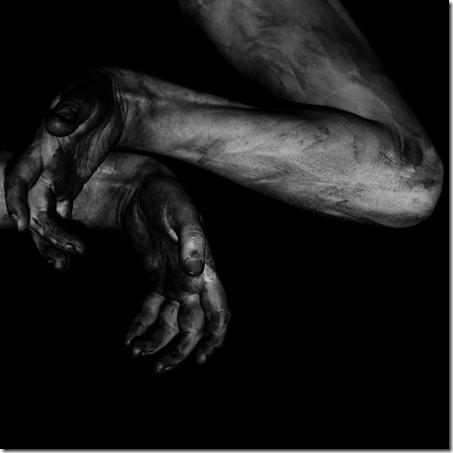
Darwin Falls ARTWORK

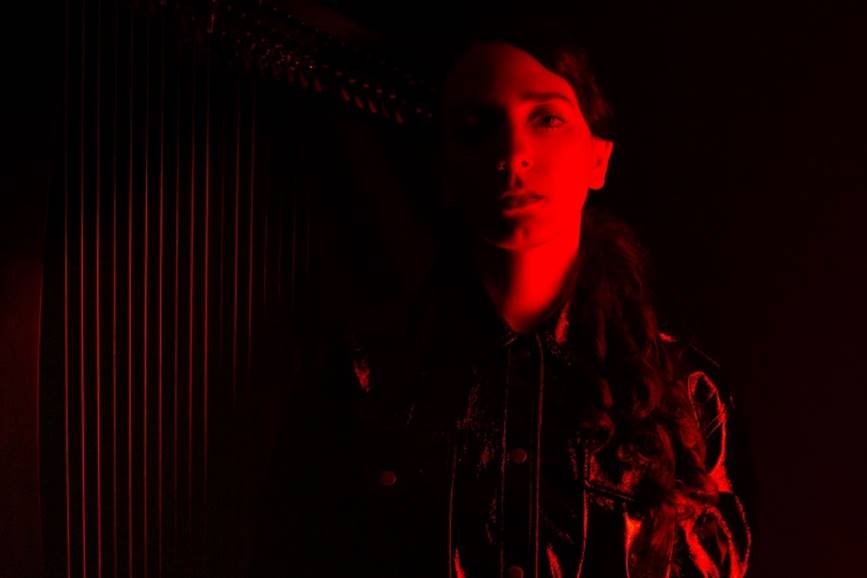
Kety Fusco is to harp what Helen Money and Jo Quail are to cello.

One year after the release of her debut album Dazed, the young Italian-Swiss harpist and composer Kety Fusco gives us a very personal version of the famous song ‘Gnossienne N.1’ by Erik Satie. In this modern reinterpretation, which Kety has entitled ‘Ma Gnossienne’, the harp is used in an unconventional way to generate sounds that have nothing to do with its classical timbre. The entire sound system is set up with sounds of vinyl scratched on metal strings, objects struck on the soundboard of the pre-sampled classical harp, and analogue effects manipulated live.

Switzerland-based Kety Fusco has embarked on a unique harp sound research. She works with Delta Electric Harps from Salvi Harps, who have taken Kety on as their official Ambassador. Her exploration of harp and effects technology began successfully with the debut of her album Dazed, described by Swiss critics as "a white fly". Kety Fusco has over 80 concerts throughout Europe, and she is working on the first world’s sound library of non-traditional harp sounds.

Watch her perform ‘Ma Gnossienne’ here:

AA

KF

Year Of No Light have revealed their latest single, ‘Alètheia’, described by the band as ‘a double movement of light and darkness before burning our memories on the altar of the void’. The track is taken from their new album Consolamentum set for release via Pelagic Records on 2nd July.

Listen to ‘Alètheia’ here:

Pelagic Records are releasing not only their new album Consolamentum but also a wooden box set, to celebrate the band’s 20th anniversary, containing their entire discography of 5 studio albums, several split EPs, and the collaboration with Belgian composer Dirk Serries from the ‘Live At Roadburn’ recordings, on 12 vinyl records.

YONL 2

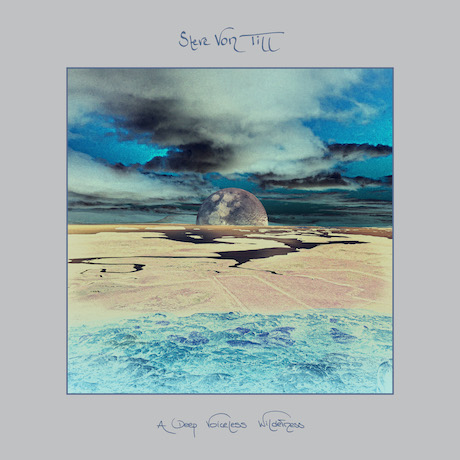
Steve Von Till shares another piece from his forthcoming ambient album A Deep Voiceless Wilderness approaching on 30th April via Neurot Recordings. "Called From The Wind" arrives by way of an elegant video from Chariot Of Black Moth, which can be viewed below. The track is also available on all the main streaming sites. About the video Steve comments, "Jakub Moth hints at the emotion behind a timeless story about humanity and landscape without saying too much, without limiting the universal scope of the sound. As I have removed the verbal language from the ambient version, he has added visual poetry to accompany it."

Watch the video here:

AA

index

‘Love Poem’, the second video from Los Angeles-based instrumental outfit TEETHERS’ eponymous first EP; all the songs are from drummer Andrew Lessman’s book of compositions.​ Lessman is a drummer known in the L. A. underground for his chameleonic contributions to a roster of projects whose jazz, avant garde, and indie pop scenes don’t always intersect.

Watch the video here:

AA

Most of these pieces were written during Lessman’s days studying at the California Institute of the Arts under Wadada Leo Smith. This is also where Andrew met the irreverent psycho-talents who now 10 years later play on this first TEETHERS EP… sometimes it takes time to cultivate a group sound that does justice to the sound in one’s head. Joining Andrew in the studio on these recordings are: Graham Chapman on bass, guitarist Alexander Noise, Joe Sanata Maria and Ted Faforo on saxophones and Stefan Kac on tuba. Laced into this moody wordless music, like a delicious mushroom chocolate, is a humble nudge to look past the decaying fetters of our assumed boundaries and imagine new organizational forms.

Andrew grew up in a suburb of Chicago called Elgin with a single mom who worked as a dental hygienist. With no musicians in the immediate family, his musical awareness came from playing trombone in the middle school band and listening obsessively to Q101 (“Chicago’s Home for Alternative”).

At age eleven, after making fart noises on a rented trombone for a year, he received a $200 Hohner drum kit as a birthday reward, and promptly formed a Nirvana cover band with his buddy Jim. It was a good start, but at age thirteen everything changed. His mother had been fighting cancer for about six years and it spread out of control and took her life. It was decided that he and his sister would leave Illinois to go live with his jazz musician father in San Diego.

It was a painful loss, but dialectically embedded in this loss was opportunity for growth. On the first day of high school, he made fast friends with some punks on the quad who’d also just gotten some instruments, and they started a band called The Irrelevants. Through hardcore punk, they learned how to channel teen angst into volume and speed. They wore ugly homemade clothing, hated the government, smoked weed out of apples, and booked quite a bit of DIY shows.

At the same time, his dad was a professional gigging musician and his home was a constant hangout for many of the great players in the San Diego scene. His dad’s record collection confronted him with the confusing sounds of Miles’ “Kind of Blue”, Ornette’s “Shape of Jazz to Come”, Coltrane’s “Giant Steps”, and Art Blakey’s “Freedom Rider”. These sounds were incredible, and his dad was there to help demystify it. Within a year of obsessively drumming along to those records on the same $200 Hohner kit, he started sitting in at his dad’s gigs, booking gigs of his own, and picking up lessons from local legends like Charles McPherson.

One of his dad’s friends, drummer and educator Duncan Moore, thought he would benefit from attending UCSD’s summer jazz camp, so he pulled a few strings to squeeze him in last minute. Since all lessons with the drum faculty were full, he was randomly given a lesson with Wadada Leo Smith, the iconoclast composer and trumpeter who in the 60s helped start the AACM (Association for the Advancement of Creative Musicians). From this very first meeting, he permanently broke Andrew’s brain and got him thinking about composition. His advice on thinking beyond rhythm, melody and harmony to make creative use of musical form was like jumping from 3D to 4D. Andrew spent the next year shedding for college audition tapes and he ended up following Wadada to the California Institute of the Arts in Los Angeles.

19th March 2021

Christopher Nosnibor

‘Elba’, the second single cut from their forthcoming second album, Small Worlds, finds alternative / post-rock act Mount Forel conjuring a shimmering sonic tapestry of atmospheric instrumentation. From a hazy mirage of shifting sounds emerges a slow-burning laconic tune that twists desert rock with country and a progressive twist.

For reasons I can’t quite pin down, I find myself thinking of The Eagles, and ‘Horse with No Name’ by America, even though it really doesn’t sound like either. What it does have, though, is a certain laid-back, vintage Americana feel that’s kinda nice. Maybe I’m getting old, maybe I’m tired, maybe I’m stressed, maybe it’s just nostalgia, but nice is alright.

A

MountForel_SmallWorlds_artwork_1080sqr