Posts Tagged ‘Post-Punk’

11th March 2022

Christopher Nosnibor

When it comes to goth, you might say that the apple never falls far from the tree: there’s a long history of references and recycling, with bands often taking their names from songs or otherwise referencing other bands, and there is, or at least should be, a goth band name generator somewhere on the Internet, with ‘Children’, ‘Sisters’, ‘Grooving’, ‘Dead / Death’ and ‘Ghost’ featuring prominently in the not-so random permutatable word selections. Funerals and marionettes are pretty popular, too, from as far back as 1986, when The Marionettes began life as The Screaming Marionettes.

Taking their name from the Charles Gounod composition of the same name, best known as the theme music for the television program Alfred Hitchcock Presents. The Funeral March of the Marionettes go back to that mid/late eighties heyday (broadly 84 or 85 to 87 or 88) that saw ‘goth’ solidify from being a nebulous array of post-punk bands (The Sisters of Mercy, Siouxsie and the Banshees, Bauhaus, Alien Sex Fiend) being lumped under an umbrella by a lethargic press into an actual genre with more defined stylistic boundaries, typically drawing on the aforementioned acts, but with more indie-leanings typical of The Mission and the style of guitar Wayne Hussey introduced to The Sisters on his arrival in 1984

The Funeral March of the Marionettes, from Rockford, Illinois, cite The Cure, Bauhaus, Joy Division, Siouxsie and the Banshees, and others among their influences, and while they describe their latest offering as something of a departure, it’s still dense with latter-day gothic tropes, albeit leaning more towards the atmospheric post-punk/industrial crossover space, whereby you’ve got Depeche Mode covering Joy Division, a brooding atmosphere as cool synths drift in an ocean of reverb while angst oozes from every corner of the dense, gloomy production.

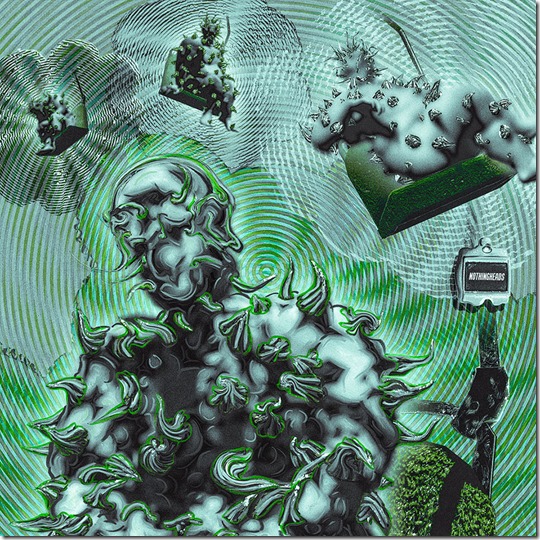
Yet for all its adherence of those tropes, for all its stylistic familiarity (just look at that cover art, that’s The Sisters of Mercy / Merciful Release meets Joy Division via Rosetta Stone), ‘Slow’ hits a spot, because it’s dark, dark, dark, and the execution is spot on, sending a shiver of torment down the spine that entices you to bask in the gloom.

AA

203094

London based doomy post-punk band Nothingheads unleash the lead single Jukebox as part of their upcoming Digging EP, to be released digitally via London based Holy Dotage Records (Spizzenergi, Voodoo Radio) and as a limited edition tape cassette via Just Step Sideways (Beige Banquet, Civil Partnership, Tommy Cossack).

Propelled by a disco beat and rolling bassline, Jukebox’s energetic and compelling mix was captured by producer Chris Smith and recorded at Press Play Studios In Bermondsey, South London.

Nothingheads say “Jukebox is about retreating into a ‘doom cave’, tuning out and turning it up”.

Formed through a shared love for the capital’s DIY music scene, Nothingheads songs draw no boundaries – no subject is too confusing, no sound too eclectic. The band write collaboratively, harnessing the noise and energy that comes from playing together.

Nothingheads are Rob Fairey (vox / guitar), Matt Holt (bass / synths), Ed Simpson (guitar) & Joe Zain (drums). They’ve been described as ‘creepy post-punk doom and gloom from a basement’ by Turn Up The Volume and ‘part metallica, part punk, part psychedelia’ by Play It Loud UK. Having previously supported Japanese Television, Ugly and DeafDeafDeaf, the band have recently headlining both The Victoria Dalston and Shoreditch’s Jaguar.

Listen to ‘Jukebox’ here (click image to play):

Nothingheads_InfiniteJukebox_960sqr

Upcoming shows:

May 1stGet Together Festival (Sheffield)

May 5thOld Blue Last (London)

May 7thHanwell Hootie Festival (West London)

Jul 23rdTramlines In The City (Sheffield)

15th April 2022

Christopher Nosnibor

It may sound a bit screwy, but then, we’re here on the Internet and I’m sure you’ll have read far screwier things presented in more enticing ways that are far more dangerous than my theory that individuals are somehow psychologically and biologically attuned to certain kinds of music. It’s a complex issue, and one I’m yet to fully unravel, but it feels like something that slots into the nature / nurture debate: are people born predisposed to appreciate darker music, or is it triggered by life events – or a combination of the two?

In 1983, at the age of seven or eight, I saw Killing Joke on Top of the Pops performing ‘Love Like Blood’. I was, in hindsight, enjoying a mundane middle-class upbringing, but this moment – and it was one of several – went a long way to cementing my appreciation of darker music. I’d never suffered any kind of trauma and hardship beyond maybe some kids taking the piss out of my coat or whatever, but still something drew me towards this kind of thing.

Nearly forty years on, and ultimately, nothing’s changed: the turn of the millennium brought a new wave of post-punk influenced acts, with the likes of Interpol and Editors setting the grounds of darker territory. And, in turn, we’re seeing bands emerging now that very much echo the sound and style of post-millennial wave of post-punk, or new millennium new wave if you will (there doesn’t really seem to be a label for it, but if that one ever gets used, I’m claiming it).

This is the long and meandering route to the arrival the new single from London-based alt-rockers The Palpitations who – like so many acts – emerged during lockdown out of a need to so something, and the foursome – Tom Talbot on vocals, Brett Rieser on guitar, Nishant Joshi on bass, Florin Pascu on drums – set out their agenda with the ‘Feed The Poor! Eat The Rich!’ EP.

But there’s a nugget in the Palpitations bio that shows they’re not just another bunch of musicians who were loafing around listlessly and decided to bung some tunes together to fill the time whole on furlough or unable to play live. Talbot and Joshi were, in actual fact, working as frontline doctors, and both were instrumental in protecting NHS staff with upgraded PPE, and also took part in protests that gained international attention. Joshi later took the government to court over their PPE failures, winning a landmark case.

It’s out of this passion and a sense of frustration that the music of The Palpitations comes, and ‘Denial’ is a belter, smashing together a spindly, soaring lead guitar, with cool, meandering synths and a thumping solid rhythm section; if Interpol collided with Bivouac and Eight Storey Window, you’d probably have a handle on their post-punk grunge crossover, although there’s perhaps more than a hint of Placebo in the blend, and ‘Denial’ packs some darkly melodic angst and significant tension into its four-minute duration. It resonates not just on an emotional or sonic level, but on  a cerebral and biological level – and it’s an instant grab.

Cool Thing Records – 1st April 2022

Christopher Nosnibor

BAIT exists as a side-project for Asylums’ Michael Webster and Luke Branch, and they couldn’t be much different, with Webster using this vehicle as an outlet by which to channel all his angst and anger through sharp-eyed and sharp-tongued social observation and critique.

This debut long-player has been a long time in coming. Their eponymous mini-album landed back in March 2017, and apart from the standalone single release of ‘DLP’ in the spring of 2019, they’ve seemingly been dormant, at least in the public domain. But despite the obstacles of geography during lockdown, they’ve been busy, and the last couple of years have provided an abundance of grist to their mill.

The band describe it as ‘a digital post-punk lockdown docu-record which watches the clock, gets the jitters & lashes out just like the rest of us. It’s an internal monologue that accounts the anxiety, the struggles, the pressures experienced living by the sea during an international pandemic’.

Most struggled in one way or another during the pandemic, some unspeakably, and for a great many, the lasting effects of the trauma of lockdown and isolation are every bit as bad as those of the virus itself. Many lost loved ones, but were unable to gain closure or grieve with friends and relatives due to restrictions – while, it turns out, the government of ‘Great’ Britain partied on. It was often hard to know what to make of anything: conspiracy theories abounded, but over time, some of those theories began to look rather less far-fetched, and under such close surveillance, people could be forgiven for getting paranoid, for being angry.

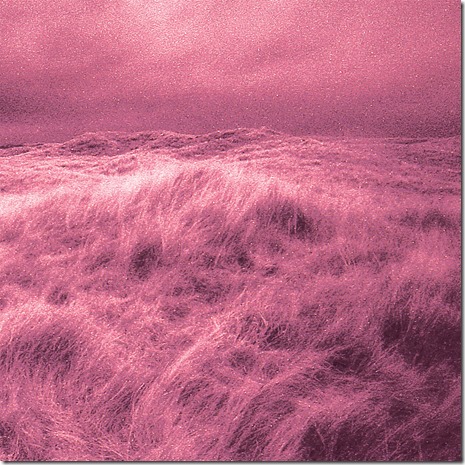
Sea Change is one angry record. But to describe it as such is to overlook the emotional range it articulates: it’s an album that gives voice to anxiety, panic, fear, trauma. Perhaps it’s the ‘internal monologue’ aspect of its evolution is why it really speaks. As is so often the case, in the personal lies the universal, and it conveys the rapid changes in mood and general state of confusion, questioning, and self-doubt that defined the lockdown experience for so many of us. And just because we’ve left lockdown doesn’t mean that we’ve left lockdown behind, psychologically, meaning that Sea Change’s resonance goes far beyond that defined period in time which spawned it (‘inspired probably isn’t the word).

The mood is tense and dark throughout, and the production has that mid- to late-80s Wax Trax! Industrial feel to it: the guitars are gritty, but everything is condensed into a dense lump of sound that batters rather than saws at the senses. ‘No Sleep for Light Sleepers’ is more minimal, haunting, but also ominous, the processed spoken word like the mutter in your ear that just won’t let you settle.

It’s not entirely without humour, either: if the frenzied, pounding ‘DRAMA DRAMA DRAMA DRAMA’ encapsulates the way in which a heightened state of anxiety is a shortcut to a loss of perspective, whereby the smallest, most trivial things give cause to great panic (things you know are irrational, like, say, getting twitchy when your phone battery drops below 49%), it also highlights just how self-obsessed and microfocussed we are as a society (that that incident at the Oscars totally engulfed the internet against a backdrop of war, a cost of living crisis, and rising Covid cases and hospitalisation is perhaps the definitive moment in our culture of self-absorption, and perhaps, in the wake of lockdown panic, the need to have something to fret and opine over obsessively just to fill the gap). It’s not all completely oppressive, either: ‘Electric Murder’ is a straight-up dark electropop tune that would comfortably sit in Depeche Mode’s catalogue.

‘The Weight of the Water’ finds them punching through a steely grey mesh of guitars, and it’s dense and tense; the jitters amp up tangibly on ‘Somewhere to Be’. ‘I’ve got somewhere to be… I’ve got somewhere to be’ Webster repeats as if a mantra, like the White Rabbit trapped in a postmodern world in which all holes have been concreted over and gentrified in the name of ‘progress’. ‘Sugarlumps’ leaps from a queasy, claustrophobic wheeze to a roaring metal blast reminiscent of Ministry’s Filth Pig, and the album ends with a ferocious finale with ‘We Will Learn to Bark’, the sound of pure catharsis.

It’s pretty much an instant grab, but Sea Change is definitely an album that offers up more over repeat plays.

AA
Sea Change

Avalyn formed in late 2021 after long-time friends Andy Power (Guitar & Vocals) and Ben Croft (Lead Guitar) decided to start writing together due to them both being dissatisfied with their previous musical efforts. Soon joined by Cain Garcia (Drums) and Emily Turnbull (Bass & Vocals), the band appeared all over their local music scene in 2021, including playing their first gig supporting Junodream alongside Lime Garden at The Shipping Forecast in Liverpool, as well as going into Whitewood Recording Studio with Robert Whiteley to record their latest offering.

Influenced by the great punk powerhouses, Avalyn takes their cues from the likes of My Bloody Valentine, Slowdive and Lush. What emerges is the ferociously uplifting sound that can be heard on the group’s latest track; ‘When We Were Nothing’, out 24th March. Featuring mastering work from the Lead Singer & Guitarist of the seminal 90s Shoegazing band RIDE, Mark Gardener, the track melds brooding experimentalism, with an unshakeable punk sound. Thrashing guitars play under Power’s haunting vocals, as he sings about the euphoric uncertainty that comes with youth, and the always present, uncertain future.

“When We Were Nothing was the second song we ever wrote together as a band,” says Power. “Our guitarist Ben brought in the main riff and I could tell from the beginning it was going to be great, so I wrote a verse for it and then we wrote the lyrics together.  Everything really came to life once we brought it into the practice room with the addition of Cain’s drum part and Emily’s bass and vocal Recording with Rob Whiteley was a lot of fun as we felt like he was able to help give us the freedom to experiment with the sounds we wanted as well as being able to put all our ideas together into a cohesive mix. The mastering job from Mark Gardener was the final touch that has taken the song to another level and we’re excited to continue working with him going forward.”

Listen here:


AA

AValyn

25th March 2022

Christopher Nosnibor

For the uninitiated, JW Paris is a band, rather than a person, and a band who’ve been described by 6Music’s Chris Hawkins as sounding like Joy Division.

It was around fifteen years ago when there was a huge buzz around emerging acts Interpol and Editors where all the hype was that they ‘sound like Joy Division’, and I rushed to check them out, and while I immediately loved both bands, my first reaction was ‘no, they don’t really.’ Yes, baritone vocals and post-punk guitars, throbbing bass… the elements were there, the influence was clear… but neither band sounded like Joy Division. But then, such is the length and darkness of the shadow cast by Joy Division, comparisons are invariably likely to build unrealistic expectations.

So I don’t expect ‘Electric Candle Light’, the fourth single from the ‘90’s grunge and Britpop inspired three-piece’ to sound like Joy Division – which is perhaps as well, because it doesn’t. But I’m not disappointed, and there’s certainly a Manchester vibe about them, despite their London base.

‘Electric Candle Light’ is a ramshackle lo-fi chunk of shaking rockabilly post-punk with a raucous lead guitar line that needles its way over a loose swaggering rhythm and has some catchy backing vocals zooming around in the mix.

‘Are you / see thru?’ Danny Collins questions, sounding more Mark E Smith than Ian Curtis, although the overall effect is a collision of The Fall and The Dandy Warhols. forging a zesty, spirited tune with bags of energy. Woohoo indeed.

JWParis _5 by c24photography

Pic by c24photpgraphy

Christopher Nosnibor

Having been rescheduled after last November’s booking was cancelled, The Golden Age of TV are back in York on the eve of the release of a new EP.

It’s not the most promising start to arrive to find the doors locked, and Sea Legs are still soundchecking when they open the doors 25 minutes late. Something isn’t right with the mic in the kick drum, and it’s creating huge crackling distortion. But a change of mic, a change of leads, and things are back on track, albeit with a slightly later start.

It’s pretty quiet to begin, too, so the time between soundcheck and the start affords a bit of time just to sup a pint of Timothy Taylor’s dark mild and see the venue properly. I don’t think I’ve ever noticed that there’s still a fireplace and mantelpiece at the back of the stage behind the drum kit. It’s even more of an anomaly than the huge great radiator at the side of the room. These are reminders that The Vaults may be a venue, but still a pub at heart, and I’m drinking my hand-pulled pint from a real glass. There’s something comforting and gratifying about this.

Sea Legs’ melodic indie/alt rock stylings are easy on the ear, and occasionally fade into waves of ambience in between. There are some nice bass grooves too, not to mention some detailed and textured lead guitar work. They’re tight and tuneful: to my ears they’re nice enough but a shade ordinary, although that means they’re also exactly the kind of band that goes massive with the right breaks.

DSC_2284

Sea Legs

Pavillion’s front man’s beige chinos and shiny paisley shirt are a bit of a distraction from the music, although that’s probably just me as I realise he’s dressed how everyone dressed when I was their age, down to the early 90s curtains. I also realise the place is suddenly a lot busier, and it’s a shame their fans / mates thin out again shortly after their set, not least of all because they seriously missed out. If I was being harsh, I’d say their song ‘Terrifically Ordinary’ could be their signature, but they show real songwriting panache, with hints of Squeeze, and they play well, even if the visual aspect of their performance isn’t particularly evolved yet. Their lyrical vignettes are poetic and evocative, and well-constructed.

 DSC_2289

Pavillion

All of this is just preamble, both in terms of the bands and the commentary. I’m here for The Golden Age of TV quite simply because the last time I saw them back in September, they absolutely blew me away with their sheer quality. Although they’ve been around a while, something seemed to have fired them up several notches during lockdown.

Tonight proves that their Long Division performance was not just a flicker post-pandemic exuberance, and that they really are a band who’ve achieved a new level of form. In a bold move, they open with the upcoming EP’s title track and lead single ‘Bite My Skin’ that merges motorik groove with choppy post punk and solid riffing.

DSC_2312DSC_2307DSC_2357

The Golden Age of TV

The energy they radiate is magical: they’re overtly nerdy in image, and they embrace it to the max. Rock god guitar poses (Ryan with glasses sliding off face, the guy plays every chord like it’s an absolute crushing stadium-blasting monster, Sam hard thrashing like he’s possessed) epic gurning and unashamed mum dancing, they are just so exuberant and joy to watch, and I keep finding myself grinning like a loon. Bea is a remarkably expressive vocalist with great presence. In all, they’ve got great tunes, tight and tidy with neat structures and finishes, and a great vibe. When a band are this into what they’re doing, it’s hard not to get caught up in it. The golden age of TV may have long passed, but their own golden age is now. Go see them: because recorded they’re ace, but it’s live where they really thrive.

Hull quintet Low Hummer have shared new single ‘Talk Shows’ ahead of their debut appearances at SXSW this week. The first new music since their acclaimed debut album appeared in September 2021, ‘Talk Shows’ is another piece of danceable, synth heavy post-punk from the East Yorkshire band as they continue to create essential documents of alienation & discomfort as lyricist Dan Mawer touches on societal pressure to drink, body dysmorphia and the dirge of late night Saturday TV.

Continuing their run of collaborations with Leeds producer Matt Peel at his studio The Nave, ‘Talk Shows’ finds Low Hummer blending noughties indie beats with 80’s post-punk synths, spiky guitars and their unmistakable ear for a hook, as vocalist Aimee Duncan takes centre stage delivering this message of modern angst with her inimitable delivery,  as deadpan, cool and tongue-in-cheek as ever.

Bolstered by regular play across BBC 6 Music, BBC Introducing and support from Jack Saunders on BBC Radio 1, excitement about the band has continued to build since the release of ‘Modern Tricks For Living’ – with a sold-out run of Dinked Edition Exclusive vinyl, a headline slot on the BBC Introducing stage at Reading & Leeds, a twitter listening party with Tim Burgess and a UK tour support with with Welsh indie icons Manic Street Preachers all keeping the band busy last year.

‘Talk Shows’ lands as the band arrive in the US for their debut shows outside of the UK, ready to represent their beloved Hull and it’s DIY scene to a brand new audience. With support from BBC Introducing & PRS Foundation, Low Hummer and their label Dance To The Radio Records will be in Austin for the week for a number of showcases including the British Music Embassy at Cedar Street Courtyard on the 19th March.

After SXSW the band will be playing more shows across the UK for the remainder of the year, including their first London headline show at The Lexington on 13th April.

Listen to ‘Talk Shows’ here:

LH

Credit: Shoot J Moore

BISOU Records/Beast Records – 18th March 2022

Christopher Nosnibor

Sometimes, there’s simply no escaping the fact that grooves and hooks are important. However wearying the conventions of rock and pop are so much of the time, there’s still a vital appeal. Sometimes you just need something to grab hold of, something to grip your short, feeble attention span. But what happens when you bring all the conventions together at once and then mash them, bash them, squash and smoosh them with joyful irreverence? It goes one of two ways: it’s a horrible hybrid mess with no cohesion, or it’s genius. Supersound is genius. It mines many aspects of those conventions to forge an album that’s got groove and hooks, while making unusual takes on country, rockabilly and post-punk, and wrapping them in an abundance of noise that’s pretty gnarly at times. It’s all in the mix – blues rock, alt-rock, grunge, even regular radio rock – but delivered in a twisted, mangled fashion that’s guaranteed to keep it off the airwaves.

The story of the creation of this masterwork is decidedly un-rock’n’roll as it involves Red (Olivier Lambin) suffering from presbyopia and purchasing a bass because it has ‘bigger frets and fewer strings’ and recruiting a collective who can actually see to play their instruments to realise his musical vision. It’s perhaps no wonder it’s a blurry haze of bits and bobs. Said lineup involves ‘two drummers, Néman (Zombie Zombie, Herman Düne) and DDDxie (The Shoes, Rocky, Gumm)’ who Red asked to create their own rhythms, plus Jex, aka Jérôme Excoffier, his lifelong accomplice, who still has excellent eyesight, who played all the guitars on the album.

A strolling bass and jagged guitar slew angular lines on ‘Normal’ that’s spineshaking swamp rock, sounding like a collision between the B52s and The Volcanoes. ‘Ready to Founce’ has all the groove and all the swagger, and has the glorious grittiness of Girls Against Boys at their scuzzy, sleaze-grind best, calling to mind ‘Rockets Are Red’. Then, ‘Shark’ sounds like Butthole Surfers covering an early Fall Song. ‘Screen Kills’ is altogether gothier, with acres of flange swathing the trebly guitar, and all paths lead to the tense, needling jabbing jangle of the final song of the album, ‘Carcrash Disasters’. It could have so easily been tempting fate, but while they veer wildly and screech around every corner on two wheels, DER remain on the road to the end of a crazy conglomeration of an album that buzzes from start to finish.

AA

BIS-020_front

Grappling with themes of insecurity and isolation, the gritty new track combines tight instrumentation with jagged riff-roaring melodies. Calculated and convulsive in equal measure, ‘Wall of Noise’ comes as a taste of the band’s debut album, which is expected for release this summer.

Chewing through twangy vocals, angular guitar lines and a guttural garage-grunge feel, Berries cultivate a craggy landscape of layered noise-rock that is evocative of the “noise” that so many of us constantly find pervading our own thoughts. Pelting us from all angles with their meticulously frenetic sound, the band explain of the track: “Lyrically the song gives a nod to how self-doubt and how solitude can heighten and affect these feelings. Feeling lost or confused can produce the noisiest thoughts in your mind and that’s what we wanted to convey in this song.”

And, while its lyricism might deal with notions of self-doubt, the track marks a clear, confident and calculated next step in the band’s development.

Listen to ‘Wall of Noise’ here:

AA

a0550514258_10