There’s something quite unique about the Nordic / Scandinavian strain of contemporary post-punk. It’s not easy to pinpoint, nothing you can really put your finger on. But there’s something in that balancing of light and dark, and it’s something I probably became subconsciously attuned to at an early age, listening to A-Ha in the mid-80s when I was still in primary school. I would only later come to realise just how strong the currents of darkness and melancholy ran through their precise pop songs, and that this was what the enduring appeal was years later.
Sleep Kicks don’t sound like A-Ha, of course, although the same basic musical elements are there, not least of all something of an anthemic 80s feel (although that’s more In the vein of The Alarm or Simple Minds and bands with a more overtly mainstream ‘rock’ style). ‘No Chains’ picks up were they left off last year, and they’ve been honing the contrasting elements. The song is dark, but also light, with layers of guitar and a full production that gives it an expansive feel, but it is, also, without question, a killer pop tune with an immense chorus that’s bold and uplifting, with a sweeping choral backing, which makes for a big, fat, juicy earworm.
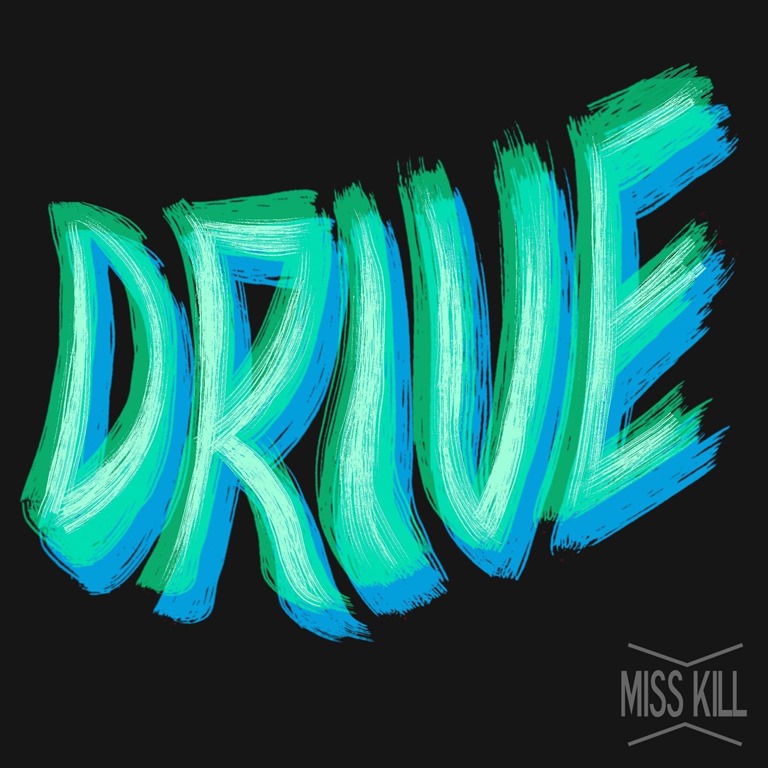
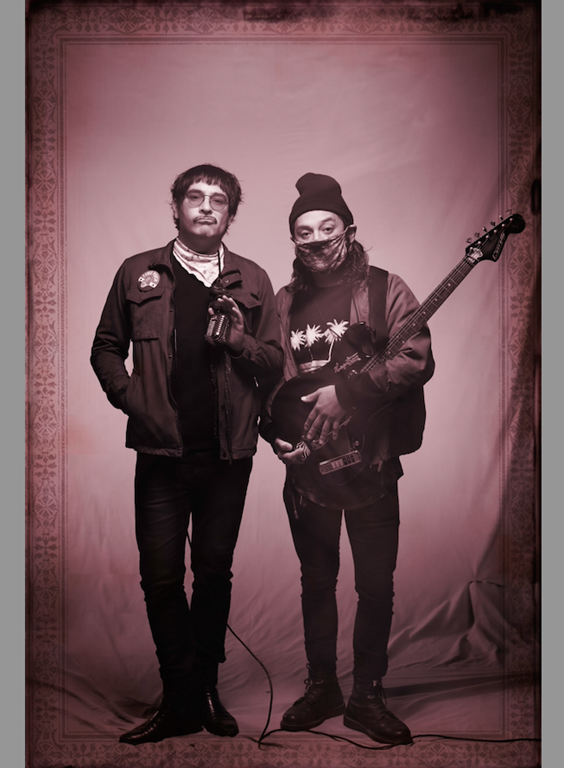
If ever there was a song so steeped in idealisation and escapism, Miss Kill’s ‘Drive’ sets new heights. It isn’t that they’ve ditched their grungy alt-rock influences, but this new single sees the duo, consisting of Alannah and Felicity Jackson in a much more reflective mood.
As they pitch it, it’s more Chris Isaak and Tom Petty than their usual touchstones of Hole, Placebo, or Pearl Jam, and in context it makes sense. It’s certainly got the easy, breezy, radio-friendly airiness of that classic Americana, but it also balances grungy bite with pop tones in a way that’s reminiscent of ‘Malibu’.
‘Asked my babe if he’d come for a ride yeh. I really just wanna get in and drive Away / Through the sun with the music blaring / Driving past I got everyone staring / I don’t think we’re ever coming back’, they sing.
It’s that perfect image, that dream, of driving away, of cruising into the sunset, never to return, to something new and something better. It’s just like the movies, just like in the songs on the radio. Freedom! Liberation! Life!
Who doesn’t fantasise about this ever? Who doesn’t want to ditch their boring ordinary life and crap job and simply live life like a fairytale? Or, better still, a road trip? To jump in a car and simply drive is the absolute epitome of the fantasy of leaving everything behind.
Reflecting on the reality is depressing, but this offers hope and prospects, like it could happen. It’s not for me to say that it couldn’t, because well, know knows? Anyway, it’s three and a quarter minutes of uplifting, melodic time out of life where you can believe in the dream.
From Cat SFX’s social media – or specifically, Cat Speranza as the face and embodiment of CAT SFX, you could be forgiven for forgetting that there’s a band happening. But why should all social media be about promotion, about the dayjob? For many artists, life inform art, and so the everyday – the shit, the weirdness, the boredom – is all integral to the making of the art.
Since their inception a couple of years or so ago, the London four-piece have had a blistering run of singles, and now look to cement their reputation as an exciting band on the rise with their debut EP, from which title track ‘Binman’ is the lead cut.
It’s an edgy post-punk effort, starting out with a taut, jittery verse with hints of early PJ Harvey before settling into a solid groove that nods to the musical stylings of Garbage, as well as The Jesus and Mary Chain circa Automatic and 80s pop era Psychedelic Furs.
‘I’m no good / never said that I was, never said that I could’, Cat sings in the breezy chorus. It sound so effortless, almost throwaway – which is fitting, since this is a song about kicking out the trash, when you are the trash, but at the same time, carries so much honesty, so much sincerity, so much realism, it’s impossible not to be completely hooked, completely sold. Because this, THIS is what perfect pop is. It’s not flimsy, throwaway, disposable, meaningless: pop resonates, grabs you, gets into your head with a catchy tune but at the same time hits you and stays with you. Cat SFX know this – they don’t say it, they just deliver it.
San Diego’s Wild Wild Wets continue to roll out singles off their upcoming new album ‘Love Always.’
The latest, ‘The Seer,’ is accompanied by a fully-animated music video (premiering today) created by Michael Turi, frontman and co-founder of Wild Wild Wets.
The track itself features backup vocals by Shelbi Bennett (The Midnight Pine and The Havnauts), and while the single version was cut to a stoney 4:20 minutes, the album version is 8 minutes long and includes nearly 4 minutes of added takeoff time that echoes Stereolab’s ‘kraut-rock’ sensibility with Turi & his bandmate and co-frontman Taejon Romanik sharing in the masterful quilting of noise and melody.
Turi explains, "I championed this track to be recorded and it eventually grew to become one of our favorite tracks on the new album, "Love Always". The song was written about a mixture between the writing process, a love for that along with the mantra that comes with completing your art, but also acts as a mantra for living, in general. I am and have always been obsessed with cartoons and it’s been a long-time dream to animate something of my own. Cosmically, I was able to use the last year of off-and-on pandemic scares to finally sink my teeth into the process. So many late nights of delirium spike this colorful dose of weirdness. I learned a lot during this creation process and once I’m over enjoying the time away from animating this I look forward to finishing my next project."
Romanik adds, “The Seer is an ethereal and cathartic pop song about writing pop songs. A story of the creative process and seeing things through to the end. Harmony vocals were performed by Shelbi Bennett of the Midnight Pine and The Havnauts. The Seer is the 3rd single from our 3rd LP ‘Love Always.’ It may be the catchiest song we have ever written."
Prophecy Productions / Auerbach Tonträger – 13th May 2022
Christopher Nosnibor
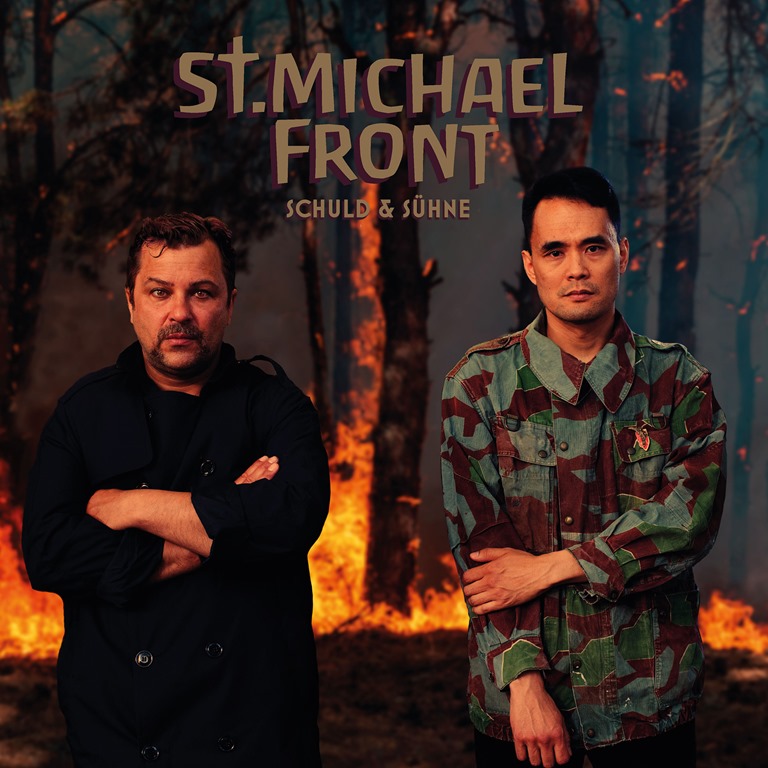
Anyone who tells you Germans lack a sense of humour probably doesn’t have one themselves. Many of the Germans I’ve had contact with have been wry wordplayers and incredibly droll. Who could deny the humour of a nation that gave us Die Toten Hosen? And so it is that St Michael Front showcase a certain tongue-in-cheek amusement, and while their debut album revelled in the preposterous, their latest, which also happens to be the first in their native tongue, exploits the disparity between drama and drollery. For a band who play small venues domestically, and with a minimal setup beyond the projection of movie clips, their sound and presentation is very much a cinematic widescreen and 5.1 sound that’s bold and ambitious – and not just a little self-aware of the pomp and extravagance of their songs.
I have to confess that the arrival of ‘Knochen und Blut’, the second single from Schuld & Sühne completely skittled me, and I immediately found myself somewhat obsessed by the song, and its accompanying video. The song is so magnificently poised, balanced, dramatic, theatrical, while the video… the video is weird. Lifting clips from vintage movies is nothing new, but there seemed to be a certain revelling in the brutal here, and it cut a path from the previous video, suggesting that these guys have something of a fascination with clips of people pummelling or shooting the crap out of one another and scenes of destruction by fire and extreme weather. I’m actually reminded a little of Home Alone, and can picture them glued to all the old black and white gangster movies.
AA
Schuld & Sühne seems to revel in being overtly German, in the way that Rammstein are – yes, I know – more German than German (although it was Hanzel Und Gretyl who took this comment on the Jewish community prior to WWII and the label ascribes to architectural historian Niklaus Pevsner for his dubious support of the Nazis as a song title for a technoindustrial banger). St Michael Front are a hell of a lot more subtle than Rammstein, and a lot more fun, too: it’s far smarter than ‘Amerika’, but no less German, and no less bold or steeped in pomp.
There’s more than a hint of Sparks or even Pet Shop Boys here, and St Michael Front clearly ‘get’ the essential dynamic of the quintessential pop duo: impassive, static, stone-faced guitarist Bruder Matthias is the perfect deadpan foil to the subtly flamboyant and vaguely campy trenchcoat-wearing Bruder Sascha, and the interplay between the two across the songs is entertaining. They build drama, and there’s a keen theatrical element to the songs.
It helps that St Michael Front don’t resort to force, lyrically or sonically. Instead of bludgeoning the listener, Bruder Sascha has a knack for an expansive gesture, a raised eyebrow that’s arch and disarming, vaguely absurd, and knowingly so – and it translates beyond the videos – you can actually hear this coming through in the songs themselves. At times incongruously jaunty, at others giving a knowing nod, there’s a dry comedic element to the performance.
AA
Schuld & Sühne is at times brooding, at times breezy, even borderline cheesy (none more so than third single ‘1000 Namen’) – but for all this, there is something aching and beautiful about so much of it that makes it a magnificent and really quite special album.
The first song off Continental Lovers’ forthcoming 10” vinyl E.P, ‘Pink Teeth’, which will be out in the Summer, is an old-school punk-rock blast of excitement. It’s not a blast of innovation, but then, I’m finding innovation increasingly weary. We need good tunes and energy, and that’s what Continental Lovers deliver here.
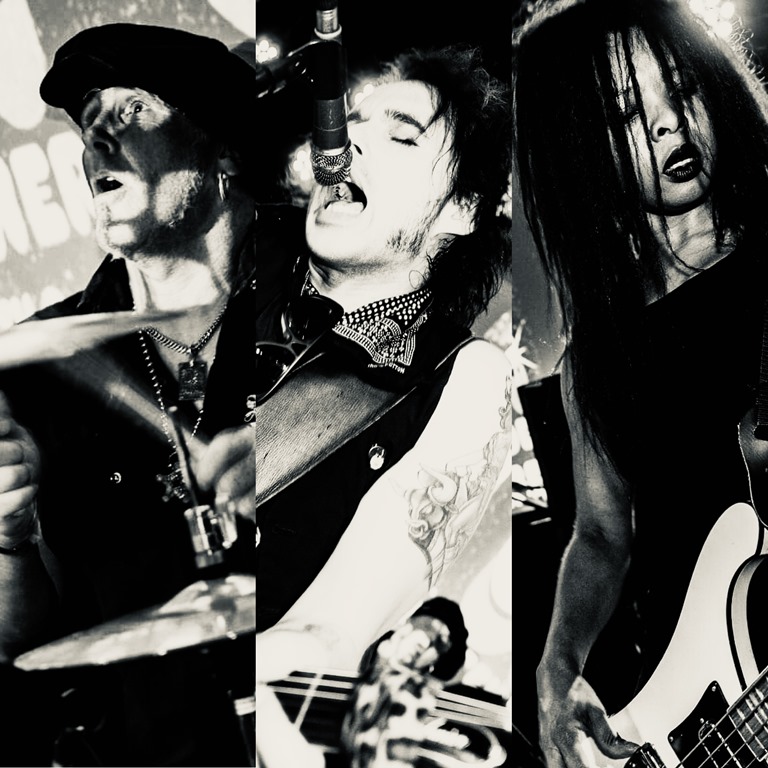
The London trio are bursting with energy and strong three-chord riffs played straight. There’s no pretence here, no production wizardry. Blink or nod and you’ll miss it, because it’s all over and done with inside two minutes and eight seconds, and that’s part of the appeal. They pack everything in – verses, chorus, guitar break, nifty hook – into that, and it’s a great tune played with real energy. It draws clear influence from vintage guitar pop in the vein of The Buzzcocks.
There’s a temptation to gush about how fresh it feels, the rush of something to immediate and direct, how it evokes memories and stirs a sense of nostalgia, but it wouldn’t exactly be in keeping with the spirit of the song. It’s in – out – clean, no messing. Perfection.
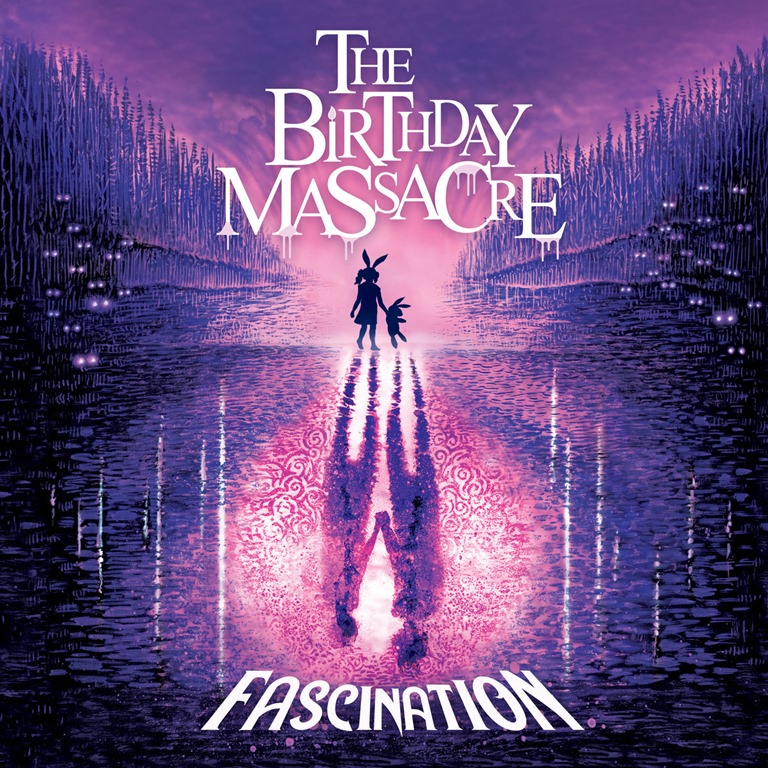
Over twenty years and a dozen albums, The Birthday Massacre have become prime exponents of goth synth pop. They describe Fascination as ‘at once the most fully realized album with the bands signature blend of haunting vocals, captivating electronica and aggressive guitars and their most accessible’.
It’s this accessibility that immediately announces itself from the outset. The title, ‘Fascination’, immediately makes my mind leap to the song by The Human League, and this is unquestionably poppy, but this is in a different league instead. It’s the title track that opens the album and it’s a colossal anthem. It’s in the slower mid-pace tempo range, and the production is so immense as to be arena-worthy, the slick synths drifting over big, bombastic guitars. Some may baulk at the notion, but it’s pretty much a power ballad. It paves the way for an album that’s back-to-back bangers.
I mean, make no mistake, this is a pop album in a pure 80s vein, and pushes tendencies that were always in evidence in BM’s work. People often seem to forget just how dark a lot of mainstream pop was in the 80s, but listen to A-Ha, even Howard Jones or Nik Kershaw objectively and the currents of darkness are clearly apparent amidst the clean lines of the clinical synth pop production of the day. It’s perhaps time to re-evaluate what actually constitutes ‘cheesy’ – an adjective so often pinned to the 80s with no real consideration – and cast aside the idea of ‘guilty pleasures’ when it comes to a lot of music of the era.
‘Stars and Satellites’ is bold and brooding, and probably the most overtly ‘goth’ track of the album’s nine, although ‘Like Fear, Like Love’ grabs bits of The Cure and tosses them into a stomping disco tune. But those drums… they’re great, they’re huge, but they really are the epitome of the 80s sound. Elsewhere, the guitar line on ‘One More Time’ actually goes 80s U2 with heavy hints of Strawberry Switchblade (and they weren’t goth either). Step too far? Maybe for some craving the chunky chug of industrial guitars, because this is fundamentally a riff-free zone, but Fascination works if you embrace the spirit of its being easy on the ear and accessible.
It feels fresh for the band, but also feels like a relatively safe step in the direction of commercialism. It’s ok, and the songwriting and performances are solid throughout, that much is undeniable. It’s one of those albums that may take some time to sink in, in the way that Editors’ On This Light and on This Evening and The Twilight Sad’s Nobody Wants to be Here, Nobody Wants to Leave, felt just that bit mainstream initially. Digesting an overtly ‘pop’ album or a change of direction – and while the direction of Fascination is something that’s always been a part of The Birthday Massacre’s sound – hearing it placed front and central inevitably feels like a shift. And it is a shift, of course, just not one of seismic proportions.
‘Is anyone real anymore?’ they ask on ‘Precious Hearts’ before the final cut, ‘The End of All Stories’ goes Cure again, only this time with monster power chords that border on metal to fill out the mix.
Dig it, soak it in, play it a few times. You’ll probably like it, even if not on first listen.
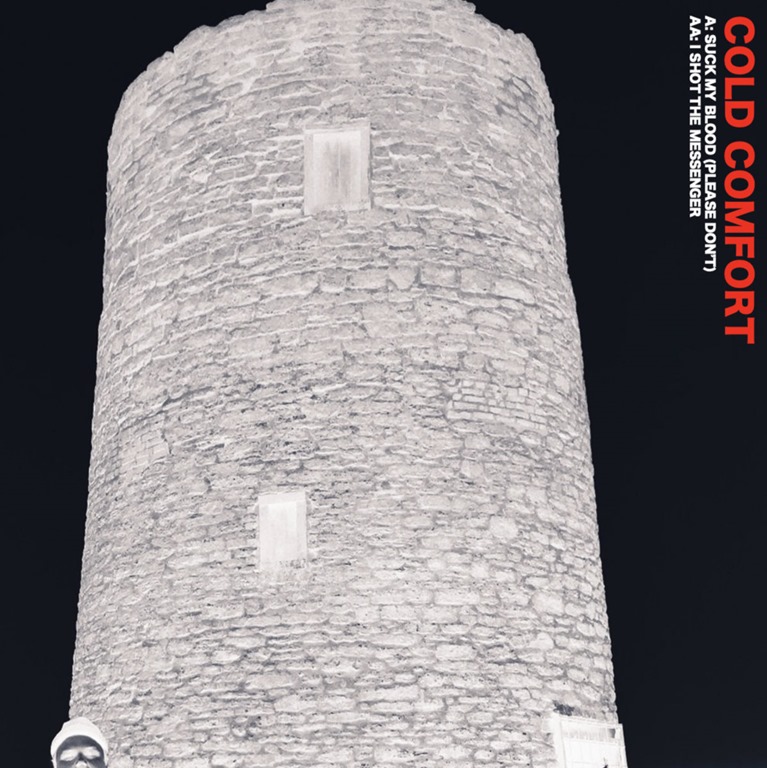
Cold Comfort is, it would seem a ‘one man punk machine’. This double-A-side effort is certainly pretty punk, both in terms of musical style and approach, in that we’re talking about sub-three-minute three-chord thrashabouts with DIY production values, accompanied by a video for one of the songs that has recreated the experience of early Internet animations. And that’s a large part of the appeal.
It’s immediately apparent that Cold Comfort places some investment in quirky humour / irony: the song titles on this release are not-so-subtle inversions, although they’re a step up from sticking ‘not!’ after each of them. And it’s very soon apparent that subtle isn’t Cold Comfort’s forte, but there’s nothing wrong with that. After all, punk and subtle don’t really go together.
‘Suck My Blood (Please Don’t)’ is a two-minute blast of primitive overloading guitars and its grungy punk is rough and ready and exploding with energy. And yet there’s still time and space for a nagging lead guitar line and a hook reminiscent of DZ Deathray. On top of that, it inverts vampiric kink tropes with its parenthetical ‘Please Don’t’, as well as booting the machismo of horror conventions into touch in the video as a digitized CC runs away from bats.
‘I Shot The Messenger’ is more spirit of ’78, with heavy hints of The Fall pitched against a booming bass that’s pinned to a vintage drum machine track that’s got the ferocity of Metal Urbain and the bedroom basicness of Young Marble Giants.
It’s not pop-punk in the contemporary sense: it’s pop-punk in the way The Buzzcocks and The Adverts were punk while writing pop songs. It’s fun, but still kicks arse, and it’s a rush.
On seeing / hearing this, I’m reminded of the character of Mike TV in Roald Dahl’s Charlie and the Chocolate Factory, a book I loved as a child, and have enjoyed all over again as a parent – although I always detested the film adaptations, especially the original, not least of all because I doubly detest Gene Wilder: the guy just grates. However, Dahl had a way of making points through his characters, often about ‘good’ and ‘bad’ traits and characteristics and behaviours, and Mike TV was no exception, and it may not have been especially subtle, but then it was a children’s book written in the 60s, at a time when sociologists and psychologists too were becoming interested on the effect of the media, in particular television – the twentieth century opium of the people.
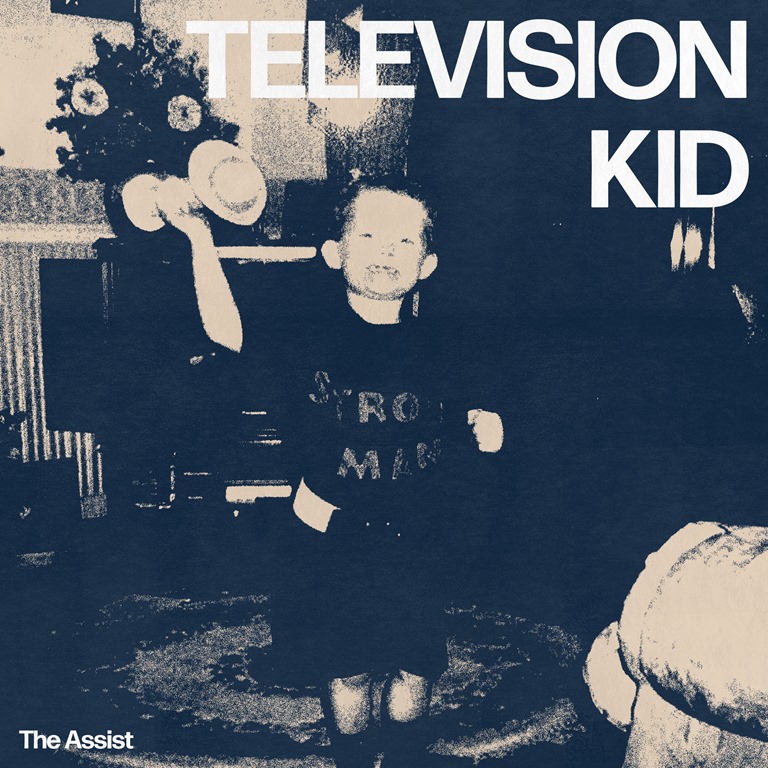
The Assist’s new offering unpacks this line of thinking through a contemporary filter and a more immediate perspective, portraying a character – who’s something of an emblem, a stereotype – whose expectations of life are unrealistic, distorted by media representations. Since the turn of the millennium and the advent of ‘reality’; TV, we’ve been fed an endless conveyor belt of shows that have espoused the idea that anyone can achieve anything, and that anyone can become a celebrity – and, worse still, that being a celebrity for its own sake is something not only achievable, but desirable. It wasn’t so long ago kids would grow up wanting to be film stars, pop stars, models, designers, sportspeople; now primary-age kids are coming through wanting to be reality TV celebs, Instagram influencers and YouTubers.
‘TV Kid’ paints the stark disparity between the dream and the reality, where head-in-the-clouds aspirations – ‘a top flight striker, Well known as a good time provider…A boxing expert, an amateur fighter, walks around to the eye of the tiger’ – are a world away from the stress of bills and so on, the kitchen sink drudgery or life on minimum wage – or, as they put it, ‘Big soup for breakfast, big soup for tea, petrol for Christmas’.
It’s a nifty tune, compressed into a sharp, snappy two-and-a-half minutes. It’s buoyant and upbeat in delivery, with some jangly but crunchy guitars driving it along nicely while brimming with melody and energy. The Midlands act are unashamed in their working class stylings, without being as in yer face as Sleaford Mods (which is no doubt one reason The Assist haven’t weighed in with Fat White Family on the ‘faux working classness of Idles), or as brash and tediously crap as Oasis, and consequently, in rank order it’s the music first and the attitude second. It’s a decent balance, and singer Mikey has just the right amount of swagger in his delivery – cocky, but not cockish, and nicely whetting the whistle for the debut album, Council Pop, out in April.
Following on from the single releases of ‘Climb’, ‘I A Fire’, ‘Hold the Line’, and ‘What is a Life?’, Reading four-piece Third Lung have delivered their much-anticipated new EP, Dialogues Of The Fatal Few.
Three of those aforementioned tracks are featured here, and while it would have been obvious and easy to have released a five-track EP featuring all four with the new song on offer here, that they’ve gone for a more succinct release means that Dialogues Of The Fatal Few is a much more focused and cohesive release, and not a complete rehash and compilation.
Opening with ‘I A Fire’ sets the stall out nicely, and while it’s mid-tempo, it’s bold and anthemic, and recalls the spirit of circa 2004 when Keane broke through with ‘Somewhere Only We Know’ and the single releases from Coldplay’s A Rush of Blood to the Head were all over the radio. Bear with me. In context, these weren’t bad tunes which hinted at considerably more than the tedium that would follow from both bands. ‘Hold the Line’ is perhaps the strongest song in the set, balancing brooding and dark with a blossoming sunburst chorus
Piano ballad ‘The Art of Stealing’ reveals a different facet of the band, and while it’s clearly not a single track, illustrates the benefits of EPs and longer form releases. It also provides a well-placed change in form in context of the EP, bringing things down a notch or two between the monster tunes.
There’s more to Third Lung than straight-up anthems: lyrically, they’ve got some depth and are worth listening to, although I suspect that’ll likely be secondary to their career trajectory, and with such a knack for big tunes, it’s surely only time before they’re big, too.