Posts Tagged ‘Photographed by Lightning’

8th June 2024

Christopher Nosnibor

This release is as intriguing – and strange – as its enigmatic and beautifully-crafted handmade packaging.

Music for Strangers continues the reissue programme for releases from underground experimental duo Photographed By Lightning, and arrives on the heels of NO, Not Now, never which represented their first new material in twenty years. For this one, we dive back twenty years, to 2004, the most prolific year of their career, until, suddenly, it halted.

While Blood Music (also 2004) consisted of a large number of comparatively brief pieces, Music for Strangers is a very different proposition, featuring as it does four longform tracks, with a couple around the ten-minute mark and a couple around the twenty. Each simply bears a numerical title.

The original release – produced in a CD edition of 100 – was disseminated not for sale on line or anywhere, but by covert means, with copies being left at random in public places. This was quite a thing in avant-garde circles for a time in the years after the turn of the millennium, particularly when MySpace was at its peak, and something that I myself participated in, leaving various pamphlets in pubs and the like, and slipping A5 leaflets various books in WHS and Waterstones. Why? Because.

Dave Mitchel and Syd Howells – aka Photographed by Lightning – are very much part of that avant-garde milieu. Something has been lost over time, and now there’s a certain nostalgia for it, meaning that the arrival of this reissue carries a certain resonance beyond the thing in itself.

There are bits of vocals interspersed here and there – abstract enunciations and discombobulous jabberings – and they emerge for fleeting moments amidst sprawling expanses of strange, otherworldly instrumental passages.

‘One’ (denoted as ‘I’ on the CD version) combines swampy abstraction and space-rock bleeepery to disorientating and atmospheric effect, which descends into dense murk in the final minutes before silence descends for a full minute. The silence is even more disconcerting than the sound which preceded it. The truth is, silence unsettles us, scares us even. It’s the reason some people can’t stand to be alone, and the reason many simply can’t shut the fuck up for a moment: they can’t handle silence, and find silence more terrifying than darkness. I suppose that while both are forms of sensory deprivation, in the modern world, while darkness still feels like a natural phenomenon – if your blinds or curtains blank out light pollution and you switch off your electricals – silence is almost beyond comprehension. There is always traffic, a distant siren, a phone vibration, the wind, rain, the babble of one’s own internal monologue. When was the last time you can honestly say you experienced true silence? That isn’t to say that with the hum of the hard-drive and my laboured hayfevery breathing, in connecting with this album I did, but the abrupt end of sound emanating from the speakers, in a time when a minute feels like an eternity, really struck me, left me feeling… what?

But at thirteen minutes, this is merely a prelude to the second track, a plunge into the subterranean swamps which drags the listener deeper into suffocating darkness for an immersive but uncomfortable nineteen minutes. There’s dadaist quirky playfulness in evidence here, the sonic equivalent of shooting water pistols and throwing overripe windfall berries at random passers-by, which redresses the balance against the backdrop of tetchy, grumbling noise created first and foremost to antagonise – which is course it does. It tests the patience and challenges the senses, with bubbles and ripples echoing as if from within a cave – for extended periods, as the sounds gradually mutate. For a spell, it sounds like water-filled lungs laboriously respiring, which makes for more difficult listening than it may appear on paper, drifting into something resembling the relentless rock of nodding donkeys at an oil drill site, and creeping into ‘Three’, it’s like sneaking down into the sewers to escape one threat only to be confronted with another.

Music for Strangers is certainly their darkest, most suffocating work, stretching dark throbs and abstract sound to the absolute limits and nudging beyond.

The bonus disc which is part of the physical release, containing Music from Nowhere, offers further insight into their prolific and prodigious experimentalism at the time, providing jut short of an hours’ worth of additional material. That it’s essentially more of the same only heightens the effect.

Given the varied and experimental nature of their output, there isn’t really a definitive release which encapsulates the work of Photographed By Lightning, and Music for Strangers isn’t really an entry-level release – but this does very much encapsulate their experimental spirit, their singularity – their awkwardness – and knack for creating difficult soundscapes.

AA

a0888861779_10

Incunabula Media – 28th January 2024

Christopher Nosnibor

First new music in twenty years. Crikey. This seems to be becoming a thing: collaborators reconvene after a really, really long time. Sometimes, it’s to the frothing enthusiasm of fans flooding out of the woodwork, as in the case of Khanate, sometimes, rather less so, in the case of a number of recently reconvened acts, including Photographed By Lightning. There ought to be some fanfare, of course, but that’s now how it goes for acts on the fringes. And PBL are fringe, niche, underground, and for all of the right reasons. Photographed by Lightning is essentially a side project for aa couple of guys who have countless projects on the go at any given time. Consisting of Syd Howells – words and music, vocals and instruments, and D M Mitchell – music, instruments, painting – the duo make noise, they do drone, they do weird shit, and NO, Not Now, never reinforces this with the addition of some heavy texture.

There is something strongly emphatic about the title, that solid ‘NO’ like a foot-stomping cry of dissent. No! Not now… not ever is certainly definitive. Prematurely perhaps. Maybe: let’s discuss. Whatever happened to ‘never say never?’ Perhaps it depends on what one is saying ‘never’ to – although it seems that the things which should never come to pass, and never should again, do, and do so again, and again, with depressing predictability. If Piers Morgan was offering me a bet, I’d have probably gone with WW3 being more likely than a new album by Photographed by Lightning. But it seems the recent reissues of their previous work may have been something of a catalyst for this rekindling. And if you’ve heard those previous albums, you’ll be buckling on for a weird ride, and recent single video for ‘Hands of Humans’  gives an idea of what to expect:.

The album starts as strange as it means to go on, with ‘Act Like Nero’, a curious collage of woozy bulbous bass, percussion that sounds like the clanking of cutlery and weird, warped, ghostly vocals which drift through waves of reverb, before ‘Dead Sparrow’ arrives sounding like a Bauhaus demo or on a tape that’s been stretched and is spooling at one-and-a-half speed, or Brian Eno’s ‘Baby’s on Fire’ and Metal Machine Music being played simultaneously and captured on a condenser mic. The experience isn’t dissimilar to the first time I heard My Bloody Valentine’s Loveless, wondering if the record was warped. The vocals are twisted, and from among the polytonal strains of mangled guitar, only snippets of lyrics are discernible: ‘follow your heart / follow the dream’; ‘static in my head’: they feel incongruous and disjointed, only adding to the discombobulating effect.

Howell’s words are poetic, quirky, often abstract or otherwise seemingly stream-of-consciousness – at least when they’re audible amidst the sonic maelstrom – occasionally pithy and unexpected, with lines like ‘My social circle needs a transplant / and the donor ain’t you’.

Strolling basslines wander around most of the compositions, but they’re jerky, breaking the groove and creating tiny, nagging knots of awkwardness. NO, Not Now, never does seem to exist to challenge the listener, by needling away with relentless pokes and occasional punches of uncomfortableness reigning in from all sides, sculpted from discord, disjunction, and disparity. ‘Cantilever’ is exemplary, finding the pair making a foray onto more overtly dance-orientated territory – but doing so in a fashion reminiscent of some of The Fall’s more experimental efforts (I’m thinking ‘Mollusc in Tyrol’ from Seminal Live and the like).

Elsewhere, ‘I Wish I Could be Sure’ is theatrical, dramatic, gothic, and unsettling, a seething morass of wailing feedback and stuttering beats which eventually coalesce into a wonky motoric groove, amidst all of which Howells pulls at every psychological sinew to wrestle with his unease with himself. It’s the darkest, swampiest not-quite dance cut, and ‘Streel Echoes’ is a straight-up what-the-fuck splat of cheesy 80s synths and vocals that veer between Bowie on Outside and semi-spoken word, with more busy, chubby, but not-quite-tight bass bloomphing and bouncing about. Yes, it’s necessary to invent words to convey the experience.

The album’s final track, the seven-minute ‘Some One Thing’ is a whirling fairground nightmare of noise, which sees the krautrock-inspired repetition of a whipcracking snare blast and thudding bass yield to a whorling barrage of noise and a super-mellow-piano, while Howells achieves peak atonality in his vocal delivery. While many albums go out on an anthemic high, it feels as if the cogs are winding down and everything is slowly disintegrating as NO, Not Now, never drags its way to its conclusion. It seems fitting. With NO, Not Now, never, Photographed by Lightning seem to have gone out of their way to challenge every notion of how an album should hang together, what music should do, and to render the most uncompromising and uncomfortable aural experience, in a fashion which places them firmly within the lineage of Throbbing Gristle. NO, Not Now, never is an artistic triumph, a work created for its own ends and with no mind for audience or critical reception. And for that, it deserves applause. It’s a good album. Variable, difficult, and purely for the art.

AA

a3154678567_10

Welsh avant-garde ‘post-rock, post-pop (post-everything)’ band Photographed by Lightning, consisting of Syd Howells (words and music, vocals and instruments) and D M Mitchell (music, instruments, painting) have released their first album in a long time – a 20-years long time, in fact.

To accompany / promote the release of NO, Not Now, never, they’ve made and released a video for ‘Hands of Humans’. While the review of the album is in the pipeline, you can watch the video here:

AA

PBL

Empty Quarter – 1st June 2021

Christopher Nosnibor

The latest instalment in the reissue series of albums by oddballs Photographed by Lightning is something of a departure from its predecessors – but then, each album marks a different departure, and if one thing this contemporary appraisal of their back catalogue highlights is that they never stated still or retrod ground, which each release existing in a completely different realm from those which came before.

Recorded in 2002 and released in 2004 and considered by the band to perhaps be their strangest offering (and it’s got some tough competition), it lists as its inspirations the works of Kenji Siratori, Friedrich Nietzsche, Suehiro Mauro, Georges Bataille, J G Ballard. I’m often particularly intrigued when a band’s citations are literary, or otherwise non-musical, perhaps because in some respects, while there is naturally much crossover between all creative disciplines, literary influences tend to be more cerebral, ideas or concept-based over sonic. When a bands say they’re influenced by Led Zeppelin, you can probably hear certain stylistic elements in the composition: but you’re not going to hear elements of Ballard in the guitar technique of any band – although with a substantial catalogue of releases to his credit, Kenji Siratori is a notable exception to the rule, particularly as the experimental Japanese polyartist’s forays into extreme electronica and harsh noise in the vein of Merzbow actually do very much resemble his literary works also as a brain—shredding sensory overload.

This is certainly a fair summary of the experience of this album: the title track, a mere intro at under two minutes, is a blend of scratchy, synthy noise with extraneous elements collaged here and there.

‘The Embryo Hunts in Secret’ and ‘Putrid Night’ are both a sort of psychedelic new wave collision, and with the wandering basslines that veer up, down, and everywhere amidst treble-soaked chaos, the effect is disorientating dissonant, as if everything is slowly melting or collapsing in on itself. Everything is murky, dingy, kinda distant-sounding and discordant. Take ‘Kundalini Butterly’ – a spiralling kaleidoscopic mess or scrawling feedback and a bass that sounds like an angry bee bouncing around inside an upturned glass, coming on like Dr Mix covering Cabaret Voltaire’s ‘Nag Nag Nag’.

Blood Music is noisy, but it’s not straight-ahead guitars noisy: instead, it’s a mangled menage of bits and bobs hurled together – not clumsily, but then, not delicately, either, with pulsing washes of rhythm throbbing and crashing all around. It gets weirder and darker as they plunge into ‘My Hole’, where the bass bubbles and throbs beneath a continuous stream of trilling distortion, synth whistles and wails, and there’s a lot of overloading, whupping distortion that derails the helicotoptoring synths and froth and foam that sloshes around at the lower end of the sonic spectrum. ‘Dark Sun’ goes kind of industrial with a hefty, thunking beat, with a relentless, distorted snare, low-slung, booming bass and heavily treated vocals, and there’s chaotic piano all over the place: the emphasis is very much on the dark here.

Dave Mitchell’s lyrics are, we’re led to believe, to have been inspired by whatever he was reading, but buried low in the mix, bathed in reverb and given a grating metallic edge, he sounds like a malfunctioning Dalek chanting incantations. To be clear, that’s by no means a criticism.

Final track, ‘Frame’ is more overtly ambient, but dark, with a certain industrial hue as it shifts to pound out a relentless beat against braying sax and a whirlpool of aural chaos: I’m not about to suggest that PBL were going through any kind of NIN phase, but there are hints of parallels with The Fragile in places here.

Everything about Blood Music is seemingly designed to challenge, to present the music in the least accessible way possible – and it’s far from accessible to begin with, for the most part. The dark density of the sound is heavy, and there’s something quite deranged about the album as a whole, in a way that’s hard to define… but deranged it is. Which seems a pretty fitting summary of the band’s catalogue as a whole: the only thing you can really predict is their unpredictability.

AA

a3521472505_16

9th April 2021

Christopher Nosnibor

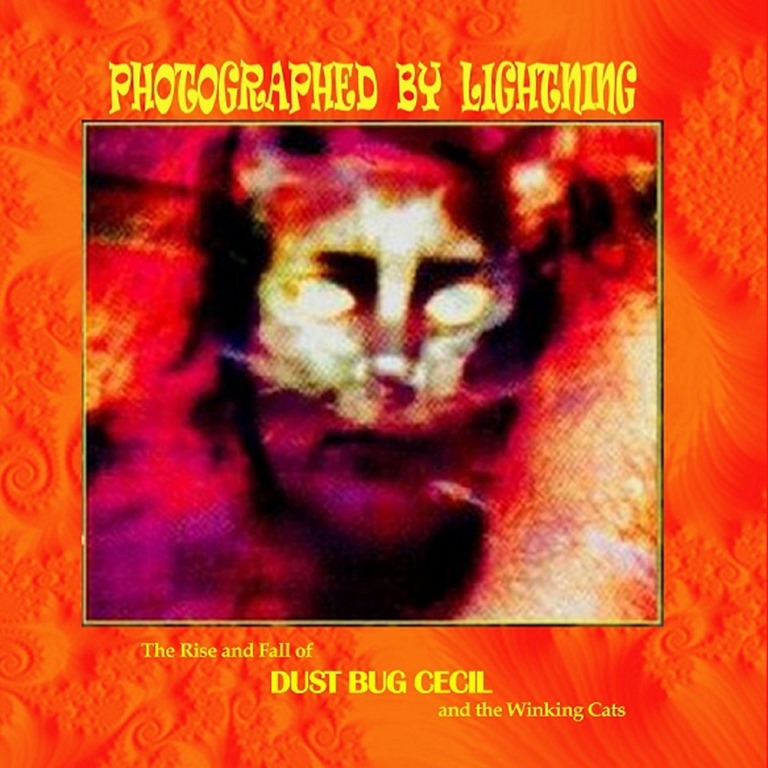
The remastered re-reissues of avant-experimentalist oddballs Photographed by Lightning continues apace with the emergence of Dust Bug Cecil (or, to give it its full title, The Rise and Fall of Dust Bug Cecil and the Winking Cats, supposedly taken from an obscure book about a direct to disc recording pioneer, and may in turn be a skewed play on Ziggy Stardust. Of course, everything is skewed in the world of PBL, and if Music From the Empty Quarter wasn’t evidence enough of this, then this should be enough to convince anyone: presented here as a whopping thirty-eight track document (2 CDs worth), Dust Bug Cecil is augmented with the entirety of their other 2002 album, Let Me Eat the Flowers. On the strength of this, it vocalist Syd Howells and co (here represented by Dave Mitchell (vocals, bass, keyboards); Bionio Bill (drums & percussives); Roland Ellis (saxophone); Chris Knipe (mandolin & fiddle), and Rev Porl Stevens contributing vocals to ‘White Master’)) had perhaps ingested more than just pansies prior to these sessions.

As Howells recounts it, ‘following the behemoth like Music From The Empty Quarter we went in search of tunes. Found some too. Glued them together with words and somehow found ourselves making a ‘pop’ album.’ In comparison to its predecessor, Dust Bug Cecil is a pop album in that there are none of the sprawling ten-minute epic headfucks on offer here, with most of the songs – and, indeed, they are songs – clocking in around the three-minute mark. It’s ‘pop’ in the style of the dark pop of post-punk, but its values are ostensibly altogether more punk, and its sound is primitive and murky. It’s pop in the way The Jesus and Mary Chain write breezy, surfy pop tunes and bury them in is a squall of noise that renders them almost indistinct.

There are melodies and choruses bursting out from every corner, but in context of 2002, songs like the album’s opener, ‘Eyes on Stalks’ and ‘Numb Alex’ sound like early 80s new wave demos: driving Joy Division-esque bass dominates a rhythm pinned down by a frenetic drum machine that sounds like it’s struggling to keep up with the throbbing energy, and there are hints of The Cure and B-Movie in the mix here.

The guitars buzz like flanged wasps on the vaguely baggy / shoegazey ‘Lady Lucifer’, prefacing the sound that A Place To Bury Strangers would come to make their signature. Elsewhere, the sound swings from almost straight 60s-tinged indie on ‘Let Me Eat the Flowers’, while ‘The Remains of a Tramp Called Bailey’ sounds like a head-on collision between The Pixies and The Psychedelic Furs, and ‘The Risen’ comes on like early New Order. If it reads like I’m chucking in a list of seemingly random and incongruous artists by way of confused and confusing reference points, it’s because that’s what the listening experience is like. None of the elements of the album are unique by any stretch, but their hybridisation very much is. The 60s garage vibe of ‘Untitled (for Dylan’) and the Fall-like scuzz of ‘David Dickinson Said’ (with its obvious but necessary ‘cheap as chips’ refrain) are well-realised, and suit the lo-fi production values.

Sonically, Dust Bug Cecil is nowhere near as challenging as Music From The Empty Quarter, and it was almost inevitable that they had to do something different, having taken the avant-jazz oddity to its limit. Then again, of course, there’s still the customary weird shit, like the squelchy racket with spoken word of ‘Bob’ and ‘Pablo’, and the doomy industrial synth robotix of ‘Be This Her Memorial’, which mean it’s hardly the most accessible album going and it is quite bewildering just in terms of its stylistic eclecticism.

It’s unquestionably a mixed bag, and not all of the efforts are completely successful or gel quite as hoped, something the band themselves acknowledge with hindsight. But it’s still very much a musical, if not commercial, success, showcasing a band capable of wild diversity in their creativity, as well as a band who’ve spent a career making the music that pleases them over anyone else.

AA

a2359923339_10

Christopher Nosnibor

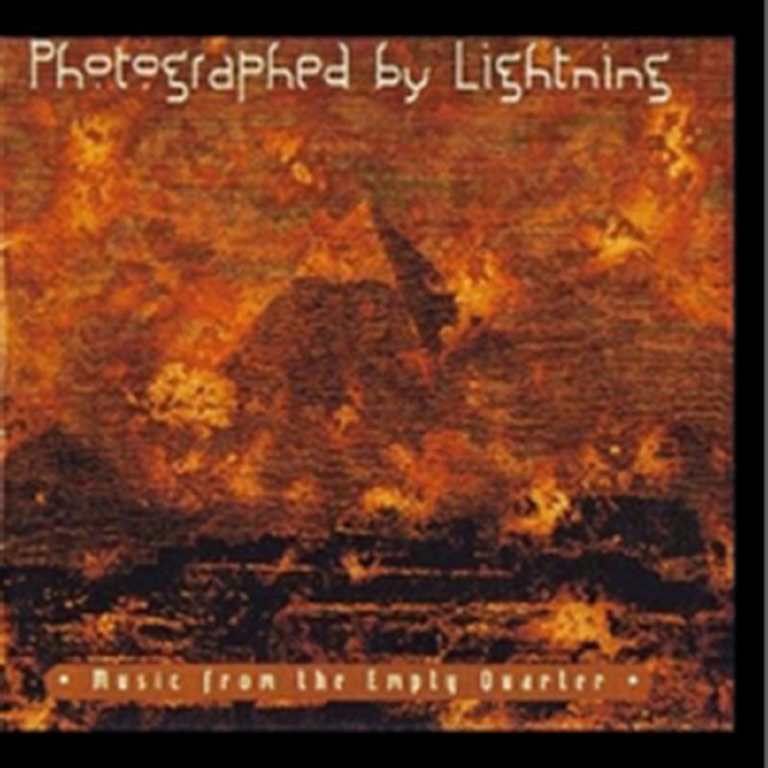
Originally released in 1999, Music from the Empty Quarter was Photographed by Lightning’s fifth album. The band described it as ‘their Troutmask Replica, their Tago Mago’, forewarning the listener that it’s ‘a monstrous slice of avant jazz, musique concrete Lovecraftian horror and should under no circumstances be listened to while under the influence of ‘substances’, and it’s immediately clear why. Like Trout Mask, it seems to be an album intended to be as difficult and challenging as possible, the sound of four musicians playing four different tunes in different keys and time signatures at the same time.

A strolling bassline stops and starts, runs and halts against a thunking beat. Everything’s up to the max, resulting in a slightly fuzzed-out sound, murky with the edges frayed by distortion. And over all of it, horns honk and parp, weaving weird patterns. This is the first of the four parts of ‘Al Azif’, scattered at strategic points across the album, with the same nagging bass motif recurring on each, as if in some attempt to give some sense of structure or cogency to the deranged, sprawling mass of weirdy noise. While three of the four parts are comparatively short, ‘Al Azif 4’ is a colossal twenty-one minutes in duration, but there’s a hell of a lot to wade through before – namely the whole of disc one.

‘Reptiles Invent The Amniotic Egg’ is a slow-trudging grind, somewhere between Justin Broadrick and Kevin Martin’s GOD, and SWANS, and ‘Foehn’ occupies similarly dark, weighty territory. Meanwhile, ‘Pop Song’ stands out as the most accessible track here, a snappy number with an actual semblance of a tune that’s reminiscent of early Public Image – but after a minute and a bit, they’re done, and back to making the most chaotic racket going with the frenzied discord of ‘The Assembly of Membranes’, and taking things up a notch on ‘Timing of Cellularisation’ which sounds like The Fall playing next door to Merzbow, and they’ve both left the door open and you’re standing in the corridor between the two.

By the time you’ve been battered by the murky wasteland that is the noodling delirium of ‘Mosses Invade the land’, with its impenetrable vocals, and the unexpectedly folksy lo-fi indie of Sugar Fist – part Silver Jews, part Syd Barrett, you arrive dizzied and dazed at ‘Al Azif 3’ with a strange sense of déjà-vu, before disc two arrives with more of the same – literally. That sensation of being on an endlessly recurring loop is a headfuck almost on a par with Rudimentary Peni’s Pope Adrian 37th Psychristiatric, but perhaps more realistically an approximation of The Fall’s ‘Bremen Nacht’ repetitions on The Frenz Experiment and accompanying 7”.

The demented, snarling vocals, that gibber and gnash away into the drifting fade of horns is most unsettling as disc two gets dubby and deranged on the fourth instalment, and after the brief interlude that is ‘Hypoxia’, the fifteen-minute title track is a yawning, droning swirl of somnambulance, a ritualistic swell and groan with laser rockets arcing over its bubbling, swampy expanse.

This is fucking heavy stuff: not heavy in the metal sense, but in the sense that’s it’s relentlessly oppressive and lasts an eternity. It’s absolutely bloody great, but it’s also probably the soundtrack to life in purgatory. You have been warned.

AA

a1100566683_10