Posts Tagged ‘percussion’

False Door Records – 5th September 2025

Christopher Nosnibor

More than five years on from the onset of the pandemic, and still pandemic projects are emerging. The arrival of this release provides a timely reminder of a time which already many seem to have moved on from, forgotten. More than likely, there was a collective keenness to return to normal as quickly as possible, to bury the trauma and make like it never happened. There are many, of course, who will never forget, for a host of reasons. Many lost loved ones, but still many more suffered mentally, from isolation, from being trapped in abusive situations, or simply – I say ‘simply’ as if it’s something minor – the fear of the virus and the way the entire situation was managed and messaged by governments and media – not to mention the bewildering effusions of misinformation on social media.

In between home schooling, struggling to work as key workers, or struggling financially due to reduced furlough incomes, the idea that we were all in it together was essentially a myth – but people found ways of coping, and for those of a creative bent, new ways of creating became the focus.

For Johnny Richards and Dave King, this new way of creating involved emailing digital files across the world to one another: as the bio explains, ‘Richards recorded piano parts, some prepared, some using the piano as an explicitly percussive instrument, then sent King the files to the US for him to record his drum parts. Richards would then record further piano parts and overlay them, in response to King’s parts.’

At the time, there was much talk, many virtual column inches, devoted to the discussion of ‘the new normal’. Fleetingly, there was optimism, a hope for a kinder world, a world where we consumed less fossil fuels, where work / life balance was more evenly distributed… but since the end of the pandemic, it’s been hell, as if people pent up all their hatred and fury and have been unleashing it in war and antagonism and making up for lost time.

And so it is that The New Awkward reminds us of that fleeting spell of optimism, and as they reflect, ‘It could have happened at no other time. With its multiple layers percussion and piano, treated and untreated, it would be impossible to recreate live.’

Awkward is an appropriate choice of word for the title of this album. There is something almost feverish about the compositions, which are bursting with complex – and often irregular, contrasting, even conflicting – time signatures. At times, drums and piano happen upon coincidental timing, but for the most part, they seem to be duelling one another – not in an aggressive or antagonistic way, but playfully. On ‘The Chance Would be a Fine Ting’, there are moments where the parts intersect to forge a groove that almost has a swing, a swagger, albeit a slightly off-kilter, drunken one that staggers a little, the tempo changing as if the crank handle of an organ is slowing, then picking up pace again.

It’s a little disorientating, but ultimately fun, as titles like ‘Sleepless in Settle’ suggest – a title which only really makes sense in the context of Johnny’s being based in Leeds, or, more broadly, the north of England. The best jokes are always puns, especially when they’re super niche.

AA

The seven-and-a-half-minute ‘Memory Man’ has something of a vintage film feel to it, as well as a strong swing, and it’s easy to forget that this album features only piano and drums while listening to what, for all intents and purposes, sounds like a busy bassline leading a full band. The title track twists and twangs, is a bit noir, a bit late-night jazz café, but weird and woozy. ‘Gene Heard Wrong’ is another busy piece, the drums, played quietly but shuffling rapidly around the kit, as it twitching with anxiety, while the piano… the piano chinks and rolls with a nervous energy. ‘Darts’ strolls and stutters, while the last track, ‘Climbing on Mirrors’ builds slowly from dark atmospherics through softly loping beats with jarring discordant piano, and it sounds like everything is winding down… down… down.

From my own experience of lockdown – balancing working from home and home schooling a primary-school-aged daughter while my wife also worked from home, converting the living room sideboard into a desk until she installed a desk in our bedroom – devoting time – or stealing time, carving cracks in time late at night – for creative output was about the only thing that kept me even half sane. The fact that The New Awkward is far from straightforward makes sense in this context: I can relate to becoming so immersed, so invested in a project that it becomes its own world, and that its creation closes the door on the madness outside, all the texts and other messages, the screaming social media frenzy.

The New Awkward brings a lot back, and does so with mixed emotions. But throughout, it buzzes with a tense creative energy, urgent but also immersive and upbeat, the sound of unadulterated creative freedom.

AA

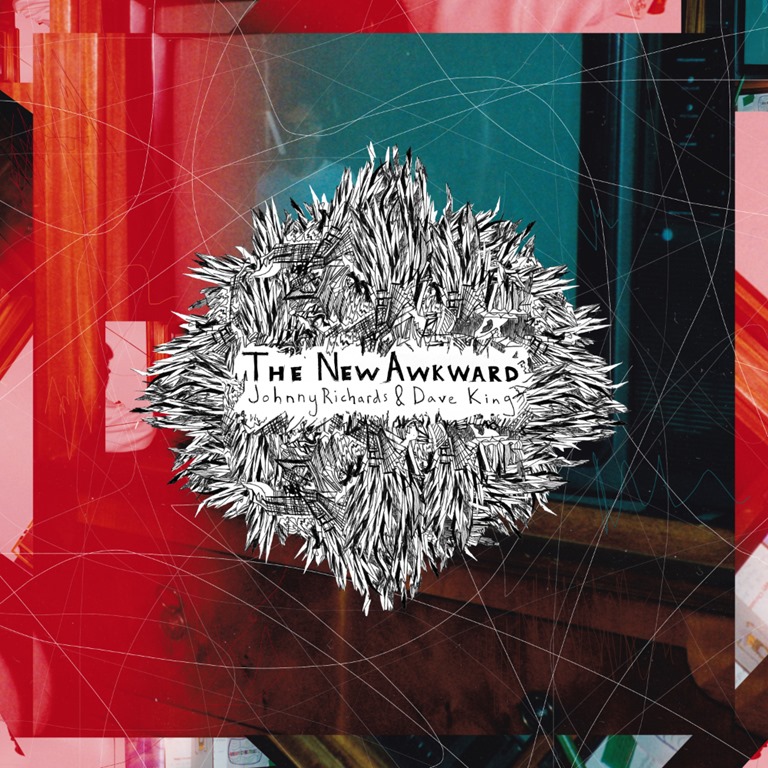
Johnny Richards & Dave King – The New Awkward cover 1000px

Christopher Nosnibor

Whistles, hoots, and pipes welcome the sellout crowd as they filter in – very slowly, due to the intense security involving airport style metal detectors on the forecourt, and of course, bag checks, the disposal of any fluids, and enforced cloakrooming of said bags (once any bottles of water etc. have been confiscated). Having only frequented small shows for the last few years, I’d forgotten – or erased – this aspect of attending larger venues, and it strikes me as sad that this is the world we live in now, and I drink my £8 pint very slowly indeed. But tonight is a night where it’s possible to distance oneself from all of the shit and recapture some of what’s been lost, however fleetingly.

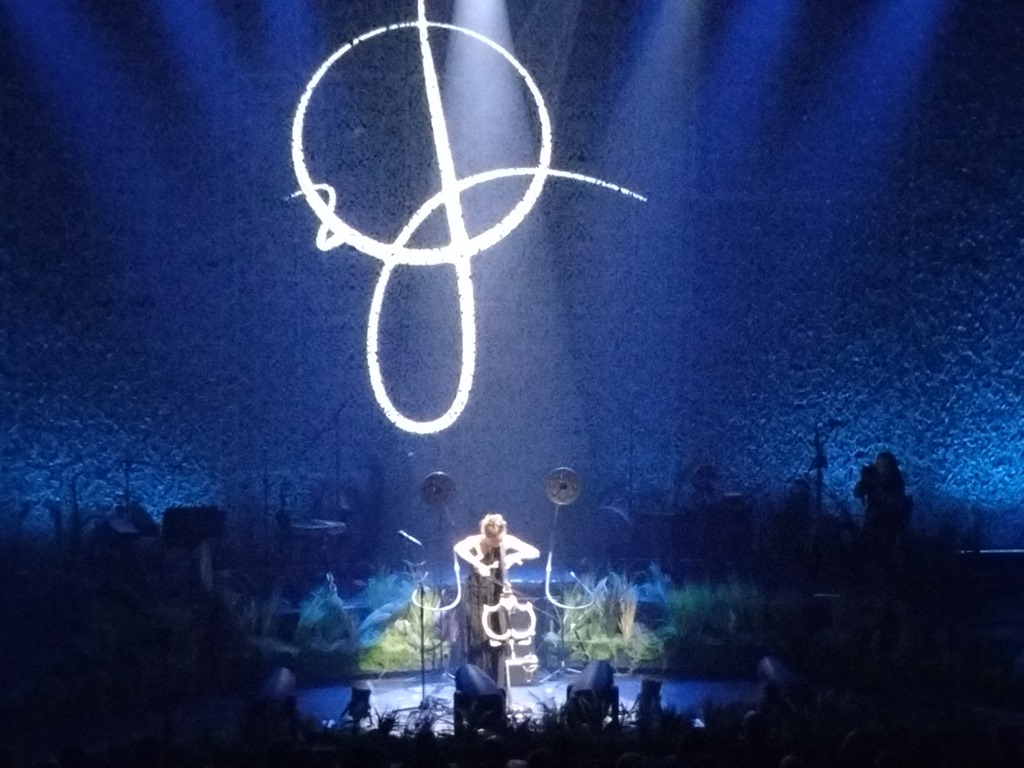
Jo Quail, who never fails to deliver less than stunning performances, commands the large stage – and audience – with a captivating half-hour set, which opens with ‘Rex’ and swiftly builds an immense, dramatic, layered sound with loops continually expanding that sound. There’s no-one else who is really in the same field: with the innovative application of a range of pedals – not least of all a loop – she makes her solo cello sound like a full orchestra, with thunderous rumbles, percussion and big rock power chords all crashing in.

IMG_20250322_200724

Jo Quail

It’s a new song called ‘Embrace’ which is the second of her three pieces, and she closes with ‘Adder Stone’ from 2014 LP Caldera, which would subsequently provide the mane for her independent label. The rapturous reception is well-deserved. Her richly emotive sound is certainly a good fit with Wardruna, and it’s likely she’s won herself a fair few new fans tonight.

While the place had been pretty busy when she took to the stage, the lights come up at the end of her set and suddenly, it’s packed. Thuds and rumbles build the anticipation for the main event.

Opening the set with ‘Kvitravn’, Wardruna immediately create a fully immersive atmosphere with strong choral vocals and huge booming bass, and it’s an instant goosebumps moment. Recorded, they’re powerful, compelling: live, the experience goes way beyond. The vibrations of the bass and the thunderous percussion awaken senses seemingly dormant.

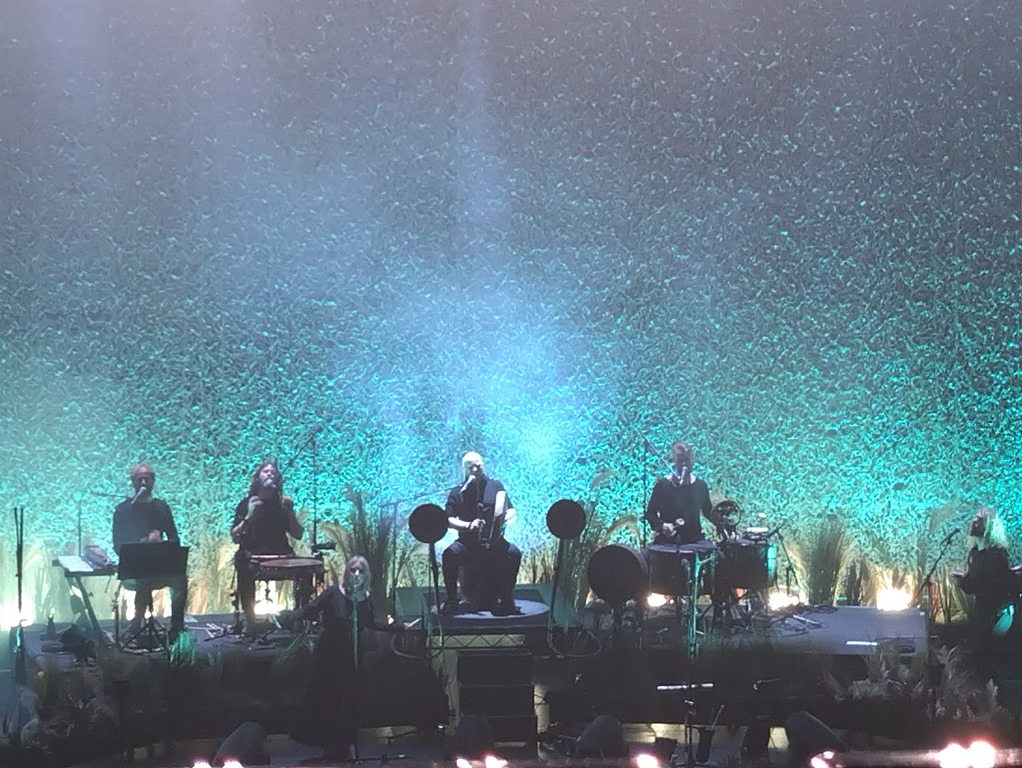
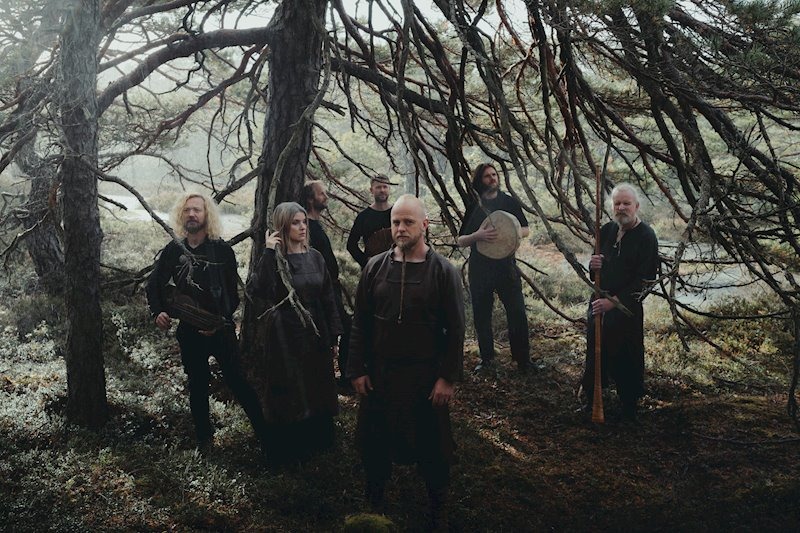
Performing as a seven-piece, hearing their voices coming together, filling the auditorium and rising to the skies is stirring, powerful and infinitely greater than the sum of the parts. It’s the perfect demonstration of what can be achieved through unity and collectivism, and the multiple percussive instruments being beaten, hard, with focus and passion produces something that’s almost overwhelming, and goes so far beyond mere music… It’s intense, and intensely spiritual, too.

IMG_20250322_205728IMG_20250322_213016

Wardruna

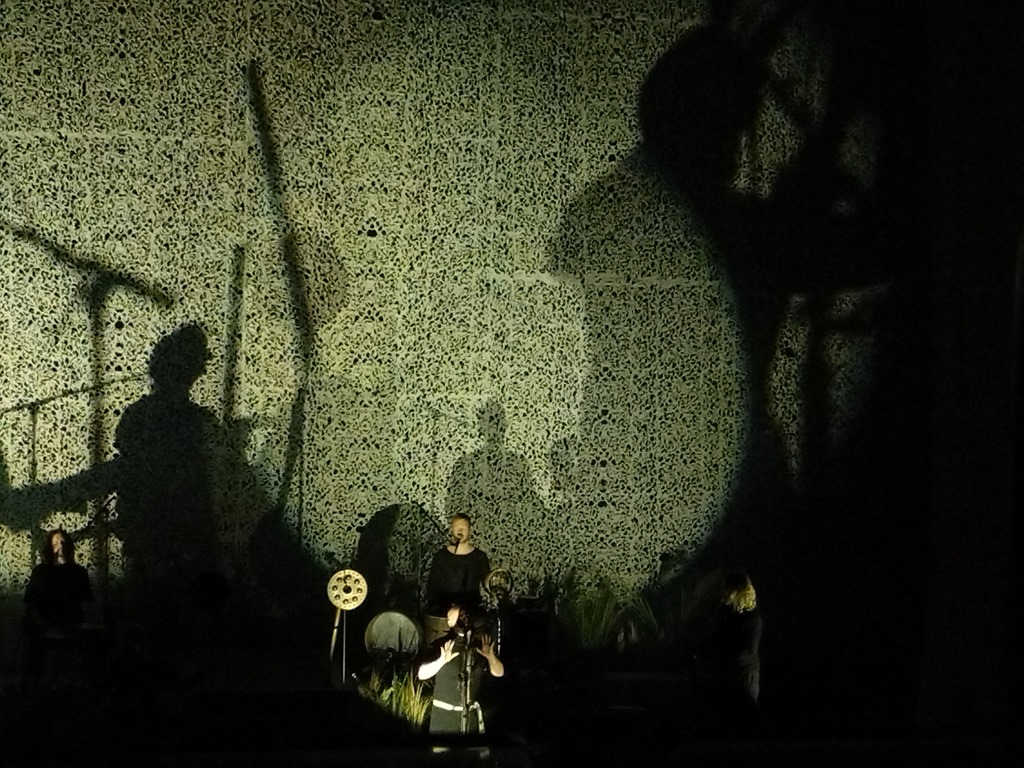
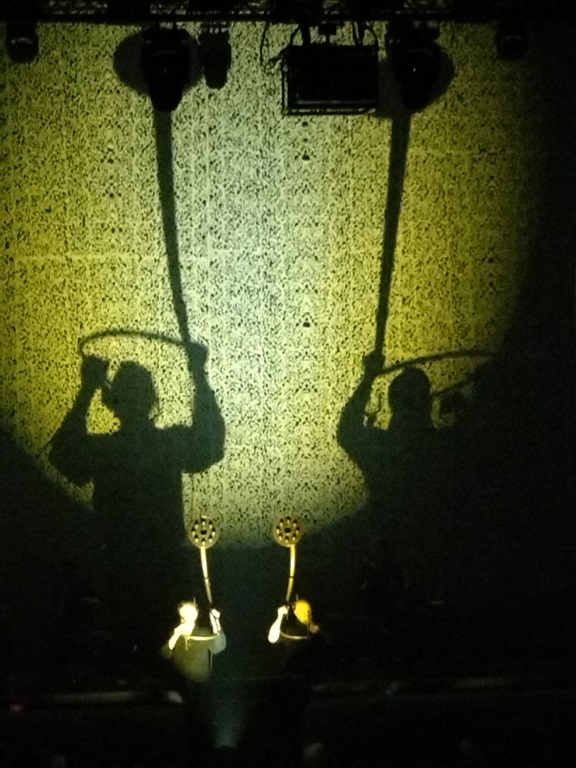
The sound is phenomenal, and it’s augmented by some incredible lighting: no standard spots or flashy lasers here: this is a magnificently considered and perfectly-choreographed display which works with the backdrop and the foliage on stage to optimally compliment and accentuate the performance. While I’m often somewhat unenthused by the larger-venue experience, preferring the intimacy of the sub-five-hundred capacity venue, this is a show that could only work on a big stage. Somehow, it’s the only way to do justice to music that truly belongs in a forest clearing, or on a clifftop, or on a glacier amidst the most immense and rugged vistas on the planet.

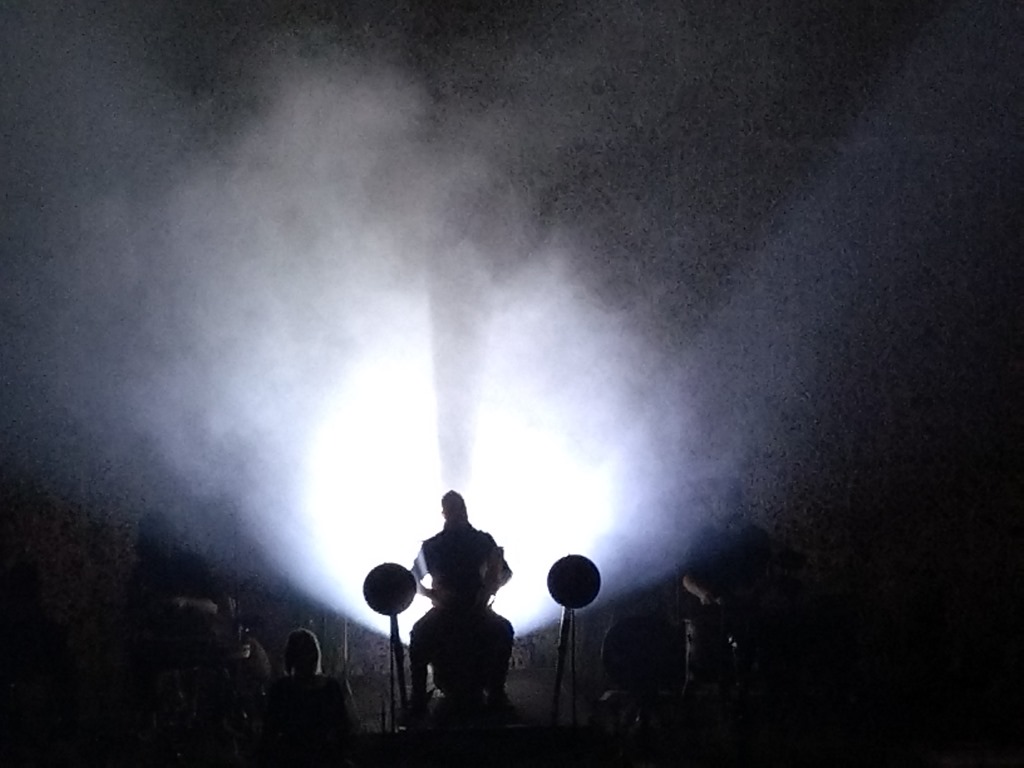
On ‘Lyfjaberg’, they achieve the perfect hypnotic experience, while dry ice floods the stage and lies about their ankles like a thick, low-lying forest mist, before Einar performs a solo rendition of Voluspá.

The second half of the set elevates the transcendental quality still further, as the percussion dominates the throbbing drones which radiate in Sensurround. This is music that exalts in the wind , waves, birds, trees – and the bear – and celebrates power of nature. It’s an experience that brings home just how far we have come from our origins, and a reminder that not all progress is good. Humans are the only species who adapt their habitat to their needs, rather than adapting to their habitat, and it’s a destructive trait. Even parasites strive to achieve a symbiotic relationship with their host, and a parasite which kills its host is a failed parasite because it finds itself seeking a new host. Without the earth, we have no habitat: we will not be colonising Mars any time soon, whatever Elon Musk says, or however much Philip K Dick you may read. But experiencing Wardruna live is the most uplifting, life-affirming experience.

IMG_20250322_213855

Wardruna

They bring up the lights and bask in the rapturous applause for some considerable time, before Einar speaks on nature and tradition and the importance of song, before they close with funeral song ‘Helvegen’, illuminated in red with burning torches along the front of the stage. It’s a strong, and moving piece delivered with so much soul that it’s impossible not to be affected.

IMG_20250322_214101

Wardruna

After another lengthy ovation, Einar dismisses the rest of the band and performs ‘Hibjørnen’ – a lullaby from a bear’s perspective – solo. After such a thoroughly rousing hour and a half, it makes for a beautifully soothing curtain close.

This was not merely a concert, and the performance, theatrical as it was, was not theatre, but a sincere channelling of purest emotion, a quest to connect the players with the audience and their innermost souls and their origins. It’s a unifying, and even a cleansing experience, a reminder of how we can all step back, breathe, and refocus. This was something special.

Music For Nations / Sony – 24th January 2025

Christopher Nosnibor

While studying English Literature at university, I undertook a module on Anglo-Saxon literature. It was fascinating to learn the etymology of certain words, and the way in which commonplace phrases came to be, and one thing which struck me was the reverence the Anglo-Saxons held for the bear, with not only words like ‘berserk’ deriving from a fierce, angry bear, with armies placing their berserkers at the front of their lines, foaming at the mouth and gnashing their teeth on their shields to strike fear in the hearts of their opponents, but the phrase ‘lick into shape’ came from the belief that bear cubs were born as balls of fur, and their mothers would literally lick them into the shape of a bear. In so many aspects of life, through history, humans have aspired to be like bears.

It is this which provides the central theme of Wardruna’s sixth album, as the accompanying notes expand upon:

The bear frequently figures in the oldest myths of mankind in the northern hemisphere, and many indigenous people still regard this animal as a totem, honouring it with rites and songs. It was once our respected guardian, our guide to edible plants and berries, a creature we both feared and admired. Although the bear from the very beginning has constituted a threat to our own lives and those of our livestock, humans have always identified with the bear in various ways. If you skin the animal, its body underneath the fur strongly resembles that of man, which may be a reason legend has it the bear in fact originated from humans, and for thousands of years we have strived for its strength and wit. In some cultures, “treading the path of the bear” means pursuing what you’re truly meant to do in life.

Because this is a Wardruna album, it taps into ancient mythologies on a level which goes far deeper than some kind of conceptual cosplay or superficial skirting around the subject. Wardruna has a way of tapping into a spirituality which resides in our very bones, our DNA. Their music resonates, powerfully, in ways which are hard to articulate beyond the fact it stirs something deep inside. Birna is more than an album, it is a force of nature distilled in musical form.

‘Hertan’ begins with a thudding rhythm like a heartbeat which provides the backdrop to a spoken word introduction and, suddenly, a swelling surge of sound, clattering wooden-sounding percussion and bold choral chants. Immediately, it evokes images of a primal heritage, of rituals performed on moorlands around open fires, animal skins, ceremonies exulting pagan spirits, and a connection with the earth which transcends words alone.

The title track is simply immense, a colossal, powerful blast of sound, which conveys the strength – and also the gentleness – of the she-bear. It’s perhaps here where they most successfully articulate the appeal and fascination of the bear, a creature capable of the most divergent behaviours, so caring to its cubs, but would absolutely annihilate anything when threatened. There’s a reason why you don’t, as they say, poke the bear.

The fifteen-and-a-half-minute ‘Dvaledraumar’ (Dormant Dreams) enters rather more ambient territory, lunging into slow droning darkness after a hooting call like that of a conch shell being blown, or similar. Along with ‘Jord til Ljos’ (Earth to Light), it forms ‘a two-song meditation creates a joint hibernation between animal and listener’. It’s somewhat sad, that we haven’t taken cues from the bear to hibernate. It doesn’t feel natural to drag oneself out of bed and trudge to work in darkness, when it’s often cold, wet (or snowy, depending on geography), and windy. Before industrialisation, before electricity, working hours were limited by daylight, and in feudal times, serfs would effectively hibernate, unable to work the field during the winter months. I’m certainly not saying that this was a golden age of any kind, but capitalism and technology have certainly failed to deliver the lives they promised with a wealth of leisure time.

Sitting and reflecting on this, the rippling, repetitive melodies of these two tracks washing over me, I once again find myself envisaging dense, expansive woodlands, a habitat thick with vegetation, and sparse with population, a world before humans lost touch with nature and even humanity, and fucked everything up so badly. And I suppose it’s this desire to rewind the clock, to unfuck the planet, to undo centuries of mistakes to rediscover that which lies subconsciously in our hearts, which Wardruna connect with so perfectly.

Following this extended hibernative segment, they return first withHiminndotter which evolves from being sparse and folksy to a frenetic frenzy of tribal percussion and a powerful choral refrain. ‘Tretale’ presents a haunting rumble with a breathy, hypnotic vocal. It’s built around a low, deep-lunged organ-like drone, but cuts back to some hypnotic passages where the insistent beat stands almost alone.

The eight-and-a-half-minute ‘Lyfjaberg’ brings the album – which is epic in every way – to a close with a slow, hypnotic beat and repetitive instrumentation and vocal chorus. It draws you in in such a way as to suspend time and space: it’s hard not to get lost in the moment, but also, ultimately, in time. I suspect I’ve described Wardruna’s music as ‘transcendental’ before, and more than once… but is the word which most accurately describes their music. Yes, THE word – and perhaps the only one. Because this… this is something else.

AA

167087

Lamour Records – 16th December 2024

Christopher Nosnibor

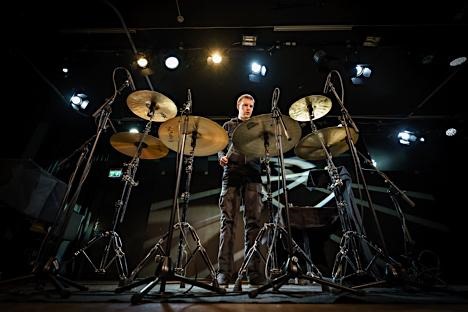
When you read that someone is exploring metal, the likely response is to think it’s a metal album in terms of genre. But not Tomas Järmyr: his explorations into ‘the deep frequencies of metal’ are quite literal. ‘Using only cymbals’, the notes accompanying the release explain, ‘Järmyr creates a slowly rotating musical sphere that holds beauty, deep emotion, and fierce heaviness… Entrails is an album that shows the core of his artistic expression and serves as the perfect introduction to Tomas Järmyr as a solo artist.’

As titles go, Entrails is unquestionably visceral in its connotations – another thing which would, for many, suggest a ‘metal’ album rather than a ‘metal’ album. But here we have an album containing a single track, which runs for thirty-eight minutes, consisting of nothing but cymbal work.

Thomas J

Photo: Thor Egil Leirtrø

In the context of a full drum kit, cymbals provide expression, and also an amount of ‘fill’ to the overall sound, not only of the kit, but the band, creating a wash of resonance in between the notes of the instruments and the beats of bass drum, snare, toms, etc. How do cymbals stand up when separated from everything else?

In the hands of Tomas Järmyr, we come to appreciate the range and versatility of the cymbal. Size certainly matters, and Järmyr’s setup which spans small, light crashes to huge, resonant, bell-like peels, against a backdrop which builds from a delicate clatter to a clashing, splashing tempest, is educational.

There are passages where the clatters and chimes diminish, and make way for dank, atmospheric reverberations which evoke the gloom of subterranean caverns, dark ambience which bears no discernible resemblance to anything remotely percussive, at least to the average ear – or mine.

Sometimes, with experimental music, the mystery is an integral part of the appeal: I prefer not to know which instruments have been used to create which sounds, and similarly, knowing how certain synths or laptop-based programmes have been used to conjure alien sounds feels like something of a spoiler, because I find myself scrutinising the sound and seeking to pick apart its construction. On Entrails, the opposite is true, because most of the sounds simply do not correspond to the source. So on the one hand, Entrails does lay bare the guts of the instrumentation: on the other, as I sit in the swirling drone which fills the room around the eighteen-minute mark, I find myself perplexed and in absolute awe at the creativity of the musicianship. How does anyone come to discover that cymbals have the capacity to be this versatile, to create sounds like these? Who has both ready access to this many cymbals and the time to explore their sounds and the way they interact with one another in such detail?

Sometimes the crescendos are delicate, slow-building: others, they explode unexpectedly. At others still, the sensation is more like an outflow of molten lava from a volcano.

Järmyr’s metal album may be devoid of guitars and guttural vocals – or, indeed, any vocals – bit it is still, for the most part, a heavy album, issuing forth an immensely dense, dark atmosphere, not to mention some quite challenging frequencies, spiking at the top end while rumbling heavily around the lower sonic regions. Ominous, oppressive, Entrails is not a fist-forward punch to the guts, but instead prods and pokes. The effect is no less potent.

AA

a3439715063_10

5th February 2024

Christopher Nosnibor

People often say they hate surprises. I know where they’re coming from, although by and large, the surprise is less the issue than their reaction being seen. As children, we’ve all had the Christmas party and the birthday where we’ve suffered a head-exploding embarrassment where something’s been sprung unexpectedly, and where, as a consequence the walls have closed in and you’ve felt entrapped within a tight, tunnelling space and simply wanted to disappear – right? But there are two kinds of surprises: good ones and bad ones, just as there are two kinds of music: good, and bad.

‘Cryptic Bodies’ is good music, and the perfect surprise, presenting as a discordant chaotic mess of purgatorial abrasion, which smashes its way into a collision of post-punk and… well, what else is hard to say, beyond sinewy, straining dissonance. Really, this is one of those ‘what the fuck is this?’ releases. Personally, I absolutely love this kind of stuff, that’s challenging, shouty, difficult to listen to, let alone define. The music shifts in tone and intensity, a meandering twisting thread of jangliness and extraneous noise that bears jazz influences without being jazz, noise-rock elements without being noise-rock. What does it mean? What is it for? Cryptic is certainly the word, and perhaps it’s best to simply revel in the strangeness than attempt to unravel and decipher it.

But there’s more. The track is lifted from Hungarian artist Porteleki’s forthcoming album Smearing, which is out in March, and it’s not his first work by the title ‘Cryptic Bodies’, as a moment’s cursory research brings us to a ‘documentary’ film on YouTube, uploaded in three parts, which captures Porteleki – a percussionist first and foremost – performing a solo score, which is ‘structured yet improvised’ as the audio backdrop to ‘a contemporary dance piece, where 5 dancers traverse through space, body and time to throbbing experimental live metal music. The work is inspired by ancient bodily practices such as Egyptian mummification and Mesopotamian occult healing rites’.

Being instrumental, and extending to around forty minutes, it’s a powerful soundtrack to a visually striking and remarkably compelling multimedia experience, which also showcases Porteleki’s inventive, atmosphere-building approach to guitar playing. Elsewhere online, his SoundCloud uploads present an array of experimental works, ranging from minimalist dark ambience to wild, maximalist bursts of noise, meaning how representative of the album this cut might be is anyone’s guess. But given the title track, which is currently streaming on Bandcamp, there’s a strong possibility that it’s going to be an extremely varied and extremely unusual collection of highly experimental bits and pieces. ‘No genres’ he states on his Bandcamp. No kidding: Porteleki’s modus operandi appears to be to shatter every mould there is. He isn’t so much leftfield, or outside the box, but outside the field, and he’s burned the box to ashes.

Porteleki clearly likes to push boundaries, and none more than his own. ‘Cryptic Bodies’ offers a gateway into the world of an artist who warrants exploration – but not if you don’t like surprises.

AA

a3137193342_10

AA

Mind Altering Records – 13th November 2023

Christopher Nosnibor

Back at the start of 2021, I penned a pretty positive review of the solarminds album Her Spirit Cracked the Sky. The combination of ambience and extreme weight was a thrilling proposition. And it was – and still is – monumentally epic. It feels a long time ago already, and much has happened in the interim. If emerging from the pandemic was trailed for a long time by the release of myriad ‘lockdown’ projects, we’ve subsequently trickled into a ‘world’s turned to shit’ phase, and like the pandemic, it feels like there’s no end in sight. Trump may be out of office, but he still looms large and continues to pose a threat in the arena of world politics, and it’s a world at war, and a world where alternately wild fires and floods decimate swathes of land. Slowly but surely, the planet is becoming less inhabitable. And yet, still, people jet off on skiing holidays and bemoan the lack of snow despite being the cause of the lack of snow, and whenever it rains, people take to their cars to make five-minute journeys to avoid getting wet, thus ensuring it will rain an awful lot more in the time to come.

And since the release of Her Spirit Cracked the Sky, after more than a decade, Chris Miner has put the project to bed. But, like the proverbial phoenix rising from the ashes, he now returns with Sun Colour Sound, and the first in a projected trilogy of releases. On the evidence of this first one, it will be something special.

Ritual One (Climbing the Fire into the Sky) consists of a single piece, which runs just short of half an hour, and it shares many elements with solarminds – namely a fair bit of noise, some hefty guitars and punishing percussion, at least in the first two thirds, and it’s heavy, harsh, noisy, and it crashes straight in with some grating, heavy drone, twisting feedback and thudding drums.

This is one of those tracks which stars like the end of many sets, and it feels like it’s winding down from the offing. This is by no means a criticism, simply an observation that what in the context of many works is a climactic, tempestuous crescendo finale, is simply the start of a ferocious sonic storm. It does very much call to mind Sunn O))) and the epic, swirling instrumental passages of contemporary Swans, although the guitars are very much geared towards generating howling feedback rather than crushing, clashing chords that sound like buildings being demolished. Therte’s something of a psychedelic twist in the spacey delivery, too. As whining, whistling notes ring out, the percussion builds from the occasional roll to a relentless thunder. The combination is immensely powerful, and assails the senses with a real physicality. Buy around the thirteen-minute mark, it’s reached wall-of-sound levels, a dense, shimmering sonic force which shimmers and ripples while coming on like a bulldozer, at the same time as hand drums fly at a frantic pace and evoking something spiritual in the midst of a hypnotic frenzy. And still, it goes on, surging forwards.

The shift in the final third occurs subtly: the percussion continues to clatter away, but the guitar abrasion tapers away, to be replaced by altogether softer strings.

Ritual One (Climbing the Fire into the Sky) is more than just a really long piece of music: it’s an ambitious piece in every way, and its scope and scale are immense. There is so much depth and detail here, and it takes repeated listens to really appreciate just how much is happening, especially given that the first reaction is simply to bow to its sheer sonic force.

But the last ten minutes belong to a different world from the first portion. Hypnotic, soothing, graceful, the tension dissipates and Eastern vibes radiate through the gauze-like layers which drift and float over the busy but altogether more subdued percussion.

So while it is an ambitious work, it also delvers far above any expectations, and it’s both unique and special.

AA

Version 3

Davide Compagnoni, aka ‘KHOMPA’, has been pushing musical boundaries since the release of his ground-breaking debut album, The Shape of Drums to Come in 2016, featuring an adventurous mix of drumming, electronics and cutting-edge drum triggering technology. The album, featured on Ableton Live and Modern Drummer, introduced this unique audiovisual live project, whose main elements are: a drummer, a conventional drum kit, 3 state-of-the-art drum sensors, a laptop and a stepsequencer. Each drum controls a virtual musical instrument (synthesizers, samplers, arpeggiators, etc.) within Ableton Live music software that, in combination with a custom stepsequencer developed with MaxforLive app, allows Davide to perform real melodies/electronic orchestration without the use of any backing track. 100% live. In addition to that, he also uses a microphone set up in the middle of the drumkit to capture the dynamics of the acoustic drums and translate them through ‘envelope followers’ into electronic parts in several ways.

KHOMPA’s second album, Perceive Reality, which followed in 2022, saw the further integration of audio and visual components, with AI-generated 3D visuals created by Riccardo Franco-Loiri (alias Akasha) all triggered and modulated live from the drumkit.

Tre Trigger Contro Tre Trigger is a companion piece to Perceive Reality, drawing on the same technology but venturing into a more trance-inducing territory, with oscillating synths snaking around a pulsating, primal drumbeat, rising in pitch to a cathartic peak.

The video for ‘Tre Trigger Contro Tre Trigger’ is a 100% live performance where all the sounds and visuals were triggered in real time with KHOMPA’s drum kit as a reflection of the punk/chaotic/hypnotic energy of the song. The piece is also the closing track of the live performance "Perceive Reality A/V" that the artist is currently playing in festivals, cinemas and clubs in Italy. In the video, words that seem to be extracted from a manifesto of perceptual dissociation bounce off the screen activated and distorted by the drum kit itself.

Watch the video for ‘Tre Trigger Contro Tre Trigger’ here:

AA

thumbnail_image002

The Quietus

Christopher Nosnibor

It’s not that I like to brag, but I’ve been writing about Sly and the Family Drone since 2012, when they blew me away at the Brudenell in Leeds, with a chaotic, percussion-heavy, audience-participation-led performance (and since when my writing has improved and I’ve become a shade more sensitive, perhaps). Witnessing Matt Cargill standing aloft on a stack of amps while surrounded my members of the crowd battering drums distributed by the band was one of the most exhilarating experiences of my life, and I was an instant convert. In some respects, I was fortunate to witness it: in a recent interview, Cargill was at pains to stress that it’s one of those spontaneous things: “It doesn’t happen at every gig,” he warns. “And I don’t want it to become a thing that people expect or are disappointed when we don’t do it. There are times I’ve seen people write, ‘Bring your drumsticks!’ I’ve never said that and I don’t want you to do that! If we were doing it every night people would be, like, ‘Oh, fuck off! They’re doing their schtick.’”

It’s this spontaneity and true commitment to improvisation that is a significant part of the band’s appeal. You never know quite what you’re going to get, and there’s a sense that nor do they: it all unfolds in real-time.

Their subsequent releases since my introduction in 2012 have never disappointed, and for me, at least, the best thing about Sly is that they embrace the difference between the live and recorded media. As such the recordings are the recordings, the performances are the performances. Explaining the difference to The Quietus, Cargill says “It was nice to be able to do all that spatial and stereo stuff which we wouldn’t be able to do live,” he says. “Because of mics on drums and stuff, it just doesn’t really work in that way. So we were able to spend a bit of time just working on that and doing some quite weird-sounding drum stuff which I’m really happy with.” The same article also explains, ‘The passages of manipulated drumwork are bookended by the band performing together in full skronking and lumbering flow and, in a move that vaguely echoes the ecstasy of their live sets’ endings, it finishes with a warm and symphonic cacophony of horns. “It’s kind of a pieced together track but I think it works as an entire piece,” reflects Cargill.

They have forged a career – or perhaps eked one, on the breadline, with a cult reputation which exceeds the returns a fringe act can attain in this crappy climate, a climate whereby post-Brexit overseas travel is prohibitive and not just financially – from being far out. Embracing elements of jazz and noise and a whole spectrum beyond, it’s fair to say that this is an act who plough their own furrow, and for that, respect is due, and them some.

This latest release is – as ever – an interesting one. It’s a limited lathe-cut 12” released via The Quietus, a publication with an immense reputation for its championing of the weird and the wonderful, and which perhaps more than any online publication with a significant readership plugs the gap left when Sounds, and then Melody Maker ceased to be. For non-subscribers, it’s available digitally via the usual platforms.  The ones I don’t use or advocate. But I digress. ‘And Every Knife In This House Is Mine’ is Sly at their best.

As a single track – less a composition than an exploration – with a running time of twenty minutes, it’s an EP or an album by some bands’ standards, but what it ultimately is is an immersive experience which sees them make the most of having access to studio facilities to push their sound further in different directions.

It’s a shrill, rippling wave of feedback that pierces the eardrums in the opening seconds which announces its arrival before a tempest of crashing drums, wayward brass and extraneous noise deluges in, and more happens in the first forty seconds of this tune than the entirety of many albums. Shortly after, it settles into a thunderous groove, the rhythm section grindingly heavy while wild horns – Kaz Buckland’s alto sax and James Allsopp’s baritone sax interplay is a back-and-forth that is timed with perfect precision.

There’s a lot of reverb, and a lot of space here. They pull back from the brink of pure chaos and meander through some expansive gentler passages, before, each time, exploding into a wild crescendo. It’s hard to differentiate snarling electronics from barking vocal yelps , and there isn’t a second where there isn’t something happening. It’s impossible to maintain a commentary on this sequentially.

A tumult of noise, bleeps and glitches, bloops and whirls, all fuse to form a wild cacophony, and it’s pure bliss to yield to this sonic tidal wave. But over the course of the track’s twenty minutes, there are constant ebbs and flows, the lower-level churning swashes rendering the louder segments and extended crescendo’s all the more impactful.

Things get decidedly Throbbing Gristle around the midway point, with swampy electronics and groaning low swoons taking things down, disrupted by random clatterings of percussion, before things take a turn for dark around the fifteen minute mark, with drones that sound like a 747 heading towards the ground in a nosedive… and then the climaxes with an extended jazz frenzy, and… woah.

Running through every form and texture, Every Knife In This House Is Mine is both exhilarating and exhausting… and everything you would expect from Sly and the Family Drone, and all that jazz.

AA

SlyAndTheFamilyDrone_Flat_copy_1669300606_crop_550x550

Limited Noise – 29th April 2022

Christopher Nosnibor

With a CV that lists near-multitudinous membership and participation in bands (notably his regular gigs with Snack Family and World Sanguine report, but also contributing to Sly ands the Family Drone and countless others), renowned experimentally-minded jazz drummer and percussionist Will Glaser has taken some time out to continue his solo album sequence with the fourth instalment of Climbing in Circles.

Over the course of three previous releases, Glaser has explored jazz, folk, and beyond, through an experimental prism and with a methodology that’s very much about improvisation. This outing features long-time collaborator, Matthew Herd, on saxophones and piano, alongside trumpeter, electronic artist and producer, Alex Bonney, and was assembled over the course of five day. While the album is loosely constructed around two overarching ‘acts’, they consist of eleven separate and distinct pieces, and bookended by ‘Beginnings’ and ‘Endings’, there’s a narrative arc of sorts, here.

It begins with crawing birds and a gentle piano playing what one could readily describe as a charming melody with a quite conventional structure, and ends with a genuinely pleasant lilting piano tune – and yes, I mean tune in that it has all the conventional features of one.

In between, there is slow decay and infinite space. Rumbling, echoes, notes reverberate off one another at distance. Sax and trumpet trill and drone, sometimes at one, at others as if duelling. The percussion rolls and crashes, but more often than not, at distance, and creating texture and atmosphere and colouring the pieces with expression rather than maintaining rhythm.

The combination of instruments is relatively conventional in jazz, and, similarly, there’s nothing particularly radical about the way they’re played and interact on here. But there’s considerable joy to be had in simply listening to the musicianship and the way the musicians themselves interplay on the pieces. ‘Spiral Dance’ is a hypnotic serpentine spin, while ‘Bad Dream Machines’ is a drifting mass of fragmentation, dissonant, discordant, and above all, a work that exists in the spaces between the notes and in the reverb and echoes as in the notes themselves.

There will be some – perhaps many – who are deterred by the very mention of jazz, and there is a perception of there being a certain elitism about jazz – the idea that random notes and borderline unlistenable chaos is somehow a superior art form, and anyone who doesn’t ‘get’ it is clearly a philistine. But Glaser is a remarkably positive showcase for jazz, with a focus on the listener rather than purely the musicianship. Climbing in Circles Pt 4 is about atmosphere, about vibe, rather than indulgent wanking: this is jazz you don’t need to be an aficionado to appreciate. It’s listenable, and it’s varied, too.

On ‘Dead Fly Disco’, he and his collaborators play completely straight, a song with structure and swing, something you could even dance to, or at least nod a long to its toe-tapping groove in a basement bar late at night. ‘Ballad in the Jazz Style’ almost feels like they’re playing with and working within the tropes as an example of discipline, and it’s highly restrained and wonderfully moody in that sad, smoky jazz melancholy way.

There’s plenty going on, and enough to maintain interest, but not so much as to be chaotic or to lose the listener. Whether these things make it a good access point to jazz, it’s hard to say, but what it does mean is that Climbing In Circles pt.4 is a jazz album that’s accessible and enjoyable simply as a musical work.

AA

Climbing In Circles cover 1000px CMYK

By Norse – 26th November 2021

Christopher Nosnibor

Hildring is the second album by Wardruna vocalist Lindy-Fay Hella with musicians Dei Farne. It’s been a long time in the making, with ‘Taag’ dropping as a single back in the summer of 2020. But what is time when the world is off its keel and the world is spinning at a different pace, one so rapid we’ve lost touch with our innermost selves? Lindy-Fay Hella and Dei Farne connect with a past world, a time before technology: not necessarily a more primitive time, but a time in which there was a closer connection to earth and nature, and also to the inner self, the core spirit.

‘Hildring’ is the Norwegian word for mirage, and it’s fitting, for despite the solid, tribal percussion that dominates the sound, paired with solid, chunky basslines, the remaining musical elements are fleeting, flitting, mellifluous, transient, impossible to grasp a firm hold of.

That isn’t to say the album is all airy atmosphere and no substance: quite the opposite, in fact, there’s a sturdiness and density to the richly layered compositions, and it’s a very fine balance of the seemingly separate elements, namely the solid, and the ethereal and airy. The drumming is immense, ribcage-rattling, rousing. There is a wonderfully rich, earthy quality to Hildring. In keeping with Wardruna’s quest to explore Norse cultural and esoteric traditions by delving into ancient history and mythology, so in this collaborative project Lindy-Fay Hella continues that focus. The sound is modern, but the album is deeply evocative as echoes of the ancient resonate forward through every note, and you feel the aura of generations past around your being as you listen. It resonates in ways beyond expression, beyond lived experience. It’s deep, and it’s powerful, and strikes a resonant chord from the off with the percussion-led title track, where soaring vocals and a driving bass melt together amidst spacious waves of sound, and it sets the bar and the form.

In something of a shift from the overarching style, ‘Insect’ feels rather more overtly electronic, with skittering glow-worm flickers flitting hither and thither, but it’s still packing a rare emotional intensity.

‘Compositionally, ‘Briising’ is minimal; drums, bass, sweeping, droning synth, and incidental cymbals accompany a balanced, inwardly-focused vocal performance. There’s a menacing, growling vocal that is again otherworldly, and if not scary, then unsettling. ‘I return to fire’, he repeats in a dark, gravelled monotone.

‘Taag’ goes big on the expansive sound, and it’s sweeping, immense, immersive. It’s bordering on the grandiosity of post-rock, and propelled by urgent drumming. Elsewhere, the sparse, looping synth of the appropriately-titled ‘Otherworld’ is relentless and resonant.

Throughout, Lindy-Fay’s vocals are outstanding, and the album showcases her remarkable vocal dexterity. Often light and airy and floating and soaring above all layers of human perception, Hildring is magical, mystical, beautiful, majestic, and powerful. There, I managed to not to use ‘epic’!

AA

GDOB-30H3O1-001.pdf