Posts Tagged ‘Noise’

Fucking North Pole Records/Blues For The Red Sun – 16th February 2024

Christopher Nosnibor

One might think that after Anal Cunt, Scraping Foetus Off the Wheel, Rapeman, Cancer Bats, and Dying Fetus, all of the band manes people would find problematic had been exhausted, or otherwise people would have grown immune to blunt shock tactics. Yet it seems that Nordic heavy noise rockers Barren Womb have found a moniker capable of touching a nerve for its poor taste. I’m by no means about to invoke wokeism here, but we do seem to have witnessed an enhanced level of sensitivity in resent years. I can’t ever criticise anyone for calling out of sexism, racism, double standards, or general cuntiness, and wince when I see many of the predominantly right-wing wankers defending ‘free speech’ as a right to be offensive, racially, homophobically, or demeaning the poor or the disabled. But being overtly offensive simply because? Shock still has its place and its merits, and I’m more shocked that people are still shocked than by the shock itself. On balance, Barren Womb likely sits more in the ‘crass’ bracket than the overtly offensive, but it’s perhaps not really my call to make, and I’m here primarily to judge the album on its merits.

They’ve been going since 2011, since when they have ‘been raising both eyebrows and hell with their minimalist approach, earsplitting volume and defiant experimentation’, although it’s only recently that they’ve registered on my radar ahead of the release of fourth album Lizard Lounge, ‘a bombastic slab of modern noise rock in the vein of Daughters, Metz and Viagra Boys, to critical acclaim through Loyal Blood Records in 2020’ – I said of it that it was ‘wild and loud and absolutely hits the spot.’

Their bio informs us that ‘The duo make efficient use of crude dynamics and the power of the riff to hammer their point across’ and that ‘They have played close to 300 shows in the US and Europe so far, sharing stages with among others Entombed A.D., Voivod, Conan, Nomeansno and Årabrot, and have played festivals like SXSW, by:Larm, Tallinn Music Week, Øya and Pstereo.’ Clearly, then, the name has been no significant obstacle to their reaching an audience – and they’ve once again hit the spot with this effort.

Chemical Tardigrade is an absolute beast of an album. ‘McLembas’ blasts out of the traps an explosion of raging overdriven riff-fuelled fury. The barking vocals are pure fire, screaming a stream of references from the Bible to Fight Club and the guitars are lean, strangled, and sinewy before detonating hard enough to collapse buildings. The power of the drums is a real not-so-secret weapon: they’re up in the mix, but also really thick, and dense, with the kick and snare dominating and the cymbals backed off, the result being a full-on percussive pummelling.

If the feel is raw, rowdy punk, there’s also whole lot more to it than lump-headed fist-pumping choruses ‘Bug Out bag’ is more hardcore than grunge, and blasts into full-throttle punk, and ‘Campfire Chemist’ comes on like Fugazi playing while the studio’s on fire, before the flames lick at their heels and they ratchet up to the screaming mania of early Pulled Apart by Horses.

They’re not without humour, as titles like ‘D-Beatles’ ‘Dung Lung’, and ‘Batchelor of Puppets’ indicate, the latter, as a single cut, stands out, but it’s a ball-busting blast from beginning to end, with D-Beatles being a raging explosion of frenzied crust punk, marking another of many twists and turns in their expansive palette of mangled noise. It’s hard to credit that just two people can produce quite this much racket. ‘High Fructose Napalm Syrup’ is every bit as explosive and crazed as the title suggests, some hefty minor-key power chords lumbering around some frenetic drumming. They save the hardest and heaviest for the end, with ‘Dung Lung’ going all-out at the front end before surging to a melodic and uplifting climax. And for all the fury, all the weight, all the volume, all the intensity, there’s a sense of fun which filters through the entirety of Chemical Tardigrade, which makes the experience ultimately – and unexpectedly – enjoyable.

AA

039410

Ahead of the release of their debut collaborative album Orchards of a Futile Heaven, out February 23rd, The Body & Dis Fig share potent, affecting new single ‘Dissent, Shame.’

The track’s devastating force lies beyond pure noise or abrasive textures, evoking weighty emotions with a minimalist drone dirge that gradually builds into an enchanting choral passage. Suffused with a raw vulnerability and a longing for catharsis, Dis Fig’s voice searches for escape in the midst of oppressive atmospheres as if determined to find relief from guilt. She elaborates on the track: “It’s about the act of abandonment, and the guilt and shame that comes with it. Running away from something, seemingly towards your own safety, but as your conscience picks you apart the entire way.”

Orchards of a Futile Heaven affirms The Body & Dis Fig as skilled sound sculptors who have an exceptional ability to make deeply affecting music, bracing as it is touching, harrowing as it is awe-inspiring. While sampling has long been essential to each, The Body & Dis Fig deftly meld their differing approaches to sampling and creating extreme sounds until the boundaries are entirely blurred. The group transmute weighty emotions into bristling sonic atmospheres, buoyed by Dis Fig’s ethereal vocals. She elaborates: “I love the balance. You could never connect to just a machine as well as you could a human. Which is why the combination is so potent for me. I don’t want to hide. I think nothing connects you more empathetically than another human’s voice.”

The Body & Dis Fig plan to tour throughout the US, UK, and Europe in 2024. Dates and details incoming soon.

Listen to ‘Dissent, Shame’ here:

The Body & Dis Fig are a natural pair. Each has pioneered instantly recognisable worlds of sound all their own that defy any traditional categorisations or boundaries. The Body, Lee Buford and Chip King, continually challenge any conventional conception of metal, collaborating with myriad artists and from the folk-leanings of their work with BIG|BRAVE to their groundbreaking work with the Assembly of Light Choir to the intensity of their collaborations with OAA or Thou.

Dis Fig, aka Felicia Chen, pushes electronic music into dark extremes, from warped DJ sets to avant production, from being a member of Tianzhuo Chen’s performance-art series TRANCE to being the vocalist with The Bug. The Body and Dis Fig find kinship in reimagining what it means to make “heavy music”. Their debut Orchards of a Futile Heaven is the perfect synthesis of two forces, twisting melodicism and intoxicating rhythms, layering a dense miasma of distortion with intense beats and a soaring voice clawing its way towards absolution.

The two found kinship in their desire to find new avenues to make heavy music that looked beyond tropes of metal and electronic music by merging the two. “I always wanted the heavier stuff but I also didn’t really like heavier guitar music,” says Buford. “None of it really felt quite heavy enough to me. A human can’t be as heavy as a machine.”

a0528546945_10

What timing! Getting up and starting work on the dayjob in the dark, on a cold, cold morning on what felt like the Mondayest of Mondays ever, my day suddenly took an unexpected upturn on the arrival of the news of an imminent new album from Pissed Jeans – and best of all, a video for the first track to be released from it.

On 1st March 2024, Pissed Jeans will release Half Divorced, their incredible sixth album, on CD/LP/DSPs worldwide from Sub Pop. The band is sharing the official video for indelible lead single “Moving On” from director and frequent collaborator Joe Stakun (“The Bar Is Low,” “Bathroom Laughter,” “Romanticize Me”).

Watch it here:

Pissed Jeans’ Half Divorced is the follow-up to 2017’s Why Love Now, an album that took aim at the mundane discomforts of modern life. The album and its singles received praise from The New York Times, The New Yorker, Rolling Stone, Pitchfork, The Guardian, Uncut, Stereogum, and more.

The twelve songs of Half Divorced skewer the tension between youthful optimism and the sobering realities of adulthood. Pissed Jeans’ – Matt Korvette (vocals), Bradley Fry (guitar),  Randy Huth (bass), and Sean McGuinness (drums) – notorious acerbic sense of humor remains sharper than ever as they dismember some of the joys that contemporary adult life has to offer.

Half Divorced includes the previously mentioned “Moving On,” the omnidirectional piss-take “Everywhere Is Bad” (Spoiler alert: “Seattle is soaking wet”), shrinking debt-to-credit ratios in the bracing “Sixty-Two Thousand Dollars in Debt,” and the harsh truth-telling in the bruising “Cling to a Poisoned Dream.”

Half Divorced was produced and mixed by Pissed Jeans and Don Godwin and engineered by Mike Petillo at Tonal Park in Takoma Park, Maryland, and mastered by Arthur Rizk (co-producer and mixer for Why Love Now).

Pissed Jeans’ previously announced international tour dates in support of Half Divorced span end of February to April. New shows include Friday, 29th March 29th in Schijndel, NL at the Paaspop Festival. Additional live dates will be announced soon.

Thu, Feb 29 Mississippi Studios, Portland, OR Tickets

Fri. Mar. 01 – Seattle, WA – Madame Lou’s Tickets

Sat. Mar. 02 – Los Angeles, CA – The Echo Tickets

Fri. Mar. 15 – Philadelphia, PA – Underground Arts

Sat. Mar. 16 – Brooklyn, NY – St. Vitus

Fri, 29th March – Schijndel, NL – Paaspop Festival

Sat, 30th March – EartH (AKA Hackney Arts Centre), London, United Kingdom Tickets

Sun, 31st Mar – Manchester Punk Festival, Manchester, United Kingdom Tickets

Tue, 2nd Apr – Stereo, Glasgow, United Kingdom Tickets

Wed, 3rd Apr – Whelan’s, Dublin 2, Ireland Tickets

Thu, 4th Apr – Brudenell Social Club, Leeds, United Kingdom Tickets

AA

cgKJcW99

Photo credit: Ebru Yildiz

Dret Skivor – 1st December 2023

Christopher Nosnibor

Yes, that’s fjord, not fox, meaning you won’t find these collaborating sound artists bouncing around the woods dressed as furry animals, making daft, random sounds. Well, you won’t find them bouncing around the woods dressed as furry animals, anyway, although Dave Procter did spend many years performing while wearing a latex pig’s head, but he put a stop to that after David Cameron started turning up at his shows.

This latest collaboration between Martin Palmer and Dave Procter is, in fact, inspired by the site of previous experimental audio tests in 2019, namely the sculpture “what does the fjord say?” in Trondheim harbour. As they tell it in the accompanying notes, ‘Armed with percussive sticks, contact microphones, audio recorders and the occasional toy and synth, they set about a full exploration of the sculpture and their own sonic ideas in and around the sculpture, using created and environmental sounds to answer the question posed by the sculpture. These recordings are Palmer and Procter’s replies.’

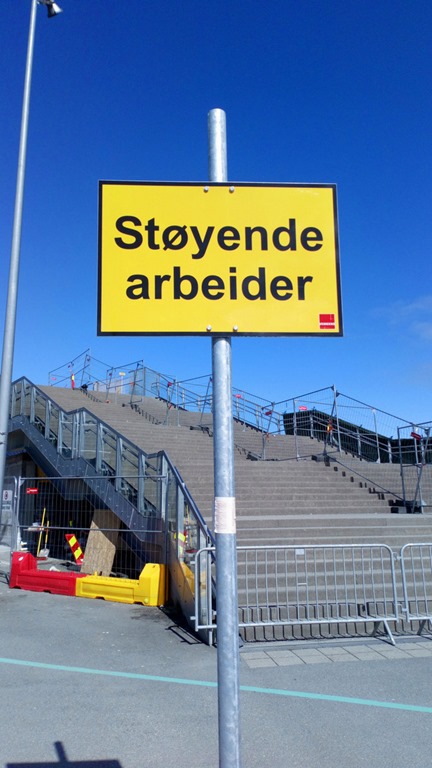
The first reply ‘støyende arbeider’ is more of a lecture than a simple reply, with a running time of twenty-one minutes. Consisting of random clatters, crashes, squidges, squelches and shifting hums which ebb and flow amongst an array of incidental intrusions, it’s more of a non-linear rambling explication, and exploration of the rarely-explored recesses of the mind than a cogent conclusion. But then, why should a reply necessarily be an answer. This, then, is a dialogue, a discussion, not an interview constructed around a Q&A format. It’s nothing so formal, and all the more interesting for its being open-ended, evolving organically. There are points at which the thuds, clanks and scrapes grow in their intensity, creating a sense of frustration, as if attempting to unravel a most complex conundrum and finding oneself stuck and annoyed by the fact that there is something just out of reach, something you can’t quite recall. And at times, this is also the listener’s experience. The way to approach this is by giving up on the expectation or hope of coherence, or anything resembling a tune, and yield to the spirit of experimentalism.

‘Moose Cavalry’ and ‘Mock Paloma’ are both significantly shorter pieces, the former being atmospheric and evocative, the animalistic calls conjuring images of beats roaming moorlands in the mist. Plaintive, droning moans and lows transmogrify into warped, pained cries and needling drones. The latter is different again: dark, tense, shrill tones scratch and scrape, flit and fly, reverberating from all directions. It’s unsettling, uncomfortable.

These three compositions are so different from one another, it superficially makes for a somewhat disjointed set, but on deeper reflection, what Palmer and Procter have forged a work which demonstrates how it’s possible, and even desirable, to approach a subject from multiple angles and perspectives. I still don’t know what the fjord says, but I do know that Palmer and Procter have posed some interesting musings in response.

AA

a3551752136_10

The Helen Scarsdale Agency – 8th December 2023

Christopher Nosnibor

It’s often difficult to keep up with artists’ outputs, especially the super-prolific ones. Jim Haynes not quite make the super-prolific category, but having first written on his work with a review of The Decline Effect back in 2011, I’ve covered three albums between 2017 and 2021 alone. I tend to take a particular interest in albums released through The Helen Scarsdale Agency, which despite sounding rather prim and literary, is a label which has a particular knack for platforming music of an experimental and often difficult and noisy nature.

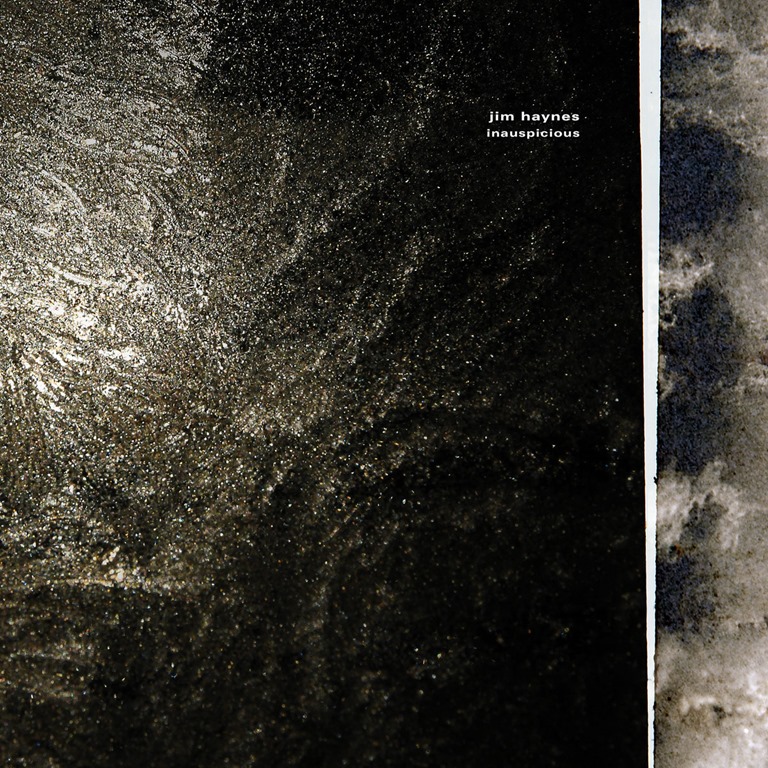
Haynes’ work has become progressively harsh over time, and the press release for Inauspicious notes that this has been particularly true post-pandemic, while acknowledging the cliché that the pandemic marked a pivotal point for many musicians. Crucially, it notes that ‘The tools for Haynes’ work remain limited: motors, electronics, shortwave radio, found objects, all applied with considerable pressure. Compositionally, Inauspicious is a very rough moire pattern from overlapping elliptical structures that can negate and obfuscate just as easily as they can compound and aggregate. The album surges and collapses upon the two twenty minute chunks of controlled noise that follow an internal logic that snakes from brooding power drones, spectral radio transmission, and an aktionist demolition cast upon metal, glass, and unfortunate wooden objects. Rupture and release. Purge and pulse.’

As such, while the output, and the dynamic may be different, Haynes’ fundamentals remain unchanged, and this matters, in that it demonstrates that more often than not, the end product is not so much dependent on the input and the raw materials, but their application and the process.

Inauspicious features just two compositions, ‘Variant, Number Fourteen’ and ‘Variant, Number Fifteen’, which each run to precisely twenty minutes apiece. It’s a work that’s seemingly designed for a vinyl release, with each piece occupying a side of the LP, and I daresay that the dank ambient rumblings have their greatest impact when rolling from the grooves of a thick chunk of vinyl. Still, it works digitally when played through some decent speakers which afford air to the album’s slow, granular churnings. It’s not that fat into ‘Variant, Number Fourteen’ that it’s built to a brain-shredding blast of drilling noise. Beneath the ear-destroying mesh of treble and shredding abrasion, there are swells and surges of lower-end noise. It’s easy to overlook the slight details in the face of such a wall of abrasion, but it matters. While Haynes is bringing a relentless assault, it’s important to pause by the details, and Inauspicious is abrim with them, although ‘Variant, Number Fourteen’ spins into a restless ancient howl in its final minutes and tapers into a dank rumbling that brings a heavy tension.

‘Variant, Number Fifteen’ brings more of the same: heavy drone, grainy texture, harsh noise, spluttering and droning,  a deep sense of ominous foreboding, only with lower, deeper, more resonant bass, the tone of which drags on the lower abdomen among the swishes and swirls. And then grating mid-range abrasion. It’s hard to know how to react to this truly painful grind. By turns, I feel as if I need to defecate and vomit, although in the end I do neither as I simply clench my stomach during passages of this dark mess.

This is an album that brings noise and it brings pain. It’s a relentless grind and growl, and not for the first time, Jim Haynes has tapped into a sense of awkwardness which really grates and grinds.

AA

a3232720135_10

21st November 2023

Christopher Nosnibor

It’s now an established fact that many, if not most listeners make judgements on a song within seconds – to the extent that back in 2014, it was revealed a quarter of Spotify tracks get skipped within the first five seconds. And only thirty seconds or more counts as a stream. I suspect that figure may be even higher now, as attention spans have hardly increased in the last few years. I only speak for myself when I think of the jittery hours where scrolling and skipping has become more of a nervous twitch than social media engagement – although I still refuse to use Spotify, meaning any review request containing only a Spotify link is an instant rejection. It’s one way to filter the fifty-plus daily submissions.

But while I’m likely to give a track more than five seconds, I am prone to making pretty snap decisions when it comes to new music. The chances are the squalling mess of noise that crashlands ‘Overfed’, the opening track on No Gene Will Save Us Now by Greek ‘machine-driven noise rick duo’ Tote Kinder will repel 95% of potential listeners in less then five seconds, because its skronking scrape of slanting, skewed guitar is an instant headache – and the very reason I love it immediately. It’s a shouty, angular mess of – well, everything, and probably the first time I’ve heard anything overtly mathy and a bit Truman’s Water using quite such a barrage of drums right up front. It’s like The Young Gods in collision with Daughters and slams hard between the eyes, and the crunchy bass-led ‘Permanent Damage’ is equally hard-hitting. Taking its guitar cues from Gang of Four, it’s noisy and difficult, despite its leaning towards a groove.

‘Hard to Swallow’ really is, arriving in a shrill blast of power electronics with overloading noise before plunging into darkness and with distorted bass and thudding relentless drums. It’s a hybrid of DAF and PIL, and it’s strong. It doesn’t stop. ‘Die Letzte Weste’ is all thumping beats and grinding bas, again reminiscent of DAF – at least until the blasting guitar noise crunches in, and thereafter, it’s Foetus and KMFDM who spring to mind, but there are others, too. This is some full-spectrum noise.

Tote Kinder are taut tight, poised, in their delivery of churning industrial noise. ‘The Falling Man’ is a sneering, snarling, industrial chug worthy of Filth Pig era ministry, a workout that froths with nihilism. The last couple of tracks don’t exactly offer a mellow finish – and nor should they.

No Gene Will Save Us Now may only contain seven tracks, but they’re all strong and incredibly hard-hitting. – and fittingly reminds us that we are all fucked. Why will people not accept or otherwise recognise this? They just continue as normal, booking their overseas holidays. We are so over. And this album will so break your head.

AA

a0565283797_10

Dret Skivor – 6th October 2023

Christopher Nosnibor

It’s been a few months since we’ve heard from Legion of Swine, one of my favourite vehicles for the intensely prolific Dave Procter – because LOS are noisy, abrasive, and unpredictable, and I have fond memories of numerous demented performances and a couple of collaborative sets together. Even when sadly sans pig-head mask, having developed an allergy to latex, the gnarly electronic noise Dave cranks out is messed up and often times hurts.

Dave, and the Swine, are both highly political animals, and once again it’s politics which have spurred him to clack his trotters into activity and snort his disapproval of current affairs.

L.H.S. is accompanied by uncharacteristically expansive liner notes, which prove useful, and so I shall quote in full:

‘This release pays credit to Värmland folk who campaigned to create a better society and are represented by the letter LHS.

L is Selma Lagerlöf who was heavily involved in women’s suffrage and received a Nobel Prize for literature in 1909.

H is for Gerda and Mauritz Hellberg who were central characters in the right to vote campaign.

S is for Torgny Segerstedt who took a stand against the Nazis in his role as editor at Göteborgs Handels- and Sjöfarts-Tidning.

The image used in this release is a reminder of how the free market is way more important than people in some eyes.’

It lays it all out there, and reminds us how failure to learn from history is guaranteed to doom the future. Admittedly, the way things are looking now, we’re doomed one way or another and likely sooner than anticipated due to sheer greed and a refusal to face facts. In the face of this, there’s a part of me that feels as if complaint or resistance is futile, because we’re already fucked. But we need to go down fighting. We need to at least die trying, to know we’re did our best.

L.H.S. is the sound of the fight. It’s a fucking racket, blasting in from the outset with overloading distortion, cutting in and cutting out, a blasting overload that just hurts and is an instant headache. It’s the harshest of electronica which only gets nastier and more intense and insane as it progresses. By three minutes in, it sounds like someone smashing a bin lid connected to a contact mic, recorded on a mobile phone. The treble is high all the way, and the sounds are metallic, distorting, like someone tearing the door off a garage in a gale or something similarly deranged. And deranged it is, from beginning to end.

We’re in Merzbow territory here. And it actually hurts. Ten minutes in, there are some vocals, but they’re impenetrable shrieking derangement, buried in feedback, before things get really gnarly.

L.H.S. is nasty, and I absolutely love it. I suspect most won’t. It’s one to file alongside Whitehouse, Merzbow, and Prurient. It’s brutal, and as niche as fuck, and Dave knows it. Embrace the pain. This is something else.

AA

AA

a3749396098_10

Inverted Grim-Mill Recordings – 6th October 2023

Christopher Nosnibor

Yes Grasshopper’s ‘Ghost Dog Pagoda’ is the lead single from the forthcoming album of the same name.

Grasshopper? Yes, grasshopper. Not cricket. While on a recent day trip to Berwick Upon Tweed, my daughter was asking about the sounds of the crickets or grasshoppers, and I had to confess I was unaware of the difference, and had to look up the main visual difference is the length of their antennae, and the main biological difference is how they make that distinctive sound.

While I’m still unsure if we were hearing crickets or grasshoppers, it’s clear that despite being in the north-east, we weren’t hearing Yes Grasshopper, as their most informative biography clarifies: ‘Grasshoppers are among what is possibly the most ancient living group of chewing herbivorous insects, dating back to the early Triassic period around 250 million years ago. Those species that make easily heard noises usually do so by rubbing a row of pegs on the hind legs against the forewings, this is known as stridulation. Yes grasshopper formed in 2020 and make noises with a guitar and some drums. Emerging from England’s unforgiving northern coast, this dynamic duo present a wholly unique take on noise rock, with crushing riffs, white water rhythmic twists and barking intertwined vocals making way for heinously catchy hooks.’

As titles go, ‘Ghost Dog Pagoda’ it’s simultaneously visual and abstract. As songs go, it’s absolutely mighty.

The single starts out with a tight picked guitarline, which nags away, before the bass and drums crash in, hard and with the kind of density that feels like a body blow. There’s a moment of pullback to build the tension further before POW!! Fuck!

This isn’t the sound of innocuous insects: it’s the sound of ground-razing devastation. The distorted vocals are way low in the mix, only adding to the impression of monster volume – those smallish gigs where the backline and guitars are so fucking loud the in-house PA simply cannot compete and so the vocals are lost but somehow cut through and the thrill is just beyond words because the sheer sonic impact is beyond words… If you’ve ever experienced this, you will know, and this is the blistering force of ‘Ghost Dog Pagoda’. If you haven’t experienced it, then you need to get out and witness more small-venue live music.

Back to the single, it’s a mess of noise, a full-tilt, all-out sonic assault. The hooks really come in the respite, where the nagging guitar returns, because the rest… it’s a brain-shredding attack. The vocals aren’t only low in the mix, but they’re a frenzied howl blanketed in distortion, and the song’s structure is a long way from a neat verse/chorus alternation. Fuck, it’s impossible to follow, and I have no idea what’s going on from one second to the next. But herein lies its sheer brilliance: ‘Ghost Dog Pagoda’ isn’t pretty, and makes no concession to commercialism or accessibility – not a single one. It hits you, hard, with a wall of abrasive noise, and it’s a beast alright.

AA

YG

zeitkratzer productions / Karlrecords – 22nd September 2023

Christopher Nosnibor

SCARLATTI represents something of a departure for zeitkratzer, the neoclassical collective headed by Reinhold Friedl, master of the prepared piano and a renowned avant-garde composer in his own right. While their performance and recordings usually focus on modern composers and avant-gardists spanning Stockhausen and John Cage via Whitehouse and Lou Reed, with a reinterpretation of Metal Machine Music, here they turn their attention to the altogether more historical figure of Domenico Scarlatti (1685-1757). He is best known – although this is relative – for composing some five hundred and fifty-five keyboard sonatas, and his being a progenitor of classical music. But a large portion of his work went unpublished in huis lifetime, and much has only been available sporadically since.

As the notes which accompany the album explain, ‘Little is known about Domenico Scarlatti… His music is, so to speak, left to its own devices: free, cheeky, playful, sonorous, surprising… Harmonically strolling again and again into unforeseen regions, the ear leads, not the theory; and also the fingers get their right: playful and haptic it goes. Scarlatti explained, “since nature has given me ten fingers and my instrument provides employment for all, I see no reason why I should not use all ten of them.”

But Scarlatti does not contain music by Scarlatti. Instead, the six tracks presented here are all composed by Friedl in response to Scarlatti’s work.

As such, this is much a celebration of Scarlatti’s ideas and approach to composition and so the explanation of the process and thinking behind it bears quoting: ‘Freedom, friction and listening pleasure instead of convention: “He knew quite well that he had disregarded all the rules of composition in his piano pieces, but asked whether his deviation from the rules offended the ear? He believes there is almost no other rule than that of not offending the only sense whose object is music – the ear.”

‘Reinhold Friedl applied this principle and composed the music for a choreography by dance company Rubato. Dance music drawn from Scarlatti, who was so inspired by dance music. The material of the piano sonata F-minor K.466 is twisted anew in all its richness, shifted back and forth, declined, frozen, noisified, sound structures extracted, floating. Those who know the sonata, will more than smell it’s [sic] shadows.’

The six pieces are indeed varied, in terms of mood and form. ‘lias’ is booming, droning, woozy, slow discordant jazz, low, slow, and with lengthy pauses. It’s not something anyone can dance to, and rather than light and playful, it feels dark and sombre. This is less true of the altogether sparser, but stealthily atmospheric ‘muget’.

‘pissenlit’ blasts in with churning industrial noise, a snarling blast that lurches and thunders, crashes and pounds withy relentless brutality. It’s clearly as far removed from the music of the seventeenth century as is conceivable, but beside the lilting piano and quivering, droning strings and subsequent stop-start levity of ‘reine des prés’ the sequencing of the pieces serves to highlight Scarlatti’s versatility, if not necessarily his predilection for playfulness. The playfulness manifests differently and unexpectedly here: ‘pissenlit’ is in fact the French word for ‘dandelion’, a plant often associated with a certain element of fun, of lightness, so the fact that this piece is three and a half minutes of gut-punching abrasive noise worthy of Prurient or Consumer Electronics is illustrative of the disparity between expectation and actuality.

Discord and discomfort abounds as drones and strings tangle amongst one another, heaving and wheezing and occasionally offering glorious, sun-hued vistas through the breaks in the widely varied forms, which feel elastic, and as if Friedl and co are stretching the fabric of the material to see just how much it will give. And it turns out, there is a fair bit of room. ‘reine des prés’ explores space, the gaps and pauses between the notes, and feels like a sort of musical cat-and-mouse which would equally work as soundtrack piece, but it has a cartoonish quality which means it’s more Tom and Jerry than anything else. But it is by no means flippant, throwaway. Entertainment is serious business, after all.

‘violette des marais’ brings pomp and drama… while the final track, ‘astis’, is skittish, playful but also frustrating in its hesitant, halting structure.

Scarlatti is interesting, entertaining, and bold, going out on a limb to present such an unconventional interpretation of a historical artist’s career. But this is largely the purpose of zeitkratzer: together, they re-present music, excavating the archives but presenting them through a prism of contemporary and avant-gardism, with jazz leanings but without being jazz in the way most would interpret it. In short, zeitkratzer continue to push and redefine musical boundaries, and long may they do so.

AA

a1585066167_10

ant-zen – 16th September 2023

Christopher Nosnbor

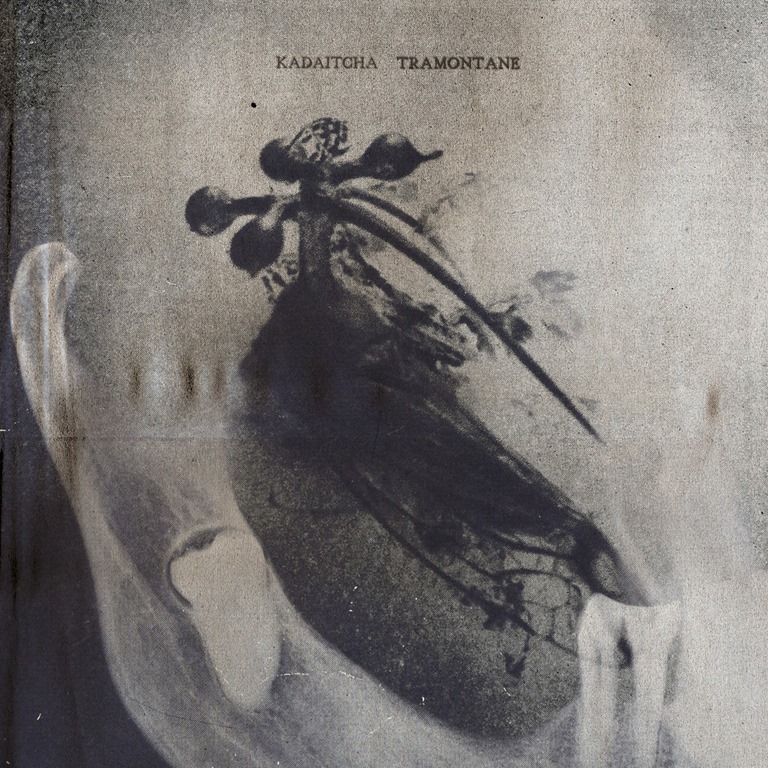
Four years on from Tar, Ukrainian industrial duo Kadaitcha, consisting of Andrii Kozhukhar and Yurii Samson, have overcome many, many challenges to deliver album number five, in the form of Tramontane.

The tracks which appeared on their limited lathe-cut single last year do not appear here, and this is admirable: singles so often tend to be used as launchpads for albums, and it was particularly common in the 80s and 90s that albums would sell on the basis of a couple of singles, but would have next to no other decent tracks. In the days before streaming, this was something that was easy to get away with, since the only way of hearing the album was by buying it, which you would do based on the singles. But then, the risk could be reduced by taking punts using your half price or free options through Britanna Music, or similar. The advent of streaming hasn’t really improved things, though, because now, at least in mainstream circles, the album is essentially obsolete.

But outside the mainstream, the album is thriving, and artists are pushing the format now that the constraints and limitations of physical formats aren’t necessarily dictatorial in determining duration, and there are infinite options for exploration. The single wasn’t so much of a stop-gap release as a standalone document of a period in time. But the key point here is that Tramontane is very much an album, and a work to be approached as such. The notes which accompany the release are almost hallucinatory – not quite Burroughs cut-ups, but fragmented, non-linear, and they serve to articulate the essence of the music contained here. Stylistically, it’s tight and cogent, and there’s a flow to it, too, which begins with the appropriately-titled ‘Intro’, which is precisely that – a short instrumental intro piece which paves the way for the ten heavyweight cuts which follow. But within that coherence, what Tramontane offers is a work which really goes all-out to disrupt and unsettle.

‘Niello’ draws primarily on the sound and style of earlier industrial music, the electronic pioneers of the late 70s and early 80s, the likes of DAF and Cabaret Voltaire, but with its distorted, menacing vocals, there’s an element of the later evolutions of industrial which emerged in the mid 80s. It seems to be that there are very different understandings of industrial, and while Al Jourgensen may be a huge fan of William Burroughs and the music that formed the body of the first wave of Industrial music, namely Throbbing Gristle and also the wild tape loop works of Foetus and the heavy percussion of Test Dept, it’s industrial metal and harsh post-NIN electronica which have come to become synonymous with industrial latterly.

On Tramontane, Kadaitcha have brought the two forms, old and new, together, and the result is discordant, noisy, difficult. And these are its selling points. It feels like a guided tour through the most challenging aspects of Industrial music through its evolution and history.

‘Knife’ is a sparse, oppressive low-end throb pinned down by a dull, thudding, muffled-sounding beat, over which twitching electrical streams flash and flow while monotone vocals are unsettlingly detached. The percussion really dominates on the tempestuous ‘Liars’ and any and all references to Einstürzende Neubauten are entirely appropriate. It’s a thunderous, dense racket where the low end really stands to the fore, but it’s tame in comparison to the dark ‘Offering’: even when it drives out as a heavy and insistent bass riff, it feels unfinished, undercomposed. Yet therein lies its success: it feels organic, and nothing is overdone.

The mangled noise and droning distorted vocal on ‘Fossil’ is pure Throbbing Gristle, a barrelling barrage of blitzkrieg laser synth bleeps and a whole mess of midrange and lower end distortion and dirt, churning, discordant, the monotone vocals almost buried in the tempest of overloading unpleasantness, and ‘Seeds’ is similarly unpleasant and uncomfortable, everything going all out on overdrive.

It all comes together on ‘Insight’: beginning as a gentle, spacious, mellow post-rock guitar-led piece, it soon erupts into a mess of overload akin to Metal Machine Music, only with drums and sinister vocals. It’s got the lot, and as the album enters its final stages, it seems to consolidate the elements of the previous tracks to punch even harder, with the percussion harder, the grinding morass denser and darker.

Perhaps a reflection of the circumstances in which it was created, perhaps a reflection of the times in the world at large, Tramontane is heavy and at times harrowing. The lyrics may not be decipherable for the most part, but the mood requires no translation or interpretation, and Tramontane will crush your soul.

AA

a3600121745_10