Posts Tagged ‘New Wave’

‘Pagan Synth’ duo, ESOTERIK has just unveiled their new single, ‘Mentor’ from the forthcoming EP, Archetypes.

For the next installment of the EP, ESOTERIK explores the insight and experience the ‘Mentor’ has to offer. Get lost in the hypnotic groove but heed the advice of the Mentor for it’s the end of suffering. It’s a beacon in the darkness calling you from the illusive world of form. It’s a voice that’s behind the incessant stream of thoughts; a gentle nudge with a firm but helping hand. The choice has always been yours all along. Will you be a listening ear, or will you flounder in the chaos?

On the upcoming EP Archetypes, the band examines the tropes that have weaved a thread across societies for centuries. “It’s such an interesting topic and really highlights the power of language whether written or passed down via word of mouth. The legends hold a commonality that span through time and culture. Before the world was connected by technology, these stories held the experiences and wisdom for generations to come. Whether they are steeped in symbolism or ritual, the lessons are still infused and if sensational that only ensures the survival beyond our limited life spans.”

Check ‘Mentor’ here:

AA

965696

12th July 2024

Christopher Nosnibor

As genre crossovers go, Post-Punk/Alt Hip Hop is quite a rare one. Perhaps not as radical or as extreme as the kind of crossovers with alternative and metal bands and hip-hop acts that took place on the groundbreaking Judgement Night soundtrack in the early 90s, but at this point in time, where pretty much anything goes, this is unusual. Actually, I’d like to step back from that for a moment. Not so long ago, it felt as if anything went, that postmodernism had truly reached its peak and you could have grindcore with a kazoo and not be too surprised. More recently, while pockets of weirdness are strongly entrenched – as the recent Guardian article on Nerdcore, which managed to mention Petrol Hoers and BxLxOxBxBxY, both vehicles for beardy, ferret-keeping, pant-wearing York legend Dan Buckley (disclosure – Noisenibor performed a one-off collaboration with him in his guise as Danny Carnage, which was everything you’d expect) – things seems to have become more siloed, more set, more fixed, when it comes to genre parameters. Fluidity and crossovers remain, but wild invention seems to have given way to something of a return to convention.

‘Imagine Beck meets Sleaford Mods, meets Slowthai’ the bio says. Only, listening to this, you don’t have to imagine.

What’s noteworthy about these touchstones is that two are very white, and two are very British, the British acts both being overtly political, while all three draw on elements of hip-hop in their work. None of this is to denigrate anything about Oscar Mic or ‘Sun Star’, and nor is it a criticism to comment that it’s a hip-hop tune which is overtly white, as delivered by a pale guy with a vaguely gingery moustache. It’s a true testament to multiculturalism and artistic cross-pollination, and what’s more, ‘Sun Star’ boasts some truly sinister bass frequencies which strike way low and hit hard like subsonic torpedoes beneath the shuffling beat that clatters away nonchalantly all the way. Toss in some Beastie Boys and you’re getting a sense of where this is at.

Then there’s the really melodic indie break, and the thing has something of a quirk / arty / studenty vibe, while the video bursts with experimental oddness. And when you piece it all together… it’s gloriously mismatched and off-kilter. And we should celebrate its non-conformity.

AA

SUN STAR COVER ART

Christopher Nosnibor

Goths are the most knit-picking pedants and harshest critics of their favourite bands of any genre’s fans I know. Actually, that’s not quite true: fans of The Sisters of Mercy are the worst knit-picking pedants and harshest critics of their favourite bands. I preface this review with this observation as a Sisters fan first and foremost, and contestably as a goth second.

Y’see, most of the bands which emerged after that initial post-punk crop which included The Sisters, Siouxsie, The Cure, Bauhaus – disparate bands who have little in common sonically and stylistically beyond reverb, dyed hair, and studded belts – and sure, The March Violets, The Danse Society, UK Decay, and a handful of others, were toss. By the time ‘goth’ was formalised as a ‘genre’ it had gone to shit, mostly with every other band ripping off the guitar and bass for ‘Walk Away’ and diluting it to a pissweak rehash, and all too often with ghastly theatrical booming vocals. And they all started wearing waistcoats and frilly cuffs and appropriating ‘gothic’ imagery to boot. That was circa 86, by which time – that’s which time, not witch time – The Sisters and The Cure and Siouxsie had very much evolved, so we can probably as much blame The Mission for the start of the rather more naff second wave. By the 90s, derivative cack like Every New Dead Ghost was crawling out of the woodwork, amplifying the cliches on top of simply being laughably bad.

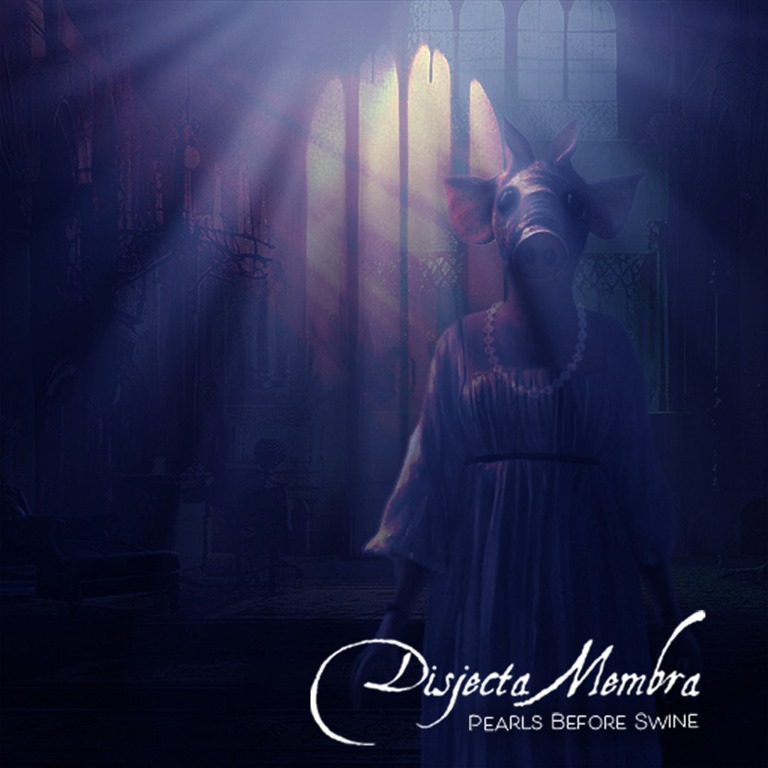
It so happens that Disjecta Membra have been going 30 years, emerging from that early 90s milieu of corny goth revivalism – presumably pining for 1985 and sobbing into their baggy sleeves when The Sisters went cock-rock with Vision Thing. This release is a career-spanning retrospective, which they’re giving away free on their Bandcamp. And this is the first I’ve heard of them.

I kinda wish it had stayed that way. It starts off with the single version of ‘Whakataurangi Ake’, which features Rob Thorne, and it’s a preposterous, pretentious semi-ambient new-age effort with over-the-top dramatic vocals. I mean, fair enough in that it draws on their New Zealand heritage, but it’s pretty obvious and cheesy as. And it’s all downhill from there.

‘Lilitu’ might actually be quite exciting if X-Mal Deutschland had never existed. But as it is, it might as well be a cover of ‘In Der Nacht.’ Talking of covers, there are a few here. And again, after The Sisters broke the ground of taking songs that didn’t obviously sit with the style – like ‘Jolene’, and disco faves ‘Gimme Gimme Gimme’, and Hot Chocolate’s ‘Emma’ and made it their schtick, every other goth band thereafter just had to toss in some quirky covers… and lo, we get a take on Boney M’s ‘Rasputin’ and covers of other goth bands, because they obviously add so much more. ‘Rasputin’ sounds like you’d imagine, of course: drum machine with a head-splitting snare and spindly guitars. It’s cack, but the worst thing is that it doesn’t really bring anything new and doesn’t even sound like it’s done vaguely ironically, meaning it’s neither cool nor funny.

And while we’re in the realms of cliche, what’s the obsession with marionettes in contemporary goth? ‘Antoinette Marionette’ is as obvious as it is lame as wordplay goes., and with its crashing snare and chilly synths and spindly guitars, the best that can be said for it is that it’s uptempo. I did kinda wish that ‘Skin Trade’ was a Duran Duran cover instead of the po-faced and predictable goth-by-numbers that it actually is.

Apparently, ‘Madeline! Madeline!’ and ‘Death by Discotheque’ are both good enough to warrant two versions on a thirteen-track compilation. They aren’t, and it suggests a lack of material of a quality to fill a single album over the course of thirty years. The latter, especially is a derivative disappointment, a stab at rambunctious goth-country in the vein of Fields of the Nephilim while attempting to create their own take on Suspiria’s ‘Allegedly, Dancefloor Tragedy’- one of the few decent songs to come out of the early 90s revival. This isn’t a patch on it, and just seems to think it’s amusing bashing cybergoths. I mean, they have a point, in that cybergoth was a ridiculous thing, but of all the audiences to alienate in their position.

The last track, ‘Walking in Light’ is quite interesting, marking a shift in tone towards droning guitar ambience, at least initially, but then it descends into a glam-infused rock stomp which turns out to be a cover anyway.

30 years, and this is the best they’ve got.

AA

a0980357481_10

Arriving more than three decades after his first solo album and almost 20 years since his groundbreaking group Telex delivered their final message, Belgian electro-pop musician Michel Moers is finally making a comeback with As Is, his brand new album. To celebrate its imminent release, the synth man has invited iconic vocalist Claudia Brücken from the similarly revitalised Propaganda (now xPropaganda) to guest on its first single, ‘Microwaves’. A 50% electro-pop, 50% new wave anthem, it will delight fans of Ladytron as well as Telex classics such as ‘Moskow Discow’.

“Claudia has a great voice that you recognise from the very first note,” says Moers. “I was thrilled to get the opportunity to work with her and was determined to place her vocal upfront in this song.”

Check ‘Microwaves’ here:

AA

Michel Moers will release As Is in mid-April. Coming 33 years after his solo debut, Fishing Le Kiss, the long-awaited record features ten tracks that showcase Moers’ wisdom and artistic reflection as he offers a blend of thoughtful, electronic music infused with surrealism in his own unique style. It includes contributions from xPropaganda singer Claudia Brücken, who adds her distinctive Teutonic touch to ‘Microwaves’, plus Moers’ compatriot DAAN (Daan Stuyven), whose deep, expressive voice is utilised to full effect on ‘Back To Then’.

Containing songs that have been developed over several years, the album has an intimate, diary-like quality, reminiscent in part of the compositions of Erik Satie. With highlights that include the stridently uptempo ‘Potentially (Love-Hate)’ and ‘Pixels’, plus the lyrically unsettling ‘New Friend’, the album actually opens with an updated version of ‘Les Gens Sont Affligeants’ (People Are Disappointing) from Moers’ debut. It resonates more than ever in today’s individualistic society.

As Is represents a triumphant return for Moers, blending past influences with contemporary sounds and themes, and stands as a testament to his enduring creativity and adaptability in a continually evolving music landscape.

Moers has spent the last three decades working as an architect and photographer while continuing to make music. Involved in the remastering of the Telex back catalogue that was reissued to great acclaim on Mute Records in 2023, this also served to reinvigorate his skills and contributed to the creation of As Is. Belgium’s first electronic band, Telex were influential pioneers, appearing on Top Of The Pops in 1979 and representing their nation at the Eurovision Song Contest in 1980.

ff3a0909a1752b34921296440990af1eb6900c49

13th February 2024

Christopher Nosnibor

Another day, the organic evolution of another obscure splinter-genre or a genre cooked up by the music press, or, indeed a band themselves. Given the ever-expanding void in the space where the music press used to exist, that particular scenario is increasingly unlikely, meaning genre demarcations tend to now originate by word of mouth among fans, or from bands. And much as there’s a heavy cringe element to the way in which the music press historically created genres, from goth to shoegaze and Britpop, alongside a whole bunch which failed to ignite, like Romo and The New Wave of New Wave. Sometimes, trying to build a pigeonhole slips into the domain of trying too hard, and more often than not, genre labels simply serve as shortcuts which bypass the requirement to engage in meaningful dialogue as to what an act is actually doing, what they really sound like,

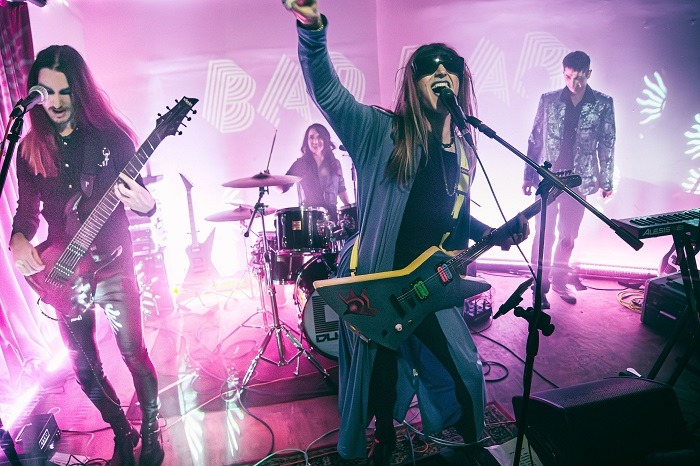
And so the arrival of ‘Long Divide’ by ‘Seattle-based ‘turbowave’ pioneers, Dual Analog serves as an educational piece. They pitch themselves as ‘combining New Wave and Heavy Metal into a brand new genre.’

There’s nothing wrong with ‘Long Divide’, but it doesn’t sound especially metal or new wave, carrying most of the trappings of 80s electropop – although image-wise, there’s a whole heap of 80s hair-rock influence going on, with bandanas and studs all in the mix. And hair. Lots and lots of hair.

‘Long Divide’ isn’t really the sound of bandanas and studs and hair, and is more Depeche Mode circa Songs of Faith and Devotion with some guitars played lowed but mixed low, meaning the synths dominate the sound. The vocals register in that same baritone region of Dave Gahan and a whole host of post punk / goth bands, but there’s something about the delivery – level, tone, pitch, I’m not sure – which hovers on the cusp of uncomfortable… but as the song progresses, it seems to slot together rather better. And then they whip out a big old guitar solo near the end and boom, you’ve got you hair rock fix.

Time was I’d have wrapped up a review with a pithy summation., but this feels increasingly forced and corny, and at the same time, presenting a verdict feels little different to casting oneself into the mould of a star-rating – it’s arbitrary and lazy in equal measure. As much as ascribing a genre is a short-cut, so is declaring an album a 7/10; it’s a box-ticking exercise that appeases the lowest common denominator. A hedge-betting 6 or 7 out of 10 is the coward’s way of saying you’re being polite and sitting on the fence. Whereas I’m ok with saying this is… ok, so-so, middling to me but likely to find a solid fanbase.

AA

1438c134-109d-11a4-a071-a18bf622a4f3

25th January 2024

With Band of Susans, active between 1986 and 1996, Robert Poss curved an arc from the New York noise scene towards more of a shoegaze sound. With releases on Blast First and Mute, and featuring a pre-Helmet Page Hamilton on second album, Love Agenda, not to mention a reputation for eardrum-shatteringly loud live performances, the band unquestionably achieved more in terms of influence and cult cred than commercial success (something their final album, Here Comes Success (1995) seemed to acknowledge in its title). But what qualifies as success? Capitalist culture and media tell us that success is a career, promotion, cash, holidays, cruises, bug house big car. But that’s because these are the status symbols capitalism tells us we should aspire to. How about having enough to be ok, a home you like and feel comfortable in, having friends, knowing yourself and being comfortable in your own skin, and having the freedom to do things which give you pleasure? It’s a question of values: what do you value more, time, or money? Status, or the satisfaction of being true to yourself?

There seems to have been a fair bit made of fellow BoS alumni Karen Hagloff’s return to music making in recent years, but not so much about Robert Poss’ sustained output since the band called it a day. But then again, Poss has spent a career being somewhat overlooked and vastly underrated. Both his songwriting and style of playing is quite distinctive and unusual – quirky seems a reasonable adjective, and is certainly not a criticism. The notes on bandcamp note that ‘The release is dedicated to composer/filmmaker/photographer Phill Niblock, a long-time mentor, colleague and friend.’ The timing of this certainly renders this dedication particularly poignant, and also highlights the way in which exponents of avant-gardism feed off one another and evolve one another’s ideas in different directions.

The Niblock connection certainly sheds additional light on Poss’ approach to composition and sound, favouring drones and repetition over rigid verse/chorus structures and progression, and Drones, Songs and Fairy Dust does very much contain, as the title suggests, a miscellany of bits and pieces, ranging from exploratory wanderings to fully-formed songs using conventional ‘rock’ format of guitars, bass, and drums – and on some, there are even vocals, notably the punchy post-punk cut ‘Your Adversary’, which marks a change of style with its murky production and blustery drum machine backing.

The first of these, ‘Secrets, Chapter and Verse’ is a title which could easily be on a Band of Susans release and the song carries that Band of Susans vibe – jangly indie but played loud – and I mean LOUD, with strolling bass running back and forth and up and down beneath the layers of guitar, the vocals low in the mix and serving primarily functional capacity – sonic placeholders.

‘Out of the Fairy Dust’ combines jangling indie and ambient drone and in many respects does carry echoes of ‘Here Comes Success’ – but also Love of Life era Swans – at least until about halfway through where it takes a sudden turn into deeper folk territory. It’s quite a contrast with the deep, ultra-droney sonorous ambience of ‘Foghorn Lullaby’.

Like the epic solo workout that is ‘Hagstrom Fragment’, which comes on like some legs akimbo 90s rock, ‘Skibbereen Drive’ lunges into rock mode, and follows the chord sequence of ‘Flood II’ from The Sister’s of Mercy’s Floodland – and sounds very like it, with its cold synths and crisp drum machine, but without the acoustic guitar detail and lead guitar line. It’s a real contrast to the epic dronescape of ‘Into the Fairy Dust’, on which the drums are a million miles behind the drone as they clatter and roll away, onwards, ever onwards, but also almost entirely submerged in the mix. Elsewhere, with its snarling synth grind, ‘S Romp’ sounds like Suicide doing dirty disco, and ‘Trem 23’ – well, it takes us back to the 23 enigma.

Drones, Songs and Fairy Dust showcases a remarkable diversity of styles, and it’s neither as dry nor as dark as all that, with ‘Imaginary Music On Hold’ presenting a most whimsical feel. As a collection, it never fails to be interesting, or enjoyable, and showcases Poss’ eclecticism and range, and there’s pleasure to be had from listening to a collection of work by an artist who never feels constrained or compelled to confirm to a given genre or mode. It’s something that seems to trouble many people, not least of all labels and critics, that an artist’s creations are based on the pursuit of creative endeavour and interest rather than assigning themselves a category by which they must live. The flipside of this is that it may not feel particularly like an album it its own right, but more like a collection of demos and ideas – and just as the title summarises the contents as three separate elements – Drones, Songs and Fairy Dust – so it feels like it contains the seeds of three separate and distinct projects – a droney one, an indie one, and a dark rock-orientated one. It would be exciting to witness those three projects realised, but what we have here, regardless of future intent, is a document of forward-facing music-making and an artist whose sole priority is doing his own thing. This is, ultimately, the ambition for any artist: to create without concern for commercial matters. And Drones, Songs and Fairy Dust is an exemplary product of creative freedom.

AA

a2882047316_10

The members of MISSILES are no new kids on the block. Coming from punk, rock, and metal, as well as surf and rather diverse backgrounds, they all answered to the call of their good friend Gabriel Forslund – sincerely interested in doing something new and exciting together.

The band’s trajectory began with a 7" single released by the Swedish label Fetish in 2016. Initially viewed as a project, MISSILES have organically evolved into a fully dedicated band with a laser-guided focus, causing shock waves in the underground with their jet-fuel genre-clash. Combining abandoned sounds with new inventions on Weaponize Tomorrow, MISSILES promises to both pat you on the head and stab you in the back, delivering a unique blend of post-punk with a touch of goth rock.

MISSILES claim their debut is a one-of-a-kind album, truly a loved bastard. Weaponize Tomorrow will appeal to those who enjoyed the certain “je ne sais quoi” found in the New Wave movement, a line of thought that is liberating to hear today when artists go to the bank with a genre description. MISSILES couldn’t be bothered; it’s rock, it’s pop, its punk, it’s je ne sais quoi.

Hard to pin down, but undeniable to freak out to, Weaponize Tomorrow is a high yield blast wave that will leave MISSILES hot on the tongues of those looking for a sudden and dramatic, incendiary kick. A gut smashing future shock that will resonate across diverse musical landscapes, Weaponize Tomorrow will be the perfect atomic cocktail for fans of Wipers, Dead Moon, The Birthday Party, The Gun Club and even modern iconoclasts Molchat Doma and Beastmilk.

Their inaugural album, Weaponize Tomorrow is out on May 10, 2024, under the banner of Svart Records. Witness the album’s opening track ‘Dead Summer Moon’ here:

AA

Missiles promotion 1 color.

Credit: Johan Snell

New Heavy Sounds – 19th January 2024

Christopher Nosnibor

Cold in Berlin’s latest project, The Wounds looks to see the band scaling new heights of ambition, being a multi-record work consisting of an EP, The Body is the Wound, and an album, due in 2024, and promises ‘a musical vade mecum of what is to come in a fresh era for the band.’

I was gripped by Cold in Berlin from day one, on the release of their White Horse EP, a tense and intense burst of spiky goth which was razor-sharp and raging, bringing a zippy electro element to jagged guitars and a vocal that drew clear influence from Siouxsie and Skeletal Family. I must have conveyed my excitement pretty well, since my review is quoted on the BandCamp for the release, some twelve years on. Their debut album, Give Me Walls, still stands as a latter-day goth / post-punk classic.

Over the course of three further albums, the band have further defined and refined their style, becoming doomier, darker, heavier, but still with a clear commitment to concise and focused songwriting, proving that doom doesn’t have to be all about formless seven-minute dirges. I’m a fan of formless seven-minute dirges, but variety is the spice of life, and Cold in Berlin are one of those rare acts who’ve succeeded in creating their own niche in not one, but two crowded genre spaces.

Two of the EP’s four tracks have already been released as digital singles, both accompanied by visually striking videos. It so happens they’re the first two tracks on the EP, and they’ve been released in the order they appear. But the rest of the EP is absolutely on a par.

As the band write, ‘The lyrical themes dance around sex, murder, suicide and broken dreams, brought together in loose storytelling that allows listeners to add their own experiences and bring personal meaning.’ The words only begin to emerge after a few listens, after you’ve shaken your head clear from the initial impact. It’s a proper punch in the face, a full-force kick in the eye. The Body is the Wound packs four songs of equal quality back to back, and is as strong a document of the band’s work that they’ve laid down to date.

‘Dream One’ is a towering monolith which combines pulverising power chords with stark, icy vocals, and the effect is spine-tingling. Maya’s vocals have never sounded more powerful, more commanding than here. Then again, ‘Spotlight’, which slows the pace and amplifies the weight matches it, while emphasising the band’s doom leanings. It’s some heavy shit, alright, and hits with a punishing intensity.

The cuts which haven’t yet been unveiled are every bit as strong as those which have. ‘When Did You See Her Last’ twists stark synths and gothy guitars behind a chilling set of lyrics – the most spine-chilling I’ve encountered since ‘Shooting Dennis Hopper Shooting’ by The Twilight Sad.

To describe the final cut, ‘Found Out’, as ‘poppy’ might be slightly misleading, but it’s a question of context. There’s some stealthy picked reverby guitar that’s pure 1985 goth that laces the verses with some fine texture before the thunderous chorus blasts in on a tidal wave of distortion. And in some ways, it very much recalls their earlier works, only thicker, denser, more driving, more powerful on the riff front, and they deliver all-out epic compressed into less than five and a half minutes.

Not only is there not one remotely lesser track on this EP, but it’s consistent and utterly relentless from beginning to end: no breathers, no ballads, no instrumental interludes. In short, The Body is the Wound is an utter blinder and absolutely blistering, and if the album is half as good, it’ll still be their best yet.

AA

a3987109465_10

Human Worth – 10th November 2023

Christopher Nosnibor

I know it’s not really cool to make that you’re cool because you’re in the know or whatever. A few years ago, it was the way of the hipster, but after what felt like forever, they seems to have disappeared, probably because everyone grew beards during lockdown, so the hipsters had to shave and resort to telling people they were wearing a beard before the pandemic or something. Nevertheless, I can’t help but take some satisfaction from having observed Beige Palace from their very dawn, at their first show in the now-lost CHUNK rehearsal space-cum-gig venue way back in the spring of 2016. The place was a bugger to get to from the train station, being practically in the middle of nowhere you’d actually want to go, and to describe it as basic would be polite. But what CHUNK provided was a place where anything went. It was BYOB, pay what you can, and it was a hub of creativity which lay at the heart of the DIY scene in Leeds. And so it was that Beige Palace – perhaps not quite a supergroup at the time, but simply people in other bands (Freddy Vinehill-Cliffe (Thank), Kelly Bishop (Gloomy Planets) and Ant Bedford (Cattle)) doing something different together – came to be.

They’ve come a way since then, notably with slots at The Brudenell supporting Mclusky and also Shellac, with a personal thumbs-up from god himself, Steve Albini. There’s likely a number of reasons for this, apart from the simple fact that Beige palace are bloody good, a major one being that they make angular noise without being overly abrasive, preferring instead to push sounds that are slated, skewed, imbalanced, jarring, jolting. This is right up front at the start of this, their second long-player, with ‘Not Waving’, a scuzzy collision of Shellac, The Fall, early Pavement, and Truman’s Water. The bass is right up in the mix, the vocals down low, and everything about it is absolutely wrong in terms of conventional sound. You can imagine sound engineers all around the country shaking their heads and saying “but that bass is just booming… it’s drowning out the vocals… and the guitar, maybe you should take the treble down a bit?” But Beige palace’s sound isn’t conventional, and they’re not going for radio-friendly pop tunes.

The album’s title appears to make a nod to XTC, and calls to mind the band’s hit ‘Making Plans for Nigel’ (surely one of the greatest snappy tunes of the New wave era) and the fact that Andy Partridge was co-frontman of XTC. Coincidence? Am I joining dots and identifying references which simply don’t exist? Possibly, but then again, for all the wrongness, the off-key and the off-kilter, there are some neat hooks to be found leaping out from the rumbling basslines and loping drums. ‘Local Sandwich’ is representative: the rhythm section strolls along kicking a loose groove where the bass and drums are seemingly playing alternate to one another, the discordant sprechgesang vocals of the verses overlap one another, making for a tense combination – and then out of nowhere, pow! Hook! And then a squalling climax.

The genius of the songwriting lies in its unpredictability: for as much as the compositions are largely built around repetitive motifs, hammering away at the same nagging loop for minutes at a time, adding and subtracting elements such as keyboard or guitar, they’re prone to veer off somewhere else or otherwise change tempo or burst into a scratchy blast of noise at precisely the moment you least expect – and just when you expect something unexpected, a song like ‘My Brother Bagagwaa’ doesn’t do it. They’re as keen to explore the space in between the notes as the notes themselves, and there are numerous passages on Making Sounds for Andy where they pull things back to stark minimalism. This makes the crackling bursts of distortion and clattering drums all the more impactful.

Leeds has a habit of birthing weird bands who are nosy but not noise, with the legendary Bilge Pump and the should-have-been-legendary Bearfoot Beware providing a brace of examples – but Beige Palace are very much their own band. Making Sounds for Andy is a bold celebration of ramshackle lo-fi, delivered in such a way as to hit hard. It’s got ‘underground classic’ all over it.

AA

HW025_BeigePalace_MakingSoundsForAndy_CoverArtwork

Portland post-punk alt-rockers SKY LIONS presents ‘Werewolves’, a wild offering from their debut album Inside The Circle. The duo is made up of Radio Sloan and Outer Stace, who over the years have performed with or as a part of Courtney Love’s band, Peaches’ band, Le Tigre, The Need, Time Bitch and Photona.

Sky Lions’ musical collaboration began in childhood, before they were aware of any rules. Outer Stace says, “’Werewolves’, in part, is about the idea of shifting from our outer selves to our inner selves, the fleeting peace that can bring; transformation and adaptation… So, the art direction possibilities were pretty endless. It was a lot of fun to create the different versions of ourselves that we could be.”

Watch the video here:

AA

“It’s like a metamorphic reality of death and the future. It feels like things we’ve seen,” says Radio Sloan. “Our sound is that of accepting existence for all its flaws. Sky Lions has a darkness that isn’t entirely heavy metal, post-punk or darkwave. Rather, it’s a culmination of who we have been, who we currently are, and how we interpret the world around us. Moving within that world is the core of our musical expression.”

From early days experimenting with instruments to their evolution into Sky Lions, they’ve carved a niche where innovation, music, feminism, Trans/queer identity and horror come together. Sky Lions weaves together the threads of life’s absurdity, unquestionable magic and tragedy. Their trans / queer / feminist lens adds a relatability of lives lived and times to come, creating an immersive sonic journey that challenges the mind and ears. Through genre-blurring compositions and evocative lyrics, they hope to channel their ethos into a call for transformation! They hope that their songs challenge stereotypes, and ignite conversation.

Sky Lions