Posts Tagged ‘minimal’

Ahead of the release of her forthcoming self-released, crowdfunded album, Mosswood – which we absolutely love – minimal electronic pop artist Mayshe-Mayshe has released a third single by way of a taster.

‘Little Yeah Whatever’ encapsulates the spirit of Mayshe-Mayshe perfectly – subtle, understated, shy-sounding, but with an unexpected strength at the core.

AA

a3517779526_10

Nocturnal Rainbow Recordings – 5th September 2025

Christopher Nosnibor

One significant downside to digital music formats is that is reduces the dimensions of the experience. With a record, and even a CD, there is a physicality which is in many ways integral to the experience. I’m not here to sell the whole multi-sensory experience and tactility of vinyl line: yes, I grew up with vinyl, and in the 90s, a new LP was maybe £7.50 while a CD was £11, so I would often buy vinyl simply because I could get more music for my money. And records do scratch, sleeves get bent, and generally, vinyl requires more care than a CD, so I’m as much a fan of 5” silver discs as I am 12” black ones. And now, vinyl has become something of a fetishised luxury item: as much as there’s still pleasure to be had from sliding a thick chunk of wax cast in whatever hues from a glossy, heavy card sleeve, there’s sometimes a sense that they’re all trying too hard, and the £30 price tag takes some of the shine off the experience. There are a few exceptions – recent Swans releases have been works of art in every sense, and the physical formats have added essential dimensions to music which is something more than just some songs, recorded.

Had Ran Slavin’s latest offering been given a vinyl release, it would have been a triple LP, containing as it does thirty tracks, with a running time of almost two hours. It would have been epic. But despite having released previous albums on esteemed labels including Mille Plateaux, Cronica, and Sub Rosa, it’s unlikely that Ran Slavin has the kind of fan base that could justify, from a label perspective, a triple-vinyl release. But what Nocturnal Rainbow Recordings have done here is interesting, and utilises the digital format in a novel way, by offering alternative artwork in recognition of the album’s multi-faceted nature. Yes, it’s been done by major artists who’ve released physical albums with variant covers, with a view to enticing hardcore fans to buy multiple copies and thus increase sales and enhance the chart position (The Rolling Stones’ Hackney Diamonds probably wins the award for the pinnacle of pisstake on this score), but the idea of buying an alternative digital cover for a nominal price isn’t something I’ve seen before.

As the notes on the Bandcamp page explain, ‘Just as the music migrates across genres, the visuals migrate across states of being, extending the album into a network of parallel identities. Together, they construct a fragmented yet coherent cosmos, where each image is both an entrance and a deviation, multiplying the ways Neon Swans can be seen, heard, and inhabited.’

Appropriately, Neon Swan doesn’t quite sound like anything I’ve heard before, either. To unpack that, it contains many elements which are common and familiar. There’s sparse techno, minimal dance cuts with sped-up vocals and swathes of space between low-key beats and glitchy grooves, as represented by single release and album opener ‘tell///me///now’ – one of many titles which reflect the sense of fragmentation and juxtaposition which define the album (‘s4dert1ac’ and ‘d3xr3rity’ provide other examples, but then there are the likes of which also disrupt the conventions of language in the same way Slavin disrupts the language of genre tropes).

‘audio ease my pain’ plunges into darker territory, while introducing rap vocals atop heavy hip-hop beats (although there’s an instrumental version as well further on, which offers a different perspective again on the same material). Elsewhere, ‘c-r-i-m-s-o-n-schema’ brings spacey, spaced-out bleeps, heavy percussion that has a late 90s feel, a blend of The Judgement Night soundtrack’s melding of rap and rock, and the Wu-Tang Clan.

For all of the space, the reverb, the minimalism, something about tracks like ‘searching_heart’ is quite claustrophobic: the intense repetition and synthetic feel, paired with crackling fizz, brain-melting glitches and some grinding bass tones. It may be constructed using the fundamental elements of dance music, but this is not dance music. Electronic music to induce uncontrolled spasms and twitches isn’t a genre, but if it was, Ran Slavin would be a leading exponent.

It’s a long album, with a lot to digest, and as it thumps and wobbles and glitches away, snippets and fragments collaged across one another, there are times it all feels a but much, a bit bewildering. At times it’s draining, exhausting, at times you simply zone out, and often, I find myself questioning the wisdom of persisting with it. The vibe is that of the kind of underground clubs I never got on with in the 90s and early 00s, and I’m particularly reminded of the time Whitehouse played an Optimo night in Glasgow in 2003: I was there for Whitehouse, who played for forty minutes starting around midnight, and the music being played was rather in the vein of the more groove-centric cuts on here. The people there for the DJs weren’t happy for the low-key electro pulsations to be paused for the noise and antics of Bennett and Best, but for my part, I struggled to get into the low-key electro pulsations. But the other reason I recount this experience, challenging in its incongruousness, is that in places, Neon Swans feels incongruous with itself, an album riven with unreconciled contradictions.

The execution of Neon Swans is hard to fault, and it does cover considerable ground, with range, over its expansive duration. But it is sprawling in its scope, its focus is variable, and it is very long. And it’s maybe better with drugs.

AA

NRR38 art 1

Ideologic Organ – 5th September 2025

Christopher Nosnibor

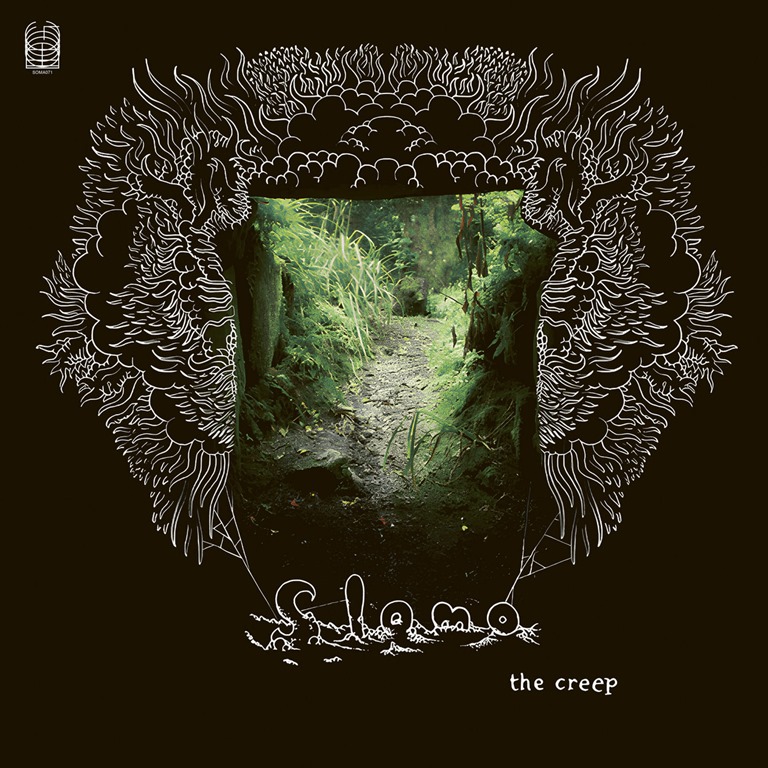
Umberto Eco is one of the many authors I feel I should have read, and hope that one day I will get around to reading. Social media has of late showered me with posts and reposts with a quite from Eco about owning more books than you will ever read – something I never much relate to. I only have so many hours in the day, and reading – since I insist on engaging with books rather than passively absorbing audio books while participating in other activities – is one of those pastimes which is time-intensive. I find music-listening to be comparable. As much as I enjoy listening to music while I’m cooking or participating in other activities, I like to give music full attention, especially new music. And it’s in this context that I often find I purchase music – like books, albeit to a lesser extent – at a faster rate than I can consume it. And this is why it’s taken me until the twentieth anniversary release of Slomo’s The Creep to catch up with this cult classic which brings together sludge / doom and vintage industrial influence.

The album’s context, too, is worth providing here, and so, I shall quote at length rather than paraphrase – not because I’m lazy in my writing, but because I fear making omissions, and feel that liner notes or press releases articulate in a way which better represent the artist.

Just one week after the passing of COIL’s Jhonn Balance in late 2004, the 61-minutes of "The Creep" manifested in a Sheffield suburb. Not yet a band and only captured due to happenstance, this first music of Slomo flowed forth without any consideration of it even being "a piece", let alone a release, though it didn’t take long for the participants (Chris "Holy" McGrail and Howard Marsden) to realise they’d captured something of distinct colour on account of how often they were listening to it.

Initially dubbed "The Ballad of Jhonn & Sleazy", the pair soon instead ascribed the music to Boleigh Fogou; a prehistoric underground chamber on the Land’s End peninsula that both had recently visited and been affected by. "The Creep" took its name from the peculiar side chamber assumed to be if ritual function, having no apparent practical use. This ponderous music chimed perfectly with the fogou; an apparently stolid place that teems with life once you become attuned to its frequency.

Fitting in perfectly alongside other massive single-track albums such as Sleep’s "Dopesmoker", COIL’s ‘Queens of the Circulating Library’, Cope’s "Odin", and Boris’ "Flood", "The Creep" secured a limited release on Cope’s Fuck Off & Di CD-R label in 2005 that quickly sold out via supportive outlets such as Southern Lord, Aquarius Records and Stephen O’Malley’s Ideologic Organ – then operating merely as a blog and micro-store.

And now, Ideologic Organ present a twentieth-anniversary vinyl edition. No doubt there will be plenty of people who are happy about this: after all, it’s never been released on vinyl, and I expect the tonal qualities of vinyl are ideal for a work where there is so much texture, so much richness of tone. The slow, resonant, reverberating bass during the quiet intro deserves deep grooves and decent speakers.

One downside of where the industry is now – and there are, as most of us are aware, many – is that the days of a promo copy of a slab of vinyl are essentially over (unless you’re writing for a major national or international publication), meaning I’m here with some decent enough speakers, but basing my opinion of the mastering and overall sonic experience based on an MP3 version. And as the low notes crawl, quivering, from those decent enough speakers, the rooms seems to darken and the atmosphere grows thicker, heavier.

Not a lot really happens during the first fifteen minutes, but the effect is profound, in that it resonates throughout the body. There is movement, but it occurs at a tectonic pace, and by stealth, rumbling around the far reaches of internal organs. For anyone who has read The Anatomy of Melancholy, Robert Burton’s seventeenth-century analysis of depression which explores the effects of the various humours on both mind and body. And The Creep slowly pulls on the gut and the intestinal tract in the most shuddering, lugubrious ways. At times it’s barely there, but shudders and shivers uncomfortably low on the psychic register. Others… there are low peaks among the troughs, but this is an album that registers more on a subliminal level and certainly low in the guts.

Where I raised the point of the vinyl release likely being popular with many fans, the counterpoint to this is the disruption to the continuity that the format creates. Listening to the MP3 version, there’s a fractional pause at just over thirty-two and a half minutes. It feels like a minor stutter, given that there is a long, low, undulating bass boom that fans out like a ship’s horn or subaquatic signals – but imagine having to get up and flip the record at this critical point before things begin to build. I’m perhaps being picky, but this feels like an unwarranted disruption.

The second half is even lower and slower than the first: twenty-nine minutes of bleak, rumbling abstraction. It’s the perfect amalgamation of drone, experimental, and dark ambient. And The Creep is dark. Whisps of feedback trail around and waft over hovering bass tines which simply roll and reverberate. Time stalls. Everything hangs in suspension: even your mind, and your digestion, hang, suspended, paused. Your breath… your mind. You stop thinking and simply float in this, this sound. Immersive is an understatement. It’s all-consuming, and you can easily lose yourself – completely – in this slow, slow, heavy drone.

20 years on, it’s clear that this is a work which is timeless. Niche, but timeless, in the same way that Earth 2 and Sleep’s Dopesmoker are more than just heavy droning noise. It’s no means an easy listen, but I’d still point to it as an essential one.

AA

a3748639222_10

Mortality Tables – 20th June 2025

Christopher Nosnibor

Lunar Forms is Rupert lally’s second release on Milton Keynes label Mortality Tables, following his Interzones album, released in November last year, and forms part of the latest ongoing project by the label, dubbed The Impermanence Project (which so happened to feature a tense but lugubrious ambient work by some guy called Nosnibor a short while ago).

Sometimes, while I try to work through my review pile in a broadly systematic way, I have to reshuffle my priorities according to mood. And right now, my mood is jittery, jumpy, tense, unfocused, meaning that what I need is something fairly gentle, somewhat abstract, if not necessarily ambient. But also something which feels relevant, in some adjacent fashion. And so here we are: bombs are dropping and missiles are flying, and it’s maybe easy to dismiss it as taking place at a safe enough distance away…. But is any distance truly safe enough?

And so, it’s necessary to seek solace in distraction, solace in abstraction, something that offers layers and textures that draw you in, captivate the attention… but at the some time, offers something more to reflect on while listening to the glitches and echoes, woozy, skitty fragments of analogue pull my attention in different directions.

Impermanence… as polyartist and the innovator of the cut-up method, Brion Gysin said, ‘we’re all here to go’. And we are. We fear it, but it’s impossible to escape the inevitable. It’s not a question of if, but when.

Lunar Forms transitions between stuttering, glitching minimal techno and slowcore EDM, and more expensive, cinematic instrumental sounds which are overtly ambient. Electronic fuzzed and buzzes spark over swirling soundscapes, and at times we’re led into Tangerine Dream territory, while at others, we find ourselves adrift. The fact that, including bonus tracks, Lunar Forms features eighteen pieces, and has a running time of some seventy-four minutes, is significant. It’s a vast and expansive work, and one which is easy to get lost in, since the tracks are distinguished only numerically, ad those numerical titles are not tagged sequentially.

There is a lot of dark atmosphere, a lot of rumbling. There is much haunting reverb, considerable space, a great deal of bubbling, blipping, hovering. The deeper it plunges into spacious, cloud-like disturbance, the more immersive and simultaneously the more the power of this work increases. Breathe deep… and feel everything this represents. ‘313’ May be sparse, but it also edges its way into the space between dance music and the BBC Radiophonic Workshop, while ‘325’ pitches jittery microtonal beats against sonorous strong-like sound. It’s simultaneously tense and introverted, and outward-facing through cloud. The beats of ‘303’ are like the dripping of a tap amidst synthesizer drones and swirls. And it goes on. As such, Lunar Forms is more than varied: it straddles boundaries in a way which renders it almost impossible to place.

AA

cover

Long Trax Productions – 31st January 2024

Christopher Nosnibor

The brief liner notes are almost as perplexing as the cover art and the rest of Will Long’s Bandcamp page. I mean, you might think that the title is the key here. While clocking in around the eleven-minute mark, these compositions, as much as they’re far from short, well, I’ve certainly heard many longer trax, with many albums featuring a single twenty-minute piece on each side. But of course, it’s a pun. Sort of. Regardless, spreading these four tracks across four sides of vinyl feels somewhat indulgent, although I won’t go quite as far as to say exploitative, despite the temptation.

Will Long has to date created an extensive catalogue of work, both with Celer, since 2004, and as a solo artist – and when I say ‘extensive’, I mean extensive, with Celer having released around a hundred albums (if you include collaborations and compilations), and his solo output is equally overwhelming in volume. The Long Trax releases have arrived sporadically between other releases, and are broadly connected, in stylistic terms. As Long puts it, ‘round 4 of the Long Trax series [is] the pivotal moment of truth. Four new deep cuts spread across 4 sides of vinyl in dual sleeves, and spun onto disc. An all-analog, hardware machine affair, full of glacial pads and icy stabs, rhythm composure (composer) sequences, round booming basslines, and narrators from beyond. It’s the real thing, still chugging along.’

Less than a minute into ‘One in the Future’, I’m feeling late 90s chilled techno vibes, and I’m dragged back to a handful of club experiences where I fucking hated the music and I hated the posers.

I’ll admit, I’ve always had something of a fraught relationship with dance music and its culture. I suppose I’ve generally leaned towards rock, but have found spaces in my head and heart for some dance and adjacent, loving the KLF from the start, and so much of the electronic music from the late 70s and early 80s. Chris and Cosey’s Trance is a straight-up dance album, and I dig it not just because it’s a Throbbing Gristle-related release. But, as I discovered when visiting a club in Brighton on visiting friends in the late 90s, some stuff, I just struggle to connect with. And this is it. To add to my story, I attended an Optimo night in Glasgow in 2004 to see Whitehouse. It was a strange event, in that most were there for the downtempo dance, which was halted for three quarters of an hour while William Bennet and Philip Best cranked out the most punishing, ear-shredding set to the sheer horror of the majority, before smooth beats returned, to their relief. My experience was inverse to the majority. Whitehouse did not go down well: the end of their set did. As the relentless bouncing beats returned, I was happy to leave, as were my whistling, devastated ears.

‘One in the Future’ is the longest eleven minutes of nondescript sonic wallpaper I have had the pain to endure in over a decade. It’s the monotony that hurts. It’s soulless, tedious, and nothing happens. And this is a fair summary of the album as a whole. To my ear, to my mind, to my insides, it feels so devoid of… anything that I can connect to. The samples blare, the squelchy synths blip and bloop and pulsate over tedious beats and maybe I need different drugs or a different brain, but this is relentlessly tedious, monotonous and crushingly dull. Get me out of here!

AA

名称未設定のアートワーク

Bearsuit Records – 31st January 2025

Christopher Nosnibor

It’s been a while since we’ve heard form Bearsuit Records, and from Eamon The Destroyer, too, with Harold Nono’s The Death of Barra slipping out quietly in October, and the last ETD release being the Alternate Piranhas EP last April. Ok, so it’s not so long in the scheme of things, but in recent months, while the world has spun into new realms of insanity, the wonderful wibbly weirdness this label specialises in has been sorely missed.

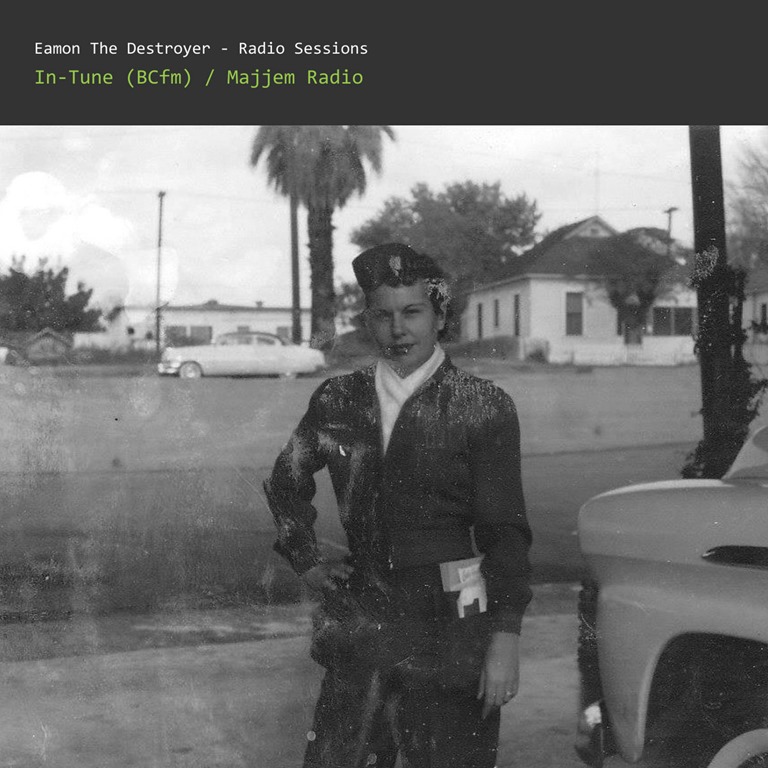
As the factual, functional title suggests, this release features tracks recorded for radio sessions, recorded for In-Tune (BCfm 93.2 FM), broadcast in September of 2024, and Majjem Radio, broadcast at the tail end of the year. And if another release with no new material seems like overkill, since the last ETD was a set of remixes from second album We’ll Be Piranhas, which came out in October 2023, then it’s pleasing to be able to report that, no, while this may well be something of a stop-gap release, it’s a worthy addition to the catalogue. It not only provides some insight into what one may call the ‘promo cycle’ of an album, particularly for a DIY act, but also casts a different light on the songs, being stripped-back acoustic guitar-based renditions of the songs – which are a 50/50 split of choice cuts from We’ll Be Piranhas and its predecessor, A Small Blue Car.

The original versions may be sparse and lo-fi in their production, but that production, and the prominence of droning, wheezing synths is what really defines them. That’s not to detract from the songwriting or performance at all, but the downtempo, downcast mood is heightened significantly by the execution, and that thick, hazy sound is integral to that.

However, hearing these songs played straight, as it were, is something of a revelation. The parts are essentially unchanged, but apart from a bit of reverb, and some vocal layering, these takes are more live-sounding, as could be performed by one man with a guitar and a pedalboard or synth with a few loops.

A far shorter rendition of ‘Underscoring the Blues’ still packs in the magnificent oddness that encapsulates everything that’s special about both Eamon and the whole Bearsuit aesthetic, suddenly spinning off from a sparse picked folksy guitar into a fantastical fairground of whirling, waltzing organ.

I’ve written previously that Eamon The Destroyer’s songs have a certain quality which casts a long, bleak shadow of lugubriousness over the soul, and how the effect is, for me, at least, similar to listening to Leonard Cohen’s Songs of Love and Hate. It’s an outstanding album, but it’s dark in a way which goes beyond the crushing lyrics of ‘Avalanche’, ‘Dress Rehearsal Rag’, and ‘Famous Blue Raincoat’. What I’m trying to articulate here is that there’s a special place for sad songs, songs which have a mood-altering effect, and this is Eamon The Destroyer’s strength. The lyrics are largely abstract and often difficult to decipher, but the feel is inescapable.

The ‘Avalanche’ on here, which first appeared on A Small Blue Car isn’t a cover of the Leonard Cohen song, but the stark atmosphere hits just as hard. It’s all about the minor chords, and the monotone croon. ETD adds layers of extraneous noise way down in the mix which adds tension to an already tense soundtrack.

Not because it sounds in any way similar, but ‘The Choirmaster’ calls to mind Chris Rea’s ‘On the Beach’ with its wistful tones and twisted hints of flamenco, and wraps the release with a vibe that’s almost uptempo, despite the heavy undercurrents of melancholy.

It’s the end of one of the longest, darkest, bleakest Januaries in living memory: we’ve been battered by storms, by global politics, by relentlessly traumatic news of war, of.. of… you name it. If you’re looking for a lift, steer clear of Eamon the Destroyer. But The Radio Sessions is nevertheless essential listening, showcasing the quality of the songwriting which lies beneath that fuzzing haze and reverb, and remember: it’s ok not to be ok.

AA

a4026067221_10

HAUJOBB reveal the new video single ‘Opposition’, which is featuring guest vocals by the outstanding Emese Árvai-Illés from the Hungarian pop noire duo BLACK NAIL CABARET. The track is taken from the Electro-Industrial act’s forthcoming new album The Machine in the Ghost. The German duo’s tenth full-length has been slated for release on September 20, 2024.

HAUJOBB comment: “Adding guest vocals towards the end of the song was basically the idea of a Saturday afternoon”, programmer Dejan Samardzic explains on behalf of the duo. “Emese is such a reliable artist, she delivered her impressive vocals within 24 hours. Maybe she sensed the urgency this had for me. I could hardly wait to add that new element to the arrangement as it brought a strong organic feel to it.”

Emese Árvai-Illés adds: “Dejan had some wordless singing in mind, like the side vocals of the Eurythmics’ classic ‘Sweet Dreams’, and he asked me to just improvise”, the Hungarian singer reveals. “I recorded a couple of takes and did some random Adlibs at the end. That gave me somewhat of a Massive Attack ‘Unfinished Sympathy’ feel, but in a more industrial way.”

Watch the video here:

AA

ebbc9731-d7a0-5959-8077-6263beb0d048

Montréal guitarist and producer Kee Avil returns with Spine, the follow up to her 2022 debut LP Crease, an intricately constructed, knife-edge take on avant-pop which garnered plaudits from outlets like The Wire, The Quietus, Mojo and Foxy Digitalis, picking up a Canadian Juno Award nomination and Bandcamp Album Of The Day and Albums Of The Year along the way.

Kee Avil’s music is both adventurous and intimate, intellectually challenging and emotionally resonant, and with her sophomore release Spine, she strips back her heavily textured compositions, opening up a much rawer sound. She calls it folk—and while traditionalists might scoff, this is urgent music that reflects the precarity of modern life, as well as the jarring mixture of electronic and real-world interactions that have become the fabric of our day-to-day experiences.

Avil says: “‘Gelatin’ sounds like rock and mud to me. It’s dense and heavy, viscous. It feels like it emanates from underground, underwater. It took a while for this song to come together – it started off with just voice and foley for a long time. When the beats were put in, it finally all glued together.”

Watch the video here:

AA

c3de1866-49b1-8a26-a451-244255dd5292

Kee Avil: Photo by Caro Etchart

Coju Recordings – 1st April 2024 (CD & digital)

Cruel Nature Records – 29th April 2024 (Cassette)

Christopher Nosnibor

Letters and things lost have an almost mythical status in the field of literature. So many volumes are dedicated to the reproduction of exchanges between authors of revered status, and are poured over, clawed over, by both fans and academics. Many writers of great novels were also great letter-writers, and the letters often serve to build not only biographical depth and detail but also shed light on the development of the novels, that mystical ‘creative process’. Much of history exists in letters – the rich primary source material from which we piece together the picture and assemble a coherent narrative. It may be a construct, but it’s a necessary one when it comes to understanding the world and how we collectively came to arrive at the present.

The fact no-one writes letters anymore is a great loss. The same thought and effort simply doesn’t go into emails, and they tend to be considerably shorter, too, especially in the last decade or so. In fact, the quality of communication has slumped through the floor in recent years. Emails volumes – at least, ones that aren’t transactional in some way, have plummeted in favour of WhatsApps and messenger missives via FaceBook, Twitter, etc. It’s hard to really articulate just what’s been lost over the last few years, besides simply the art of in-depth, detailed longform communications, but with anything more than five lines long likely to be dismissed as TL;DR, it’s significant. I digress… because there are rare avenues open to expand on these matters.

Benjamin Heal, one of those multi-faceted, polyartistic individuals who is hard to pin down due to the sheer range of his output, has, through the years, pursued an academic career with a focus on William S. Burroughs – a prodigious writer of letters – and performed experimental noisy indie under the guise of Cowman, sharing stages with the likes of Trumans Water and Gum Takes Tooth, as well as his more electro-centric vehicle Coaxial.

Now resident in Taiwan, his latest project seems to bring together these elements of a diverse life. The material on this, the debut release from The Lost Letters – which finds Heal working with Fulia, is a calm and calming collection of delicate songs. The duo offer a quite gentle and melodic set of tunes in which is mostly centres around mellow acoustic-led indie, and slow, sparsely-arranged, soporific shoegaze and it’s not merely projection on my part in detecting a wistful, vaguely nostalgic air permeating the songs. The songs effortlessly drift and weave, Fulya’s vocals adding a layer of sound rather than easily audible lyrics.

The seven-minute ‘Cecille’ has, by its trilling gentility, nothing to do with The Walking Dead: it’s a graceful exploratory work which is mellow, melodic, and carries heavy hints of The Cure circa Disintegration thanks in no small part to its fulsome, airy bass sound and crystalline guitars, and it’s fair to reference Cocteau Twins at this juncture, too.

Things take a turn for the darker and more discordant on the lugubrious, plodding ‘Cut’, which scrapes and scratches for another seven minutes. With its muttered, monotone vocals and insistent sparsity, it offers hints of Shellac and latter day Band of Susans, in contrast to the soft acoustic instrumental work of ‘Route Rute’. These songs are on the longer side by necessity: repetition has greater impact over duration, and if the literary allusions and lifts by means of the deployment of the cut-up technique devised by Burroughs and Gysin are largely lost in the mix, the overall effect of discomfort and disjointedness remains strong throughout the set. ‘Crystal Skies’ is murky, with a drifting ambience spun through with a softly picked guitar, before ‘Sails and Sou’wester’ brings the album full circle to its nautically-themed beginning. While inviting comparisons to Slowdive and Cranes, it cascades dreamily into a mesmerising sea of sound, so richly evocative that you ache as it drifts on toward the horizon, leaving you reaching for something intangible.

Critics often write of craft, but the most moving music often comes from intuition and feeling, and this is moving in the subtlest of ways. Quite simply, The Lost Letters is a beautiful album.

AA

a3976784992_10

Spleen+ (Alfa Matrix) – 1st December 2023

Christopher Nosnibor

Christmas has come early this year, with an absolute deluge of releases landing on1st December, many from acts I like or am otherwise keen to hear. Hanging Freud are in the former bracket, and Worship marks their seventh album release, following 2021’s Persona Normal.

The duo have established themselves as purveyors of premium-quality dark, stark, gothy electro, and with Worship, they solidify their position with aplomb. Persona Normal was recorded at a leisurely pace between 2018 and-2020, and, like so many other releases in the last couple of years, Worship was written and recorded during the pandemic and under lockdown conditions, and the accompanying notes lay out both the contents and context in further detail:

‘The 10 songs featured on this album literally come from a place of contradiction hanging somewhere between courageous vulnerability and fearful resilience, and deal with themes such as collective distress and loss, finding beauty in tragedy or yet questioning about what makes us human in the symbolic contrasts of life and death…. It’s no surprise to hear that this “less is more” introspective ode to melancholia was written in particular claustrophobic circumstances during the pandemic lockdown. “Because of what was going on, we were essentially stuck in temporary accommodation in Scotland, away from our studio and forced into a period unexperienced before. The songs that came out therefore come from a different place. Everything was done within a laptop and is proudly 100% digital. It was recorded and mixed while literally sitting on the side of a bed in a mouse infested apartment…” explains Paula Borges.’

If it sounds like a grim and oppressive set of circumstances for creating art of any kind, then the singles which prefaced the album have set the tone and expectation, while affirming the claustrophobic intensity of the music which emerged from these challenging conditions.

The result is a hybrid of Siouxsie and 17 Seconds era Cure with a hefty dose of New Order’s Movement and dash of Editors circa On This Light and On This Evening. Reference points may be lazy journalism, but they serve a purpose. While this album stands alone like an icy obelisk, singular and a monument to the darkest introversions, some musical context is probably useful for discursive purposes.

The stark ‘Falling Tooth’ is as bleak and haunting as it gets: Paula’s vocals are breathy but theatrical, pitched over a strolling squelchy synth bass and a vintage-synth sound that wanders around over just a few notes, while ‘I pray we keep the world’ is low, slow, sparse, and lugubrious, as well as emotionally taut, and dominated by a truly thunderous drum sound. ‘This Day’ is particularly drum-heavy, withy only gloomy, droning synths sweeping through a heavy mist of atmosphere.

There are some who bemoan the use of drum machines, and who complain that they lack the vibe of a live drummer. Hell, there are contributors to forums and groups devoted to The Sisters of Mercy who question why they don’t get a real drummer, some forty-two years on from their inception. These people are missing the point. Drum machines can do things that human drummers can’t, and one of those is how drum machines can be louder, heavier, more monotonous than a live drummer. And in context for certain music, this can be a real asset, accentuating the sensation of dehumanised detachment of synth music that sits at the colder end of the spectrum. And Worship is one of those albums which will leave you with chapped lips.

It’s against brittle snare cracks and sweeping synths that Paula claws her way through complex emotions, and where the lyrics aren’t immediately decipherable, the haunting vocal delivery is heavy with implicit meaning. It resonates beyond words alone. Everything is paired back to the barest minimum, exposing the darkest recesses of the psyche.

Standing alone as a single, ‘A hand to gold the gun’ was bleak and heavy. Sitting in the middle of the album, this sensation is amplified, accentuated, and the gracefulness of the vocals as they drape around the broad washes of sound which surge and well is that of a dying swan.

‘Her Joy’ is perhaps the least joyful thing you’re likely to hear in a while, and if ‘Beyond’ feels somewhat uplifting, it’s only because it’s a flickering candle flame in an endlessly dark tunnel, as devoid of air as light. The mood is heavy, and presses on the chest, slowly pressing the air out and crushing the spirit, and as the album progresses, the effect is cumulative. By the time we arrive at the piano-led ‘Don’t save yourself for him’, I feel my shoulders sagging and my back hunched forward from the endless weight of this.

Worship is a masterful exercise in poise and restraint, a work which conveys the purest essence of isolation, of desolation.

AA

HFreud