Posts Tagged ‘Kowloon Walled City’

Neurot Recordings – 10th November 2023

Christopher Nosnibor

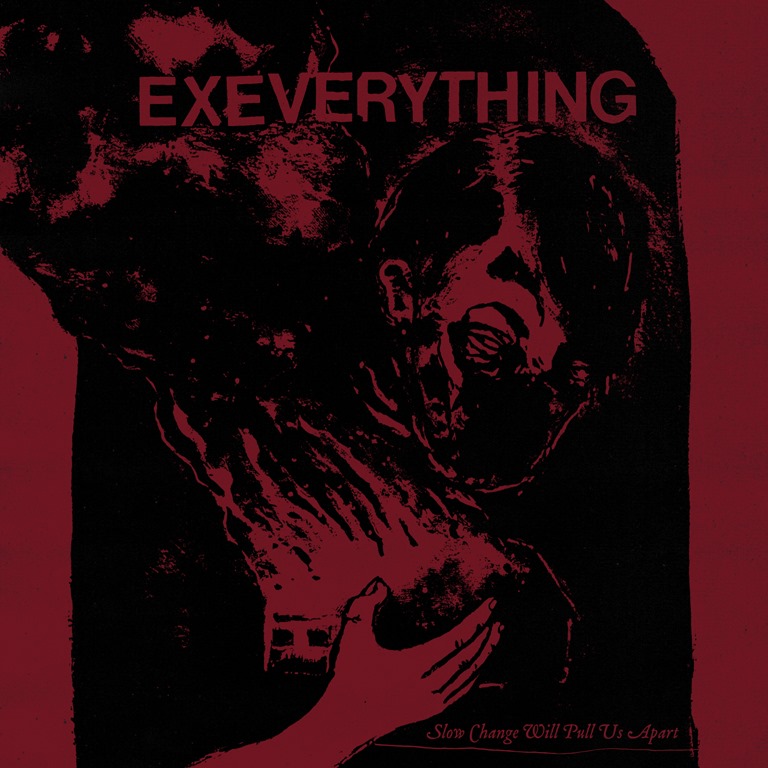
It’s practically impossible to overstate just how grim things have got lately. It’s not just any one thing, either. The climate is fucked, the economy is fucked, the world is at war. This isn’t about local pockets of fuckedness. It’s all fucked. Ex Everything very much appreciate this, as set out in the notes which accompany Slow Change Will Pull Us Apart: ‘Our world has been gradually falling apart. This may seem like a bleak point of view, but the collapse we’re all witnessing inspired post-mathcore outfit Ex Everything as they created their eruptive debut Slow Change Will Pull Us Apart… “Everything around us–politically, socially, environmentally–seems to be stretching and breaking,” says guitarist Jon Howell. “Our record sits in that terrifying place where you’ve been watching it happen.”

A fair few people I know – my age bracket in particular – have said they’ve stopped watching or reading news because it’s detrimental to their mental health. No doubt it is, but the bliss of ignorance can’t last forever and ignoring everything that’s going on is the ultimate compliance. British politicians in particular repeatedly begin sentences with ‘let me be clear’ – before rolling out an endless ream of obfuscations. So let me be clear. Everything is fucked, and things are only going to get worse.

As their bio summarises, ‘The Bay Area quartet boasts current and former members of Kowloon Walled City, Early Graves, Mercy Ties, Blowupnihilist, Less Art and others, but listeners shouldn’t mistake this for a short-term project or side band. This is a priority, every member focused and committed, and it only takes a few minutes with the album to understand how serious they are. “This band is completely its own thing,” says Howell. “It addresses the part of us that wants to write fast, chaotic, knotty, messy, pissed off music.”’

Fast, chaotic, knotty, messy, pissed off music is precisely what these chaotic, knotty, messy times call for. It feels as if the world was waiting for the pandemic to end to go absolutely all out to annihilate one another. There has, throughout history, always been a war somewhere, but now, there’s pretty much a war everywhere, and in less violent, bloody battles, governments wage war on the poor in the interest of ‘the economy’ and fuck over society’s most vulnerable, from the unemployed to the disabled, not to mention the homeless, the wounded, mostly in the interests of capitalism.

Slow Change Will Pull Us Apart packs eight hard-hitting, heavy tracks which rage and rage and rage and hit so hard, in a furious frenzy. The guitars are often busy and brittle and mathy, but the rhythm section is welded together and blast the hardest sonic attack. Slow Change Will Pull Us Apart is the sum of its parts, and that’s a positive here: it brings together the best elements of the contributors and fuses them into something tight, taut, uncomfortable. Single cut ‘Exiting the Vampire Castle’ is exemplary: full-throttle noise rock with dominated by shuddering bass and thunderous drums, with guitars which are both grimy but also reverby clanging over the top, while the vocals and raw and nihilistic. This is some full-on angst: ‘A Sermon in Praise of Corruption’ is a full-on, blistering rager, and there really isn’t much let-up in terms of ferocity. This is an unashamedly political album, as titles such as ‘Slow cancellation of the Future’, ‘The Last Global Slaughter’ and ‘Plunder, Cultivate, Fabricate’ suggest. These are highly political times, so it’s only right that Ex Everything tackle the issues.

There is detail, there are moments where they pull back on the pace and the blunt force, but they’re brief, and serve ultimately to accentuate the immense and intense power of the rest of the album when they put their collective foot hard on the pedal And drive forward hard.

In the face of everything, rational contemplation and collected consideration are difficult. The real urge is to give in to the temptation to simply give up, give in, and to scream at the world to fuck off. Slow Change Will Pull Us Apart comes close, but better than that, it noisily articulates the nihilistic rage which sprays in all directions. There’s no one thing that’s shit or fucked up: it’s everything. And sometimes the only way to deal is to let it all out. Ex Everything do that, channelling every last drop of fury into this bleak and hefty beast of an album.

AA

403960

Oakland, California-based post-hardcore quartet Ex Everything – formed by current and former members of Kowloon Walled City, Early Graves, Mercy Ties, Blowupnihilist, Less Art, and more – present a video for “Detonation In The Public Sphere”. The song is the second single from the band’s debut album, Slow Change Will Pull Us Apart, which will be released 10th November via Neurot Recordings.

About the video the band says, “We selected ‘Detonation In The Public Sphere’ as our second single off Slow Change Will Pull Us Apart because it’s a fucking banger. Clocking in at ninety-three seconds, the song is a 203bpm sprint from start to finish. The video shoot was a grind for the band (thirty-five full song takes!), but we felt very confident with Bay Area cinematographer Ryan Castaneda behind the camera. With all that great footage, Wendy Leuthold and Andre Sanabria’s edit highlights the band’s explosiveness both live and on the record.

They continue, “’Detonation In The Public Sphere’ is written from the perspective of a person who HAS recognised their place in the machine of capitalist imperialism and the actions needed to change conditions for the better of humanity. We hope this song will move listeners to think about their place in that machine and then hit repeat to play it again.”

The video for ‘Detonation In The Public Sphere’ was directed by Ryan Castaneda with additional filming and DIT by Katie Grubbs, gaffer Tehan Davis, editor/colorist Wendy Leuthold, and editor/producer Andre Sanabria.

Watch it here:

AA

Ex Ev

Photo credit: Scott Evans

Neurot Recordings – 15th September 2023

Christopher Nosnibor

Once upon a time, way back, I’m confident I read an interview with the artist Francis Bacon which contained the phrase ‘life is pain’. It certainly sounds like one of his brutally bleak and precisely pithy lines, encapsulating his eternally dark world view, but I can’t for the life of me find it anywhere, at least not attributed to Bacon. It’s a phrase which seems to have acquired an online ubiquity to the point that it’s simply something people say now. People say all kinds of nonsense, though. I had a work colleague who would often wheel out the line that ‘pain is weakness leaving the body.’ He was an imbecile, and that’s not how it works or I’d be Hercules by now.

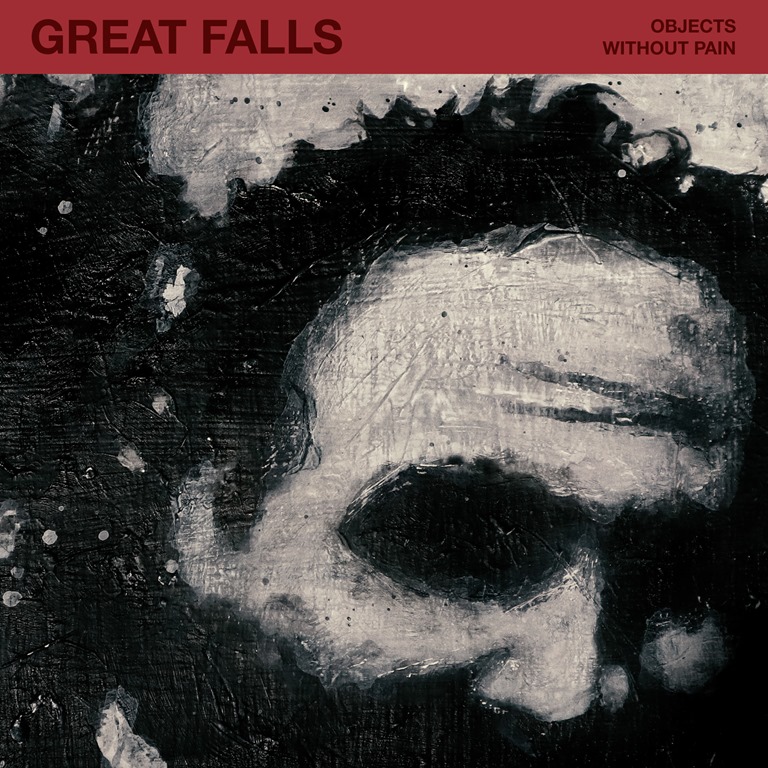
In this context, the concept of objects without pain is almost inconceivable. No pain? Oh, to be inanimate… But as the accompanying notes soon render apparent, Great Falls’ fourth album is a work which plunders a whole world of pain: ‘Objects Without Pain takes us on a bleak, purgative journey through a separation – a snapshot of the turmoil and indecision that occurs after the initial realization of someone’s misery, and before the ultimate decision to end a decades-long partnership. From the foreboding intro riffs of ‘Dragged Home Alive’ to the end of the 13-minute closer ‘Thrown Against The Waves,’ its eight tracks explore the thoughts that come up when a person is staring down the barrel of blowing up their life: How did this happen? Is it too late for a new life? Will the kid be OK? What will make me happier: familiar torment or unknown freedom?’

This is dark, alright. And it’s weighty, but not always in the most obvious sense. Indeed, the nine-minute opener, ‘Dragged Home Alive’ begins with nothing but a clean guitar, strummed scratchily. But then the vocals, a pure howl of anguish, tell us this is not some mellow folksy effort, and from there it builds, and when the bass and drums kick in, it’s nothing short of explosive. The drums are fast, nuanced, dynamic, almost jazzy, while the bass is thick and squirmy, it’s the sound of a snake wrestling to escape the hold of a human, and everything comes together with such fiery force you feel dizzy, whiplashed, battered from every angle – then the second half is almost another song; still slow, still heavy, but with a very different sound and level of energy, and it fucking pummels. This is powerful stuff.

They keep the riffs coming thereafter, too, as they deliver obliterative volume and endless anguish and emotional torment of a failed relationship and its fallout. It’s not pretty or poetic, but the internal monologue and the conflict laid out straight in real-time, churning through questions of blame and sifting through belongings, bald vignettes and depictions of packing, moving.

I spend my day

Searching homes

And I can be

Alone for real

I spend my day

Searching towns

And I can be

Searching alone

And I can be

Searching alone

I can’t do this

It hits hard because it’s so, so raw, so real, so much a real voice, unfiltered and rendered overtly lyrical. And because of this, rather than in spite of, the lyrics are true poetry. The pain is real, and you feel it.

‘Born as an Argument’ is considered, slow, dolorous, but also raw and ragey, and with its double-pedal drumming, it’s heavy-hitting. Even winding down to soft, almost folky vocals to fade, the heavy mood lingers, and then ‘Old Words Worn Thin’ crashes in with lumbering bass and vocals screaming anguish. The bass that crunches is at bowel-level on ‘Ceilings Inch Closer’ is the definition of energy, channelling all of the negativity and conflicting emotions into something so sonically solid the impact is physical.

As a label, Neurot has a knack for finding bands which are ‘like’ Neurosis but different, with Kowloon Walled City recent standouts for their brand of stark, bleak, nihilistic heft, and, on the same pile, Great Falls. Only, while sharing that heavy nihilism and the roaring rage of Unsane, they stand apart from so much of the label roister by virtue of their sheer force and absence of breathing spaces. Breathing is for wimps. Suck it up and plough on. Bathe in the brutality of Great Falls. Absorb the pain, and grow stronger for it.

AA

779849

Warren Records – 25th November 2022

Christopher Nosnibor

While Leeds has a strong reputation and record for emerging noise-orientated rock bands, Hull is proving that it’s not far behind as a spawning ground for purveyors of noise-driven angst and anger.

As was the case in the 70s and 80s, social deprivation proves to be a powerful driver for the creation of art that channels frustration and the whole gamut of expression that comes from dark places, and from adversity. Of course, it’s always the North. Leeds spawned goth, Manchester Joy Division, Magazine, Slaughter and the Dogs, The Durutti Column. Sheffield, too, has a strong heritage of bands known for innovation born out of frustration, with Cabaret Voltaire being a strong starter for 10. Hull, of course, brought us Throbbing Gristle, arguably one of the most groundbreaking acts of the 70s and beyond.

Most punk bands, especially the Pistols, simply cranked out pub rock with a sneer and the guitars turned up. Throbbing Gristle went beyond any conventions of music to create a real soundtrack to alienation.

More recently, we’ve had The Holy Orders, Cannibal Animal, Low Hummer, Parasitic Twins, and many more. And now we have Bug Facer kicking out a disaffected din, and ‘Horsefly’ is one hell of a debut single, and clocking in at over six and a half minutes it’s a behemoth of a track.

The band say of ‘Horsefly’, ‘At its core the track is about struggle. It conjures images of being trapped or stuck in a box or something but we don’t want to give away too much! We try to write music that is evocative and suggestive, not being too direct with our lyrics and ideas as we’d much prefer our listeners to tell us what it is they hear and see as they listen to our tracks. Some people have said it’s like battling through and emerging from a storm, others say it’s like someone has angered the gods.’

The sense of struggle is conveyed keenly here: you feel the pain in your bones, in your muscles, nerves, and sinews. It pulls hard at the soul, at the same time as punching away at the guts with a methodical thud.

It’s a hefty, dirgy trudge that oozes anguish, and if the organic feel is rathe in the vein of Neurosis, the bands it’s closest to are Unsane and Kowloon Walled City. It’s bleak, grinding, stark and brutal. Its power derives not from distortion, or from pace, but from sheer density and crushing volume, and from raw power. It’s the kind of claustrophobic, pulverising heaviness that leaves you aching. This is serious. And Bug Facer are instantly my new favourite band.

Neurot Recordings / Gilead Media – 8th October 2021

Christopher Nosnibor

Less is more. This is something that few bands appreciate or understand half as well as Kowloon Walled City. And less doesn’t have to mean less intense: if anything, it’s a major factor in the ‘more’ element of the equation. Instead of hitting the listener with hard volume, relentless drumming, and gnarly distortion, Kowloon Walled City distil emotional pain into something simple and direct, and in doing so achieve optimal impact.

Their last album’s crushing weight derived not from its pace or even its volume, but its sense of space. Instead of filling the air with big noise, each chord crashed down hard and rang out into silence. In that space, Singer/guitarist Scott Evans’ vocals conducted pure anguish and blank nihilism. No throaty metal stylisation or posturing, just a kind of shouting – a shout of pain, of psychological torture – the torture of existence.

It’s the space between the sound that they’ve explored in the evolution of their fourth album, Piecework – their first output in six years. Make no mistake: Piecework is fucking heavy. It packs some utterly gut-punching, seismic riffs that drive hard, and when they hit, they’re utterly pummelling. But it’s the bleakness, and the blankness, that’s most affecting, that really hits the hardest. In the first instance, it’s simply so raw, so unprocessed. With the vocals clean and up-front, it’s the humanity that’s at the fore.

Not that there was any fat on Grievances, but with Piecework they pare it right down to the bone, and then scrape away a little more. Whereas most of the songs of its predecessor sat around the five or even six-minute-plus mark, Piecework packs seven songs into around half an hour. In cutting back so hard, the effect if heightened as the grey walls close in tighter, faster, more likely to bring a crushing end. The effect is cumulative, and there are no clear standouts on Piecework, only a sustained slug driven by a low, lumbering bass. It’s a bass that really churns the gut, and it has a physical force.

The production captures this dark, dense force perfectly, conveying a sound that feels live, that feels real. Wish you were there? Hell yes: we all need a bit of fortune, and Piecework is both beautiful and harsh. When they bring it down to nothing but a single note hanging in the ear, I’m reminded of latter-day Earth, and it’s clear that space and time matter.

As the press notes tell us, ‘Evans was dealing with the loss of his father during the writing of the album. He found strength in the women in his life, especially his maternal grandmother, who worked at a shirt factory in Kentucky for 40 years while raising five kids. The album name (and title track) is a nod to her line of work—and her quiet resilience.’ The lyrics are at once abstract and packed with images. There are no specifics, only scenes, and they’re bleak ones, of claustrophobic confined spaces, of deathbeds.

And it’s no criticism that this feels like an album of graft: the rhythm section ploughs on, and on, relentlessly, as if their duty is pure graft, digging, digging, digging. In the same way that early Swans was the sound of punishment, so Piecework is a soundtrack to the brutal reality of production-line capitalism.

The album’s predominantly slow pace is not the sound of rapid mechanisation, but of soul-sapping drudgery, the crushing weight of negative progress. There is no respite, no detours to bathe in moments of human kindness, the idea that for everything, there are glimmers of light and optimism. No, Piecework is an album with no let-up, in the way that Unsane are unrepentant, unremittingly grey in their outlook and execution. It hammers and bludgeons away at the senses and prods hard at the frayed nerve endings, the space and dead air speaking to the emptiness that hits us when the noise stops. Life is short and life is cruel, and Piecework is the perfectly merciless reminder of that.

065653

Oakland-based heavy music savants Kowloon Walled City have announced Piecework, the quartet’s first album in six years, confirmed for an October 8th release via Neurot Recordings and Gilead Media. Since forming 15 years ago, the band has increasingly refined its deconstructed approach to noise rock, math rock, and post-hardcore, embracing dynamics and negative space to a degree that few others in the world of heavy music match. With Piecework Kowloon Walled City has managed even greater levels of restraint: songs are bleak and slow, but also shorter and more concise; counterpointing moments of austere beauty with stretches of near silence. While the band has always operated under the MO that less is more, it has doubled down on that ethos for Piecework. Singer/guitarist Scott Evans and guitarist Jon Howell, the main songwriters, self-imposed restrictions to push themselves creatively—“restraining ourselves into oblivion,” as Howell puts it.

The negative space amplifies the ruptures of heady aggressiveness that anchor Piecework. Angular guitar notes from Howell skew off the neck, dissolving into space. Ian Miller’s bass lines churn in the muck. Drums and cymbal smashing by Dan Sneddon punctuate dead air. (Sneddon, formerly of Early Graves, makes his recording debut with the band five years after joining.) There’s sadness and anger in Evans’ shouted vocals, but also a desire for something better; hints of perseverance and hope pushing through the resignation and regret. Piecework feels not only like an artistic accomplishment, but a triumph of resolve and vision.

Evans was dealing with the loss of his father during the writing of the album. He found strength in the women in his life, especially his maternal grandmother, who worked at a shirt factory in Kentucky for 40 years while raising five kids. The album name (and title track) is a nod to her line of work—and her quiet resilience. The themes of absence and death, surrendering to aging, and familial strength and love are all encapsulated in album artwork by photographer Melyssa Anishnabie—the tattered beauty of an abandoned home reveals the faint edges of where life used to be. Evans likens it to watching a grandparents’ house fall into disrepair. As with all previous KWC releases, Evans recorded and mixed Piecework (his impressive recording CV includes Thrice, Yautja, Great Falls, Ghoul, Town Portal, and many others) and like previous albums Container Ships (2012) and Grievances (2015) the tracks were recorded live at Oakland’s Sharkbite Studios, with minimal overdubs.

Watch ‘Piecework’ here:

AA

KWS

Photo Credit: Scott Evans

Oakland post-metal greats Kowloon Walled City have released a new track, ‘Oxygen Tent’.

Since their formation the band has been in a continuous cycle of refinement, gradually peeling away layers of grit and distortion to forge a singular vision of heavy music — yielding a pair of critically acclaimed albums along the way; Container Ships and Grievances.

The new song, their first in six years, distils things even further as the band continues into a new era of their career.  Listen to ‘Oxygen Tent’ below and stay tuned for more news soon.

AA

a2955954001_10

Gizeh Records – GZH99 26th June 2020 (Digital) / 25th September 2020 (LP/CD)

Christopher Nosnibor

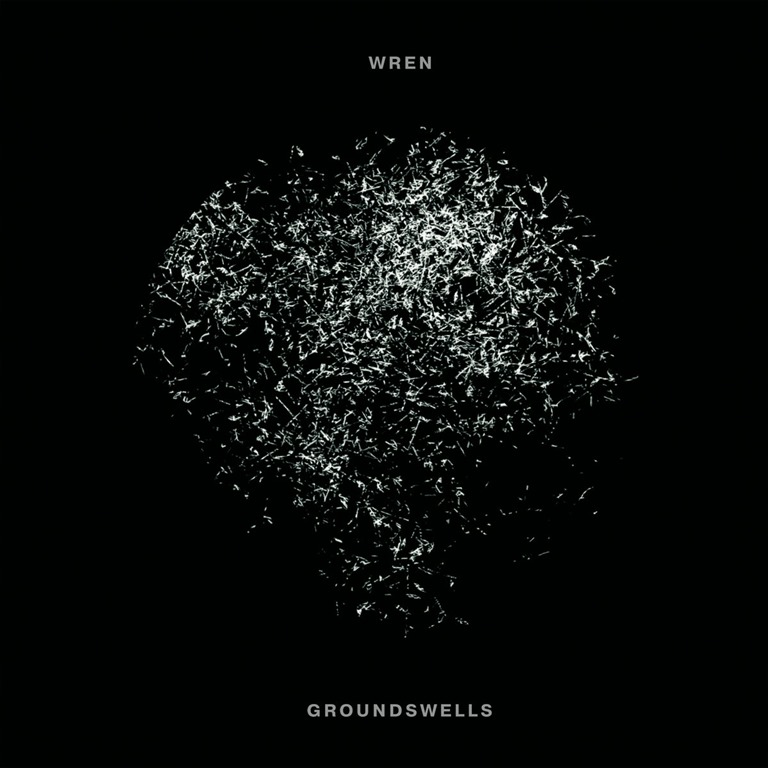
Wren’s third album – or ‘third chapter in Wren’s seasonal lore exploration’ as the press release puts it – is their first on Gizeh, and promises ‘six melancholy-shrouded sonic ruminations [which] swell between intimate performances devoid of adornment, and evolving soundscapes of auditory ruin’. And pitched as being of interest to fans of Godflesh, ISIS, Kowloon Walled City, Neurosis, it does the job of bringing slow-burning slow-trudging metal with an emotionally-articulate aspect and certain musical nuance.

The first megalithic sonic slab to assail the listener is the nine-minute ‘Chromed’, an epic battery of guitar and anguished vocal, and it piledrives in with a repetitive chord sequence, there are heavy hints of Amenra, and it’s the grainy, earthy quality that’s most reminiscent of Neurosis. There’s a lot of space here between the crushingly weighty power chords that drive, hard, low, and slow, less like a battering ram and more like a tank driving against a wall: slow, deliberate, and completely devastating.

There is detail, there is texture, and there is space within the broad parameters of this ambitious work, giving moments of respite and pauses for reflection between the raging infernos of fury that flare upwards toward the skies from the troughs of gloom. And yes, Groundswells is gloomy, dark, lugubrious, the soundtrack to motional trauma and swings from anguished introspection to annihilative rage.

If the album’s entirety could be encapsulated on a single track, it would be the dynamically-flexible ‘Subterranean Messiah’, which stretches out beyond ten minutes as it works it was way though a series of peaks and troughs, venturing into a range or mood-spaces and sonic terrains to forge a compelling sonic journey that’s utterly immersive. Jo Quail adds layers of subtlety and not to mention sonic depth with her cello work on the track also.

The final song, ‘The Throes’ is a grinding dirge, Godflesh played at the pace of Swans’ Cop. But amidst the torture, punishment, and the anguish – those excoriating vocals and that shrieking lead guitar that battles against the dense, slow chug and grind coalesce to form a perfect prism of pain, the psychological expressed through the physical.

If the band’s name suggests something soft, delicate, melodic, then Groundswells tears those expectations to shreds in the most obliterative way. It’s simultaneously harrowing and beautiful, and an all-consuming experience.

AA

a3321068616_10