Constellation – 3rd May 2024
Christopher Nosnibor
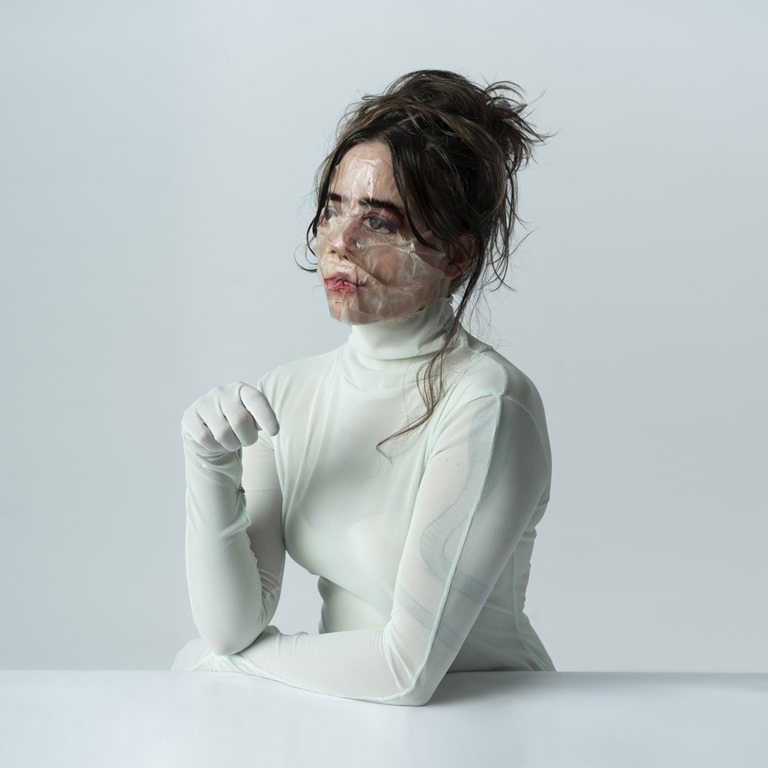
Ah, that difficult second album. Kee Avil set the bar high for herself with her debut, Crease, two years ago. Crease was a highly experimental, boundary-pushing collection of compositions, which was as challenging as it was entertaining. But the trouble with setting out one’s stall in such a fashion is that you can’t retread the same ground, you can’t do the same thing twice, you can’t repeat the same experiments and expect different results. Not to suggest that Crease was in any way a ‘novelty’ record, but experimentation and avant-gardism has to be ever new, fresh, and novel. Pushing the boundaries requires an artist to continue to push them further, to expand the parameters, or otherwise risk being confined withing the limits set initially, at which point, it becomes prescriptive, a template. Small wonder, then, that Avil found the process for Spine to be quite different from Crease. But, unlike many artists who struggle to regain the creative spark in the wake of their debut, whereby some languish for years in a creative trough only to return with some second-rate slop (there are many articles devoted to examples of the ‘sophomore slump’, and I feel neither need nor inclination to recap on them here), Kee Avil seemingly found herself fizzing with ideas, as her bio details:
‘Spine was written in Kee Avil’s home studio after a lapse in writing while touring Crease and working on other projects. She is a well-known and respected member of the Montréal experimental scene, and formerly ran Concrete Sound Studio with Zach Scholes, who continues to work with her as a producer on Spine. Compared to the three years that went into making her debut, Spine emerged in a matter of months—a process that may also be a factor in its intensity and sharpness: “This record was much harder, like it was really discovering everything from scratch.” In her desire to not simply replicate or extend the sound of Crease, she felt she had to rip up the rule book, write in a different way, and pare back songs against her usual instincts.’
Touring does seem to have a habit of affecting the creative flow. It seems almost as if the industry model with its cycle of release – tour – write – repeat – serves to doom artists to dealing with unnecessary pressure to deliver, and it’s entirely self-defeating since inspiration simply cannot be forced – it’s something that happens. And it happened for Kee Avil, for sure.
Spine is brimming with discord and dissonance, angularity and oddness. ‘Felt’ fucks things up from the very off with warped, wrangling, jangling guitar that twists and mangles across flickering, stammering beats and extraneous noise that gets in your ears like a hatched moth fluttering against your eardrum. It’s a cringy, unsettling sensation, and it’s not really all that pleasant, and Avil breathes and croaks her way over it.
‘the iris is dry’ is magnificently weird, a close, breathy semi-spoken word muttering about lamps and eyes and angels, and it’s tense and claustrophobic and claws its way into your cranium. ‘It makes no sense,’ she croaks by way of a closing refrain, and it’s hard not to agree.
‘remember me’ continues the form of minimally-arranged alternative / eerie indie with a dark folk vibe crossed with a vocal style that sits in the realm of spoken word with a performance art delivery: Avil doesn’t sing, but whispers and breaths the words in a fashion that creates a palpable tension.
‘Gelatin’, released ahead of the album is entirely representative: taut, glitchy, the vocals mixed in a way as to be in your ear and at the same time detached: it’s awkward, uncomfortable. This is true of Spine as a whole.
The only real difficulty in Kee Avil’s second album is for the listener: with its shuddering percussion and harsh frequencies, as well as the up-front vocals, this is a challenging work. And this is a good thing: art should be challenging, and the quality is outstanding.
AA
A
 Aural Aggravation