Posts Tagged ‘Jazz’

Efpi Records – 18th November 2022

Christopher Nosnibor

Time flies when… life. And especially when a pandemic and a series of lockdowns rob you of two tears of doing anything. And so it is that Let Spin are marking the ten-year anniversary of their fourth album, Thick As Thieves.

The band are something of a supergroup: Formed in 2012, Let Spin feature four highly acclaimed musicians: Ruth Goller (Melt Yourself Down, Vula Viel), Chris Williams (Led Bib, Sarathy Korwar), Finlay Panter (Beats & Pieces Big Band, Sound 8 Orchestra), and Moss Freed (Union Division, Spike Orchestra), and Thick As Thieves features ten segued tracks of what they describe as ‘adventurous post-rock, experimental jazz’.

Thick As Thieves may be a cliché, but the music it contains is anything but. In fact, quite the opposite is true. Much as it subscribes to aspects of both jazz and post-rock, it’s an exploratory instrumental set that doesn’t really conform to any specific genre trappings, instead borrowing from them in order to form a unique hybrid.

While it’s largely driven by some crunched-up, noodling guitar work, Thick As Thieves very much mines an overtly jazz theme, and while it starts out quite gentle and doodly, on the third track, ‘Red’ it takes a hard lurch into altogether nor challenging terrain, and not just because it gets louder and more percussive: it’s altogether more jarring, the tempos and signatures tumbling into stop/start confusion before the brass ruptures into a cacophonic maelstrom.

‘Broken, I Told You!’ brings a chubby, strolling bassline that’s got some serous groove in a stuttering sort of a way and packs in some deft runs that weave in and out of the wild woodwind and jittery guitar work that’s disorientating and discombobulating. It’s pretty much ok that this feels a bit weird and woozy: it needs to be. ‘North Sea Swim’ takes things down a way and meanders along before swerving into ‘’Mixed Messages’. ‘Bead’ is perhaps the most overtly post-rock / jazz hybrid work, an expansive succession of crescendos with a soaring sax undulating into waves of stratospheric reverb. Closer ‘Liminality’ is almost nine minutes long, and is a space-rock jazz monster that’s absolutely dizzying.

This is one of those albums that not only feels like its album status is essential – you don’t seek out or skip to particular tracks, but experience it as a whole – but there’s a keen sense it would lend itself nicely to being performed live, in its entirety. It flows from end to end, with judiciously-placed peaks and troughs. The ten songs may be marked out individually, but this really feels like a single continuous piece segmented out into ten slices, and it’s a listening journey. At times intrepid, at times curious, it’s got a lot going on, often all at once. Brace yourself!

AA
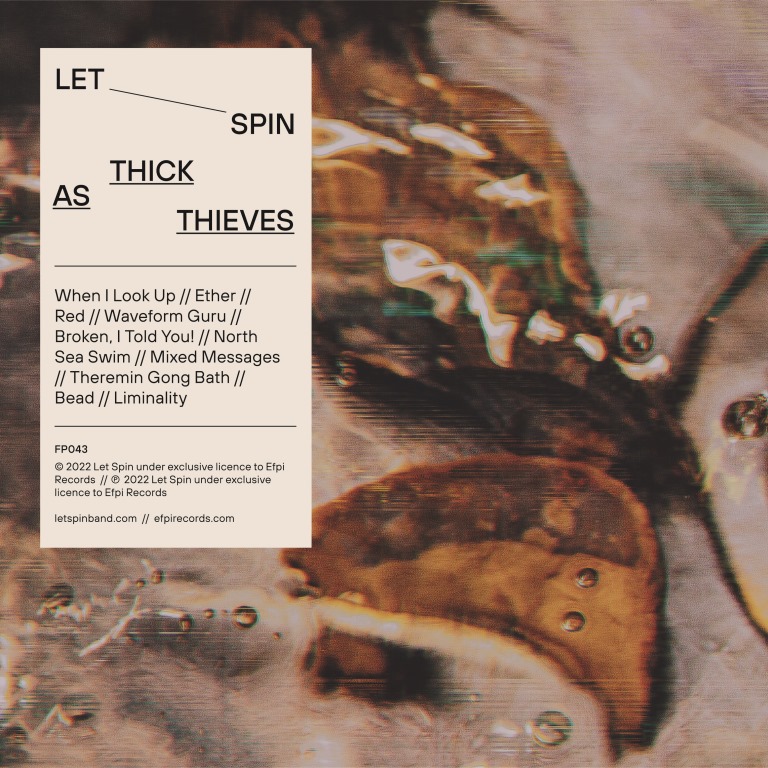
LS03 Thick As Thieves FRONT

Italian post-punk band Leatherette have just released ‘Fiesta’, the title track from their debut album out on 14th October via Bronson Recordings.

One of the darkest, smokiest tunes of the record, ‘Fiesta’ is a minimalist, abstract love tune about absence and distance. The band explain: "We wrote the theme thinking of jazz standards, while the title and the atmosphere were inspired by Hemingway’s homonymous book. And there’s brushes and 7th chords and a sax solo in the end".

Listen to ‘Fiesta’ here:

The latest single from the album, Fiesta follows previously released tracks ‘So Long’, an extravagant and catchy slice of modern post-punk, full of rugged noise and crushing melodies and ‘Sunbathing’, an irresistible punk-shoegaze anthem.

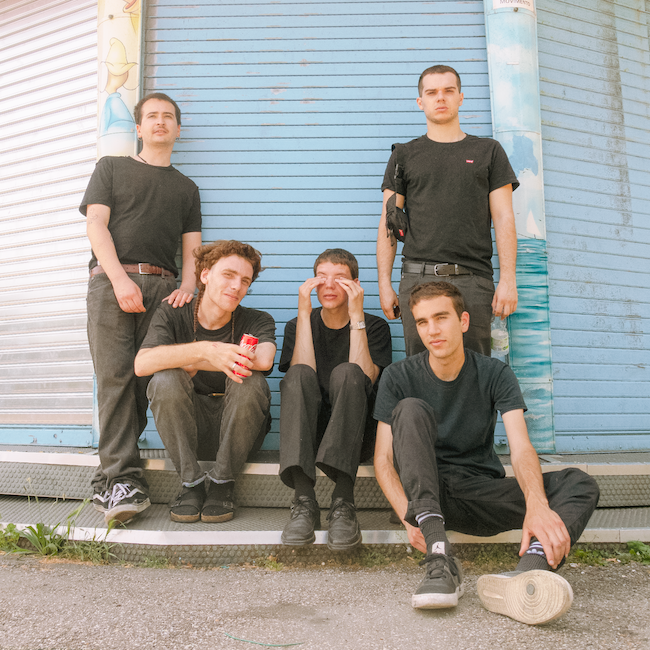
Leatherette are, by their own description, “five shy guys who sometimes get off the stage and punch people,” a quintet whose car-crash of jagged noise, twisted love and dark, anguished melody has delivered a remarkable – and eminently combustible – debut album. 

The group are based in Bologna, but all hail from different towns in Italy. These five young men – singer/guitarist Michele, bassist Marco, drummer Francesco, guitarist Andrea and saxophonist Jacopo – are united by a profound need to make music, to express themselves naturally and honestly.

The group bonded over wildly differing influences – everything from midwestern emo gods American Football, to Berlin-era Bowie, to James Chance & The Contortions, to rap and electronic music – to create a dense, passionate, articulate sound of their own.

You can file them near fiery post-punk kindreds like Shame and Squid, or unhinged 90s noisers like Unwound or Hoover, or squalling No Wavers like James Chance, but the truth is there are few bands like Leatherette that walk this Earth.

Their first full-length, Fiesta follows an EP, Mixed Waste, recorded during lockdown. The songs on Fiesta precede the Covid era, though the group spent the pandemic rewriting and overhauling their maiden batch of songs at leisure. 

The result is an astonishing and remarkable debut: poetic, caterwauling, broken and beautiful. The album title is “a reference to the bullfights in Pamplona,” the group say. It’s no empty metaphor. “Bullfight is a strange ritual,” they elaborate. “And we’re against bullfights, but they’re fascinating in an iconographic way. And also metaphorically, violence flows on both sides, but in a feastful way. It’s similar to a concert, really – you’re expressing violent things, in a physical way. And people react to that, which is wonderful, which is fantastic.”

5tqs_quadrata2650--1

Let Me Out Records – 20th May 2022

Christopher Nosnibor

The connotations of jazz are myriad and varied, and it’s also perhaps – not coincidentally – one of the most divisive genres, even after all this time in existence. It’s also one of the hardest to really pin down, largely because it spans such an expanse. On the topic over a pint a few nights back, a friend of mine was telling me how he had become quite partial to jazz, which he was best able to describe as (I paraphrase) ‘random notes that don’t join up… but work’. He’s right and he’s wrong, of course: there’s avant—jazz and freeform jazz that very much is in this vein, but then there’s that kind of slick, smooth jazz, and the kind of jazz you used to get either mega-late at night or on a Sunday evening in a smoky basement bar – the kind of jazz there’s likely a proper term for, but which I refer to as ‘background’ jazz, played in the kind of setting where it’s actually Ok to chat while the music’s playing.

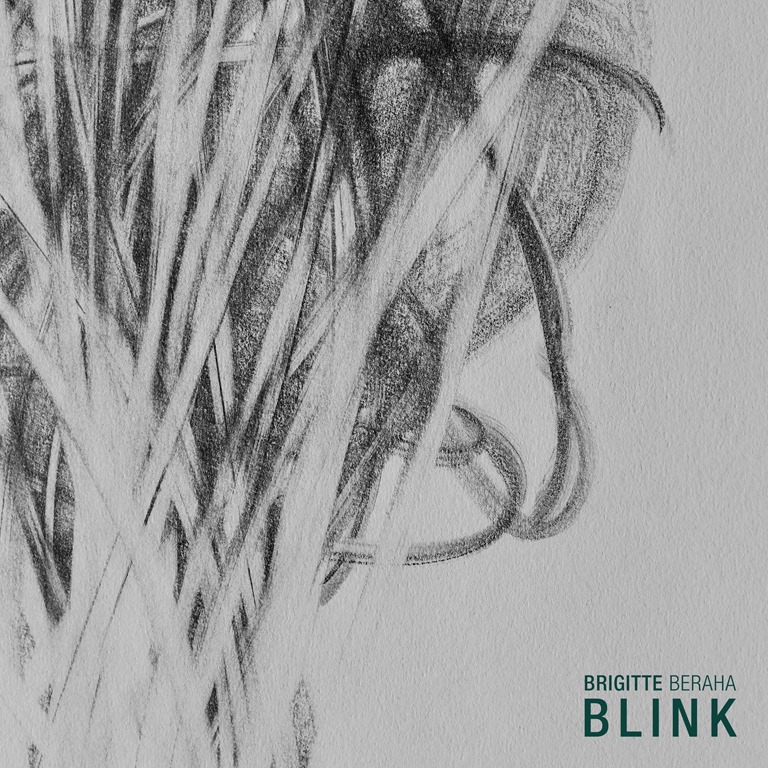
Brigitte Beraha straddles a number of these fields, and Blink is kinda smooth, kinda background, and kinda cool – not in an overtly slick, smooth, nauseatingly muso way, but very much laid back and sultry nevertheless. Her vocal is breathy and intimate at the start of the title track, which sashays between a stop start rhythm and something altogether smoother, and the sound swells and rolls through a succession of passages over its seven and a half minutes that carry you along and make you forget yourself as you’re carried beyond the confines of conventional song structures.

“I love Doors… Everything about them. Well, almost everything,” Beraha reveals on ‘Doors’, seconds before a cascade of calamitous percussion rains down onto ringing chimes. “Light… heavy… ones that resist pressure…very well-oiled ones…” Ah yes, Doors. Not The Doors. I didn’t used to like The Doors, but came to appreciate them in my mid-teens, before realising that no, they were as crap as I had originally thought. I much prefer the wooden slabs these days, particularly over veneered chipboard or MDF: they may or may not be “fascinating pieces of history,” but they tend to be functional in the main, and while they can be frustrating if they don’t close properly or keep blowing shut, they’re not self-indulgent toss.

There are other unexpected insights to be found over the course of Blink, although most are musical rather than lyrical, and tend to be fleeting flickers whereby the listener gets to peer in between the wavy lines that drift effortlessly as a piano tinkles behind quavering woodwind, and see snippets of another world.

The thirteen-minute ‘Modulo 7’ is breezy, and skips along lightly for the most part, starting sparse and strange, and through twists and turns the layers build over and across one another, a serpentine melange of parts that spread and circle in different directions, landing in precisely the terrain that people find difficult to navigate, particularly as it’s both busy and smooth at the same time – and then, abruptly, it halts, and we’re plunged into darkness, and a deep throb murmurs ominously. The pace quickens and the tension rises: the last thing you’d be expecting is pulsating dark ambience with an industrial edge in the middle of this album. The oscillating waves and echoic brass that drifts from the darkness is compelling, and in places calls to mind some of Throbbing Gristle’s exploratory works.

That it’s hard to really summarise or even reasonably convey an album that carries such contrasts with the sparse-tone challenging ‘Too Far to Hear My Singing’ skipping and swooning between moods in a moment, and it’s perhaps futile to even contemplate doing so while wrestling with the idea that some note sequences simply shouldn’t exist, while other still don’t sound like they’re possible or within the realms of music. But they do, and they are, and they’re here, woven into the complexities of an album that’s intricate yet sounds deceptively simple, leaving plenty to ponder.

AA

Blink front cover 3000 px RGB

Thanatosis – 7th May 2022

Christopher Nosnibor

Within Reach of Eventuality is the debut album by Swedish duo David Bennet & Vilhelm Bromander. Their notes on the album state that ‘Following a semi-open score, the duo is treating elements such as complex textures, non-pitched sounds, microtonality, beatings and intense pauses in an improvisatory and careful manner’.

I’m not entirely sure what that means, and I’m not certain of the meaning of the album’s title, either. It feels like it almost carries a sense of significant import, but then is equally so vague as to be almost abstract. And in a way, it’s representative of the four pieces on the album. There’s a grainy scratching flicker of extraneous noise running along in the background during ‘Part I’, like a waterfall in the distance, while in the foreground, elongated drones – atonal strings or wavering feedback – hover around the pitch of nails down a blackboard. Occasionally, more conventionally ‘orchestral’ sounds – emerge fleetingly – gentle, soberly-paced percussion, string strikes and soft woodwind, and it comes together to create a somewhat ominous atmosphere.

It’s a hushed, minimal ambience that fades out towards more sonorous drones that ebb and flow across ‘Part II’, and as the album progresses, the interplay between the tones – and indeed, atones – becomes more pronounced, and also more dissonant and consequently more challenging, as long, quivering, quavering drones rub against one another.

The structures – such as they are – become increasingly fragmented, stopping and starting, weaving and pausing. There is a sense of a certain musical intuition between the players, the rests coming at distances that have a sense of co-ordination, if only as much to confound expectation as to sit comfortably within it. In other words, Within Reach of Eventuality feels like a semi-organised chaos, and as it slowly slides towards the conclusion of the sixteen-minute fourth part, the sound thickens, the volume increases, and the atmosphere intensifies, become more uncomfortable in the process. And in this time, the meaning becomes clearer when it comes to understanding their approaching the sonic elements in a ‘careful manner’. There’s nothing remotely rushed about Within Reach of Eventuality. The notes are given space and separation, room to breathe. It all feels very considered, very restrained: it’s no improv free-for-all, there are no frenzied climaxes or blasting crescendos. Instead, they demonstrate a sharp focus on a fairly limited range of sounds and spaces, and the result is an album that has a strong cohesion.

AA

a4211091835_10

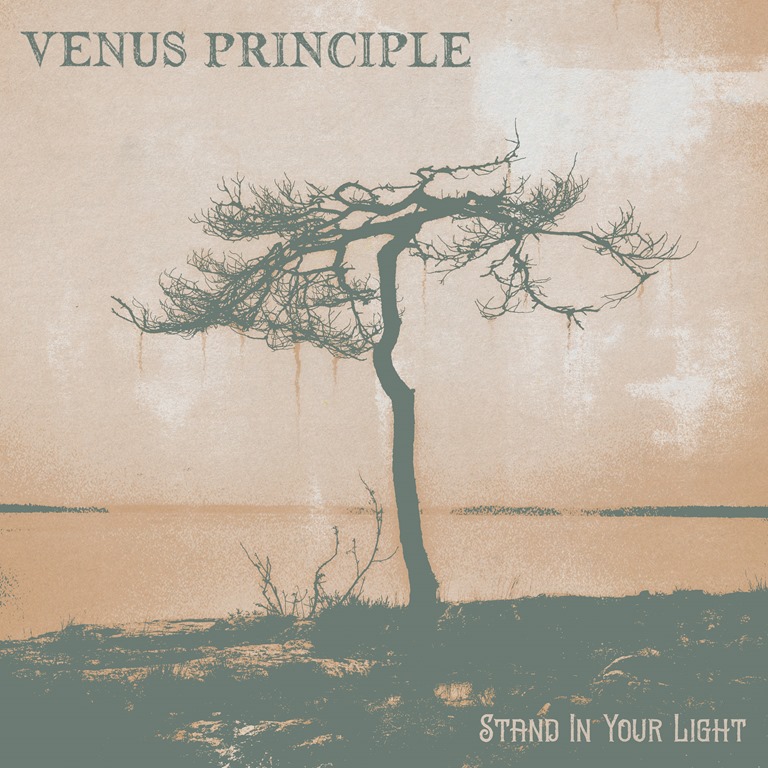
Venus Principle are premiering the melancholic and powerful new track ‘Drag Nets’ as the final single taken from the dark psychedelic rocker’s debut full-length Stand in Your Light, which has been scheduled for release on May 27.

‘Drag Nets’ makes subtle use of a wide range of instrumentation from sax to mellotron vibes and Mini Moog, and the stunning vocal chemistry between Daisy Chapman and Daniel Änghede comes into play again as well.

The band comment: “After the initial recording sessions for Stand in Your Light were postponed, we had a chance to write a few more songs”, guitarist Jonas Stålhammar tells. “The last one written was ‘Drag Nets’. It turned out to be by far the heaviest track on the album. ‘Drag Nets’ represents the waste and rejects of man. You can trawl the sea for food and treasure, but humankind will always carelessly discard all unwanted matter only for it to be rediscovered as flotsam and jetsam. The idea of adding saxophone was a last minute thought in the studio when I reached the conclusion that we had too many guitar solos on the album already. Our amazing guest on the saxophone, August Eriksson, copied my guitar solo note for note and then added some improvised sprinkles.”

Listen to ‘Drag Nets’ here:

AA

Venus_Principle_000_album_cover_Stand_in_Your_Light

Four years in making, Toronto artist Barzin is releasing his fifth studio album Voyeurs In The Dark. That the album is more cinematic in its scope and conceptual in feel than his previous studio albums can be attributed to the time he spent over the past several years composing the soundtrack for the independent film, Viewfinder.

Voyeurs In the Dark retains that cinematic quality, and at the same time infuses the music with elements taken from Jazz, electronica, rock and pop. Having primarily explored the quiet side pop and folk in his previous four albums, Barzin has expanded his musical palate, broadening his sound towards a more an experimental direction, while still retaining his preoccupation with exploring the  internal landscape. The uniformity of sound that characterized the previous albums has been abandoned for the expression of differing aspects of the self that at times hold opposing views and desires. This is best represented in the image chosen for the cover of the album, which depicts three figures in one body. The album seems to be the expression of not one unified self, but the various aspects of the self.

Voyeurs In the Dark sees the artist plot a seductive, contemplative route through city haze, shuttling between graceful glimmering interludes, with wonderfully atmospheric songs at every stop. On new single ‘It’s Never Too Late To Lose Your Life’, Barzin has a affirming and urgent tone, shade turning into shapes and motion.

About the track, Barzin explains, “I guess you can say I was chasing my own private white whale when I was writing it. I was trying to create from a place of not knowing. I didn’t want to know what the hell I was talking about. If something started to make sense to me, I knew I was on the wrong track.

The Sufi poet, Rumi, wrote many years back that we must make room inside of us for these unwelcome guests that visit us every day. Not only did I invite the guests to come inside, but I asked them to stay and make an album for me. I have no idea what I/they made, but it was an interesting experience to create something that felt foreign to me.

I think this song and this video is a good example of what happens when you let the “other” take the wheel and drive the car”.

Watch ‘It’s Never To Late To Lose Your Life’ here:

AA

Barzin

Limited Noise – 29th April 2022

Christopher Nosnibor

With a CV that lists near-multitudinous membership and participation in bands (notably his regular gigs with Snack Family and World Sanguine report, but also contributing to Sly ands the Family Drone and countless others), renowned experimentally-minded jazz drummer and percussionist Will Glaser has taken some time out to continue his solo album sequence with the fourth instalment of Climbing in Circles.

Over the course of three previous releases, Glaser has explored jazz, folk, and beyond, through an experimental prism and with a methodology that’s very much about improvisation. This outing features long-time collaborator, Matthew Herd, on saxophones and piano, alongside trumpeter, electronic artist and producer, Alex Bonney, and was assembled over the course of five day. While the album is loosely constructed around two overarching ‘acts’, they consist of eleven separate and distinct pieces, and bookended by ‘Beginnings’ and ‘Endings’, there’s a narrative arc of sorts, here.

It begins with crawing birds and a gentle piano playing what one could readily describe as a charming melody with a quite conventional structure, and ends with a genuinely pleasant lilting piano tune – and yes, I mean tune in that it has all the conventional features of one.

In between, there is slow decay and infinite space. Rumbling, echoes, notes reverberate off one another at distance. Sax and trumpet trill and drone, sometimes at one, at others as if duelling. The percussion rolls and crashes, but more often than not, at distance, and creating texture and atmosphere and colouring the pieces with expression rather than maintaining rhythm.

The combination of instruments is relatively conventional in jazz, and, similarly, there’s nothing particularly radical about the way they’re played and interact on here. But there’s considerable joy to be had in simply listening to the musicianship and the way the musicians themselves interplay on the pieces. ‘Spiral Dance’ is a hypnotic serpentine spin, while ‘Bad Dream Machines’ is a drifting mass of fragmentation, dissonant, discordant, and above all, a work that exists in the spaces between the notes and in the reverb and echoes as in the notes themselves.

There will be some – perhaps many – who are deterred by the very mention of jazz, and there is a perception of there being a certain elitism about jazz – the idea that random notes and borderline unlistenable chaos is somehow a superior art form, and anyone who doesn’t ‘get’ it is clearly a philistine. But Glaser is a remarkably positive showcase for jazz, with a focus on the listener rather than purely the musicianship. Climbing in Circles Pt 4 is about atmosphere, about vibe, rather than indulgent wanking: this is jazz you don’t need to be an aficionado to appreciate. It’s listenable, and it’s varied, too.

On ‘Dead Fly Disco’, he and his collaborators play completely straight, a song with structure and swing, something you could even dance to, or at least nod a long to its toe-tapping groove in a basement bar late at night. ‘Ballad in the Jazz Style’ almost feels like they’re playing with and working within the tropes as an example of discipline, and it’s highly restrained and wonderfully moody in that sad, smoky jazz melancholy way.

There’s plenty going on, and enough to maintain interest, but not so much as to be chaotic or to lose the listener. Whether these things make it a good access point to jazz, it’s hard to say, but what it does mean is that Climbing In Circles pt.4 is a jazz album that’s accessible and enjoyable simply as a musical work.

AA

Climbing In Circles cover 1000px CMYK

Human Worth – 3rd December 2021

Christopher Nosnibor

Shit happens, and lost in a tsunami of shit that is life with Christmas on top, the landing of Human Worth’s vinyl release of How Is This Going To Make It Any Better?, the third album from Northampton’s 72% originally released digitally and on cassette in 2019 was something I was aware of, but never got around to exploring. My loss.

It’s straight in with the clattering percussion that feels almost counterrhythmic, over which guitars skew in at obtuse angles, clanging and scratching – and then everything goes haywire and in less than a minute it’s a full-throttle assault: ‘I Have No Idea What You Want Me to Do’ brings the ugly sonic churn of Swans’ debut album, Filth, a record that still lands a kick to the stomach and leaves you feeling like you’re on the brink of spilling your guts to this day.

Some of it’s about discord; some of it’s about the relentlessly lurching rhythms, the stop/start churning bass and droning feedback and slabs of dissonance crashing out of the guitars, and some of it’s about the sheer abrasive force, meaning that as much as it’s in the realm of nascent Swans, it’s equally in the domain of Daughters and KEN Mode. ‘Mate, No-One Will Ever Love You’ sounds like it could be a title by The Streets or Sleaford Mods, or maybe some ‘witty’ middling indie band who think they’re incisive, so the fact it’s a blast of face-melting turbulence only makes it more audacious.

While it’s not exactly easy to make out the lyrics – by which I mean it’s pretty much impossible – the titles reveal the various themes that run through the album, and with ‘It’s Only a Problem if it’s a Problem for Me’ connotes the same kind of gregarious self-centred twattery as the abundant misuse of prefacing a statement with ‘mate’; you know the sort: cockends who call you mate are the last person you’d have as a mate, and they invariably think the world revolves around them.

‘Don’t Look For it, it’s Not There’ marks a shift towards a more post-rock style before lurching on a turn into thinking, lumbering sludge metal, while ‘Holy Shit’ is an appropriate response to the song of that title: it’s a messy morass of squalling free noise that’s not jazz, math, or experimental, but some kind of hybrid of all three, and it hurts. ‘Failure is Absolutely Possible’, however, is an entirely different proposition; mathy, proggy, post-metal, it beings the noise pinned to quiet/loud dynamics and some rather more technical drumming and for all its up-front, balls-out riff-driven thunder, there’s a lot of detail as well as a lot of noise. ‘Hurry, There’s No Time to Explain’ is urgent, powerful, hefty, and again it’s a collision of math and metal, and ultimately noise against noise with the force of a juggernaut racing down a mountain with the brakes cut. Closer ‘Brutish Giant’ is a full-on raging grunger which again invites favourable comparisons to Daughters’ last album, and leaves you drained, but uplifted.

With just 150 red vinyl copies, this is one of those releases that looks destined to be a future collectible, in addition to being a nice item. And, meanwhile, ‘10% all proceeds (+ Bandcamp’s 10% cut on the fee waiver days) donated to charity CALM – a leading movement against suicide, who are currently supporting more people than ever through this challenging time.’

There is comfort to be found in abrasion and noise, and Human Worth continue to put their proceeds where their sentiments lie, and we sincerely applaud their work, especially as there simply isn’t a duff release in their entire catalogue.

AA

a4045036575_10

Room40 – 14th January 2022

I know I’m not alone in experiencing the sensation that large parts of my life have been spent wading through treacle. It may be something of a cliché, but it’s a valuable simile for that slow struggle.

Although these are the associations circulating sluggishly in my mind, they have no bearing on the origins of the album’s title, which is, as Cooper himself explains, ‘a soundtrack for an otherwise silent film. The title of the album, and of course the film, is borrowed from my late friend Fred Hardy’s book The Religious Culture of India – Power, Love and Wisdom, considered to be one of the most important books on the subject. In this book Fred wrote,

“In 1835 the historian Macaulay investigated whether there was anything in the traditional Indian systems of learning and education that could be used in the training of native personnel. In fairness to Mr Macaulay, we must remember that those were days long before the writings of a Tolkien or a Mervyn Peake. He came to the devastating conclusion that people who believe in oceans of milk and treacle had nothing to offer to a modern system of education. A straightforward, realistic assessment in an age that believed in science and realism! The effects were far-reaching. Traditional Indian ways of looking at the world were written off as obsolete. India was provided with three universities (Calcutta, Bombay and Madras, founded in 1857) as the hothouses to nurture a custom[1]built, English-speaking Indian intelligentsia. A new age began for India, and two of its inevitable consequences were the demand for independence and the production of atomic bombs and satellites by the post-independent Bhārat.”

This places Oceans of Milk and Treacle in an altogether more academic context, and perhaps, if only a shade, this knowledge does colour my appreciation of the work specifically, an album consisting of nine compositions.

The pieces themselves present a collaged array of sounds, from distant rumbles and clanging hammers, to wind-chimes and static crackles. The clanking windchimes and eerie vocal moans and bleats, which drift amidst a breaking storm on the first piece, ‘A Chart of the Wet Blue Yonder’ contrive to create something quite sinister, and a significant contrast from the playful Jazz frivolities of ‘Boogie Boards and Beach Rubbish’. Oceans of Milk and Treacle is very much an album of contrasts and of strange sounds, combining chillout grooves and collaged field sounds and weirdness, often simultaneously.

It’s one of those albums that packs in so much, it transcends definition or categorisation, for better and worse – because genre distinctions tend to be lazy marketing pitches, and music – or any other artistic medium – should just be. Why can’t a book simply be a book or a story? Why does I have to be crime fiction, a thriller, sci-fi, or otherwise tossed into the netherworld of literary fiction or speculative fiction? And so why can’t an album simply be an oddball amalgamation of all sorts and simply be an album? Electric guitar and Moogs or something tinkle around while something electronic happens in the background to fill the space like crickets scratching, but clearly actually something less natural in origin on the warping, bending array of almost-pleasantness of ‘Tirta Gangga’, a woozy collision of sedated bleeps and chimes that sounds like it’s nodding off near the end – and it’s not an unpleasant experience.

The title tracks goes deeper into jazz territory, but there’s trilling analogue noise humming in the background, and it nags away at the peripheral sense, while on ‘Mono-Hydra’, amidst tweeting birdsong, the musical elements sound warped., bent, as if the tape is stretched and the notes spin off their spindles to spin into strangeness. ‘Under Vertical Sunlight’ brings hectic percussion to the fore, amidst drones and groans, before drifting into abstraction on ‘Toward Great Piles of Masonry’, which sounds like a wander down a city street while the clubs are still open.

Oceans of Milk and Treacle isn’t really a journey, but then what is it? A meandering sonic amble through a succession of sonic spaces and a range of scenarios? Possibly. Whatever it s it’s interesting, and devoid of genre conventions.

AA

a0586186042_10

Midlands based math-rockers a-tota-so are back though not quite as mathy as you might remember them. When COVID19 hit the UK and the never ending lockdowns and lack of support for the music industry started signalling the end of live music for what many thought might be a very long time, a-tota-so decided to change things up and keep themselves busy working on their second album entitled Lights Out.

The biggest change sees the usually instrumental band enlisting a gang of their vocalist friends from the UK and Irish music scene, putting a fresh spin on their music and create something different this time around. Each of the 8 tracks boasts a different vocalist from the likes of Damien Sayell (The St Pierre Snake Invasion/Mclusky), Ashley Tubb (Sugar Horse), Jake O’Driscoll (God Alone) and Ellie Godwin (No Violet).

With most of the music being written during the first lockdown and recorded over winter 2020 at JT Soar, the legendary DIY venue and recording studio in Nottingham, the band sent a track to each of the vocalists they had in mind and they were given free reign to do what they wanted over the instrumentals. The result is an exciting and eclectic album which covers a wide range of genres and changes the bands sound completely.

Guitarist Marty Toner comments, “The album deals with a variety of themes including depression, anxiety, feeling lost and the general state of the world we are currently living in while providing hope that we can carry on with the things that we all love and enjoy in the future."

Now the band have shared the beautifully animated video for recent single “I Am” which features vocals from Aisling Whiting (Sang Froid). Video director/animator Steve McCarthy comments,

“When Marty from a-tota-so  shared the song with me I knew I had to get involved! initially I’d wanted to keep it simple, but he gave me full creative freedom on the video and as I started experimenting the idea started to grow.

Taking some inspiration from Simon J. Curd’s album artwork, I developed a story around a scene in a forest that changes through the cycle of the seasons and the cycle of life and death.

This was such a great opportunity to really explore some creative ideas and tools, and the whole thing was a learning process. It was a pleasure to work on and turned into a real passion project and a learning exercise for myself.” 

Watch the video now: