Posts Tagged ‘Jazz’

Impossible Ark Records – 4th April 2025

Christopher Nosnibor

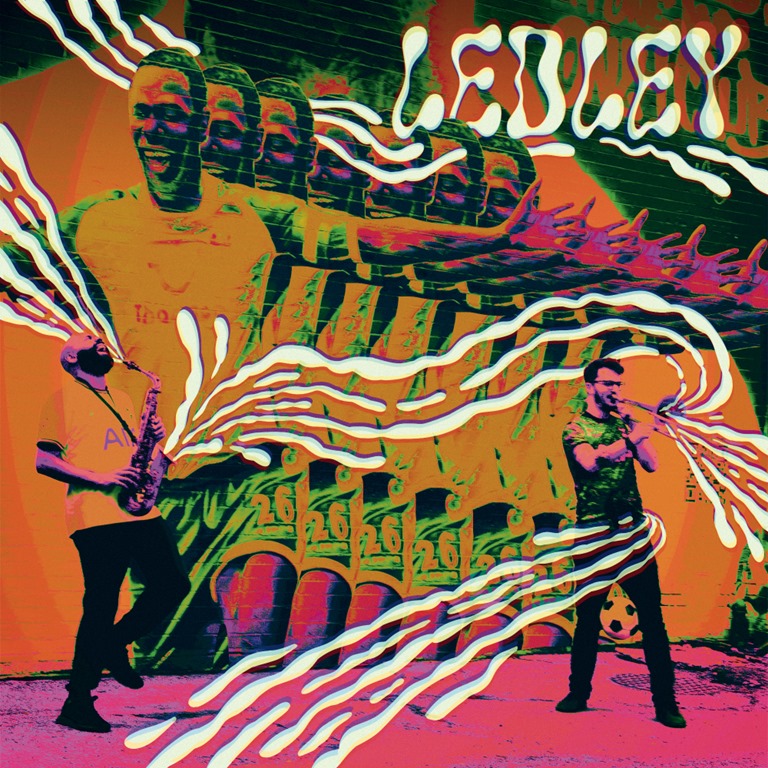
The jazzosphere has a way of throwing surprises, and in the most unexpected ways. Ledley’s eponymous debut, which sees acclaimed electroacoustic improvisational musicians Raph Clarkson (trombone, FX), Chris Williams (saxophone, FX) and Riaan Vosloo (electronics, post-production), is – let me check this – yes, a tribute to legendary Spurs footballer, Ledley King. You didn’t see that one coming, did you?

My knowledge of football is scant: I was born in Lincoln and so feel obliged to follow The Imps – by which I mean check on the scores on the BBC when I remember, and I sometimes watch England international, when I have time and can bear to – but clearly, this does not make me a football fan. But I do have a deep interest in music that’s out of the ordinary, the weirder the better. And this is pretty weird.

Ledley is pitched as ‘is a celebration of improvisation, friendship, and shared passions, blending music and sport into an exploration of community, belonging, and resilience – one of the most extraordinary tributes ever paid to a footballer.’

Although split into eleven tracks digitally, the album is essentially two longform compositions, corresponding with the two sides of the vinyl release, which contain loosely-defined segments, or passages, which flow into one another. Some of these are dramatic, film-score like, with the trappings of bold orchestral bursts, only without the full spectrum of instruments, lending these pieces the feel of somewhat stunted reimaginings of John Williams scores. But then there are the meandering straight-up jazz meanderings, trilling, tooting woodwind, and moments that sound more like some kind of noir soundtrack excerpt – you can envisage some old black and white movie version of something by Raymond Chandler – and then the more extravagant, indulgent moments, which are, it must be stressed, brief and infrequent, evoke the spirit of Kerouac and The Beats. The association with The Beat Generation is something I’ll park here, as The Beats were as stylistically diverse in their writing as The Romantics, and there was nothing jazz about Burroughs. I digress, but to do so feels appropriate: while it does have a musical flow to it Ledley is not a narrative album, and it in no way presents a sense of sequentiality.

The second half is most definitely more sedate, and more prone to abstract wanderings, as the instruments criss-cross, snake, and interweave through and around one another, before tapering down into spacious, semi-ambient, almost drone-line expanses which yawn and stretch in one direction and swoon and glide in the other. Towards the end, it feels as if the batteries are slowly winding down to a low drone. There are bird-like squawks and slow, heraldic horns ringing out, but it’s more the sound of mournful defeat than triumph and celebration. Perhaps this is intentional, and perhaps an understanding of the context is beneficial here Or maybe not: hearing the final tapering tones fade over the horizon, Ledley could as easily be a hymnal to seabirds as it is to a football player, and the beauty of music, particularly instrumental works, is that regardless of their intent, there is ultimately a sense of interpretation which lies with the receiver. Personal experiences, life in the moment, these things come to weigh on how we receive and interpret, and determine not only pour reaction and response but the relationship we have with a given work of art.

Having a knowledge of Ledley King and his career may, or may not, be beneficial when it comes to this album. Sonically, it’s interesting, it slides between moods and spaces, pulling the listener along through them. No naff sporting analogy is required in creating a punchline for this one: it’s simply intriguing, and the musicianship is of an undeniable quality.

AA

LEDLEY – Ledley artwork cover 1000px

Trestle Records – 18th December 2024

Christopher Nosnibor

Tout isn’t a seedy guy flogging – or trying to buy, at a cut-price – tickets outside a gig, but a band which, on this, their fourth album (bet you never guessed that) brings together aspects of contemporary classical, jazz and ambient, in addition to the ‘folk and new age traditions’ which influence their previous works. It follows and extends the trajectory of their previous albums, sequentially numbered with the exception of their last Live, released in 2017.

It’s certainly a lot to toss in together, and with no fewer than ten musicians contributing to this release, the compositions certainly afford a considerable amount of layering and offer much to process. Even after a few listens, I’m still digesting and on the fence as to whether the combined elements are appealing or not.

Jazz comes in almost infinite flavours, and it’s not the ‘nice’ jazz to which the cliché of the listener sporting a goatee and cardigan applies which is the strain that tantalises my taste buds – but Tout do sit perilously close to this at times. At others… they’re truly sublime.

One of their habits is to title the tracks – instrumental pieces, all – in such a was as read in sequence, they form a poem, although on Fourth, it ends abruptly, despite the full stop making it clear that this is no accidental cliffhanger.

I rob the rich to feed the poor

Which hardly is a sin

A widow ne’er knocked at my door

But what I let her in

So blame me not for what I’ve done

I don’t deserve your curses

And if for any cause I’m hung.

‘I rob the rich to feed the poor’ makes for an expansive, atmospheric start to the album, slow-swelling cymbals and understated percussion hover in the background while delicate sonic waves rise and fall, while smooth saxophone echoes out atop it all, growing increasingly excited toward the climactic finish.

It’s broad-brushed, sweeping synths and soft strings which provide the backdrop to ‘Which hardly is a sin’, where a strolling bass stumbles and stutters from time to time. ‘A widow ne’er knocked at my door’ marks something of a change in tone, with sparse acoustic guitar mournful strings bringing an altogether folkier feel in contrast to the jazz vibes. At the same time, it’s reminiscent of some of the post-rock which was all the rage circa 2005.

‘So blame me not for what I’ve done’ is truly magnificent: a minimal, piano-centred piece, it’s haunting and melancholy and leaves you feeling somewhat hollowed and bereft, and it’s apparent that – to my ears, at least – the less overtly jazz works are the superior ones on the album. Admittedly, that’s a matter of taste, but, objectively, Tout seem at their most inventive and creatively enthused when venturing into these different territories.

The album ends as abruptly as the poem it spins: one moment, ‘And if for any cause I’m hung.’ after a subtle, sedate start, is jazzing along, the bass strolling and ambling – and then suddenly it isn’t, petering out, unresolved. Et c’est tout. It’s well played, both literally and figuratively.

AA

a3531274275_10

Cruel Nature Records – 6th December 2024

Christopher Nosnibor

The ever-prolific Aidan Baker has been a frequent and recurrent feature on the pages of Aural Aggravation since its inception in 2016, and I’ve been listening to, and covering, his works since a fair few years earlier. He’s an artist who never fails to intrigue, and his manifold collaborations see him revealing new aspects to his creativity.

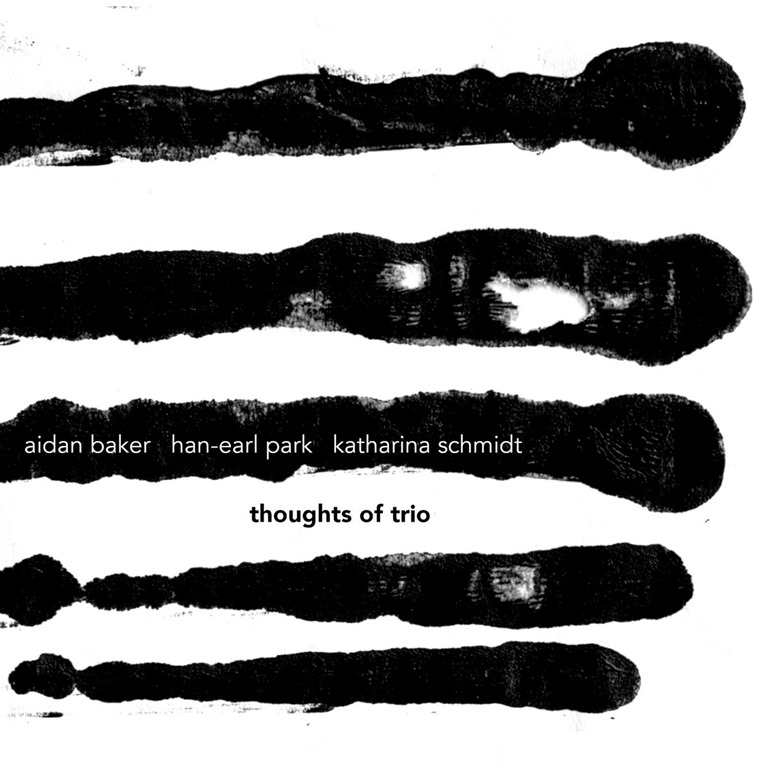
This three-way collaboration was, according to the accompanying notes, ‘recorded live at Morphine Raum in Berlin, Germany on February 21, 2024 by Canadian guitarist Aidan Baker, Korean-American guitarist Han-earl Park, & German drummer/percussionist Katharina Schmidt. The group brings together their respective, disparate musical backgrounds to explore the intersections of ambient music, improvisational (free) jazz, and musique-concrète.’

It’s worth noting just how many live releases of collaborations there seem to have been released recently: in fact, only yesterday I was delving into the dynamics of the latest offering by CEL. This may be a ‘cost-of-living’ matter, in part: economic circumstances really aren’t favouring anyone who isn’t two-homes-and-at-least-one-cruise-a-year rich, and this is a global issue, whereby post-pandemic the disparity between the wealthy and the rest has increased exponentially (a word I’m mindful of tossing about being aware of its actual meaning), and it’s never been a tougher time to be a musician, unless you’re Taylor Swift, or Ed Shearan or Elton John or Coldplay… you get the idea. And it’s certainly not (only) because of the shit streaming revenues paid (or not) by Spotify. Studio time is expensive: getting together for intercontinental collaborations is expensive… and when it comes to it, it’s not always easy, or even possible, to recreate the energy, the frisson, the immediacy of a live performance in the studio.

And so here was have Thoughts Of Trio, which captures a set from the start of the year, mastered as eight segments, simply titled sequentially ‘TOTone’ to ‘TOTeight’. The arrangements are often sparse, and combine nagging, regular repetitions with erratic irreglularities: ‘TOTone’ sounds like a pulsating wave or a slow alarm simultaneous with a game of ping-pong and some urban foxes foraging through bin bags. I mean, it doesn’t really sound quite like that, but the different elements belong to different places, and while it does work, it does not feel like a composition in any conventional sense. And this is very much the form of the album: there are no overt structures, there is no sense of cohesion or linearity.

But where Thoughts Of Trio evades the pitfall of being a discordant disaster is in just how they somehow keep things together, with an absorbing, if loose, sense of rhythm, which is both absorbing and bewildering, but, however subtly, ever-present. ‘TOTthree’ features springing guitar twangs and lurching grumbles, but a distinct sense of almost abstract rhythm. Clanking rattles and slow-bending, woozy drones hover and slowly wilt, with scrapes and subterranean bumps and nudges unpredictably rising and falling.

There’s no obvious shape to any of this, but amidst a set of pieces which are five or six minutes long, the eighteen-and-a-half-minute ‘TOTseven’ stands out a dominant track on the album, although one suspects that for those who were actually there, it was difficult to differentiate the pieces, which tend to bleed into one another. It rumbles and hums, tense and dense, simmering, without ever breaking through the tension that holds down the surface.

There’s little to no audience noise, no applause in the interludes or intersections, which works well in terms of the overall listening experience, but means that this doesn’t sound or feel like a live album. That’s by no means a criticism, and again illustrates how live recordings can replace studio recordings for so artists. This simply doesn’t sound or feel like a live recording, and that’s not only due to the lack of audience noise, but the way everything flows.

For all of the discord, the twists and knots and disparities, Thoughts Of Trio comes together somehow. While it’s is by no means overtly, jazz, Thoughts Of Trio sits between jazz and ambient, with an experimental / avant-garde. Ultimately, it does its own thing.

AA

AA

a4098448952_10

Nakama Records – 29th November 2024

Christopher Nosnibor

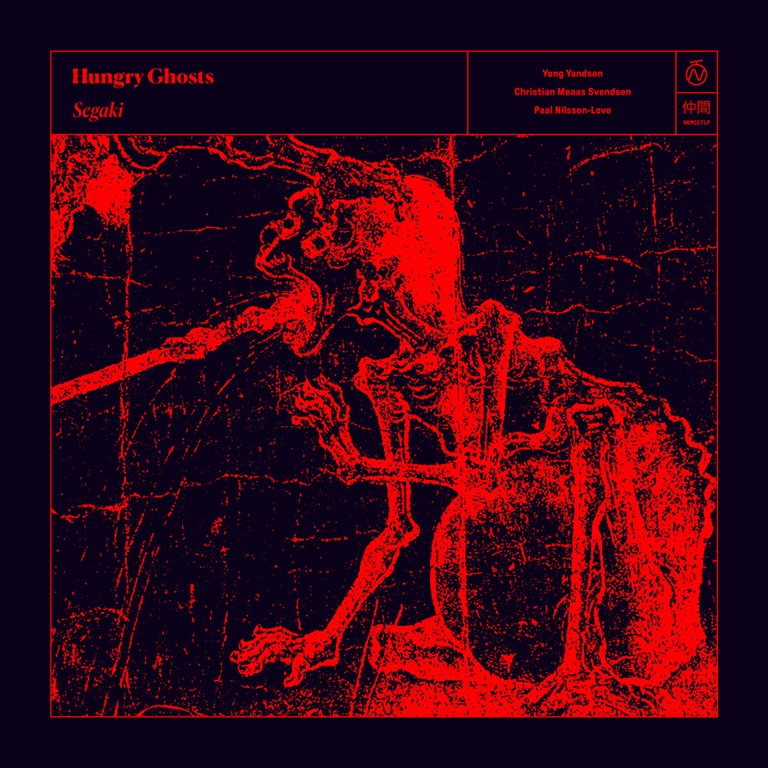
Is there such a thig as music-listening burnout? Probably not, but reviewing a new album on a more or less daily basis is knackering. There’s listening to music, and then there’s listening to music: one is passive, while the other is very much an active pursuit. But engaging – and fully engaging – with different forms of music can be strong and vigorous exercise for the mind, and when presented with music which is overtly challenging, there is a sensory workout involved, too. And Segaki, the second album by the Norwegian-Malaysian trio Hungry Ghosts, consisting of Malaysian tenor saxophonist Yong Yandsen ‘accompanied by the Norwegian powerhouse duo of Christian Meaas Svendsen on double bass and Paal Nilssen-Love on drums’ is most certainly challenging.

As their biography attests, ‘their debut record has been described as an album with an ‘unstoppable energy’ and like actual hungry ghosts (my italics) — the unfortunate souls who are reborn as pitiful creatures into their own miserable realm, punished for their mortal vices — the trio has an insatiable appetite for more… This appetite was temporarily quenched during their European tour in 2022. As part of this tour they played in a small Austrian town by the name of St. Johann in Tirol. That concert was recorded, and that recording became the raw ingredients for this release. Now, after having gone through a rather extensive two year long digestive system of listening, mixing, listening, mastering and listening again, the trio has brought us their second dish of hard hitting improv.’

The digestive system must be in quite a state if the album’s first track is anything to go by: ‘In search of filth like vomit and faeces to eat’ is sixteen sprawling minutes of frantic percussion and discordant sax frenzy. The title conjures an array of disturbing scenarios, from the dog, driven by stress, boredom, or anxiety to eat bodily waste, to something altogether more depraved and disturbed. The music itself provides no answers, only a crazed sprawl of rabid jazz which wanders and lurches in all directions, but amidst the mania, the phrase ‘shit-eating grin’ pops into my head uninvited. Of course it did. Some swear by various narcotics to open the mind, but for my money, music is the most powerful gateway to making unexpected associations and triggering recollections and reminiscences from almost out of nowhere. It’s not a grin I’m wearing by the end of this wild excursion, though, but a grimace, white knuckles gripping the sides of my chair as I exhale slowly. My head’s swimming, and I’m dizzy from the rollercoaster ride, and it’s the phrase ‘eat shit and die’ which bubbles up into my mind from my churning innards.

The viscerally continues on the altogether shorter ‘Small bits of pus and blood’ which completes side one. It’s sparser, atmospheric, uncomfortable. The percussion is altogether more restrained, yet dominates the minimal arrangement, and rhythms fleetingly emerge from the erratic clomps and clods before petering out to a lone trilling whistle.

Flip to side two and ‘Mountain valley bowels full of grime’ starts quietly but soon builds to a sustained crescendo, and keeps on crashing and braying away with a cranium-splitting intensity for almost twenty-two minutes. The drums explode in a perpetual roll, the double bass runs… run and run beneath sax mania that sounds like a jet engine.

‘A great decomposing odour’ delivers the final blow: at a minute and fifty-three seconds long, it feels like a jazzed-out sucker punch which takes unfair advantage of the dizzy, bewildered state one finds oneself in having seemingly, unknowingly, fallen down the mountainside into the valley and into the grime head-first.

The titles feel as if they belong to a gritty, grimy, sludgy metal album, but what Hungry Ghosts evidence on Segaki is that darkness, weight, intensity, and befouled viscerality are not exclusive to the metal domain, and that it’s possible to articulate sensations with a rare physicality without the need for distortion or snarling vocals – or, indeed, any vocals at all. With Segaki, Hungry Ghosts achieve a level of intensity and a power which is intensified by just how unexpected it is.

AA

a4155131662_10

Cruel Nature Records – 25th October 2024

Christopher Nosnibor

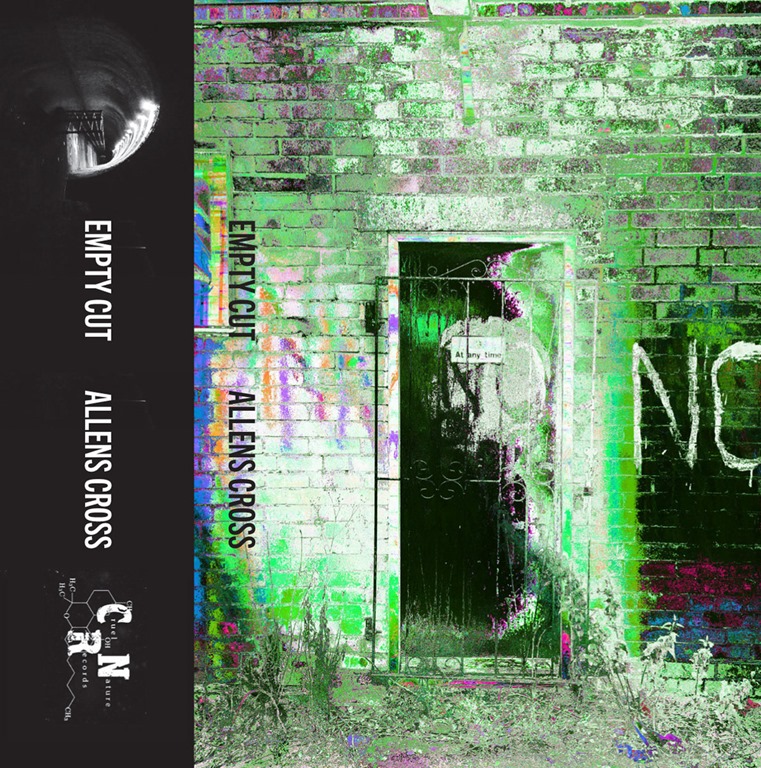
In the debate of nature versus nurture, it’s noteworthy how many artists find themselves influenced in no small way not only by their formative years, but also the place or places where they grew up. There’s an entire thesis to be made from this, but here I make the observation because on Allens Cross, Empty Cut – a duo consisting of Douglas Fielding-Smith and Robert Bollard – have forged a work ‘Inspired by their childhood growing up in Birmingham they blend together all their experience and inspirations to create a noise that holds a heavy solid groove mixed with harsh noise and fuzzed out reverbed bass, topped with psychedelic synths, and chopped and screwed vocals.’

Birmingham, the city which gave us Black Sabbath and UB40, the second largest in England, with a population of over two and a quarter million, and has long been renowned for its diversity, and is a truly multicultural melting-pot. It’s perhaps unsurprising that cities like this – in contrast to so many predominantly white, often middle-class towns – are the source of musical innovation: throw in an element of social deprivation, the frisson of frustration driven by class and cultural disparity, and inevitably, this backdrop will fuel the fires of those with a creative bent.

Allens Cross is exemplary: as the blurbage summarises, ‘mixing together drums, bass, samples, effects and vocals they have created a sound that incorporates punk, hardcore, electronica, jazz, drum’n’bass, experimental-industrial and shoegaze.’ It’s one of those that on paper probably shouldn’t work, but thanks to the dexterity if its creators, works far beyond imagination.

It grinds in on a sample looped and echoed across a dirty bass and slow-building beat… and then everything slides into a doomy, sludgy sonic murk. ‘Bloodline; makes for a dank and difficult opening, five minutes of feedback and dinginess sprawling and lunging this way and that, culminating in a manic howl driven by frantic percussion and driving bass.

‘Fidget’ whips up a howl of feedback against a juddering stop/start bass, and with shouty vocals low in the mix, it brings a quintessential 90s Amphetamine Reptile vibe with a hint of Fudge Tunnel… until things take a detour into dub territory in the mid-section. When the noise blast returns, it hits even harder.

With none of the album’s eight tracks running for less than five minutes and the majority straying beyond six, it feels like there’s an element of slog, of punishment, inbuilt. ‘The Well Beneath’ certainly mines that dark seem of metal that plunges underground, but with the contrast of jazz drumming and some quite nifty bass work, at least until they hit the ‘overload’ pedal and everything blows out with booming distortion.

If ‘Fluff’, by its title sounds cuddly, like a kitten, or a bit throwaway, like that which you’d sweep up from the corner or the room, the reality is quite the opposite: a six-minute seething industrial sprawl, it’s slow-burning, dark and menacing, and a clear choice of lead tune… Not, but then again, with an echo of Eastern promise and a certain ambience, and the strains of feedback a way in the distance, it perhaps is the most accessible cut on the album.

We’re proud to share a video exclusive of ‘Fluff’ here:

AA

Elsewhere, ‘Hymn to Then’ pitches cold synths and rolls of thunder to conjure dark images, a stormy backdrop to an eye-opening hybrid of prog rock, industrial, and krautrock: the result isn’t only epic, but conjures images of Dracula and unseen horrors with its icy atmospherics, while the last track, the eight-minute ‘Shatter’ begins with an eerie take on Celtic folk

Allens Cross is a highly imaginative work, an album that draws together a broad range of styles in a cohesive form. Its impact lands by stealth, building as it does across a range of styles, often creeping under the skin, unexpectedly, to register its effect. Sparse synths laser-cut across distorted, arrhythmic percussive blasts, as a low-level crackle and hum of distortion hovers around the level of the ground. Fractured vocals add to the disorientation, and the experience is uncomfortable. You cower, and will for release, not because it’s bad, but because it’s intentionally claustrophobic, torturous, and so well executed.

This is perhaps a fair summary of Allens Cross as a whole. It is not, by any means, an easy listen. Enjoyable would be a stretch. But it is utterly compelling.

AA

a3947501964_10

Human Worth – 15th November 2024

Christopher Nosnibor

They’ve been around for a while now, but as yet, there hasn’t been another act quite like Sly and The Family Drone. They’re one of those acts that straddle so many different boundaries and function on so many different levels, they’re impossible to pigeonhole and impossible to pin down. They make serious art delivered with a quirky, tongue-in-cheek sense of humour, and their live performances are celebrations of community and whacky while simultaneously being genius performance art improvisations. I’m by no means being superior when I suggest that a lot of people simply won’t ‘get’ them, and it’s obvious as to why they’re very much a cult thing. But that they’ve managed to sustain a career operating on a DIY basis, booking their own tours, etc., for well over a decade is testament to both the appreciation there is for them on a cult level, and to their sheer persistence and insanity. And their last release was a lathe-cut album containing a single twenty-minute jazz odyssey released via The Quietus.

Moon is Doom Backwards – a wheeze of a title which is factually inaccurate, and of course they know it – is a classic example of the absurd humour which is integral to their being, and it’s a joy to see that they’ve come together with Human Worth, a label I’ve filled many a virtual column inch praising, for this release. And because it’s on Human Worth, a portion of the proceeds from this release are going to charity.

The album, we learn, was recorded ‘exactly three years ago at Larkins Farm’. That’s quite a lag, but this does often seem to be the case when it comes to homing works of avant-jazz noise-drone. They describe it as ‘a patient, stalking, lurking thing. A properly noir thing, as notable for its long stretches of quiet atmosphere as it is for its pummeling skronk. Sly’s is a strange sort of quietude, though. A “drums heard through the wall”, “disquieting electrical hum” kind of quiet. An “eavesdropping PI”, “solo sax on rooftop” sort of quiet. An attention-grabbing kind of quiet so engrossing that, when our fave neo-jazz wrecking crew actually gets to wrecking – and they still wreck real good – we’re caught off guard, wrong-footed, defenseless. We get run the hell over by The Family Drone’s quintet of bulldozers.’

None of this should come as a surprise to anyone who’s been acquainted with them for any period of time. Because whatever one expects from Sly and the Family Drone, they’ll probably deliver, but simply not in the way one expects it.

Containing seven pieces, mostly around the three-to-five-minute mark, Moon is Doom Backwards is more conventionally ‘albumy’ – whatever conventional means when it comes to any format now. And there is, indeed, a lot of quiet on this album, much hush. There are many segments where not a lot happens, or simply a solo sax rings out into a slow-blowing wind of reverb.

‘Glistening Benevolence’ is underpinned by a mesmeric, tribal beat and crooning sax and wiffle of woodwind, at least until the percussion rises into storm-like crashes and the percussion surges around the mid-point, before it tapers, and then splashes to a halt. And then there is quiet, for quite some time, until the drums blast back and there is a sound like an elephant braying in pain. So far, so Sly. It’s pummelling percussion and frenzied honks and toots, parping and tooting in all directions which blast from the speakers on single cut and shortest track ‘Going In’, after which darkness descends. The inexplicably-titled ‘Cuban Funeral Sandwich’ has too much percussion and it too overtly jazzy to be ambient, but it’s a low-key, meandering piece that feels far too improvised to qualify as a composition and it certainly brings the atmosphere – a dark, oppressive one, which gradually builds and horns hoot like ship’s horns and clattering cans rattle with increasing urgency – before another abrupt halt.

If ‘Joyless Austere Post-war Biscuits’ may seemingly allude to some kind of Hovis-like cobbled-street and open-fire nostalgia, the actuality is altogether darker, as more sax flies into the sky on an upward spiral of infinite echo and the drums – building, building, to a crazed frenzy, but at a distance – create a palpitation-inducing tension, before ‘The Relentless Veneration of Bees’ – something which really should be a thing, along with the outlawing of pesticides – wanders absent-mindedly into an arena or ambient jazz, where the drums hang around in the distance somewhere.

There are shooting stars and percussive breakdowns amidst truly tempestuously frenzies jazz experimentation, and ‘Guilty Splinters’ is the perfect soundtrack to this. The closer, ‘Ankle Length Gloves’ is perhaps the most unstructured and uncomfortable of all here: amidst wheezes and drones, it’s the sound of creaking floors and subdued wailing utterances… and nothing but a buffeting breeze.

Moon is Doom Backwards is certainly their sparsest, most atmospheric, and least percussion-heavy album to date, but it really explores in detail and depth the relationship of dynamics, and pushes out into new territories. And while it’s still jazz, it’s jazz exploded, fragmented, dissected, and reimagined.

AA

AA

HW038_Sly&TheFamilyDrone_DigiCoverArtwork

Panurus Productions – 24th August 2024

Christopher Nosnibor

I take heart from discovering that Panurus Productions are as far behind on their PR as I am on my emails and messages. Even if it weren’t for the relentless flow of submissions – I’m looking at an inundation of around fifty a day, via email, messenger, and all the rest, even drops of CDs through the letterbox – there’s still that matter of… life. It consumes all of your time, and it wears you down. It’s an endurance test. Just living is a full-time job. No, it’s more than that. It’s exhausting, draining, it saps your very soul. On a personal level, just the day to day is too much at times for reading emails and listening to submissions. Throw in a dayjob, life and a single parent, and bereavement on top, and simply opening all the email submissions become too much. So arriving at the most recent Shrimp album around two months after its release, I feel ok about that – and by ok, I mean pleasantly calm, which is a rare sensation in the main.

Fucking hell. It’s a monster. It packs four tracks, the shortest of which clocks in at just under twenty five minutes. It’s more than a monster. It’s a skull-crushing leviathan. It will leave feeling week and so drained. It makes predecessor Mantis Shrimp sound like Barry Manilow.

They promise ‘a sprawling mass of free-form guitar, vocals (an associated miscellanea), effects and percussion’, whereby ‘the listener is thrown about the room with the sound, as the initial dirge collapses into a frantic scramble of activity, glitch and movement as the various pincers and claws dart out from the sonic mass. The sound field shifts as elements are isolated or the entire band is channelled through the snare, sometimes in line with the music and others completely of its own accord. Not even the platform you are listening from is stable.

‘Hidden Life’, with a running time of forty-one and a half minutes is an album in its own right. And it’s dropping tempo mood-slumping jazz with stutter percussion, at least at first. Before long, a slow-driving riff grinds in, and shortly after, it slumps into a drone and a feedback wail, while snarling, gnarling, teeth-gnashing, demented vocals rave dementedly amidst a tempestuous cacophony of… of what, precisely? Cacophonous noise. Everything is a collision, a mess, every second is pulled and pummelled, and it’s like The Necks on acid, only with chronic roar and an endless raging blast bursting every whichway, amidst howls of feedback.

Then you realise that this is only the first track and you’re already physically and mentally exhausted. You are absolutely on your knees here, battered, bruised, ruined by the noise, and still the frenzied furore continues.

There’s mellow, trippy, almost jazz vibe which lifts the curtain on ‘Leaf-like Appendages’, another epic track – but then they’re all epic, all challenging. ‘Maximum Sanity’ brings maximum pain and derangement, as howls and sputters from the very bowels of the very depths squall in anguish. James Watts has a rare talent for creating the most chthonic tones

Brine Shrimp trills and shrills, quills and spins in so many directions. It’s not only a mess of chaos, but a truly wild, and at times hellish, mess of chaos. It’s heavy, and it hurts. It’s Shrimp erupting like the Godzilla of the crustacean world: a monster in every way.

AA

a0473555031_10

Discus Music – 27th September 2024

Christopher Nosnibor

One way to tell an avant-garde musical work from its title alone is when the title provides a quite precise statement relating to its compositional nature. And so it is that this collaborative set of songs by Keir Cooper and Eleanor Westbrook are structured around guitar and voice.

‘Willow Tree – A Dialogue’ takes the interesting form of – perhaps not surprisingly – a dialogue of sorts, in which Westbrook’s adopts two contrasting modes of delivery, with a spectacular operatic aria juxtaposed with a spoken-word interrogation as a counterpoint. The effect is closer to a simultaneous internal monologue running across the song itself rather than a dialogue in the conventional sense. Meanwhile, the delicately picked neoclassical guitar is subject to interruption by clunks and distortion and occasional whirs and bleeps and the operatic vocal strays off kilter and the dream which drifted in twists and flickers with darker shades: not pronounced enough to be truly nightmarish, but unsettling.

The pair continue to explore the contrasts of melody and disharmony as Westbrook squeaks, squawks, trills, and purrs an infinite array of vocal gymnastics and Cooper’s guitar work, which chimes and treads delicately from folk to flamenco via classical streams, stamps on its own beauty with sudden and unexpected stops and stutters and forays into wrongness with stray notes and dissonance.

‘Superstar’ strays into the space which soundtracks a sense of derangement, the territory where things make no sense, and that place of incomprehension instils an unsettling confusion that borders on anxiety. ‘Modern Translation’ follows a similar trajectory: it’s a piece of magical neoclassical chamber music that’s twisted as if performed in an auditory hall of mirrors. Everything is wrong: something that should be soothing and beautiful is warped in a that it becomes unheimlich, eerie.

It’s hard to locate a touchstone or reference point for this: perhaps there are elements of later Scott Walker present, blended with hints of The Ex with its more avant-jazz leanings. One can only muse as to how they came to create this work: despite its clear foundations in the realms of classical and opera, Star Quality ventures so far from this path that it often bears little resemblance to any given style. The pieces evidently do have quite detailed and complex structures, as there’s nothing haphazard or uncoordinated about the way the two play together, but it’s impossible to decipher them from an outside perspective.

There’s a grand yet ethereal theatricality to ‘Bordering the Afterworld’, and ‘O’ soars and swoops and squeaks and whoops its way theatrically – and somewhat crazily – across some sprightly, if vaguely gothic-sounding guitar picking that suddenly, from nowhere, begins to buzz and thump. ‘The Time I Gave Up the Stage’ draws the curtain on an incredibly curious and as far off the wall as is imaginable.

Star Quality clearly has theatrical inspirations and aspirations, but shows two artists who are more interested in exploring their outer limits than taking the limelight in a mainstream setting – and for that, I applaud them.

AA

a1210959813_10

27th August 2024

Christopher Nisnibor

Just read that bio, and reflect for a moment:

Beige Palace was a band from 2016 to 2024. During that time we released two albums, an EP, a split 7" and some other miscellaneous bits. We toured the UK a bunch, we managed to play shows in France and Belgium, and we opened for some of our favourite bands like Shellac, Mclusky and Dawn of Midi. It has been lovely!

These are no small achievements. But for all of them, Leeds’ leading exponents of low-key lo-fi have been humble and kept it DIY throughout their eight-year career. Fans inevitably feel a sense of loss at the demise of any band, but as someone who was present at their first ever show and having followed their progress through the years, this feels like a particularly sad moment. It shouldn’t: the members have moved on to become Solderer, with the addition of Theo Gowans, a Leeds luminary, gig promoter, purveyor of mad noise as Territorial Gobbing, and one-time member of Thank, another of Freddy Vinehill-Cliffe’s vehicles, and of course, they’ve all received coverage here along the way.

So we shouldn’t feel sad. Instead, we should celebrate the achievements of a band who seemingly set out with no ambitions other than to make music for themselves. But still… I was in attendance at their first show, and as I documented at the time, and as I’ve mentioned in subsequent reviews, they were ace. Unassuming, a shade awkward, perhaps, but warm, human, and appealing in the way they presented their set of sparse, minimal tunes, Young Marble Giants were my first-choice reference point.

How YMG, a band whose album was released on Rough Trade and who have been the subject of a number of articles, not to mention being referenced and covered by the likes of Hole, remain obscure, I will never comprehend. But no matter: Beige Palace picked up their baton and, er, hid it under the settee.

In contrast to the wildly flamboyant dayglo-sporting Thank, Beige Palace were always the introspective, introverted musical counterpart who hung back, heads down as they looked at their shoes. Beige Palace’s successes happened almost in spite of the band themselves. That’s no criticism. They were a great live band, and they released some great music, too. I’m reminded of one of the other great DIY Leeds – via Bradford – bands, That Fucking Tank, who bookended their career with recordings of their first and last shows. Without the documents, the events would be but myths and legends.

This looks like being the first of two retrospective releases, and as a recording of their last live show – which neatly bookends my experience of the band, having attended their first – makes my case about the quality of their performances.

LIVE For The Very Last Time (2016-2024) presents a career-spanning set, with opener ‘Mum, Tell Him’, ‘Dr Thingy’, and ‘Illegal Backflip’ representing their 2019 debut album, Leg, and a fair few cuts from Making Sounds for Andy packing out a varied set, which culminates in single ‘Waterloo Sublet’.

But there are a handful of unreleased songs here, too: like Thank, Beige Palace were always focused on the next project, the next release, and as the very naming of ‘Waterloo Sublet’ illustrates, irreverence was their thing. ‘Local Sandwich’ is a perfect illustration of their quirky irreverence, as Vinehill-Cliffe rants about, yes, a local sandwich shop.

LIVE For The Very Last Time (2016-2024) captures everything that was great about this trio. Awkward, honest, slightly disconnected between-song chat is integral to the experience, and there’s plenty of that – including comments on someone’s wind – on this warts-and-all, as-it-happened recording, captured in Leeds in the intimate but awesome grassroots venue, Wharf Chambers, where the sound is always good – and loud – the audiences are friendly, and the beer is cheap.

There are no overdubs, there’s no polish or pretence, and LIVE For The Very Last Time (2016-2024) is all the better for the fact. The mix isn’t always balanced – the vocals are half-buried and times and the guitars are way loud at times, but what you get is a feel for being in the room.

The music is gloriously wonky, skewed, angular math-rock with some valiant forays into noise. The vocals and guitar both veer wide of melody; it’s the lumbering, loping, rhythm section that keeps everything together: without them, it would be a complete disaster. But this is how some bands work, and Beight Palace always sounded like a band on the brink of falling apart, in the same way Trumans Water always sounded like they may or may not make it to the end of the song as they jerk and jolt their way through waves of chaos.

‘Update Hello Blue Bag Black Bag’ which lands mid-set making its debut and final appearance is unexpectedly evocative, and the eleven-and-a-half-minute ‘Dinner Practice’, also unreleased, hints at the trajectory they might have taken on their next album.

Beige Palace were never going to be huge: they were cut out for cult fandom, and comfortable with that, being one of those bands who made music for fun first and foremost. It’s the sense of fun that come across here. Even in the most downtempo songs, what comes across is that they’re enjoying playing. They will be missed, but we look forward to their next incarnation.

AA

a3696456151_10

When iconic Norwegian vocalist Gaahl, revived TRELLDOM he did the only thing that could ever be expected from this exceptional artist: the unexpected. Hardly anybody could have predicted the stylistic shifts and the twists and turns of the forthcoming new full-length: …by the shadows…

A few weeks back, TRELLDOM opened their set at this year’s edition of Bergen’s Beyond the Gates festival followed the introduction via By the Shadows with the new opening track ‘The Voice of What Whispers’. This avant-garde jazzy yet relentlessly driving song conjured looks of confusion, fascination, and even rapture onto many faces in the crowd. Now the band releases ‘The Voice of What Whispers’ as the third single in the shape of an equally unexpected yet fascinating video. Who would have thought to see a Japanese horror style clip from a Norwegian band with deep roots in the black metal scene?

Watch the video here:

AA

45d43f56-416e-0552-bf75-2930adccdd19