Posts Tagged ‘Jazz’

Karlrecords – KR025 – 23rd September 2016

Christopher Nosnibor

If you though that free jazz couldn’t be brutal and punishingly aggressive, you clearly haven’t heard Painkiller. A three-way collaboration between three legends in their own rights – namely Bill Laswell, John Zorn and Napalm Death’s Mick Harris, the three albums they released in the early 90s represent the work of a true supergroup: not just a coming together of names, but creative powers combining convergent forces to forge something exceptional. Guts of a Virgin and Buried Secrets, both released on Earache Records, melded grindcore and free jazz to devastating effect, but it was their final album, the double-CD sign-off that was Execution Ground (1994) that saw them take things to another towering level.

That 1994 is now 22 years ago is hard to digest: not only are there kids listening to Nirvana who weren’t born when Kurt Cobain ended it, but adults too. Nevertheless, it’s 22 years since Execution Ground was released, and only now is it receiving a vinyl pressing, in a limited run of 500 (with the obligatory download code). And yes, an album of such sonic depth more than warrants a vinyl edition, and Karlrecords have done themselves proud, with the 180g double vinyl mastered and cut by Rashad Becker in Berlin. There’s a slight change to the original running order here, with ‘Pashupatinath’ being cut from the vinyl and tacked on at the end of the download, but nevertheless it works, and the key point to note is that this doesn’t sound like an album from 22 years ago. But then, it doesn’t sound like an album from any time.

Zorn’s alto sax playing in the opening minutes is beyond wild, and it’s underpinned by a thudding, gut-rumbling bass. Everything about the album is immense: ‘Parish of Tama (Ossuary Dub)’ works the full sonic spectrum and distils the most potent elements of grindcore and jazz, while bringing down the pace to a glacial grind. Simultaneously frantic and pulverizing, it pulls the listener in two different directions, and possesses a dark turbulence powerful enough to tear you in half.

‘Morning of Balachaturdasi’ begins with a slow, heavy drum beat, joined next by a dolorous chime of a repeated bass chord. Half Swans, half Shellac… and then the sax. Fuck, the sax! Its shrill, it has attack, and while the rhythm sections gradually dissolves into a sea of echo, quintessentially jazzy grooves rise up and the playing really wigs out. Over the course of its quarter-hour running time, it builds to punishing crescendos, drops back down to almost nothing, with extended semi-ambient passages which in turn yield to shrieking sonic assaults with the brutal rhythm section producing some deep, dark dub vibes.

The ‘ambient’ versions are darkly menacing, and swampy echoes drift and swirl, offering little by way of comfort. In the distance, sax honks parp and bray like a wild beast begging for mercy from within the belly of a whale. Drum breaks erupt and vanish into think, murky air, while tortured voices howl in agony from the depths. The bass is so low and edgy it’s positively stealthy and almost subliminal in its attack. But attack it does, as it nags away, strumming and thrumming and skipping and dipping. Thirteen minutes into ‘Parish of Tama (Ambient)’, a crescendo of crashing drums and satanic thrashing and gnashing offer a view into the black heart of purgatory.

It’s certainly not ‘ambient’ in any conventional sense, and nor do these epic sonic expanses conform strictly to the tropes of ‘dark ambient’, instead making for something altogether dense, more oppressive and more sinister.

It’s a brain-frying and utterly monumental work of epic scope, depth and dimensionality. However far genes cross, you’d be hard-pressed to find a work which pushes forward across seemingly incompatible genres, and even more hard-pressed to find one which succeeds like Execution Ground.


painkiller-execution-ground

Immedata – IMM006 – 4th July 2016

Christopher Nosnibor

‘Instruments that sound like instruments!’ boasts the sticker on the cellophane in which North of North is shrinkwrapped. It’s a good selling point, and I’m not being sarcastic. It’s not a matter of selling tradition, but what could reasonably be described as the album’s manifesto: ‘this is no random grimprov get together or free jazz blowout, this is a serious engagement with compositional parameters combined with instrumental virtuosity from a working band’, announced the press release. It’s a bold statement which is likely to rankle with a fair few in avant-jazz circles, but fuck ‘em. Isn’t that what avant-gardism is all about?

As it happens, there’s a lot of fucking going on with this release. The interior of the lurid pink gatefold cover contains the following uncredited quotation, impressed in silver text:

It doesn’t come from fucking somewhere else,

It comes from your fucking brain.

Your brain tells you what to do, and you fucking do it.

If your brains are fucked, then the music will be fucked.

And the music is a little fucked, but in a good way. In the way that this album is all about what the title states: ‘The Moment In and Of Itself’. It’s immediate. It’s real. The moment is the only thing that matters. The moment is history in the making. It’ a moment in time, captured, distilling the coming together of three musicians to create something – to create music. Nothing more, nothing less.

Featuring the talents of Anthony Pateras (piano), Scott Tinkler (trumpet) and Erkki Veltheim (violin), the album’s five tracks represent spirited, free-flowing improvisation – a subject they discuss at length in the three-way conversation (it’s not strictly an interview) in the 16-page booklet which accompanies the album. It’s all in the moment. It’s not pre-planned improvisation, guided, ordered, conducted. Naturally, just because the instruments sound like instruments doesn’t mean that this is a perfectly accessible work. At times in perfect accord and at others creating tempestuous discord, there are jazz elements in the compositions, such as they are. And of course, the range of sounds three instruments can name, individually and in combination, while still sounding like instruments, is immense, and at times brain-bending.

There’s certainly a strong element of playfulness which runs throughout the project as a whole. What lies North of North? It’s like the question posted in Spinal Tap when discussing the cover to their Black Album. And just as there’s none more black so there is none more North than North, unless you’re going to leave the planet completely. Which could well be the aim of these fellows, as they explore what it means to participate in ‘real-time composition’. I’m also reminded of the Bukowski book, South Of No North. Which is presumably nowhere or also off the planet. Whatever: location is a state of mind.

Leaping between brooding drama and fleeting, skittering leaps and transitioning from moody to frantically busy, with scratches and scribbly scrapes, fast fingerwork and mindboggling intuition are what make this album happen. And in the moment, they eke out extended crescendos and embark on wild detours and impromptu romps in myriad directions. It’s challenging, at times manic and eye-popping. But this is the real deal. It happened. And this album is a document of a moment, as it happened.

North of North

Music Information Centre Lithuania – MICL CD 089

Christopher Nosnibor

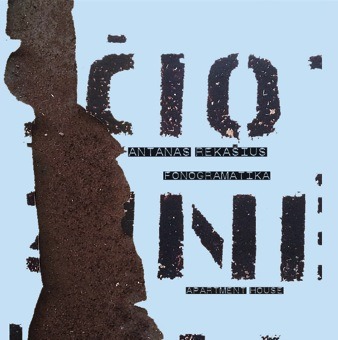
A retrospective collection is perhaps the most instructive place to begin when being introduced to the work of a late artist with a substantial body of work to their name. And so it was that Fonogramatika, 26-track collection culled from seven projects from between 1970 and 1981 featuring the work of Lithuanian composer Antanas Rekašius (1928-2003), as performed by the six-piece Apartment House ensemble came into my possession for review. My first contact with a composer clearly of some renown, but of whom I had absolutely no prior knowledge. A small amount of research revealed the composer is believed to have committed suicide, aged 75, after suffering poverty and depression.

There’s nothing depressive about the quirky music on offer here: indeed, there are humourous touches at every turn in Rekašius’ lively, unconventional and often quite audacious musical works.

Anton Lukoszevieze’s substantial liner notes (subtitled ‘Unsettling Scores and Unstable Tendencies’) are informative, and help to provide some kind of handle on Rekašius’ work, but needless to say it was extracting the disc from the incredibly heavy-duty and immaculately-presented four-way gatefold sleeve (really, the packaging super, and you really can feel the quality) and actually hearing the music therein which proved more instructive.

Rekašius’ style is often informed by jazz, but with a keen ear for atmosphere and experimentation, using the instrumentation of a chamber orchestra to create a range of effects. There’s a fluidity to the compositions, and a certain deftness which makes for rapid and often unexpected transitions from sparse, stark atmospherics to wild brass. The strings howl and mew, bend and bow, and Rekašius makes a trademark of combining dissonance and subtle melody. In fact, it’s the fact that there are strong, albeit brief, passages of melody, and a ken for swinging rhythms and off-kilter repetitions that render the works so beguiling: the listener can marvel at the scope and style of the compositions, the apparent randomness and the dynamics which are worked into the pieces, because yes, it is all very clever. But equally, it’s possible to simply enjoy the music.

Often, the music is jarring, but Rekašius invariably pulls back from the brink of spine-jangling awkwardness with cadent musical flourishes which are pure joy. Wild cacophonies, lumbering menace, twisted folk fiddle and notes that simply sound ‘wrong’ all contrive to keep the listener alert and entertained. ‘Atonic I’ (the individual tracks on each album are known by number only, with the exception of those from Phonogram) evokes the soundtracks of old, silent movies. If anything, Fonogramatika demonstrates just how able Rekašius was at turning his hand to different styles and making them work, while at the same time adding his own idiosyncratic stamps to them. The musicianship of the Apartment House players shouldn’t be underestimated, by any means: they play with nuance, intuition, and passion.

It’s now 13 years since Rekašius’ death. While his work has been performed in the United States, Italy, France, Finland, Sweden, Germany and Hungary, as well as Lithuania and Russia during his lifetime, his substantial output, which includes nine symphonies, 12 ballets, seven concertos and an opera-oratorio, Rekašius’ legacy seems rather limited in most territories. Perhaps the release of Fonogramatika will go some way toward addressing this, and earning Antanas Rekašius wider posthumous recognition.


Rekasius


Apartment House Online

Large Unit – Ana

Posted: 6 April 2016 in Albums
Tags: , ,

PNL Records – 4th April 2016

James Wells

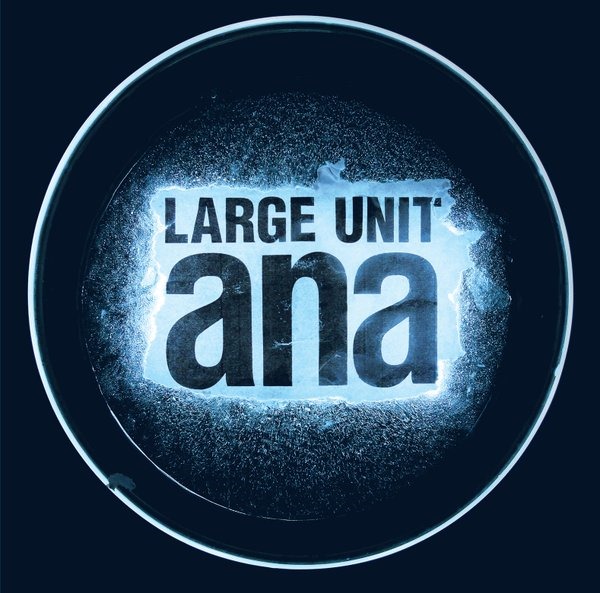
This may be a vehicle for Paal Nilssen-Love, but with an ensemble numbering some 14 musicians, Large Unit is appropriately named. The three pieces, recorded in a single day in August 2015, are long-form constructions, spanning 13, 28 and 17 minutes respectively, and as such, everything about this projects exists on a grand scale, not least of all the sound.

Layer upon layer of percussion provides the backbone over which strolling bass and vast, parping brass booms and squawks which veer wildly between crazed, warped jazz and epic swing. There are tempo-changes galore, and frequently the sound builds into a dizzyingly discordant tumult.

Technically, it’s a work of jazz wizardry, but there are places where it’s rather heavy going.

Large Unit