Posts Tagged ‘instrumental’

Room40 – 19th September 2025

Christopher Nosnibor

There are many labels putting interesting and unusual, innovative releases into the world. The majority of them are small, and supremely niche, but survive by virtue of knowing their audience – and I say audience rather than market, because while they obviously need to balance financially, often on the minutest of margins, they exist for the purpose of disseminating art rather than the production of profit. The underground operates on a very, very different model, and with very different objectives, from the mainstream.

One label which is consistent in its output is Lawrence English’s Room40. The interview I conducted with Lawrence some years ago has vanished from the Internet now, as happens when websites cease to operate and their owners stop paying for their hosting, but it will always stand as one of my favourites. This is relevant, because we touched on the subjects of William Burroughs, cut-ups, and sonic collage, and lo, English, in his appraisal of Steelwound, recounts how ‘In the early 00s, Ben had been working on cut-up electronics, spilling over with floating rhythms, humming string samples and piano splices. It was a sound realised in part through the subversion of fruity loops and also owes a debt to Ableton Live which arrived in late 2001. His works to that point, gently saturated and bristling with a fizzy distortion at times, hinted at another sound world which would become his focused in the summer of 2002 and into 2003.’

A further note on Frost’s process is also informative by way of a preface, and comes again courtesy of Lawrence, who writes, ‘Working with a Fender Twin, often with the reverb dialled in at maximum, he found a language of shimmer and saturation, of compression and collision, that set the stage for a prolonged interest in how sound performs and is perceived at volume. It also is the first time that many of the tonal and melodic inflections that have come to be recognised as his compositional language are on display.’

This is the twentieth anniversary edition of an album that likely very few people have even heard of, let alone heard, and the chances are, it will remain that way despite this reissue. That isn’t because it’s not good, but because it’s ultra-niche and on a small label. But, in those certain small circles, it will likely receive attention, and deservedly so.

As is often the case, any technical and theoretical background is lost in the listening. The album’s first piece, ‘Swarm’, is an ambient work which may well weave a certain tension, but its trickling drone reveals nothing of the aforementioned context. The same is true of the epic ‘I Lay My Ear to Furious Latin’, which in itself is anything but furious, an floats, drifts and wisps abstractly over the duration of nine minutes, before the mellifluous ten-and-a-half-minute ‘You, Me and the End of Everything’ stretches out into post-rock territory, and in doing so extends its emotional pull, also. It’s slow and ponderous, spacious, and expansive, and strains of feedback scrape and push at the delicate, soft-focus edges, before the first vocals of the album arrive, haunted, detached, and deeply moving in unexpected ways. Sometimes, the human voice affects us more profoundly when any words aren’t discernible. We hear the emotion poured into them, and we feed on what we take implicitly. Sound and enunciation, delivery, can convey emotion and meaning which is beyond words, and that is very much the case here.

The title track, emerging from the rumble of thunder and heavy rain amidst a blustery backdrop scrapes and drones, trills and whines, a representation of an industrial soundscape that veers between the graceful and the brutal, the harsh, as feedback assails the ears frequently – but there are points at which it dissipates, and submits to drifting mellowness, even then the feedback continues. ‘Last Exit to Brooklyn’, taking its title from Hubert Selby Jr’s classic, if gritty, novel is soft but with harsher edges.

It’s hard to comment on the initial resonance or impact of Steelwound twenty years ago. There likely wasn’t much. But as the whistles and wails of the title track dissipate in a gentle breeze, it does grow dark. Not SO dark, but darker that it was. This is an album of texture and detail, moving, but also captivating, a spell of gripping stillness, a pause to reflect. As the scraping, sonorous trails of ‘And I watch You Breathe’, it’s worth stepping back, taking a moment, and breathing. Just… breathing.

AA

RM403_20 front

Vinter Records – 5th September 2025

Christopher Nosnibor

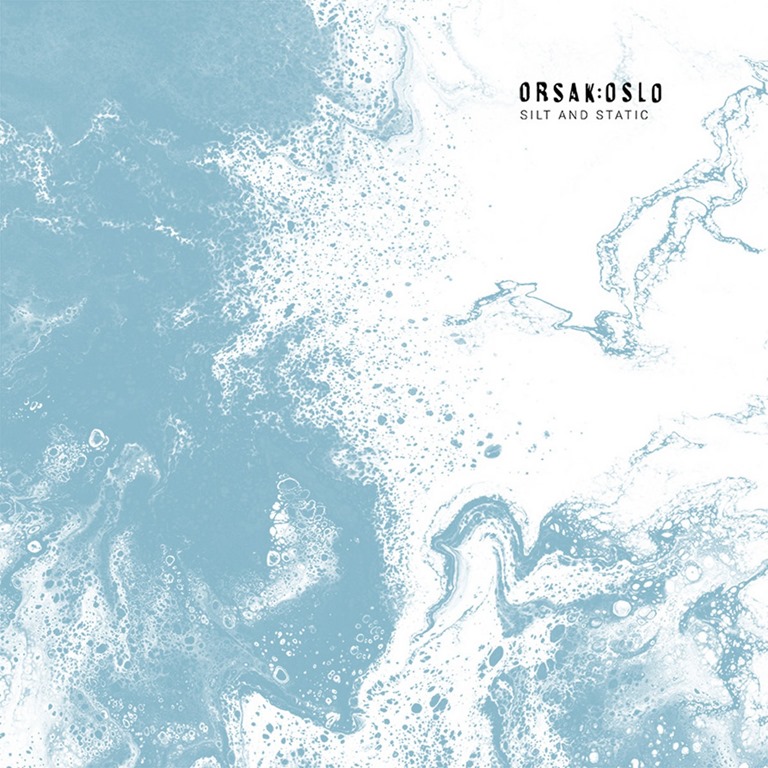
The post-rock boom feels like a long, long time ago now. Perhaps because it was: realistically, we’re talking about nearly twenty years since Explosions in The Sky and Her Name is Calla were super-hot topics. I discovered HNIC supporting iLiKETRAiNS on tour circa 2007, and Maybeshewill via their split 12” with Her Name is Calla, before seeing them playing with AndSoIWatchYouFromAfar… There are always chains and sequences, but the post-rock bubble burst in a tidal wave of oversaturation maybe around 2009. It all got a bit samey. But there was – and still is – always room for a band that take a genre template and take it somewhere else, offering something different, instead of a template-based rehash. Enter Osak:Oslo, who most certainly offer something different. Silt and Static is nuanced, but at the same time forceful.

There’s nothing like going all-out epic on an opening track, and that’s what precisely what Osak:Oslo do here, with the eight-minute forty ‘Biting In’, which begins with some enticing, chiming guitar that’s quintessential post-rock in every way, but then the rhythm section kicks in, and it drives along straight ahead, riding a solid motorik groove for a bit. After taking it down in the mid-section, they come back in, driving harder than before, a sprawling desert-rock soundscape expanding like a straight road headed to the horizon. Hell yes! You feel this. Exhilarating is the word.

They take things slower and bring more weight on ‘Days Adrift’, but still conjure rich layers of atmosphere, and bring things together with a chunky, chugging, bass-driven groove. In contrast, ‘Salt Stains’ is altogether more jangly, indie, at least to begin, and then, less than a minute in, a solid riff powers in, topped by soaring lead guitar work.

Over the course of the album’s nine expansive tracks, Osak:Oslo demonstrate a real knack for beefy riffery – nothing overloading, hugely overdriven, distorted or gritty, but just big, bold, solid and defined by a sense of forward trajectory, and what’s most remarkable is the way the band arrived at this work:

Recorded spontaneously, Silt and Static captures the band at their most stripped-down and unfiltered, balancing atmospheric fragility with crushing depth. With tape rolling and no roadmap, the album emerged naturally, giving shape to a sound that’s both deeply personal and bleak yet beautiful.

‘Bleak yet beautiful’ is a fair summary, but establishing, or unravelling, precisely what’s personal on an instrumental work is not easy, or sometimes even possible, although it is clear that certain elements, sounds, structures, transitions, which hit in a particular way are deeply evocative, often moving. But as a listener, those moments feel personal and are rooted in one’s own experience, one’s own individual response. I write this as someone who has sat with friends, playing songs saying, as I practically burst with enthusiasm, “Wait… there! That’s the key change!” or “That’s where the distortion comes in!” or “There! There!”, to be met with… mixed results. Is that moment which floors me the same one which the creators feel is the pivotal point in the song, the one which articulates, through the medium of sound alone, that deep-seated, complex emotion which has been tormenting your psyche for months, or even years? I suppose it doesn’t really matter. What matters – for artists and listener alike – is that connection, achieving that vital emotional resonance, where the music speaks.

‘Resonance in Ash’ slips into shoegazey territory, but also offers the most potent swell of noise that threatens the eardrums, bursting into a ragged explosion of noise, bordering on post-metal and racing to a blistering crescendo, and despite being one of the album’s shortest songs, ‘The Onward Strike’ feels like one of the most immense. Then again, there’s ‘Break and Sink’, which goes all-out to crush… It’s riffy, it’s heavy, and it lands hard. The bass… it grinds, alright.

The beauty – and creative success – of Silt and Static is that it succeeds on both levels. Because of the bold riffery – never succumbing to the post-rock cliché of the slow-build and epic crescendo, but instead forging these strong, cinematic, rock-orientated bursts of energy which are immersive, transportative, and reach far beyond genre confines. Silt and Static is an imaginative, inspired work, and the circumstances of its creation make it even more remarkable. It’s the work of a band operating with a rare level of cohesion, and it’s pretty special.

AA

a1841796365_10

Cruel Nature Records – 1st August 2025

Christopher Nosnibor

Nicholas Langley outlines his latest offering with the explanation that “One Square Centimetre Of Light is a continuation of the ideas and techniques I used to compose Thinky Space and especially Cymru Cynhyrchiol. Recorded in spring and summer 2024, this album was an outlet for a lot of thoughts and emotions regarding the involuntary loss of time and memory.’

There are gaps in the narrative here – gaps which I don’t feel it’s necessarily appropriate to probe or plug, particularly when, in his extensive explanation of the album’s final, thirteen-minute piece, ‘Missing Day’ – of which he writes: “‘Missing Day’ can refer either to the mourning feeling of losing whole days to bad health, or to the actual calendar day of mourning, Missing Day, on February 20th. For this piece, as well as layers of tracks 3, 4 and 5, I returned to the generative music techniques I started in 2016. This time around I spent many days getting to grips with programming multiple pieces until I eventually programmed a piece which exactly conveyed my feelings of mourning and hope.”

Memory loss can be a source of panic, anxiety, and while it appears to be a focus, or inspiration of sorts for this album, it feels inappropriate to probe here. But listening to the soft, soporific ambience of One Square Centimetre Of Light, I find myself wondering – where will it go next?

It doesn’t really need to ‘go’ anywhere: the instrumental works which make this album are subtle, sublime. ‘Welsh Summits’ is a beautiful, resonant ambient exploration, while ‘The Weather on the Seafronts’ is magical, mystical, ambient, while ‘Old Age’ quivers and chimes abstractedly, with layers of resonance and depth.

And so we arrive at ‘Missing Day’: fully forty minuses of melodic instrumental exploration, serene, calm, expansive. It’s soft and as much as One Square Centimetre Of Light soothing, the vast sonic expanse of ‘Missing Day’ encapsulates the album’s conflicting and conflicted nature.

One Square Centimetre Of Light is overtly serene and beguiling, but hints at an undisclosed turmoil beneath the surface, a work which is a sonic balm, the result of a process to calm inner strife. As lights at the end of the tunnel go a mere on centimetre is barely there – but there it is. And it is hope. keep the focus on that.

AA

a2057051706_10

Torto Editions / Ramble Records / Atena Records – 25th July 2025

Christopher Nosnibor

DuChamp (certainly not to be confused with the seminal avant-gardist Marcel Duchamp) is a Berlin-based artist, and for this release, is the product of ‘a journey of development, research, and refinement of a deeply personal voice’, their chosen selection of instruments is listed as ‘baritone guitar, voice, organ, synths, bouzuki, electronics, incredible stubbornness.’

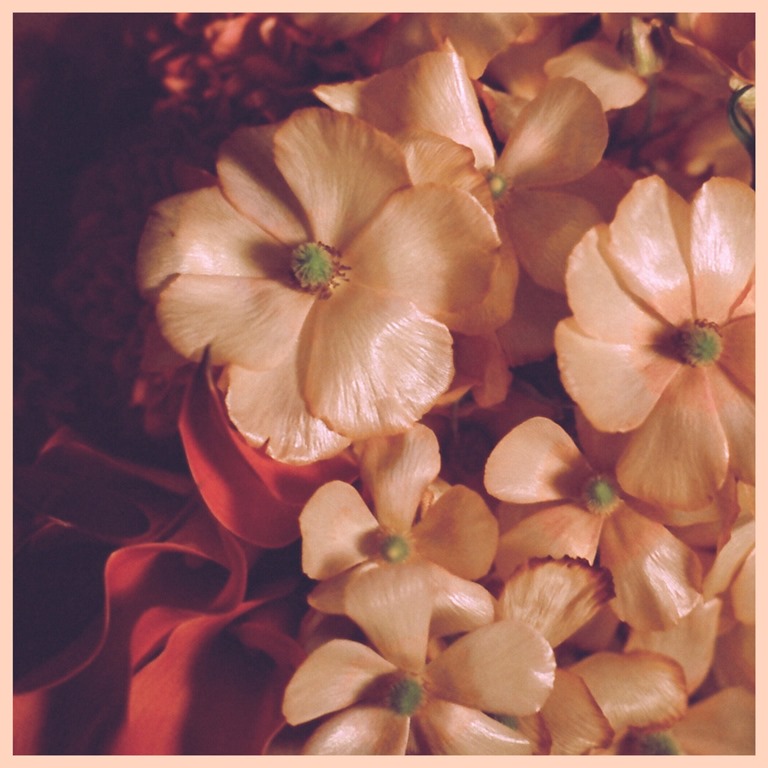
The baritone guitar is not a common instrument, but oner which sounds quite unlike any other guitar in terms of its tonality. Its application here is in providing the core to elongated sonorous drones on the five compositions on The Wild Joy. It’s a title I take to be somewhat ironic, for despite the resplendent flora which graces the album’s cover, the title of the first piece, ‘Sine proprio’ translates, depending on your choice of reference source, as ‘without property’, ‘without possession’, or ‘poverty’. Whether or not this is a reference to a physical or spiritual poverty isn’t apparent, but what this nine-and-a-half minute dronescape does possess is a wealth of texture as the layers build and vibrate against one another.

‘The Shape of Time’ is very much constructed around contrasts; a whining, scraping drone nags the conscious level of listening, while a low, rumbling bassy resonance lingers way below, and it’s something you feel as much as hear. In the space between, incidentals drift in and out. In the distance, gongs chime and fade slowly, and the disparity between their timing and that of the pulsating throb which has begun to build is disorientating, unsettling.

‘Epithalamion’ marks a dramatic shift – in every way, starting with the change of instrumentation, and by no means ending with the change of approach, with a wild, undisciplined key-bashing crescendo occupying the first couple of minutes, before giving way to a wheezing sound like an organ on the brink of expiry. With its origins in the classical age, an epithalamium is a poem written specifically for the bride on the way to her marital chamber. This, however, sounds more like a piano being pushed down six flights of stairs, before a ghastly gasp sputters along interminably for the remainder of the duration. I pity the bride this was penned for.

Things are different again on ‘Fulaxos’: there, the baritone guitar comes into its own and to the fore, played conventionally, a picked, rolling motif that’s brooding, even doomy provides the starting point for a piece which gradually unfurls toward a place of light and optimism. The final track, which is also the title track, brings us almost full-circle, but there’s a levity to this extended, delicate dronescape, and the soaring vocal only accentuates this sense of elevation.

The joy may be somewhat subdued overall, but it’s there, on what is, ultimately, an accomplished, multi-faceted work.

AA

a3734767457_10

Kranky – 2nd May 2025

Christopher Nosnibor

Landscapes, in all their forms, have always been significant in the inspiration for loscil works. Scott Morgan is an artist who seems sensitive to his surroundings, and also responsive to them when it comes to the creative process.

This is true of many artists, of course, and any artist who isn’t in some way influenced by their surroundings and the things which happen around them are… largely incomprehensible to me on a personal level. It simply seems unnatural to create art in a void, detached from experience. I’m not advocating that all art should be grounded in the here and now, or even in reality, but even the most imaginative of scenarios require an element of grounding in order to be credible. The most wildly-imagined sci-fi and fantasy only work when there’s a demonstration of an understanding of human character, or how dialogue works, and so on.

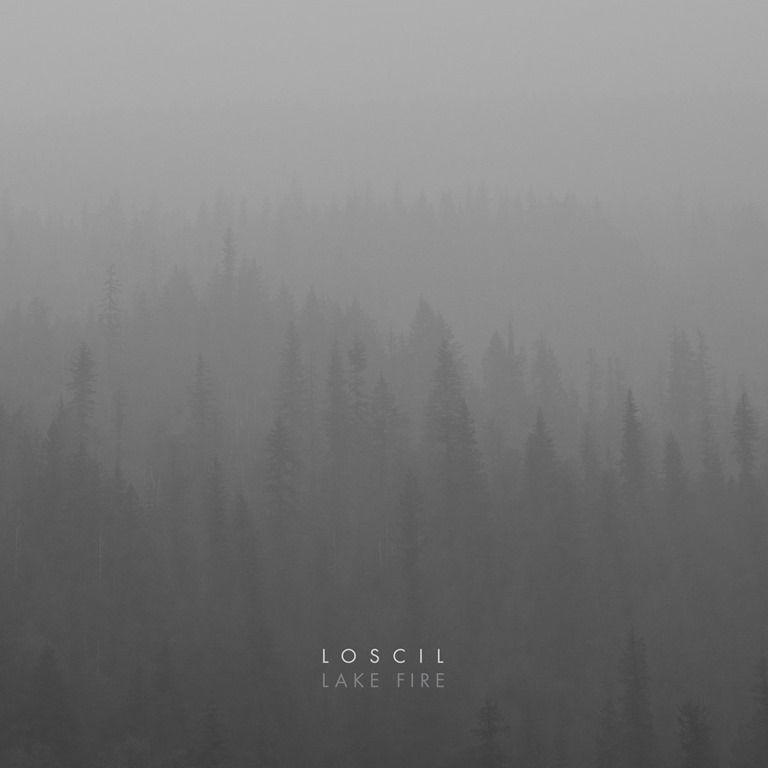
The misty, murky shadings of the cover are replicated in sonic form on ‘Arrhythmia’, the first of the album’s nine compositions. Where are indecipherable whispers eddying behind the piano notes, which gradually blur into a watercolour wash, and a slow pulsing tide slowly rises, only to fall and resurface and fall again.

Interweaving layers create an aural latticework on ‘Bell Flame’, the different tempos of the rippling waves merge together effortlessly to create a shimmering, ever-shifting fabric that’s soft, almost translucent. These supple, subtle ambient works are far from abstract, although their forms are vague to distinguish, and single release ‘Candling’, it so proves, is exemplary of the album’s finely-balanced layerings and contrasts.

With ‘Sparks’ preceding ‘Ash Clouds’, one might be tempted to perceive some form of narrative, or at least a linearity in their pairing: the two six-minute pieces drift invisibly from one to the next, although ‘Ash Clouds’ is heavier, darker, an elongated drone providing one of the album’s moodiest, most oppressive pieces. ‘Flutter’ is appropriately titles, and warps and bends in a somewhat disorientating, disconcerting fashion, creating an effect not dissimilar from the room-spin of inebriation, while the title track concludes the album with a lot of very little, as long, low droning notes hang heavy. It’s pure desolation, and yet… there is something which rises upwards other than smoke and flame – a gasping breath and the sound of a thousand souls transported in vapour.

There are beats on this album, but they’re almost subliminal, a heartbeat underneath the mix, and provide a sense of orientation like fence posts visible through fog or low cloud on a barren moor. More often than not, though, the rhythms come from the interactions between the different elements as they meet and then separate once again. The abstract nature of the work somehow compels the listener to not only fill the blank spaces with their own sensory and emotional input, but also to visualise in the mind’s eye what they may look like. As such, Lake Fire, while largely tranquil, sedate, and even soothing in parts, is stimulating, and to more than just the ears.

AA

a2277207601_10

9th April 2025

Christopher Nosnibor

With his latest offering, Gintas K promises a work of ‘ambience, electroacoustical micromelodies and noise played and record live without overdub.’ That he is so relentlessly active is perhaps one of the reasons its possible for him to create such wild improvised works on a first-take basis – which in turns means it’s possible to crank out new releases at such a staggering rate.

The first of the seven sequentially-numbered pieces is eleven and a half minutes in duration, and begins as a barely audible drip, a tiny trickling sound at the fringe of perception. Instantly I find myself on edge: it’s a sound I’ve become increasingly and acutely aware of in recent days, as the shower in my bathroom – only an internal stud wall away from my office where I listen and write – has progressed from a slow and infrequent drip to a full, continuous dribble, a nagging, torturous sound which has led me to place the shower head in the bath in order to mute it. There’s something of a liquid, and sometimes foamy, frothy sound to many of Gintas’ works, and Atmosphera begins with all the promise of being another one of these. And, indeed, as the drip and trickle increases in rate to become a gurgling stream, there is a sense of growing volume – in terms of liquid, rather than sonically. But a sparse piano rings out over the babbling stream, and as the piece progresses, creaks and bleeps and bumps and strange warps in the very fabric of time and space disrupt the flow. And yet, as the abstract interruptions and distractions become increasingly frequent and ever-more alien, sometimes extending to washes of fizzing distortion, and even fill-on frenzies of chaotic noise, echoing drips and splashes, like water falling from above into the lake at the bottom of a heigh-vaulted cavern, and reverberating piano notes remain at the core of this bewildering sonic collage.

There is a certain sense of evolution as the pieces run into one another: by Atmosphera #3, there is a sense of ambience blended with dissonance, and slow pulsations merge with the brooding and often melancholic piano lines, and these elements certainly contrast with the organic yet equally turbulent, almost artificial grunts and gurgles. Atmosphera #5 is the sound of lasers set to stun, with robotic squawks and a relentless whistle of feedback that hits right at the tinnitus pitch and congeal into concoction of wrongness, like a stew with a bunch of ingredients that should never be combined.

The album winds down gradually, sparse piano notes and a soft trickling liquid flow slowly descending, falling, and fading away…

Something about listening to Atmosfera is like watching a large fish tank. Just as the fish flit blithely and without any attention to the world beyond their own, darting here and there without any predictable linear path, so Atmosfera doesn’t follow a linear flow – and is all the better for it.

AA

a2258515655_10

‘Mars On A Half Moon Rising’ is the first video from The Sound, the solo debut of much-travelled musician / producer / arranger / painter Knox Chandler. This project is a musical / visual memoir depicting the shift in his surroundings from the urban to the rural, specifically the Connecticut shoreline off the Long Island Sound and the impact of this dramatic change of environment on his consciousness and the art-work that leads to.

At The Sound’s core is Chandler’s “Soundribbon” style of meditative, powerfully cinematic instrumental performance on guitar, accompanied by upright bass and percussion which comprises the audio component of the release. The visual portion is a book of paintings, photographs, sketches and written meditations, interpreting nature through technology. The blending of these mediums is Knox’s attempt to make the diaristic intent of his music explicit. The Sound is being released on Knox’s new label Blue Elastic on May 30. The album is available on digital download and on streaming platforms on its own, or the book comes with a download code. I hope you’ll consider covering Knox with an interview, feature, news story or album review.

Knox Chandler’s career has spanned for over four decades including long stints as a member of The Psychedelic Furs, Siouxsie and the Banshees and the Cyndi Lauper band, extraordinary experiences in recording and performing live around the world. Chandler’s also performed, recorded, arranged and produced, working with acts such as REM, Depeche Mode, Grace Jones, Marianne Faithful, Natalie Merchant, Tricky, The Creatures, Dave Gahan Paper Monsters and The Golden Palominos etc.

Knox spent a decade residing in Berlin, Germany, while he explored sound-scaping. He developed a technique he calls “Soundribbons”, which he recorded and performed in its own right as well as applying it to different genres and mediums . He composed, recorded, toured, produced, and wrote string arrangements for Herbert Grönemeyer, Jesper Munk, Pure Reason Revolution,The Still, TAU, Miss Kenichi and the Sun, Mars William’s Albert Ayler Xmas, Rita Redshoes, Them There, The Night, etc. While living in Germany received a Post Graduate certification in education and was the head of the guitar department at BIMM College.

AA

Knox Chandler

Dret Skivor – 4th April 2025

Christopher Nosnibor

This latest release on Swedish microlabel devoted to the most underground of underground music, Dret Skivor, may be form an act we’ve not heard of before, but something about it has all the hallmarks of the eternally prolific Dave Procter all over it. The man behind Legion of Swine (noisy) and Fibonacci Drone Organ (droney) and myriad other projects and collaborations – some occasional, some one-off – has a distinctive North of England drollness and a penchant for pissing about making noise of all shades, after all.

Released on CD in a hand-painted edition of just two, the notes on the Bandcamp page for the release are typically minimal: ‘Is it dungeon synth? Is it just spooky music? Is there torture afoot?’ I would say I will be the judge of that, but dungeon synth is a genre I’m yet to fully get to grips with, although it does for all the world seem as if it’s a genre distinction that’s come to be applied to spooky music, and seems to have grown in both popularity and usage comparatively recently, despite its roots going back rather further.

The cover art doesn’t give much – anything away, and in fact, I might have hoped for something more… graphic. But perhaps less is more here. However, the titles of the two tracks –‘the shithouses’ shithouse’ and ‘the festering flesh of the neoliberal’ are classic Procter and could as easily be titles for poems by Dale Prudent, another of his alter-egos.

The first begins with a swelling thrum of what sounds like a chorus of voices, possibly some monastic indentation, layered and looped and multitracked to create a torturous cacophony. For the first twenty, thirty, forty seconds, you wait for a change to come, for something to happen. After a minute that expectation is diminishing, and by the three-minute mark it’s impossible to be certain if there really are keyboard stabs swirling in the mix in the midst of it all, or if your ears and mind are deceiving you and you’re losing the plot. For some reason, I’m reminded of the Paris catacombs – not because it’s actually creepy, but because, just as seeing rows and rows of bones stacked up for quite literally miles becomes both overwhelming and desensitising after a time, so hearing the same sound bubbling away for ten minutes is pretty much guaranteed to fuck with your head. Near the eight-minute mark, there are most definitely additional layers of buzzing drone and there are some tonal slips and slows, like listening to a tape that’s become stretched or is slipping on its spool, but by this time your brain’s already half-melted, and I find myself contemplating the fact that while visiting the catacombs on a sixth-form art trip, one of my fellow students accepted the challenge to lick a skull for eight Francs – which was about a quid at the time. I was less appalled by the fact it was a human skull than the fact the bones looked dusty and mossy, and had probably been touched by even more unwashed hands than the handle of the gents lavs at a busy gig venue.

And so we arrive at the twenty-two-minute ‘the festering flesh of the neoliberal’. It begins with a distant clattering percussion – like someone bashing a car bonnet with a broken fence post heard from a quarter of a mile away, but with a gauze of reverb, as if echoing from the other side of a valley – or, put another way, like listening to early Test Dept through your neighbour’s wall – while a pulsing, pulsating electronic beat, like a palpating heartbeat, thuds erratically beneath it. And that’s pretty much it. But there are leaps and lurches in volume, and the cumulative effect of this monotonous loop is brain-bending. There are gradual shifts, and seemingly from nowhere rises a will of croaks and groans which grow in intensity, and it may well be an auditory confusion, but regardless, the experience is unsettling. Twenty-two minutes is a long time to listen to a continuous rumbling babble that sounds like droning ululations and a barrage of didgeridoos all sustaining a note, simultaneously, for all time.

Is it dungeon synth? Probably not. Is it spooky? Not really. It is torturous? Without doubt. This is a tough listen, with dark babbling repetitions rendered more challenging by the cruelly long track durations. The torture afoot is right here.

AA

a2009823040_10

Today, celebrated electronic composer Loscil shares the video for ‘Candling’, taken from his forthcoming album release, Lake Fire (kranky, 2nd May).

‘Candling’ is one of Lake Fire‘s nine tracks offering ash-laden sonics that mine the tension within the cycle of destruction and rejuvenation.

AA

Loscil will perform the following live dates:

May 1, 2025, SFU – Vancouver, CA  SOLD OUT
Sep 4, 2025, Extreme Chill – Reykjavik, IS
Sep 8, 2025, Silent Green, Berlin, DE  tickets
Sep 10, 2025, Botanique, Brussels, BE 
Sep 12, 2025, Casa Montjuic, Barcelona, ES  tickets
Sep 16, 2025, Rich Mix, London, UK  tickets
Sep 18, 2025, Ostre, Bergen, NO  tickets
Sep 20, 2025, OSA Festival, Gdansk, PL

Lake Fire is the result of a disjointed creative process. Originally conceived as a suite for electronics and ensemble, most of the original compositions were deserted, save for Ash Clouds, featuring James Meager on double bass. The remaining tracks were reshaped and remixed, built anew out of the remnants of the abandoned work. The result is a phoenix, an album burnt to the ground only to be reassembled out of its cinders. Fragments of the original lurk beneath a densely overpainted canvas of sound.

Infused into the resulting rearrangements are impressions from a road trip into the mountains marking a personal half-century milestone, surrounded by the ominous proximity of wildfires and dense smoke; celebrating life while the world burns. The album’s title comes from the striking irony that forest fires are often named after regional lakes – perhaps subconsciously referencing ancient lore. The cover photos were taken from this same trip, while sitting in a rowboat staring into the grey abyss of an opposing mountainside outside of Revelstoke, BC, obfuscated by smoke from a nearby lake fire.

AA

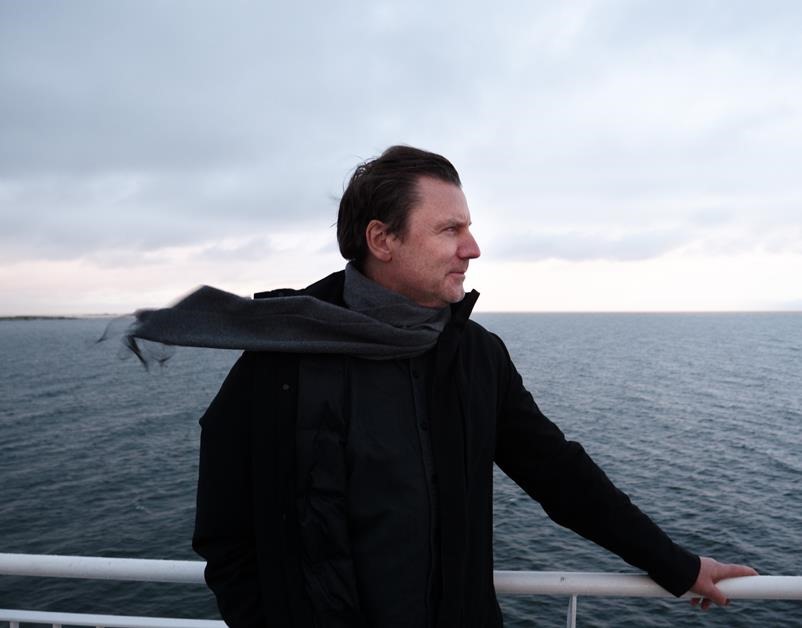
3_loscil_ferry25_nocredit-99045103cf04513c

18th April 2025

Christopher Nosnibor

Eric Quach has been making music – or perhaps more accurately sculpting sound on the fringes of music – as thisquietarmy for over twenty years, amassing a substantial body of work as a solo artist, with an expanded band lineup, and with various collaborations, the most recent being Cîme, his second with Tom Malmendier

We learn that Langue Hybride was written and arranged in less than 4 weeks during thisquietarmy’s music residency at Centre d’Expérimentation Musical (CEM) in the region of Saguenay—Lac-St-Jean, Québec.

The album consists of five longform tracks, which range from seven and a half to sixteen minutes in duration. It’s the shortest work, ‘Les Rayons Cosmiques’ which lifts the curtain the album, with droning, dolorous strings and distant, delicate percussion conjuring evocative atmospherics, coloured with both a simmering tension and an underlying sense of sadness, which, while hard to define, is palpable. Around the midpoint, that distant percussion builds to stand front and centre and a groove emergers, suddenly and unexpectedly, and the whole feel changes towards something that’s a cinematic hybrid of folk and space rock.

‘Respirer l’instabilité’ crashes into altogether darker territory, a gloomy, doomy trudge of slow, deliberate drumming and a low, grinding bass, over which discordant sonic mayhem plays out. After a lull of calm around the mid-point, a pulsating rhythm merges, and things evolve into a strolling wig-out with some strong jazz-funk leanings and already, a pattern is beginning to emerge in terms of compositional structure, in that around halfway, the trajectory shifts, and the piece ends in a completely different place from the one in which it started.

This is confirmed by the pivot which takes place around five minutes into the third track. Reminiscent of latter-day Swans, ‘Les radicaux libres’ is woozy and weird, expansive and haunting, and begins to pick up pace and volume six minutes in, building to a bursting sustained crescendo that’s both hypnotic and tense, and if ‘Organismes en aérobiose’ starts out soothing, the sound of dappled sun through leaves on a summer’s day, it transitions to a fist-waving stomper and concludes as a skyward-facing surge of sonic exultation, via the detour of a post-rock tidal wave, while fifteen-minute closer ‘Solastalgie impalpable’ rides a wave of thick riffage and strings reminiscent of the long play-out on ‘Layla’ – only this is arguably more successful, as it always felt like an epic and overlong anti-climax in the wake of that guitar-line. True to form, ‘Solastalgie impalpable’ does make a shift, tapering into some elongated swirling drones which reverberate and rattle the ribs and taunt the senses, before suddenly bursting into life with a driving rock riff by way of a climactic finale.

Langue Hybride is a wild ride, and while claims for acts producing ‘genre-defying’ works are not just tedious and predictable but usually completely spurious, there’s no neat way of categorising this schizophrenic hybrid, where each track is a work of two halves, presenting almost oppositional styles and characteristics .But this stylistic polarity makes for exciting – if challenging – listening: given that the only thing that’s predictable is that each piece will fly in a different direction at some point, there’s no way one could call this album predictable. The vision – and its execution – are superb, and with Langue Hybride, thisquietarmy offer something which is quite different, and rather special.

AA

a1481414249_10