Posts Tagged ‘Industrial’

5th February 2018

Christopher Nosnibor

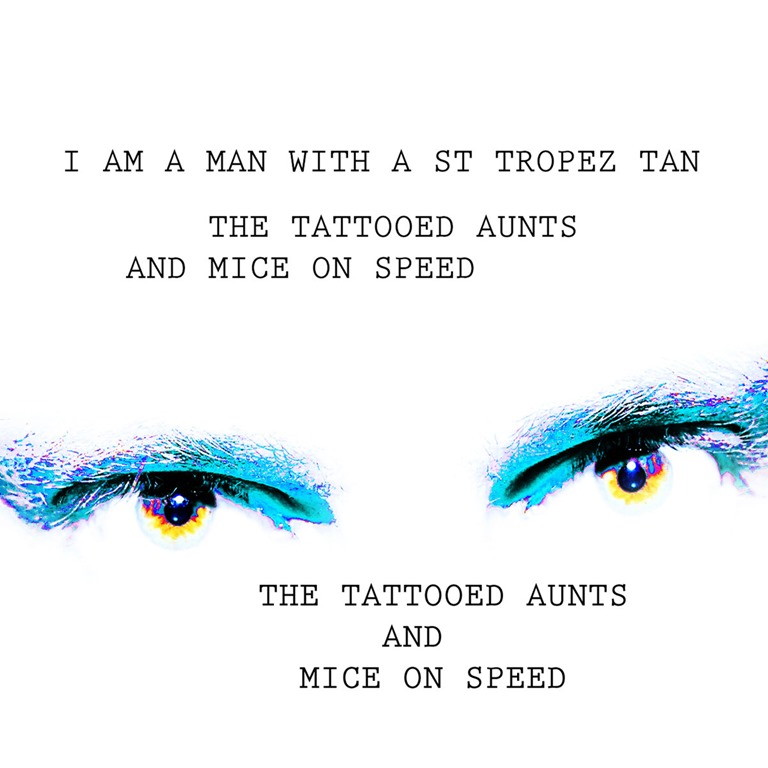
Sidestepping any comparison of the title to Chocolate Starfish And The Hot Dog Flavored Water and perhaps clocking a nod to Cinema Cinema’s Manic Children and the Slow Aggression, The Tattooed Aunts and Mice on Speed stands not only as one of the most intriguing juxtaposed item album titles I can think of, but is probaby one of the best you’ll hear all year.

It’s been some time in coming, but Rick Senley’s fourth album under the I Am A Man with a St Tropez Tan guise. He has many, including musicforvoyeurs, alongside his work as a photographer, journalist, writer, teacher, actor and guitarist in a number of bands. I Am A Man With a St Tropez Tan is – according to Senley himself – ‘the sound of aggression borne of death, mental health struggles and addiction. It’s also a project centred around one man and his Dictaphone, a magpie-like approach to lifting and combining snippets of sound to create a nasty, messy and quite abrasive collage.

The biographical context to The Tattooed Aunts and Mice on Speed is genuinely harrowing, and I shall quote without abridgement: ‘After the death of his girlfriend and an accident left Rick housebound for months he channelled his rage and despair though electronic sounds and screams – a Chemical Brother nightmare put to sleep by Apex Twin’s downers, a bed-bath by Depeche Mode with Nine Inch Nails glaring through the keyhole and The Prodigy banging on the door.’

It’s a challenging mess of splintered noise, fragmented and disjointed, with pumping technoindustrial beats and dark club-orientated grooves pounding insistently beneath it all.

The whole thing has a nightmarish quality about it. Warped vocal samples taper in the way for a juddering beat and warping bass groove on the first track, ‘Killing Seals’, and thins become only more challenging from hereon in. the second Senley seems prepared to offer an inroad, an accessible structure centred around a solid rhythm and consistent bassline, he tears it to shreds and throws it all up in the air.

Senley pitches the album with the summary ‘Bursts of Burma, Thai ladyboys, Egyptian dogs and kittiwakes from Iceland join forces in equally disturbing measure.’ It’s perhaps a slanted perspective of the actual contents of The Tattooed Aunts, but it does give some indication of the wide-ranging sourcing of material Senley has engaged in in order to formulate this near-Burroughsian cut-up collage of sound. It’s disruptive, disturbing, a soundtrack of dissonance and dislocation. And it very much captures and conveys a mood of a difficult headspace, making for an album that’s at times tough, but ultimately rewarding.

AA
I Am A Man - Tattooed Aunts

Cold Spring Records – 23rd January 2018

Christopher Nosnibor

Never mind the cat, listen to the whale! There’s a rather trippy, dubby crossover feel to the trilling new-age rhythmic bass-led groove of ‘Thee Whale’, one of the three tracks on the second disc of this two CD plus DVD extravaganza of a release, which includes the film Dead Cat, which was released in 1989, and shown only at a handful of cinemas that year, including once at the infamous Scala Cinema in London. According to the accompanying blurb, ‘it was never issued on general release and has only recently been uncovered by David Lewis (writer & director).’ This release finally presents the full film, re-authored from the original source. The film itself features unique starring roles from cult film director Derek Jarman (who also worked with TG on In the Shadow of the Sun back in 1980), Andrew Tiernan (The Pianist, 300, The Bunker, and Derek Jarman’s Edward II) and Genesis P-Orridge. The film features the music of Psychic TV, included here on CD1, in its complete form.

On the one hand, it’s classic Psychic TV. On the other, I’m reminded why I parted ways with Psychic TV and much of the industrial movement, when, post-TG, everyone seemed to disappear up their own arses, otherwise ceased making music that felt either challenging or essential. It’s not that none of the members of Throbbing Gristle made any decent music after the initial split, because they clearly did, and early PTV and Chris and Cosey releases are proof of this. But at what point is enough enough? At what point does it all become so much indulgence?

That the material here is lifted from the archive provides only so much justification or defence. There’s very much a sense that all of the early groundbreakers have been surpassed, and that the myriad artists they’ve influenced have advanced far beyond the parameters their forebears pushed to new places. And they were already pushing on in 1989. Listening now, in 2017… ‘Dead Cat’ is a gnarly mess of humping and pumping, grind and drone, a seemingly formless throb of grating dissonance, and it sits well enough as a soundtrack. As a musical piece, the short (23-minute) version which closes CD2 is preferable: the plaintive mewlings stretched across the shuddering scrapes, punctuated by obliterative detonations, are challenging to the ears, but in some respects it feels all rather predictable. Whereas Throbbing Gristle still sound dangerous and deranged, ‘Dead Cat’ sounds like a safe assimilation of the template.

‘Thee Whale’, recorded on 23rd January 1988, is the soundtrack to the film Kondole, which was never made, although if it had been, it would have been 23 minutes long. ‘Thee Shadow Creatures’, the track which sits between ‘Thee Whale’ and the short ‘Dead Cat’ is also 23 minutes in duration. It’s dank and ominous, muffled rumblings and disembodied voices buried amidst swampy echoes. And way off in the distance, low in the mix and submerged by the distorted tribal rhythms, tortured jazz horns honk their anguish into the subterranean depths. While recorded some years later than the other tracks – in 1993 – it’s arguably the most successful, not least of all by virtue of being the most menacing, sustaining its atmosphere to the end.

As a whole, it is a nice set. As unsettling and noisy dark ambient works go, it delivers precisely what you would expect. And, regardless of my opinions as to whether or not it’s essential on any level, it is, unquestionably, a valuable and intriguing archive document. And on that basis, it’s very much worthwhile as an addition to the PTV catalogue.

AAA

PTV - Kondole

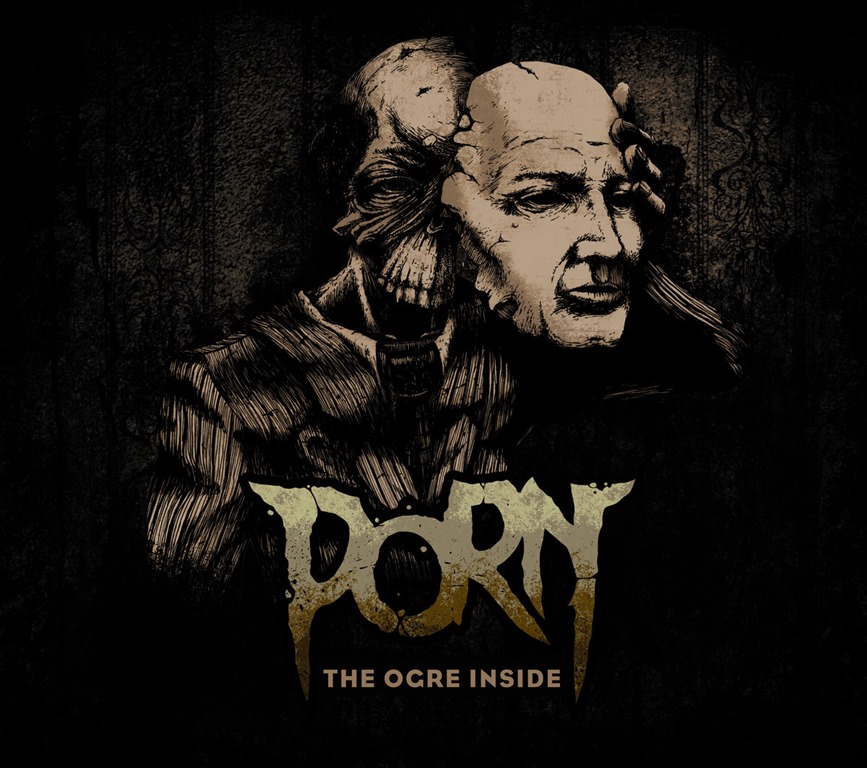
The French industrial-goth metal group Porn released their third album, The Ogre Inside, in October. The third video from it, for the slow-burning and atmospheric 9-minute title track, now appears on the same day as an EP of remixes of the song by Aura Shred, Heartlay and An Erotic End Of Times, entitled Inside the Ogre Inside.      

Band leader Philippe Deschemin explains : “The video was shot in Los Angeles in October. It follows the duality pattern that was noticeable in our previous video for ‘You Will Be The Death Of Me’, with alternating shots of two people, a male and female. The male is trapped in a sort of prison or factory cell, a small and darkened room, and condemned to work on basic machinery in a laborious routine. In an adjoining cell is the female, doomed to the same fate. The factory cells represent their lack of communication and the machines represent the routine of a relationship. We wanted to create a metaphorical version of a doomed relationship, one without soul and feelings."     

Watch the video here:

AAA

Porn Inside

Avalanche Recordings – 17th November 2017

Christopher Nosnibor

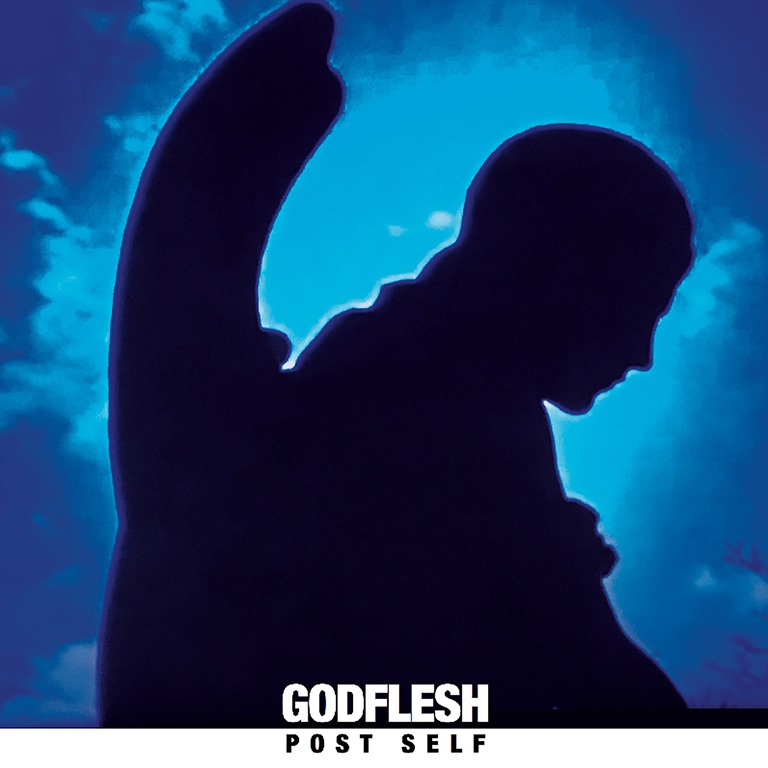
We’re used to press releases gushing with superlative verbiage, so the short statement which accompanies the second post-return Godflesh album stands out by virtue of its brevity and factuality. It simply reads: ‘Over two years in the making, Post Self explores a different side of Godflesh, taking in their formative influences to conjure something informed by late 70’s/early 80’s post-punk and industrial music. The album deals with themes of anxiety, depression, fear, mortality, and paternal/maternal relationships’.

It’s entirely fitting. Godflesh require little introduction as pioneers of stark, brutal music, paired with lyrical brevity.

We live in a post-everything world, and Justin K Broadrick has long crated music that’s post most things. His solo album, Post-Human, released under the JK Flesh moniker, saw Broadrick draw together various threads of his extant output into a ferocious sonic assault. Post Self­ manifests as a different kind of post-dissection from the solo release, and also brings a different shade of grind from A World Lit Only by Fire. Post Self is unmistakeably Godflesh, and incorporates all of the elements that make Godflesh Godflesh. Thudding, mechanical percussion, snarling bass, lead-guitar motifs built on feedback and minimal, repetitive riff structures and relentless brutality define the album. And in contrast to the certain sameness that overarched its predecessor in terms of texture and tempo, Post Self­ has all the dynamics and attack of much earlier works, as the thick sludge ‘n’ scrape pounding is replaced by space, a greater separation of top and bottom, and altogether more diverse sounds and structures – and with serious impact.

The title track is he first cut, and booming, dubby bass and mechanised percussion pound beneath squalling guitars, with murky rhythm juxtaposed with super-toppy lead. The vocals are practically impenetrable, throaty, splenetic snarls drawled out over a full bar. The relentless thud of ‘Parasite’ again explores tonal range and difference, a mangled interloping treble-edged lead threading a spindly web of pain over a bowel-churning bottom-end. ‘No Body’ has all of the vintage Godflesh tropes, with brutal digital percussion and trudging riffing dominating everything. ‘Be God’ is a sonic bulldozer, the bass grind an earthmoving shovel and scrape which yields to gentle musicality, the strum of a reverby, indie guitar into the fade before ‘The Cyclic End’ washes into dystopian shoegaze that’s more reminiscent of Jesu than Godflesh, but for the booming bass throb and creeping darkness. Combining glacial coldwave synths, mangled vocals, and a grating, trudging bass, ‘Mortality Sorrow’ is as unrelentingly stark and unforgiving as it gets.

I constantly find myself facing the question about the balance of objectivity and subjectivity. Objectively, Post Self is painful, breathtaking to the point of discomfort brutal, punishing. Of course it is: it’s a Godflesh album. But subjectively, it feels both more vital and equally more bleak than its predecessor. There’s a passion here, but the mechanical, dehumanised detachment that characterises Godflesh is equally present. Subjectively, I’ve always been drawn to Godflesh because of just how removed from human input they’re capable of sounding, forging a sound that emanates rage and despair while stripping every last sinew of humanity from the end result.

And buried and largely indecipherable as the vocals are, the themes are less conveyed by the lyrics than the delivery. The atmosphere is intense, claustrophobic, oppressive, and every inch of the album is imbued with implications of depression, anxiety, fear and self-loathing. It gnaws away cerebrally, while working away at the pit of the stomach and kneeding away at the intestines.

Post Self is Godflesh on form: nihilistic, pulverizing, and ploughing their own deep furrow of dark, furious despair. No other band can create work quite like this, and rejuvenated, reinvigorated, they continue to push the parameters.

AAA

Godflesh - Post Self

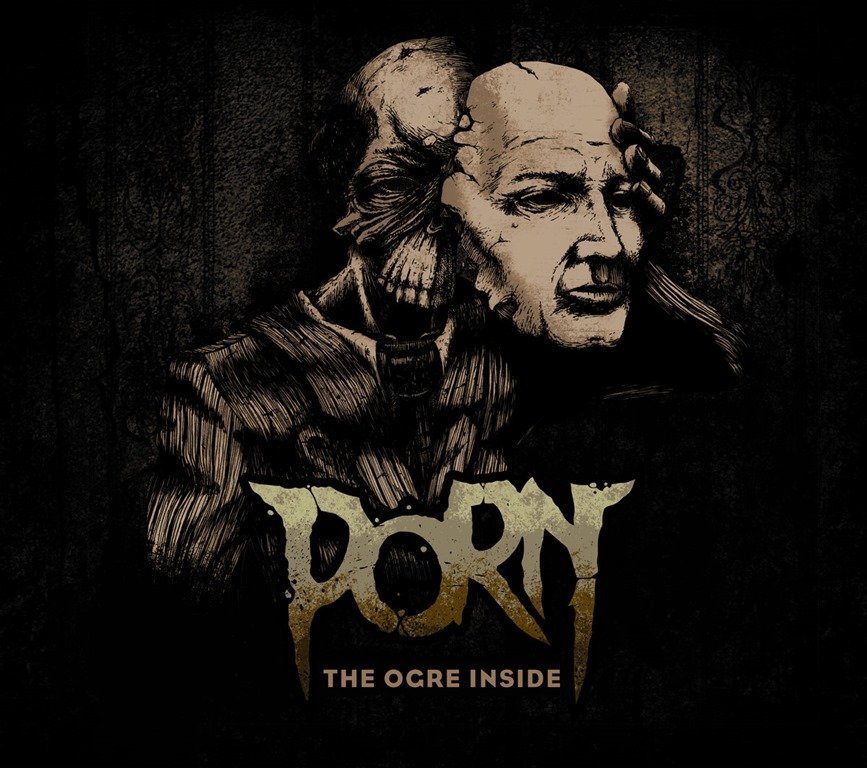
French industrial-goth metal band Porn have just released their third album, The Ogre Inside, from which the song ‘You Will Be The Death Of Me’ is taken.

Porn leader Philippe Deschemin describes the song as being about "life, death and love and the fact that love is like humans – mortal. I am obsessed by death, which I see everywhere. Everything ends, everything dies. And sometimes, maybe always, being in a relationship means to kill the previous version of yourself. You change, and in a way you die, to be reborn as another you. The new video is a metaphor for death, a ‘mise à mort’, and I wanted to place the female protagonist in the dominant position."

Do people still use ‘NSFW’ these days? If so, this meets the criteria. If you’re not at work, or work in Westminster, you can watch the video here:

AAA

Porn - Ogre

Bleak Recordings/Division Records – 22nd September 2017

Christopher Nosnibor

Black Earth is pitched as and expansion on their previous releases, and as ‘a sonic mammoth that pushes their music even further into new dimensions of heaviness, harshness and despair.’ We also learn that ‘the lyrical themes are directly related to the presence and function of men in the planet and, particularly man himself.’ Given that man has pretty much singlehandedly fucked up the planet – creating the ‘black earth’ of the title, it’s small wonder that this is a work of seething fury edged with self-loathing and guilt.

‘(No) Shelter’ hammers out an industrial metal trudge reminiscent of Godflesh and perhaps even hints at early Pitchshifter, the mechanised drum explosions slicing through a wall of low-end grind that’s countered by tripwire guitars with some attacking treble. From the relentless, rhythm-driven maelstrom, vocals howl pure blackened nihilism. It’s a punishing eight and a half minutes and a brutal way to open an album.

‘Feral Ground’ plunges deeper into doomy drone in the opening bars before a pulsating throb of battering ram percussion and churning guitars and bass blended into a thick wall of sonic clay. It’s all about the chunky chop ‘n’ thud, stuttering, stop/start riffs, the trudging grind. One can trace a lineage of brutally nihilistic music which achieves absolute catharsis by simply bludgeoning the listener with brute force, and which possesses a tangible physicality from Swans’ initial phase, through Godflesh and Pitchshifter via Earth to Sunn O))). It’s within this context that Process Of Guilt introduce elements of Neurosis’ gnarly organic enormity to the slow pounding fury of their precursors.

On ‘Servant’, the guitars shriek in tortured anguish, the notes bent out of shape into howls of feedback while the rhythm section pounds on, hard. The twelve-minute title track is a relentless succession of sledgehammer blows, tearing guitar chords and straining feedback, and provides the album with a towering centrepiece.

The fifth and final track, ‘Hoax’ is a trudging dirge of a tune, nihilistic fury distilled and dragged to around 60BPM.

Black Earth is bleak, and it’s heavy, and it feels like the end of days.

AAA

Black Earth Cover

Les Disques Rubicon – 20th October 2017

Christopher Nosnibor

This is pretty high-concept stuff. The album’s framework is based around the sci-fi Contoyen, a novel by the band’s own singer, Philippe Deschemin, and the album’s nine tracks are billed as ‘1st Circle’ through to ‘9th Circle’. Not being available in translation, the connection to the book aids my comprehension and analysis of the album not one iota. However, the bigger picture does, at least a little: eternal masters of intertext and referencing, Porn are in fact named after The Cure’s seminal 1982 album, and are influenced by early 80’s electronic noise exponents such as SPK and Esplendor Geometrico, as well as the 80s/90s dark rock lineage of Bauhaus, Fields Of The Nephilim and Type O Negative.

No two ways about it, we’re in dark, gothy territory here, and The Ogre Inside is a desolate wasteland of an album with an icy core. The album is dominated by spindly lead guitars which are backed by throbbing, tearing, juggernaut rhythm guitars and bass which throb and chug.

Chilly synths and rippling electronics provide texture and atmosphere to the opener, lead single ‘Sunset of Cruelty’, which finds a complex, interweaving lead guitar meshing its way over a thunderous metal-edged rhythm. It’s not short on force.

‘She Holds My Will’ has heavy hints of Rosetta Stone on The Tyranny of Inaction, blending industrial guitars and rhythms with swirling gothic synths and atmosphere, and successfully, landing in the space between early Nine Inch Nails and The Sisters of Mercy circa 1985.

The nine-minute ‘May be the Last Time’ is one of two behemoth compositions which dominate the album. It’s expansive, emotive, and with Deschemin’s gravelly baritone howling through the delicately poised darkness, it’s reminiscent of Fields of the Nephilim.

None of this is to suggest that The Ogre Inside is in any way derivative – more simply to frame it within the tropes of the genres from which it’s clearly emerged. Porn also display some range across the spread of the album: while it’s still centred around chorused guitars juxtaposed with chugging metallic rhythm guitar, there’s a strong hook and keen sense of melody. It’s not flimsy or overtly pop, but it is catchy and accessible and enjoyable.

The album’s penultimate track, ‘You Will be the Death of Me’, is dense, hefty and propelled by rapidfire bass pedalling, and raises things to a high level of tension before the megalithic finale, which stands in the shape of the second nine-minute colossus of a title track.

The Ogre Inside is a well-paced and highly structured album, which stands up without any need for a handle on the work on which it’s based. It’s also an album which is consistent and strong, sustaining both the quality and the rich, dark atmosphere from beginning to end – and that’s no minor achievement.

AAA

Porn - Ogre

Black Needle Noise has unveiled the new video for ‘Shiver of Want’ with Bill Leeb of Front Line Assembly and worldwide charting dreampop collective Delerium.  In the world of post-punk and industrial music, thesee are two key personalities that have consistently been putting out quality music.

Legendary artist-producer John Fryer, the mastermind behind this project, met up with Bill Leeb in Norway after a Front Line Assembly gig.  They hit it off right away and found a really good friendship in the making. While it did take over a year or so for the stars to line up, they eventually did. The new video was shot in 3 countries: Norway, Germany and the USA. 

"This track made history for me because, even though I have worked with countless artists over the years and really value the concept of collaborating, I personally had never sung on a one-off collaboration. I have said no to quite a few offers over the years. But when John approached me, it just felt right. With his background I thought we could do something interesting without having to worry that we were looking for a radio hit, but rather make it a journey into an artistic creation," says Bill Leeb.

"To me, the lyrics are like you are peering through a looking glass at your life, as if it were a third person.  You are trying to grasp its fluidity as it slips through your mind and soul, having absolutely no control of where it is truly taking you on its final journey. Somehow one tries to come to terms with this, but it never gives you a clear picture or resolves in your subliminal state or dreams.  Everyone knows it will end, but I do hope somehow a realm of consciousness will arise and we can all dream for eternity through our spirits.  Yes maybe this sounds a bit optimistic, but we need to find hope in one form or another. A shiver of want."

This new video follows up videos for ‘And Nothing Remains’ with Ana Breton (Dead Leaf Echo) and ‘Neon Noir’ with Dr. Strangefryer, which matched 80s-style synthpop with retro-fitted video colorama graphics courtesy of Alisa Akay.

Watch the video here:

AAA

John_Fryer_and_Bill_Leeb_2_-_photo_credit_Adam_Scott

Hallow Ground – September 2017

Christopher Nosnibor

Hallow Ground is one of those niche little labels that exceeds in catering to a small but devoted audience. The quality is pretty consistent, and while you know broadly what you’re going to get from anything in their catalogue, there’s nevertheless a sense of challenge with each release. And so it is with The Expanding Domain, which is pitched as showcasing the way in which the producer’s ‘fascination with ambient becomes a blank slate upon which [he] and his collaborators serve shimmering Trance-derived melodies, murky Industrial grooves and all-consuming Harsh Noise attacks.’

If it sounds like a difficult and disparate blend, it is, making for 23 intense minutes, but it works. ‘Cold Bloom’ may be brief, but moves through a succession of quite contrasting passages, from ominous ambient rumbles and analogue tweets through expansive orchestral strikes lifted straight out of 90s clubland. As such, it condenses all aspects of the album into under two and a half mind-punishing minutes.

On the one hand, it seems like a bad idea and waste of energy to become overly concerned with genre definitions and intersections. On the other, The Expanding Domain seemingly less invites and more demands that type of scrutiny.

‘Lil Puffy Coat’ – which I’m taking as a playful reference to The Orb’s ‘Little Fluffy Clouds’ amalgamates dislocated Krautronica with shades of abstract industrial to forge a sinister expanse of liquid concrete: grey, heavy, but tactile, its form transitional, not yet set firm, and therefore difficult to define.

The volume and aggression are ratcheted up on the heavily percussive attack that is ‘Fear in Reverse II’, the pounding barrage of metallic hammering reminiscent of Test Department providing the perfectly painful foil to the howling discord that screeches above it.

The title track is definitive: with Dominick Fernow (aka Prurient) and Death Grips drummer Zack Hill contributing additional percussion and Dirch Heather bringing the modular synths, it’s a perfect hybrid of delicate, semi-ambient electronica, gnarly, dark ambient that broods and churns, and throbbing industrial. The result is immersive and unsettling, an album somehow at ease with its incongruity which is melded into a perversely cogent form.

Dedekind Cut – The Expanding Domain

Christopher Nosnibor

It seems as if this release is designed to cause maximum confusion. It’s called 2014 and is being released here in 2017. It was ‘originally’ released by German label Attenuation Circuit on 8th August 2017, and has been – so far as I can make out – independently released by the artist himself, with the subtitle of Attenuation Circuit 2017. Given the album’s contents, it sort of works.

The accompanying blurb – which is in fact culled from a review published on August 12th (is this chronology messing with your orientation yet?) is a curious mix of hyperbole, unusual metaphors and theoretical reference points:

‘Gintas K will shower the ears with a whole lot of incredible data streams, all clustering electronica bits and bytes that drop down in a wild way. As if data communications had been flushed through the shower head, tumble down and ending up together in the drain. Strangely when the tap is closed and these electrodes have calmed down in their dripping ways, they actually form beautiful sounding music… well, music might not be the word for all to say, but it does feel like there is a lot of beauty to be discovered in these busy data dada streams.’

As much as the quirkily playful application of abstract digitalism does clearly it comfortably within the framework of Dadaism, it’s also a work which readily aligns itself to the postmodern, in the way that it effectively recreates the experience of information overload, and does so in a fashion which is both nostalgic and retro (the sparking circuits are more dial-up than fibre optic) and executed with a certain hint of parodic pastiche. At the pace of progress as it stands, even 2014 feels like a point of nostalgia on the cultural timeline: a year which predates the vote for Brexit and the accession to power of Donald Trump, it may be a year with little going for it and which has little to mark it as memorable, but many would likely concur that 2014 stands in a period which is better than the present.

2014 is certainly one of Gintas K’s noisier and more challenging releases. While Slow was a subtle and quite quiet, delicate work, 2014 is far more up-front and attacking in every respect. It’s also more difficult to position, in that it absolutely does not conform to simple genre categories like ‘ambient’, instead straddling vague brackets like ‘electionica’, ‘industrial’, and ‘experimental’.

Hurtling from the speakers from the get go streams a barrage of gloopy digital extranea, a glissando of chiming binaries and a dizzying digital wash that flickers and flies in all directions, an aural Brownian motion of beeps and bleeps.

The eight-minute ‘max’ starts very much as ‘min’, with a full three minute’s silence, before a brief crashing facsimile of some metallic kind of percussion makes a fleeting appearance. There are sporadic clunks and scrapes and minute glimmers of higher-end frequencies, but for the most part, the silence of space dominates the clutter of sound.

‘5 zemu ir max2’ sounds like R2D2 having a seizure, with occasional blasts of distortion and random thuds punctuating the frenzied stream of bleeps. It’s ten minutes long. And I have no idea what the title – or indeed any of the titles attached to the individual pieces – stands a s reference to, just as the overarching 2014 has no obvious connection to the seven tracks it contains.

Crackled a gloops and bloops and whiplash blasts of static, crashes like cars impacting at speed and jangling rings all congeal into a digital mush which bewilders and disrupts the temporal flow. 2014 is disorientating, and not just in the immediate moment, but in terms of a wider placement and sense of time / space.

Gintas K - 2014