Posts Tagged ‘goth’

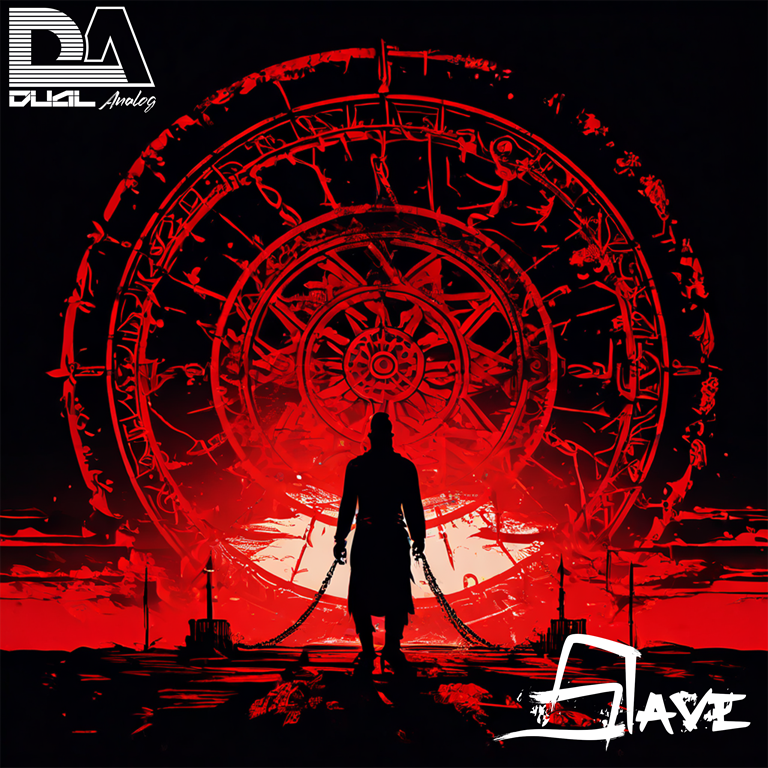
Orcus Nullify has just unveiled their highly-anticipated new full-length album, Creatures Of The Wheel.

The new LP was influenced by the current of darkness running blatantly through the United States’ politics. This has brought with it a blood red flood of gun violence, inequality and cultural warfare.

Society’s eyes are closed tightly shut as it votes in well-branded neo-fascism. This blindness is an abandonment of a government for and of its people. There is indifference and lack of respect towards our fellow man. There’s a struggle between environmental policy and greed. It’s a short, dark road we’re on.

As a taster, they’ve released a video for the track ‘No Justice’, and a song that’s brimming with early 80s UK goth vibes. Watch the video here:

AA

Orcus Nullify is mainly a solo project of Bruce Nullify. Bruce is a multi-instrumentalist that has been creating music under this name since 2012.

Bruce had his start in the mid eighties, playing bass for a  hardcore band, Birth of a New Generation (BONG). During this time, Bruce was fortunate enough to open for acts like 7 Seconds, Agnostic Front and Gang Green. He then played guitar and performed vocals for a few other local bands in Central Florida.

After almost a fifteen year hiatus from music, Bruce returns with the band name Orcus Nullify – a name that he created for a previous band back in the 90s.

Despite his youth, Bruce had been hurt, seen people hurt and hurt others deeply. He saw that lies were very powerful and evil – something to be destroyed. Orcus is a mythological Roman god, specifically, the punisher of broken oaths. Orcus Nullify is the weapon which destroys lies and takes revenge for the oppressed.

AA

9aef4e71-086b-d2ba-ca0b-1fd1287676a5

23rd November 2023

Christopher Nosnibor

Dark post punk and music of a gothy persuasion appears to be enjoying – if enjoyment is an accurate description – of late. Dark times call for dark music, and the echoes of the 80s which resonate in the presents are deep. As financial turmoil continues to bite hard – and hardest on those who struggle the most – and war rages around the world, the new state of cold war which hovers has been relegated to a mere shadow in the background, bur remains very real. Add climate change and constant surveillance, massive inflation, and a global political shift to the right to the mix, and we have the perfect cocktail for an explosion of music which channels dissent and frustration.

But what goes around comes around, and it’s a truism that if you stick with what you’re doing long enough, it will inevitably come back into fashion at some point. And so here we are presented with Do Not Switch On, the latest offering from we be echo.

Canadian Kevin Thorne has been doing what he does for a long time. As he set out in his bio, ‘I formed Third Door From The Left with Raye Coluori in 1979. I left to form we be echo in 1981, and released Ceza Evi on cassette and contributed to several compilations. I’m still recording now, some 40 plus years later. And what do you know? The world has come back around and caught up with his mode of musical output once more.

Do Not Switch On is straight in with bass that snakes and crunches: ‘Cold Rain Gun’ is dark, dank, weighty and throbs away as Thorne paints a word-portrait of a bleak and dangerous world. Depressingly, any depiction of near-future dystopias are more or less the reality in which we find ourselves.

Instrumentally, ‘At You, Because’ sounds like a cut from The Jesus and Mary Chain’s Honey’s Dead, with a driving bass and shuffling beats locking down a solid groove. The same is largely rue of the pulsating psychedelic throb of ‘Sometimes’, which calls to mind the cyclical stylings of Pink Turns Blue, only with more bass – much more bass – and more noise – much more noise.

‘Grey, Grey’ is a blistering riff-driven tune, and it’s swampy, dark, dense, with a tinge of not only psychedelia but of swampy surf. For all that, The Black Angels stand as the closest comparisons, at least on this absolute stomper, and hot on its heels, ‘Die For You’ follows the same hypnotic template, a motoric beat thudding away through various explosions of sound while Thorne croaks and croons a monotone amidst the swirling tension, and ‘Sepia’ locks into a groove that feels longer than it is, in a good way. If ‘Shallow Hallow’ leans rather heavily on Bauhaus and ‘R.U.N.’ takes a bit much from both The Black Angels and the Sisters of Mercy simultaneously, it works.

Do Not Switch On is a solid album, and that’s a fact. Most of the tracks run past the five-minute mark and drive away at a single repetitive riff for the duration. But within what may appear to be limited confines, Thorne really wrings a lot out of what is, in real terms, a minimal setup.

This stuff never ceases to excite, either live or recorded. Do Not Switch On is solid, and nags and gnaws unexpectedly.

aa

a1670967739_10

Cleopatra Records – 8th November 2023

Christopher Nosnibor

The goth crowd are an odd bunch. Like many subcultures, there’s a strong tribalism ingrained among them, and not even simply the older adherents or trad goths. There’s a perplexing contradiction here, in that a subculture born out of a broad church of outsiders should be so defensive and exclusive, even antagonistic towards those outside their club, while at the same time many are the most broad-minded and accommodating people you could encounter. I suspect the less accommodating are keen to protect their thing from people who aren’t really into it. Casuals, weekend goths, emos and metallers who misrepresent what it is to be goth… yeah, there’s a logic to not want to be tarred with the same mascara brush as some.

In my experience, some goth gigs – and I have been to many, although can’t claim to have been ‘there’ in the early 80s when it was all starting out because I simply wasn’t of an age – do seem to attract more than their share of ‘gother than thou’ posers, and while my collection is very heavy on vintage goth records (and CDs) and my wardrobe is 90% black (as Andrew Eldritch once quipped, and I paraphrase, it saves on laundry), I’ve always felt that I’m not goth enough for the weekend tribal gatherings in Whitby.

This is all to say that I get where Neon Funeral are coming from with this release. The New Jersey-based darkwave/post-punk band, are on Cleopatra Records, which has some pretty strong goth credentials. But then no doubt there will be British goths who will say that it’s an American label and the Americans don’t really ‘get’ goth and created their own strain and yadda yadda yadda.

As the blurbage explains, ‘The EP’s theme is based upon the band feeling alienated from the goth scene. The name of the EP, Banned From The Goth Club was given because of the band’s challenge in finding their audience given their contradictory sound.

The band states, “The goth audience can’t exactly get fully immersed into the music because of the aggression and intensity of the vocals and the hardcore scene can’t exactly understand the softer and dance-driven instrumentals for moshing. We once performed at a goth venue and seemed out of place and out of touch with the audience. We then coined the phrase ‘Banned From The Goth Club’ to welcome the eclectic sound and introduce it playfully.” As is to accentuate this point, the last track on the EP is a cover of Eddie Murphy’s 80s foray into music-making, ‘Party All The Time’.

‘A Void’ is probably too synthy for the traditionalists who like their guitars, trebly and drenched in chorus – but then the switch to gritty, snarling vocals are too metal for the darkwave fans. Of course, you can’t please all of the people all of the time, but what do you do when the people are ultra-picky and pedantic? In the words of Valor Kand – fuck ‘em! It’s a cracking tune, dreamy on the surface but with a heavy dash of nightmare in there. On ‘Avolition’, the heavy synths and hyperactive programmed drumming, melded to solid bass and overlaid with theatrical vocals bring all the ingredients of 90s goth as represented by the likes of Suspiria and the Nightbreed Roster (although thankfully not Every New Dead Ghost). ‘High Tech Low Life’ is short – a mere two minutes and fifty seconds – and gloomy, a droning, drifting synth that lands between Faith era Cure and New Order circa Movement, but with some roaring metal vocals, before it skips into something that’s more like The Mission on crack and fronted by Carl McCoy. All to often, hearing the popular elements of goth being jigsawed together is a bit of a yawn, but it would be way off to describe this as derivative. With its harder edge, Banned From The Goth Club isn’t going to appeal to a large portion of the crowd, particularly the trads and the purists, and it’s not one for the dreamwave, darkwave, or cybergoths either. But for anyone who isn’t set on genre limitations, and with ears, and who likes it dark and a shade gnarly, this is a winner.

AA

AA

a0967268712_10

Christopher Nosnibor

It’s a common issue for artists, even those with labels, that a release simply fails to gain traction. There are myriad reasons and multiple factors, and it’s often a combination of them which contrive to leave a release sunk like a stone, dead in the water. It’s rarely a question of quality. Even A-Ha’s ‘Take On Me’ and ‘West End Girls’ by the pet Shop Boys took more than one attempt to break through, despite major label backing at a time when labels would plough absolutely hods of cash into new artists.

Sometimes it’s simply a question of timing: some weeks and months there’s a glut of major releases or releases that otherwise grab the attention that mean some great records slip through the cracks. This month is a classic example, and it seems there are at least half a dozen truly killer releases all landing on the 10th. I can’t even listen to them all, let alone write about them.

And so it seems to have been the case when Distance H dropped debut EP Intimacy a few months ago. The single cuts released in advance of this EP grabbed my attention, not least the first, Bitch 16’, featuring Ophelia from Saigon Blue Rain. In fact, there wasn’t a weak selection among the three singles: ‘Waters of Woe’ by Distance H feat. Marita Volodina was – and remains, as I described it at the time – ‘vintage goth with a contemporary spin’ and ‘a cracking tune’.

But having failed to make a splash, Intimacy is getting a PR reboot, and it’s a good thing, because the tracks which didn’t get single releases a year ago or whenever, are just as strong, and this makes for a full and founded EP. Casting an eye back to the 80s and 90s when big bucks were doing the rounds, it was often the case that albums would depend on a strong single or two, and that those singles would stand as beacons in set of mediocre slop, or, as was often the case, indulgent turd. It’s rather harder to get away with that ‘lead single’ marketing approach now people can stream the album or hear to by other means in advance without needing to go and check out a listening booth or blag it off your mate.

But Intimacy is truly all killer. ‘Twilight’ is a big, sweeping slab of majestic melancholy, balancing cool synths and chiming guitars that lean on Disintegration era Cure and sits nicely alongside The Twilight Sad circa Nobody Wants to Be Here and Nobody Wants to Leave. It’s a song with a sadness that aches, but at the same time, there’s an ethereal majesty about it, due in no small part to the sweeping, soaring vocals. The epically multi-faceted ‘Waters of Woe’ we’ve already raved about here, but hearing it afresh in the context of the EP, it seems to gain power. The same if true of ‘Reasons to Rush’ which features Liset Alea, combining heavy goth vibes with the electric rush of 90s alternative acts like Curve.

The final track, the epic six-minute ‘Leaden Sky’ now selected to lead the reboot, again features Ophelia on vocals. It’s another gothy epic, clocking in at over six minutes, with a bulbous bass and a wash of echo-soaked guitars weaving a richly textured backdrop cut through with programmed drums which punch out a rolling rhythm. In the context of the EP, it rounds off a big journey ending as it begins, while stepping through some memorable terrain. For these collaborative cuts, Manu H has made some truly immaculate selections. Each of the vocalists brings a subtle but essential twist to the sound, and while tied tightly to the templates of his stated influences (The Cure, Joy Division, Siouxsie And The Banshees, Cocteau Twins, The Sisters of Mercy or The Chameleons), Intimacy sees Distance H emerge victorious by capturing the atmospheric aspects of his forebears without falling to cliché, and the quality of the songs seals it.

AA

a1691727151_10

Metropolis Records – 3rd November 2023 (Digital) / 17th November 2023 (CD)

Christopher Nosnibor

Ian Ross’ electro-industrial project Flesh Field emerges, quite unexpectedly, from almost two decades of dormancy, twenty years in mute, to deliver ‘A concept work with each of its ten tracks representing stages of political radicalisation and violence, Ross states in the CD booklet that “believing falsehoods because those falsehoods reinforce our preferred narratives is not harmless. Promoting falsehoods to benefit your faction is not harmless, particularly in a well-armed society. If we remain locked in our own echo chambers, inevitably there will a voice of the echo chamber that speaks in the language of mass murder, believing it justified. This album describes that tragic inevitability.”

It’s not hard to ascertain ‘why now?’ While I’ve long become weary of the endless and continuing stream of ‘lockdown projects’ emerging, it’s a fair assessment that the pandemic did change everything. Confined, pressurised, and subjected to a relentless bombardment of news media, government ‘information’ and directives, and often with only social media for company beyond the four walls of home imprisonment, people struggled to separate fact from misinformation and conspiracy, reality from fiction and imagination.

I first really noticed the echo chamber some time before, in 2016, with the Brexit referendum in June, swiftly followed by the election of Donald Trump as US president in November. Both results seemed not only implausible, but nigh on impossible. No-one I knew or spoke to supported either as far as I knew – why would anyone vote for either of these outcomes? But against a backdrop of simmering tensions and social divisions and a general melee of things being pretty fucked, these seemingly unimaginable things came to pass. I would subsequently learn that relatives had voted in favour of Brexit ‘to see what would happen’. Fucking Boomers who won’t be around to live through the worst of the fallout. And this is how it goes when you have ageing populations and a swing towards the right in uncertain times. People seek to protect their own interests rather than the greater good. It doesn’t necessarily mean that echo chambers perpetuate falsehoods, but they do most certainly create confirmation bias, foster complacency, and distort reality by creating a bubble. And now… there is no way Ross could have predicted the dark turn that would assail the Middle East just a few short weeks ago. The divisions surrounding this conflict reverberate around the globe. And we watch. And we watch. It’s simply more TV, more unreality to many.

During Flesh Field’s protracted period of inactivity, their work continues to spread, like a fungus, or to perhaps use an analogy more akin to their own spheres of reference, like a virus, numerous tracks from their catalogue were placed in the soundtracks of films including the just released The Mill, TV shows such as True Blood and video games like Project Gotham Racing. Sometimes, being away is the best promotion.

But there couldn’t be a more appropriate time for Flesh Field to return, and Voice of the Echo Chamber is a powerful document reflecting these difficult times. The opening track, ‘

Crescendo’ stars strong, with a cacophony of babbling voices, before thunderous percussion and bold orchestral strikes build big drama. Not since Red Raw and Sore by PIG have I been struck by such a grand intro to an album, and this melds driving metallic guitars, industrial-strength techno beats and seething bombast. It’s a strong cocktail and one that hits the listener right between the eyes, paving the way for a set of ten insistent tracks all driven by loping sequenced synths and thudding hefty beats pushed to the fore and pumping, pulsating hypnotically. The are choral bursts woven into the dense fabric of the compositions, as well as strings and piano and incidental noise: ‘Catalyst’ crunches in with a harsh mechanised grind which gives way to a filly cinematic string segment before the pounding beat slams in and things get dark, like an industrial reimagining of Holst’s ‘Planets’ suite. The vocals are low in the mix and low in the throat. The delivery means the lyrics aren’t always especially audible, but the sentiment and energy is relentlessly loud and clear amidst the grunt, grind, and crackle.

‘Arsenal’ goes big, a gritty anthemic chorus paired with a crunchy industrial verse that draws together elements of NIN, KMFDM, and PIG, to big, big effect, being both attacking and cinematic at the same time. There’s plenty of attack here, but equally, Voice of the Echo Chamber is big on bold, widescreen, cinematic segments. ‘Manifesto’ is a monster, with all the guitars, all the orchestral work, and a relentless beat that hits hard and heavy and it all comes together to create a big, big sound. The pounding ‘Soldier’ is really big on impact, and contrasts well with the brooding, slow-crawling ambience and piano atmospherics of the unexpectedly gentle introduction to ‘Rampage’.

There’s a certain sense of uplifting empowerment to be found in the chorus of the last track, ‘Reset’. Ewe need this glummer of optimism in the face of so much relentless bleakness and gut-crushing darkness, which ends with more crowds, more shouting. You flinch and stall, because it’s too close, too real.

In places harsh and stark despite its enormity, Voice of the Echo Chamber is a strong, relentless, unyielding blast. I feel that this is a time to sit back, let things repercuss in their own time, and step back while Ian Ross blasts distortion, vitriol, and amplifies self-loathing with brutal force. Feel it.

AAAA

a2435923100_10

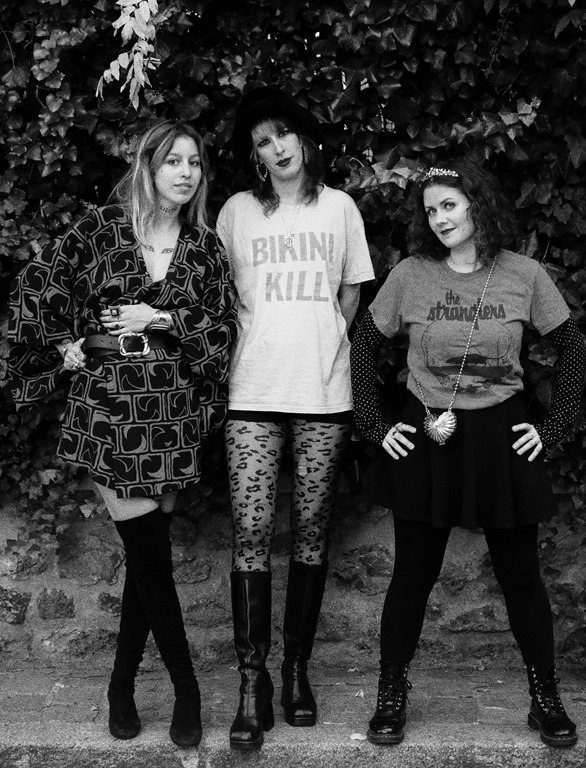
Portland post-punk alt-rockers SKY LIONS presents ‘Werewolves’, a wild offering from their debut album Inside The Circle. The duo is made up of Radio Sloan and Outer Stace, who over the years have performed with or as a part of Courtney Love’s band, Peaches’ band, Le Tigre, The Need, Time Bitch and Photona.

Sky Lions’ musical collaboration began in childhood, before they were aware of any rules. Outer Stace says, “’Werewolves’, in part, is about the idea of shifting from our outer selves to our inner selves, the fleeting peace that can bring; transformation and adaptation… So, the art direction possibilities were pretty endless. It was a lot of fun to create the different versions of ourselves that we could be.”

Watch the video here:

AA

“It’s like a metamorphic reality of death and the future. It feels like things we’ve seen,” says Radio Sloan. “Our sound is that of accepting existence for all its flaws. Sky Lions has a darkness that isn’t entirely heavy metal, post-punk or darkwave. Rather, it’s a culmination of who we have been, who we currently are, and how we interpret the world around us. Moving within that world is the core of our musical expression.”

From early days experimenting with instruments to their evolution into Sky Lions, they’ve carved a niche where innovation, music, feminism, Trans/queer identity and horror come together. Sky Lions weaves together the threads of life’s absurdity, unquestionable magic and tragedy. Their trans / queer / feminist lens adds a relatability of lives lived and times to come, creating an immersive sonic journey that challenges the mind and ears. Through genre-blurring compositions and evocative lyrics, they hope to channel their ethos into a call for transformation! They hope that their songs challenge stereotypes, and ignite conversation.

Sky Lions

7th October 2023

Christopher Nosnibor

West Midlands post-punk trio , The Glass House Museum, comprising Joe and Jon Cummings (both vocals and guitar) and Lee Meadows (programming and bass), have been releasing music since 2017, but ‘The Committee’ is their first new material since the mini-album Artifacts in 2020.

It begins with some dark atmospheric grumbling, some gloomy bell chimes and squawks, presumably the menacing cries of the vultures mentioned in the song’s chorus, and also featured on the cover art. And, naturally, the collective noun for vultures is a committee. Despite this literal referencing and representation, it’s apparent that the song’s meaning is truly somewhat rather more figurative: ‘Tread careful, stranger,’ is the caution which starts the song’s lyrics.

With the sequenced rhythm section, they hold the solid core groove tight, giving it that quintessential goth vibe.

Over the years, I’ve witnessed many detractors – and even fans – ask why bands like The Sisters of Mercy don’t get a drummer. There are numerous reasons why they don’t, won’t, and never would, but the main one is that the drum machine is a defining feature of the sound of that particular strain of post punk which came out of Leeds in the early 80s. That hard, relentless beat, paired with a bass that followed it, bam-bam-bam-bam, overlayed with guitars, edged with a metallic clang and shrouded in chorus and reverb created a perfect tension that isn’t really like anything else – and this is why it’s provided the blueprint for so many bands over the last forty years.

But to dismiss it as being ‘derivative’ would be to miss the point: this is about heritage and lineage, and also there’s a certain degree of knowingness to making references that are, in some ways, I suppose, tribal in their function. If you know, you know, and you’re one of ‘us’. And so it is that the lettering on the cover is lifted from Siousxie and the Banshees’ A Kiss in the Dreamhouse, offers another referential insight into the band’s stylistic touchstones. The devil really is in the details.

The vocals aren’t of the spiky punkier aspect of post-punk, eschewing the edgy styles of Siouxsie and Skeletal Family’s Anne-Marie Hurst and if anything, are more in the vein of Julianne Reagan in her rockier moments.

But the most significant thing here is that the ingredients are well-blended and folded in together around a decent tune with some sharp energy and a solid chorus, and none of it feels formulaic or ripped off. In short, ‘The Committee’ is in the ‘classic’ style, but with a strong identity of its own.

AA

533356

6th October 2023

Christopher Nosnibor

Lascivious is Black Angel’s fifth album, which promises the band’s ‘hybrid Gothic Rock sound and taking flavors from their 80’s predecessors while adding new tones… retaining the essential gothic elements that drive his inspiration as originally provided by the likes of Siouxsie and the Banshees, Bauhaus, The Cult & Sisters of Mercy.’

Certainly, Lascivious is steeped in the stylistic tropes of the 80s, not least of all the thick four-four bass grooves and smashing snare drum which both dominates and defines the sound. But the first thing that strikes me, as a longstanding fan of that golden era in the 80s (I was too young for the start of it all but when The Sisters and The Mission started breaking the Top 40 singles charts between 86 and 88, it was a revelation which set me on a lifelong journey) is that the ‘new tones’ very much involve contemporary production. That is to say, it’s just that much cleaner and fuller, more polished than the true ‘vintage’ sound.

Ah, but they know the features of yesteryear. It’s been a while since I’ve heard a fadeout, but that’s just what happens on the album’s first track, ‘Killer’ – and it’s not the last time on the album they employ it either.

The drum intro on ‘Black Velvet Amphetamine’ is an on-point lift of the snare sound of the Sisters’ cover of ‘Gimme Shelter’, and many of the sounds can be pinpointed as having a certain root or origin. In fact, five seconds into the title track, it’s clear that the drums are lifted from ‘Heartland’, although it also leans on the Sisters’ cover of ‘Emma’ by Hot Chocolate, and it’s clear they’ve been raiding the early Sisters back catalogue – and fair play. The Sisters achieved some incredible sounds with minimal means, with ‘Temple of Love’ marking their first step up from an eight-track ‘studio’ in the run-down northern seaside town of Bridlington.

But if the drums and guitar work make big nods to The Sisters, Corey Landis’ croon is closer to that of Wayne Hussey than the cavernous baritone of Andrew Eldritch. One of the divisions between fan-camps when Hussey and Adams went and formed The Mission – and a source of tension when Hussey began offering songs with lyrics. I write as a fan of the Mission when I say that while they work in the songs, Hussey’s lyrics are more cliché patchworks than literary masterpieces (Eldritch played with and perverted cliché and did so poetically), and one problem with bands who followed in the wake (excuse the pun) of both The Sisters and The Mission is that they’ve had a tendency to ape the lyrical substance without really adding anything creatively unique

‘She’s My Suicide’ slips into more generic rock with a gothy edge, and makes me think of the bands who emerged following the cult but had more of a hair rock leaning, reminding me why despite all my teen goth credentials, I was pretty picky but then, right at the end, they pull out a really gritty, spindly guitar break that’s magnificent, reminding me of The March Violets. And this is a fair summary of the album as a whole: some really good bits, some solid songs, but some rather weak and generic aspects which hold it back in the bracket of ‘decent’ rather than ‘awesome’.

‘Bite It’ bristles with spiky guitars and a low-slung groove, and is perhaps the first song that seems to really fit with the sleaze implied by the album’s title, and ‘Want’ also achieves this, but suffers from trying too hard to be ‘More’. It’s a fair stab at bombast, but it’s hard to compete with the Sisters, especially when they’ve got Jim Steinman on hand, plus a whole host of backing singers and a monster budget for state of the art studio time. I’m sorry I’m not more undemanding. Halfway through ‘Dirty Little Secret’, I realise its chords are based on Motörhead’s ‘Ace of Spades’, and afford myself a small chuckle.

The slower, ‘Ticking of the Clock’ is driven by a crunchy, flangy bass that’s pure early Cure, and is one of the album’s real standouts, by daring to deviate from any obvious formula, and in fairness, the title track is low-slung, sleazy, and grinds out a dark seduction with style.

Sonically, Lascivious is more than solid, and Black Angel clearly know what their doing: there’s no question they have their sound and style absolutely nailed – and consequently, with this set of solid songs, the album will go down well with existing fans and a huge chunk of the goth crowd, and deservedly so.

AA

a3733231510_10

Neurot Recordings – 13 October 2023

Christopher Nosnibor

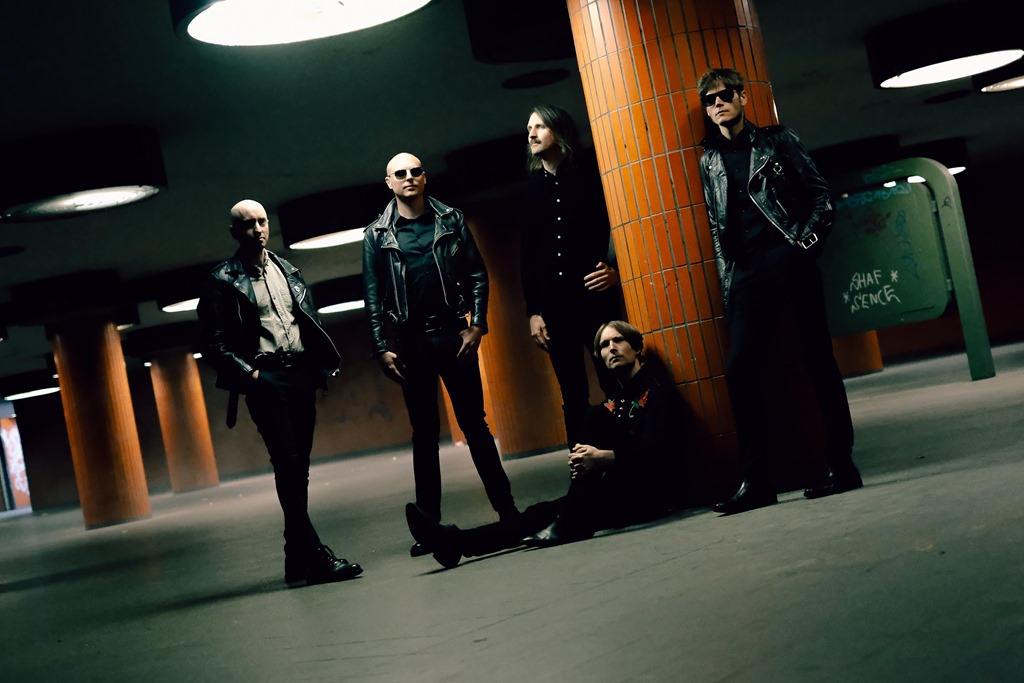
Let Them Eat Fake may be False Fed’s debut, but the members have between them a substantial catalogue of releases. The band comprises Discharge frontman Jeff Janiak, Amebix guitarist Stig C. Miller, Nausea, Ministry and Amebix drummer Roy Mayorga, and JP Parsons, and collectively, we’re told that this album sees them ‘all stepping outside their musical comfort zones to present an album of discomfort and rage in the face of reality’.

The solid, throbbing bass, glacial synth and squirming guitar that mark the album’s opening with ‘Superficial’ may come as something of a surprise given this preface: we’re deep in dark post-punk territory here, and it’s a huge shift from the hard, attacking pace of either Discharge or Ministry, as well as an immense stylistic departure. Janiak’s vocals, too, aren’t hardcore hollering, but a resonant baritone, at least unto he breaks our roaring and raging toward the end. The vibe is more UK goth circa ’86 than anything else, but this is fitting, given the many parallels between now and then. Yes, so much for progress: we’re right back to the 80s in a climate of fear and a new cold war… and not just a cold war. Instead of coming together to make some kind of effort to address the self-made catastrophe of climate crisis, we seem hell-bent on destroying one another.

‘The Tyrant Dies’ is more what you’d expect from this bunch: industrial-strength hardcore punk with a metal edge: the blasting punk fury of Discharge with the gritty heft of Ministry… but then the bridge slows things and we’re back in goth territory – well, goth as filtered through a strain of Rammstein – and the portentous refrain of ‘we will rise’ feels like a call to arms while at the same time calling on the ‘undead, undead, undead’ refrain of ‘Bela Lugosi’s Dead’: it’s time for a resurrection.

This album hits harder as it progresses: the guitars drive harder, the drums roll heavier, and goth, punk, and metal tropes melt together to forge something devastatingly intense. I haven’t heard anything that amalgamates these elements – and so successfully – since Alaric’s End of Mirrors, released in 2016 – also on Neurot.

‘The Big Sleep’ is all driving fury, hell-for-leather drums, chunky, chugging metal guitars, and high-pomp vocals echoing from the chest. Meanwhile, ‘Dreadful Necessities’ comes on like Killing Joke with its taut compressed guitar sound and driving beat. It’s dense, and probably more accurately described as steely grey than dark, since it brings a strong, melodic chorus.

The title – Let Them Eat Fake – may be light-hearted on the surface – but obviously has darker undertones in terms of its reference to class division, and that’s one of the major factors behind the album’s anger. And this is an angry album. Let Them Eat Fake is also an album that has a clear trajectory, and it builds as it progresses, becoming louder, faster, harsher, more angry with each song. By the end, it’s positively incendiary, a full-on roar of fury driven with guitars that burn. And ultimately, it makes sense as an articulation of ‘discomfort and rage in the face of reality’. We’re all feeling it. Reality is pain. Let Them Eat Fake tells is like it is.

AA

589049

‘Panic’ is the new single from DC goth rockers The Neuro Farm. The song is inspired by a childhood episode of fevered delirium, and it will be featured on their next album planned for 2024.

The Neuro Farm is a darkwave gothic rock band based in Washington DC. Combining vocal harmony with soaring violin melodies, driving rhythm guitar, and ethereal sonic textures, their music has been described as hauntingly beautiful. The Neuro Farm draws on influences such as Joy Division, Radiohead, Nine Inch Nails, Siouxsie and the Banshees, Sigur Ros, Chelsea Wolfe, Portishead, and Rammstein.

Listen here:

AA

a3842352669_10

AA

489859