Posts Tagged ‘Experimental’

Front & Follow – 22nd February 2019

Christopher Nosnibor

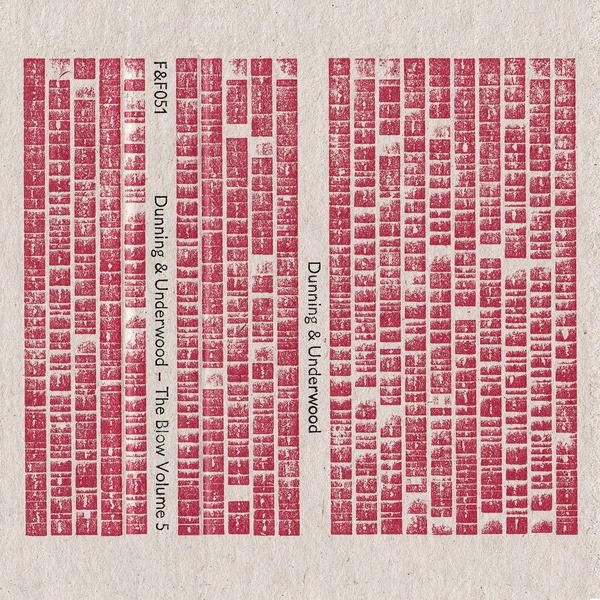
Front & Follow continue their ever-fascinating The Blow series of split / collaborative releases with an album by Dunning and Underwood, aka Graham Dunning and Sam Underwood, who’ve used this release to showcase their Mammoth Beat Organ project.

I’m mature enough to refrain from making any puerile quips about mammoth organs and instead get down to the business of reviewing an album which showcases the sound of a machine they describe as ‘a modular, mechanical music contraption, designed as a two-player, semi-autonomous musical instrument’ which ‘plays unusual, sometimes erratic compositions drawing on drone music, minimalist repetition and fairground organ techniques’.

None of this prepares me for the reality – which is, arguably, one of the strongest, and also the most far-out – releases of the series yet. I’ll focus here on the music rather than the machine – which has some kind of quirky steampunk look to its construction – because while in a live context, it’s no doubt quite a spectacle, in the medium of recorded sound, the sound is all you have to engage with. And the sound is rich in strange, unsettling atmospherics, a work that nether light nor dark but hovers uncertainly in the shadows of its own casting.

The first piece, ‘Song or Chimney Sweeps’ transitions from elongated, atonal drone to trilling fairground organ, although the notes waver and wheeze, and assonance and order are rapidly replaced by dissonance and disorder and the different notes play in different times, and what begins as something playful and lighthearted pretty soon becomes a horrible headfuck. This, of course, is a good thing. The headfuckier the better as far as I’m concerned. Clearly, this is an album that calls for more vodka. Lots more.

The peeping, parping, tooting, quavering atonality of ‘Blown Coda’ is constructed around droning not-quite chords which droop like deflating bagpipes. There’s an almost child-like naivete to the mismatched conflicts of key. The way young children have no concept of key and will simply play notes to hear a sound and will play randomly – and for protracted, torturous periods – comes to mind here. Only, these are long, slow nots that trickle and weep over erratic arrhythmia. Contrastingly, ‘Acorn Factory’ is largely percussive – or at least sounds that way. Tinny, irregular beats – the sound of something hitting the bottom of a metal bucket or something – peculiar, difficult to place in a musical context.

‘Demon’, one of the pieces that’s more overtly ‘structured’ or ‘composed’ sounds like some kind of primitive drum ‘n’ bass, with clattering, ramshackle rhythms proving the backdrop to honking horn and woozy drone, all muffled by a blanket or raw, barely-there-production.

Then there’s what anyone – even the most passionate avant-garde aficionado – would likely describe as ‘weird shit’, starting with the woozy atonal discordant mess of ‘Odd Duty’ placing the emphasis on ‘odd’ and ‘Padlocks on a Bridge’ bringing together wheezing bellows notes with off-kilter percussion.

All the vodka isn’t quite enough to make sense of this sonic derangement. It isn’t abstract, it’s just warped and wilfully perverse. And it’s little short of genius.

AA
Blow 5

Panurus Productions – 25th January 2019

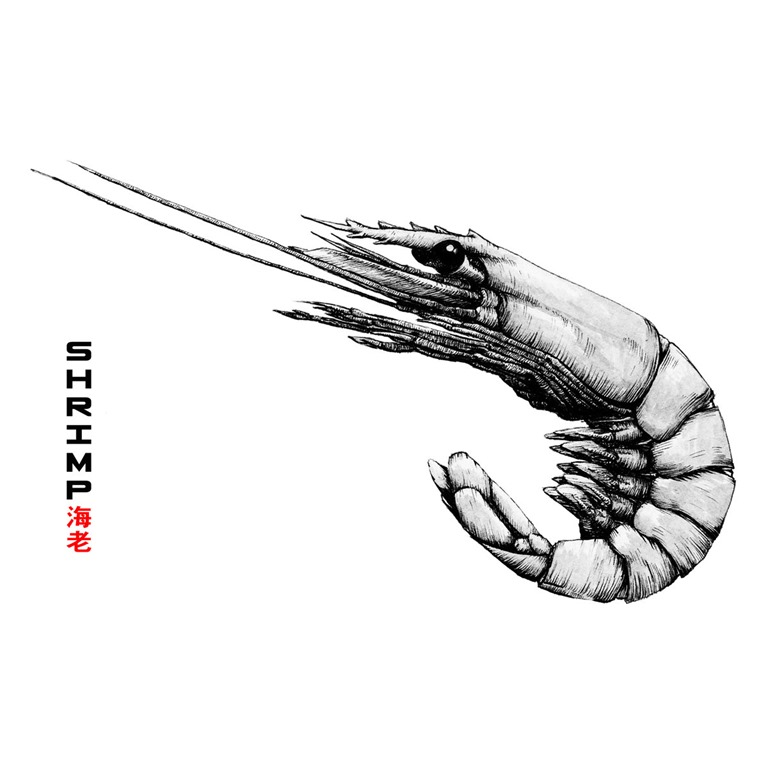
Is it a supergroup if the members of a collective all belong to acts no-one has ever heard of? Shrimp is a project which represents the coming together of Jon O’Neill (The Smokin’ Coconuts, The Shits, Skronk et al), Chris Watson (Snakes Don’t Belong in Alaska, Forest Mourning), James Watts (Plague Rider, Lovely Wife, Lump Hammer et al),Rob Woodcock (Plate Maker, Fret!) and Ryosuke Kiyasu (Sete Star Sept, Fushitsusha, Kiyasu Orchestra et al). Initially converging to perform on the bill at a Ryosuke solo show in Gateshead, this eponymous release captures the intensity of that performance in a studio setting – at least, so they claim.

Listening to this, it’s probably a claim that’s justified: it is, indeed, intense. They promise ‘a maelstrom of clanging, shrieking guitar, relentless frenetic drum savagery and inhuman vocals’, and forewarn that ‘Shrimp, in direct contrast to the weakness implied by its moniker, is the sonic equivalent of being trapped within a chitinous storm of pincers and consists of a thirty minute studio onslaught and a live recording, featuring additional electronic noise.’

Yep. It’s brutal and harsh from the outset. A cacophony of guitar feedback and whiplash explosions of extraneous noise whirl into a tempestuous frenzy around smashing percussion. The first five minutes sound like the climactic finale of something immense. And it just keeps on going from there. On and on, notes and beats and crashing cymbals flying in all directions, slowly bringing things down only to resurge and burst into a raging sonic storm once more. Deranged shrieks lie half-buried in the mix amidst all kinds of chaos that combines stoned desert rock, psychedelia and free jazz.

Twenty-two minutes in and the speakers are melting with a blistering stream of frenetic noise, formless, atonal, punishing in its complete lack of shape or musicality. After half an hour it bleeds into second piece, ‘Light as Hell’. It’s more of the same – an ear-bleeding aural tidal wave that continuously threatens to break but never does. It’s dizzying, and difficult. And yet, supergroup or not, it is definitely super, in a wild, chaotic, insane way.

Shrimp

Room40 – 5th October 2018

Christopher Nosnibor

Mass Observation by Scanner – the vehicle of the prodigiously prolific Robin Rimbaud – surfaced in 1994 as an EP. It was (in)famously sampled without credit by Björk on ‘Possibly Maybe’, resulting in a lawsuit that led to copies of Post being withdrawn and a sample-free rerelease. Sidestepping the issue of originality and ownership – specifically the notion that lifting from a sound-collage – the controversy provided Scanner with an unexpected level of coverage and arguably brought underground avant-garde experimentalism to a new audience.

Not that any of this really made any impact on Scanner’s trajectory, in terms of musical direction or career, and Rimbaud’s text which accompanies this expanded release is objective in its assessment of its form and formulation: ‘Dehumanised communications, beatless, radio signals drawn in live to tape, and accompanied by dial tone pulses and abstract textures, Mass Observation is a highly suggestive picture of a particular place in a city at a very specific time. A form of Sound Polaroid as I tended to call such recordings.’

Words seem inadequate for describing the temporal dislocation and unsettling atmospherics woven throughout the recording – an entirely different mix from the original, as Rimbaud explains: ‘Two mixes were captured directly onto DAT tape. One of which would be officially released as Ash 1.7 Mass Observation, an EP that featured a 25 min version of one of these sessions, but until today the second longer expansive mix has never been heard. Each quite different from the other.’ Presented here as a single track with a duration of 54:29, it’s a dark, disturbing sonic journey that has no obvious sense of direction.

I’ve no interest in laboriously and meticulously comparing the different versions: Mass Observation is very much a work that invites immersion in its atmosphere, and is about the overall effect rather than the minutia of detail – which in some respects is ironic, given that the overall effect is the result of the compilation of near-infinite details, overlaid and juxtaposed, recontextualised and realigned.

This versions, however, isn’t entirely beatless: a thudding trudge fades in after a couple of minutes and hammers out a dolorous funeral march while electrical currents eddy around in the ether, at times almost hesitant, pausing as the vaporous swirls twist and drift. But when it fades, it fades and is gone, washed a way in a drift of shifting found sound. Sharding scrapes of metallic treble sheer the senses with sharp, blade-like edges and simmering drones interweave hypnotically.

Ominous rumbles and snippets of dialogue, distant, reduced to a barely audible mutter-line and occasionally rent with blasts of distortion and static from the fabric of Mass Observation. Cut through the mutter line to reveal… more muttering. Silent eyes behind screens… 24/7 CCTV and phone taps. At times, all the voices, all at once, echo across one another. They slow and blur. The snippets of conversation are mundane, humdrum, banal – but this in itself adds to the effect. This is the everyday, captured, and if anything, it resonates more now than it would have almost a quarter of a century ago. Now, surveillance has reached totality, and there is no escape.

The effect of listening to the disembodied echoes and whirring electronics of Mass Observation is disorientating, and the whole album is a paranoia-inducing, disturbing wreck of sound – not because it’s uncanny, unfamiliar, strange, but because it’s so real.

AA


Scanner – Mass Observation

Midira Records – MD044 – 23rd November 2018

Christopher Nosnibor

N + [ B O L T ] aren’t the most imaginative when it comes to naming their albums: this, their third collaboration, is, like the two which preceded it, is without title. But then, they’re in the company of The Bronx and Peter Gabriel, and the lack of titles on whose first four solo albums didn’t exactly damage his career. As is often the case with untitled albums, which come to be identified by the prominent features of their cover art, so “die Krähe (the crow)” follows the albums known as “der Hase (the rabbit)” and “das Hörnchen (the squirrel)”.

Since recording the album, [ B O L T ] have expanded to a four-piece featuring two bass players and a drummer, but this captures them still sparse, taut, minimal, and the accompanying text sets the scene: ‘Imagine an industrial area, with big smokestacks and metal architecture, mostly quiet and sometimes interrupted by machine noises and from somewhere you hear the sound of N + [ B O L T ] coming through the walls. This is what you see and hear around the studio in Duisburg (Germany), where the band recorded the album’.

While the album is by no means determined specifically by the environment in which it was produced, said environment is nevertheless a factor, an integral part of the backdrop to its formulation. And so emerges a sound described by the band as ‘black drone’.

It seems a fair description. It’s dark, gnarly, and droney after all. I’ve been around a while and this crushing, low-tempo, low-octave, percussion-free sludge-drone sounds very much like a refined retake of Earth 2. A1 bleeds into the heavy grind of A2, a gritty, cyclical stop/start bass trudge. It never stops: it’s hypnotic, all-immersive. And it’s all about the trudging bass. It’s the album’s defining feature, and if anything, it becomes more prominent, more dominant, as the four pieces progress. Progress is a relative term: it doesn’t go anywhere: it doesn’t need to and isn’t designed to. Its purpose is to trudge, while guitar feedback wraps around like… like… twisting vines, serpentine, wisps of mist.

Time slows and weight evolves over the course of the four pieces: B1 stretches its funereality over some ten minutes, the guitars only bursting in around a third of the way through. It wells to a mesh of pulverising, overdriven noise ad leaves the listener hollowed, drained. It all heads slowly and incrementally down towards the plodding grind of ‘B2’: an epoch passes between each below-the-earth bass note, while guitar feedback strains all around. The final piece stretches out over almost fourteen minutes, and begins with the lowest, lowest of bass grinds amidst a swirl of layered feedback. And it goes on: an eternity passes as a simple double-strike of the same note, so low as to register below the range of cognisance, instead nudging at the spectrum marked ‘subconscious’. And it’s as we slide into this area that the impact of this wordless exercise on weight really registers its impact.

It’s music beyond words, music beyond music. The richness and density, paired with the almost indistinguishable, melted tempo of droning sound without rhythm has an effect that resonates on an almost biological level.

AA

N46

Christopher Nosnibor

I was forewarned. The note which accompanied the debut releases – yes, plural – three separate CDs released simultaneously – but experimental collective kröter – strongly recommended that listening was not (yes, underlined) to be attempted with a clear head. The note’s sender, one Mr Vast, began with an apology. ‘I’m really sorry to do this to you…’ he wrote. I don’t believe him. He knows I like weird, fucked-up shit. Although with this sprawling three-album effort, I can’t help but wonder If he’s testing me. If I struggle, how will anyone else handle this work of ambition beyond sanity?

Things get off to a good start, with a picked guitar, notes bent, weaving a soft melancholy. I suddenly jolt and look around: it sounds like my cats in pain in the next room. No, wait, it’s just the CD. That’s some crazy woodtrumpet noise. ‘Is that the cat?’ my wife calls from the next room. ‘No, it’s just the CD,’ I reply. ‘Thank goodness, it sounded like the cat was really ill.’ Seconds later, my daughter’s at my elbow asking if it’s the cat she can hear in my office. I explain it’s the CD, and she declares that she loves it. We’re less than two minutes in, not even one full track of twenty-seven played, and already these Kröter buggers are causing mayhem and breaking my flow.

The sparse, bass-led spoken-word sleaze of ‘Sebastian’ seems positively commercial by comparison, despite being, in real terms, claustrophobic and vaguely disturbing, the monotone narrative bordering on the psychotic. And the rest of the album is just as weird. All the shades of weird, from dislocated spoken word colliding with off-kilter electro-funk to minimal electro-pop that sounds like it’s melting as beats misfire in all directions and loops stutter and fracture like some kind of sonic seizure, with the lyrics veering from the surreal to the ultra-mundane by the verse.

Wibbly-wobbly weirdness abounds, shuddering, juddering analogue synthiness and all sorts of inexplicable dominate pieces that range from interludes of less than a minute in duration to expansive workouts. On *b, ‘Dogsick’ is a seven-minute spoken-word piece that delivers graphic details about the varying shades of the globules of canine vomit, mutating along the way to find Mr Vast come on like Peter Murphy against a backdrop of whacked-out trumpet action.

There’s wonky, fucked-up funk disco on the menu, too, alongside the 10-minute ultra-sparse blues exploration of ‘Tricky Task’ that goes kinda Pavement, kinda huh? as it progresses. It’s impossible to separate the wheat from the chaff, the killer from the filler: this is simply an exercise on experimentalism, and you’ll like it or lump it and maybe like some or lump the rest, or, meh, who cares?

By disc three, my brain’s beyond bent: my daughter’s hassling for more songs that sound like that cat and I’m being battered with tunes from her new Pomsie, which are like cat disco and explaining that there probably isn’t another song on the planet like it isn’t being well-received, which is troublesome, especially as kröter do have some net tunes half-buried in the big mess of weird shit. Then again, ‘Telephone Rag’ starts out quite nicely, but rapidly descends into screaming madness, and ‘Opera Lift’ is all over, a nasally-delivered narrative carried by a slow-building post-rock / krautrock crossover with swelling choral backing vocals. I mean, how do you rationally process this? There is no rationality to the yelping dog loop freakiness of ‘Asumasite Huip’, or the Doors-meets-The-Fall plod of ‘Flageolet Beans’, or, indeed, any of this. And then tings go kinda strangely Bowie on the last track, ‘Awful Light’, which is arguably the best track on the entire set.

Kröter are the epitome, the encapsulation, the embodiment, the definition of niche. They’re the archetype of a band making music for their own entertainment. These three discs – which purport to contain ‘excepts’ from their sessions in Berlin in 2017 – may represent the best of their improvisations, or only a flavour, but nevertheless leave the question ‘just how much material did they get down?’ The questions unasked, perhaps ‘how much more are the likely to release?’ and ‘how much more do we need?’ The truth is, the world is always a better place for artists unconstrained by convention: it doesn’t matter whether or not you, or I, or anyone, like them – it’s about choice. It’s about expression. And commercial success is no measure of artistic merit. And if the artistic merit of the individual pieces on this insanely ambitious, sprawling effort varies immensely, it doesn’t actually matter, because the merit is in the scope, the ambition, and the fact it exists. They may have utterly screwed my brain, but the world is better for the fucked-up weirdness of kröter.

AA

AA

Monika Entreprise – monika93 – 7th December 2018

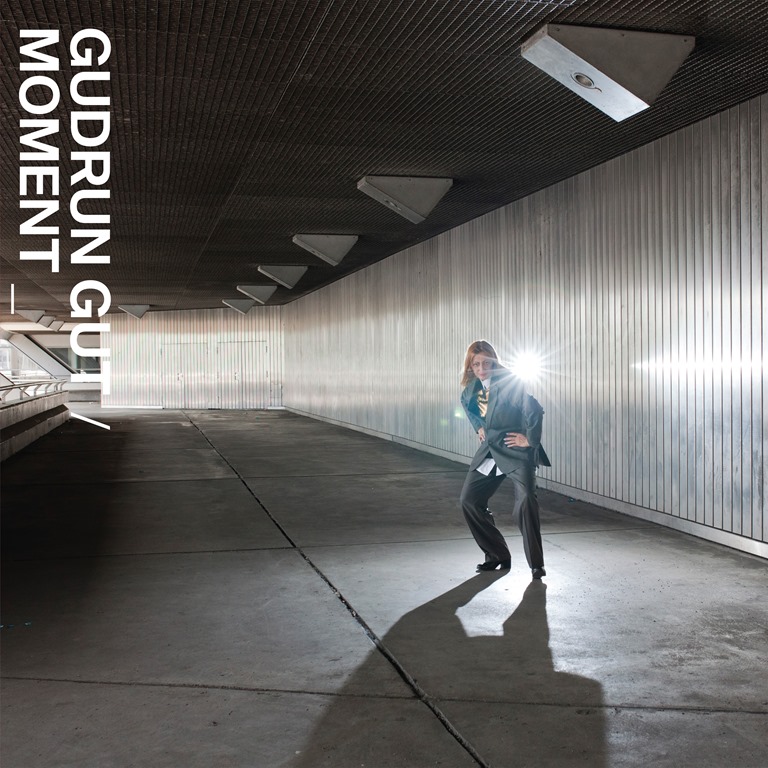
Although active on the German music scene since the late 70s, it wasn’t until 2007 that Gudrun Gut released her first solo album. She’s maintained a steady output over the last decade, while also operating labels Monika Enterprise and Moabit Musik. And while very much married to the field of electronic music, one could never describe her work as predictable or standard, and Moment is no exception. Describing it not as an album, or even a collection of songs, but a ‘statement’, she promises a work which is ‘stark, somber, sultry, and clever, [on which] the sides slide between ballad and lament, synth-pop and spoken word, anthemic and abstract.

From the opening motoric beat and throbbing electronica of ‘Startup Loch’, over which Gudrun Gut lays monotone robotic vocals, Moment presents a sparse retro electro style. Heavy repetition and monotony are the defining features of the album’s fourteen tracks which thud away, on and on. ‘Lover’ is exemplary, grinding out a single looped pulse over a square 4/4 beat bereft of fills for over five minutes, while the cover of Bowie’s ‘Boys Keep Swinging’ is an object lesson in cold clinicality, stripping out the flamboyance – and tune – on the original, and replacing both with a discordant drone.

As much DAF as Kraftwerk, it’s every inch German-built in its fabric. The atmosphere is one of detachment and sterility, but in that clipped early 80s style that makes optimal use of reverb and precise production. There’s something about that stripped-back analogue synthiness paired with mechanoid percussion that’s more chilling and glacial than contemporary digital production can muster. And by these means, Gudrun Gut gives a lesson in distancing, in detachment, in music that segregates the cerebral from the soul.

The experimentalism becomes more pronounced as the album progresses. ‘Biste schon weg’ pulls apart structure and stretches at the edges of linear time to warp some woozy bass and glitchy, clattering beats which slowly collapse from rhythm to deconstruct the very components of composition, presenting an exploded view of music-making. Gradually, the forms become increasingly indistinct, more fragmented, more abstract, delineated and disconnected. Cohesion crumbles to slow-drifting sonic separation as delineation and decay define the evermore nebulous forms.

Moment is not as the title suggests, a single moment, but a succession of moments which blur into one another. Collectively, the pieces create a unique listening space in which time folds in on itself and stretches, bending, in all directions. A moment to get lost in.

Neue Moment M93 LP Out.indd

Forking Paths – FP0015 – 5th October 2018

Christopher Nosnibor

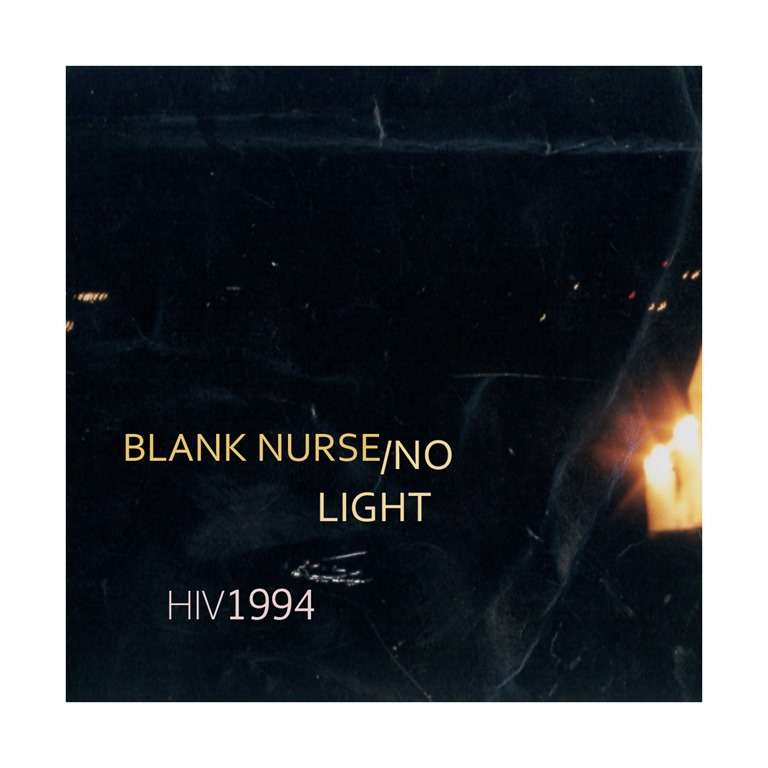
The title has very personal origins for Evan Davies, the man who records under the Blank Nurse / No Light moniker. A sufferer of Pure OCD – a form of OCD which manifests with no external behaviours or rituals, with the compulsions being mental rather than physical – and depression, Davies spent his teenage years tormented by the fear of HIV infection.

HIV 1994 sees Davies confront and channel the experience creatively, using what the press release describes as ‘often-overwhelming mental health issues’ to create song which are ‘like exorcisms for emotions and memories’. The context suggests that this was never going to be an ‘easy’ album, and however deftly Davies combines his wide-ranging and, in the face of it, incongruous and incompatible influences, which span ambient and neoclassical, hardcore, black metal, noise, and house, the clashing contrasts would be awkward enough without the anguish behind the compositions themselves. And so it is that on HIV 1994, Blank Nurse / No Light hauls the listener through an intense personal hell.

‘Blood Fiction’ begins with a collage of voices and extraneous noise before lilting string glissandos and a soft bass steer toward a calmer, more structured path. It provides a recurring motif, but one frequently interrupted by passing traffic and low rumbling noises. And so gentle tranquillity and ruptures of disquiet are crunched into one another before ‘Mocking of the Ghost of Crybaby Cobain’ really ratchets up the intensity with unsettling collision of styles, with pounding industrial percussion and expansive electronica that’s almost dancey providing the backdrop to the most brutal screaming vocals. It actually sounds like an exorcism. Or Prurient with more beats.

And it only gets darker, more disturbed and more disturbing from here: the lyrics are unintelligible, guttural screams of pure pain, and the tunes mangled to fuck, glitchy, twitchy anti-rhythms hammer around behind quite mellow synth washes. ‘Flu Breather’ sounds more like a demon dying of plague in a nightclub conjured in a nightmare, or, perhaps more credibly, the outpouring of indescribable, soul-shredding anguish that cannot be articulated in any coherent fashion.

There are some straight-ahead, accessible moments amidst the cacophonous chaos: ‘Outside the Clinic is a Hungry Black Void of Nothingness’ is a brooding electro-pop piece with a real groove and a narrative of sorts, and calls to minds Xiu Xiu, while ‘No Ecstasy’ goes all Wax Trax!, coming on like late 80s Revolting Cocks . But these tracks are very much the exception, as the majority of the others twist, turn, break and collapse in on themselves. Redemption and light are crushed and swept way in a succession of disconnections and claustrophobic dead-ends. It’s deeply uncomfortable from beginning to end, and much of it sounds like opposing sonic forces at war – which probably makes this a successful work, providing a deep insight into the tortured mind of the artist.

AA

Blank Nurse

Panurus Productions – 19th November 2018

Christopher Nosnibor

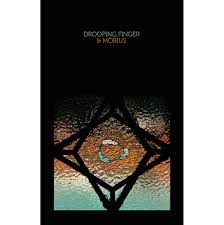
What have we got there, then? It would appear to be a collaborative release from Drooping Finger and Möbius, utilising the former’s lo-fi minimal electronic drone as a setting for the latter’s looped wordless vocal textures.

I must admit that I’m unfamiliar with ‘Newcastle gloomlord’ Drooping Finger, but ‘melancholic vocal duo’ Möbius I am aware of. Their first collaborative work, imaginatively titled Drooping Finger & Möbius is pitched as combining their talents, and consists of their set at The Gosforth Hotel’s Sumner Suite and material recorded during a session at First Avenue Studios in Heaton.

And what does is give us? The BandCamp write-up tells us that ‘Guttural gurgles are embedded in glacial electronics whilst siren songs tumble overhead. The tones hover above the murk at times whilst disappearing into its eddies at others as the collaborative trio draw you into their bleak atmospherics’. And all of it’s true. Although mostly it’s the murk that dominates, with sounds and tonal ranges all but buried beneath a sonic smog.

The live side, (at least corresponding with the cassette release) containing one track simply entitled ‘Sumer Suite’ is first, and is 26 minutes of dark ambient rumblings and janglings and mid-range drones, punctuated at first by stuttering, echoic beats, a shifting soundscape of disquiet. Ominous hums and swells of distant thunder provide the backdrop to disembodied, angelic voices low in the mix and veering between euphoric grace and the anguish of entrapment. Sonorous low-end booms out like a warning signal and cuts through the rising cacophony. But this is not a linear composition, there is no obvious trajectory: instead, the objective is the creation of atmosphere, and while it does naturally ebb and flow, peak and trough, the sustenance of tension is the priority here. Amidst slow crashes and waves of darkness emerge… nothing but nerve-tingling tensions, and even as the piece faded to silence, its hard to settle completely.

The studio side – again, consisting of a single track called ‘Stung’ which spans a full half an hour – provides more of the same, and with similar sonic fidelity at least on my speakers. Heaving drones like distant passing motorcycles drift in and out of range. Ghostly voices drift around nerve-chewing mid-range drones that shimmer and churn like foam on sand. On and on. Again, it doesn’t go anywhere, but that it’s the intention: it funnels and eddies to immersive effect. The tension builds not by any increments within the music, but by accumulation.

It’s a lights off, candle lit, eyes closed type of album, whereby there are no dominant features, and barely any features at all. In context, features are surplus to requirement: Drooping Finger & Möbius makes its presence known subtly, indirectly, creeping under the skin and weaving its dark magic subliminally.

AA

Drooping Finger   Mobius

1st October 2018

Christopher Nosnibor

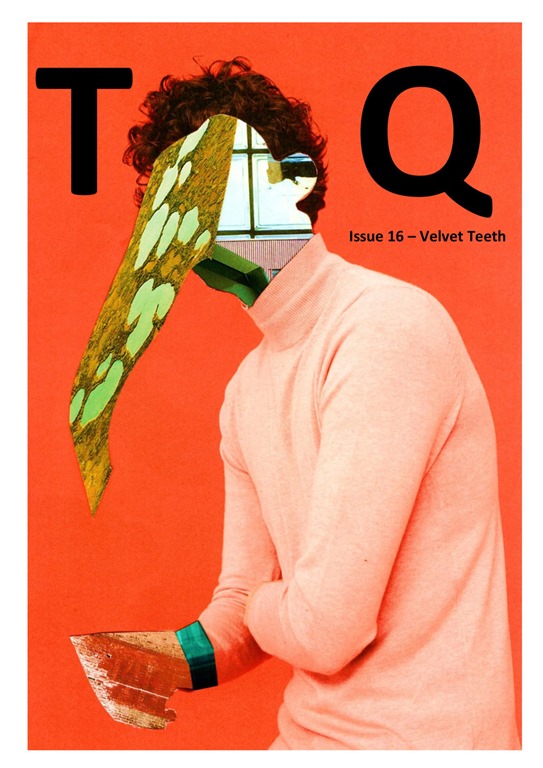
Velvet Teeth was originally released as a 200 only limited-edition CD through the October issue of TQ Magazine, which is the kind of publication that gives coverage to the likes of Ceramic Hobs and Drooping Finger – not so much competition for Aural Aggravation, but a channel with a shared goal of giving coverage to the kind of acts most won’t, assuming they’ve even heard of any of the artists. The funny thing about niche music is that it has a fairly hardcore set of devotees, and there’s a kind of disparate, disconnected community that’s less of a scene and more of a rhizome-like underground network. And while a lot of fairly niche stuff may still only have a potential market of around 200, it’s often amazing just how many oddballs there are hiding in the cracks demanding the work of some bands that on the surface seem so obscure that even their mates haven’t heard of them. Chlorine – the musical vehicle of Graeme Hopper – certainly has that wider appeal, and moreover, most certainly deserves wider exposure and the opportunity of a larger audience.

Velvet Teeth is experimental in the most explicit sense, a sequence of fragmentary sonic collages. The longer pieces roam around murky depths with ominous fear chords obscured by laced shrouds of sonic fog. ‘Manlines’, with its down-tuned, sinister vocals and groaning, droning dissonance, and ‘The Scenic Route’ exploit dimetric tonalities and the prominent separation of frequency ranges, with rumbling, almost subliminal low-end providing a base for niggling treble. The six-minute ‘Low Hauxley Tide’ pushes further on the resonant low-end pulsations, a low, tidal throb providing the main body of the piece. It’s kinda mellow, but kinda shiversome, too. There’s a creeping fog of darkness that pervades both the piece, and the work as a whole, which creates a certain sense of separation. It’s simultaneously immersive and engaging, but there’s a feeling that you’re not quite in the same room and there’s a force-field preventing entry.

‘Who Pays for This’ is a spine-tingling mess of scrapes and jangles, muffled, slowed speech that’s just on the cusp of indecipherability, and elsewhere, ‘Bubbewraps’ is woozy, wibbly, vaguely disorientating. The album as a whole is built on a loose, drifting fluidity, with compositions that aren’t so much compositions as sonic coalescences which occur as much by chance as design.

Uncomfortable, awkward, unsettling… these are the positive qualities of the oddity that is Velvet Teeth.

AA

Chlorine - Velvet

Christopher Nosnibor

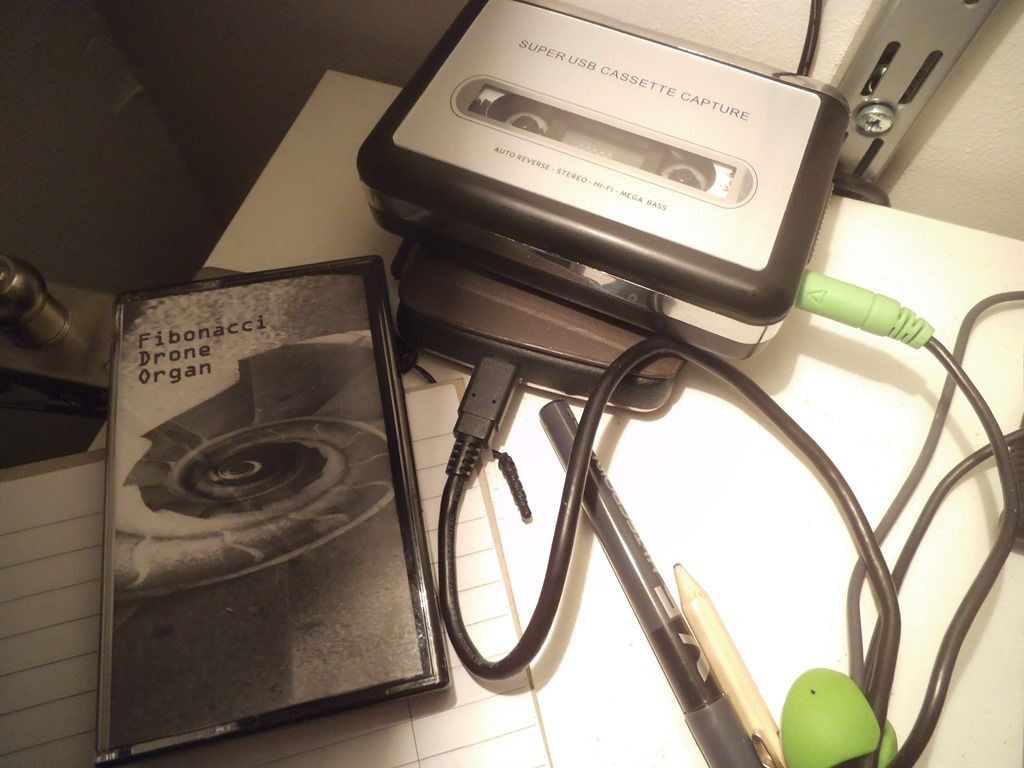
Fibonacci Drone Organ: three random words spliced together, unshackled from the constraints of context to allow free association to determine interpretation? Or a descriptive indication of what Dave Procter’s second- or t(h)ird-latest (this month saw the debut of HUNDBAJS, which is Swedish for dogshit, the absolute latest) of his myriad projects which include the Wharf Street Galaxy Band and Legion of Swine? The cassette release contains precisely no information whatsoever, even down to a track listing, but a spot of digging reveals that it’s the latter – which should come as no surprise, given that the man behind FDO curated a ‘10 Hours of Drone’ event a while back. The album contains two pieces, each occupying a side of the tape, and they’re formed around droning organ notes. Long, long droning organ notes.

And my (rather limited but suitably fruitful) research uncovered that FDO ‘uses the Fibonacci Series as part of the compositional process,’ that ‘the notes are chosen via dice rolls and coin tosses,’ and that ‘the durations of the notes are chosen by the Fibonacci Series. Notes are added at the appropriate time.’

From this, I infer that in technical / theoretical terms, FDO compositions emerge from an intersection of John Cage-inspired randomness and the mathematical precision of Fibonacci. What this actually means, ‘m not entirely sure, and thankfully, the technical aspects don’t impinge too heavily on the output from a listening perspective. Ultimately, it’s all drones. And on this outing the ‘appropriate’ time for adding noes is seemingly after an eternity.

This means that across the tape’s duration, not a lot happens. Notes may be added, but at such distance that the layers build so gradually that the pieces are over before much depth, resonance or layering has occurred. This is all testament to Procter’s unswervingly uncompromising approach to music-making, and encapsulates the reasons I personally hold him in such high regard (and it’s fair to say that if there’s one person I’ve worked with who’s intuitively understood my vision for creating spoken word with the most hellishly mangled noise, it’s Dave who’s been behind the majority of my best and most exhilarating collaborative live work). With more projects, pseudonyms and releases to his credit than seems humanly possible, he’s practically a one-man underground scene in his own right. Look up ‘northern avant-garde’, and you’ll likely find a picture of Dave Procter – or a bloke in a lab coat sporting a pig’s head or something.

Procter gets art, and is an artist, but doesn’t espouse the pretentious trappings of being an ‘artist’ (or, worse still, an ‘artiste’). Which means he can not only get away with releasing a tape containing 40 minutes of theory-backed drone without appearing a tit, but delivers some of the most brilliantly self-aware electronic drone you’re likely to find.

Side two (not that the sides are marked) brings a quavering decay to the elongated drones – which hover toward the higher frequencies – by way of contrast to the strong, stable drones of side one. The effect is cumulative and ultimately soporific, and it’s definitely the music and not the beer as I listen to the spindles rotate on my tape deck and the notes drift from the speakers. Sometimes, there’s no shame in sleep.

DSCF6863

AA