Posts Tagged ‘Experimental’

Nova Alternativa – 16th April 2021

Christopher Nosnibor

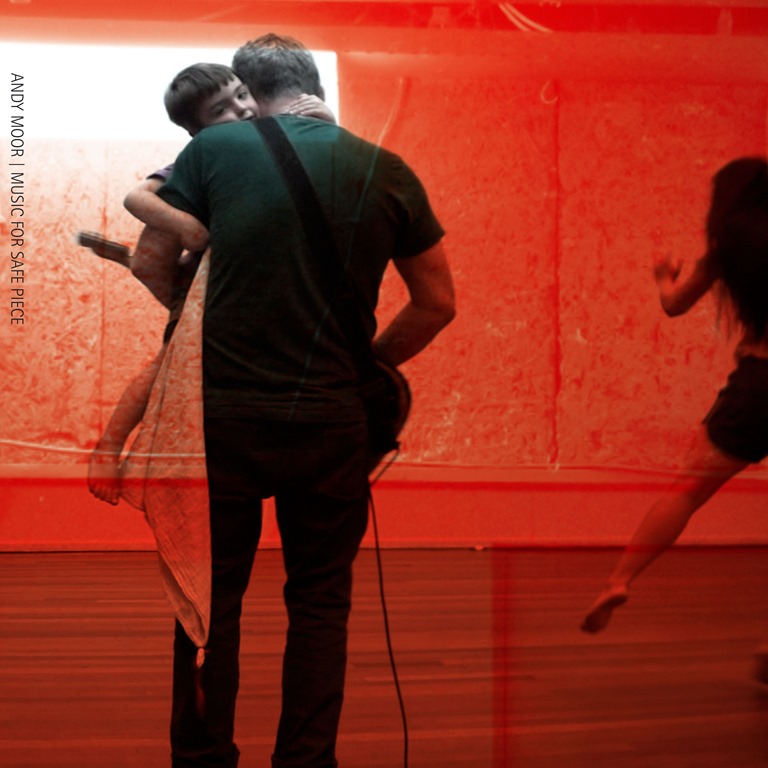
The two Ks are Gintas K & Jan Kruml, and Environmental Framework is a collaborative work, whereby, as the liner notes outline, Jan worked with the historically first and last track that Gintas published. Gintas reworked tracks from Jan’s (Instinct Primal) live set from January 2021.

But rather than simply rendering this as an album of two sides, which would be perhaps the obvious approach, but instead, the seven tracks are sequenced with A1-A2-A4-B1 composed by JK, remixed by GK, and A3-B2-B3 composed by GK, remixed by JK.

Bring unfamiliar with Jan Kruml’s work, and having not heard the live set in question, it’s difficult to judge just how radically Gintas K has reworked the pieces here, but the remixes 1 and 3 of ‘Myths’, with their combined running time of ten minutes are sparse, spacious, and unsettling, as an elongated droning drift hangs, conjuring n eerie atmosphere. Incidental echoes and flickers, barely-present crackles of static rise and fall, fading in and out of the mist almost subliminally, but growing thicker and denser and more layered over time in the first, before transitioning into the explosive digital sloshing that is something of a signature for Gintas K. If this raises the question of the extent to which a remix can become more the work of the remixer than the original artist, here it’s worth commenting that it does work well, and places a complimentary light on Kruml’s sounds, and the way in which Jan approaches the ‘Noisebient RMX’ of ‘Phono’ very much returns the favour as it presents a clamorous babbling microtonal rush against a broad sweep backdrop.

The first remix of ‘Entering the Cave’ (which is in fact Remix 4) is hectic, a busy bubbling rush of sound that recreates that vintage analogue froth, only on a cocktail of steroids and speeds – amped-up and foaming away at a blizzard’s pace. Remix 1, which immediately follows, is altogether more low-key, shadowy, manifesting as a rumbling, grumbling ominous ambience. It’s dank, dark, and very much does evoke the scene of the title.

As the liner notes point out, ‘they never met in person, but sonically it’s like if they knew each other for decades’ – and certainly, there is a keen sense of intuition displayed here, as the two artists seemingly become interchangeable in their works.

It’s drone that defines Kruml’s remix of ‘Almost the End’, which is, fittingly, the penultimate track, before he revisits the ‘Noisebient’ theme for the epic span of the album’s bookending ‘Invite Round For A Cup Of Tea’, which strains and clamours and whirs in a flurry of granular tonality for over ten minutes. If it’s familiar territory for Gintas K, it equally highlights how at ease Jan Kruml is with this type of electronica, and despite its segregated origins, the remixing process has given the material a sense of unity that renders Environmental Framework a remarkably cohesive work that actually feels like ‘an album’ rather than a bunch of remixes. A true artistic triumph.

AA

cover

25th April 2021

Christopher Nosnibor

While real gigs still aren’t possible, nim_brut are keeping the fringe noise community together with their ‘FEAST’ streams – and it’s an appropriate moniker, as they offer a veritable smorgasbord of experimental, noisy, and weird shit that fans of this disparate (anti)scene can fill their boots with at one of these events – eclectic, engaging, and inclusive, with something for everyone (as long as they’re into this kind of niche). Admittedly, the lineup was predominantly white and male, but that’s by no means an issue unique to experimental / electronics / noise, and the chat that ran alongside the stream was both welcoming, supportive, and encouraging for all comers. And in terms of replicating the live experience, it’s pretty good: something obscure provides a backdrop as people arrive and there are greetings in the chat, much like turning up at a similar show in person: a fair few people know one another from the circuit, and it’s relaxed and accommodating. In real life, these are some of the places I feel happiest: there’s no pressure as such, and people are accepting and accommodating of others not feeling particularly sociable, and the shared appreciation of diverse and indigestible music is simply accepted as enough.

So we’re here, and it feels comfortable.

The gig poster is replaced by footage of a lot of knobs and wires… a lot of panning and close-ups of this complex kit accompany drippling, blipping, bleeps and whistles, trickling, babbling sounds create a light, skipping mood. It’s Autotross, and they certainly don’t outstay their welcome with this short set. A nice taster, it would be interesting to see what more they make of this setup.

Soloman Tump’s pulsating dark ambient electronica is quite a contrast, and the rumbling, droning groan is accompanied by a walk in the woods, blurred, rasterised and colourised to render it most uncanny and unsettling. Clicks and burrs spike through the murk, the thudding beats thick and heavy, slow and deliberate, while will-o-the-wisp lights flicker and skip in the upper tonal regions, bringing a full sonic spectrum with good separation. The walk ends in a strange place with what looks like pouring paint and the sound winds down slowly like the life is slowly being sucked from it. While it would no doubt he great to see and hear in a real live setting, it does work well through phones.

DSC_6899

Soloman Tump

I was rather anxious ahead of the slot reserved for …(something) ruined: technical difficulties meant that the intended set wasn’t good to go, and I had stepped in last minute with a solo track I’d been working on, which I had about an hour to add visuals to before submission, thus making the debut for instrumental offshoot …(everything) ruined. Seven minutes of gnarly digital distortion accompanied by an eight-second clip of a sink-unblocking chemical in action looped for seven minutes seemed to go down pretty well.

Grating electroindustrial and eye-bleeding, fit-inducing flickering visuals are the order of the day from AGED at the start of the set – and then things start getting really weird as skeletal birds begin to drift back and forth against low oscillating scrapes and hovering drones.

OMNIBAEL had threatened a set involving banging railings and that’s what they delivered. Somewhere between Test Dept and Einstürzende Neubauten, it’s a heavily percussive clanging racket, and it’s brutal and oppressive. Marking a significant shift from their previous FEAST appearance, it’s a short, sharp shock of a set, and its impact is immense.

DSC_6904

OMNIBAEL

Blackcloudsummoner’s set starts out dark and sense with a grimy, distorted bass booming. Not a lot happens: the drone drones on, as shrill whistles of feedback strain through a discoordinated chatter of sound that reminds of being in a crowded place… it’s unsettling and tense. Red lights drop like lava against a dark background in a loop, and in combination, the effect is hypnotic.

There’s a whole lot of gnarly nasty noise from Error Control, and there’s a definite sense of performance here too, as we see him twiddling the knobs on his compact but knob-dense kit while blindfolded. On one hand, this could be taken as a critical comment on the nature of harsh noise and the lack of technical prowess required to create it, as well as the S&M subculture associated with some corners of the scene, but I feel it’s more about exploiting the ransom elements of music making – and he works his patches well, generating some head-shredding tones with some abrupt tonal shifts.

DSC_6907

Error Control

Even if you ‘get’ and dig Territorial Gobbing, Theo Gowans’ outré approach can’t fail to evoke a certain ‘wtf’ response. Sonically, this set is very much standard territory, a series of groans, drones, bleeps, blips, burp and farts, with random samples flying in from all angles to dizzying and bewildering effect. Only this one, he’s dialled in from bed with a hot water bottle and some kind of elephant trunk hat thing made out of foam and paper mache or something. He coughs, splutters, wheezes, mutters, and snores, the din stops and starts and you wonder if he’s perhaps unwell, maybe delirious, but then you remember that’s just how he is, and he’ll probably be doing shit like this on his deathbed. It’s a cracking set that reminds us that there really isn’t anyone else doing anything quite like this.

DSC_6910

Territorial Gobbing

It’s a top end to a top night. At some point in the future, this will happen in a small room, at extreme volume and will be observed and appreciated with a fervent enthusiasm by a dozen or so people, and it will be aMAYzing. For the time being, it’s a real joy that the creativity continues and the sense of community remains.

And you can watch it all here:

DSC_6900

Plinki – 15th April 2021

I’ve been vegetarian since around 1994 or 95. My vegetarianism amuses some people, including a couple of friends who are such hardcore meat enthusiasts the prospect of a meal without at least some meat element makes them shudder and quiver and slowly foam away like a slug having salt poured over it. Then again, there’s a real risk they might dehydrate through salivation at the prospect of a tray of meat. Yes, the promise of meat can have a profound and indeed physical effect.

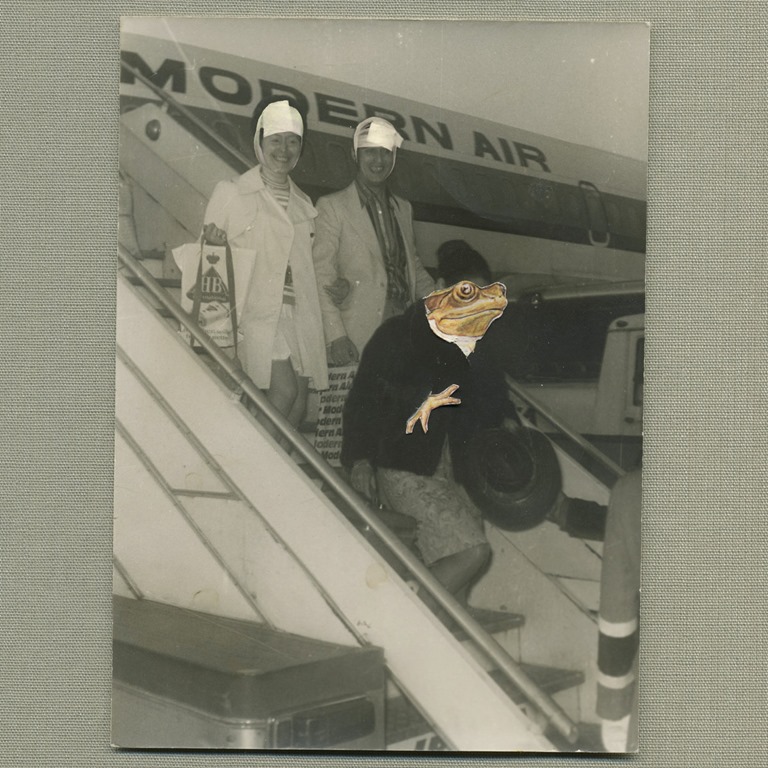
On this album, Anat Ben David and collaborators aren’t promising any meat you can actually eat and digest, but only chew on, which will no doubt disappoint my carnivorous chums. But there is much to chew on, and to ponder, as they present a vast array of styles and sounds that don’t always sit comfortably aside one another and will test many listeners on a number of levels. At times it’s pop, and with an electronic beat, but at others, it’s overtly experimental. And what does the cover art say?

Each of the songs on the album according to the liner notes, takes as its starting point ‘a text by a different author’ with ‘the new compositions bringing out a shared theme: the interaction of humans and the natural world and the assimilation of technology into our being’.

The five tracks on The Promise of Meat are stunning in their dramatic structures, their contrasts, their juxtapositions, and Anat’s soaring operatic vocals are utterly breathtaking. And there is no one overarching style that defines the album beyond the method, a focus on the minimal, the brooding. Pitched against groaning, droning electronica and stammering synths, it’s a striking sensation that creates a certain cognitive dissonance? What is this? How does one process and assimilate it?

‘Naked Axes’, the first song, is sparse and dissonant, dramatic and while the vocal is perhaps most reminiscent of Billie MacKenzie and there are hints of the high drama and tension of The Associates, it’s Scott Walker’s later work that’s perhaps the closest comparison here.

‘Cherish the Birds; is a chorus of delirium, while ‘Face Mixed With Phone’ is a stuttering barely- there dual-vocal acapella / spoken word piece with some bloopy, gloopy incidentals. It’s a shade awkward, especially when growls and whoops collide with shuddering organ-like drones and the crack of the snares of vintage drum machines to forge a wibbly sonic mirage.

The title track, a sprawling ten-minute morass of meanderance, is where things really get weird, and it’s sonorous, lugubrious, as an acoustic guitar plods a deadened strum, augmented by mournful brass sounds sad, lost notes into nothing, and amidst squelches and digital glitches. As atonal and varikeyed vocals collide against one another in the instrumental drift, it becomes increasingly disorientating and deranged.

Maybe this isn’t an album to process or assimilate in the usual ways. There is no clean or simple way to position this or to otherwise feel comfortable with the unexpected transitions and perspectives. But it is an album to spend time with, and to reattenuate your expectations by.

AA

POM001_art

WHY Record Company (WRC) – 20th March 2021

Christopher Nosnibor

Once again, Gintas Kraptavicius, aka Gintas K has shamed me with his relentless output. Sure, Art Brut is only his second released of the year, but then, it is only the first week of April, and he’s maintained a pretty steady flow of two or three albums a year since 2003, and that’s before you get to the collaborations and visual projects. And if cranking out improvised sets using various permutations of keyboard and battered laptop with software seems to be something that can be done relatively quickly in principle, the setting up of said software for optimal effect, and devising how best to exploit it to achieve one’s aims and objectives can be time-consuming.

Art Brut finds Gintas delve deep into the most extreme digital territory in a while, with some wild improvisation and some pretty harsh keyboard battering conjuring a brain-frothing array of stammers and glitches, bleeps and bloops, all stop-starting, stutters, judders and clunks. This is one of those ‘everything all at once’ efforts that leaves you dizzy and bewildered, drowning in a digital foam. The experience is jittery and intense.

Although a digital release, it’s clearly designed as an album of two halves, corresponding with two sides of vinyl or cassette, with the three parts of ‘Art Brut’ in combination spanning some twenty-two minutes, and virtual B-side, the three parts of ‘Al Sublime’ stretching out over a similar duration, with the ten-minute ‘Al Sublime #2’ extending beyond the ten-minute mark.

The three movements of ‘Art Brut’ melt together in a transistor-troubling digital meltdown. Tractor beans and laser blast tear through warped tapes spinning on fast forward, and the whole bathful of bubbling noise swashes and sways in lurching waves. Fizzes and crackles and sparks fly like a heater dropped in, and you can almost hear the sizzling of flesh as electrodes pop at a rate of a hundred a minute. Everything fizzes, pops, squeaks, squeals and crackles in a crunching blizzard of scrappy, scratchy skitters and scrapes, and every single second is different.

‘Al Sublime’ isn’t radically different from ‘Art Brut’, but it is different nevertheless, with the effervescence countered by a broiling volcanic low-end simmer that grumbles and ferments. The low-end thrumming is at times almost subliminal, a humming drone that buzzes and grates, but is so often almost buries in the hectic insectoid clamouring. But this is also slower, lower, more warped and droning. Twisted tones resemble human voices, elongated moans droning become quite unsettling as gurgling electronic trails rise and fall and as jangling, chiming blips bounce off one another at random angles atop the gurgling discombobulation as if a blender is being sucked into a minuscule black hole, it all becomes to much to digest and assimilate… but then save for the two minute scrabble and scrape of a curtain closer in the form of the stammering ‘Al Sublime#3’ – a brief but tense bookend to an extended exercise in fractured fragmentation that digs deep into the cranial cavities and leaves you feeling slightly violated.

It’s a return to previous territory for Gintas K, and Art Brut finds him on peak form.

AA

AA

cover

Red Hook Records – 16th April 2021

Red Hook Records is the new label set-up by former ECM producer, Sun Chung. Hanamichi is Red Hook’s debut release. And what a prestigious release it is.

This is no casual, passing release or minor effort, and it’s certainly not a stop-gap space-filler of a release in the body of Kikuchi’s work: Hanamichi represents the final studio recordings made by the Japanese pianist, laid down over two days in December 2013, before his death in 2015 aged 75. As the liner notes suggest, Hanamichi is ‘the culmination of [his] lifetime of musical exploration and discovery.

Having featured on no fewer than 62 album releases, and having worked with a host of artists including McCoy Tyner, Elvin Jones, Miles Davis, Gary Peacock, Paul Motion, Hanamichi provides a fascinating bookend to an outstanding careers, and demonstrates his unique ear for melody. The airy and spacious opener, ‘Ramona’ is exemplary: the notes, played at intervals that hint at a time signature, but one that’s varied and unconventional, flow in a fashion that’s on the surface an easy, vaguely jazzy tune, but then there’s something that doesn’t quite conform to expectation, with small and subtle but still definite jumps between key.

And so Kikuchi leads us airily through the soft easiness of ‘Summertime’, an extended composition of great delicacy. Fleetingly, a bar resembling Ella Fitzgerald’s song of the same name half-appears, but in an instant, it’s floated away on a zephyr. Yet there are some moments of uncomfortable discord, and clouds gather across the sun, before the piece slowly tapers down to nothing in the final minute.

‘My Favorite Things’, in two parts, echoes the lilting lightness of the first piece, and the atmosphere is almost that of the background soundtrack in a basement jazz bar. Back in the day, you’d hear stuff like this that was mellow and laid-back through a smog of smoke and a babble of chat late into the night and even into the morning in tiny spaces down winding stairs. But what renders these pieces interesting are the sudden flurries or notes in a different tempo, occasionally lurching unexpectedly here to there, breeding disorientation and discomfort.

The contrasts are the key: gentle, accessible melodies and soothing tunes veer sharply and unexpectedly into awkwardness – not so awkward as to be horribly jarring, but just awkward enough to be, well, awkward. As such, Hanamichi sounds like nothing else: easy, but not, existing in a unique space, a space apart.

AA

Hanamichi album cover 3000px

DRET 05 — 2nd April 2021

The fifth release on Swedish label Dret Skivor, which coincides with another Bandcamp Friday, is Blue Oblivion by Tore Honoré Bøe. Information about the artist or the material is non-existent, so everything is left open for the listener to extract and interpret from these layered sonic collages. My initial response is the ocean, being immersed in the vastness of the expanse – or, more specifically, drowning, before my thoughts turn upwards, to the eternal endlessness of the sky. Starring up on a cloudless say, it’s easy to lose yourself in the infinite space.

But the sonics captured here evoke neither. This is, for the most part, a snarling, swirling tempest of electronics pushed to – and beyond – their limits, a shrilled, shrieking assault on the senses that utterly engulfs: this is not a pleasurable or ecstatic oblivion, but the oblivion that arrives as a welcome relief from a relentless battering.

On the first piece, ‘Foosa!’ a piano note fades into the fog as a crackle of static builds to a sustained fizz. Scrapes and drones take on the presence of creeping chords in the absence of any overt musicality. It howls and wails and drills into the cranium randomly, one shill blast of noise replaced by another shrill blast of noise of a different frequency. Like cowboys armed with two pistols shooting from each hand alternately, Tore fires off drill-like frequencies one after the other, hand over hand, whirring and buzzing… and then it’s all down the toilet in a single plunge.

‘We Love King Julien!’ is less abrasive, at least initially, but no less challenging: a woozy, stammering mess of glitching drone that cracks and churns through a succession of misaligned subsequences that stammer and lurch, it’s a different kind of discoordinating. Metallic smashes scrape and buckle to forge brain-clenching streams of static noise that bubbles and churns. In time, it all breaks down into a mess of fractured noise and fizzing static, a horrible mass of treble that jumbles all focus. It descends into alternating drones and explosive blasts of speaker-shredding noise, and culminates is a tsunami of churning while noise and synapse-melting overload across a wheezing drone so flat it feels like it died a long time previous.

There is no kind or considered response to this, no neat finisher. It’s not an easy or pleasant release – but then, that’s not what Dret ‘do’, and seemingly, it’s not what Tore Honoré Bøe does either.

Blue Oblivion is unquestionably immersive, but it’s not entertainment: this is harsh, uncomfortable nose. It’s noise to lose yourself in.

AA

a3756016703_10

Bankrecords – blank037 – 12th March 2021

Christopher Nosnibor

In his everyday work, Tobias Vethake composes music for theatres, installations, radio plays, television and film, and while also participating in various collaborative projects, including Mini Pops Junior, his primary outlet for his experimental explorations is Sicker Man. With electric cello at the heart of the compositions, Vethake incorporates myriad additional sound sources and draws on a vast cultural spectrum spanning jazz and industrial, from east and from west to forge expansive and quite intense works of range and depth.

Like Jo Quail, Vethake plays the cello in ways that rarely sound recognisably cello-like: it’s apparent that the instrument’s versatility is severely underrated. So while there are certainly orchestral elements present on Dialog, it’s by no means an overtly orchestral album, and by absolutely no means an overtly ‘cello’ album. It’s more of an abstract, ambient, (post) rock work. Moreover, collaboration has a way of drawing different ideas and methods out of artists, with the potential to realise works which are infinitely greater than the sum of the parts, the product of the ‘third mind’, if you will.

Dialog contains a collection of pieces recorded in collaboration with different artists – all improvised and unarranged. The dialogs therefore represent the musical exchanges between the musicians in the moment as they respond, spontaneously and intuitively, to one another, often as they meet and ‘converse’ for the first time.

The album’s first track, ‘dialog with Manuel Klotz’ begins with a weaving air of eastern mysticism (a Turkish marriage orchestra Tobias would pass as they played on his way to the sessions), and I’m reminded of the Master Musicians of Joujouka, only with more prominent percussion – but before long, a yawning swell of noise engulfs it, the wave finally breaking to a heavy tidal drone with an instant beat. Eventually, everything collapses to a buzzing drone.

Each piece has its own distinctive style, indicating not only the merits of what each collaborator brings, but also Sicker Man’s versatility. There’s a swampy swagger to the piece recorded with Lip Smh, where drill-like drone buzzes vibrate against serpentine scales that twist enigmatically into a desert haze.

Aidan Baker gets everywhere, and here he is bringing brooding shadows of melancholy the a mournfully lugubrious piece, which is, for my money, one of the standouts. Of the others, there are lengthy passages of gentle, abstract ambience in succession, but the dialog with Kiki Bohemia brings all the dingy bass, as well as all the shimmering space-rock synths, while Scheider TM goes all out on the electro pulsations. Clocking in at over nine and a half minutes, it makes for one mighty finale, building into an immense wall of overdriven guitar that’s absolutely crushing in its weight and density. It has the elements of Earth 2 and Sunn O))), but played at pace, a swirling black metal vortex of overloading distortion. It’s absolutely punishing, and its relentless.

After the curious journey that is the rest of Dialogs, this is just a devastating finisher. There is nowhere to go from here, other than to turn out the light and stare at the ceiling.

AA

blank037_front

28th March 2021

Christopher Nosnibor

While online streams have become quite a thing as a gig substitute during lockdown, I’ve personally struggled to really connect and haven’t been all that engaged with the virtual gig scene.

In classic real-life style I arrive a few minutes in (although due to technical difficulties rather than a late train or being at the bar over the road) to find a man –Stale Cooper, apparently – sitting cross-legged with a guitar in front of an immense back of effects pedals. The lighting is hazy, noise is droney.

A mass of monochrome blurring and squalling feedback drone combine to conjure a vast, expansive soundscape as OMNIBAEL take the virtual stage: there are hints of Jesu in this immersive, transportative wash of noise. The sound and visuals compliment one another perfectly. When there are vocals, they low in the mix, buried in a tempestuous whorl of sound that’s a blend of Swans and Throbbing Gristle. The set culminates – or at least it maybe should have – in a motoric throb of a repetitive riff that ultimately dissolves in a mess of noise, and it’s absolutely fan-fucking-tastic The set goes on a further ten minutes or so, and would have probably been more impactful with a shorter duration. Nevertheless, it was one of those sets that if it were a real gig, you would be able to go home happy, safe in the knowledge that you’ve probably seen the band of the night.

thumbnail

OMNIBAEL

The best way to follow a hard act to follow, and it’s no brag that …(something) ruined are different. Yes, it’s my band, and we have a knack of standing out like a sore thumb in any context, not least of all because there are so few noise acts with vocals. Watching back our 3:22 of obliterative noise was a challenge, but only a couple of people left. I don‘t know if I’m pleased or disappointed by this.

DSC_6658

…(something) ruined

Lovely Wife make a monstrous blackened din: dark, dense, pitched at the low-end, low-tempo and with bowel-churning vocals, there’s an other-worldly, ethereal quality to their music. Featuring members of a number of other prominent noisy / doomy / sludgy / etc acts from the city, the trio combine elements of their other projects to conjure something powerful and intense. The Band of the night crown has been passed on.

The dark ambience of AGED is well-placed, changing the tone and the tempo, and the visuals contain a neat narrative, too, while Lost Music Library drift into softer terrain that slows the pulse, and paired with some hypnotic digital visuals, it’s a gripping experience.

Despite the rainbow discoball visuals, Blackcloudummoner’s set is a brain-shredding blast of feedback, a thrumming squall of dank electronics. Heavy low-end drones are disturbed by glitches and ruptures, and it’s heavy but mellow, in a harsh way. If that makes no sense, then, well, maybe you had to be there to appreciate how the scrape of nails down a blackboard against a dense fog of static and blistering, billowing noise can somehow be soothing.

DSC_6661

blackcloudsummoner

Neuro… No Neuro’s short set leads us into more minimal territory, with glitchy crackles and pops defining the sound of a brief set that would have been quite acceptable had it continued for an eternity. No matter, ‘Flower of Flesh and Blood’ bring an array of pink and white and brown noise and endless reverberations and humming circuitry, occasionally exploding into some difficult noise.

Forest Friends lead us through a leafy woodland as soundtracked by a crunching crackle of overloading noise: again, there are heavy hints of Throbbing Gristle, and with some woozy synth brass that trills away, their set is deeply lo-fi in its leaning. The vocals and drums are both a horrible mess of distortion, thick and dirty and it’s the sound of decay and disintegration that define the set as it gradually crumbles into a pulp of derangement. It’s a fitting end to a night of intense and challenging music, and credit goers to Nim Brut for assembling a varied, contrasting and complimentary lineup.

DSC_6663

Forest Friends

See you down the front for FEAST #3!

11th March 2021

Christopher Nosnibor

Sometimes I find myself in a state of confusion. Sometimes / often. Admittedly, work fatigue, lockdown fatigue, parenting, and beer on an evening are all likely contributors on many an occasion, but sometimes, I’m almost certain that life and situations are simply addling and that’s all there is to it. E42.A8’s press release is a source of a degree of bewilderment for me, as they outline their latest release thus:

‘E42.A8 lies between a place, a process, a group or several, or maybe as we were introduced in Frankfurt once: a Musikkapelle. We like to think that what matters are the following guiding notions: freedom, play with opening(s) & interaction, resulting in music marked by textures, variations between pulse & stretch, moments of varying intensities, détournements (Verwandlung?), oscillations in saturation and silence.’

IIIII is in fact a compilation, a double CD, which draws on a morass of releases spread across downloads, CDr and one tape, and features 21 musicians, in varying ensembles, from 2 to 9 people, recorded during the first five years of the collective’s existence. Said collective, which operates around a ‘disused farm/barn in the countryside in Picardie ( a region spread over the north of France +southern Belgium’ is centred around improvisational works, and as the fifteen pieces, which span a whopping 141 minutes – which isn’t far short of two and a half hours – and which makes listening to this in full a serious time commitment. The chances are that few listeners are likely to repeat it more than once or twice.

And while most of the compositions are under the eight or nine-minute mark, there are are handful of absolutely epic works that sit in the twelve to twenty-one minute mark that really illustrate the expansive plains E42.A8 ere capable of exploring when given the time and the space, and of course, the right atmospherics.

As one might expect from such a loose framework of musicians improvising over such a time-span, this is a pretty mixed bag, centred around immense drones, grinding organs and elongated oscillations. At its best, it’s haunting, evocative, unsettling, while at its worst its clunky, uncoordinated, experimental but without focus. And that isn’t a problem: the avant-garde and the postmodern so often delights in revealing its workings, demystifying the creative process, pulling apart the myth of the ‘creative genius’. IIIII reveals E42.A8 to be multi-faceted and willing to take risks in the interest of progression, of artistic evolution.

Insectoid skitters and creeping drones, scrapes, and all kinds of bleeps and twitters and stream-like trickles combine to forge the peaks and troughs, gulfs and chasms which make up this immense work. Heavy clanks like the sound if a blacksmith mishitting his equipment as shards shower everywhere in such an enclosed space. Chinks and stammers and fractured tonal cracks break the surface, and disruptions and discord and discombobulations abound.

A track-by-track analysis would be even more pointless than Brexit or an episode of Pointless, because this isn’t a work that has standout tracks: compilation it may be, but ultimately it’s an immense document which collates a vast library of experimental ambient electronic works which will shred your brain, make your eyes pop leave you feeling bewildered overwhelmed, which is, in context, a measure of artistic success.

AA

a3729120449_10

Constellation – 2nd April 2021

Christopher Nosnibor

Godspeed You! Black Emperor are a band I’ve long found perplexing. Not musically: that they stand as one of the definitive post-rock acts is irrefutable, and the reasons why are evident in pretty much every track they’ve released. Moreover, having started out back in 1994, releasing their debut album in ’97, they more or less invented the genre. But there is clearly a lot more to this perversely enigmatic collective, who have spent a career eschewing all industry conventions, refusing to give interviews, and identifying as anarchists, with left-wing themes and ideologies running through their work.

But perhaps one thing that is often overlooked is a certain absurdist humour that’s occasionally evident in the work of a band who have also released material as God’s Pee, and Pee’d Emp’ror. This in no way undermines the seriousness of the band, so much as it indicates they’re more multifaceted than popular perceptions indicate.

As Kitty Empire wrote in The Guardian in 2002, ‘When they made the cover of the NME in 2000, they did not actually appear. The background image was of a cloudy sky, broiling with portent. In place of the traditional sucked-in-cheek band photograph, a quote appeared, from the opening monologue on Godspeed’s debut album, the snappily-titled f#a#OO: ‘the car’s on fire and there’s no driver at the wheel and the sewers are all muddied with a thousand lonely suicides and a dark wind blows’. And yes, it sounds portentous, even vaguely pretentious even, and certainly suggests high art. But maybe it – and they – aren’t as serious as all that? Maybe there’s something parodic in their intent. Maybe they’re the KLF of post-rock?

Their latest offering, the curiously-titled G_d’s Pee AT STATE’S END! only furthers that notion. Not that their music sounds anything but deadly serious, and the band’s statement which accompanies the release reinforces their political position from a bleak standpoint:

this record is about all of us waiting for the end.

all current forms of governance are failed.

this record is about all of us waiting for the beginning,

and is informed by the following demands=

empty the prisons

take power from the police and give it to the neighbourhoods that they terrorise.

end the forever wars and all other forms of imperialism.

tax the rich until they’re impoverished.

And then they sign it off as God’s Pee.

The press release interestingly points to the band’s non-conformist tendencies, citing ‘the heretical anarcho-punk spirit of the title’ and pitching an album on which ‘Godspeed harnesses some particularly raw power, spittle and grit across two riveting 20-minute side-length trajectories of noise-drenched widescreen post-rock: inexorable chug blossoms into blown-out twang, as some of the band’s most soaring, searing melodies ricochet and converge amidst violin and bassline counterpoint.’

But that’s two side-long tracks (plus a couple of interludes – because in the world if GY!BE, six minutes is an interlude, and the two shorter tracks are presented on a 10” that comes as an addition to the 12” vinyl album, which actually makes more sense than the digital version, but then, vinyl often makes more sense, especially where bonus material is concerned): you know that this isn’t some shift towards snappy protest music or anything that’s even vaguely overtly ‘punk’ – at least stylistically. Although I would argue that the most punk thing anyone can do is their own thing and refuse to be swayed by trends or peers. So perhaps G_d’s Pee AT STATE’S END! is the pinnacle of punk in 2021. It certainly isn’t radio-friendly, pop, rap, or R’n’B orientated.

The first track – the snappily-titled twenty-minute behemoth ‘A Military Alphabet (five eyes all blind) (4521.0kHz 6730.0kHz 4109.09kHz) / Job’s Lament / First of the Last Glaciers / where we break how we shine (ROCKETS FOR MARY)’ is effectively an album condensed into one longform composition, a mess of overlayed vocal samples, ambient noise, field recordings, and heavy guitar that displays a droney / psychedelic bent. At times it’s overloading, distorting, but in contrast, certain passages bring it right down to a low throb and chiming top notes. And just shy of the eight-minute mark, the build breaks into the album’s first monumental, sustained crescendo. That crescendo hits an expansive motoric bliss-out and just keeps on going… and going. And things really step up once again around the thirteen-minute mark with some serious heavy guitars. The folksy passage that follows the comedown is both sedate and surprising, and it ends with gunshots and death. I’m speculating, but it seems fitting.

‘Fire at Static Alley’ begins as a volcanic eruption, before yielding to a steady, stately tom beat at a sedate, strolling pace and chiming guitars that are the very quintessence of post-rock. It’s haunting and atmospheric, and provides a moment of respite before crackling radio dialogue disperses among static and trilling wails of enigmatic electronica. A collage of extraneous sounds, cut and overlayed rises before a ponderous bass wanders in hesitantly to change the trajectory of ‘GOVERNMENT CAME” (9980.0kHz 3617.1kHz 4521.0 kHz) / Cliffs Gaze / cliffs’ gaze at empty waters’ rise / ASHES TO SEA or NEARER TO THEE’ – another multi-sectioned, multi-faceted beast that’s a collision of post-rock, progressive, and experimental. At its many, soaring peaks, it’s a full-tilt psychedelic rock behemoth, which soars off toward the end into altogether trippier territory.

If ‘OUR SIDE HAS TO WIN (for D.H.)’ sounds aggressive in its capitalisation, it manifests rather more gently as an expansive ambient composition, which makes for a pleasant and majestic closer.

Matters of formatting make this a difficult release to assess as an ‘experience’, which is likely to differ depending on one’s format of choice. But to take AT STATE’S END! as its two tracks, with their cumbersome titles and multiple segments, it’s by turns intense and soothing – and without question an essential addition to the GY!BE catalogue.

a1526103098_10