Posts Tagged ‘Etheral’

Gizeh Records – 4th April 2025

Christopher Nosnibor

Returning for their eighth album, A-Sun Amissa, purveyors of drone-centric ambience centred around founder Richard Knox pull back from the rather larger avant-rock sound of 2024’s Ruins Era to concentrate once more on ‘unsettling drones and claustrophobic atmospheres’. Knox is joined for the third successive release by Luke Bhatia and Claire Knox, indicating that this is a fairly stable lineup, and perhaps this has been a factor in the album’s exploratory, evolutionary approach.

The promise is that the record’s ‘washed out and ethereal sound drags electric guitar, clarinet, voice and piano through pillows of reverb and distortion to build heaving, desolate dronescapes. Moving through dense, oppressive passages of sound and diffusing into sections of gloomy, haunting restraint. We Are Not Our Dread is filled with majestic, textural detail. It envelops and, at times, smothers you before releasing just at the right moment, resolving in a billowing, melancholic, distorted reverie.’

The first thing that strikes me – as is often the case with any project centred around Knox – is the evocative nature of the title. Perhaps I’m feeling uncommonly sensitive right now, but this one in particular lands with an unexpected impact, and as much as the implication is one of positivity – no, we are not our dread, our dread does not define us or dictate our lives – there is equally the emphasis on the fact that we have that dread. And not you, or I, but us, together, collectively. And so it is that dread become the focus, that thing which looms large over not only the title or the album, but our lives. Why do we have this dread? It would not be an overstatement that the pandemic changed everything: the world that we knew lurched on its axis and no-one knew how to handle it. And since then, insanity has run free. 9/11 may have rattled the rhythm of life for a time, but not it seems that the entire world spent the pandemic years just waiting to wage war, and now nothing is safe or predictable – not your job, your home, your ability to post stuff online. You don’t need to be a prominent protestor or social agitator to attract the wrong kind of attention. The dread hangs over every moment now. We thought we had seen the worst when COVID swept the globe and lockdowns dominated our lives, and began to breathe a collective sight od relief when things began to retract, as we looked with optimism toward the ‘new normal’. But who ever anticipated this today as the new normal the future held?

We Are Not Our Dread consists of four fairly lengthy instrumental compositions, and ‘Electric Tremble’ arrives in a dense cloud of ominous noise which immediately builds tension, and if the rolling piano which drifts in shortly afterwards is gentle, even soothing, the undercurrents of rumbling discord and distant thunder which persist maintain a sense of discomfort which is impossible to ignore.

Ever since his early days with Glissando, melding post-rock with ambient tropes, Knox has had an ear for the unsettling, deftly manoeuvring elements of the soft and gentle with the spine-tingling. And while the eleven-minute ‘All The Sky Was Empty’ is a quintessential work of epic post-rock abstract ambience, rich in texture as it turns like a heavy cloud billowing and building but without an actual storm breaking, instead dispersing to offer breaking light and a sense of hope, the wandering clarinet brings a vaguely jazz element to the sound.

‘Sings Death or Petals’ arrives on trails of feedback and rumbling guitar noise, and is immediately darker, and those dark undercurrents continue with crackles and rumbles and elongated drones which persist beneath the ghostly, ethereal voices and reverb-heavy piano and picked guitar notes. At times, this bears the hallmarks of latter-day Earth, but at the same time there’s a less structured, less motif-oriented approach to the composition, which leaves much open space. I still can’t choose between death or petals here. It builds to a churning whorl, before the final track, ‘Our Hearts Bent As Crooked Lightning’ stirs from a rippling array of simmering noise and evolves into a colossus of rumbling drones, and, over the course of ten-and-a-half minutes, grows supple with softer waves of expansive synth which remind you to breathe again. For all the fuzz and broad swells of abstract, buzzing noise that’s equal parts gripping and soothing, the overall effect is sedative, and welcome.

We Are Not Our Dread leads the listener through some challenging moments, and as each listener experiences works differently, as I hear the final soaring strains of ‘Our Hearts Bent As Crooked Lightning’ this strikes me personally as dark and challenging. The intentions may be quite different, but this is undeniably a work which is sonically ambitious, spacious, resonant. Even as the tension lifts, the mood remains, like a dream you can’t shake, like the paranoia that persists even when you’ve dome nothing wrong.

That We Are Not Our Dread is true, and so is the fact that, to quote from Fight Club, you are ‘not your job. You’re not how much money you have in the bank. You’re not the car you drive. You’re not the contents of your wallet. You’re not your fucking khakis.’ And you are not your dread. It may at times possess you, but this, this is not it. This, however, is a great album.

AA
a1068739543_10

Cruel Nature Recordings – 23rd February 2024

Christopher Nosnibor

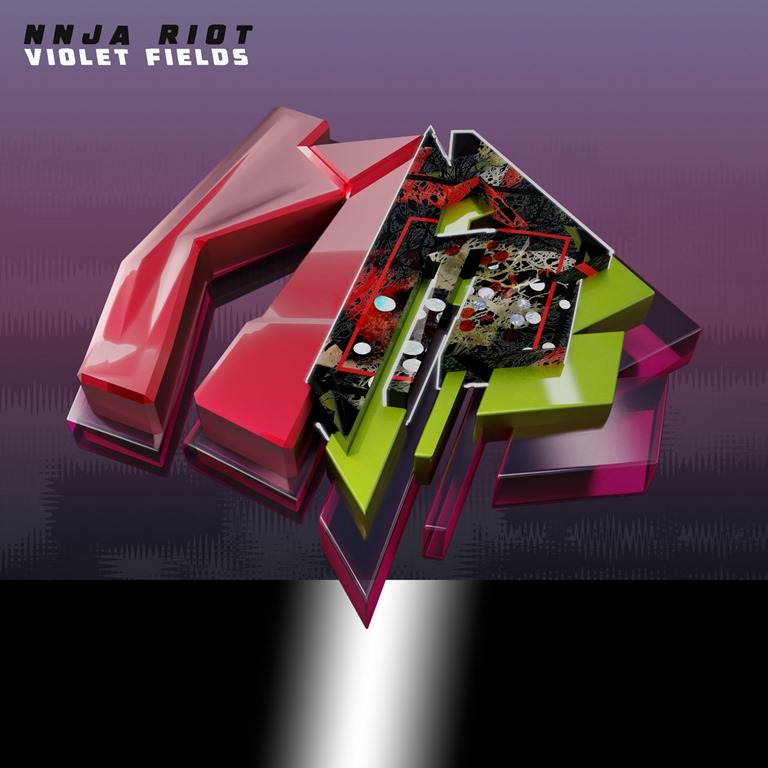
Nnja Riot is the solo project of Lisa McKendrick, who also happens to be one half of experimental electronic noise duo Isn’tses, with Tim Drage, who makes serious noise as Cementemental.

It’s a small world, especially in circles of noise and experimental electronics, and so it is that a few years ago, I paired with Tim for a one-off collaborative set in London at the bottom of a bill curated by Human Worth, with the mighty Modern Technology headlining. I lost my hearing in one ear before the set due to some congestion, and by the end, I’d lost my voice, too. Somewhere along the way, I’m convinced I’ve crossed paths with Isn’tses, too, but can’t find the evidence at this moment in time.

Anyway, my needless digression brings me to the point of observation that their individual projects are quite different from one another, and their collaborative output. This is ultimately a good thing, because while algorithms which have seemingly replaced the music press in making recommendations of the ‘if you liked listening to this, you’ll like this’ ilk, it ain’t necessarily so. Because algorithms don’t understand art, or the fact that an artist’s output may be widely varied.

And so it is that as Nnja Riot, Lisa takes a much more songwriterly approach to things, and Violet Fields contains seven songs which can be described broadly as stark industrial electropop. ‘Horror Heart’ brings all of the elements in together to raise the curtains on the album: understated verses, with a thumping heartbeat bass beneath a delicate vocal bathed in reverb, are suddenly blown away in a wave of noise and monotone robotics with whipcracking synthetic snares cutting through the murk with some harsh treble.

‘The Evolve’ is a low, slow, dark pulsating grind which swells to a blistering ruckus of bubbling, broiling eruption of glitching electronic froth, and things get mangled fast and hard. Nnja Riot is indeed an appropriate moniker: the noise grows and takes over by stealth, as if from nowhere: one minute things are pretty mellow, the next, it’s all going off and you’re being carried away on a sonic tidal wave.

The album’s longest track, ‘Dark Assassination’, stretches beyond the seven-minute mark, and with a stuttering, beat hammering like a palpating heart in a state of fibrillation against the ribcage, it’s creates a muscle-tightening tension which is uncomfortable. The vocals are disconcerting, sounding as they do detached, off-key, non-melodic. Desperate drones bend and warp in the background, adding layers of dissonance and discomfort.

Everywhere across Violet Fields, there are subtle but essential incidental details, little lines of melody which ripple and fade. The title track is hazy, sedated, spaced-out, with melodic elements juxtaposed with swerving sci-fi noise which threatens to drown out the erratic beats and she cuts loose to another level of intensity with the vocal delivery: fuzzed with distortion, there’s a outflowing from the innermost which pours into the swirling wash of multi-faceted noise.

Violet Fields crackles and fizzes, often promising structures which crumble and evaporate and leave the listener feeling a little lost, grasping for something uncertain and just beyond reach. It’s this sense of vagueness which remains after the grainy ‘Musical Fix’ and the ephemeral drift of ‘Slow Release’, a mere fragment of a song which carries a spiritual richness on a ritual drumbeat before fading. There’s a sense that hearing Violet Fields and fully grasping it are not one and the same, and it feels that however long one spends engaging with it, there will always be depths and layers of implicit meaning that exist beyond the realms of conception. You wave a feeble hand, desperate to clutch and cling, but it’s gone. It’s gone.

AA

a2182947288_10

The Circle Music – 9th September 2022

Christopher Nosnibor

Dakini, the debut album by Lisa Hammer (Requiem In White, Mors Syphilitica) was originally released back in 2009. It’s been described as ‘music for ritual, introspection and awakening of the senses’, ‘a complete manifesto of inner search in which a lot of influences from different genres of music’, and that it was ‘designed to carry the listener away from the manifest world and into a deeper space’.

Re-released here on limited coloured vinyl as an expanded release with three additional tracks, it provides an ideal opportunity for existing fans to re-evaluate, and reacquaint themselves, and for latecomers to be introduced.

It happens that I’m in the latter camp, and so am coming to the album with fresh ears, and only the facts that it’s pitched as being for fans of Dead Can Dance while promising ‘unprecedented vocals, sometimes angelic and sometimes damned as if they come from another period forgotten by the time.

Now, one might ask, if the original release was a ‘complete manifesto’, is the inclusion of additional tracks not gilding the lily? Especially when considering that ‘the Indian ragas correspond with times of the day, so the album represents a condensed 24 hours, which is perfect for ritual, or any emotional and spiritual trip.’ In context, there is the question off how to assimilate the additional material in the least obtrusive way, with the least impact on the flow that is so integral to the original concept?

Opening the album with a new, seven-minute ‘Alte Clamat Epicurus’ works nicely; it’s an evocative vocal incantation with a sparse droning backing. It sounds – in the mind’s eye, and with a small soupçon of imagination – like a sunrise, like an awakening. Hammer sounds both otherworldly and most incredibly earthy, which is no small feat – but then, I find that this is something particular to music, particularly vocalisations, which tap into echoes of ancient spirituality. While exalting the heavens, there feels as though there is a deeper connection with the ground, the rocks, trees, the elements. It paves the way perfectly for ‘In Taberna Quando Sumus’; simple, rhythmic, repetitive. As the album progresses, one becomes attuned to the sense of an arc, of a cycle, and Hammer leads the listener on a journey inside. Some of the musical arrangements are so minimal as to be barely there, the sound of the wind and cavernous reverberations, while others are centred around hypnotic percussion and wordless choral vocalisations, as on the powerful ‘Samsara’ and the lilting, ethereal ‘Vajra’.

That flow is disrupted somewhat with a dance mix of ‘Chant Nr 5’ dropped as the fourteenth track at the end of side three. In the sense that it bookends the side, which opens with the original version, it makes some sort of sense, but still… it’s incongruous, sweeping away the drifting incense with a busy beat and quavering organ tone. Perhaps this is why I’m always hesitant to use the term ‘world’ music: it’s such a western-centric view of the globe, where ‘the world’ is vast and the west occupies only a sliver of it, both geographically and culturally. In the west, the west is the world and perceives its cultural dominance as such. It’s a badly skewed perspective.

While Dakini incorporates elements of what would commonly be described as ‘world’ music, it’s really ‘world’ music in that it truly embraces music from the world in its full breadth, with the delicate sing-song of ‘Lullaby’ perhaps owing more to western traditions and showing that for Hammer, all sources are equal, and it makes for a rich and moving listening experience.

Side four ends, and closes the album, with the third and final bonus track, ‘Hurdy Gurdy Gavotte’. And there, it sits perfectly.

803437

Devotional is the new collaborative release from The Lord (Greg Anderson of Sunn O))), Goatsnake and Engine Kid) with vocalist and violinist Petra Haden.  The album is a rapturous and heady offering of wordless vocalizations, droning guitars, and heaviness explored in unexpected and intoxicating ways.  On Devotional, through a haze of incense, flowing robes, and secret mantras, Petra Haden’s voice rings out over constant drones in ecstatic chants throughout this musical investigation into the myriad of ways in which worship can lure and intoxicate. This is a journey that Haden and Anderson go on together, the guitar and vocals combined like the call and response of a guru and its congregation.

Petra Haden first worked with Greg Anderson during his time in Goatsnake, as well as on the second SUNN O))) studio album, ØØ Void.  Now, two decades later, the duo reunite for Devotional.  Anderson comments, “It had been about 20 years since we had recorded together and Petra is as she was then: a master improviser and otherworldly vocalist.” Haden continues, “It was so much fun getting to play and sing on SUNN O)))’s album ØØ Void. 20 years later, I’m on stage with them at The Mayan Theater in Los Angeles singing and playing on the encore. I was in heaven! After the show, Greg and I talked about working on more music together. When I heard his ideas, I already had melodies in my head. I recorded some ideas at home and it developed from there. Greg is a really deep listener and he’s so much fun to work with. Getting to collaborate with Greg reminds me why I love to sing and improvise. I feel free and happy. That’s what music is all about."

Watch ‘Yaman’ here:

AA

zo4TbwOc

Photo credit: © Steven Perilloux

2nd September 2022

Christopher Nosnibor

UK duo Thraa consists of Sally Mason and Andi Jackson, whose bio states that ‘Working without the constrictions of a traditionally structured song, this duo improvise around meditative drones, combining Sunn 0))) influenced guitars with soaring vocals. Making single take recordings, they capture an organic sense of sound that has cavernous textures with minimalism at heart.’

In some respects, this debut EP brings us full-circle in terms of drone evolution, and it’s fitting in the most appropriate, and planetary sense. The most successful and celebrated purveyors of drone, Sunn O))) famously took their moniker as a reference to drone/ doom progenitors Earth, who will, in certain circles, be forever remembered for the tectonic grind of their epic second album, Earth 2, from 1993, which contains just three tracks spanning some seventy-three minutes, with nothing but guitar and bass feedback stretching out, crunching along at a glacial pace and carrying the weight of entire continents. It’s hard to believe that this release will ever be surpassed for all that it is, with two of the three tracks stretching out around the half-hour mark with no shape or form, only an endless, grating, grumbling grind. Into Earth connotes a return to base material, a slow collapse, even a decay into compost form, but also hints at a sonic slide toward this territory carved out by the original and definitive drone act some twenty-nine years ago.

Thraa intimidated at the shape of things to come in June with the release of ‘Move Among Them’, which is the first of the EP’s four tracks. It’s swampy, sparse, beginning with an awkward, gurgling, wheezing, a kind of tentative snuffling grunt in the bass region before soaring, sculpted feedback howls and churns metallic—tinged clouds of scraping ambience. It probably sounds like a contradiction on paper, but hear me out: the screeding layers blur into a whirl without definition and tumble into a vortex of abstraction, and in doing so, create the sound closest to that early Earth whorling wall I’ve heard from any other band.

The title track lacks even more overt form, spurs of guitar feedback screeching as it breaks loose from the dense, rippling wall of undifferentiated noise. There are strong elements of Metal Machine Music here, but it’s around the midpoint that a slow, rhythmic piano emerges, along with a haunting understated vocal from Sally that’s half-buried beneath the noise of explosions and / or tidal waves. It’s both dolorous and ethereal, and BIG | BRAVE comparisons aren’t out of place here, either.

Everything coalesces after the subdued scrape and low-end rumblings of ‘Elgon’ on the seventeen-minute finale ‘Over Warm Stones’. Nothing different happens as such: there is only more, in terms of duration, and in terms of atmosphere. The snaking, rattling notes that swell and shimmer provide a sparse, textured backdrop to a quivering, evocative vocal performance.

Into Earth may not offer anything new, per se, but does provide a strong contribution to the canon of emotive, evocative ambient drone / doom which features vocal, which in this instance are essential to the experience, and it’s an experience which is compelling, immersive, heavy as hell and at the same time heavenly, before it collapses into a landslide of feedback that stretches out to the horizon.

aa

a3764076389_10

17th February 2021

Christopher Nosnibor

It’s completely fitting that ‘something’, the new single from the Leeds-based artist elkyn is accompanied by a truly expansive video that slow-pans an immense landscape – a slow-panning view over a valley in the Lake District which touches me more than I’d have expected. But then, The Lakes is my happy place, a space away from the world and while the swinging pan shot is close to inducing motion sickness, it’s also a perfect accompaniment to this dreamiest of tunes.

The track follows up on last year’s single ‘if only it was alright now’, as well as the debut EP Beech. The song maybe but a mere two minutes and ten seconds of acoustic guitar, simple synths and basic drum machines, backing Joseph Donnelly’s hushed, introverted vocal musings, but it’s a world unto itself. And being drawn into that world is a breathtaking experience, and one that is far, far greater than the music alone.

The vocals are a soft wash that melt into the marshmallow instrumentation, meaning you focus more on the overall tone and atmosphere than the words themselves – words that according to the liner notes contain ‘a heart-felt personal confession of feeling hopeless and desperate.’ That’s certainly a relatable emotion, and, paired with the visuals, combines a certain tension and a sense of claustrophobia and entrapment with magnificent space and freedom.

The sensation is vague, the mood is intangible yet touching, and ultimately, elkyn has – again – delivered ‘something’ special.

The Helen Scarsdale Agency – HMS048 – 17th August 2018

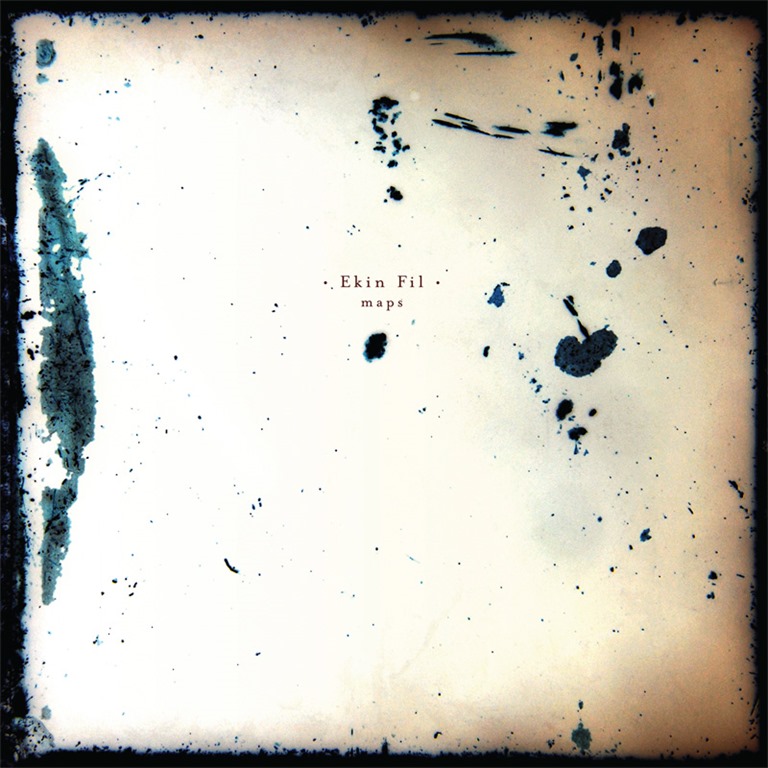
The pitch for Maps’ as ‘minor-key’ where ‘tear-stained notes of piano, organ, and guitar veer along elliptical orbits as a soft-whisper lilt of Ekin’s voice narrates more by emotive decree than by literary couplet’ is but a flavour.

The album is largely inspired by her first winter on an island in the Sea of Marmara, away from the hustle and bustle of Istanbul, Maps is a completive work that reflects on experiencing silence and isolation. It’s relatable, and as is so often the case, in the personal lies the universal.

Isolation is not necessarily geographic, and distance doesn’t need to be great (the Sea of Marmara lies within the greater metropolitan umbrella of Istanbul) to have an effect on the psyche. Distance also needn’t be geographic: there’s no distance more isolating than emotional distance. It’s immeasurable, impossible to quantify, but manifests as a relentless ache, a sense of emptiness that sits in the gut and echoes around the chamber of the chest cavity. Mere inches in physical terms count for nothing when there’s that separation, and it grows to a pulling desperation, a gap that can’t be bridged. So close, and yet so far… just out of reach. There’s no-one to turn to, nowhere to go. Because you’re alone. And there are no words. Maps charts a journey through inner space, its hesitant notes representing the hesitant steps into unknown territory, alone.

On Maps, there are no words: this is the language of sound which communicates the message in its entirety. The warm-tones and sparse arrangements define the atmosphere of Maps. Fuzzy-edged guitar notes hanging in rarefied air for an eternity allude to Fil’s delicate, understated approach. Her music is sparse yet warm, delicate yet rich.

It’s a remarkably quiet, soft, understated work. It isn’t that nothing happens, but that evens unfurl discreetly, subtly, solely, with a certain delicacy. Organ wheezes as feedback whines on ‘Away’, while on the majority of the compositions, it’s a soft, echo-soaked piano that provides the main focus for this hushed, sparse song sequence which drifts together to create a very natural flow.

Maps doesn’t offer a direct route from A to B. But it does remind that the map is not the territory, and that the geographical terrain is not the mental space.

hms_048_M2

Wrong Way Records – 16th September 2016

Christopher Nosnibor

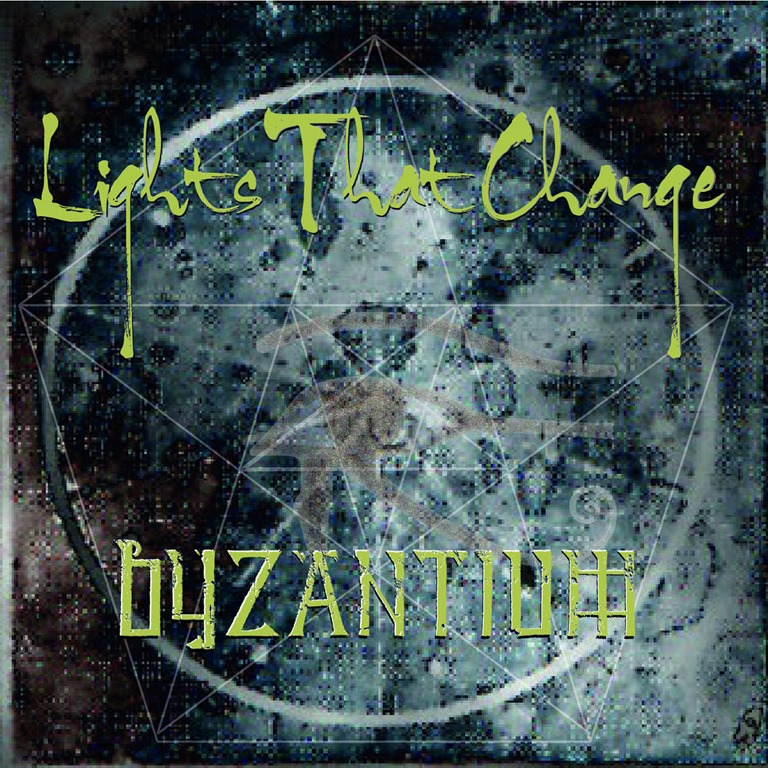
Described as ‘full to the brim with blood, sweat and tears and intertwined intricacies of the history of the known world’, Byzantium is the debut album from Welsh trio Lights That Change. The title itself brings with it immediate suggestions of ancient history and classical antiquary, while the band’s name is a fair representation of their shimmering, lustrous sound. These are not songs concerned with the everyday or the contemporary, but with timeless themes. Laced with an abundance references and invocations of classical deities and elements and intangibles woven into the lyrical fabric, the songs transcend the lives of mere mortals, conjuring ancient mysticism and long-lost myths and legends. 

It’s an album that doesn’t readily fit into any direct lineage: it’s certainly not in the folk style, traditional or contemporary, and nor is it strictly shoegaze or dreampop, but draws on aspects of them all. The execution is exquisite. The delicate arrangements and washes of reverb which surround Mandy Clare’s magical vocals imbue the album’s opening song, ‘Again’ with an air of mysticism. The guitars remain at a respectful distance, interweaving detailed latticeworks of texture.

‘Dea’ (on which OMD’s Mal Homes, who lends his drum programming skills to the album receives a co-writing credit) is fragile and sparse, with the layers of vocal harmony hinting not only at Slowdive but also Ultraviolet-era All About Eve. There are very few acts which could pen a song which calls to Greek goddess Athena and also quotes from the Latin hymn ‘Dies Irae’ without sounding affected or pretentious: this is intelligent, artful songwriting, evocative and contemplative.

If ‘Voices’ offers a more robust sound, driven by a strolling bass and rolling rhythm, it’s still characterised by fractal guitars that flicker and turn. Elsewhere ‘Golden City’ tells of fallen empires and builds drama and majesty over a Curesque bassline, while ‘Union (For Louise)’ is a perfect dreamy pop song which radiates a sense of joy.

Balancing delicacy and depth, Byzantium is an album not shackled by earth or time, floating in the stratosphere.


Lights That Change - Byzantium