Posts Tagged ‘eponymous’

Rocket Recordings – 22nd August 2025

Christopher Nosnibor

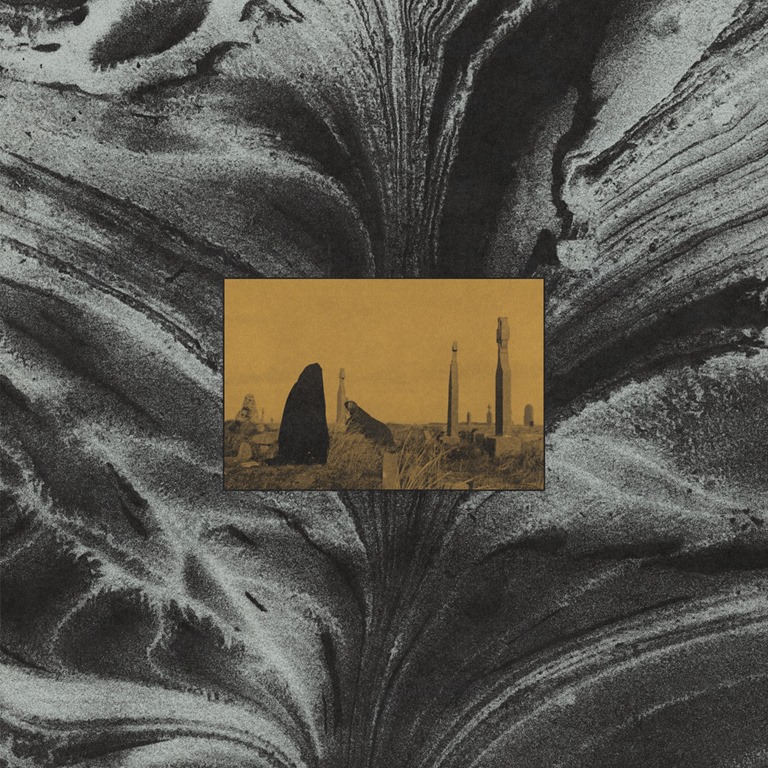
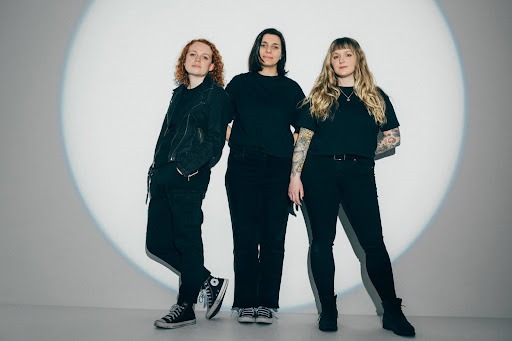
While you wouldn’t exactly call Rún a supergroup, they certainly represent a coming together of disparate artists of no insignificant pedigree, as their biography attests:

Rún comprise firstly Tara Baoth Mooney – sometime Jim Henson voice artist, with a longstanding background in everything from folk and choral music to experimental film-making. Diarmuid MacDiarmada – Nurse With Wound co-conspirator and brother of Lankum’s Cormac, brings with him the experience of avant-garde collaborations with a plethora of artists stretching back over thirty years. Drummer, sound designer and engineer Rian Trench, meanwhile, has worked on everything from the psychedelic IDM of Solar Bears to auto-generative experiments to orchestral arrangements, and owns the studio – The Meadow on Ireland’s East Coast – in which the album was made.

It’s a delicate folksome vocal which floats in on the first composition, ‘Paidir Poball (Pupil)’over what initially sounds like a mechanical wheeze of a bellows, or some form, of life support. The juxtaposition between something so earthy, so human, and something so very much not is compelling, and quite powerful, in a way which isn’t immediately easy to unravel. But a couple of minutes in, a thick, droning guitar – reminiscent of Earth 2, with that thick, sludgy distortion and trebly metal edge – winds its way int the mix and immediately, the mood and the direction changes. And then, on top, choral, almost monastic layers of vocal build and rise upwards to the heavens through the grit and grind and howls of feedback before eventually there is percussion. The drums – thick, thudding, low in the mix, feel as if they’re lagging, foundering in the tide or struggling against a head-facing current.

‘Your Death My Body’ strips things back primarily to percussion, but turns up the intensity with the vocals, which hit a wild intensity which borders on rabid. But with this, and some bleepy computer incursions and a grumbling but groovy bass which makes allusions to Jah Wobble, this album becomes increasingly difficult to place, or to pigeonhole. It’s a sad fact that nowadays, not only will they throw you in jail if you say you’re English, these days (I’m safe as I’m ashamed to pronounce my Englishness, even – or perhaps especially – in Scotland) – but aligning oneself to a genre can be a minefield, too.

The eight-minute ‘Terror Moon’ is a dark morass and a muti-layered, bass-heavy mindfuck that explodes into blistering, shredding electronic overload in the first minute before thumping percussion and the filthiest, fuzziest bass drive in and punch straight in the gut, propelling a psychotic, psychedelic weird-out with tripping space-rock synths and strains of feedback and infinite echo, which leaves you feeling dazed, dizzy. Terror? Yes, just a bit: it’s huge, it’s warped, and a tiny bit overwhelming in its weight and witchiness.

But this is nothing compared to the final track, the ultimate finale, the thirteen-and-a-half minute behemoth that is ‘Caoineadh’. Arriving as it does after a pair of punchy cuts – ‘Such is the Kingdom’ is murky, atmospheric, leaning toward experimental / spoken word, but a mere three an as half minutes on duration, and ‘Strike It’, which is perhaps the album’s most direct composition, evoking Swans circa ’86 but on speed, the grind coming with pace –it takes the album in a whole new trajectory. Gentle, even tentative at first, with nothing but a wandering bassline, it has a slow-burning drone-rock vibe to it as first. But then, the vocals – oh, the vocals! Tara Baoth Mooney brings a lilting folk feel against a slow, droning backdrop, which eventually gives way to a slow, expensive prog-pop mellowness, opening new horizons in every way. And every direction. It ends in a rippling wave of distortion.

This is essentially Rún in a nutshell: they have no confines, no limits, and to touch them is to embark on a journey. And what a journey this is.

AA

a1829277806_10

Gutter Prince Cabal – 19th July 2025

Christopher Nosnibor

As far as I can recall, I first encountered the word ‘bruxism’ in the early 90s, through the back-print of my Therapy? ‘Teethgrinder’ T-shirt. I fucking loved Therapy?, and the shirt was one of my favourites. I regret selling it, but I needed to eat, and a stretched and faded T-shirt that would pay for a whole week’s worth of groceries was an obvious choice for bunging on eBay.

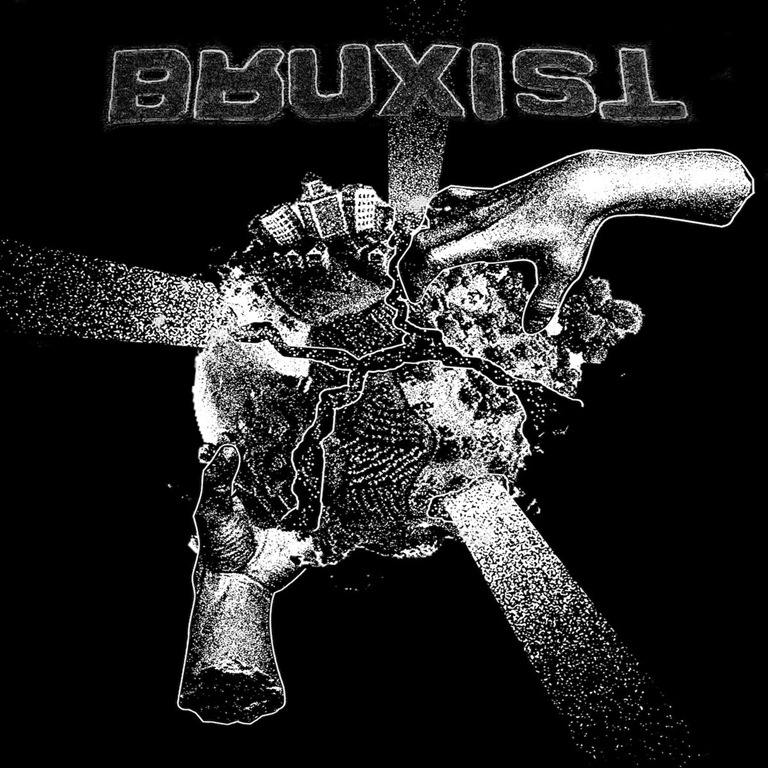
I’ve since come to realise that I, myself, am prone to extreme jaw clenching during times of anxiety, and while listening to particularly intense music. Which brings us to the eponymous debut by Bruxist. As the pitch outlines, ‘Rooted in crust punk fury and d-beat momentum, Bruxist crashes through the gates with chainsaw Stockholm-style death metal, grimy rock’n’roll swagger, and even shards of frostbitten black metal. It’s a high-speed collision of sound: filthy, feral, and dangerously alive.’

And it is. The album offer seven relentless, pummelling tracks, half of which are under – or only just over – three minutes in duration. ‘Inversion’ doesn’t so much launch the album as kick down and throw in a massive stash of Molotov cocktails before starting a riot as the building burns. It’s frenzied and filthy, the guitars are a murky blur, the drumming is frenetic and the vocals a gargling raw.

‘Six Feet Headfirst’ staggers and swaggers, brawling, snarling and rabid, before ‘Black Sheep Discipline’ slams in at a hundred and fifty miles an hour.

The album is relentless in its pace and brutality. There’s a moment in the closer, ‘Divide and Conquer’, where it breaks down to just the bass for a few bars. It’s the grungiest, gnarliest noise imaginable. Then everything piles back in and nothing short of absolute devastation ensues in that final minute.

Bruxist is done in around twenty-three minutes – and in that time the band delivers something that’s almost unspeakably savage. It’s a proper, full-throttle, furious jaw-clencher, that’s for sure.

AA

a1744781853_10

Intervention Arts

Christopher Nosnibor

While eponymous debuts are commonplace, apart from artists who name all of their albums eponymously, it also seems to be a thing for long-established bands to release a self-titled album well into their career, and, to my mind, it seems somewhat strange. Nevertheless, Killing Joke have in fact done both, and Interpol have also managed two eponymous albums (if you count album number five, the anagrammatic El Pintor). Have you run out of ideas or something?

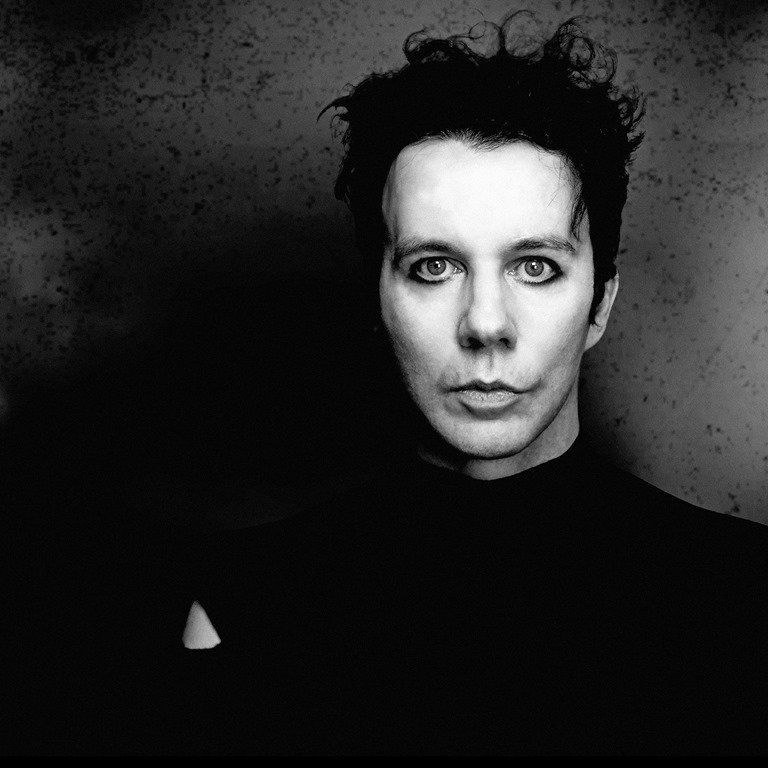
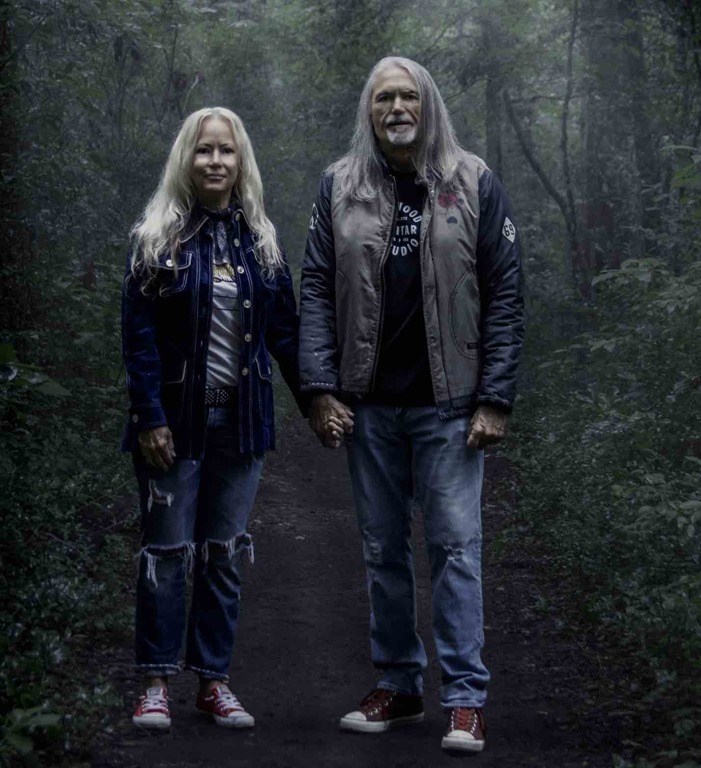
The Awakening has been a thing for a good quarter century now, during which time Ashton Nyte has also released a number of solo albums, a brace of books, and been a constant feature in the lineup of industrial / goth collective Beauty in Chaos. He’s a busy man.

The twelve tracks on The Awakening represent something of a revisiting of the classic goth template, and in this context, the title makes perfect sense. It’s a return to the beginning, treading the ground where it all began, and feeling that spark once again: an awakening, indeed.

‘Shimmer’ creates the atmosphere with dolorous bell chimes and slow, deliberate, ceremonial percussion, before single cut ‘Mirror Midnight’ thumps in with a sturdy bass groove melded tight to a relentless, solid drum machine beat. Laced with delicate traces of brittle, chorus-laden guitar, it provides the backdrop to a crooning baritone vocal delivery. Lyrically, it’s rich in esoteric imagery and it’s classic goth – mid-80s in style, md-90s in production. And this is essentially The Awakening: it’s dark, brooding, espousing the doomed romanticism that was central to The Sister of Mercy’s genre-defining debut album, First and Last and Always.

‘Through the Veil’ goes epic, and if its arena aspirations seem somewhat removed from the claustrophobic confines of the first phase of goth, it likely owes something of a debt to Floodland, while the acoustic-led ‘Your Vampire’ evokes The Mission circa Children (I’m thinking ‘Heaven on Earth’, but perhaps a little less bombastic), although ‘Island in a Stream’ is an equally valid reference point.

‘Haunting’ – also a single – and an obvious choice, it has to be said, is a burly burst of muscle-flexing guitar propelled – again – by a throbbing bass and pumping drum beat, draped with cool Cure-esque synths, culminating in a climactic rush of a finale. ‘See You Fall’ stands out as another quintessential goth banger: the instrumentation again is reminiscent of early Mission songs, and the drumming, with its dominant snare is absolutely cut from the same cloth as The First Chapter, although Nyte’s vocal reminds me – quite happily – of Andrew Eldritch demoing vocals on ‘Garden of Delight’.

Things take a turn for the heavy – and the political – on ‘Fallout’. It’s a reminder that the music of the 80s emerged from a time of terror, a political lurch to the right, and living under the shadow of the bomb. And here we are again. We can never escape history: it simply repeats. And so, it stands to reason that music is also cyclical.

‘Not Here’ hints at Bauhaus, while the thunderous ‘Cabaret’ – which seems to take certain cues from ‘Dead Pop Stars’ by Altered Images and The Psychedelic Furs’ ‘Soap Commercial’ in terms of its spindly lead guitar line – is a modern goth classic.

The Awakening mines a seam of trad goth which straddles the first wave and the 90s revival, or second wave – which is precisely the starting point of The Awakening. This album feels rather like time travel, in the best possible sense, and, in context, it’s less a case of homage as revisitation and renewal.

AA

AA

The Awakening 1 - photo by Ashton Nyte

This Friday, BERRIES return with a second glimpse into their self-titled new album, in the shape of new single ‘Balance’.

A tempered and touching acoustic lullaby by the trio, it marks something of a handbrake turn from the sound and fury of previous single, ‘Watching Wax’.

“Let’s balance out time like we said we would” coos vocalist Holly Carter, atop a single laden with silky guitar lines, hushed harmonies, and a pin-drop atmosphere.
Urging us to find that time to sit back and enjoy the moment, BERRIES say of the track: “’Balance’ talks of those promises we make ourselves. Filling our time with things we want to do, not just need to do. It’s quite easy to get caught up in busy schedules, rushing around with busy brains but this song reminds us to stop and take it all in.”

Unlike anything else the band have released previously, it arrives as a tantalising new insight into their highly anticipated second album: BERRIES, which is due for release on 18th October via the Xtra Mile Recordings label.

As its eponymous title makes clear, ‘BERRIES’, is the sound of a band determined to make a statement with their second full-length outing. While the band have never shied away from brutally honest admissions or difficult subject matters like struggles with mental health, BERRIES finds them weaponising them into a set of fearlessly assertive tracks that seize strength from darkness. As BERRIES explain:

“This album is about battling intrusive thoughts and finding contentment in your day, however big or small those moments are. It’s a journey to finding your own space and being comfortable in it. We haven’t held back with this album – it’s raw, honest, and a true reflection of BERRIES.”

Check ‘Balance’ here:

AA

BERRIES – HEADLINE TOUR 2024
OCTOBER

23 – Brighton, The Prince Albert

24 – Nottingham, Bodega

25 – Leeds, Hyde Park Book Club

26 – Manchester, Gullivers

29 – Bristol, Thekla

30 – London, Lexington

31 – Norwich, Waterfront

NOVEMBER

1 – Southampton, Heartbreakers

15bcf76d-07c0-0146-7160-de4e1ff00124

Consouling Sounds – 26th May 2023

Christopher Nosnibor

Size matters. Or at least, scale does, if you’re measuring epic. You can’t do epic by halves, and that’s a fact. And when an album weighs in with just five tracks but has a running time of almost forty minutes, you know you’re in proper epic territory (and that it certainly isn’t an EP masquerading as an album). And this is one hell of an album, and it goes beyond epic.

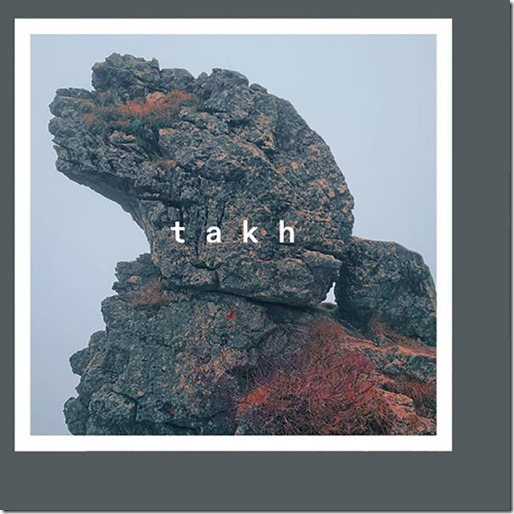
As the bio explains, TAKH emerged from ‘The fruitful collaboration between The Black Heart Rebellion and Echo Beatty’s Annelies Van Dinter on the People album was the beginning of a new musical story. After the end of TBHR Alexander, Annelies, Emeriek and Pieter went deeper in their quest to write music reflecting the true emotions of the musicians. After about one year of free improvisation, TAKH created something truly unique. The idea was very simple: to release the result of the collaboration without pre-orders and announcements…’

There is absolutely nothing out there on-line which provides a precursory listen to this album, and that in itself is beyond rare in an age when bands – and labels – hype releases to the nth degree. More common is that you’ll have heard every track weeks before the release, and this makes TAKH’s stealth approach all the more welcome. It takes us back to the days of before the Internet, when you’d read about a band in Melody Maker or hear about them from a mate or on the sixth form stereo – the means by which I introduced my friends to / tortured my friends with Swans and Godflesh during breaktime.

Swans are one of the bands listed as influencing TAKH, and it shows in the compositions, and to some extent, the musical arrangements, not least of all the way the final track echoes latter-day Swans in their hypnotic, immersive swells of sound.

‘Salomonne’ enters in a swathe of ancient Eastern mysticism, long, trilling vocal drones and esoteric spiritualism which sets the atmosphere before the arrival of the drums, bass, and rasping vocals. In combination, the tension builds as does the sense of vastness, and you feel an endless desert and sky spreading before you, extending infinitely to the vanishing point at which the two meet and fade in a haze. It slowly trudges, shimmering, simmering, and burning, to its weighty climax. It’s metal, but not in a particularly recognisable form.

The percussion dominates the droney ‘Unabashed and knowing’: if The Cure’s Pornography comes to mind, it’s a fair comparison, but this actually feels more like The Glitter Band paired with Joujouka and the triptastic done of a digeridoo. Around five minutes in, seemingly from nowhere, rising like a desert storm, the dual vocals rise up climactically to deliver something resembling an impassioned chorus, even bearing a semblance of a hook, before being drowned in a rising wave of sound: part shoegaze, part eddying panic and a sense of unfamiliarity, and all propelled by a relentless percussion., before ultimately fading to a heavy elongated drone.

The album’s shortest song is also perhaps its most conventional: a crawling bass and plodding beat pin ‘Drôme’ together, and the vocal passages are intersected with a chiming nagging guitar motif before the tension breaks – or more cracks a little – around four and a half minutes in. Perhaps it’s just me and I’m a little cracked, but the break into the light makes you want to cast your eyes to the skins and open our arms, not necessarily expecting a response but to simply absorb.

‘Azure Blue’ has a warped sea-shanty feel to it, amidst the crushing post-rock crescendos which surge and splash. Spread out over almost seven-and-a-half minutes, it’s a beast, albeit one that’s subdued and contemplative.

The album concludes in reflective style, with the ten-minute ‘Hair of a Horsetail’. Captivating vocals, at once ethereal and earthy, quaver over a slowly wavering drone. It’s a duet of sort, and one which delves into deep and ancient spirituality. The bass rolls in around the midpoint, from which the song builds, making for a climactic closure to an album that’s powerful, while often understated. It has so many levels, so many layers, so many depths; at once uplifting and exhausting.

TAKH - S T Cover

12th December 2022

Christopher Nosnibor

The eponymous debut EP by South Carolina indie pop-rock duo The Yets is steeped in the tropes of quintessential vintage alternative pop, absorbing a range of influences, while keeping a clear eye on classic and ultimately accessible forms – embracing Fleetwood Mac and Cocteau Twins in equal measure, as the press release suggests with remarkable accuracy.

Robin Wilson has a superb voice, delicate, emotive, easy on the ear, and at the same time rich and gutsy. It’s key to the sound of The Yets, and the six songs on this debut EP really showcase both her versatility and that of their songwriting.

There’s a weird booming sound – not quite a beat, not quite a bass note – that cuts through the mellow drift of ‘Waterline’, and it’s one of those things that once you’re attuned to it, you can’t detune, like the duck in Whigfield’s ‘Saturday Night’ or the cowbell on ‘Don’t Fear the Reaper’, but if you can ignore it, it’s a superbly-executed song with a clean guitar chug that keep it moving along nicely while the lead guitar chimes and washes melodically.

‘Remember’ is perfection, a layered, easy alt-rock tune that’s Fleetwood Mac’s ‘Dreams’ and it floats along in a dreamy drift that closes out with a delicate guitar solo.

They strip things right back for ‘Lesser Evil’, which swings between brooding indie and moody post-punk with hints of Siouxsie, before spinning into ethereal shoegaze territory on the dreamy ‘Letter to a Boy’, which really does find the band revelling in the misty ethereal shadows of Cocteau Twins.

‘Fades to Grey’ makes an obvious reference to Visage, and the band’s 80s leanings are on clear display, but that’s where the connection severs: this is a smooth, atmospheric rippling piece with chiming, echo-heavy guitar that owes much to Disintegration-era Cure, and ‘Happy Now’ builds on that thickly atmospheric sound with a loping rhythm and layers of vocals that really fill out the sound as the guitars and it’s the most overtly goth song of the set.

With a broad pallet of tuneful wistfulness and textured, layered instrumentation, coupled with some smart and sensitive production, The Yets have landed with a seriously accomplished debut: there’s a lot happening here, and there’s a significant range but at the same time a cohesive feel to it.

AA

The Yets 4 - photo by Gordon Backman

Photo: Gordon Backman

20th July 2022 – Produkt 42

Christopher Nosnibor

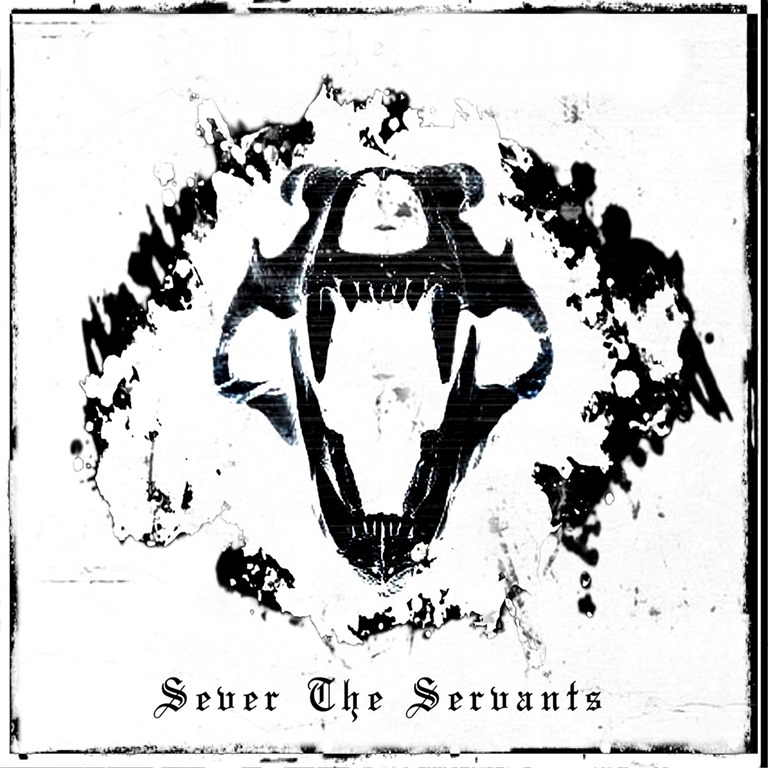
Sever The Servants – a nice play on words – have dished up an eponymous debut that’s as dark as darkwave gets, with subsonic bass, thudding beats and hushed, deadened vocals. As much as anything, I’m reminded of Test Department’s The Unacceptable Face of Freedom, only much more muted, and less abrasive, antagonistic, and slowed to a crawl.

Sever The Servants are no less political, skewering slabs off both ‘political and social commentary. From the ‘right wing hivemind’ theme of the title track to the things that slowly kill us day to day’, STS are seething… but with a taut musical restraint. It’s stripped back, minimal. No samples, no loops, just an undulating larval creep.

Instead of going all-out raging, industrial-style either by means of guitars (e.g. Ministry) or snarling synths (e.g. Nine Inch Nails), Sever The Servants create a dense, suffocating soundtrack that recreates the pressure of oppression with a sonic density and uncomfortable weight. Listening to this album is like having a heavy cloak pulled over your head. Everything is muffled, and you can’t think straight. You panic. The drum beats are like kicks to the chest. It’s hard to breathe. And they never let up. You feel the atmosphere thicken.

I was sold on the pitch that ‘The album’s themes are generally apocalyptical with some each of the album’s six tracks represent the freedom to explore with a complete lack of care towards staying in a “box”.’ Having spent the last couple of years effectively living in a box, I’ve grown accustomed to a certain sense of claustrophobia, but Sever the Servants manage to intensify this with the six tracks on the menu here. As for the apocalyptic… the world is quite literally burning now. And yet right-wing boomers are decrying those who dare to mention climate crisis as ‘woke’. We are fucked beyond fucked. The end of the world is truly nigh, and I’m out of words to describe just how fucked we are. But Sever The Servants at least manage to create a soundtrack that goes some way to articulating it – for as long as we have power, before the blackouts commence.

The vocals wheeze uncomfortably amidst tense soundscapes that roll and lurch, and the weight doesn’t come from volume or abrasive, but a menacing dark force.

AA

a4218863382_10

Dret Skivor – 1st October 2021

Christopher Nosnibor

Dret Skivor continue to provide an outlet for the weird and wonderful, not to mention the obscure and droney with the eponymous release from the enigmatic but somewhat amusingly-monikered twAt klaxon. All we know of twAt klAxon is that they’re a Finnish sound artist – but then, so we really need more (beyond the advice to ‘Play through decent speakers/headphones for best results’)? Sometimes, it’s preferable to engage simply with the music than to become side-tracked by biography and theory.

Being a Dret release, twAt klAxon is an album of two halves, created very much with the cassette format in mind (with just four copies of the limited C45 physical edition produced), and each side contains a single longform track. The first of these, the inspirationally-titled ‘twAt’ manifests as a single, thrumming, humming drone. It hovers predominantly in the midrange, and not a lot happens for a long time. Fleetingly, it stammers and stalls, before pulsing back with a stronger, more overtly rhythmic phase. While the variations are minimal, the sonic ripples yield some good vibrations – not just metaphonically, but literally, sending waved through my elbows and forearms as they west on the surface of my desk as I listen. And listen I do. Sometimes, to focus intently on a single sound can be a quite remarkable experience, one that’s both relaxing and liberating. The sound thickens and sticks, and slowly it creeps over you. It’s a frequency that doesn’t drill into your skull, but instead wraps your head tightly and squeezes, a smothering compression of emptiness.

As a child, I had a recurring dream in which pencil-drawn planes crashed and scrumpled in succession. This dream was soundtracked by a deafening silence. This is not that sound, but it reminds me of it, and in doing do, recalls the anguish caused by that dream, and it’s not pleasant. Even without that association, the tension of that single note that hovers from around the fourteen minute mark and on and on and on for all eternity is challenging. The reason I admire this as a work of sonic art because of the level of patience that must have been required to produce it – unless, of course, they left the room and made a cuppa while the sound continued, in which case I would feel somewhat cheated, and making them a twAt of the highest order.

‘klAxon’ is more drone: there are more vibrations, the sound is thicker, denser, buzzier, and there are intimations of beats of at least regular pulsations that thump rhythmically low in the mix. This slides into some heavy phase and throbs endlessly hard. It’s primitive, with undertones of early Whitehouse, mining that analogue seam minus the pink and white noise. twenty-one minutes of that undulating, slow-shifting bubbling almost inevitably has an effect, and it’s deeply disorientating. Perhaps less klAxon and simply more twAt.

Quippage aside, this album is certainly no accident: it is designed to register physically, while torturing psychologically. And no, torture is not too extreme a word: that isn’t to say that twAt klAxon is intended to inflict any kind of trauma, but it does employ the methods of torture within an artistic context to create a work that’s perverse and purposefully challenging – and it succeeds.

AA

a3994329484_10

A Front Recordings – AFR01

Christopher Noosnibor

A paroxysm is either a fit, attack, or sudden increase or recurrence of symptoms, or a sudden violent emotion or action, an outburst.

This paroxysm – the act – consists of Werner Dafeldecker (double bass) and Roy Carroll (electracoustic media), and between them, they forge a paroxysm – the work – which is a sustained sonic spasm consisting of two longform compositions that each extend to around the twenty-five minute mark.

This is one of those works that doesn’t really feel or sound like the sum of its parts – partly because it’s difficult to disentangle precisely what the parts actually are. Especially when it comes to ‘electracoustic media’. That’s not a criticism, so much as a passing critique: this isa collection of soundscapes forged from sounds of non-specific origin. Ominous hums and drones and scrapes and hesitant feedback loops all toss and turn together to conjure an ever-shifting expanse of amorphous, mellifluous sound. Clunks and thunks and clatters provide a percussive element of sorts, but again, these sounds are non-specific in their origins. As notes hang, quivering, or otherwise scrawl and hover around certain frequencies, the way they resonate and rub against one another becomes the listening focus. Listen closely, and some notes just nip the side of consciousness, and they’re bearable until there’s a friction against other frequencies, other rates of resonance. Upper-frequency chimes and tinkles collide with lower-end clanks and thuds, the swing of heavy bells decay slowly over shivering, shuddering extranea. It’s a slow creep, and while the sound never settles, over time one grows accustomed to the whistling, the how, and the hum.

If side two’s ‘Basalt’ contains all of the same elements as ‘Tendencies’, that’s because Paroxysm is a work that’s very much focused on detail, and progressively delves deeper into it with cumulative effect. As such, ‘Basalt’ is starker, sparser, sonically harder in every sense – but particularly tonally, and as an experience. Around the mid-point things get really dark and murky, before the percussion dominates the final minutes of slashing, crashing, difficult sounds.

And this – THIS – is the point of paroxysm. For most of the album, it feels drony hummy scrapy, but it emerges climactic, dense, a physical force that is longer merely background. It comes by stealth but hits by force. Boom. Never underestimate the subtle, slow build.

AA

AFR01_sleeve

Hallow Ground – HG2104 – 13th August 2021

Christopher Nosnibor

There are few things in life you can really rely on, but Hallow Ground is one of them, if you’re seeking music from the darker side. The clue’s pretty much in the name here: this is pretty dark. Of course it is. It’s also quite an interesting and unusual blend of styles and sounds, for while this forty-minute, seven-track work is predominantly instrumental and ambient in its leanings, it pushes wider and deeper than that, to span a range of territories, with often quite unsettling results.

DarkSonicTales is a project by Rolf Gisler, who was granted an artist residency in a 300-year-old farmhouse in the Swiss countryside in autumn 2019, by the label. How this sort of thing comes about, I’m not really sure, but there it is. I am a shade covetous of artists who get dedicated time and space to work on their art in whatever medium, because the simple fact is that in ordinary life there never seems to be enough time. For anything. And creativity requires headspace and time, both of which are rare and precious commodities.

Rolf seems to have made the most of his time, and the result is an album that’s varied in terms of form and tonality, which makes for a fascinating listening experience. From the mellow chiming of the short intro piece, ‘Info Pandemie’, to the eight-minute drone-swirl of ‘Best Buddies’ that drags the album to a slow-simmering conclusion in a bilious fog of sonic drift, DarkSonicTales is a deeply exploratory piece.

‘I Still Believe’ is a long, slow-burning, low-key, low-tempo gothy tune, where Gisler whispers in a baritone croon over a delicately picked guitar that’s hauntingly atmospheric and pinned down by a distant but insistent drum machine, its cracking snare cutting through the sonic haze.

‘Best Buddies’ brings the finale, and there’s a stuttering heartbeat drum flickering like a palpitation against the slow, majestic musical backdrop.

In some respects, it’s a challenge, simply because however much the album leans towards electronics, the way the instrumentation is used is so widely varied this feels like an album that’s harder to accommodate far more than it actually is. Somehow, the pieces of the jigsaw fit together.

AA

a4220900238_10