Lunatic Soul, the Polish outfit lead by Riverside’s main composer and vocalist/bassist Mariusz Duda is pleased to announce their 8th studio album The World Under Unsun, to be released on October 31st, 2025 worldwide (excluding Poland) via InsideOutMusic.
A second, new single off the upcoming album is being launched today. Check out ‘The Prophecy’ – which features music and lyrics composed as well as all instruments performed by Mariusz Duda, except drums by Wawrzyniec Dramowicz – in a video created by Sightsphere here:
Mariusz Duda checked in with the following comment about the song: “’The Prophecy’ is one of the more “rock-oriented” tracks on the upcoming Lunatic Soul double album The World Under Unsun, closer to what I usually offered in Riverside. At the same time, it’s also among the most melodic ones, especially thanks to its catchy chorus. Lyrically, it speaks about the situation when an artist only gains fame after their death. We’ve all probably encountered this phenomenon – when, after an artist’s passing, their work suddenly attracts more attention, new fans appear, and the number of streams and album sales rises. The song’s protagonist is therefore an artist who has just learned, from ‘The Prophecy’, that he will only achieve the fame he longed for after his death. Fortunately, the composition itself is not pessimistic. You can hear hope in it. Musically, the track is epic, emotional, and uplifting.”
The Norwegian–Swedish collective Orsak:Oslo returns with Silt and Static, their most emotionally intense and musically ambitious record to date. Set to be released on September 5, 2025 via Vinter Records, the album marks a profound new chapter for a band long celebrated for their introspective blend of psychedelic haze and dystopian post-rock.
Recorded spontaneously, Silt and Static captures the band at their most stripped-down and unfiltered, balancing atmospheric fragility with crushing depth. With tape rolling and no roadmap, the album emerged naturally, giving shape to a sound that’s both deeply personal and bleak yet beautiful.
“This is the most honest and emotionally charged record we’ve made to date,” says the band. “Silt and Static is not a concept album, but it still carries a distinct atmosphere that sticks with you. It maintains a fragile balance between friction and flow, born in this session that at times felt like it was on the verge of collapse, yet somehow kept enough momentum to find a winding way forward. None of the songs were written with a specific audience or genre in mind, they simply emerged while the tape was rolling. The entire album came about spontaneously, and we did our best not to get in the way of where it wanted to go. It’s not meant to be perfect, but it is meant to be real.”
“We hope there’s something, somewhere, in the space between the ugly, the fragile, the beautiful, and the unbreakable that stays with the listener as the needle approaches the runout groove on the final side of this double vinyl.”
Following the album’s gripping first single, ‘084 Salt Stains’, the band now unveils the second single, ‘083 Petals’, a brooding and hypnotic track that reveals the emotional tension at the heart of the new album. A track built on contrast and collapse, it begins with a sense of control before slowly disintegrating into distortion and desperation.
“For us, ‘083 Petals’ was an exercise in contrasts,” the band explains. “It began with confidence but quickly unraveled — a mask slipping, dignity hanging by a thread. It had to almost fall apart before it could come back together. Somewhere between muted cries and atonal screams lies this track.”
From the slow-burn psychedelia of their earlier work to the more introspective and improvisational textures of Silt and Static, Orsak:Oslo has never sounded more cohesive or more exposed.
Formed between Norway and Sweden, Orsak:Oslo has firmly built a loyal following over the years, with a sound that channels post-rock, krautrock, doom, and ambient psychedelia into captivating sonic landscapes. Their ability to stay unpredictable, while always sounding unmistakably like themselves has set them apart in the post-rock underground.
Silt and Static is a culmination of that journey: a double LP that breathes, fractures, mourns, and moves forward.
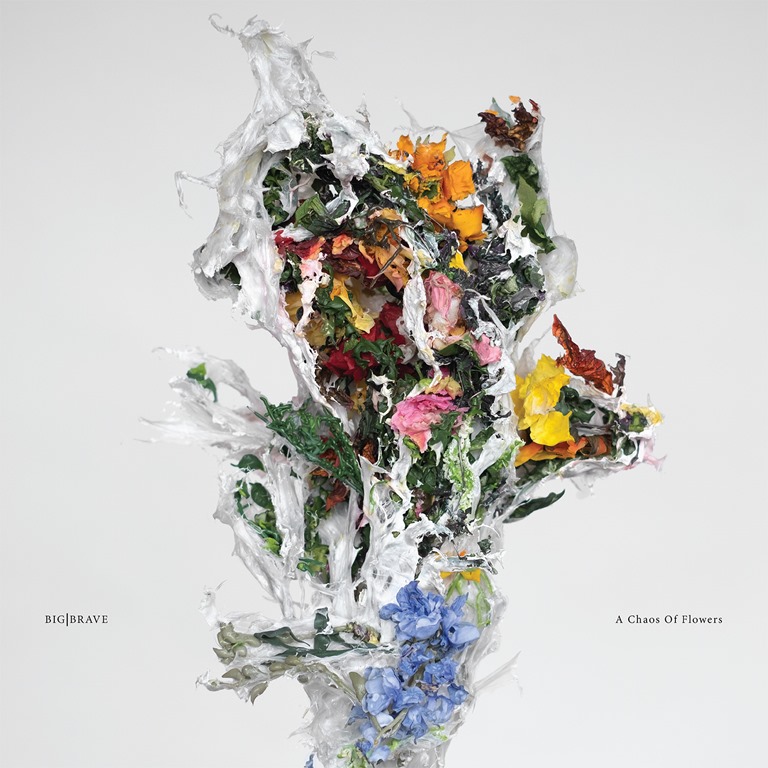
There’s been a quite staggering trajectory to the work of BIG|BRAVE: with each release they achieve an even greater level of intensity, which seems to be unsurpassable – until the next album. They’ve come a long way from their minimal ambient / folk beginnings. The instrumentation has remained minimal, but cranked out ear-splitting decibels, they’ve developed a way of creating a lot from comparatively little, and unlike many guitar bands, they’re not afraid of space. There is starkness, there is silence, there is separation between the instruments, and much room to breathe between slow, thunderous beats and crushing chords which collide at the pace of tectonic plates.
Vital was aptly titled, and marked a new peak in the articulation of raw emotional turmoil. It seemed improbable that nature morte could equal it, and yet it did, and went beyond, a desperate, feral edge pushing its emotive force to a higher level.
Coming a mere fourteen months after nature morte, and some substantial touring, how could they possibly sustain that kind of intensity? It seems improbable, but it’s happened. A Chaos Of Flowers is graceful, delicate, even folksy – but also eye-poppingly intense, cranium-splittingly loud, and utterly devastating.
The tracks released ahead of A Chaos Of Flowers hinted that this new album, beyond what seems human, would once again match its predecessor. ‘I Felt a Funeral’, which is also the album’s opening track, has strong folksy vibes… until the sonorous guitar tones enter. There are hints of late Earth about his, the way the resonant tones of pure sustain simply hang in the air. But dissonance builds, and there’s an awkwardness to this scratchy, imperfect beauty. The way Mathieu Ball’s guitar scratches and scrapes and builds to a blustering squall of dense, twisted noise is remarkable, building from nothing to an all-consuming howl. Yet at the same time, there’s restraint: it’s as if he’s pulling on a least to restrain this ferocious monster in his hands.
Currents – and volume – build. You’ve never heard guitar like this before. It brings the crushing weight of the drone of Sunn O))). And the thunderous relentless repetition of early Swans, but delivered with a breathy ethereal sparseness that’s difficult to place. And then there are the vocals. Not since first hearing Cranes in the early 90s have I heard a vocal so otherworldly.
The guitar feedback yearns heavy and hard in the final minutes of ‘not speaking of the ways’, a track which starts heavy and only grows in both weight and intensity. Robin Wattie’s voice is half adrift in a sea of reverb and drifting, almost drowning, in a tidal flow of guitar noise, for which you’d be hard-pressed to find a comparison. I’ve fried, struggled, failed. You can toss Sunn O))), Earth, MWWB around in the bag of references, but none really come especially close to conveying the experience of A Chaos Of Flowers.
The songs are shorter than on recent predecessors, and overall, the mood of A Chaos Of Flowers is different – dare I even say prettier than the last couple of albums. There’s a musicality and gentility about this album which marks something of a shift, and single ‘canon: in canon’ is the perfect evidence of this. One may say that ‘heavy’ is relative in terms of distortion and volume, but there is more to it than that. Many of the songs on A Chaos Of Flowers are delicate, graceful, sparse, with acoustic guitar and slow-twisting feedback dominating the sound of each track. There’s a levity, an accessibility, which is at the heart of every song here. Much of it isn’t overtly heavy… but this is an album which will crush your soul.
If A Chaos Of Flowers is intentionally less noisy than its predecessors, it’s no less big on impact. Raging, ragged chords nag away, until ‘chanson pour mon ombe (song for marie part iii)’ brings bleak, tones which cut to the core and explodes in to the most obliterative noise close to the end: this is the absolute definition of climactic finale.
There’s a rawness, a primitive, elemental quality to their music which has defined their previous albums, and this remains in A Chaos Of Flowers. You arrive at the end feeling weakened, short on breath, emotionally drained. I ask myself, how did I get here, so sapped-feeling? The answer lies in the force of this immense album. A Chaos Of Flowers is devastating in its power, and BIG|BRAVE reached a new summit – once again. The deeper and darker they go, the better they get.
Manchester-based art-rock five-piece Sylvette have shared a spine-tingling cover of Nine Inch Nails classic, ‘Right Where It Belongs’, which appeared on 2005’s With Teeth.
The new track arrives as the band confirm a release date for their third album: ‘Single Thread’ – which will arrive on 25th November 2022.
A sprawling rendition that sees Sylvette pay homage to the Nine Inch Nails original just as easily as they do douse the track with their own allure, the band initially released an early version of “Right Where It Belongs” on YouTube back in 2020. Having amassed almost 20,000 views since, the cover gained traction with Nine Inch Nails fans who flooded the video’s comment section “proclaiming they connected to it just as much if not more than the original.”
Quietly contemplative cover that’s laced with a heart-rending sense of feeling, vocalist Charlie Sinclair explains how it finds its place on their upcoming album:
“”Right Where It Belongs” is the first cover we’ve ever played together that really felt like we made it our own. The song is about questioning your reality and how going through change and trauma can distort the way you perceive yourself. It really felt appropriate for the theme of our upcoming album ‘Single Thread’, so we made it the closing track on the record.”
Staking their place as one of the most prolific and intriguing bands on the Manchester underground scene, ‘Single Thread’ will emerge on 18 November and promises to show a completely new side to the group.
Born out of Charlie’s personal struggles whilst caring for his disabled and terminally ill father, and the subsequent loss he experienced during lockdown, the album sees Sylvette shed their fantastical and dramatic sound to make way for a deeply personal, more honest and intimate kind of songwriting.
Capturing the sound of a band becoming more emotionally in-sync than ever before, the album was recorded in guitarist Jack March’s rented shipping container-turned-studio. Working on the project only between the hours of midnight and 3am, to avoid noise spill disturbing neighbours in the unit, ‘Single Thread’ is the band’s first completely self-made record, with Jack on mixing and producing duties.
With shades of John Martyn or Nick Drake appearing in some of the album’s instrumental moments, Charlie’s haunting falsetto will evoke the spectre of Jeff Buckley. Tracks like “Borrowed Time” and “Marble Stone” have a bitter-sweetness comparable to the likes of Cocteau Twins, whereas tracks like ‘Safety in Solitude’ are gently reminiscent of the darker, stripped-down side of Nine Inch Nails.
Listen to their version of ‘Right Where It Belongs’ here:
AA
SYLVETTE LIVE DATES 2022
27 September – Manchester, Carlton Club
24 November – Manchester – Album Listening Event, Details TBC
London-based Parisienne alt-noise-grunge threesome A Void have been kicking around for a bit now, although most of their kicking around seems to have been in London with few ventures beyond. During lockdown – a spell where they did a few online streams and the like – I found myself contemplating the strange geography of bands – specifically how in many places, ‘local’ is used disparagingly to denote an act who’ve failed – or declined – to venture beyond the vicinity of their region, and for any ‘regional’ act to ‘make it’ nationally, they need to venture to the capital, whereas in London a band can chug around the city’s venues forever and seem like they’re actually on tour without the word ‘local’ ever cropping up.
In politics, we complain about how just London-centric everything is, and back in the 80s and 90s, the same accusations were levelled by nine tenths of the country at the music press, as represented by Melody Maker, NME, and Sounds. It seems pretty trivial now we no longer have a music press, but back then it was frustrating to read endless reviews of London gigs by bands who never played outside London.
A Void don’t just hark back to that in their remaining firmly lodged in London, but in their ramshackle grunge-influenced stylings: for all of their time on stage, they’ve stubbornly shunned the common tendency to tighten up and get slick, with their shows being wild, chaotic, and clearly joyfully cathartic, which is completely in keeping with the music itself, which is pitched as being ‘FFO Hole / Silver Chair / Babes In Toyland’, and which got me wondering if there are any FO Silverchair, or if anyone even remembers them now.
This rough, raw immediacy carried through into their debut album, Awkward and Devastated, which featured some pretty wonky playing in places. It in now way detracted from the listening experience – quite the opposite, in fact, rendering it all the more real, all the more honest – but even now, I still find myself thinking ‘wow, they left that in?’
Penned by frontwoman Camille Alexander during lockdown, this second album was recorded between 2019 and 2021 in London, with producer Jason Wilson (Reuben, Dinosaur Pile-Up), the blurbage describes it as ‘a record delivered with a visceral, personal energy that touches on themes of heartbreak to womanhood to battles with mental health.’
The first taster we got of it was ‘Sad Events Reoccur’; presented here in two conjoined parts, a six-minute slow-burner of a single felt like a pretty daring way to mark a return after couple of years, but A Void really aren’t a band to be bothered by commercial considerations and it showcased an altogether meatier, chunkier sound that suited them well, and as such, makes for a strong start to the album.
‘Stepping on Snails’, also released as a single, has a certain swing to it, and is a winner with its explosive chorus and vocal harmonies, but it’s the thick, gritty bass that really holds everything together as the guitar wanders around hither and thither, ad I’m reminded of the squalling mess of Nirvana’s In Utero, where at times the guitar seems to serve to provide only texture and tone, while the rhythm section is what keeps the shape and prevents it from collapsing into incoherent noise.
There’s a reflective tone to ‘One of a Kind’, at least in the verses, before the distortion kicks in on the guitar and it’s a well-realised slice of tortured angst that runs the full gamut of churning emotions.
Dissociation is a giant leap forward from Awkward and Devastated, which was appropriately titled and we can see just how much everything about the band has evolved. The songwriting is more structured, but without losing any of its sense of dynamics, and the production really has optimized a much, much more solid performance in playing terms. It’s still raw and fiery, Camille still roars like she’s possessed and the force is strong, but this feels altogether more professional. That should by no means be equated to overpolished or selling out in any way: this newfound focus facilitates a more accurate articulation of the songs and the band’s intentions.
There’s not a dud track here, and the ones that aren’t instant grabs are strong growers, from the barren, bereft ‘2B Seen’ and ‘5102’ that revive the spirit of the criminally underrated Solar Race to the more accessible ‘In Vain’ that actually slips into a groove and bursts into an anthemic finale with a hook worthy of Alanis Morissette while at the same time bringing a touching emotional sincerity.
To describe an album as ‘mature’ feels like a vaguely damning praise that connotes a transition towards dullness and mediocrity: this is most certainly not the case with Dissociation. It’s just an altogether better realised set of songs: A Void have lost absolutely none of the fire, but have found the best method to get everything across, and it punches hard.
Here at Aural Aggravation, we may have a predilection for noise and abrasion, but sometimes, we get headaches, sometimes we just get too het up and stressed and life gets so horrible that we need a break. Besides, even pop songs don’t necessarily mean mainstream these days: and without the kind of exposure that propels them to stardom, purveyors of pop can be as underground as the darkest of sludge metal acts.
Bethany Ferrie – 23 and hailing from Glasgow – beings us a piano-led song that’s poppy, but also serious, but without being Coldplay or Keane about it. She does, however, represent a generation of new artists who are emerging with a maturity that belies their years.
On ‘This is Where I Leave You’, Bethanie twists and turns through a gamut of emotional turmoil, and there’s a whole lot of emotional anguish here, but it’s presented delicately and digestibly thanks to a sweetly melodic delivery.
It was live that I was first sold on The Twilight Sad. Having been recommended their debut album, I felt a certain indifference, but a few weeks later, witnessing the intensity and blistering volume of a live show, they affected a genuine shift in my life in music.
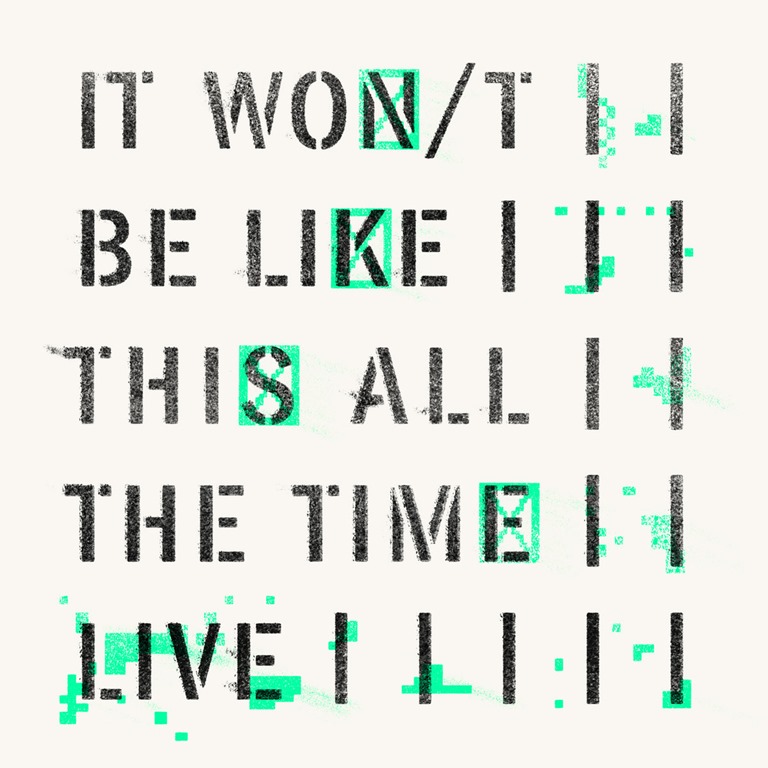
Timing matters, and it’s a fact the band themselves acknowledge in the blurb accompanying this digital release: ‘We have been talking about recording a live album for a long time. We think this is the best we’ve been playing as a live band and wanted to document that. With five albums of material we felt now was the time.’
Ordinarily, I wouldn’t quote at such length, but the band’s statement speaks multiple volumes about the nature of the band, and precisely why they mean so much to their fans: ‘Over the past few months we were figuring out how to release the album and then covid-19/lockdown/gig cancellations happened. We quickly decided that we would release the album digitally on a pay what you want basis. The reason behind this is that we know that financially it is a worrying time for a lot of people and for ourselves included. We wanted to make sure we could give everyone who likes our band one of our gigs live in their living room as we can’t be out in the world playing gigs right now. We wanted to make sure that anyone who wants the album can afford it as well. I hope everyone is doing okay. I hope this helps… The title of our last album It Won/t Be Like This All the Time has been living with me for the past three/four years and right now that sentiment feels stronger than ever. We’ll get through this together.’
This release will definitely help. This is a largely personal thing, I’m sure, but I’ve struggled to stir much enthusiasm for the myriad live streams from living rooms. Kudos to the artists plugging the gig gaps and engaging directly with their fans. But seeing one or two members of a band strumming away in their living room doesn’t capture or recreate the experience of attending a live show, which is about the immediacy and the intimacy and while I’m not one for hug or physical contact, the sense of oneness that comes from standing packed in close with people in a shared moment of appreciation and often catharsis is unique. And if I want full-on, tear-jerking, breath-shortening catharsis, I go and watch The Twilight Sad.
The fact The Twilight Sad have such a massive hoard of recent live recordings from the last tour is good news: having caught them just before and also just after the release of the album, it’s fair to say that they really have hit a new pinnacle lately. And as a document which captures their recent form, listening to this is transportative. Rather than lamenting the lack of the full band as I watch an acoustic home show – and with absolutely no criticism of the bands doing this – I’m back there, reliving the experience. For this reason, it’s very much a plus that they’ve replicated the full concert experience rather than simply selected recordings of the tracks from the latest album and presented them in sequence. Strong as the album is, this is more, with 18 songs that really do show the band in spectacular form.
It’s a powerful opening: the massive incremental swell that builds on the album version of ‘[10 Reasons for Modern Drugs]’ is replicated perfectly here: a bubbling synth and simmering tension culminates in a maelstrom of guitars. Meanwhile, ‘Shooting Dennis Hopper Shooting’ is one of the definitive Sad tunes and one the most killer tracks of 2019, and they deliver it with full force here. But then, that’s every performance of every song at every show, and is precisely why they shows are so very fucking special.
‘VTR’ brings all the emotion, and dipping further into the back catalogue, they attack ‘Don’t Move’ at a blistering pace, and while the synths still dominate the melody, Andy MacFarlane’s guitar squalls bring all the noise and all the texture. And this is an important point of note: however tight they get, however close to fidelity the sound, there’s always an edge that’s unmistakeably live about The Twilight Sad, and the emotions are never less than painfully raw.
‘That Summer, At Home, I had Become The Invisible Boy’ lands just short of the middle of the set, and is everything that sold me in the first place: the volume and intensity are captured perfectly as James Graham howls ‘The kids are on fire in the bedroom / the cunt sits at his desk / and he’s plotting away.’
‘The Arbor’ is denser and even bleaker than the studio version, and calls to mind Pornography era Cure, and ‘I/m Not Here [Missing Face]’, one of the starkest, darkest tracks on the album, is harrowing as hell live as James croons darkly, ‘I don’t want to be around you anymore / I can’t stand to be around me anymore’ against a guitar that positively wails in anguish.
Every single song is a highlight, but the inclusion of ‘Seven Years of Letters’ and ‘Wrong Car’ are rather welcome surprises which almost compensate the absence of ‘I Became A Prostitute’, while listening to the cover of Frightened Rabbit’s ‘Keep Yourself Warm’, which has become a set staple and here spans a massive eleven minutes, provides another reminder of the way band and fans connect to share their pain and anguish.
The album closes, as every set rightly does, with an eight-minute rendition of ‘And She Would Darken the Memory’. It never fails to hit home, landing a punch to the gut and bringing a lump to the throat. On paper, the words ‘the rabbit might die’ may only yield a shrug, but howled in a thick Scottish accent amidst a tempest of guitars, it acquires all the emotional resonance that words alone can’t articulate.
Make no mistake: this is an outstanding live album by any standards, capturing the essence of the live experience of the band perfectly. But it’s also something that will mean absolutely everything to the fans. And of course I mean me.
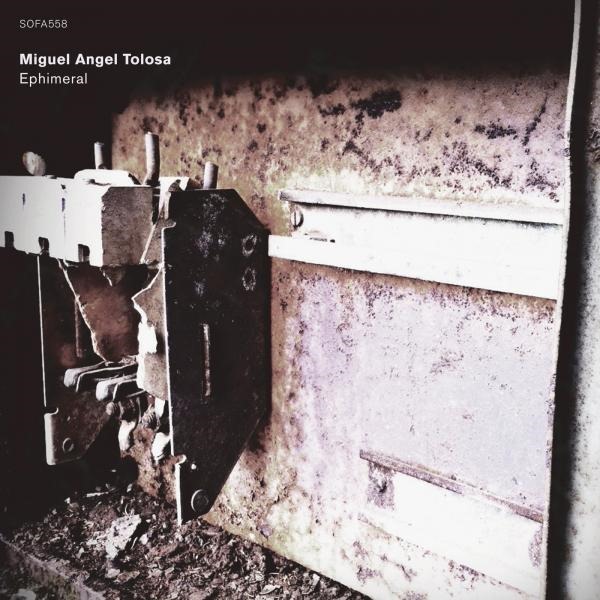
I recall that in my teens, having read the word ‘ephemeral’ just once, I used it in conversation and mispronounced it, much to the amusement of one of my fellow students. My phonetic pronunciation is replicated in the title of Miguel Angel Tolosa’s album. There’s little relevance to this anecdote in the wider picture, but that’s actually the point. It was a brief moment in time, long past and irrelevant and inconsequential on every level but for the fact that it lives on as a moment of embarrassment in my memory. And herein lies the relevance. Moments only exist in the moment: any record or document of the moment may change the context, the complexion and the enduring recollection of the moment, but in the context of the ongoing continuum of time, once the moment has passed, it’s past.
There’s surely something of a contradiction in a recorded work centred around the concept of ephemerality. The very act of committing the sound to a recorded medium captures it in time, imparts a date stamp (literal or otherwise) and locks the moment for perhaps an eternity. Ephimeral exists within these contradictions. It doesn’t exactly explore them, but the compositions – individually and collectively – serve to create a fleeting atmosphere centred around transitions and contrasts.
While the majority of the album’s compositions are preoccupied with ambience – wide, sweeping sounds, building ever-shifting cloud formations in sonic form, with the threat of a storm always looming but never becoming an actuality – there are other pieces which break the mould of fleeting, fractal aural nebulousness to coalesce into something denser, if not necessarily more tangible or readily compressed into structured musicality.
The album starts dark, ‘Rio de Cristal’ dominated by an undulating low-end drone, which segues into ‘Tropismos’, on which a dark, murky swamp of sound is rent with barrages of grinding noise and attacks of snapping shrapnel akin to machine gun fire. It’s the kind of aural experience that makes the skin crawl and the nerves jangle.
Light and dark are juxtaposed throughout, often simultaneously, with menacing chords and notes which scrape like metal against fillings filtering beneath soft, expansive clouds of sound. And perhaps it’s in the experience and the sensations this music provokes within the listener that the ephemerality of Tolosa’s work is truly apparent. The listener is left chasing fragmentary thoughts and feelings, often conflicting, arising in response to the simultaneous aspects of the music.
So how does Ephimeral leave you feeling? By turns elated but tense, strained but calm, and ultimately confused and conflicted and adrift, at odds with oneself.

 Aural Aggravation