Posts Tagged ‘electronica’

generate and test – gt49 – 23rd October 2020

Christopher Nosnibor

I don’t even know what day it is most days. I’m vaguely keeping track of the months and weeks, but a mostly existing day-to-day. Turn on the laptop, check my calendar, dial into the meetings I’m booked into. It’s just mechanical, I’m not really living. I know it’s 2020, by virtue of the fact I don’t know much else: confusion reigns. Time’s meaning has evaporated over the last seven or eight months.

I was drawn by the title, as the two component parts both feel relevant. That may be a personal thing, it may be a more general thing. We’re living every moment of every dystopia ever written, ever filmed, ever imagined, and I’m deeply nostalgic for all things right now, ranging from human interaction to simply feeling as if I have a life. I know I’m not alone in being alone.

I’ve long had an acute sense of nostalgia, but loathe the way nostalgia has become an industry, capitalising in the way the ageing process rose-tints the past. Anniversary edition albums and movie reissues don’t only cash in on that sense of past times, but lock people into a cycle of nostalgia, provoking reminiscences of ‘the good old days.’ Admittedly, the future has never looked so barren and the past more appealing, but generally speaking… we always yearn for the past because things were simpler when we were younger and less burdened with responsibility and emotional baggage.

It looks like this release has been languishing in the vaults for a long time, if my reading of the liner notes is right, they state that this was ‘written, produced, performed, and recorded by Matthew Thomas 1997… mastered by Matthew Thomas 2020’ Apparently, ‘2020 demanded we revisit a 1990s vision of a dystopic future’ – and yes, maybe it did. Or maybe it didn’t. Do we need to be heaped with more dystopian anguish given the pain of living in the every day?

nostalgia:dystopia promises ‘four tracks of dystobeats, placing the human voice within a context of fractured systems’, and delivers something that may be something close, I don’t know. I’m not entirely sure what dystobeats are, but I feel that we’re all living in a nexus of systems all of which are fractured and fragmenting, much to the psychological detriment of many. If lockdown was hard, the fact we’re still living in such uncertain times and under such restrictions and at distance from our fellow human beings is taking its toll. And this… it’s electronic, it’s overloading. Layers of sound collide against one another to forge challenging sound and forms.

There’s a sense of excessive volume and colliding sonic intents on the first track, ‘Pranayama’, where yawning drones like mechanical digeridoos hum and hover amid static blasts and feedback that ruptures from the simmering sonic surface like solar flares. Pulsing rhythms merge from the layers of sound.

In contrast, ‘Within in Orange Sodium Glow’ is thick, deep, and mellow for the most, with squelchy electro vibes coming to the fore: but there’s an eerie undercurrent that’s hard to ignore as lumpy beats lurch and thump amid undulating analogue oscillations, while ‘Sheering Force’ is stark, mechanoid, depersonalised, bleak and ‘Insect’ is a scratchy, buzzing mess of distorted beats and murky gyrations that emanates detachment and dislocation.

Having languished some twenty-three years in the vaults, it does seem as if Thomas had a certain sense of gloomy premonition about the future that’s now here. But then, every year of present feels bleaker than those which preceded, and since the turn of the millennium, it’s felt as though while global warming has been melting the ice caps at an exponential rate, life has been inching closer to a perpetual winter of the soul. With nostalgia:dystopia, Matthew Thomas has created a suitably claustrophobic soundtrack.

AA

gt49_front

23rd October 2020

Christopher Nosnibor

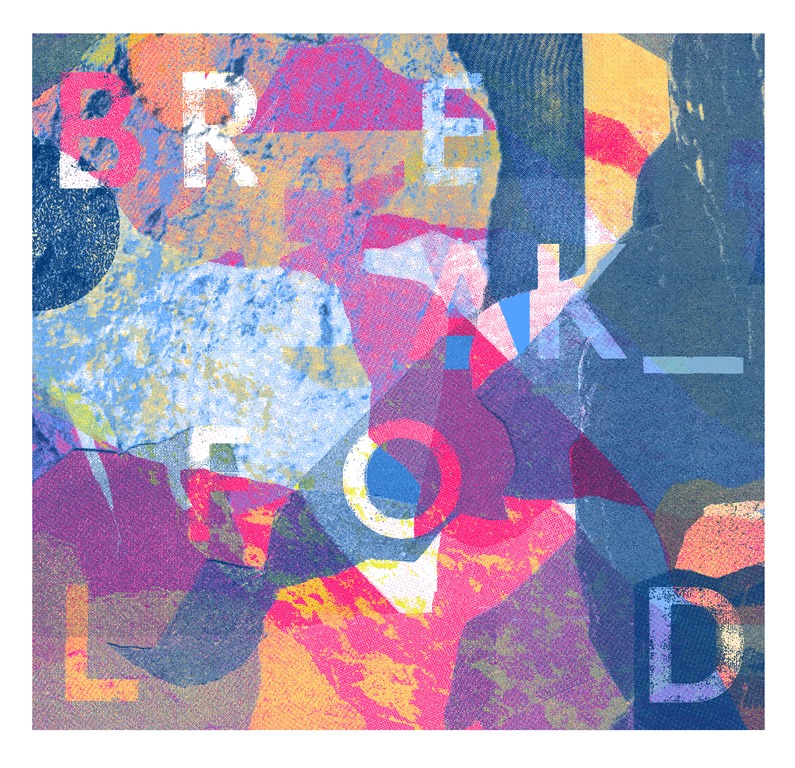
It’s been a while since we’ve heard from break_fold, the electro-semiambient project of former i concur front man Tim Hann. But life has a habit of getting on the way of creative endeavours, so it’s not entirely surprising. This is the third eponymous break_fold release, and it marks a clear continuation from its precedents, including the song titling, with the majority of tracks denoted as a date which this indicates when work started on the song. The two exceptions are ‘Gaps_in_the_Mesh_(Remix)’, a reworking of a track by ambient artist and collaborator, Ten, and ‘JP’, which is dedicated to a friend of Tim’s who unfortunately passed away in 2019.

That the first two tracks date back to 2018 give an indication of the length and laboriousness of the assembly of this third excursion. The previous release, 27_05_17 – 21_01_18 was a comparatively speedy work.

The first piece, ‘22_12_18_Pt1’ is soft, supple, floating mellifluous ambience that evolves from an elongated, ominous drone, into a cascading piano motif, while its counterpart brings the beats – soft, yet strong, clear, and propellent, it’s a cinematic electro groover, which radiates an uplifting vibe.

From this point, the album begins to develop a definite sense of having a forward trajectory. A dark, serrated hum blossoms into a multi-hued shimmer of radiance, pushed along by a solid danceable rhythm on ‘15_11_18’. There are some quite noodly synth details behind the broader sweeps. There are hints of Jan Hammer about some of this, and there are moments that stray into drivetime dance that’s kinda smooth, kinda accessible: the buoyant basslines are easy on the ear and there’s an undeniable bounce in the background. It feels rather escapist, and it’s rather nice: we all need somewhere to escape to at times, especially now, so immersion is good. And breathe…

‘29_04_18’ feels fully formed as ripple waves of gentle sound pulse across a flickering, understated dance beat – more one to nod along to than to get down t, but nevertheless, it’s unexpectedly uptempo, and while it does still evoke chin-stroking ponderousness, it equally creates a rich atmosphere in which to wander and ponder.

There is a lot off space to be explored on break_fold, a lot of texture and tone, and while it may largely favour the light and melodic and easy on the ear, it’s got range and ventures into shadowier realms in places. There are parts that evoke 80s film soundtracks, and others still more chillwave in their orientation.

The album ends with ‘JP’, and one can’t help but feel the abrupt ending is significant, a work truncated, unfinished and unresolved. But for all that, it feels like the work for this album is done, as though this particular creative cycle is complete. Where to go from here remains to be seen, but in the now this resonates majestically.

AA

breakfold_album_front

Panurus Productions – 25th September 2020

Christopher Nosnibor

Shrill, harsh, shrieking feedback noise and ear-cleansing scrapes of crunching metal collide and it’s not pretty, it’s not easy on the ear, it’s not rhythmic, melodic, or anything even approaching aesthetic. This is the sound of ‘Cardboard Schimitar’, the eleven-minute opening track on Always Check Your Mirrors, a collaboration between Mariam, Plastiglomerate, SW1n-HUNTER & Yol. It’s something of a departure for Newcastle-based tape label Panurus Productions, for whom dark, odd, and unsettling are standard, because Always Check Your Mirrors hurtles headlong into the domain of warped and outright nasty.

It’s head-shredding, and a sonic experience akin to poking a wet finger in a live socket, but the best of it is that that’s as gentle as it gets. It’s the sound of four similarly attenuated but nevertheless disparate artists pulling in all directions at once to chaotic effect.

To be fair, the liner notes do very much prepare us for the worst: ‘from frantic blasts of electrical necromancy through to sparse ominous ambience, crackling with distortion or resampled and warped. Objects clatter and strings twang over sizzling electronics and stark exclamations, as twisted and sheared sounds fold back into themselves over the course of eleven tracks.’ As the notes also explain, this album was ‘pulled from a session recorded live’, and consequently, ‘these tracks vary in intensity across the tape; from frantic blasts of electrical necromancy through to sparse ominous ambience, crackling with distortion or resampled and warped. Objects clatter and strings twang over sizzling electronics and stark exclamations, as twisted and sheared sounds fold back into themselves over the course of eleven tracks’.

And the end result is a serious fucking din. Unintelligible, maniacal shouting against screeds of impenetrable, undifferentiated noise is the order of the day for ‘Illegible Back Tattoo with Typo’: it’s a primitive stab at power electronics, and it’s this primitivism that gives it such a brutal edge. Twanging, scraping, clanking, clattering, this is truly everything thrown in including the kitchen sink, with bags of spanners, rusty nails, leaky pipes, and a hefty dose of psychosis: this is the sound, and this is the mood: wild-eyed raving and a boiling fermentation of electronic froth come together to create an uncomfortable atmosphere, like being hemmed in a small meeting room with a manager who’s losing their shit every which way, while troubling tinnitus rings in your ears. The tension hurts, and your pulse quickens with discomfort.

The vocals are stuttering, tight-chested, snarled, shouted, choking on fury to the point that thy more or less resemble a breakdown captured by microphone, stammering incohesion amidst a crackling overload of distortion. Always Check Your Mirrors straddles electronic noise and experimental weirdness: ‘Awesome Pop Off the Radio’ is a cut-up explosion with Tourette’s, a spasm smash of warped tape whiplash. Needless to say, it’s the antithesis of pop, and yet it’s probably one of the more accessible cuts by far. ‘Hoiked from Pure Air’ evokes Japanese oddity, and following the bleep, fuzz, and whirr of ‘Test Skeleton’ with its farting circuit melts, while the thirteen-minute closer, ‘Accolades as the Car Stalls Again’ dissolves in a wave of static as bleeps and crackles fly in all directions.

It’s far from soothing – by which I mean it’s borderline psychotic – and an album containing this level of fevered spleneticism should probably carry a trigger warning for the more delicately disposed in these tense times, but the catharsis imbued within each brutal blast that combined noise and words to the most powerful effect is perhaps one of the most succinct articulations of all of this fucked-up shit I’ve hears all year.

AA

cover

29th August 2020

Christopher Nosnibor

True to form, details of the theory or process behind Gintas K’s third release of 2020 are sparse: ‘Played & recorded live by Gintas K 2019. Recorded live at once, without any overdub; using computer, midi keyboard & controller assigned to vst plugins’.

What he presents here are three longform compositions, between fifteen and twenty-one minutes apiece, each accompanied by an ‘extension’ piece, of around five minutes or so, which tacks on to the end. The pieces are untitled, beyond ‘Track One’ and the date and what I assume to be the end time of recording.

K works from a palette of synapse-popping digital froth, tiny bleeping tones that fly around in all directions like amoeba in a cellular explosion, which builds to some neurone-blasting crescendos of whirring electronics and fizzing bursts of static and sparks. Amidst a swampy swirl of squelchiness rises a hum of interference, like an FM radio when a mobile phone’ been left next to it. ‘track one’ dissolves into a mass of amorphous midrange; its counterpart ‘extension’ reprises the glitching wow and flutter, ping and springs of the majority of the preceding twenty minutes, and follows a similar structural trajectory, only over a quarter of the time-frame.

‘track two’, recorded the following day in November of 2019 is, ostensibly, more of the same, with birdlike tweets and twitters fluttering around random clunks and thuds. Here, initially, there is more restraint, fewer fireworks, and more space between the sonic somersaults, until, briefly but intensely, about five minutes in, when a fierce blast of static cuts the babbling bleeps, washing away the sound to silence. Granular notes trickle in a minuscule but rapid flow which hurries keenly toward the conclusion, only to return for the extension piece, sounding rather like the tape being rewound.

Bloops, glops, tweets and twangs abound once more on ‘track three’, and if the pieces on Extensions are given to a certain sameness, it’s testament to Kraptavičius’ focus and dedication that he explores such a small sonic area in such intensely obsessive detail. Gintas K creates intensely insular music, which picks through the details of its own creation in a microscopic level, and if his spheres of reference seem suffocatingly introverted and inwardly-focused, then that’s precisely because they are, and it’s welcome. Instead of eternally reflecting on his emotions, like so many musicians, his work emerges from an infinite loop of self-reflectivity concerning its own content, and as such exists in a space that is free of such emotional self-indulgence. If this is indulgent – and perhaps it is – it’s equally scientific and detached, which very much paces it in a different bracket. And as Gintas K continues to pursue a most singular journey, it’s most educational to be able to tag along.

AA

a1507230848_10

Submarine Broadcasting Co

Christopher Nosnibor

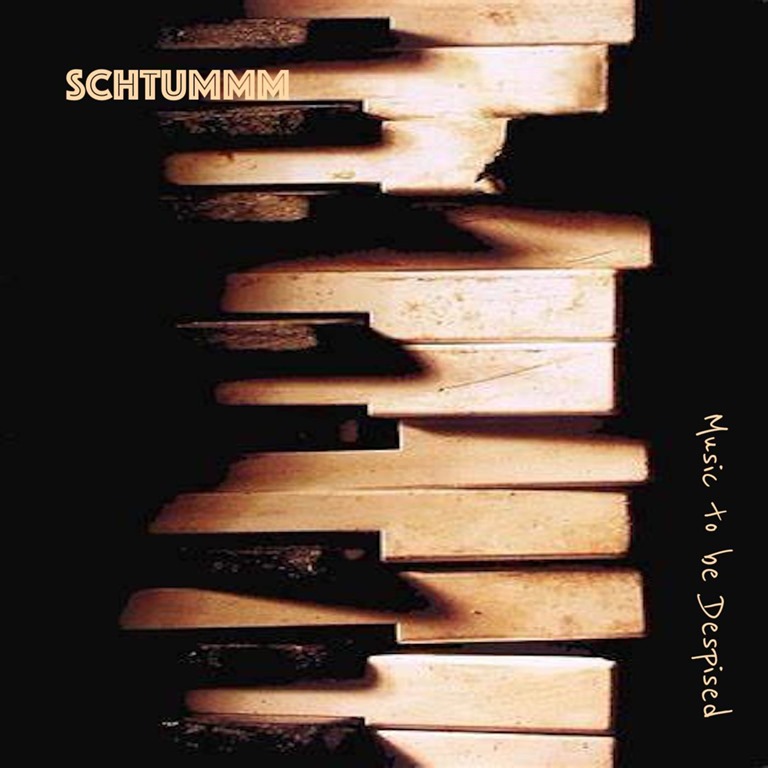
The press release details that ‘SCHTUMMM is the new project from Craig Manga (Mangabros, Modwump)’, and that ‘it’s Craig’s solo foray into generative music and it’s experimental, complex, emotional, mathematical and thoroughly original. There is beauty in there for those who are prepared to look’.

‘Despise’ is a harsh word. It connotes such a strong dislike that it borders on the physical. A loathing, a hatred, so consuming one would wish to obliterate it. How could anyone despise music where there is beauty to be found?

To be fair, Manga does make it quite difficult to find the beauty or even particularly like his work at times here.

After the gentle introduction of ‘First Cuts’, which combines subtle post-rock elements with a delicate ambience, and is pretty innocuous to say the least, things immediately become a whole lot more challenging with ‘Cesium Bed Deposits’, an experimental electronic effort which finds multiple rhythmic sound sources jostling and clanking for supremacy while whistling notes on the feedback spectrum waver in and out. It has something of a vintage vibe, hinting at the likes of Cabaret Voltaire and Test Department, even Throbbing Gristle, the kind of innovators who took new and emerging technologies and pushed them – and the boundaries of music – to the limit.

‘Juggerman’ is another exercise in dislocation and disorientation, warped tape loops spooling every which way around bulbous bass notes and clicks and pops which form muddy, stop-start rhythms. White boys can’t dance, especially not to twisted disco that’s out of key and out of time with itself as the tempos wow and flutter erratically all over ‘Tempus Fidget’ (which gets extra points for the audacious pun).

Things take a microtonal turn on ‘Circuitry <v.2.0 binary flesh>’. With piano notes bent and stretched out of shape, it sounds like ‘How Long’ by ACE, or maybe 10cc’s ‘I’m not in Love’ on a chewed-up audiocassette that’s being run over by a bulldozer, while the glitching circuity slowly melts in a stammering overload. It’s certainly a perverse and an intentionally frustrating listen.

The three-part ‘Memorygauze’ sequence, each part of which is precisely 10:00 induration (apart from the third, which is ten minutes and three seconds – I’m convinced b now that SCHTUMMM is out to affront my sense of order and my somewhat OCD tendencies are tripping over this detail

The looping vocal collage of the first of these, ‘Memorygauze: ,the erosion of nostalgia: infantile dementia>’ employs the popular horror trope of the eerie children’s voice singing, but renders it all the more unsettling with its abstraction, and the child-like simplicity of the sing-song repetition when pitched against dripping bleeps and a stuttering heartbeat of a rhythm becomes more uncomfortable over time. ‘Memorygauze: ,the erosion of nostalgia: juvenile dementia>’ sounds like the same track only more melted, a trick repeated on ‘Memorygauze: ,the erosion of nostalgia: alienator goofiest nosh>’, which actually sounds closer to the first, only with additional sighs, farts, and beeps in the mix before going drum ‘n’ bass about six minutes in. It’s almost as if SCHTUMMM is endeavouring to wring every last drop of frustration by testing the patience to the max and then just keeping on going – and going, and going. And I admire the audacity. I also appreciate the exploration of tonality, the way the relationship between incongruous sounds is interrogated in detail. It’s also a credit that instead of switching rapidly between ideas, each is given time enough to be fully realised.

Ultimately, from the frustration emerges a real admiration: it’s a challenging album, and it’s meant to be, and as such, very much an artistic success.

AA

cover

Front & Follow – F&F062 – 28th August 2020

Christopher Nosnibor

This twenty-three track extravaganza marks the third of five compilations for which cult label Front & Follow has been briefly resurrected with a view to supporting artists who’ve had their work rejected while raising funds for The Brick in Wigan, a charity for homeless people, which also operates a food back – more vital than ever, sadly.

What I personally like about the series and its approach to its purpose is that as has always been the case with F&F and the artists it releases, is its understatedness. And while there’s a lot of noise about the anguish of isolation under lockdown in the media and social media, the liner notes stress clearly ‘This is not an isolation project – it’s a rejection project’. This is very much representative of F&F’s singularity: the label was always about operating apart from trends or vogues, and as such, while it would inevitably cater to a niche audience, it wasn’t a fickle one.

While many of the artists are unfamiliar and probably not only to me, Social Oscillations and Sone Institute stand out as acts whom I’ve reviewed on previous releases on F&F.

Musically, and in terms of quality, though, it’s very much a level playing field, and it’s not hard to grasp why, having been inundated with submission for their modest project proposal, they decided to release a full five volumes.

It’s straight in with the eerie, spooky-sounding dark ambient courtesy of Social Oscillation’s ‘Dreich’, a word that’s stuck with me since my time in Glasgow around the turn of the millennium. It’s so descriptive, and yes, the song’s grey, sombre tone fits it nicely.

As with the previous volumes, despite being largely electronic and instrumental in its basis, the stylistic span is impressive: from minimal, dubby-techno to experimental post-rock via the most vaporous ambience, it’s all here, and curated so as to be perfectly sequenced.

With the super-murky ‘Crawling Guardian’, Everson Poe evokes the spirit of The Cure circa 17 Seconds and Faith before it goes crushing doom metal in the final minute, and the dingy production only amplifies the oppressive atmosphere. Elite Barbarian’s ‘Gat Trap’ is particularly unsettling and particularly impossible to pin down as is groans and rumbles; Newlands’ ‘Father Sky’ is a hypotonic chant, and ‘Orla’ by Farmer Glitchy is tense, claustrophobic, uncomfortable. Jonny Domini’s ‘New Pink Shirt’ is a bit of a departure, being a kind of Pavement-meets-The Fall lo-fi indie racket. It’s pretty cool, and John Peel would have loved it. Dolly Dolly’s ‘HEADS’ is a neat, if rather twisted, spoken word piece, and while it’s perhaps understandable why it may have ben hard to home, it’s no reflection on its being a good piece.

And, yet again, you can’t help but think that those who rejected all of these tracks, no doubt with an ‘it’s good, but just not for us’ let-down, are the ones who have missed out, and it’s all to the benefit of Front & Follow with their accommodating policy in curating this series.

AA

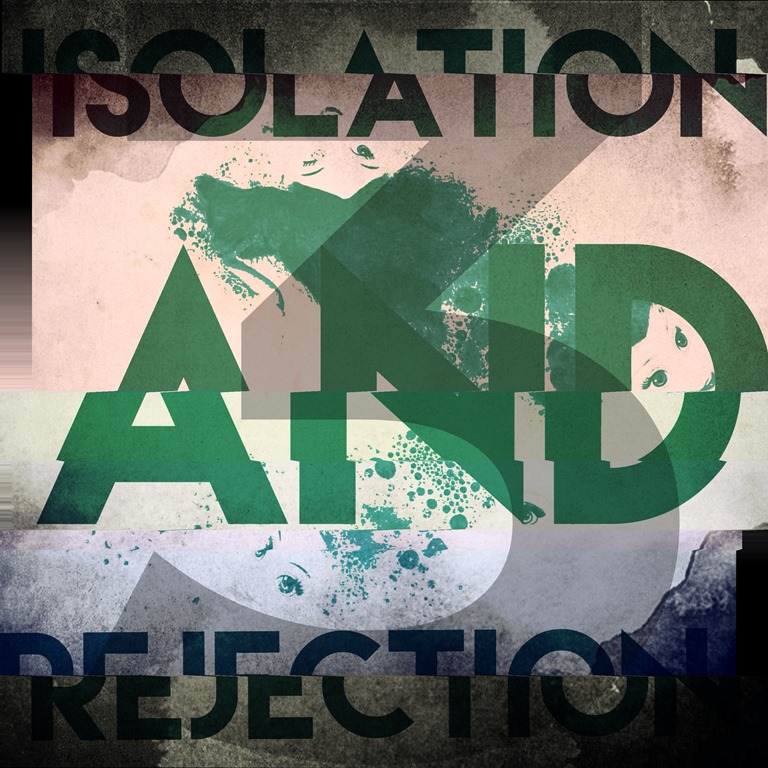
F&0F062 - ISOLATION AND REJECTION - VOL 3 cover

7th August 2020

James Wells

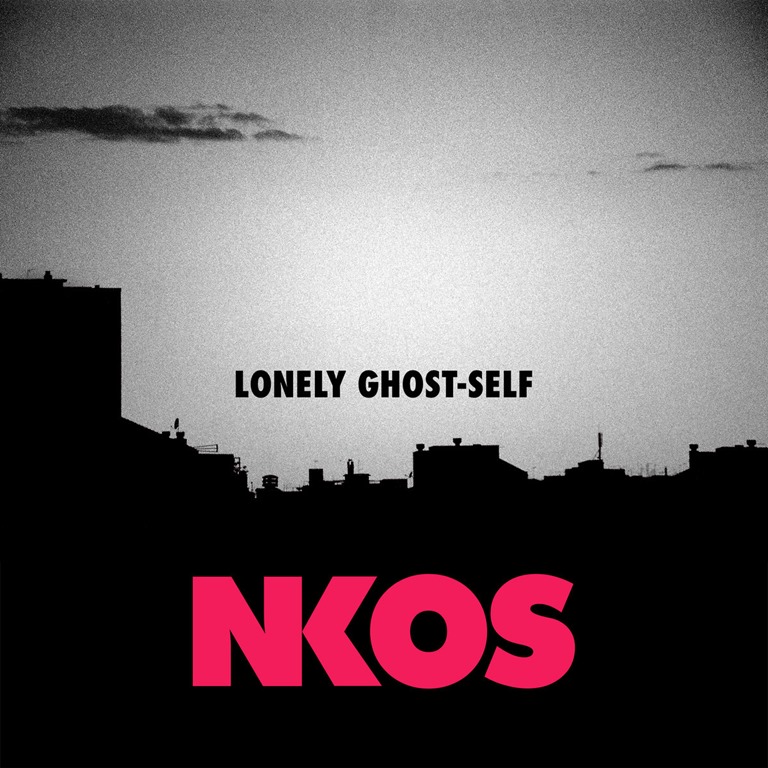
This, the third single from NKOS, is one of those tunes that just grows and grows, layer by layer, until it’s absolutely immense. Starting out subtly and slightly sinister, the beats build until the drums properly kick in, and it’s such a tight, punchy percussion, t smacks you right between the eyes, while a looping, cyclical groove eddies around to create a tense, claustrophobic atmosphere. Techno meets hip-hop meets electrogoth as a grating bass and heavily processed vocal snarls all over, calling to mind KMFDM and PIG.

With additional production from Jagz Kooner, who we can forgive his work with Kasabian and Oasis on account of his work with Radio 4, Ladytron, and the cult but so-underrated Officers, ‘Lonely Ghost-Self’ is hard-edged without being overtly aggressive, attacking without being excessively abrasive, and successfully avoids cliché, and ‘Lonely Ghost-Self’ has a lot going in its favour.

AA

AA

a1070526640_10

When an act comes as being recommended for fans of STABBING WESTWARD, Nitzer Ebb and <PIG>, we’re all ears here at Aural Aggro. and ‘Lockdown’ by Thrillsville doesn’t disappoint, mixing a dark bubbling synth bass groove and tense vocals with a bold, bombastic chorus, it’s a strong effort.

Lyrics like “Can’t stop touching my face,” “Don’t even know what day it is anymore,” and “Losing my f*cking mind” convey the mental and emotional strain the crisis has had on all of us.
"This song was directly inspired by the unrelenting restlessness of being “stuck on lock-down.”  In essence it’s a romantic song about longing for a normal night on the town.” – Rani Sharone (THRILLSVILLE)

Check the video here: you won’t regret it 9and besides, you’ve probably not got anything else to do):

AA

f0c5aa0e-75eb-446a-b9f0-cc9ad2fb2df7

gk rec.

Christopher Nosnibor

This makes for quite a refreshing change: it feels like about two-thirds of my reviews in recent months have been marked by a compulsion to comment on artists going into creative overdrive during lockdown and whacking out releases of new material because they’re not currently touring or working their day-jobs. But for Lithuanian electronic experimentalist Gintas Kraptavičius, it’s business as usual, with a steady flow of output over recent years, and with Amnesia being his second release of 2020.

One of the things I personally admire about Gintas as an artist is how broadly he explores the field of electronic music, with works ranging from minimal ambience to deep dives into microtonal territory, and a whole lot in between. Amnesia conforms to no genre or form, and instead spreads its myriad suggestions from across a host of conceptual spaces to create something wonderfully vague, and also vaguely wonderful.

The release comes with no information whatsoever about its concept or purpose or recording, beyond the fact that it uses drum samples by Travis D. Johnson. Those samples aren’t neatly assembled to form looped rhythm tracks and solid structural foundations for a work with an overt linear trajectory or other sense of solid form.

Amnesia contains a single track which spans a massive forty-four minutes, and begins with crackling, interweaving synths waves which crackle and fizz with distortion, while thumping clatters that sound more like shuffling, clumping footfalls than drums crash sporadically and arrhythmically.

There are some crescendos or swirling noise and shrill, trilling feedback notes that whistle and screech over churning blasts of bilious noise, violent sonic storms. There are segments of laser bleeps and skittering short, sharp toppy notes fire into a swirling morass of mid-range extranea.

A delicate piano tinkles in a nuclear storm and a stammering clanking rattles and clangs behind and alongside. This is a dominant feature of Amnesia: there is always a background and a foreground and a significant degree of contrast between the two, which is both textural and tonal. Harsh top and midrange are laced against softer, more gloopy lower spectrum sounds.

Time slips, drips, dribbles and cascades through a shifting sonic multiverse that’s often uncomfortable, at times undemanding, as the track transitions between ambience and abrasion, and towards the end it takes a turn towards synapse-collapsing early 80s power electronics.

What do you do with this? Where do you take it? What is it all about? There is no clear message, no distinct or decisive form, resulting in a longform composition that meanders and swerves in all directions but ultimately leads nowhere and articulates little – and that’s more than ok: Amnesia is not about sequence and making a bar, but about capturing a sense of vagueness and a certain lack of purpose, of point, and it does so magnificently.

AA

a2114610098_10

Front and Follow – 31st July 2020

Christopher Nosnibor

Rejection hurts. Always. Some of us can ride it out, brazen it off, better than others, but always, it stings. Artists in any media tend to be sensitive types, and so the sting is all the harder.

The basis for this series is lovely: it’s relevant, relatable, but also worthy because of its wider context: ‘not an isolation project – it’s a rejection project’. Rejection is isolating in itself, but more specifically, this is a collection of rejections released from isolations.

As the accompanying blurb recounts, ‘Isolation and Rejection was born out of thinking about what happened to all the tracks that didn’t make it onto those fancy compilations, and is now turning into an ongoing project to collect, collate and promote rejected sounds.

With over 100 artists signed up, we are going to release five volumes over the next few months. Each volume will showcase those lost gems, discarded and abandoned but now lovingly embraced and put front and centre for your enjoyment. We’ll also be sharing the stories behind the rejection – funny, weird and sometimes a little heart breaking.’

The beauty of this collection lies not only in the music itself, but its eclecticism. The tracks range from fragmentary snippets to eleven-minute explorations, from bubbling electronica to billowing abstraction. With twenty-four tracks, it is a monumental and truly epic set, and not necessarily one to take in in a single sitting.

Lose a Leg provide the first piece, with a delicate piano snippet of a composition called ‘Thinking About It’. It’s barely a minute and a half, so there isn’t much time to think.

There’s a strong leaning towards mellifluent ambient works, abstract, cloud-like sonic drifts of intangibility, but this being a Front and Follow-curated release, it’s got well-considered range: Time Attendant’s ‘Binocular Visions’ introduces Kraftwerkian robotic electronica into the mix, with a motoric sequenced rhythm underpinning its throbbing electronic structures. Then again, there’s a lot of bleepy electronica centred around cyclical grooves and heavily repetitive beats, as exemplified by Caper One & Vandal Deca’s contribution.

Some pieces straddle both: Audio Obscura’s ‘Castles on Earth’ is big, bold dubby, beaty and ambient all at once, an echoic bath that swells around a dense, booming bass, and elsewhere, Crisp Packet Jacket bring woozy pulsations with ‘Dreadful Own Brand’. No Later’s‘The Revenant Sea’ is spectral and haunting, and in many ways encapsulates the spirit of the release in its hybridity, while ‘Music forBroken Piano’s recalls early Pram in its dissonance and discord.

Sairie’s lilting folk cover of ‘House of the Rising Sun’ stands out by virtue not only of its difference, but its beautiful vocal melodies, which later over a sparse et lush acoustic guitar. Why was it rejected? Did they submit to a death metal or power electronics compilations? But we know that rejection is often more about curatorial taste than quality of submission, and it’s quite apparent with this collection because there simply isn’t a weak track to be found.

It is a colossal collection, and likely not one to play in a single sitting, especially with so much going on. This makes it, along with the first edition, a collection of outstanding quality.