Posts Tagged ‘electronica’

7th August 2020

James Wells

This, the third single from NKOS, is one of those tunes that just grows and grows, layer by layer, until it’s absolutely immense. Starting out subtly and slightly sinister, the beats build until the drums properly kick in, and it’s such a tight, punchy percussion, t smacks you right between the eyes, while a looping, cyclical groove eddies around to create a tense, claustrophobic atmosphere. Techno meets hip-hop meets electrogoth as a grating bass and heavily processed vocal snarls all over, calling to mind KMFDM and PIG.

With additional production from Jagz Kooner, who we can forgive his work with Kasabian and Oasis on account of his work with Radio 4, Ladytron, and the cult but so-underrated Officers, ‘Lonely Ghost-Self’ is hard-edged without being overtly aggressive, attacking without being excessively abrasive, and successfully avoids cliché, and ‘Lonely Ghost-Self’ has a lot going in its favour.

AA

AA

a1070526640_10

When an act comes as being recommended for fans of STABBING WESTWARD, Nitzer Ebb and <PIG>, we’re all ears here at Aural Aggro. and ‘Lockdown’ by Thrillsville doesn’t disappoint, mixing a dark bubbling synth bass groove and tense vocals with a bold, bombastic chorus, it’s a strong effort.

Lyrics like “Can’t stop touching my face,” “Don’t even know what day it is anymore,” and “Losing my f*cking mind” convey the mental and emotional strain the crisis has had on all of us.
"This song was directly inspired by the unrelenting restlessness of being “stuck on lock-down.”  In essence it’s a romantic song about longing for a normal night on the town.” – Rani Sharone (THRILLSVILLE)

Check the video here: you won’t regret it 9and besides, you’ve probably not got anything else to do):

AA

f0c5aa0e-75eb-446a-b9f0-cc9ad2fb2df7

gk rec.

Christopher Nosnibor

This makes for quite a refreshing change: it feels like about two-thirds of my reviews in recent months have been marked by a compulsion to comment on artists going into creative overdrive during lockdown and whacking out releases of new material because they’re not currently touring or working their day-jobs. But for Lithuanian electronic experimentalist Gintas Kraptavičius, it’s business as usual, with a steady flow of output over recent years, and with Amnesia being his second release of 2020.

One of the things I personally admire about Gintas as an artist is how broadly he explores the field of electronic music, with works ranging from minimal ambience to deep dives into microtonal territory, and a whole lot in between. Amnesia conforms to no genre or form, and instead spreads its myriad suggestions from across a host of conceptual spaces to create something wonderfully vague, and also vaguely wonderful.

The release comes with no information whatsoever about its concept or purpose or recording, beyond the fact that it uses drum samples by Travis D. Johnson. Those samples aren’t neatly assembled to form looped rhythm tracks and solid structural foundations for a work with an overt linear trajectory or other sense of solid form.

Amnesia contains a single track which spans a massive forty-four minutes, and begins with crackling, interweaving synths waves which crackle and fizz with distortion, while thumping clatters that sound more like shuffling, clumping footfalls than drums crash sporadically and arrhythmically.

There are some crescendos or swirling noise and shrill, trilling feedback notes that whistle and screech over churning blasts of bilious noise, violent sonic storms. There are segments of laser bleeps and skittering short, sharp toppy notes fire into a swirling morass of mid-range extranea.

A delicate piano tinkles in a nuclear storm and a stammering clanking rattles and clangs behind and alongside. This is a dominant feature of Amnesia: there is always a background and a foreground and a significant degree of contrast between the two, which is both textural and tonal. Harsh top and midrange are laced against softer, more gloopy lower spectrum sounds.

Time slips, drips, dribbles and cascades through a shifting sonic multiverse that’s often uncomfortable, at times undemanding, as the track transitions between ambience and abrasion, and towards the end it takes a turn towards synapse-collapsing early 80s power electronics.

What do you do with this? Where do you take it? What is it all about? There is no clear message, no distinct or decisive form, resulting in a longform composition that meanders and swerves in all directions but ultimately leads nowhere and articulates little – and that’s more than ok: Amnesia is not about sequence and making a bar, but about capturing a sense of vagueness and a certain lack of purpose, of point, and it does so magnificently.

AA

a2114610098_10

Front and Follow – 31st July 2020

Christopher Nosnibor

Rejection hurts. Always. Some of us can ride it out, brazen it off, better than others, but always, it stings. Artists in any media tend to be sensitive types, and so the sting is all the harder.

The basis for this series is lovely: it’s relevant, relatable, but also worthy because of its wider context: ‘not an isolation project – it’s a rejection project’. Rejection is isolating in itself, but more specifically, this is a collection of rejections released from isolations.

As the accompanying blurb recounts, ‘Isolation and Rejection was born out of thinking about what happened to all the tracks that didn’t make it onto those fancy compilations, and is now turning into an ongoing project to collect, collate and promote rejected sounds.

With over 100 artists signed up, we are going to release five volumes over the next few months. Each volume will showcase those lost gems, discarded and abandoned but now lovingly embraced and put front and centre for your enjoyment. We’ll also be sharing the stories behind the rejection – funny, weird and sometimes a little heart breaking.’

The beauty of this collection lies not only in the music itself, but its eclecticism. The tracks range from fragmentary snippets to eleven-minute explorations, from bubbling electronica to billowing abstraction. With twenty-four tracks, it is a monumental and truly epic set, and not necessarily one to take in in a single sitting.

Lose a Leg provide the first piece, with a delicate piano snippet of a composition called ‘Thinking About It’. It’s barely a minute and a half, so there isn’t much time to think.

There’s a strong leaning towards mellifluent ambient works, abstract, cloud-like sonic drifts of intangibility, but this being a Front and Follow-curated release, it’s got well-considered range: Time Attendant’s ‘Binocular Visions’ introduces Kraftwerkian robotic electronica into the mix, with a motoric sequenced rhythm underpinning its throbbing electronic structures. Then again, there’s a lot of bleepy electronica centred around cyclical grooves and heavily repetitive beats, as exemplified by Caper One & Vandal Deca’s contribution.

Some pieces straddle both: Audio Obscura’s ‘Castles on Earth’ is big, bold dubby, beaty and ambient all at once, an echoic bath that swells around a dense, booming bass, and elsewhere, Crisp Packet Jacket bring woozy pulsations with ‘Dreadful Own Brand’. No Later’s‘The Revenant Sea’ is spectral and haunting, and in many ways encapsulates the spirit of the release in its hybridity, while ‘Music forBroken Piano’s recalls early Pram in its dissonance and discord.

Sairie’s lilting folk cover of ‘House of the Rising Sun’ stands out by virtue not only of its difference, but its beautiful vocal melodies, which later over a sparse et lush acoustic guitar. Why was it rejected? Did they submit to a death metal or power electronics compilations? But we know that rejection is often more about curatorial taste than quality of submission, and it’s quite apparent with this collection because there simply isn’t a weak track to be found.

It is a colossal collection, and likely not one to play in a single sitting, especially with so much going on. This makes it, along with the first edition, a collection of outstanding quality.

Room40 – DRM475 – 24th July 2020

Christopher Nosnibor

In one of a brace of releases on Lawrence English’s Room 40 label in July, Australian minimalist Todd Anderson-Kunert presents a selection of Moog synthesiser compositions, which we learn are ‘exercises in intimacy, restraint and unerring patience. Past Walls And Windows plays with how sound emerges and decays. It is an edition that celebrates the ephemeral nature of the medium and the way sound’s immateriality invites a constant sensing and seeking on behalf of those that encounter it’.

These are indeed minimal works, so sparse at times as to be barely audible, and they’re a long way from presenting any sounds conventionally associated with the vintage Moog. Instead of jangly, trilling tones, Anderson-Kunert teases hovering single notes that evoke a sombre, even funeral atmosphere for the most part. There are flittering oscillaations and low, diminishing drones, and they make up much of the fabric of this set, comprising six pieces, most of which sit over the five-minute mark.

It’s quiet and delicate: ‘Better Left’ begins with distant grumbles of thunder, before low ominous notes drone in and halt abruptly, while ‘An Echo’ brings slow pulsations and haunting drones like a trilling church organ ringing out dolorous notes in a sepulchral setting. It’s gloomy, and it’s ambient in the background sense, yet it has the capacity to send the listener inside themselves on a contemplative course.

It’s no criticism to remark that there isn’t a lot to say: this is an album that requires not commentary, but peace, and time: to be listened to without interruption or distraction, and ideally in semi-darkness. It isn’t an album that really raises questions, and it doesn’t offer answers: it simply is. An as a sonic vehicle for contemplation and tranquillity, it’s ideal.

DRM475_art

Christopher Nosnibor

Pierre Massé, the man behind the Paramestre project, threatens ‘Electronic-ish music with human vocals, guitars (played by a human), and far too many effects (along with a healthy dose of digital manipulation)’. It’s an intriguing proposition, and is it even possible to have too many effects, at least when used well?

As Massé explains in the liner notes, ‘As stated by the opening track, it is nothing “perfect”; there are artefacts from tortured source material, there is noise, there are glitches from randomized effects processing, and there is no pitch correction. But there is also warmth, groove, melancholy, and hope. I hope you find something that speaks to you amidst it all.’

This is, to my mind, a succinct summary of why any artist creates; in the hope of there being a shred of commonality with the receiver in the work. But, at the same time, creating not with the audience at the forefront of the creative process. This, ultimately, is what differentiates art from entertainment. The latter is primarily commercial, designed for the (perceived) audience. Art exists for its own sake, and any audience it attracts finds it.

Rippling post-rock guitars with an almost Spanish vibe cascade softly over a dislocated beat that bumps and bounces and flickers on the aforementioned opening track, providing a supple, mellow backdrop to Pierre’s dreamy, soulful vocals, and it’s a smooth, Gallic air that permeates the lilting synth pop of ‘Elle’. It’s pleasant, but it’s not an instant grab by any means, and much of Conditions Initiales feels in some ways exploratory, tentative. It isn’t that the songs themselves feel incomplete, because they certain don’t: it’s more that one feels Massé is still working towards a sound that is one he’s entirely comfortable with, that translates his sonic ambition into the final recorded output.

‘Conceal/Reveal’ goes a shade darker, but it’s the subdued waltz of the seven-minute ‘Madeleines’, with its echoing sampled background conversation that creates a subtle but clear level of juxtaposition, that really draws the listener in, in search of its evasive heart amongst the layers.

And it’s when Massé goes still darker and brings thudding beats to the fore that Conditions Initiales really becomes interesting: ‘Carry’ and closer, ‘Endless’ are both sparse but feature more prominent percussion, the latter worthy of favourable comparisons to Depeche Mode.

Understated as it is, Conditions Initiales contains no shortage of detail, and it’s an intriguing debut that hints at even better to come.

AA

a0628153917_10

MUZAI Records – 12th June 2020

Christopher Nosnibor

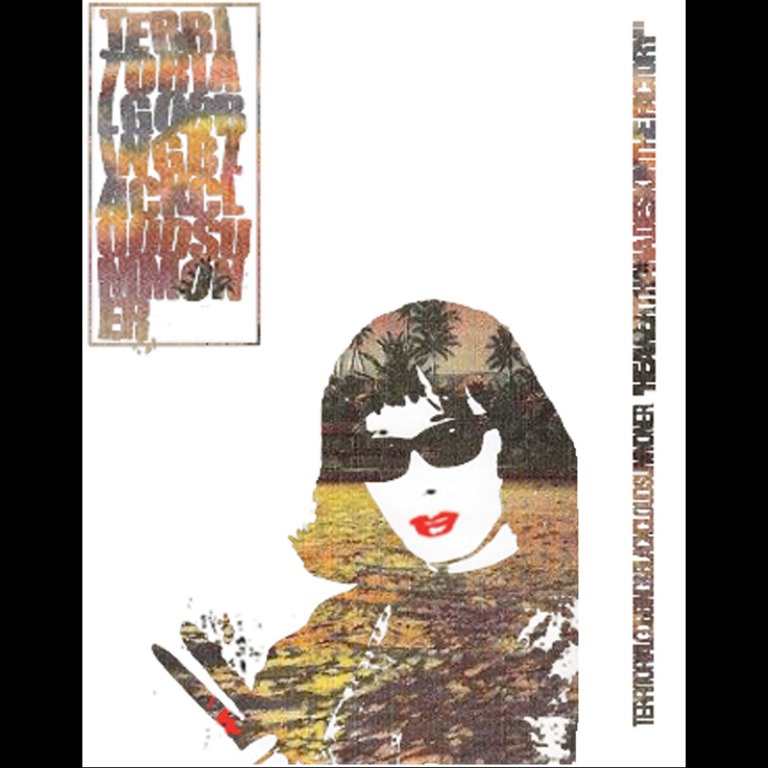
Theo Gowans, aka Territorial Gobbing, is a frenzy of wild creativity at the best of times. Not only are his frequent live performances bewildering displays of manic energy and cacophonous noise, but his recorded output is less a constant stream than a relentless spate. He’s still doing posters and virtual gigs, but with no actual gigs to promote or do sound for, he’s seemingly got time on his hands which he’s filling with the production of even more intense noise than ever, and this collaboration with Newcastle artist Plastiglomerate is exemplary.

Packing five cuts of swirling sonic soup, a chaotic collage of samples, rolling tones and extraneous blasts of noise, it’s all churning like mad in kaleidoscopic postmodern blender. The first track, ‘Crocodile Mayonnaise’ chucks everything in up front, with clanking chimes and rattling cutlery and electronic foam and twanging elastic and just a completely brain-bending blizzard of random shit, and some extreme stereo panning only makes it more nausea-inducing.

It doesn’t get any easier or more accessible thereafter, with the ten-minute ‘Government Gloves’ being an utterly head-shredding stuttering blast of noise that surges and splurges so hard and so fast as to cause whiplash. The question is, of course, is it really 10 minutes and 43 seconds long, or is it 643 seconds long? Or do we count left and right channels separately, making it 1,286 seconds long? Or should we also include the tracks either side, or the soundchecks and outtakes in that statistic? Should we amplify it by the frequency range? I have no answers. I have no thoughts. I have too many thoughts, all of them conflicting, none of them coherent. In that context, The Internet Made Me Parkour is a perfect soundtrack.

Lockdown – and moreover, the circumstances surrounding it, and the (mis)management of information in an already difficult situation – is enough to drive anyone round the bend. These guys were already several corners further on than many, and this weird, whacky wig-out is perhaps as sane as response to life as it is right now as any: certainly, ‘Total Lobby’ is total nonsense, but makes perfect sense if you’re looking to purge your brain of everything else, and the obliterative blast of white noise that is the final track, ‘A Generous Fly on that Mascot’s Outfit’ is cleansing: it’s impossible to consider anything while the inside if your cranium is being scoured by such abrasion. No-one knows what the fuck is going on: every message is scrambled, and you can’t trust anything – certainly not your government, and probably not even your instincts. But you can trust these guys to make a crazy racket. And we love them for it.

AA

TG

1st May 2020

Christopher Nosnibor

For some years now, I’ve followed Gintas K’s career with interest, for the simple fact that his work is, well, interesting, not to mention varied. This latest release is quite different from anything previous: a 7” single containing the audio, this is ostensibly a multimedia work, which finds the record packaged with a magazine, and was produced in collaboration with Visvaldas Morkevičius as an independent publishing project.

Morkevičius is a Lithuanian photographer, and the print aspect of the release comprises a series of photographs, which are the result of the artist’s visual anthropology research. K’s contribution is that of a soundtrack, as the accompanying blurb explains: ‘7” vinyl performance was made by Gintas K during the process of Visvaldas Morkevicius photographing and was added to Portraitzine as to fulfill the atmosphere in which photographs was made.’

It may be that the audio works better with the visuals, in that it fills out the understanding of both the listener and the watcher, but as a standalone work, Gintas’ two untitled works function successfully in their own right.

The sounds on side A – ‘Cut Piece’ are spare, strange, squelchy, bloopy, gloopy, fractal, disjointed, whistling, bleepy, hyperdigital. There are immense spaces between the sounds, meaning that when thumps, thuds and bangs arrive, they do with maximum impact: more than one I found myself physically jolting n my seat, having been lulled by a digital babble and spells of near-silence.

Side B, featuring the shorter ‘Uncut piece’ is mega-minimal: drips and blips punctuate three-and-a-half minutes of not a lot. And yet that not-a-lot is important: it focuses the attention, and reattenuates the listener’s attention on sound and the spaces in between. It slips and fades to nothing.

I find myself staring into space, barely aware that the ‘music’ has ended. If the ‘music’ ever really began. It’s hard to feel any real emotional or psychological connection with these snippets. But that is not their function. And ultimately, it works, and that’s the objective here.

AA

cover

Christopher Nosnibor

Much as I think the live stream shows that have become a thing during lockdown are a great way for bands to stay connected with their fans when tours have been cancelled, and artists and fans alike are frustrated and apart, I’ve struggled to get into them as an experience.

Discussing this with a gig-mate, I explained that I’d tried a few guitar bands doing streams from bedrooms , and found the experience of just one or two band members doing acoustic stuff and chatting a fair bit in between may create a certain sense of an intimate setting, but lacks the multisensory aspects, as well as the impact of music at gig volume.

‘I did do a couple early on’, my friend replied, adding ‘It’s not really what I want. I want to go to a gig.’

It struck me that that was it, in a nutshell. A stream is not a gig. TV, radio, YouTube, a live album… is not a gig. It’s like arguing that a Kindle is like a book. It may well be, but it isn’t, and the things it lacks are the reason it will never be a convincing or authentic sensory substitute. When it comes to live music, the cliché ‘you had to be there’ is ineffable. Yes. You do actually have to be there.

Nevertheless, with friends whose music I’m into on tonight’s lineup, I decided to invest a little more in recreating the live experience, starting with a pre-gig pint, which I texted pictures of to various people. Being a warm night, I didn’t put the heating up, but I did draw the blind and shut the door to my office, and put the display full screen (The streaming chat is irritating and detracts from both the music and the visuals, however sparse) and cranked the speakers up, and sat back to witness low rumblings and slow-decaying chimes that marked the start of Möbius’ set. The visuals consist of a dark background and shining points of yellow-white light. Wordless dual vocals ring out and resonate against one another, generating a subtle power, somewhere between Gregorian chanting and Jarboe at her most ethereal. The drones grow denser, louder, the effect of a single note sustained for an eternity increases as time passes: my body hums at the same frequency for a time, before the resonant echoes are gradually swallowed in a swell of distortion. Chances are, if played at the same volume, a recording would have the same effect, but it’s an immersive set nevertheless.

DSC_4118[1]

Möbius

Between-acts, there’s some obscure noise mix streaming, and Plan Pony is up next, blasting out speaker-mangling low-end distortion. If the noise is impressive, it’s matched by polarised visuals. Manipulating blasts of harsh guitar sampled in real-time and thrashed through an immense table fill of effects, the output is a sonic blitzkrieg. The quiet passages don’t translate quite as well, partly because my neighbour’s got a mate round and they’ve got the radio on in her back yard, but some snarled-up samples and snippets of music emerge from the grumbling electronics as he twiddles knobs, before long building again to a shattering wall of harsh noise.

DSC_4119[1]

Plan Pony

Zad Kokar takes things to next-level wtf, with bewilderingly nightmarish visuals that ae probably best described as max Headroom on acid, accompanying a blizzard of audio mashup that’s like early Prodigy in collision with early cabaret Voltaire. Both on acid. Diverting from the in-yer-face mental shit, we’ve got Clean Wipe, a guy in shorts stroking a doorframe while tweaking knobs on effects pedals at a circular kitchen table while the background changes colour constantly. It takes me an age to realise there must be contact mics on the door frame, and I can’t decide if I need more beer or I’ve had too much already.

It’s been a strong start, and TCH, on at number 4, take the mood and volume down a bit, but in a good way. The noise is dark and dingy, and reflects the setting in which we see a hooded figured tweaking minimal kit in a small, mildew-stained room. It’s more like watching a documentary on heroin withdrawal than a musical performance.

DSC_4130[1]

TCH

I clock 61 viewers, which is probably about the capacity of CHUNK, and the nights thy host are usually BYOB, so cracking a can of ALDI’s The Hop Stepper that I fetched from downstairs between acts seems consistent with being there.

Petrine Cross is Esmé of Penance Stare doing one-woman black metal at a million decibels. The set’s an ear-shattering mess of noise and distortion and visually, it’s stark, dark and black and white. The sound is overloaded, borderline unlistenable, but that’s likely intentional, and it’s clear some effort’s gone into this. Each song has its title on-screen at the start, there’s a plug for a charity compilation (again, on-screen text means no need for awkward chat) and songs are intercut with footage of the cat. It’s belting. And her room as some nice cornice work.

DSC_4134[1]

Petrine Cross

It’s a distorted dictaphone tape recording – a fractured ranted monologue about life in isolation under lockdown – that provides the material for Duncan Harrison’s set. It captures the mental tension of the moment so well, it’s uncomfortable listening. It’s followed by Energy Destroyer’s barrage of noise accompanied by video footage of him swinging either nunchucks or lengths of rubber in his back garden, and it’s the bodywarmer that makes it.

It’s disorientating watching the back of a performer’s head as they play and seeing them again on the PC monitor before them, with the whole scene framed by leaves and soundtracked by birdsong and incidental rumblings. But this is what we get from Garden Magik, whose set evolves gradually into a digital storm. At some point in the gale-force distortion, I realise my mind isn’t entirely on the set, but then, in a live setting, I would have likely enjoyed the sonic experience but found my mind wandering to maters of work and other stuff – and that’s no criticism. Under lockdown, in my office, it’s even easier to become distracted by text messages and FaceBook.

Content’s ‘If Hard Work Pay Show Me Rich Donkey’ leaps out as a feature of the between-act PA tunage before Sadistic Statistic, who give us more garden footage and a full-on Merzbow blast of obliterative sonic carnage. The images of cats are unrepresentative: the melting digitisations less so: at times, it sounds like it looks: brain-shredding, difficult, and impossible to pin down. Harsh is the new norm here: this is one of those sets that leaves you feeling utterly wrung out by the time the last sparking crackle fades.

DSC_4137[1]

Sadistic Statistic

Stuart Chalmers takes us on a mesmerising tour of a cave, before Otherworld bring gloopy, cracking electronics accompanied by swirling pixelated patterns that aren’t exactly easy on the retinas. It’s low-level noise that’s centred around slow-, hypnotic pulsations. It’s pitch-black in the room now bar the screen and I’m staring fixedly at the shifting shapes as the sound ripple around me, and the experience is quite gig-like until Mrs N returns an extension lead, which isn’t quite the same as being handed a final pint before the train.

DSC_4138[1]

Otherworld

In terms of lineup and performances, this was a hell of a night. It would, unquestionably, have been infinitely better to have witnessed it in person, surrounded by other people also witnessing it in person: atmosphere is interaction, but also an unspoken feeling that passes between people in a room. Virtual claps posted on a chat stream simply cannot replace real time reactions. But, while it’s the best we’ve got, it’ll have to do. What I took from tonight is that some genres seems better equipped to operate differently, and experimental electronic odd shit, with its propensity for visuals and playing in darkness, seems to have less work to do to adapt than conventional rock formats, making this the closest to the live experience I’ve yet witnessed. And yes, I had a blast. And made it home with no problems, too.

Christopher Nosnibor

Coaxial is one of a number of musical vehicles for musician and academic Benjamin J. Heal. For the uninitiated, it’s perhaps worth running some of his biographical information:

His prolific COWMAN project (2005-present) continues to plumb the depths of puerile noise-punk and a lo-fi trash aesthetic, following the footsteps of a more composed Hanatarash and early Boredoms. 2014’s acclaimed Tosokurui-no, under the pseudo-Japanese guise of Hitobashira-ni, illuminated the artistic potential found in exploring the limits of control and chaos in a band environment utilizing guitar, drums, synthesizer, sampler and gong. 2016’s The Brightness on Dead Water (as morimori) showcased contrasts between digital and analog, electric and acoustic, songs and sounds; nudging the chaotic themes of its predecessor into fields of more organic abstraction.

Coaxial – shortly to be reissued on casette by Cruel Nature represents the outlet for his explorations in instrumental electronica, and on Neo/ism there’s humour and wordplay not just in the song titles, but in the compositions themselves. This is apt, given that the Neoist art movement was largely satirical in its purpose, revelling in the depthlessness of postmodernism, and sometimes defined as ‘a prefix and a suffix with nothing in between’. Accordingly, the atmosphere on Neo/ism is denser than its light and airy predecessor, Ear Kites I (2018), but rather less heavy and sinister than 2017’s Reductio ad Absurdum.

It’s a vintage organ synth sound and even more vintage drum machine track that kicks starts the album with the seven-minute ‘Homobile’ (geddit? Linguistics jokes are always a nonstop laughriot). It lands between chillwave and krautrock, but some subtly de-synced chord changes have a vaguely disorientating effect at the start, before tapering off towards semi-ambience around halfway through and the beats dissolve to vapour.

‘Jocks v. Cocks’ is all about the juxtaposition: the track goes harder on the percussion, while the bubbling synths warp and twist, before ‘The Gay Gun’ plunges deeper into bloopy robotix territory, a melting pot of textures and tones swimming in a kind of sonic Brownian motion. ‘The Lonesome Onanist’ goes darker, and Heal’s application of long, grating drone notes that defines many of the tracks on Neo/ism is very much at the fore here.

There are strong technoindustrial elements in the mix, but then there’s a lot going on throughout, often simultaneously. Moreover, the composition seem to become increasingly strange and dislocated as the album progresses: ‘Homocrcy’ marks the mid-point with some spaced-out, space-age dubtronica, ‘Pink Noise’ crackles and pops in a time-shifting microtonal explosion, and ‘Gay Baby’ sounds like it should have featured on the soundtrack to an episode of Nathan Barley.

This all perhaps leads to the question of how serious any of this is, which in turn leads to the question of whether or not it actually matters whether or not the intent is parodic: one can’t hear intent in a recording, and can only engage with the contents of the recording itself. Given the way in which the sound of Neo/ism is characterised by contrast and variance, the experience elicits no one response, but many. And it’s quite a groove.

cover