Posts Tagged ‘Eclectic’

13th June 2023

Christopher Nosnibor

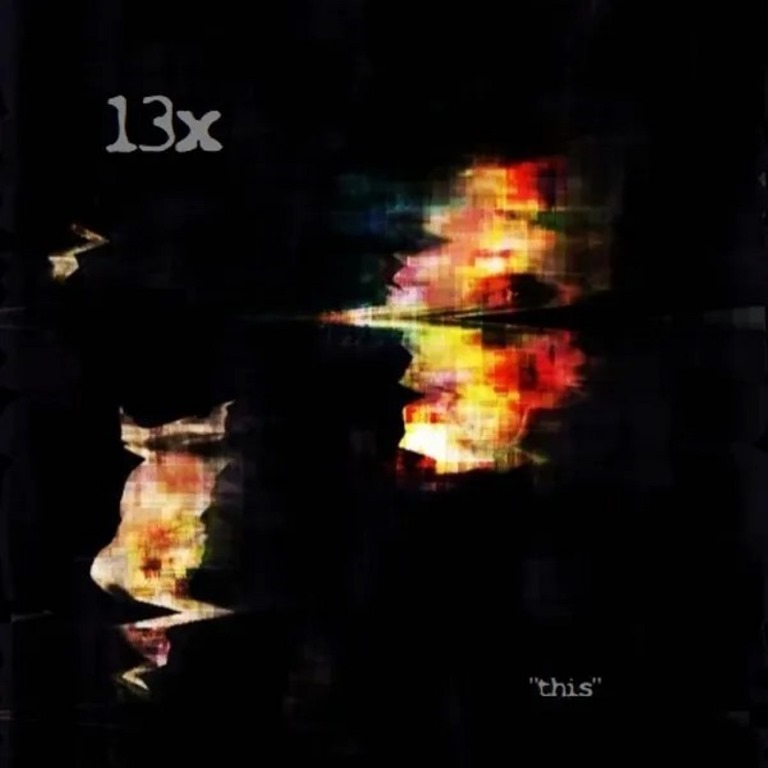
This. It’s a statement in itself. It’s simple, direct, to the point. It might indicate the image of a finger pointing down at the thing in question, like some kind of cartoon graphic or meme in the making – but there’s no need for it, or anything else. ‘This’ requires no qualification: it simply is. Self-contained. Precise. And this… well, this is 13x

It’s been a while since we last heard from ‘Multi instrumentalist transgirl’ 13x, who melted our brains good and proper in 2019 with antiscene. And it’s been a while because reasons, as the notes which accompany This outline: ‘Recorded over a 3 year period, this difficult release was made at the start of lockdown, and remained unfinished until now. Dealing with topics such as racism, transphobia, disingenuine people, the Government, abuse, loss and isolation, it goes from manic, crushing noize to quieter, more sombre tracks.’

Many, even most, of us, have endured some truly awful times these last three years, but it’s fair to say that some have endured more and worse shit than others. This is a document of some of the aforementioned shit of the notes, and the track titles encapsulate the mood and / or sentiment pretty neatly.

The first track, ‘TERFkilla’ is largely sparse and minimal in terms of both sound and arrangement, as a dissonant synth bleeps over a stuttering beat and low, droney bass. But shrill noise breaks over the top and the anger crackles within the cloud of abrasive noise. ‘fukt’ is, well, fukt, a sprawling mess of grinding synths and scratches, and some murky snippets of vocals with something of a hip-hop feel, and they sound sampled but appear to not be. They’re so cut and mangled, that when twisting and stammering against a backdrop of a shuffling drum loop and some low-end distortion it’s hard to know what the hell is going on – and it works.

There are plenty of samples woven into the fabric of This, and from an eclectic range of sources, ranging from Nirvana to a 60s interview with a catatonic schizophrenic, via a BLM interview after George Floyd was brutally murdered and Kate Winslett from Eternal Sunshine Of The Spotless Mind.

‘Fucking cunts’ is the looped refrain from the stomping aggrotech beast that is ‘Cistem Error vx.02’ – the most accessible and danceable track on the album, and simultaneously the most hard-hitting, while ‘brOkEnhEddz’ encapsulates the entirety of the album in just five minutes. Warped, woozy, it’s fractured and dark, whirring electronics and stuttering beats – but it builds and finds a groove, and from the chaos emerges something magnificent, an expansive, driving slab of dark synth pop.

I still find it unfathomable that we live in a world where vast swathes of society proclaim themselves to be anti-woke: if you’re anti-woke, you’re expressly pro-racist, pro-misogynist, pro-homophobic, pro-abuse, pro-anything that’s cunty. But then, we live in a world where vast swathes of people subscribe to Donald Trump’s view that ‘antifa’ is the enemy. But if you’re anti-antifa, you’re expressly pro-fa. There is something gravely wrong with this picture. ‘Truth Against Fascism’ and ‘The System Is Wrong (For George)’ are in effect a diptych of thematically-linked compositions. The former is a bleak mid-tempo trudge through mangled circuitry that reminds of the synapse-twisting impossibility of engaging in meaningful, rational discussion with right-wing shits who harp on about ‘stopping the boats’ and so on, while the latter has a gentler, more contemplative tone, laced with a wistful melancholy.

It’s this melancholy, expanded deeper into an aching sadness, which drapes itself all over both ‘Neeko’ and the album’s final track, the twelve-and-a-half-minute ‘Wintercutz’. I’m reminded vaguely of The Cure’s ‘Carnage Visors’ soundtrack from 1981, perhaps primarily because of the rolling drums of ‘Neeko’ and the expansive atmosphere which permeates both pieces. But there’s something special here: you can almost taste the nostalgia, and after the aggressive, angry start, there’s a sense that by the end of This, there is some sense of peace, acceptance, and a looking to the horizon in the hope of… something.

There’s often a significant disparity between the lived experience and its articulation in any medium: such is our wiring that even the most accomplished and attuned artists spend lifetimes striving to find the method that best suits them in their quest to convey what’s in their head to an audience who exists outside of their head. Sometimes, it’s not even about the audience: sometimes, the creation of art is a process by which to make sense of and deal with all of it. By purging the shit from the mind into something constructive and creative, however unappealing it may be to the masses, and there’s a strong sense that This is as much about purging and process as it is about communicating. But what This achieves is, in fact, both. This speaks without words, and says much, while at the same time, leaving substantial room for the listener to pour their own experience and frames of reference into the shifting sonic spaces. Over the course of ten pieces, This achieves a considerable amount: This has range. And This, while drawing on a host of elements from different places, sounds quite unlike anything else. This is This.

AA

a4153800615_10

Cruel Nature Records – 20th April 2023

Christopher Nosnibor

Regular readers – or even more casual ones – will likely have noticed that Cruel Nature releases have received a fair bit of coverage here. The Newcastle-based cassette label, and brainchild of Steve Strode, are now celebrating a decade of their existence, releasing non-conformist, way-outside-the-mainstream music, and they’re celebrating with a compilation of 23 (of course, it has to be 23) exclusive tracks recorded specifically for this release, on a label who can now boast the tagline of ‘Channelling sonic diversity since 2013’.

Spectrum very much succeeds in showcasing that sonic diversity, presenting a collection that spans ambience to brutal metal. In times past, no-one who would listen to one would listen to the other, but my own musical journey over the last decade and a half means that whereas once I’d have sneered at one and hesitated over the other, I’m now on board with both. And why not? Cruel Nature Records has spent a decade now giving a home to music that doesn’t really fit, and doesn’t conform to a specific genre.

Of the 23 contributors, a fair few of them have previously featured on these pages, so new material from them is most welcome. VHS¥DEATH are among them, and ‘Sacrifice’ is a relentless industrial hardfloor disco banger, which couldn’t be more different from the mellow jazz ambience of Aidan Baker’s contribution, ‘Grounded Hogs’. And in a nutshell, the contrast between the two tracks instantly encapsulates the ethos of Cruel Nature. Anything goes as long as it’s different and interesting.

It’s great to hear snarking antagonists like Pound Land in the same space as Nathalie Stern’s haunting atmospheres and the spare folk of Clara Engel. Pound Land deliver a gloomy grinder in the form of ‘Flies’; despite its minimal arrangement, it’s dense and oppressively weighty, not to mention really quite disturbing in its paranoid OCD lyrical repetitions.

‘K Of Arc’ by TV Phase’ is a punishing, percussion-led trudge through darkness, while Charlie Butler’s ‘Eagle’s Splendour’ which immediately follows couldn’t be more different, it’s rolling piano and soft, rippling chimes providing six and a half minutes of mellow enchantment.

Petrine Cross bring a rabid howl of utterly crushing, dungeon-dark black metal that’s as heavy and harrowing as anything they’ve done, making for a most welcome inclusion here. Offering some much-needed levity, Empty House’s ‘Blue Sky Dreamers’ is a wistful slice of breezy indie with a hint of New Order, not least of all on account of the run-filled bassline, while Katie Gerardine O’Neill swings something of a stylistic curveball with some quirky deconstructed jazz.

Also worthy of mention (although in fairness, there isn’t a contribution on here that isn’t, had I the time for a track-by-track rundown) are Aural Aggravation faves Whirling Hall of Knives and Omnibadger, with the former whipping up a mangles mess of glitching distortion and the latter – these buggers get everywhere, having featured on the Rental Yields compilation I covered only last week – mixing up a collage of hums, thunderous drones, and a cut-up melange of feedback and miscellaneous noises to discombobulating effect. Then again, the final two tracks, courtesy of Lush Worker and Lovely Wife respectively bring some mangled reverb-heavy drone-orientated avant-noise and eight and three-quarter minutes of demented, downtuned, downtempo sludgy space rock. Both are truly wonderful, and this is a superlative compilation that perfectly encapsulates the eclecticism of Cruel Nature. It’s also the perfect illustration of why we need these small labels who aren’t driven by commercialism or profits or shareholder value. For disseminating all of this weird and wonderful music – music which often challenges the very idea of music – the world is a much better place.

Fans of the label with absolutely love this, and for those unfamiliar with the label, there couldn’t be a better introduction. Here’s to the next ten years of Cruel Nature.

AA

cover

Panurus Productions – 2nd December 2022

Christopher Nosnibor

Panurus Productions are renowned for their favouring of pop and jaunty indie on their catalogue, but as the title suggests, they’ve really excelled with the saccharine-sweet, shimmery Christmas bauble stylings on this December release by Distant Animals, the vehicle for Daniel Alexander Hignell.

The accompanying blurb sets the pitch for ‘A scuzzed out synth/noise/punk affair… straddling a range of genres but never settling on any one of them for long, shifting around with an angry, anxious energy directed at our bleak status quo.’

Granted, this does mean it’s nowhere near as abrasive as recent releases from Trauma Bond or as dark as Carnivorous Plants, this is a hybrid form that coalesces to convey the sound of post-industrial nihilism.

The synths drive and dominate the sound, and they’re layered into thick, foggy swirls pitched against grinding, fuzzy-as-fuck sequenced bass and a drum machine that’s largely submerged beneath the swelling squall. The opener, the eight-and-a-half-minute ‘Greetings from the MET Office’ builds and builds into an immense wall of sound, the guitar adding layers off noise and feedback rather than melody. There is a tune in there, somewhere, and vocals, too, buried in a blitzkrieg that sounds like Depeche Mode covered by My Bloody Valentine and then remixed by Jesu or Dr Mix and the Remix.

‘Phase Down and Sweat to Death’ gets dubby, with samples and snippets cut in and out of the mix, and actually finds a murky, echo-drenched groove in places, before veering off on myriad detours.

As titles such as the title track and ‘Panning For Shit In The Shallow End’ intone, this is far from a celebratory collection, with the delicate and brittle-feeling ‘Hegel’s Violin’ sounding like it could have been penned by The Cure circa Seventeen Seconds, and yes, it’s fair to say that there are what some may refer to as ‘gothic’ elements to the brooding sound.

If songs titles like ‘Fondly Remembering When Primark was a Woolworths’ and ‘They Didn’t Have Snowflakes In 76’ might suggest that Hignell’s been gorging on the Memberberries, but on the evidence there is, buried away in trudging industrial sub-zero trudges and stark, oppressive abstraction, this couldn’t be further from the truth, and we can appreciate these compositions as critiques of the multi-billion-pound nostalgia industry and Brexit Britain, where narrow-minded twats get dewy-eyed all over social media reminiscing over false memories of a golden age that never was. ‘They don’t make ‘em like they used to…’ It’s patent bullshit of course, but so many subscribe to this that, well, it must be true that The BBC haven’t screened Monty Python in decades because they’re woke lefties (and nothing to do that after airing it in 2019 for the fiftieth anniversary, the rights were purchased by NetFlix), and Stranger Things is only good because, well, it’s like The Goonies, isn’t it?

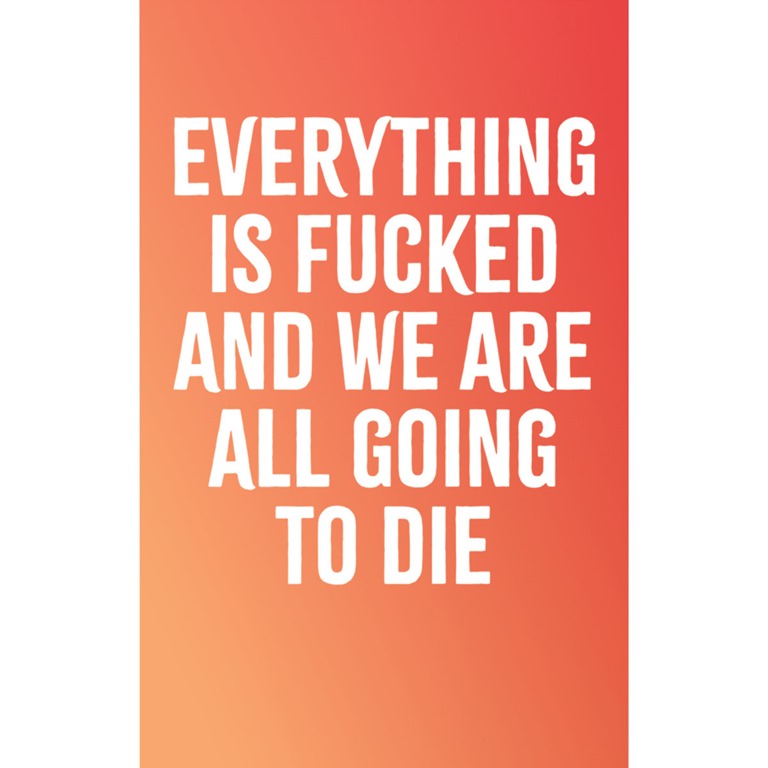
‘Panning for Shit’ is sparse, minimal electro that borders on Krautrock, and is the sound of drowning, not waving from our turd-encircled island, and there are many elements of this album which seem to align with the bleak perspectives and sounds of early industrial acts like Throbbing Gristle. But, to be clear, these are simply touchstones, rather than direct comparisons. Everything Is Fucked And We Are All Going To Die may evoke a sense of familiarity and a strange sense of déjà-vu, but ultimately presents a unique view and amalgamation of influences and stylistic references, and herein lies its true strength.

AA

a0758660749_10

25th November 2022

Christopher Nosnibor

What we all need is a jolt, a shock. Right NOW. You may not even realise it, but consider this: while life and the world seems to be swirling in a vortex of addling bewilderment, a lot of music seems to have become incredibly safe, a retreat. I’m not even talking about that slick, mass-produced mainstream fodder: even so-called ‘alternative’ rock has become increasingly safe in recent years, in the post-emo, post Foos world. And while a few acts on the peripheries are smashing all genre conventions with sledgehammers, they’re pretty niche, and what the world needs is something that can really get into the mix and shake things up. Has anything turned the world even halfway on its head singe grunge?

I’m aware that even reminiscing about grunge places my voice in a time capsule and in the ‘old bugger’ demographic for many, but has anything really been even remotely as evolutionary since? Has there ever been a seismic event since? We talk – or talked – about the zeitgeist, but what is the zeitgeist at the flaccid tail-end of 2022? Disaffection, discontent, strikes? Maybe, but what’s the soundtrack? Ed Sheeran and the new Adele album sure as hell aren’t the voice of disaffected youth.

Brighton’s ‘rising alt-rock rebels’ Fighting Colours might not be the face of the revolution, but they are the band to deliver that much-needed shakeup.

The vibe around the opening of the first of the EP’s four tracks, ‘Your Choice Now’ is a bit post-rock, with a nice, clean, chiming guitar sound – but it yields to some beefy riffage that’s pure grunge, it’s clear from the outset that they’re keen to mix things up and create their own blend, and it’s one that works well. And then Jasmine Ardley’s vocals enter the mix, and with this kind of chunky alt-rock being so male-orientated, to hear a female voice is unusual – and while Ardley has a clean vocal sound, it’s not unduly poppy.

‘The Boat Starts to Shake’ shuffled closer towards the jazzier, noodling end of the post-rock sound that was ubiquitous circa 2004, but the mathy verses contrast with massive slugging grunged-out choruses and a climax that’s nearly nu-metal and beings some hefty noise.

‘The Cure’ is different again, venturing into almost urban territory, while still anchored in jazzy math rock elements, before rupturing into a bold chorus that’s in between Evanescence and Halestorm, both gutsy and melodic and with an ‘epic’ feel, and it’s delivered with style.

The final cut of the EP plays the slower, emotion-filled arena anthem card, but still has more than enough guts and a keen melody, not least of all thanks to Jasmine’s voice, to separate it from the countless Paramore-wannabe alt rock acts out there.

It all stacks up for a strong set with a lot of bold and exhilarating rock action. It’s the kick up the arse alt-rock needs.

AA

Fighting Colours - Wishing Well - EP artwork (Gypsy Rose Design)

24th August 2022

Christopher Nosnibor

There are certain popular adages which are, frankly, and demonstrably, bollocks. The first is ‘if you can’t do, teach’. Admittedly, the state off education here in Britain means that academics at all levels are forced to teach outside their field with the scantest of time to prepare. I discovered this first-hand while working on a PhD thesis on William Burroughs and postmodernism and being tossed a semester’s teaching on Elizabethan literature. But moreover, most teachers wo get to teach in their specialist areas clearly can ‘do’ having attained a certain level of qualification. Can teachers of musical instruments also not ‘do’? Can diving instructors not drive?

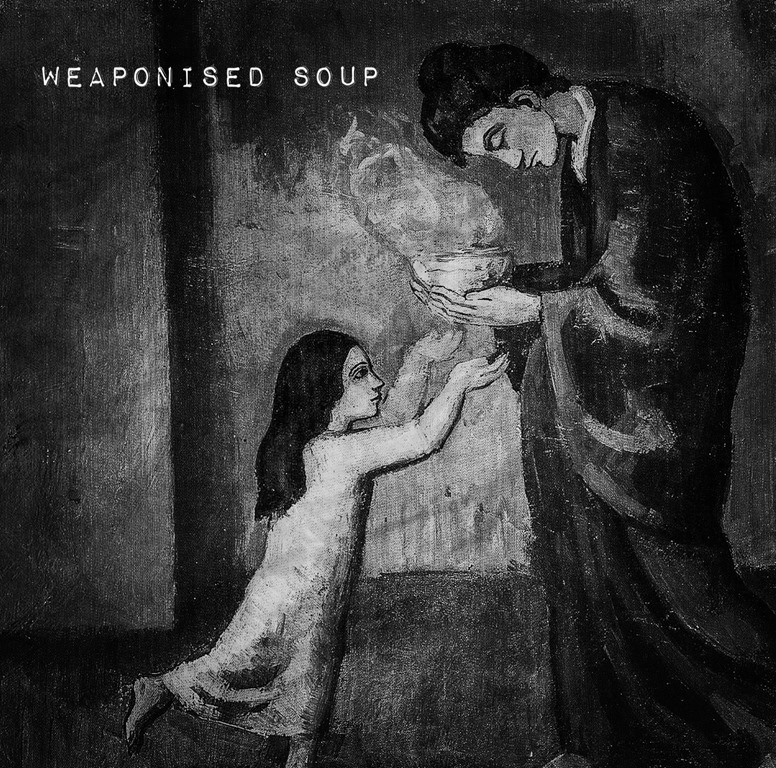
And then there’s the popular notion that music reviewers are failed musicians. Perhaps the people who cast this aspersion should speak to Neil Tennant or more pertinently John Robb, Jim Irvin, and Sally Still. I might not point them in the direction of my own ongoing musical activities so much, but would highlight Oscar Quick, the man behind the ‘Needs More Cowbell’ site, where he posts considered reviews of new releases, who has recently turned in a handful of live shows and delivered the album Weaponised Soup.

In his bio, Quick explains how Weaponised Soup ‘features influences from disco, hip hop, rave and progressive rock, while remaining true to its core 80’s post punk sound. Dealing with Oscar’s experiences with insomnia, this record is a stream of consciousness during those many long nights, covering the extreme highs and destructive lows of staying awake for days at a time.’

As a lifelong insomniac, it’s relatable: the output happens because how else do you distract a fevered, restless brain that won’t let you rest? As you may guess, it’s not only a stylistic melting-pot, but also very much an album that jumps all over the place in a way which conveys the mania and erratic impulses that arise from protracted sleeplessness.

Weaponised Soup Album Cover

Opener ‘I Should Sleep’ sounds like The Pixies, only staggering weary with fatigue and mumbling, slurred, and fugue-like. But if you’re looking for reference points, look no further than the title of ‘Assorted Psycho Candy’, which is, unexpectedly, a remarkably atmospheric, downtempo trip-hop / post-rock crossover that finds Quick picking through a medley off musings. ‘Over the Garden Wall’ is a contemplative wash of Cure-esque synths and packs more than its necessary share of cowbell.

Some songs are more successful than others: ‘Chrysanthemums’ is a weird, almost baggy slice of dance that twitches with paranoia and tension and switches into frenetic territory around the mid-point, but the sub-Goldie Lookin’ Chain white rapping takes some absorption., and the New Order-esque ‘Respect for Dinner Ladies’ brings more Sprechgesang and even straight spoken vocals that likely sit in the Yard Act bracket, and in its simmering tension and up-front awkwardness, by accident or design, Weaponised Soup seems to capture the post-pandemic zeitgeist.

Something clearly changed during lockdown: artists are now talking openly about mental challenges and neurodiversity, and embracing these experiences creatively, and this is reflected in a new wave of music that refuses to be bound by genre, as Andre Rikichi’s wonderfully weird exploratory stylistic explosion on which I wrote only yesterday exemplifies.

As we continue to crawl from under the psychological rubble of the pandemic and successive lockdowns, into a new world that’s not brave, but fearful, tremulous, and ultimately fucked-up and swinging ever further to the right, these are truly terrible times – but as history shows, terrible times tend to spur the creation of great music. With Weaponised Soup, Oscar Quick forges a small but unique space in that fucked-up world, and it’s very much a good thing.

Derby-Uni-UGG-038

Christopher Nosnibor

Steve Kendra has probably received as many words praising his work as anyone to have been covered here at Aural Aggravation, but the chances are, it’s gone unnoticed, since he’s rarely, if ever mentioned directly or by name. As the rhythm guitarist in York’s premier purveyors of psychedelic drone, Soma Crew, his contribution is something I’ve long admired. Like drummer Nick Clambake, Kendra’s brilliance lies in his humbleness, and his appreciation that the sum is always greater than the parts. A great rhythm section sticks to rhythm and keeps it together. Sounds simple, but it’s much harder in reality. It requires great concentration for a start. And it takes humility too not want to step into the spotlight in one way or another. But this is precisely why he’s the perfect player for Soma Crew, content to keep his head down, face obscured by the peak of his cap, and bludgeon away at two or three chords for six or seven minutes.

Just as he’s the quiet one of the band – not that they’re really big talkers most of the time – he’s quietly been working on his own material as Kendroid. It’s essentially a solo vehicle, but with input from as handful of people well known in York music circles, not least of all instrumental and production assistance from Dave Keegan, and to date he’s recorded and released two full-length albums, The Last Love Song on Earth (2019) and Poetry Love & Romance (2021) – so while these aren’t- hot-off-the-press new releases, it’s never too late to catch up. In fact, the whole promo build-up of a clutch of singles and videos in the run-up to an album’s release and then the explosion of reviews in the weeks and months around it, I get, but it does create a false sense of there being a certain window for new releases. The reality is that albums have a slow diffusion, and more often than not, people discover albums and artists months, years, even decades, after their emergence.

Kendra’s route to being a musician has been far from conventional: the man didn’t even pick up a guitar till he turned 40, and is by no means a muso. I have a lot of respect for that, and have found that oftentimes, technical education is a limiter to creativity. Steve can’t read tab and doesn’t know music theory – and consequently, isn’t hampered by conventions.

The chronology of the material is chewy: most of the songs on the second album were written before those on the first, and the second album is more of a lockdown exercise to document/ purge the journey that preceded The Last Love Song.

The Last Love Song on Earth presents a pretty eclectic set, spanning low-key blues and reminiscent of Mark Wynn before he went punky/shouty and went off to support Sleaford Mods (Married to the Rain’), to Soma Crew-esque space rock workouts that toss in dashes of Stereolab and Pulp (‘Mexican Heart’), and songs that incorporate elements of both, along with an experimental twist, with the swampy ‘Incel’ and brooding grind of ‘Deam Lover’ that has hints of Suicide in the mix contributing to the diversity that draws in The Doors to Mark Lanegan.

Poetry Love & Romance is quite a different animal, and while recorded in lockdown, it’s not – unusually – a lockdown album, packed with the anxieties of forced captivity or separation. But it is, in another way, a definitive lockdown album, in that its recording is one whereby the sound and production is determined by limitations, being largely acoustic – although Dave Keegan again features in a musical capacity, as well as engineering, mixing, and mastering.

We’re straight in with an easy country swing, with acoustic guitar and simple drum machine for the title track, and it sets the style for the album as a whole, which is mellow, sparse laid back, and pretty country. These are songs that paint pictures, sketches of scenes, some faded and tinged with the distance of time and reflection, and it’s quite touching at times.

Poetry Love & Romance does feel like something of a stopgap, but who wasn’t waiting for life to restart in some way the last couple odd years?

It’ll be interesting to see what Steve does next, but what he’s done thus far is interesting, and a clear step away from his guitaring day-job, and a such, it’s a bold move that’s yielded some great results.

6th August 2021

James Wells

Some bands claim to be eclectic, but fail to substantiate those claims in the music itself serving up middling mediocrity, usually of a fairly anaemic indie / rock persuasion. Of course, no act with a diverse range of influences is likely to incorporate all of those influences into a single song (while rendering anything listenable), but, y’know, claiming Bowie and Led Zep and coming on like Oasis just doesn’t cut it.

Helve (not the Leeds post-metal act, but the London indie group) intimate that they draw on an eclectic combination of jazz, folk, electronic and experimental music, influenced by an array of genres and artists spanning Aphex Twin, Radiohead, Slint, Pat Metheny, Nick Drake, Portishead & Bill Evans.

All rolled together at the same time, that lot would sound absolutely fucking awful, but ‘Cabin Fever’ is nuanced in its hybridity, a kind of jazzy, blues influenced stroller at first that gets a bit proggy further down the line.

Singer/songwriter Leon has one of those voices that’s got range – not just technically good vocals, but vocals capable of conveying emotional range and depth too. A bit Thom Yorke, you might say, but also entirely his own, haunting and evocative, and here he spins all the different aspects of isolation – the introspection, the reflection, the self-loathing, the confusion, it all there, and we’ve all been there. Originally penned and demod in 2019 (as a much longer, more post-rock orientated tune with samples and other stuff in the mix) and rerecorded for this, their debut release, it feels particularly salient.

‘Cabin Fever’ isn’t an instant grab; instead of big hooks and an attention-grabbing chorus, it’s more of an atmosphere-orientated mood tune. Jazzy without being Jamiroquai, it’s the sound of late-night basement bars, and while it’s very much a product of our immediate times, clearly betrays roots that reach back further.

Slick on the image to select streaming service:

Helve artwork

Come Play With Me – 11th June 2021

Christopher Nosnibor

These are difficult times, fraught with division – not just the well-established social and economic divides, but with infinite fragmentation and fallout over issues and identities. It seems unfathomable that there should be any need for debate when it comes to racism and sexism, and yet here we are in 2021 and still these topics are divisive, and while Pride events have done much to raise awareness, gender issues are not only grounds of immense discrimination, but also division, and, in some quarters, infighting. It’s difficult, and for many, incredibly painful.

Over the five and a bit years since its inception, Leeds label Come Play with Me has done a lot of work to represent the under-represented, primarily in giving a platform to local artists. Its latest compilation is billed as ‘a callout to support women, marginalised genders and LGBTQ+ artists based in Leeds and further afield around the north of England’, and as such has a specific and explicit agenda, and above all, serves to provide a platform and to send a message of unity and solidarity.

The blurb informs us that ‘The album features a collection of 12 brand new diverse tracks from an exceptionally talented group of artists including emerging shoegaze/dreampop sensation Bored At My Grandma’s House, renowned composer and Carnatic vocalist Supriya Nagarajan, art-rock collective Dilettante (led by multi-instrumentalist Francesca Pidgeon), and soul/pop singer-songwriter Tyron Webster.’ And it’s true: Side By Side showcases an eclectic range of artists, which is a solid representation of the diverse, cross-cultural melting pot that is the scene in and around Leeds.

Tryon Webster isn’t the kind of artist you’re likely to see playing in any venues like The Brudenell or Wharf Chambers or Oporto: they may have a local slat, but are more geared towards guitar bands and alternative acts, and Webster’s smooth r’n’b is decidedly more mainstream, as is the smoky would of Dilettante’s soulfully smoochy ‘Single Sleeve’.

Then, in contrast, Bored At My Grandma’s House’s ‘China Doll’ demo is a magnificent sliver of lo-fi indie with some effortless low-key harmonies over a sparse acoustic-guitar-led backing and minimal arrangements.

Long Legged Creatures were the last band I saw perform a proper gig, back on 14th march 2020, and I was impressed by what I referred to as their ‘electro/post-rock/psych hybrid’, and ‘Creatures’ is certainly a drifting, dreamy number – but then again, Witch of the East mine a dreamy post-punk / post-rock seam with ‘Something’s Wrong’. Shauna’s ‘Modes of Thinking’ welds the iciness of The Flying Lizards withy some deep dance groove action that’s half nightclub, half industrial motorik grind.

The chances are, not everyone will love every track on here, and adherents of the live Leeds scene will likely be surprised by just how much non-noisy, soul and jazz-flavoured sounds are on offer here: Day 42 are leagues away from, say, Pulled Apart By Horses, and sound more like Sugababes. But that’s not only ok, it’s the very point of this release. Regardless of musical preferences, it’s impossible to fault the quality of any of the acts showcased here. Moreover, this goes beyond genre and style and musical preference. This is a statement of inclusion. Embrace it.

ei

9th April 2021

Christopher Nosnibor

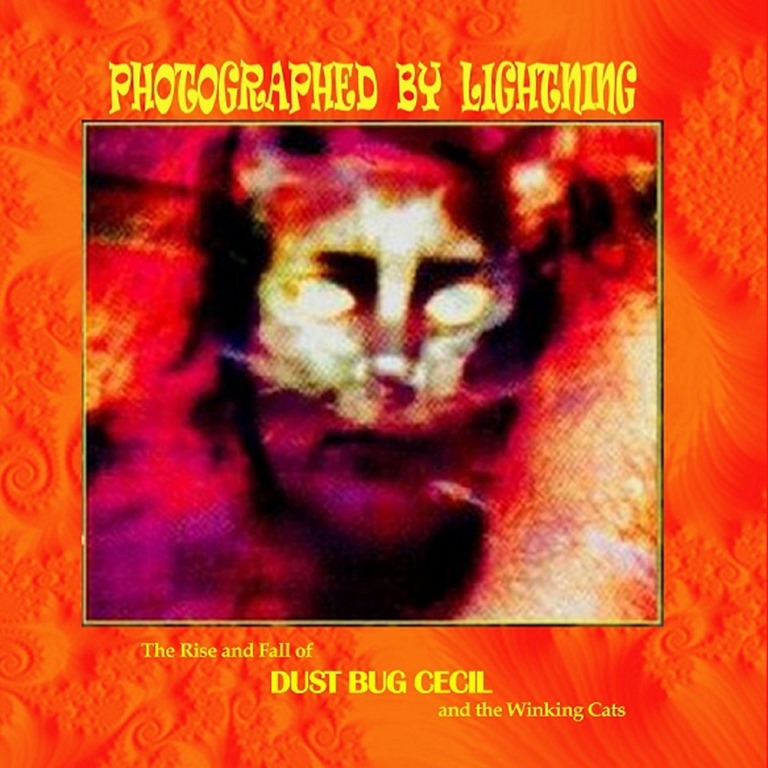
The remastered re-reissues of avant-experimentalist oddballs Photographed by Lightning continues apace with the emergence of Dust Bug Cecil (or, to give it its full title, The Rise and Fall of Dust Bug Cecil and the Winking Cats, supposedly taken from an obscure book about a direct to disc recording pioneer, and may in turn be a skewed play on Ziggy Stardust. Of course, everything is skewed in the world of PBL, and if Music From the Empty Quarter wasn’t evidence enough of this, then this should be enough to convince anyone: presented here as a whopping thirty-eight track document (2 CDs worth), Dust Bug Cecil is augmented with the entirety of their other 2002 album, Let Me Eat the Flowers. On the strength of this, it vocalist Syd Howells and co (here represented by Dave Mitchell (vocals, bass, keyboards); Bionio Bill (drums & percussives); Roland Ellis (saxophone); Chris Knipe (mandolin & fiddle), and Rev Porl Stevens contributing vocals to ‘White Master’)) had perhaps ingested more than just pansies prior to these sessions.

As Howells recounts it, ‘following the behemoth like Music From The Empty Quarter we went in search of tunes. Found some too. Glued them together with words and somehow found ourselves making a ‘pop’ album.’ In comparison to its predecessor, Dust Bug Cecil is a pop album in that there are none of the sprawling ten-minute epic headfucks on offer here, with most of the songs – and, indeed, they are songs – clocking in around the three-minute mark. It’s ‘pop’ in the style of the dark pop of post-punk, but its values are ostensibly altogether more punk, and its sound is primitive and murky. It’s pop in the way The Jesus and Mary Chain write breezy, surfy pop tunes and bury them in is a squall of noise that renders them almost indistinct.

There are melodies and choruses bursting out from every corner, but in context of 2002, songs like the album’s opener, ‘Eyes on Stalks’ and ‘Numb Alex’ sound like early 80s new wave demos: driving Joy Division-esque bass dominates a rhythm pinned down by a frenetic drum machine that sounds like it’s struggling to keep up with the throbbing energy, and there are hints of The Cure and B-Movie in the mix here.

The guitars buzz like flanged wasps on the vaguely baggy / shoegazey ‘Lady Lucifer’, prefacing the sound that A Place To Bury Strangers would come to make their signature. Elsewhere, the sound swings from almost straight 60s-tinged indie on ‘Let Me Eat the Flowers’, while ‘The Remains of a Tramp Called Bailey’ sounds like a head-on collision between The Pixies and The Psychedelic Furs, and ‘The Risen’ comes on like early New Order. If it reads like I’m chucking in a list of seemingly random and incongruous artists by way of confused and confusing reference points, it’s because that’s what the listening experience is like. None of the elements of the album are unique by any stretch, but their hybridisation very much is. The 60s garage vibe of ‘Untitled (for Dylan’) and the Fall-like scuzz of ‘David Dickinson Said’ (with its obvious but necessary ‘cheap as chips’ refrain) are well-realised, and suit the lo-fi production values.

Sonically, Dust Bug Cecil is nowhere near as challenging as Music From The Empty Quarter, and it was almost inevitable that they had to do something different, having taken the avant-jazz oddity to its limit. Then again, of course, there’s still the customary weird shit, like the squelchy racket with spoken word of ‘Bob’ and ‘Pablo’, and the doomy industrial synth robotix of ‘Be This Her Memorial’, which mean it’s hardly the most accessible album going and it is quite bewildering just in terms of its stylistic eclecticism.

It’s unquestionably a mixed bag, and not all of the efforts are completely successful or gel quite as hoped, something the band themselves acknowledge with hindsight. But it’s still very much a musical, if not commercial, success, showcasing a band capable of wild diversity in their creativity, as well as a band who’ve spent a career making the music that pleases them over anyone else.

AA

a2359923339_10

Front&Follow – 25th September 2020

Christopher Nosnibor

So big a space to fill… the absence of live music leaves an abyss of indescribable scale. Social media has been aflame with outcry over the treatment of this so-called ‘unviable’ industry, crippled by restrictions – an industry that generates many, many billions of pounds for the economy. Over and over, I’ve read articles and personal pleas from those involved about the plight not only of musicians and venue owners, but the invisible but essential contributors, the sound and lighting engineers, the roadies, the studios, and it’s all so, so painful and heart-rending.

The fourth, penultimate instalment of the Isolation and Rejection compilation series which brought the Front & Follow label temporarily out of hibernation contains a further twenty-four contributions from a vast array of artists, known and unknown, assembled here under the common banner of all having been previously rejected by labels. Their loss is our gain and that of Front & Follow, whose inclusive approach to curating this series has made for a truly enriching journey over the last few months.

There is a leaning toward the electronic, and Pulselovers’ ‘Orphans’, which lands early is typical of the atmospheric strain that’s something of a staple of the F&F catalogue. Neither dance nor ambient, it’s understated, rippling, the gauzy layers pinned together by lowkey but insistent beats.

Daphnellc’s ‘Sinker Flies The Plane’ starts out jittery, hyperactive, edgy electronica that tinkles and flutters, before going all out on the hard, pounding beats, and contrasts with many of the more delicate, wispy compositions on offer here. Then again, with ‘Slava Xenoxxx’, Bone Music hit a dense industrial groove, bursting with snappy snare explosions and a blitzkrieg of samples, and for 80s robotix electro, Function Automat’s ‘Data Data’ is proper vintage, and not without a massive nod to not only Kraftwork, but also DAF and Cabaret Voltaire’s ‘Nag Nag Nag.’ In a parallel universe, this was recoded in 1978 and a truly seminal cut that brought its makers international renown.

These more accessible works are countered by the industrial-strength dark ambience brought by Revbjelde and the gouging aggressive dark drone attack of ColdSore, and Howlround push this to the next level with an overloading mess of pulsating distortion.

MJ Hibbert bucks the electro trend with his pithy acoustic indie, and if it seems a shade incongruous it’s all the more essential because of it: the spirit of these compilations is inclusivity, and this is what gives these largely instrumental, experimental, oddball collections soul.

These remain bleak times, and fir many, the long-term prospects continue to grow bleaker, and releases like this are essential not just in terms of bringing high-quality leftfield music to those seeking sonic solace, but also in creating a certain sense of community and collectivism.

AA

a2794682398_10