Posts Tagged ‘Drama’

Christopher Nosnibor

Live music should carry a warning over its addictive properties. Witnessing a band playing a set so good that you’re buzzing for hours, even days afterwards is a unique high, and one that sets a seed of a desperate need to replicate that experience.

I’ve seen a lot of live music since I started going to gigs over thirty years ago, but the number of acts who have ignited that sense of fervent excitement is limited. I’ve seen many, many amazing shows, but few have blown me away to the extent they’ve felt in some way transformative. Dead Space Chamber Music are one of those few, and I left the Cemetery Chapel in York a few months back feeling dazed and exhilarated, my ears whistling despite having worn earplugs. I simply had to see them again, in the hope to experience that same sense of rapture.

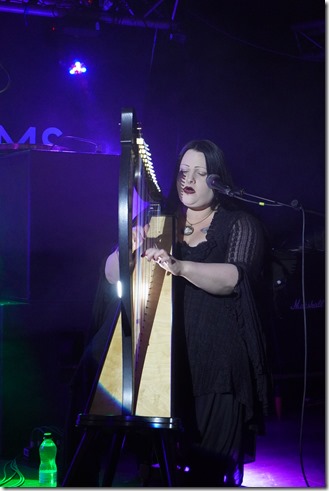
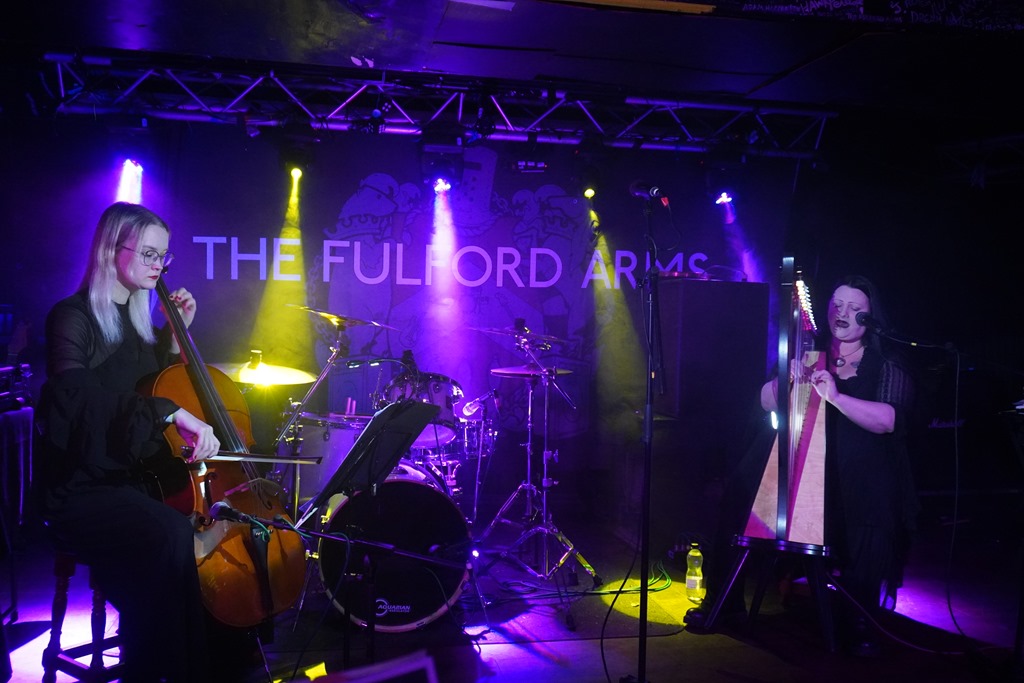
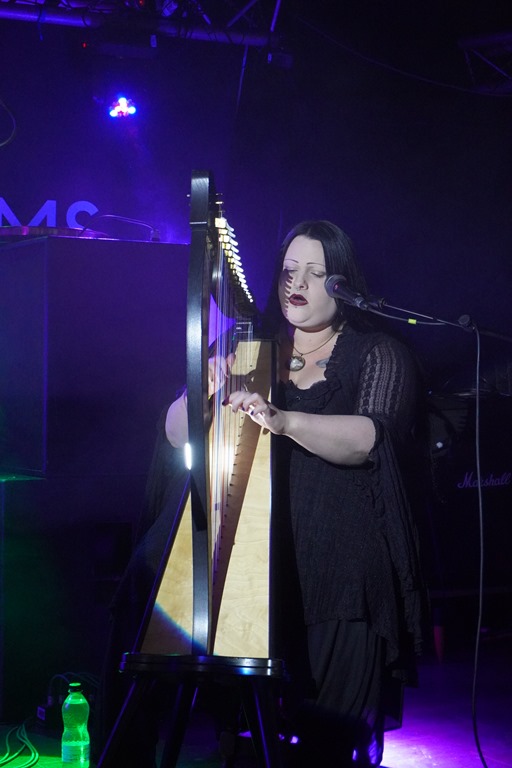
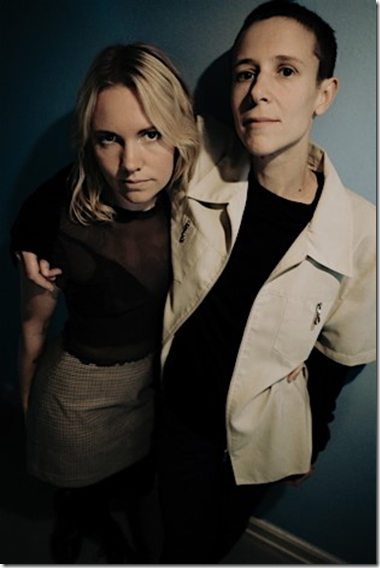
Eldermother – consisting of Clare de Lune on harp and vocals and Michalina Rudawska on cello – have no shortage of musical pedigree, and a superabundance of talent which they showcase with their minimal neoclassical works, a mix of covers and original material. They open with Radiohead’s ‘Street Spirit (Fade Out)’ led by harp and with Clare’s soaring vocals, and it’s one of those performances that make the hair stand up on back of your neck with its haunting atmosphere. There’s a rendition of WB Yeats’ poem ‘The Stolen Child’, a work rich with imagery inspired by wild nature and imbued with emotion and drama. The execution is magnificent, and the originals are similarly graceful and majestic. ‘Hurt’ may not be by any stretch representative of Trent Reznor’s career, but it certainly showcases his capacity for powerfully emotive songwriting, and if it’s the song which forms his legacy, it’s all to the good. Yes, Eldermother play a semi-operatic version of ‘Hurt’ with harp and dark, brooding cello, and… woah. It’s almost too much, especially this early in the evening. I find myself dabbing a tear and grateful for the low lighting.
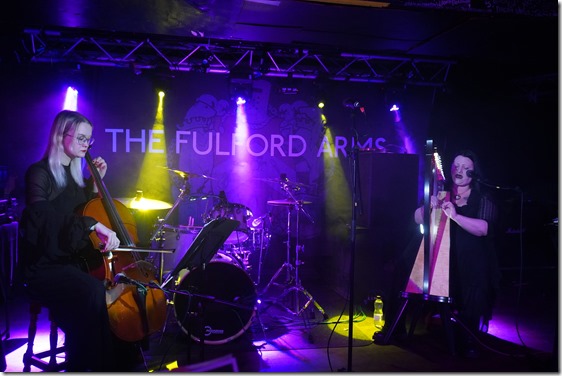
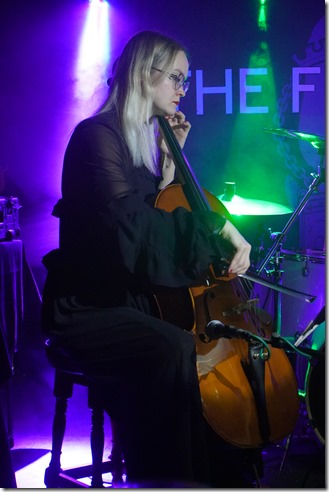
DSC04790DSC04787DSC04785

Eldermother

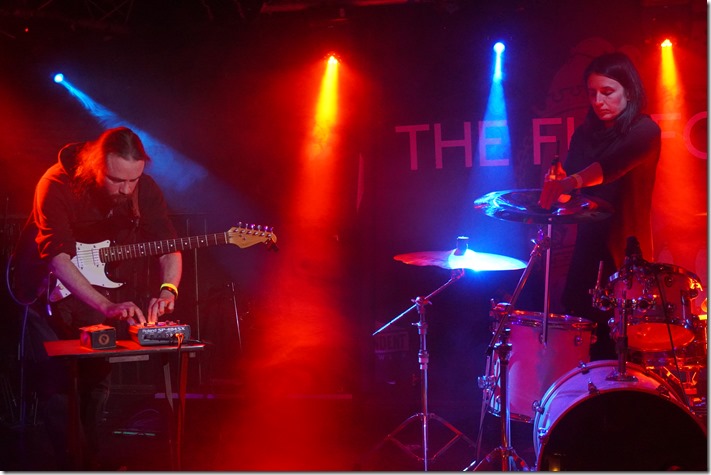
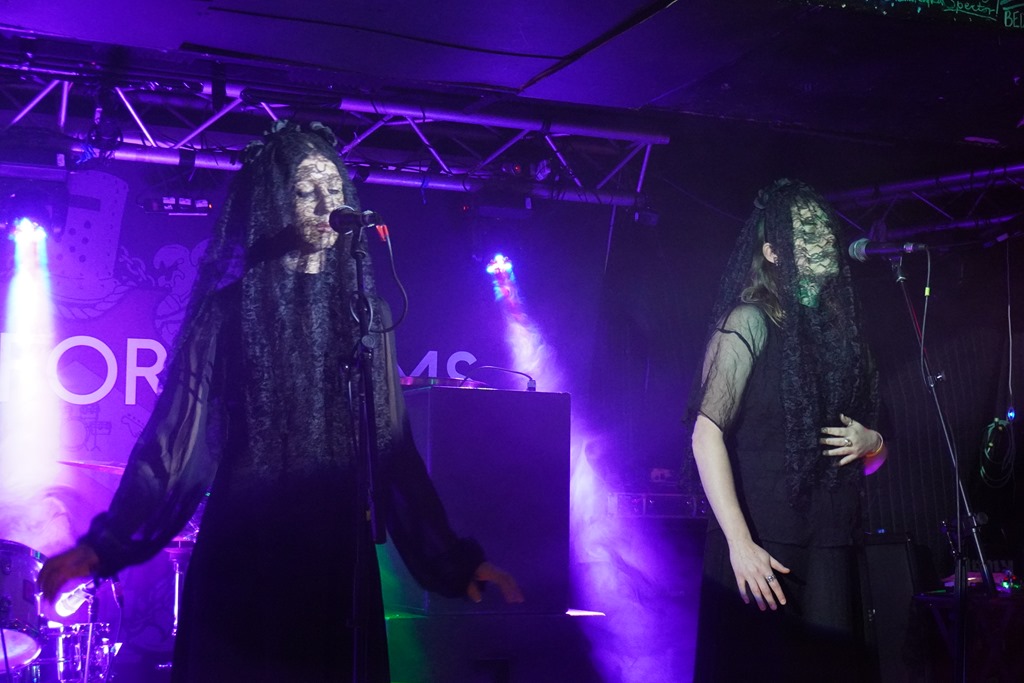
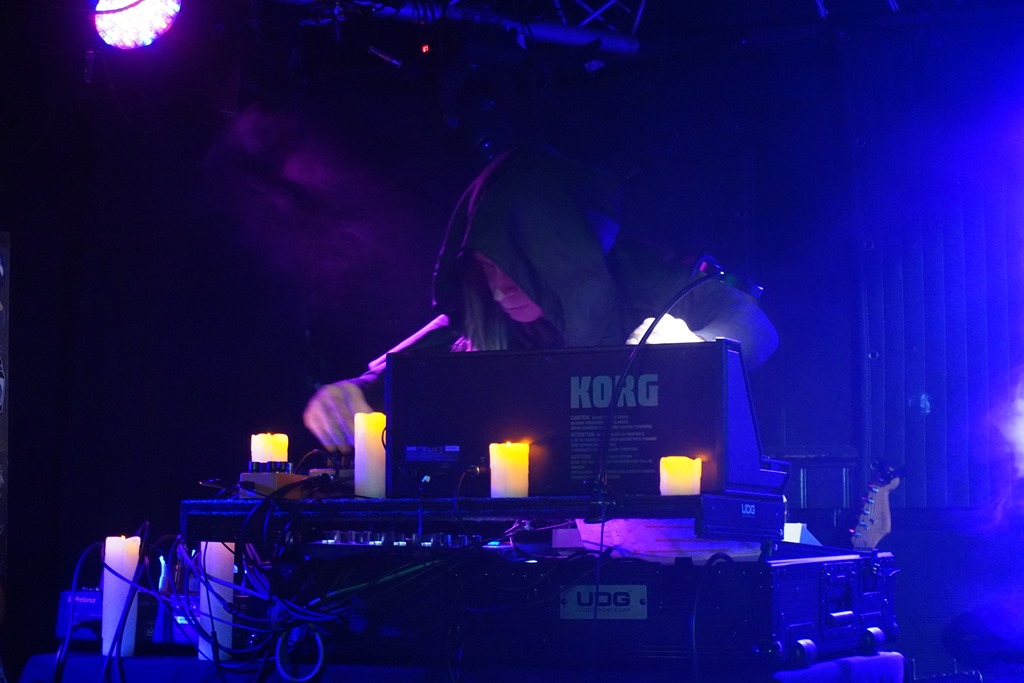
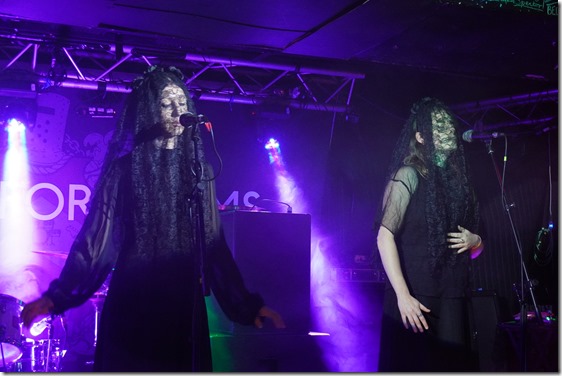
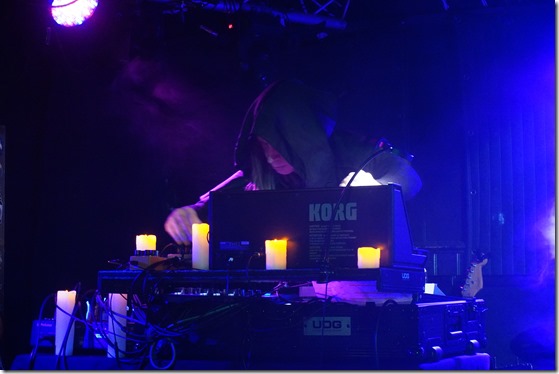
Lunar Cult Club – featuring Doug Gordon, aka Futures We Lost – as the provider of the instrumental machinations, take the theatricality up several notches to deliver a set of otherworldly cold, cold, darkest electro with glacial synths and funereal forms. The bank of synths swirl and grind, muddy beats thud and pop from amidst a dense sonic fog. Sonically, they’re impressive – in the main, the arrangements are sparse, and overtly analogue in form – but visually, they’re something else. Theirs is a highly theatrical stage show, and this significantly heightens the impact of the songs. The two singers, dressed all in black and with faces obscured by long, black lace veils – Corpse Bride chic, as my notes say – sway and move their arms in an unnerving fashion, as if reanimated, exhumed. I’m reminded of Zola Jesus and of Ladytron, and I’m mesmerised by their facsimile of a Pet Sematary Human League with its spellbinding marionette choreography. The final song, ‘No-Ones Here to Save Her’ is as dark as it gets: the vocals merge and take us to another realm entirely.
DSC04800DSC04804

Lunar Cult Club

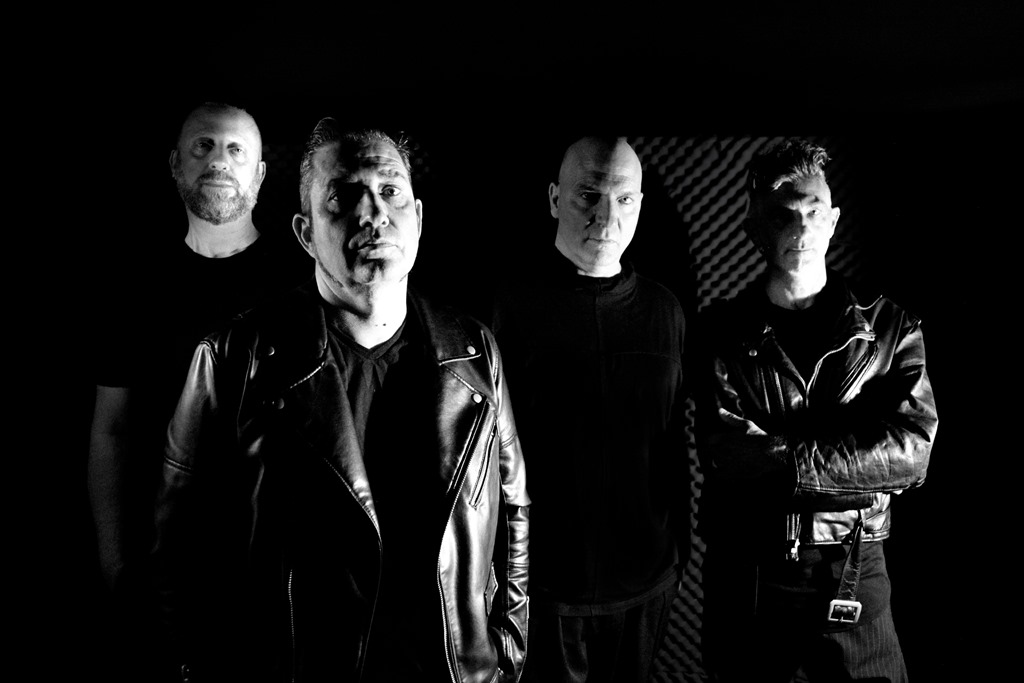
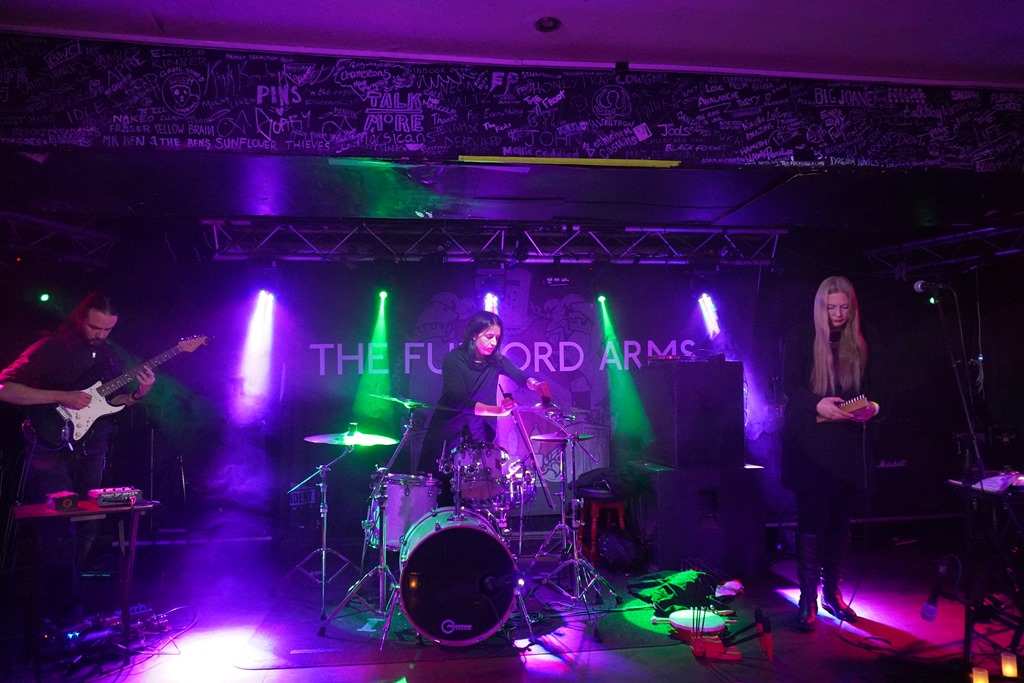
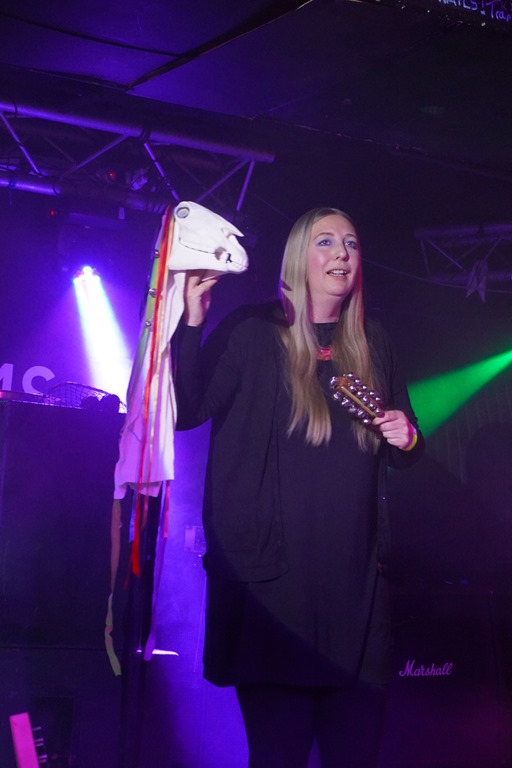
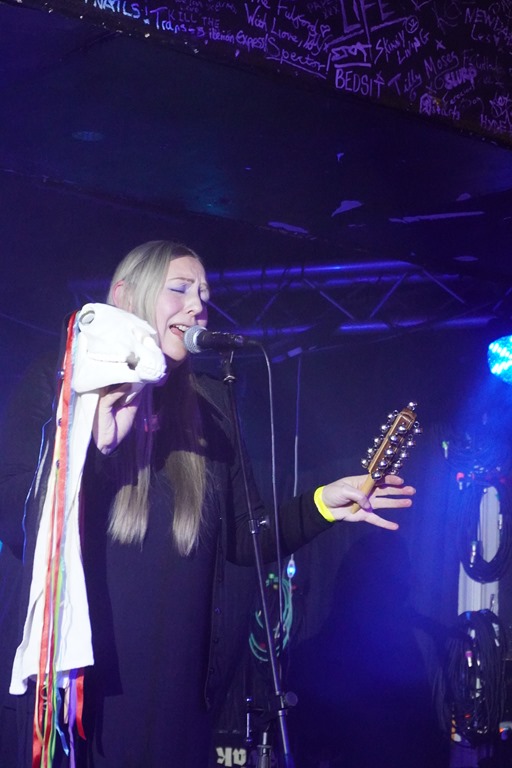
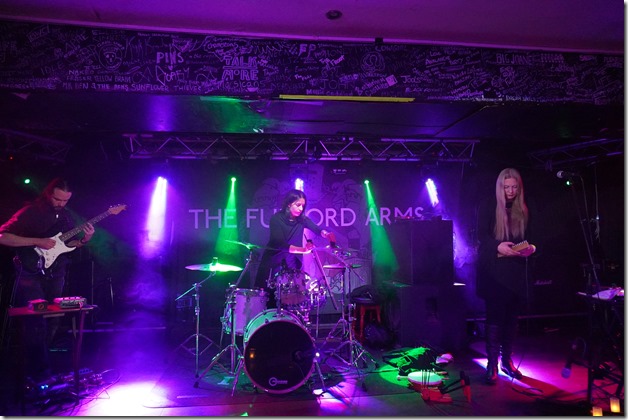
I’m still floating in a state of mild delirium when Dead Space Chamber Music take to the stage. The atmosphere is thick, tense, hushed… awed. Something about the trio’s presence alone makes you sit up, lean in, eyes wide, ears pricked. There’s a lot of detail here. Their focus is gripping by way of spectacle, and their set is designed as a linear work which evolves and transitions over its duration, in a way which calls to mind when Sunn O))) toured Monoliths and Dimensions, whereby, over the course of the set, Attila Csihar transformed into a tree. There are props and costume embellishments, mostly on the part of Ellen Southern, who performs vocals and various percussion elements and a strange stringed instrument: she brings much drama and theatricality, delivered with a sense of self-possession and deep spirituality which is utterly entrancing.
DSC04839DSC04852

Dead Space Music Orchestra

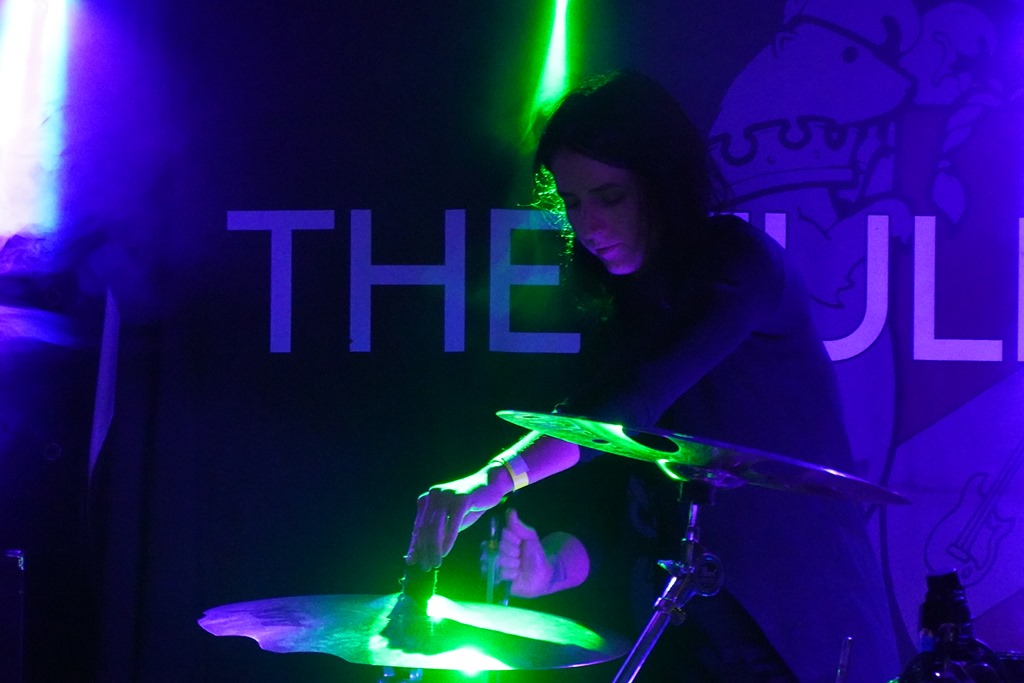
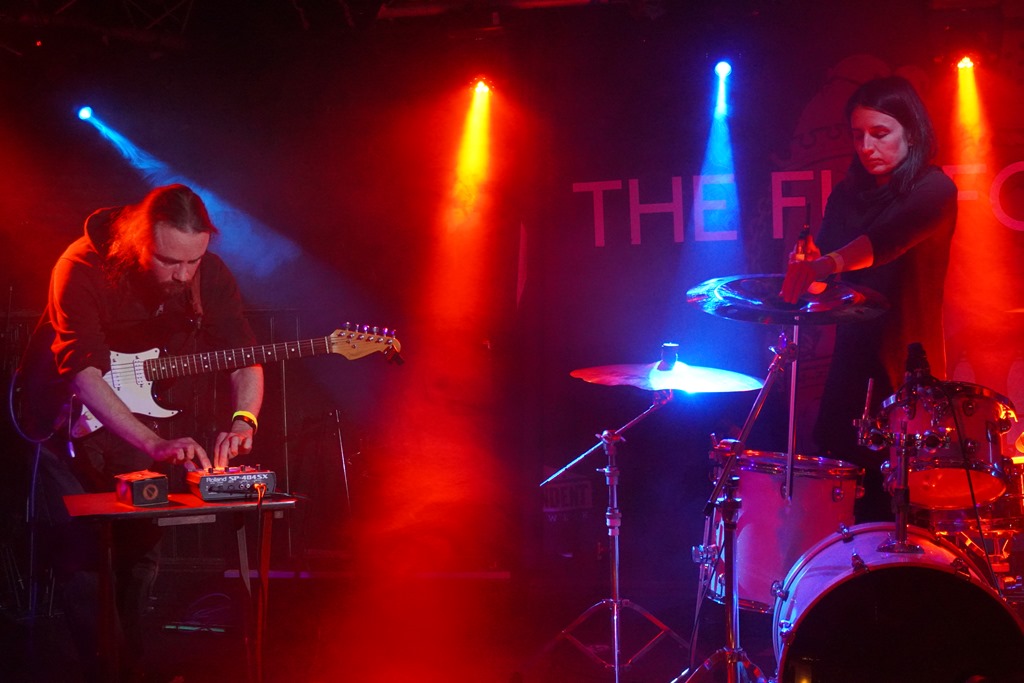
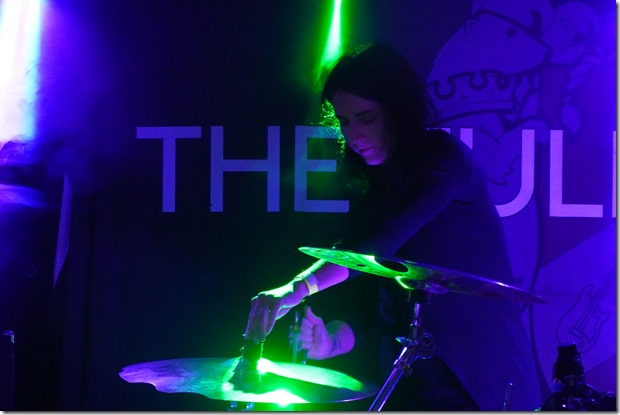
They’re so quiet you can hear matchsticks dropping into a tray. But the fact that these things are audible, amidst cavernous reverb and sepulchral echoes, is a measure of the clarity of the sound and the band’s attention to detail. Ekaterina Samarkina is impressive in the sheer versatility and nuanced approach she takes to the percussion which is truly pivotal to the performance. Her work is so detailed, subtle, the sound so bright and crisp, as she slowly scrapes the edges of her cymbals with a bow. Lurking in the background, Tom Bush – on guitar – plays with restraint, sculpting shapes and textures rather than playing conventional chords and melodies. In combination, they conjure a rarefied atmosphere.

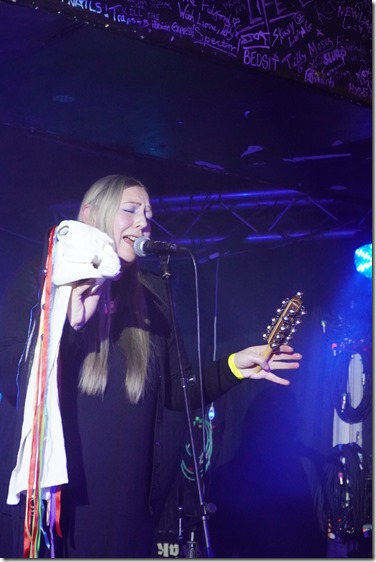
DSC04867DSC04886DSC04906

Dead Space Chamber Music

But towards the end of the set, as if from nowhere, emerge huge cathedrals of sound. The last time around, I compared their climactic crescendos to Swans, and having seen Swans just over a week ago, I very much stand by the parallel called then. And this is not volume for volume’s sake: this is about catharsis, about escape. Dead Space Chamber Music make music which is immense, transcendental. And when they go all-out for the sustained crescendo of the finale, it’s not because of a bank of pedals or a host of gear: they simply play harder, throwing themselves behind their instruments, and full-throttle intensity. It may not be as loud as on that previous outing, or perhaps it’s simply because I’m expecting it, but they nevertheless raise the roof, and fill the space with expansive layers of sound on sound.

The three acts very much compliment one another, making for an event which is more than merely a gig, more than three bands playing some songs: this is an occasion, steeped in theatre and art, performed with a sense of ritual. The experience is all-encompassing, immersive, enveloping; it takes you out of life and suspends time for its duration. It will take some time to return to reality.


5th November 2025

Christopher Nosnibor

The early days of goth threw out a host of disparate elements, and there were some quite specific regional variations, too. While Leeds was a hotbed of the emerging scene, what was happening there was stark, bleak, with a certain industrial leaning, likely in part on account of its post-industrial wastelands and the kind of depravation which was rife in the late Seventies and Eighties, but was particularly prevalent in the North. It was quite different from what the more overtly punky Siouxsie and the Banshees were doing, and different again from the art-rock of Bauhaus. And it’s really their 1979 debut single –which was only partially representative of their oeuvre – which is largely responsible for the last forty-five years of the association of goth with bats and vampires and the like. Westenra do very neatly – and legitimately – tie these aspects together, hailing from Yorkshire (Whitby, to be precise) and with a name lifted from Bram Stoker’s Dracula, which famously sees the titular lead character land in Whitby, a place which will forever be synonymous with the macabre, the haunting, the gothic.

Announcing their arrival in 2019, Westenra are relatively new arrivals to a scene that’s creaking with acts who’ve been going for centuries (ok, decades), and in that time they’ve built quite a fanbase, particularly in and around their home county, with a steady flow of releases and an active touring schedule, including some high-profile shows playing alongside The Mission and Theatre of Hate. All of this is well-deserved, as they spin their own blend of – as they pitch it – ‘Goth, Alternative Rock & Metal.’

‘Burn Me Once’ does feel like a progression from their 2021 debut full-length, First Light. The production is fuller, bolder, and while the intro track (Monitus) is a densely atmospheric sample-soaked curtain-raiser, it’s only a primer. The band’s massive riff-slinging progress is nowhere more apparent than on the first song proper, ‘Ghosts in the Machine’. It’s got guts, and hints of the expansive vibes of Fields of the Nephilim’s ‘Psychonaut’, due in no small part to the sweeping synths and chunky, hypnotic bass groove, which explodes into a cyclone of bold metal-tinged riffery, against which Luciferia belts out dominant, full-lunged vocals which draw influence from Siousxie, but which are entirely her own style.

‘Sweet Poison Pill’ steps up the atmosphere and the tension, serving up a blend of vintage goth with a cutting metal edge and a dramatic theatricality, aided by layered vocal tracks. It’s bold, it’s epic. There’s a lot going on here: ‘Time’ opens with skittering electronic energy before crashing into a crunching metal Siouxsie-infused attack – and then there’s a whopping great guitar solo which erupts seemingly from nowhere. ‘For All To See’ is a big, bold, riff-led beast of a track that packs the density.

Westrenra sure know how to slide between modes and moods: Burn Me Once is epic in every sense. It’s an album which radiates immense power, and there isn’t a weak track here. Against a densely-woven musical backdrop, Luciferia delivers consistently strong vocals.

With this album, Westrenra deliver on all their promises, and then some, with a set of songs that’s brimming with energy and brooding introspection. And as much as they’re a goth band, Burn Me Once is an album that sees them pushing out in all directions far beyond genre limitations. Ultimately, Burn Me Once is a high-energy rock album with dark undercurrents which course relentlessly, and the quality of the songwriting is outstanding.

AA

a1821740368_10

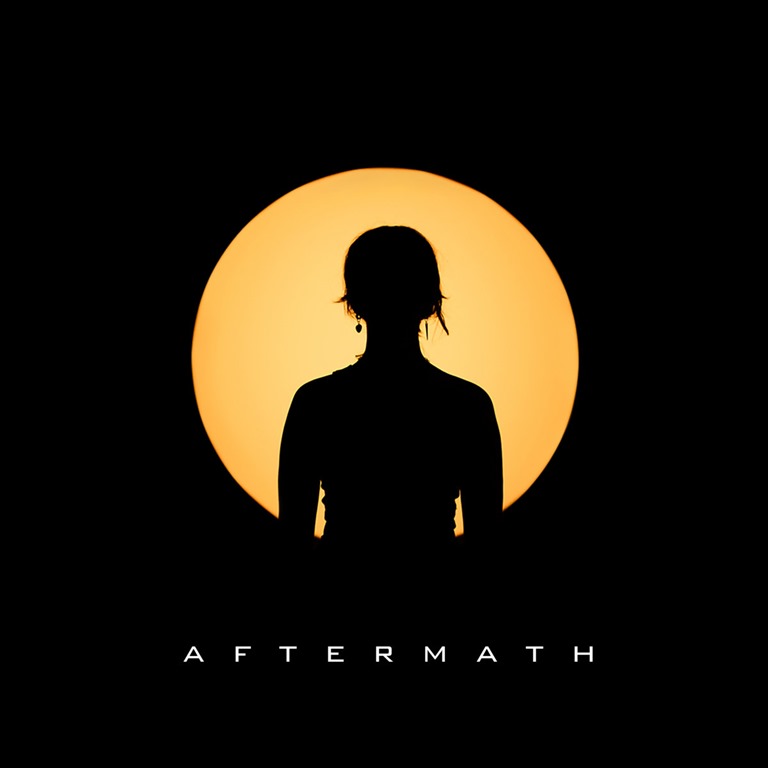
Minsk, Belarus-based alternative metal act Mission Jupiter have recently issued Aftermath, their third album but first with powerhouse new singer Kate Varsak, whose voice is suited perfectly to a set of epic, drama-packed songs that should see the group achieve lift-off far beyond their home territory.

Describing the song’s meaning, the group explain that “it asks if we can be less selfish. Most of us tend not to look beyond our own doorstep….can we be better?”


Aftermath contains ten superbly produced songs in all. Fans of alternative and hard rock, progressive rock, metal and even Eurovision-esque crossover rock (on ‘Jak Spyniajecca Bol’, recorded in the group’s mother tongue and translated as ‘How The Pain Stops’) will be wowed by Mission Jupiter’s new songs, which combine sounds, moods and melodies wrapped around a stunning voice to leave listeners breathless.

AA

a0893313440_10

25th July 2024

Christopher Nosnibor

The art world is not so much a desert as a breakers’ yard, stacked to the sky with abandoned and aborted projects, works which were commissioned and shelved or otherwise dropped, canned, kicked into touch. The endless hours spent on projects which have never seen the light of day hardly bear thinking about. A career in the arts is likely to be one dominated by failure over success, even for a successful creator. But what is success? Artistic success and commercial success exist in different spheres, and while the world at large seems to judge more or less anything by the measures of the latter, one should ask why this us. Units shifted, radio plays, streams on Spotify, these are the metrics of success, based on the monetisation of art. Something is simply not right.

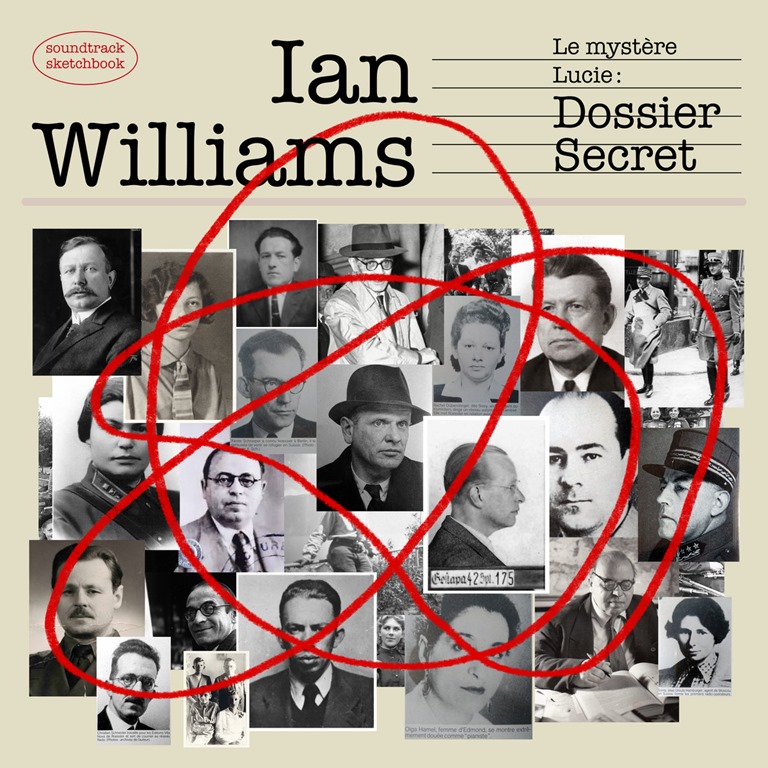
Ian Williams’ latest release is a product of failure. Le Mystère Lucie (Dossier Secret) (that’s Codename Lucy (Spies Against Nazism)’, a companion piece to the recently-released Le Mystère Lucie (Des Espions Contre Le Nazisme), his recent soundtrack album of music for the 2023 French documentary Le Mystère Lucie (Des Espions Contre Le Nazisme) / Codename Lucy (Spies Against Nazism).

As the accompanying blurb expounds, ‘it features music composed for but ultimately not used in the documentary, which was originally conceived as a 75 minute film but eventually released as a 52 minute TV broadcast. It seemed a pity not to make these additional themes and sketches available, so here they are, another collection of World War II spy music – melodic, electronic, orchestral, tuneful, abrasive, with both releases showcasing Williams’ knack of fusing big tunes with occasional blasts of industrial noise.’

Grand, bold, epic, expansive… these adjectives give a hint of the cinematic compositions n offer here. Being designed as a soundtrack, the album’s seventeen compositions are brief – largely under three minutes – and gentle, employing smooth synth bass and conjuring an atmosphere which is accessible to the ear. The tracks blur into one another with great rapidity, as one would expect for a soundtrack, where the segments flow with the scenes.

Le Mystère Lucie (Dossier Secret) is rich in mood and atmosphere, as befits its subject. There’s not much industrial noise present here but string-soaked cinematic sweep abound. Le Mystère Lucie (Dossier Secret) feels filmic, it builds drama and layers of simmering tension, as well as lakes of brooding darkness and ripples of uneasiness. It’s an accomplished score, and one which most certainly was too good to go to waste.

AA

a2382814546_10

It is no wonder that the experimental string duo Lueenas often work with film music. In their recent collaboration with animator and video artist Jonas Bentzen, their affinity for the magic that can happen moving image and moving music is highly apparent. From the p.o.v of a solo traveler, the camera takes us hauntingly through underground tunnels and fantastical sci-fy spaces of ancient aesthetics while the violent track ‘Nyx’ is carrying us through it all. For Lueenas darkness and beauty are two beautifully intertwined sensations and this duality is a driving force in their video collaboration with Jonas Bentzen, creating an eerie yet alluring and sensual journey.

For fans of Tarkovsky’s Stalker and Mica Levi’s soundtrack to Under The Skin, this music video from Lueenas and Jonas Bentzen is one to watch. “Nyx” conjures the story of Hemera’s mother, the Goddess of Night, born from Chaos and feared by all, even Zeus. Through distorted and shrieking layers of violin, and the mammoth double bass figures, she carries at once a brutal wrath and conciliatory power. Transforming into

upward blazing howls, we are reminded that there is beauty in darkness. Nyx is part of the self-titled album by Lueenas, released November 4th, 2022.  Cinematic, strings & electronics duo, LUEENAS, announce self-titled debut album, out Nov. 4. Intuition and acceptance are at the core of the debut album from Danish electrified string duo, Lueenas. Exploring the complex spaces between typical emotional dichotomies, their language emerges brimming with imaginative uses of form and texture. Born over a year of improvised sessions, and informed by their involvement in other projects across pop, jazz, electronic, experimental and post-classical music, Maria Jagd and Ida Duelund then set out to puzzle together the luring soundscapes that make up their self-titled debut. Experimenting with the limits imposed by their stringed instruments, and pushing the boundaries between acoustic, amplified and electronic sources allowed them to draw on a much broader and expressive colour palette of sounds.

Taking inspiration from ancient sacred practices, the album encompasses millennia of storytelling from distinctly female perspectives. Lueenas’ fully-cast debut album is at once the evocative score for a lauded expressionist film yet to be made, and a sermon for the fluidity of the emotional experience across time and space. As an ode to the communicative power of strings, it tells us what would otherwise remain untold. Lueenas is an experimental string duo formed in 2019 by Ida Duelund and Maria Jagd, and based in Copenhagen, DK. With violin, double bass, effects and amplifiers, they create violent and beautiful soundscapes full of panoramic grandeur. Their cinematic aesthetic has roots in both classical minimalism and improvisational rock music.

Watch the video here (click image to play):

Nyx 2

Christopher Nosnibor

Sometime during lockdown – which one, I can’t remember exactly, but likely the first, where here in England what initially looked like being a couple of weeks, ended up being more like a lifetime. After the lockdown announced on 23 March 2020 was extended on 16 April for ‘at least three weeks’ and in fact running into June, the fear surrounding the lifting of restrictions saw references to Stockholm Syndrome circulating with increasing frequency in the media.

Described as ‘a psychological response’ which occurs when hostages or abuse victims bond with their captors or abusers, and the victim may come to sympathize with their captors, and

may even begin to feel as if they share common goals and causes.

The name originates from a failed bank robbery staged in Stockholm in 1973, where Jan-Erik Olsson, and his charismatic accomplice Clark Olofsson held four employees as hostages, remaining captive for six days in one of the bank’s vaults, and when the hostages were released, none of them would testify against either captor in court; instead, they began raising money for their defence.

While the syndrome is disputed, the concept is something of a source of fascination. Personally, I had never been one of those who found themselves ‘loving lockdown life’, but found myself apprehensive about the easing of lockdown: what would be the ‘right’ way to behave in public, how would things ‘work’? I didn’t need to worry about pub and gig etiquette for a while, but was more fearful of other people than I was of Covid – because people are unpredictable, and after being cooped up for so long, who knows how many might have lost it?

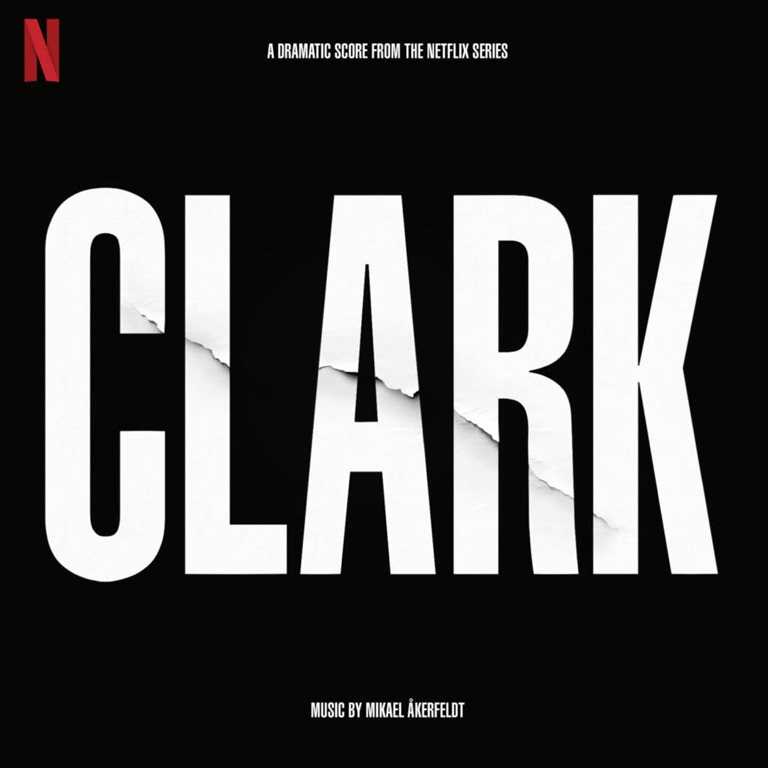
Swedish Netflix mini-series Clark is the story of Clark Olofsson, and while it’s won awards, I found its stylised and flippant comedy-drama approach to be pretty ‘meh’. There’s vague amusement to be had, but ultimately – and for obvious reasons – presents Olofsson as ‘cool’, a cheeky bad boy out for But then, just because it’s not what I would have wanted it to be doesn’t mean it’s no good, it’s just not my bag.

While there are some bold intercuts of ‘proper’ songs featured, it’s not a series where you find yourself really paying attention to the soundtrack for the majority of the time. Listening to the soundtrack independent of the series, it’s a mystery as to why this is.

Of course, much of the interest in the soundtrack will be the fact that it was scored by Mikael Åkerfeldt of progressive metal legends Opeth – and as much as this score is overtly cinematic, it draws equally on progressive rock, funk, laid-back jazz, and 70s cop shows. The last nine of the thirty-four tracks feature vocals, and this portion of the album feels separate again, and may have worked as a separate release or bonus CD or something, as it’s quite a leap. Hell, ‘Måndag I Stockholm’ goes full Sabbath. Incongruous is an understatement and it’s hard to know what to make of it all. Then again… why not?

AA

Varied, engaging and evocative, it’s imaginative and listenable and entertaining – and a lot less frustrating than the series itself.

 MikaelAkerfeld_Clark_LP_Gatefold.indd

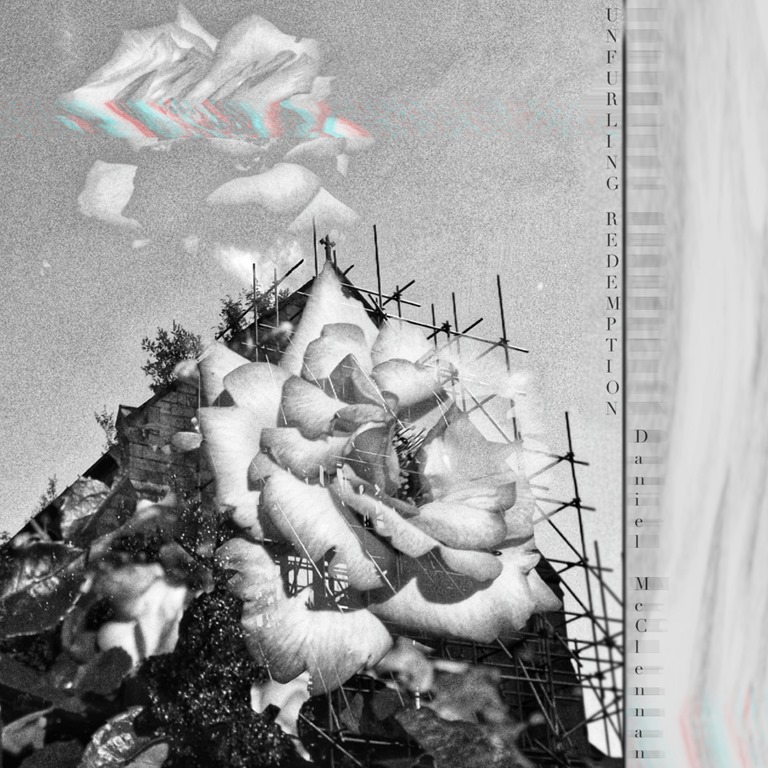
Aural Aggravation is immensely proud to present an exclusive video in the form of ‘Lifted by Marionette Strings (For Kleist)’ by Dan McClennan.

Taken from the album Unfurling Redemption released by Cruel Nature Records on 2nd September, ‘Lifted by Marionette Strings (For Kleist)’ is an unusual hybrid of neoclassical and experimentalism, balancing ominous synths and graceful piano with elements of noise to create a multi-faceted journey brimming with drama and tension.

Known for his energetic furling beats with noise-rock experimentalists Warren Schoenbright and Why Patterns, this solo release sees Daniel McClennan draw on classical and avant-garde influences such as Giacinto Scelsi; Svarte Greiner; Valentin Silvestrov; William Basinski; along with sound-artists such as Jacob Kirkegaard and The Caretaker .

Unfurling Redemption is a collection of eight assemblages comprised of synthesised instruments and freely available/stock sound samples. These assemblages explore the widely observed and seemingly inherent desire for overcoming in humankind, a dangerous proclivity for dreaming the transcendent. Particularly, the tracks pull at the problem of what we can do when these efforts inevitably drop us short of paradise, miss the mark or leave us as pyrrhic victors. Taking the form of empathetic or imagined inward reflections, they are inspired by characters in both fiction and critical discourse and take the form of unpredictable, spectral or melancholy audio ruminations. What must be done when transcendence is forever thwarted? Where then, must we seek redemption?

Watch the video here:

AA

a1220833455_10

Futura Futura Records – 6th April 2022

Christopher Nosnibor

Ah, romantic love… that all-encompassing, all-immersive burst of excitement that comes with the new. It’s that euphoria that drives people crazy, that people spend half their lives chasing, only to find it elusive, and it’s the blinding dazzlement of this ‘love’ that’s inspired infinite pop songs and poems through the ages: it was the very cornerstone of the tropes for the Elizabethan sonnet, and not a lot has changed in five hundred years, in real terms. It’s not that it’s a myth, it’s just that it’s fleeting at best.

Subterranean Lovers know this when they sing ‘I want to love you like a mother / I want to love you like a king / I want to love you like a god / I want to love you more than I’ve loved anything / I want to love you like a poet / I want to love you like an artist…’ and this makes ‘Brilliant Things’ a savvy slice of gothy pop.

Building from simple acoustic guitar and vocal and introducing the other instrumental elements of drums, bass, synth in succession, ‘Brilliant Things’ may glow brightly, but there’s a dark undertone beneath the lustrous, basking glory of these elevated aspirations, as if the weight of them drags such perfection beyond reach. This, in itself, brings a twist of anguish, the realisation that perfection is even more unobtainable than that magnificent, pedestal-standing object of desire.

‘You’re silver and gold / you’re mine to hold / you’re everything’ hints at the all-consuming and ultimately potentially damaging way obsession isn’t healthy, and the delivery is bold and dramatic, with a captivating vocal melody that’s enriched by enticing layers of harmony that leave you aching for more. Brilliant indeed.

AA

Artwork - Subterranean Lovers

SPV / NoCut and ADA / Entertainment One

24th January 2020

Christopher Nosnibor

And we’re back once again in the divergent and varied field of what’s come to be goth in the 21st century, and it’s a very far cry from its post-punk roots. The late 70s and early 80s saw the emergence of Siouxsie and the Banshees, Bauhaus, The Cure, The Sisters of Mercy, The March Violets, Christian Death and a slew of bands who would subsequently be labelled as ‘goth’, and who were subsequently joined by the likes of Red Lorry Yellow Lorry, The Cult, Fields of the Nephilim, The Mission, etc., etc. The fact of the matter is, there was little commonality between these acts, and that goth was something of a media fabrication. What about the fans? Let’s not confuse the fans and the artists, or a subculture with its icons. So what was a scene that never was morphed into an evermore diffuse group of subcultures, with an ever-broader range of bands who had little or nothing in common beyond their shared fanbase. After metal, there can be few labels that provide an umbrella for a greater range of styles.

So here we are, presented with The Book of Fire, the eleventh album by German goth-metal act MONO INC. And while it’s goth, it’s not really my kinda goth, and couldn’t be further from the dark post-punk or art-rock stylings of the first wave of bands. Is this evolution, or dilution, cross-pollination and contamination? I suppose that’s a matter of perspective.

The album’s first song, the title track, is over seven and a half minutes long. It begins with a slick guitar that almost manages to sound like a harpsichord, and then it glides into some kind of Celtic folk metal and it very soon starts to become uncomfortable. Uncomfortable because such buoyant energy is more the domain of the hoedown knees-up. The folk-hued power-metal of ‘Louder Than Hell’ brims with positivity about strength and stuff, and explodes with crisp synths and choral backing vocals and it’s fun enough, but it’s also pretty cringy: it’s the kind of thing Germany might enter into Eurovision.

Then again, ‘Shining Light’ has such a massive chorus and a hook so strong that it’s hard to resist even when you’re hating it: it has that uplifting surge that lifts you and carries you away on the tide from the inside.

The euphoria swiftly dissipates with the next song, ‘Where the Raven Flies’, which is the definition of theatrical cliché melodrama. And herein lies the problem, which I accept is entirely personal, at least on a primary level. In short, I think it’s cheesy and naff.

On a secondary level, and one which is more objective, what The Book of Fire represents is very much a commercial take on the genre; theatre and drama don’t necessarily equate to an absence of depth, but this is good-time party goth, and any emotional sincerity is polished away under a slick veneer of pomp and overblown production. In this way, it’s as credible as examples of either folk or goth as Ed Sheeran’s ‘Galway Girl’ or Doctor and the Medics’ rendition of ‘Spirit in the Sky’. It displays all the trappings, but none of the authenticity. For all the theatre, there’s a woeful absence of substance, the brooding is third-rate thespianism rather than the anguish of tortured souls.

Elsewhere, ‘The Last Crusade’ is riven with choral bombast, but is little more than an obvious ‘This Corrosion’ rip-off, that once again leans heavily on Germanic folk tropes, and ‘The Gods of Love’ similarly brings together Floodland-era Sisters with Rammstein. I’m sure plenty will view this as a good thing, but they’d be wrong, so wrong. ‘What have we done?’ they ask repeatedly on the final and suitably epic finale track ‘What have We Done’, and it’s a fair question: whatever it is, it’s not good.

In fairness, it’s not quite ‘Rocky Horror’ bad on the spectrum of play-goth, but it’s not far off, and while it’s sonically ambitious, creatively, it’s depressingly derivative.

AA

MONO-INC.-The-Book-Of-Fire-1500x1500px