TAR POND have just unveiled the fierce video clip ‘SLAVE’ as the next single taken from the Swiss doom visionaries’ forthcoming new album PETROL, which is scheduled for release on September 15, 2023.
TAR POND explain: “Although the video for ‘SLAVE’ was produced simultaneously with the clip for ‘BLIND’’, we approached the visuals in a quite different way”, vocalist Thomas Ott elaborates. “This dark and heavy song rather evokes simple and slow images. I had some interesting shots of jellyfish floating in dark water. So we decided to shoot some additional material of the band performing in the rehearsal room, filled with a maximum of smoke. That quickly turned out to be a bad idea due to the fire alarms installed in the building. Well, with the kind help of some good old friends, Marky managed to procure a much better location in no time. Initially, the video for ‘SLAVE’ was planned with more varied footage, but Fabrizio Merico’s sublime camera work, shot in only one night at the Zukunft Club in Zurich, and the absolute professional editing by Coroner’s Daniel Stoessel made us decide to just let it all go up in smoke! Sometimes less is more!”
London based Progressive Psych Doomsters Morag Tong have a video out for the first single to be released from upcoming sophomore album Grieve.
Grieve is the band’s long-awaited follow-up to 2018’s acclaimed full-length debut Last Knell of Om and marks their first release on Majestic Mountain Records. Regarding the album Vocalist/Drummer Adam Asquith states “we wanted to create something huge and heavy, but also gorgeous, textured and atmospheric. Incorporating both massive, aggressive wall of sound sections and more pensive, stripped back ambient instrumentals I think we have hit that sweet spot – something anguished and anxious, crumbling and dangerous, yet eerily beautiful and oozing with a love for life itself.”
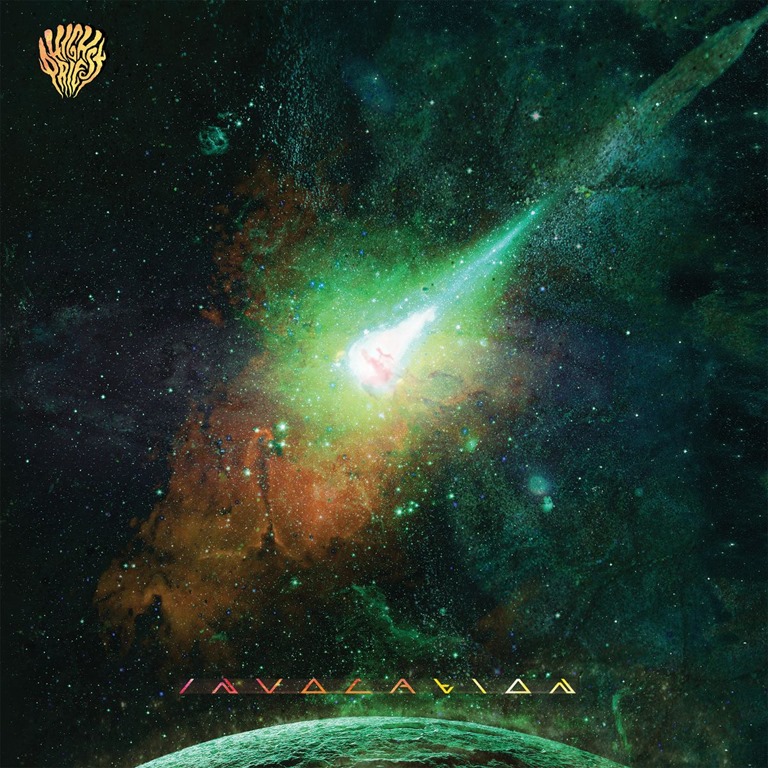
Chicago riff-doom four-piece HIGH PRIEST officially present their debut full-length Invocation to the world, now streaming everywhere and available in record shops across the galaxy from 23rd June 2023.
The band comment: “Our debut album Invocation is the culmination of years of hard work and collaboration”, guitarist John Regan writes. “We wanted to represent our breadth of influences and create something new while harkening back to the bands that inspired us to play music in the first place. I am the most proud of this record of anything I’ve ever worked on, and I’m so excited to share with the world.”
FRAYLE deliver a beautiful take on SOUNDGARDEN’s ‘Head Down’, fueled by the mystery of Gwyn Strang’s haunting vocals and down-tuned frying guitars. The fast-rising doom act from Cleveland, OH has furthermore illustrated this dark song with a stunning video, which you can see here:
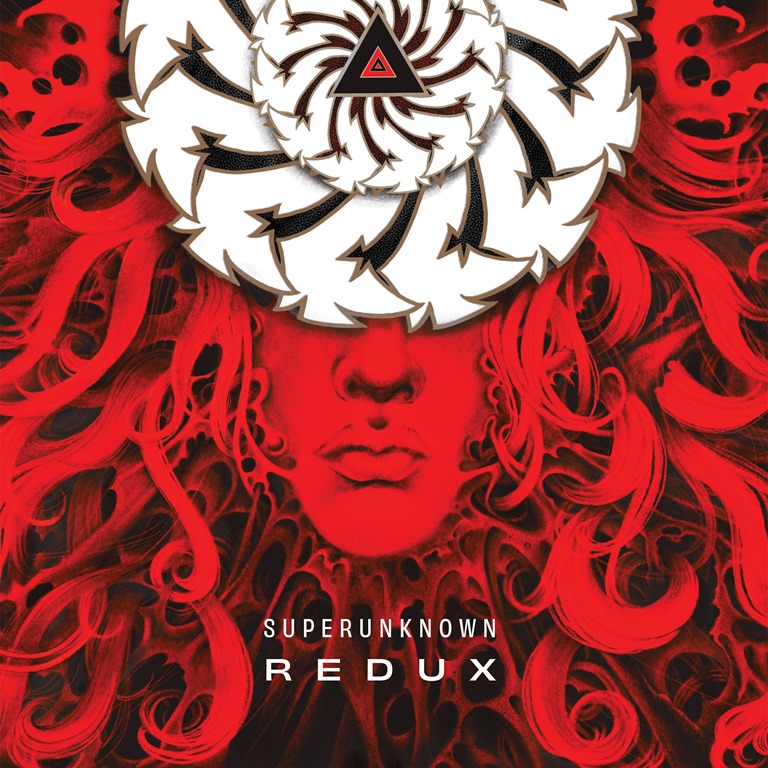
The massive double album Superunknown Redux has been scheduled for release on July 14.
Parallel to Superunknown Redux, Magnetic Eye Records will release the by now customary companion album entitled Best of Soundgarden Redux that contains further 15 cover versions of deep cuts and all-time classics from across SOUNDGARDEN’s extensive catalogue recorded by more exciting artists.
FRAYLE comment: "Soundgarden was an integral part of our development as musicians from an early age with brillant songs such as ‘Fell on Black Days’,”’Black Hole Sun’, the list just goes on and on", singer Gwyn Strang writes and multi-instrumentalist Sean Bilovecki continues: "For ‘Head Down’, we deconstructed the song and switched its timing to 4/4. The song as recorded by Soundgarden has overlapping drum parts and complicated timings for example. We stripped it down and gave the track elements of tribal drumming, while we added layers of vocal harmonies and voices coming at the listener from all angles."
Having had something of a chuckle at Henge for their pseudo-space mythology and psychedelic psilliness, I find myself squaring up to purveyors of genre-straddling experimental doom, Codex Serafani. Their biography explains: ‘Their journey started a long time ago, some say on Saturn, some say in the subconscious of the human psyche, coming out in different manners through the ages, channeled by mystics, witch doctors, shamans, free thinkers, free spirits. But we do know that what has become Codex Serafini travelled here from their home world on Enceladus in 2019 and crash landed into the music scene of Sussex.’ Of course they did.
But what are the chances that a I’m writing this review, an article from The Guardian pops up in my news feed reporting on how astronomers have spotted a six-thousand mile plume of water vapour blasting from Enceladus – a small moon belonging to Saturn believed to be one of the most promising places in the solar system to find life beyond Earth? As coincidences go, this was an usual one, and one which befits this band.
With a name which references Luigi Serafini’s Codex Seraphinianus, an illustrated encyclopaedia of an imaginary world, written in an imaginary language, it’s clear these guys have a keen interest in the realms of fantasy and mythology, to state it lightly.
I suppose that the concept piece whereby the concept includes the artist as much as, if not more than, the album goes back to Bowie – but back in 1972, this was new and novel, and moreover, Bowie was unique and an artist whom you could almost believe was from another planet. But even then, however much the concept became all-encompassing, it was also clear that the concept was a persona. But to base an entire career on a persona – not a media or public persona, but a far-fetched one which requires the suspension of disbelief – can be somewhat limiting. Where do you go when you’ve explored the concept to its logical limits?
In creating such a vast and multi-faceted alternative universe, Codex Serafini have ensured an abundance of time and space in which to explore and expand their concept, and rather than it being self-limiting, the challenge will be to test the capacity of their imagination, not only conceptually, but also musically.
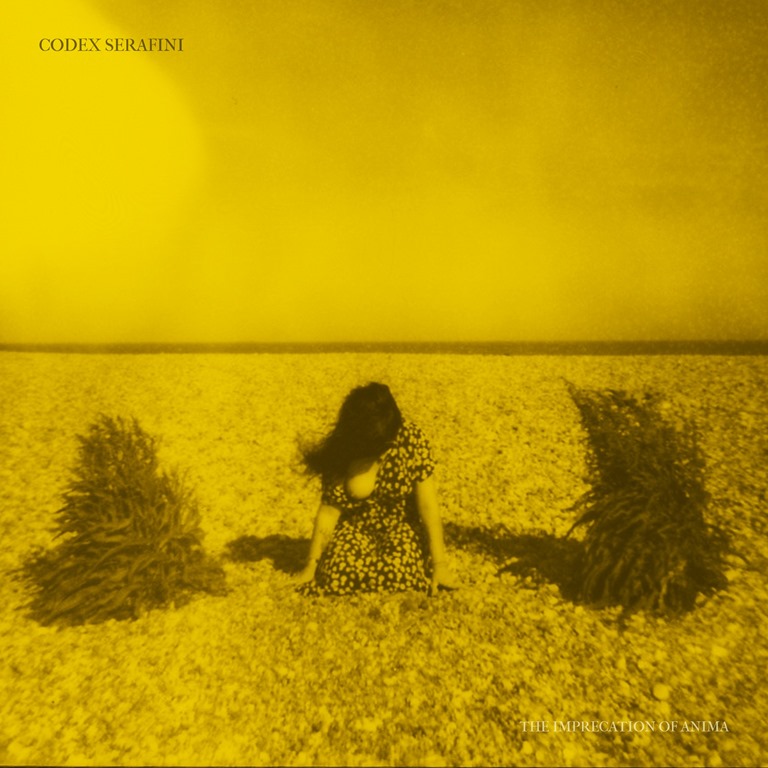
While the adage that you should never judge a book by its cover hold some merit, one can tell much about an album by the ratio of its duration to the number of tracks, and The Imprecation Of Anima has a running time in excess of forty-five minutes and contains just four tracks. We know we’re in ‘epic’ territory before hearing a note, and the first of the four compositions, ‘Manzarek’s Secret’ unfurls slowly with a long droning organ (which one suspects is no coincidental nod to The Doors) and chiming percussion. It’s not long before a thick, gritty bass and reverb-heavy vocal incantations are joined by some wild brass to burst into the first of numerous big, jazz-flavoured crescendos. At nine-and-a-half minutes long, it’s epic, but only an introduction ahead of the fifteen-minute swirling mystical monster that is ‘Mujer Espritu’, which brims with Eastern promise and sprawls in all directions at once.
Single release ‘I Am Sorrow, I Am Lust’ is perhaps the least representative song of the album as a whole: it’s snappy, exuberant, uptempo, jazzy, rocky, busy, climactic, and fairly structured – and clocking in at three minutes, it feels like a single when standing alone, but more like an aberrant interlude in context of the album ahead of the seventeen-and-a-quarter minute ‘Animus in Decay’. Now this is a wig-out! It’s heavily psychedelic and transitions through a succession of passages on the path to – what? Enlightenment? It’s certainly a journey, whichever angle you approach it from. It builds and grows in volume and tempo, then falls again and there are some expansive ponderous sections and shifts like sand dunes in a vast sonic expanse.
And so it may be that the concept is a little daft, but they deliver The Imprecation Of Anima – a work that’s as ambitious as it is immense – with absolute conviction, and the vast sound pulls you into Codex Serafini’s (other) world. Inventive and accomplished, it’s a truly mighty record.
Pow! Sometimes an album will sit in your ‘to play’ pile – physical or virtual – and after a time you wonder if it’s perhaps too late, you’ve missed the moment. But time-panic is just another construct, and it’s never too late. The whole time-frame issue when it comes to music releases, books, anything, is just a question of commercialism. If an album’s not hit critical mass and peak streams on the week of release, it’s deemed a failure, sunk. PR campaigns are deemed failures and bands get ditched by labels, and it’s all symptomatic of our culture of instant gratification. So many of the most culturally significant bands didn’t find their stride until three or four albums in and likely wouldn’t have had the opportunity in the modern climate, which is all about the short term. Thankfully, outside of the mainstream, things are a little less pressured, and there’s an understanding, an acceptance, that things often have a slow diffusion, perhaps not least of all because there’s less scope for pre-release airplay and the like which lead to the release-week bang.
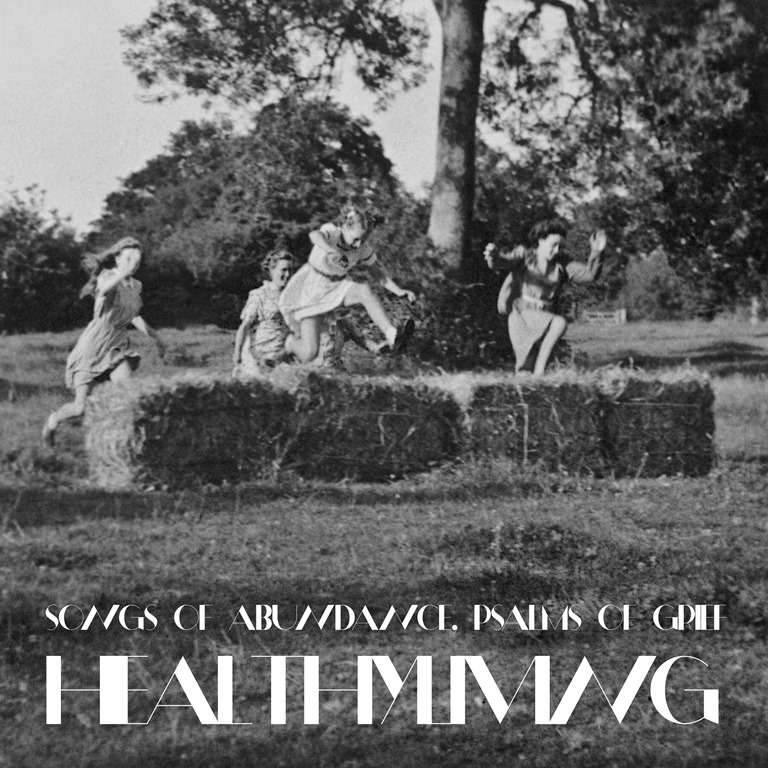
Songs of Abundance, Psalms of Grief came out in April, but then, in the scheme of things, it’s still very much a new release – and it’s a quite remarkable one, at that. It’s atmospheric and intense, combining elements of post-rock and post-metal with operatic vocals and it’s one of those albums that grips from the very start: opener ‘Until’ arrives in a flurry of energy and it’s bold and immense and so, so powerful. There are some big guitars and strong drumming and everything comes together with a density and power. But if the first impressions suggest another act in the vein of Chelsea Wolfe, the album as a whole showcases a quite different style.
As vocalist Amaya López-Carromero explains: “The magic of musical composition/songwriting for me lies in its capacity to create worlds outside of reality where both performers and listeners can explore and process things. A sort of microholiday from everyday life or an exciting meditative state, so I hope that we can share this experience with anyone who listens to the album.”
Songs of Abundance, Psalms of Grief very much conveys a sense of separation and detachment from the humdrum, and possesses an elemental quality that has the capacity to lift the listener elsewhere, in a world of its own. It’s also unexpectedly varied, and the chunky, rattling bass on ‘Dream Hive’ is only one factor – albeit a dominant one – in a layered, textured work. Galleries’ is a true epic: hypnotic, richly textured, it has simultaneously a soaring airiness and the earthy heft of Neurosis, and it’s a potent combination.
‘To the Fields’ reaches a blistering crescendo, during which Amaya’s vocals reach a new height of impact, sending shivers down the spine. Then, ‘To the Gallows’ rushes in on a wave of thunderous percussion before Amaya powers in with some high-impact vocals which border on the witchy. She’s an incredible vocalist, powerful and versatile, and her singing is imbued with a kind of pure spirituality.
‘Bloom’ is something of a contrast, manifesting as clean, wistful indie pop – at least to begin with, before it goes big and brooding, while ‘Ghost Limb’ is a glorious slow-burner which paves the way for ‘Obey’, which closes off the album in strong style, another emotionally-intense song with a gradual build and strong dynamics.
Songs of Abundance, Psalms of Grief is one of those albums that is an instant grab, but continues to yield more with each subsequent listen. And for its variety, there isn’t a song which sounds out of place, or weaker than its counterparts. It’s not solid, it’s stunning, from beginning to end.
It’s been fourteen years since there was new music from Khanate, the experimental doom outfit featuring members of Sunn O))), OLD, and Blind Idiot God. It’s perhaps not surprising that my social media feeds have been bursting with the news of the surprise arrival of their fifth album on digital platforms ahead of a physical release next month– and because it landed from nowhere overnight, you couldn’t say it was eagerly anticipated, but it’s got a lot of people excited.
As you would expect, given the members’ main projects, and the previous Khanate releases, To Be Cruel is an absolute monster, with just three tracks spanning a full hour. You don’t tune in to Khanate for snappy pop tunes.
The first chord hits like an atomic bomb, blasting from the speakers with such force it’s almost enough to floor you, and rising from the sustain, crackling synth notes, then another sonic detonation that’s so hard and loud it hurts. Many of the tones and tropes of To Be Cruel are heavily redolent of the crushing doom drone of Sunn O))), but as the first piece, ‘Like a Poisoned Dog’ abundantly evidences, Khanate are different. This difference may be less apparent to the casual listener, but the stop/start power chords and skewed, sinewy shards of feedback are cut from a different sonic cloth, and if Sunn O))) are renowned for their indebtedness to Earth, there are elements woven in here which seem to owe more to early Swans, and while I wouldn’t necessarily want to speculate on whether the album’s title is some kind of response to Swans’ 2014 album To Be Kind, there is some kind of contextual interface here, in that both acts are pushing parameters within a longform song format.
And then there are the vocals: it’s a good seven minutes before Alan Dubin makes his first contribution: the song takes another swerve, the blistering blast simmers down and as he howls and roars, the feel is a cross between the darkest of mangled metal and brutal hardcore. And his manic screams are powerful and affecting. He sounds troubled, but in a way that conveys the kind of tortured mental suffering that’s common to many: it’s a primal howl of rage ad anguish that we struggle to unleash, and so to hear this is to feel emotions channelled by proxy, and as much as it hurts, it’s a release.
‘It Wants to Fly’ takes it to the next level, presenting almost twenty-two minutes of pain. The guitar is slow, crushing, punishing. What can you say? It hurts. It’s also minimal in arrangement but maximal in volume: this is first-gear BPM, with decimating feedback between the crushing chords. At the same time, it’s doomy and ominous as well as raging, making for a powerful cocktail of weight and raw emotion. There is no question that Khanate bring both.
And so it is that the album’s third and final track, the twenty-minute title track, is twenty minutes of low drone and tortured screaming that sounds like a breakdown captured on tape as Dubin yelps and screams about spiders against a sparse backing of a distant rumble and clanging guitar. ‘Look! In the closet!’ he shrieks in what sounds like abject terror. You dare not look. You don’t even want to hide under the bed: you just want to leave the house. The composition takes its time, it hums and drones, and in time, it hits and it hurts, and in some way you wish you could be Dublin, you want this release to have a channel into the unhinged. But you’re stuck on the outside, an observer to what sounds like either the ultimate catharsis or mental disintegration.
Ground down to nothing beyond and anguished screams and squalling feedback, this is bare bones, the sound of desperation. It isn’t pleasant, and there is simply no room to breathe: this is dark, dense torturous, and it’s exactly what fans have been waiting fourteen years for.
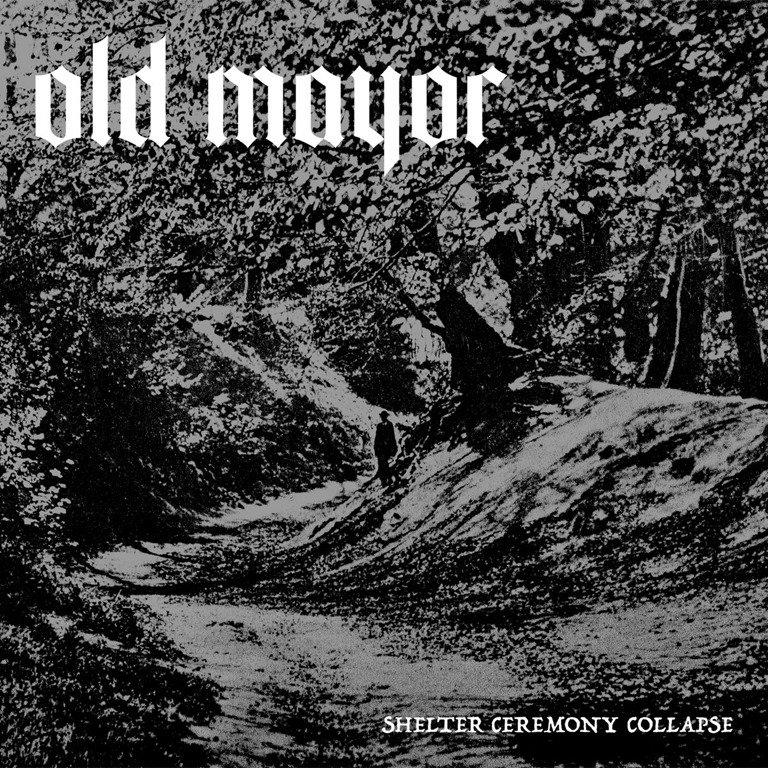
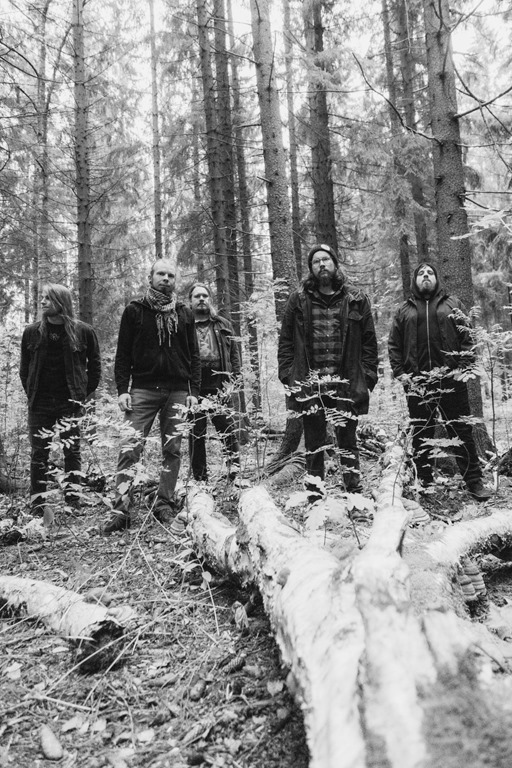
For context, I shall quote from the notes which accompany this release: ‘Old Mayor are Adam Kammerling and Owen Gildersleeve (Modern Technology / Human Worth). They were most active between 2005 – 2009 sharing bills with the likes of Boris, Russian Circles, Heirs, A Storm of Light, Orange Goblin and ASVA. ‘Shelter Ceremony Collapse’ was recorded during a stint in New York in the winter of 2008, where the duo laid down this beastly three track, recorded by Chris Pierce at Technical Ecstasy Studio in New Brunswick. But the recording never saw the light of day, with the duo parting ways soon after.
‘Fifteen years later, on hearing the news that legendary Brighton promoters Tatty Seaside Town, who’d given the band their first shows back in the early years, were calling it a day and putting on a final weekender the duo felt it was the right time to finally come back together. To celebrate they unearthed this EP.’
They certainly achieved a considerable amount during their time active, but left a scant record of it in the form of a critically-lauded eponymous five-track EP, which makes the immensely-belated arrival of this archival recording all the more welcome, and for those unfamiliar with them the first time around (myself included), Shelter Ceremony Collapse provides an outstanding introduction.
There’s an adage about how you treat people when you’re on the way up, and this release and the circumstances surrounding it are very much characteristic of Owen and Human Worth: not only reconvening Old Mayor for a farewell concert, but releasing the EP with a portion of proceeds going to charity speaks for the nature of the people and the operation.
As for the EP itself… While the title has a ring to it as a phrase, while conjuring mental images of crumbling edifices and societal disarray and something vaguely post-apocalyptic (or perhaps I simply have a vivid imagination which steers oof its own accord toward the bleaker, darker prospects), it’s also the titles of the EP’s three songs in the order they appear.
That said ‘Shelter’ is so heavy it almost brings about its own collapse inside the first two of its monstrous six minutes. It’s a slow, dirgy tune that begins delicately with clean, picked guitar, building a misty atmosphere of mist and loam, the resonant timbres of the strings rich and earthy and redolent of Neurosis – and then the distortion and drums pound in, hard and heavy and hit like a tidal wave crashing with full force against the abdomen and knocking the air from the lungs.
Kammerling’s screaming vocals are largely buried beneath the sludgy landslide; he sounds possessed, but is barely audible for the downtuned sludge, and Owen’ hard-hitting drums cut through with thunderous force.
‘Ceremony’ is but an instrumental interlude, a cacophony of shrieks and wails. It may only be a couple of minutes long, but the sounds of tortured souls leave you feeling unsettled and uncomfortable, which is either a bad state or the ideal state to receive the shuddering blast of the crushing ‘Collapse’. It’s properly heavy, snail-paced doom, and it’s potent, powerful stuff.
It would be wonderful to think that the one-off reunion wasn’t a one-off, and that it might spur more performances and perhaps even more new material – but they’ve already spoiled us, and Shelter Ceremony Collapse is the perfect release to expand and confirm their place in the annals.
Svart Records recently announced the release of Unissa palaneet, the sophomore album by the Helsinki quintet Radien. Having begun their existence on the earthly plane in 2014, Radien have forged their brand of idiosyncratic amplifier worship with passion that is in full bloom on Unissa palaneet. The debut album SYVYYS (2018), given a warm welcome by the international doom/sludge crowd, swam in murkier and more monotone waters, whereas the follow-up presents breathtakingly heavy widescreen sludge that paints its oozing black hues in technicolor.
Unissa palaneet tells a story of a person who finds a calm spot inside himself or herself amid chaos, and starts to see visions and dreams of the end times of humanity. The band comment,
“The protagonist’s dreams turn lucid, and he/she understands them being prophecies of the future. He/she understands being capable of altering the course of history through his visions, but in the end decides that it is best to let things happen as they are meant to happen and not intervene in anything. In the end the dreams and visions mix with one another and become reality. Nature strikes back at humanity and in the end the human era ends in flames and ash”, comments the Felipe Hauri from the band.
According to the band new single ‘Seinämän Takana’, which features Dylan Walker from Full of Hell "depicts a moment when the boundaries between dreams and reality break. Dreams and visions are no longer merely dreams, but omens waiting to manifest themselves in reality.”
There aren’t many guitar-based genres of music where one-man bands are particularly commonplace. Of course, I’m not talking about folk or acoustic-based music, but the kind of music where, on listening, you’d expect a full band. Industrial is something of an exception because early exponents like JG Thirlwell – aka Foetus – developed through the use of tape loops and studio experimentation, and the same is also true of later exponents like Nine Inch Nails, with Trent Reznor’s studio-based project evolving from being largely synthetic into a live proposition.
But black / death metal are genres unto themselves. One might joke that it’s because most of the people who make this kind of stuff have no mates or are too antisocial to form bands, although it may not be much of a joke. Either way, Melbourne-based Aaron Osborne is one of those one-man operations, handling all aspects of writing and playing to create the sound of several. And what a sound it is. If you want dark, dense, and sludgy, with bowel-loosening guttural vocals, then you’re in luck.
Into the Maze – a twenty-seven minute album – or mini-album – actually comprises two new songs plus four cuts previously released as the Collector EP.
You don’t listen to this stuff to be uplifted – but you do dive into it for escape, and Into the Maze brings that cathartic release.
The title track is monster slab of downtuned darkness. There are some guitar screeches which emerge from the relentless trudge that call to mind Fudge Tunnel, but this is denser, slower, doomier, and somehow less organic-feeling, like early Pitch Shifter but with live drums, and passing a nod to how they take ‘the swagger and groove of Entombed’s Wolverine Blues and infuse it with the tar-thick pull of doom’. But against Wolverine Blues, it’s half the pace and the lyrics are unintelligible grunts, so it’s very much an example of taking an influence and steering it in a different direction. And this is a good thing. The production is perfectly dingy and oppressive, and over the course of just short of half an hour it really grinds you down in just the way it should. In all, it’s pretty bloody brutal. I dig.