Posts Tagged ‘dark’

5th March 2025

Christopher Nosnibor

Steven Archer has been keeping busy: it’s barely three months since he landed the latest Stoneburner release, with its glorious Foetus-inspired cover art, not to mention a brace of EPs late last year, and a and lo, we have an album of steaming-hot brand new material. I often marvel at artists like this, who are so prolific. Do they even sleep? I do get that creativity is something that, more often than not, simply hits and you have to run with it, but…

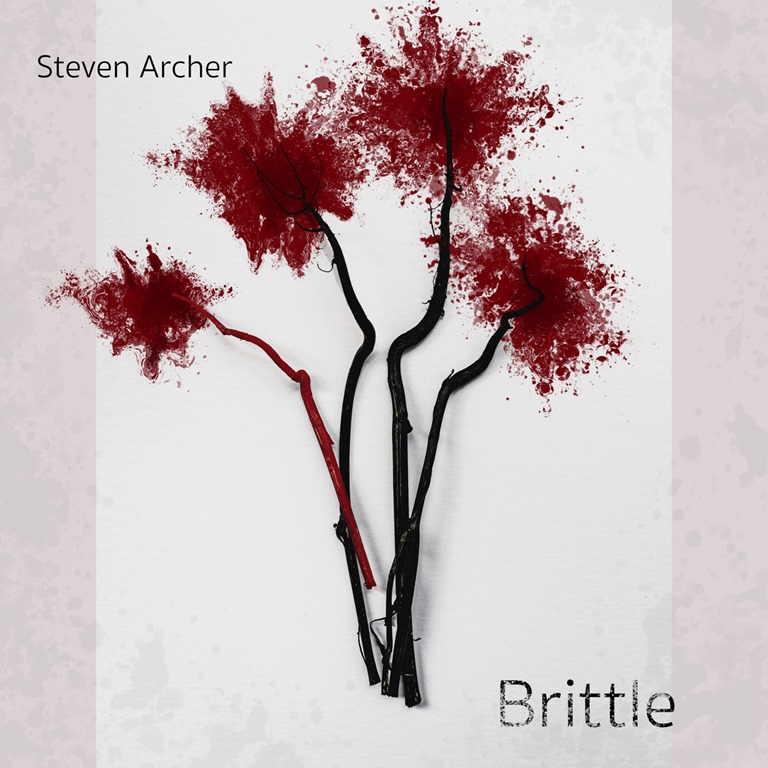
Brittle is a twisted mix of all sorts. First and foremost, it’s an electronic album, and one which leans toward darker territories – not in an aggressive or overtly industrial way, but more given to brooding, introspection, haunting reflection and melancholia.

‘Our Past is a Wasteland’ is a track which transitions and evolves as it progresses: initially, it’s kinda smooth, a bit epic, sedate in in its musical form, with soft synths and mellow beats presenting a low-temp dance vibe, but along the way it begins to develop a darker, harder edge, gets a bit more Depeche Mode. The gentle drift of ‘Tenuous Place’ steps into expansive mode toward the end, exuding anguish and pangs of pain. ‘Only the Young Die Good’ is decidedly heavier: a droning organ gives way to a twitchy drum ‘n’ bass beat and serrated synths that saw deep into the psyche.

With its piano-led instrumentation and popping drums, ‘The Human Void’ is bleak and expansive, dark electropop rubbing and against drifting ambience with sinister industrial undercurrents as the backdrop to a vocal that switches from almost spoken word to hypnotic repetition. Elsewhere, ‘Tiger Longitues’ shares borders with the kind of smoky trip-hop of Portishead, only heavier, bassier, beatier.

The vocals on Brittle are heavily processed, and there’s a strong technogoth feel to the album as a whole. There’s something of a juxtaposition here, in that lyrically, emotional turmoil and troubling psychological situations are the main focus. Yet, in contrast to the intense and personal nexus of the words, the processed feel, which diminishes the human aspect of the vocal delivery, renders a clear separation. Perhaps this is a part of a necessary distancing: it’s certainly easier to manage challenging personal matters by creating layers of separation, and a deliberate detachment. ‘A Love Song for Monsters’ is exemplary: it’s a straight-up stomping banger, with robotix vocals and a slick production, but there’s so much more beneath the surface.

On the surface, Brittle sounds anything but: with sturdy beats and throbbing basslines, it’s a set which concentrates on delivering dark bangers. But however much we lay ourselves bare, we tend to need for there to be some kind of buffer, some space in between, in the interests of self-preservation. Most of us are more fragile, more delicate, more brittle, than we are comfortable to admit, even through the most forthright of art.

Brittle is uncomfortable, pulling in different directions, the undercurrent dragging against the main current on the surface. But the tension at its core is what renders it so compelling. Take in the tension, let it course through you.

AA
a4203216124_10

Self-released – 14th February 2025

Christopher Nosnibor

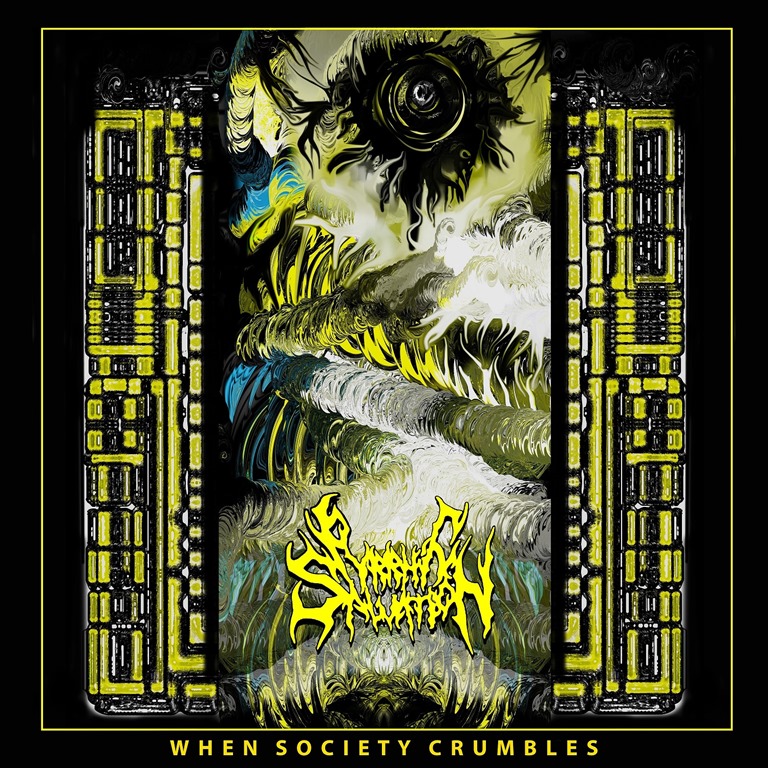
Yes, it’s ‘when’, not if, and since January 20th this year, it feels as if that crumbling which has been slowly emerging, first as a series of cracks, is now accelerating, to the point that we’re well on the way to almost certain collapse as Trump ‘the peacemaker’ puts his foot to the floor and hurtles us headlong toward self-extinction, one way or another. So after the ‘when’, the only question remaining is ‘how?’

While we ponder that, US interstate internet-based technical / experimental death metal act have delivered – after quite some time – their second EP. Having formed in 2015, it took them until 2022 to birth Manifestum I, following which singer Chrisom Infernium departed, being replaced by Shawn Ferrell. In the overall scheme of their career to date, When Society Crumbles has come together pretty quickly.

It’s overtly a concept work, centred around a fifteen-minute suite of three pieces which each address component aspects of ‘When Society Crumbles’ – ‘Infrastructure’, ‘Insight’, and ‘Inferiority Complex’. Well, ok.

The guitar parts alone contain about three hundred notes per minute, a frantic blanket of fretwork bursting from the very first bars. The vocals switch from growls to barks to howls to the squeals of wounded pigs, sometimes layered to occur simultaneously, while the drums blast away at a manic pace.

One thing that stands out from the first track alone is the production. Perhaps it’s the technical angle, perhaps it’s the circumstance of the recording, since being in a room and making noise is a very different experience from bouncing audio files around via Dropbox or whatever and adding to them in isolation. It’s not the clarity or separation per se, but the way the different instruments reverb – or don’t so much – in different ways. It isn’t that it sounds or feels cobbled together – it doesn’t – it just sounds different. But in a world where so much music is uniform, conformist, even if to supposedly alternative values, different stands out, and we need different. But the way that snare drum and the tom rolls cut through… they dominate in a way that’s rare, but it works: all too often with death – and black – metal – the drum dominate live, but are submerged on the recordings, reduced to a rattling clatter that’s more like the hyperfast clicking of a knitting machine than the thunderous blast of a drum kit being hammered hard. In places, it’s so technical as to border on the jazzy, although it’s clear they’re not just about technical prowess.

Not quite so different is the relentless fury the trio bring with the pounding percussion and frenzied picking: these elements are very much of the genre – death metal played with a real attention to technical detail. There are some well-considered tempo changes, and even some gentler, almost folk-inspired moments on ‘Insight’, where it drops down to some soft picking.

The three movements of ‘When Society Crumbles’ lurch into rabid dark territory on the third and final segment, where heavily processed vocals rip across a full-throttle all-out metal assault. The final track, the standalone ‘Every Last Soul Unmade’ is the longest by some margin, extending to almost six minutes and slamming down a tumultuous broadside of wildly noodling lead guitar over a bass that lands like a knee to the stomach. These guys know what they’re doing. I hope they keep doing it when civil war breaks out. I mean if, if…

AA

228618

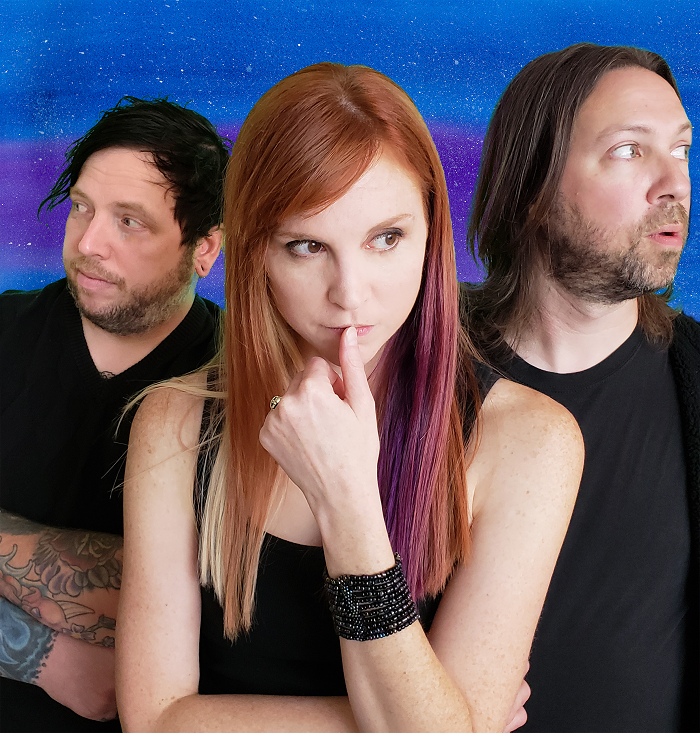
Dark electronic trio, PAWN PAWN has just unveiled their latest EP, Halloween. The EP delivers a darkly electrifying journey through a spectrum of synth-driven styles, each track a study in emotional and sonic extremes. The Halloween EP is both a love letter to synthpop’s past and a step into its future. While inspired by film director, John Carpenter, the EP is named in honor of a holiday many dark hearts celebrate every day, Halloween’s trajectory goes through the brooding, pulsing opening track, ‘Trick Or Treat’ to the seductive, shadowy anthem, ‘Tell You With My Eyes’, then closing with ‘Jealousy Looks Good On Me’, a high-octane fusion of ’90s industrial-pop that balances chaotic aggression with razor-sharp melodic hooks.

They’ve produced a video to accompany the closer, which you can watch here:

The EP’s themes, like Halloween, are about embracing darkness and emotional extremes: vengeance, obsessive attraction & jealousy. They also represent tales of liminal spaces; the spaces between thinking about revenge and actively seeking it, or the space between obsessing over someone and actually making a move.

The EP also addresses the lines between passion and destruction, the idea being that an emotion like jealousy can theoretically make us more passionate and wanting to be the very best version of ourselves. Meanwhile that eternal desire competes in a battle that can never be won and is ultimately self-destructive.

Says vocalist, Liz Owens Boltz, the music on the EP is “about exploring synthpop and industrial-pop…this is really our first official foray into these genres. So our creative journey has brought us here, trying on a darker and more aggressive sound, and having fun with it.”

AA

a461b787-64cc-cc21-0028-821a4299c7ba

24th January 2025

Christopher Nosnibor

These are dark days. I feel as if I’ve written words to this effect a lot in recent months and years. It would perhaps be rather too much to expect there to be the sunrise of a new, optimistic dawn breaking over the horizon, but when there is nothing but the glow of flames beneath a pall of smoke on so many very real horizons, any sun on the metaphorical horizon is eclipsed by a billowing pother and clouds of ash. And then, last night, I felt my heart sink yet deeper still as Donald Trump signed away the protection of the Arctic in his quest for ‘liquid gold’, and declared a ‘state of emergency’ over the Mexican border and promised mass-deportations – ‘millions and millions’, being his megalomaniacal mantra, while the man who owns him, the richest man on the planet, who seeks not only world domination, but galactic domination, threw Nazi salutes to a huge crowd of fanatics.

Fighting the urge to assume a foetal position on the hearth rug in front of the fire and stay there for the next four years in the hope there may still be a world after that, I poured a strong winter ale and took some time to sift through my submissions for something that might make suitable listening.

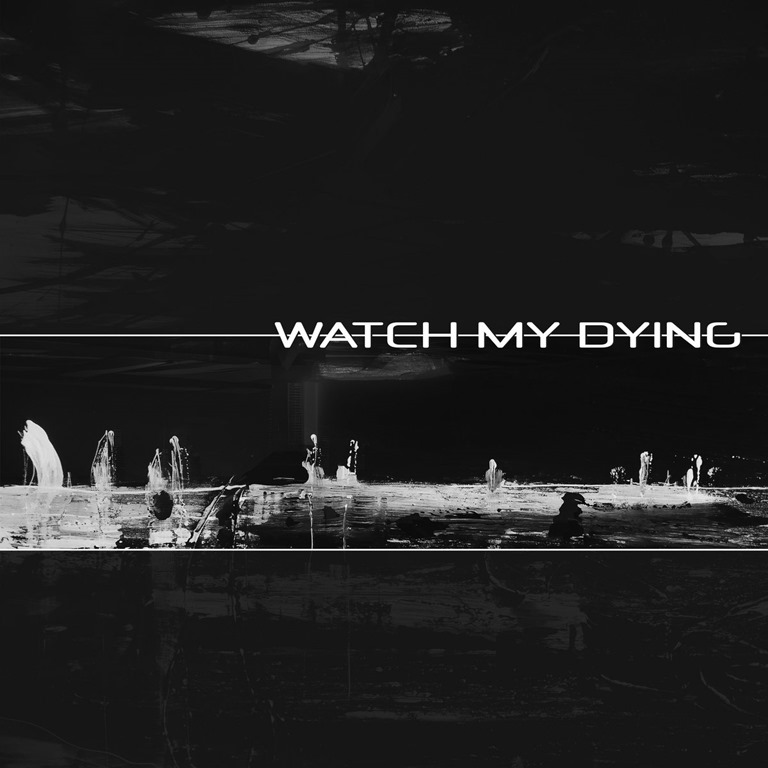
Listening to light music in the face of such darkness and despondency feels inappropriate, somehow, so stumbling upon the latest album by Watch My Dying felt fortuitous. Extreme metal has a way of providing a means of escape, sometimes.

According to their bio, ‘Watch My Dying has been a cornerstone of the Hungarian metal scene for 25 years, a hidden gem for international fans of extreme metal. Formed in 1999 in Hungary, the band quickly became a defining force in extreme tech/groove metal throughout the early 2000s… Known for their philosophical and socio-critical Hungarian lyrics, WMD stands out in the extreme metal genre, with excerpts of their work inspiring novels and poetry in Hungary.’

It’s the title track which opens the album, with a slow, atmospheric build, before heavy, trudging guitars enter the fray, and it’s only in final throes that all fury breaks loose.

While there’s no shortage of archetypally death- and black-metal riffs, WMD forge a claustrophobic atmosphere with chunky, chugging segments, enriched by layers of cold, misty synths, and some thick, nu-metal slabs of overdrive, too: ‘Kopogtatni egy tükrön’ is exemplary. ‘Jobb nap úgysem lehet’ provides an interlude of heavy drone and hypnotic tribal drumming before one of the album’s most accessible tracks, ‘Napköszörű’ crashes in. It’s hardly a party banger, but brings together industrial and metal with a certain theatricality, finished with some impressively technical details – but none of it’s overdone. ‘Minden rendben’ is more aggrotech than anything specifically metal, and it’s a banger.

Egyenes Kerőlő isn’t nearly as dark as a whole as the first few songs suggest, but it’s still plenty heavy and leads the listener on something of a sonic journey. They cram a lot into the eleven tracks, especially when considering that the majority are under four minutes, with three clocking in around the minute mark. It’s certainly varied, and while not all the songs have quite the same appeal – the last track, ‘Utolsó Fejezet’, borders on Eurovision folk – the fact that they’re in no way predictable is a strong plus.

So many technical players are so busy showcasing their skills that they forget the value of songs. This is not the case with Watch My Dying: the groove element is strong, and there are melodies in the mix – just not in the vocals. The end result is more accessible and uplifting than I would ever have imagined. I almost forgot that the world is ending for a good twenty minutes.

AA

a1664588283_10

Aural Aggravation is extremely proud to present a new exclusive video premiere in the shape of ‘Opilione’ by Vomitriste .

We promise work from  the furthest reaches beyond the mainstream, and this is it.

Vomistriste comment: ‘Opilione’ probably represents the darkest corners of Black Abyss Invocation as a whole, encapsulating the claustrophobic anguish and pervasive dread that discolours the entirety of the record. During the recording session, this is where everything ultimately clicked together seamlessly and solidified this new dismal and murky direction of the band. Murmuring words and uttering phrases that shall not be written on top of ever-evolving vortex-esque sonics… It’s apparently possible to scare yourself solely by being who you are and doing what you must.”

‘Opilione’ is dark and nasty – and we love it.

Vomitriste began their aural trek in 2022 by means of crafting colossal, noisy drones and profound dark ambient, and went on to release six albums under that motif during the following two years. While the duo’s visceral output was greeted with open arms by many and their signature sound found new aspects to itself through life shows, midway through 2024 the project came to its natural conclusion. With the aim of putting one last effort out under the moniker, the two musicians decided to instead leave all pre-conceived notions of what the band should be out of their mutual headspace, and begun composing the idea of doing something else entirely with a fresh approach and open mindset. The end result was something unexpected, which left the duo initially perplexed, but soon turned out to be a restart of sorts for the band. The previous records were lumped under the collective title of Droneworks (2022-2024) and now, a new chapter has begun.

Black Abyss Invocation is the first album under this newfound direction, introducing Vomitriste anew as a vessel of grating and pervasive cacophonous dread it was always meant to be. Certain aspects of their previous doings are present, but the seminal orientation across the record lies at the perimeters of black ambient and death industrial, taking elements from black metal and noise and mashing those together with dark ambient and electronics, with the inclusion of ritualistic and trance-inducing, jarring rhythms and waypast ominous atmospheres. The void has opened its maw once more, and instead of balancing on its rim, Vomitriste dove straight into the unknown without hesitation only to emerge from the opposite end speaking a malformed and atrocious language while sporting only motes of resemblance of its past self.

The six songs making up Black Abyss Invocation were created in a single session overnight, and left its creators in awe of what they accidentally stumbled upon. The sonic terrains discovered were nothing sort of hostile and unfathomably haunting, yet the kind that lures you deeper and deeper into its uncharted areas on every passing second. Where once stood a wall signifying the ultimate point of unease and anxiety, now a vast black ocean spread out, beckoning both the band as well as its listeners to wade into it until reaching neck-deep and suddenly being pulled down by something inexplicable and unnamed. Where there once was scarce light, now there is none.

Vomitriste Promo 2

Self-Released – 13th December 2024

Christopher Nosnibor

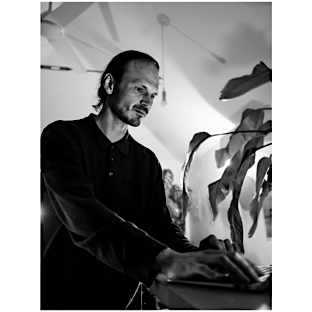
Sometimes, the notes artists pen to accompany their latest works are somewhat dry, rather technical. Others provide effusive essays, while others still no details whatsoever. Flin Van Hemmen’s words which accompany Luxury of Mind are poetic, somewhat vague and elliptical, but lyrically rich and personal, if vague.

In order to thaw matters of the heart, one must go to where it’s cold.

It was the summer of 2022 and I was finally summoned there.

My personal winter had come, a place at once foreign and familiar.

In a flash I was made aware of all my life’s dimensions – the ones less welcome, or simply too big to face.

My sense of musicianship was temporarily halted, at that point unsure of its return.

Early 2024 I knew my personal winter was waning, and so I started tinkering away again, musically.

The pitter patter of the rain, the orchestra rehearsing their parts simultaneously, the sounds inside the corner store where I buy my daily coffee.

And how do they sound, together?

What indeterminacies reveal itself, or do I pick up on?

That’s my journey and a journey I wish to share with you in Luxury of Mind.

I have elected to quote in full because they are clearly pertinent to the substance of this material. Van Hemmen is clearly and peculiarly specific that he feels the need to share this specific journey, which clearly has involved stasis and self-doubt. Writer’s block? He seems to allude to rather more than that here.

Flin van

‘A Picture of Your Face (In the Light of the Fire)’ is bold, choral to begin. It’s not grand in the bombastic sense, but feels deeply spiritual, ceremonial, and for wont of a better word, ‘churchy’. While the sense of grandeur is uplifting, and spiritually powerful, the drone of organ and voices coming reverberating in a large, echoey space reminds that where there is a ‘churchy’ aspect, religion – particularly of the Christian persuasion – for all the exultation, is laced with guilt, apology, pleading – pleading forgiveness for sins, pleading for entry into heaven. And as such, it reminds of the paradox whereby Christians prefer to confess and atone their sins rather than simply try harder not to err in the first place. There are scratches and crackles which rupture the graceful smoothness of the piece, and the title track slips into a darker, danker space, with a sound like torrential rain on a tin roof, with murky ambience lurking about.

‘Eloquence and Grief’ brings new levels of disorientation, sort of a film-soundtrack piece with discordant background babble and crowd noise as an orchestra forges a soundscape which evokes mountains and canyons. Its meaning is difficult to extrapolate: it feels like multiple narratives occurring simultaneously, and the same is true of the eerie dark sound collage of ‘Volition & Velocity I’, and its equally gloomy, dolorous counterpart, ‘Volition & Velocity II’.

The whole feel of Luxury of Mind is haunting, unsettling, like walking through the soundtrack to a vague and abstract film, traversing time and space, intersecting scenes of bustling medieval towns, and post-apocalyptic shots of burning villages, intercut with occasional psychedelic visuals, while electronic circuits in heavy rain and church bells chime for the funerals of unnamed bodies. It’s not quite horror, but it’s heavy with gloom and trauma, and, by this measure, Luxury of Mind sounds like the soundtrack to a period filled with anguish and psychological pain. It concludes with the sparse and dank clanks of ‘Last Year in Cantecleer’ – and it must have been a washout.

It feels as if we’re sinking in floodwater, drowning in a tidal wave of toxic bullshit, while all around everything goes wrong. But at least one thing has gone right for Flin Van Hemmen: Luxury of Mind is an album with so much texture, so much depth of texture, so much mood, that it’s impossible to deny its creative success.

AA

a0351313896_10

Bleeding Light – 3rd January 2025

Christopher Nosnibor

Under The Sanguine Moon is the fourth album from Denver, Colorado-based goth rock band, Plague Garden. As the pitch tells it, ‘The album features a prominent vampiric theme. Delve into the catacombs of a nocturnal world, where tales of bloodlust at dusk reign supreme. Listen to fantastical tales of the undead and even a little bit of Greek mythology added in for variety… From the album’s blood-red artwork to it’s [sic] hemophilic lyrics, this LP is bound to please even the darkest children of the night. For fans of gothic rock, post punk, deathrock, darkwave.’

Having got into gothness around 1987, just on the cusp of teenagerdom, I would come to discover that, just as with metal, this was a genre with many disparate threads. The vampiric fascination, which represents the popular image of goth – and espoused by the myriad dark souls who descend upon Whitby for the legendary goth weekends and trace the steps of Dracula following the small port town’s prominence in Bram Stoker’s genre-defining novel – is a league apart from the origins of the music which would come to be synonymous with early goth – predominantly Leeds-based acts such as The Sisters of Mercy, Red Lorry Yellow Lorry, The March Violets, and Salvation. You won’t find a hint of vampirism here. Bauhaus’ debut single, ‘Bela Lugosi’s Dead’ predates the emerging Leeds scene, and the whole vampire / spooky template can be pinned squarely on this single, which can’t exactly be considered representative of their output as a whole. But still, people like to latch on to easy tags.

This perhaps unduly preface is to say that the goth / vampire thing is something I find difficult to fully embrace. Goth bands doing vampy stuff is simply not the same as Steven Severin providing live soundtracks to classic silent movies.

The other thing I find difficult to really align is that while there is a whole new wave of acts of a goth persuasion emerging, there are a lot of goth acts loitering and lingering featuring older guys – in the forty to fifty-plus demographic, which I will, in the interest of transparency record as being my demographic – doing this. Plague Garden do sit within this bracket.

Under The Sanguine Moon is a solid album. It sits in the third wave goth bracket alongside the likes of Suspiria and the Nightbreed roster of the late ‘90s – brooding, theatrical, with booming baritone vocals that are sort of aping Andrew Eldritch but fall into that more generic ‘fah-fah-fah’ singing down in the throat style. With piano taking a more prominent position among the standard musical arrangement of drums / bass / guitar, Plague Garden create a layered sound which does stand out from many of their peers, and they so absolutely nail that quintessential goth sound with the solid foot-down four-square Craig Adams style bass groove. This is nowhere better exemplified than on ‘Shadows’, with its spectral guitars, the perfect cocktail of chorus, flange and reverb creating that brittle, layered sound which defined the 80s sound.

The vocals are mixed fairly low, and it’s the bass and drums which dominate, and this is a good thing – not because the vocals are bad, but because it puts the atmosphere to the fore, and means the lyrics are less obvious, which is probably no bad thing.

‘The Dirty Dead’ is a crunchier, punkier take on the sound, and carries hints of early Christian Death – think ‘Deathwish’ – and this carries on into ‘Pandora’.

The cover they mention is ‘#1 Crush’ by Garbage, an early B-side that’s one of the hidden gems of their catalogue. Plague Garden’s take is unsurprisingly lugubrious, theatrical, and makes sense as a song selection with its nagging, picked guitar part and crunching percussion.

There’s a flood of blood at the end, with ‘Blood Fingers’ and ‘Blood Debt’ closing the album. The former, haunting, hypnotic, a classic moody goth cut, the latter offering a slower, dreamier take on the former. These guys have got their sound honed to perfection, and if you’re into more trad goth delivered with a more contemporary spin – but not too contemporary – you probably can’t go too far wrong with Under The Sanguine Moon.

AA

025780

Mortality Tables – 24 December 2024

Christopher Nosnibor

There’s something about Christmas that really does send people spiralling in one of two directions. The people who absolutely love it seem to love it just too much to be considered sane, and this year has been one of the worst I can remember for people actually buying chocolate and putting their trees up almost immediately after hallowe’en. Amusingly, I’m seeing them taking down their trees and decorations from Boxing Day, declaring that they’ve had enough now. Well, it’s hardly surprising after three months. I really for feel sorry for the kids of these deranged households: it must be quite confusing for them, not least of all seeing their parents troughing whole selection boxes to themselves in November as they effervesce about the Christmas spirit and plaster their hedges, bushes, trees, and house frontages with lights – which is as trashy as it is environmentally unsound (‘oh, we use green energy, it’s 90% nuclear now!’) – only to tear them down a whole tend days before twelfth night. But these are the kind of people who call what they do – things like going to work and parenting – ‘adulting’ and piss and moan about it on social media, while posting pics of their decorations at the start of November. And it’s cunts like these who make me loathe Christmas with a passion I didn’t even know I possessed. They spoil it for more moderate, more sane people – and people who just despise other people and herd mentality twattery in general.

And so I’m with Mat Smith, the main man behind Mortality Tables, and am one hundred percent into ‘Grouch Thoraces (II)’, pitched as ‘The festive sentiments of a misanthrope, processed into dark and enveloping ambient texture. An updated version of a release from 2023’. In fact, I consider this to be a release that stands alongside – in spirit, if not necessarily sonically – with my own Festive Fifty noisework, released on December 20th. Against the tidal wash of syrupy, saccharine Christmas tunes – shit covers or endless rereleases or just the same toss that’s been the staple of the airwaves since the 70s and even earlier – nothing says ‘fuck this commercial Christmas shit’ like some dark noise.

‘Grouch Thoraces’, released on Christmas Eve in 2023 was a dank, murky cut, presenting just shy of five minutes of the most rumbly dark ambience. This year – to use a phrase I despise almost as much as the cheery festivity fanatics who bounce around the office in Christmas jumpers and Deely boppers or reindeer antler headbands and start arranging secret Santa and team drinks and buffets from the middle of November – Smith has doubled down on his anti-festive sentiments with a reworked ‘Grouch Thoraces’: this time it’s even darker and danker and almost eight minutes in length. It’s a churning, disorientating mess of stuff thrown together, found sounds and elongates drones twisting together to forge a thick morass of unsettling, uncomfortable noise. According to the credits, there’s a vocal by Carroll Spinney, but it’s submerged in the slow-sinking swamp. There are chimes clattering in the dark whorl of purgatorial noise, but they sound like the ching of broken decorations swinging in a post-apocalyptic nuclear wind as the survivors crawl, blind, skin peeling, through the ruins of what little remains.

On its own merits, this is a strong dark ambient work with a certain edge: in context, it speaks. Fuck this festive shit, fuck this commercial shit, fuck the obligation to socialise: let’s celebrate stepping back from it all and just getting through it, without feeling the need to pretend that we love any of it. We misanthropes need to stand together.

AA

a0412538683_10

Cruel Nature Records – 29th November 2024

Christopher Nosnibor

Creativity can have immensely therapeutic effects. The psychology behind it is likely complex, if it’s even fully understood, but immersing oneself in something creative, be it music, writing, or visual arts seems to uncoil the mind in ways nothing else can quite manage.

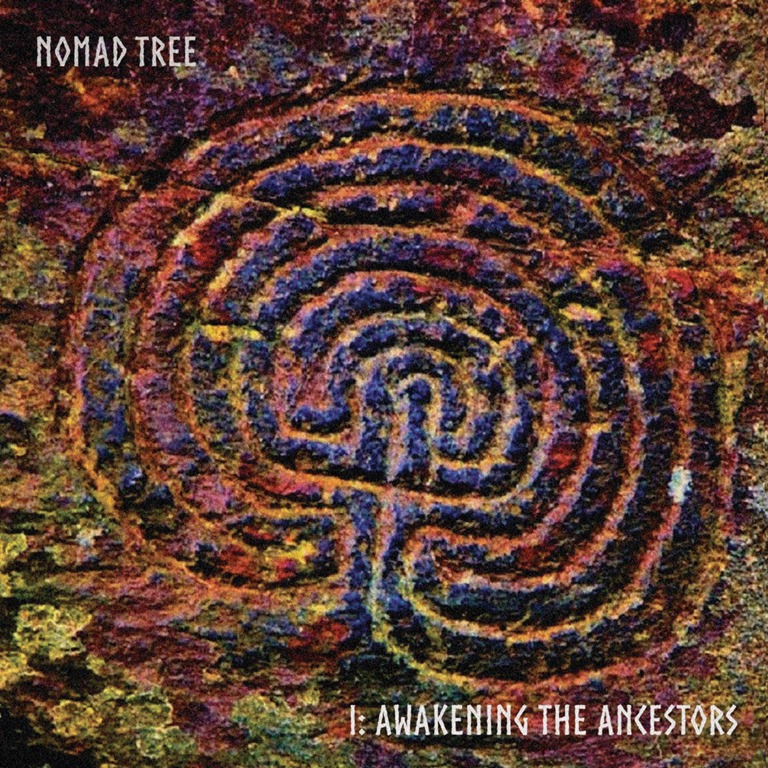
With I: Awakening The Ancestors, described as ‘a profound journey through sound, blending experimental folk, noise, and shamanic practices’, Stuart Chalmers, under the moniker of Nomad Tree, presents ‘the culmination of an 18-month exploration from burn-out and self-doubt to discovering a new voice. Using feedback techniques, contact mics on frame/bass drums, amplified dulcimers, gongs, and percussion made from natural materials, the album creates a dark, hypnotic soundscape. Recorded in unique locations like Cathedral Cave and Luds Church, the tracks evoke a sense of ancient connection to the land and spiritual practice. It’s a cathartic release aimed at healing and altered states of consciousness’.

And so it is in Chalmers’ case, perhaps, that the creative process, paired with reconnecting in some way with nature, and with places which inspire a sense of ancient history, a time before religion as it now exists, before civilisation as we know it, even, has provided a sense of escape from the all-pervasive shit of the now.

I: Awakening The Ancestors consists of three longform pieces, each over ten minutes long, and these are compositions laden with dense atmosphere. ‘On Sorcerous Wings Take Flight’ is so dense as to be oppressive: heavy, thunderous percussion rings out across barren moorland and reverberates around thick forests. Winds blow and the very earth moans and mumbles. Darkness creeps ever closer, growing ever heavier. There is a sense of a presence, but, at the same time, the absence of anything which feels overtly human is conspicuous. Although the track’s evocation is ancient mists, my mind takes me to a most contemporary on-line discussion around the hypothetical question ‘If you were alone in the woods, would you rather encounter a bear or a man?’ It’s a talking point around women’s safety, but in the last year I have taken to going on ever-longer walks in a quest to be in nature, but away from people. As Brion Gysin said, ‘man is a bad animal’, and as unnerving as the unknown and the unseeable may be, the prospect of encountering other people is considerably scarier.

‘Seeking Through Deepest Fears’ careens into dark space with droning, melancholic string sounds, wheezing, rumbling, polytonal tension and low, slow-building layers, to which primitive percussion eventually joins. There’s an oddly psychedelic sheen to this piece as it settles into a hypnotic groove overlayed with what sounds like scrawling, scraping walls of feedback, and it lands somewhere between Black Angels and latter-day Swans in terms of the listening experience: intense, almost overwhelming, but also uplifting on account of the complete immersion it engenders.

If the liner notes imply a sense of progression, a narrative arc, or any sort of linearity, the actuality of I: Awakening The Ancestors confounds that expectation in its merciless gloom. With tribal beats bashing away, hard, ‘Amongst Forest Spirits Or Wild Beasts’ conjures a sense of tapping into something elemental. It eventually tapers away to silence amidst a clamour of chimes, leaving a sense of emptiness, and much to reflect on.

AA

AA

a0749069146_10

26th November 2024

Christopher Nosnibor

Deborah Fialkiewicz has been keeping busy – as usual. Composer of contemporary classical, ambient, and dark noise works both as a solo artist and in various collaborative permutations and guises, she’s back with a new BLOOM release in collaboration with Daniel James Dolby. And it’s a Christmas single.

I’ve never been rabid about Christmas, and the last three years have seen a succession of difficult Christmases for me personally. In December 2021, my wife was diagnosed with stage 4 breast cancer. We weren’t even sure if she would be home for Christmas. She was, but was incredibly weak after three weeks in hospital, and that she was able to sit at the table for Christmas dinner felt like a miracle. We were in shock, and she was clearly unwell. Having made substantial improvements in rebuilding her strength through 2022, she deteriorated with the onset of winter, and again was weak and struggling over Christmas. It still doesn’t seem real that she only had another three weeks. And so Christmas 2023 was the first with just me and my daughter, aged twelve. We made the best of it, but it wasn’t the same. I detail this not for sympathy, but purely for context. It means that while around this time of year it becomes nigh on impossible to avoid festive fervour, with adverts depicting happy couples and radiant nuclear families, all the usual Christmas tunes and an inbox busting with new ones clamouring for coverage, and Facebook friends and work colleagues are dizzy with excitement over getting their decorations up, sorting secret Santa and planning social activities, I’m not feeling much enthusiasm, concerned primarily with getting through it and hoping distant relatives don’t think I’m rude or twatty for not sending cards out for the second year in succession.

When writing about music, I am often – and perhaps increasingly – aware that how we engage with it, how it affects us, is intensely personal and involves multitudinous factors. Sometimes, it’s something as arbitrary as the mood we’re in when we hear a song that will determine our response. And the chances are – and I’m no doubt not alone in this – hearing chirpy tunes when I’m down isn’t going to cheer me up, it’s going to really piss me off, or set me off. It’s impossible to predict. To be safe, I tend to try to avoid Christmas songs, which involves avoiding TV and radio – which is surprisingly easy if you spend large chunks of your time in a small room reviewing obscure music – avoiding shops – manageable – tacky pubs – easy – and ignore review requests for Christmas singles.

But there is always space for an exception, and Bloom’s ‘The Season’ is it. Deborah may have been posting pics on Facebook of the ‘festive mouse’ in the studio to mark this release, but said mouse is looking over a piece of kit called ‘Psychosis Lab’ made by Resonance Circuits. The cuddly cartoon cover art for this release is misleading, and for that, I am grateful.

It’s five minutes of deep, hefty beats melded to a throbbing industrial synth bass. Atop this thumping dance-orientated rhythm section, there are synths which bring a dark 80s synthpop vibe. In combination, the feel is in the vein of a dance remix of Depeche Mode circa ‘85 or ’86, around the point they began making the transition from bouncy pop toward altogether darker territories. It’s repetitive, hypnotic, pulsating, big on energy. But there are eerie whispers which drift through it all, distant wails like spirits rising from their graves. These haunting echoes are more evocative of Halloween than Christmas – and this is a significant part of the appeal. It’s a curious combination of ethereal mists and hefty, driving dance groove, which is simultaneously uplifting, tense, and enigmatic. It is not schmaltzy, cheesy, twee, or saccharine. It’s the season, alright. The season to be weird, to be unconventional, to accept those darker moods and remember that they will pass. It’s a Christmas anthem for those who aren’t feeling festive. And I will most certainly drink to that.

AA

a3458409831_10