Posts Tagged ‘Dark-Ambient’

The Helen Scarsdale Agency – 8th August 2025

Christopher Nosnibor

When the accompanying notes and press release which replicates them describes a release as ‘dire’, you know you’re in for an uncomfortable ride. In the world of noise, such a choice of adjective doesn’t carry quite the same negative connotations as is the majority of musical spheres. When it comes to noise, and certain strains of metal, the objective is to make it as unpleasant as possible. It will alienate most people, and that’s precisely the objective: those who can withstand the torture are the right people.

And so it is that Mutual Consuming is described as ‘a dire piece of isolationist thrum, spectral caterwaul, and heavy gloom through an oblique and abstracted coupling of electronics, noise, and ominous field recordings.’

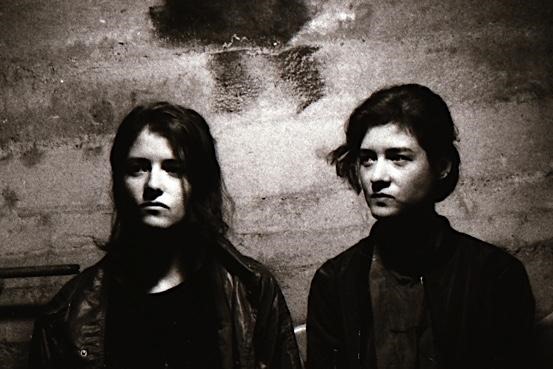
To quote further from the accompanying notes, Roxann and Rachal Spikula, the twins who make up Relay for Death’, offered the consideration that “Mutual Consuming comes from a concept in the philosophies that underpin traditional Chinese medicine theory, where the two opposing states (yin and yang) are 2 states on a continuum and their interactions produce an infinite possible number of states of aggregation. Within this interplay, there is a dynamic balance that is maintained by a constant adjustment of their relative levels. So an excess of yin consumes yang and vice versa.” We asked if this has anything to do with the concept of the Ouroboros, to which they responded, “We hadn’t thought about Ouroboros, but the eternal cycle of things makes sense too. The gorge fest of existence.” Does this relate to previous works? The twins concisely respond to that question in a rare interview in Untitled, “No.”

The album features but two pieces, each clocking in around the seventeen minute mark. An awkward length, but plenty of time to make for an uncomfortable, unsettling, and even torturous experience. And it is.

‘intone the morph orb’ is a darkly unsettling expanse of dark ambient, the sounds of thunder and cavernous growls from the pits of hell are collaged with scrawling metallic drones. Distant detonations reverberate, like volcanic eruptions beyond the horizon, as wispy ominousness lingers in the air. Very little tangible takes place, but the tension grows. There is a dark thriller / horror aspect to this: the hairs on the back of your neck prickle and you fear whatever may lie around the corner. The second half of the track is less precipitous, given to a protracted mid-to-high-end drones that swirls and eddies, cut through with occasional whistles of feedback.

There’s something vaguely Ballardian about the title ‘terminal ice wind’, and it is, indeed, a cold atmosphere which runs forth from the speakers, churning an ever denser sonic murk as the first few minute pass. It’s a seeping morass of dark discordance which takes cues from Throbbing Gristle. Three minutes in, thunderous explosions register, and all is noise, albeit for a brief time. In time, dissonant drones, thrumming reverberations and low rumbles emerge and come to dominate the mix in what is an ever-shifting soundscape, where light is in limited supply. This is, indeed, dark, and oppressive.

Everything about Mutual Consuming is as it should be. A collage of challenging sound on sound, any underlying concept fades to insignificance as the sounds assail the ears without apology. Mutual Consuming is not harsh, and on the noise spectrum, it’s fairly gentle, but it’s by no means accessible or easy on the ear.

AA

AA

RFD Promo

Cold Spring Records – 23rd June 2025

Christopher Nosnibor

It may be a heretical stance, particularly as a big fan of Throbbing Gristle, but Psychic TV never really did it for me. They felt a bit meandering, wanky folky, in the same way as a lot of David Tibet’s stuff does. This may be to my detriment, and I may be missing the joys and benefits of a huge catalogue, but… I can shrug it off, and I will live.

TG and seminal filmmaker Derek Jarman were kindred spirits, provocative, avant-garde, and testament of their reciprocal artistic respect is cemented in their 1980 collaboration, where TG soundtracked Jarman’s movie Under the Shadow of the Sun (with the soundtrack being released some four years later).

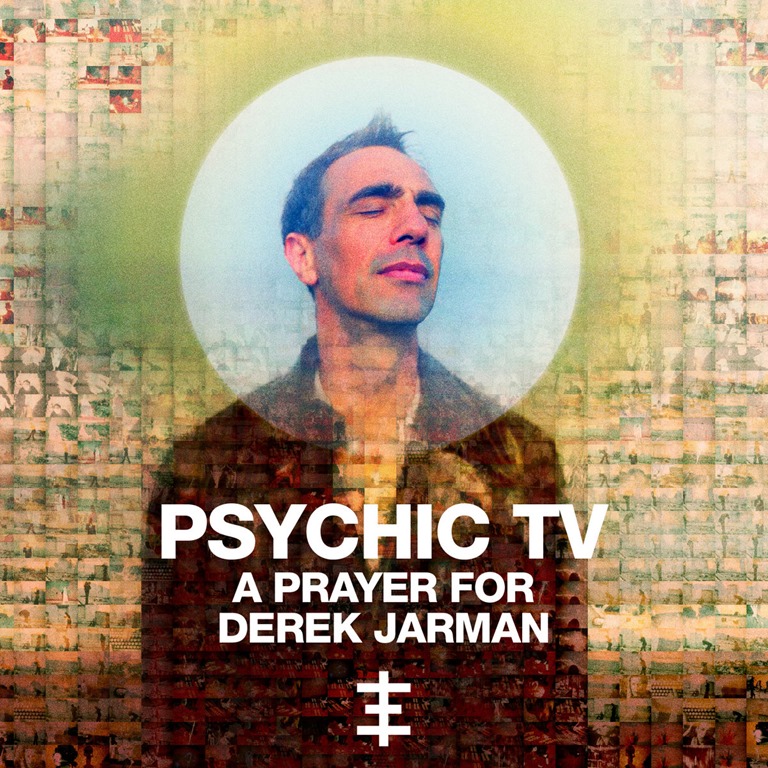
A Prayer For Derek Jarman was recorded later, on LP in 1985 by Temple Records and subsequently reissued as an extended CD version by Cold Spring in 1997. As the accompanying text explains, ‘Unavailable for almost three decades, this collection from the Cold Spring archive has been repackaged and remastered with new artwork. A documentation of the soundtrack work created by Psychic TV for the film-maker and artist Derek Jarman, it serves as a demonstration of why PTV were one of the most important groups in the underground scene of the 1980s and 1990s.’ The material on this disc was – as far as I can discern – last available in 2011 as part of the Themes six-CD box set, also released via Cold Spring, and this represents a solo release of disc two.

There’s no mistaking that both Jarman an PTV were important, although I would personally rank the former above the latter – that may be a rather subjective position to take, though, and there is no denying the immense shadow Genesis P Orridge would cast over the scene for many a year and perhaps an eternity.

The titular ‘Prayer For Derek’ is intended as an invocationary prayer and is based on Tibetan rituals; a collage of sounds including field recordings of the lulling waves running aground on the shingle beach opposite Jarman’s Prospect Cottage in Dungeness, Kent, home of some of the UK’s best preserved ‘sound mirrors’ – alongside bird song, crying babies and massed ritualised chants to aid the late director in his after-life journeys. It follows the seventeen-minute churning abstract noise whorl that is ‘The Loops Of Mystical Union’ – and which is, on balance, as good as any of Throbbing Gristle’s expansive dark noise works, and ‘Mylar Breeze (Parts 1 & 2) on which the promo for the album is predominantly pitched, and the ‘Mylar Breeze (Part 3)’. These compositions are piano-led and border on neoclassical. Dainty, charming, and musically eloquent, they certainly mark a departure from the work more commonly associated with Orridge or PTV, as well as evidencing the reasons why they are such a difficult act to pin down, or even distinguish the ‘good’ and ‘not so good’ works in their immense and wide-ranging – and variable – catalogue. With its echoed, looped vocal layers redolent of Gregorian chants, it’s not so hard to determine why ‘Mylar Breeze (Part 3)’ is not mentioned in the promo, although it’s entirely captivating.

As the accompanying text observes, ‘Other tracks feature elongated drones, washes of dissonance, melancholic guitar chime, evocative piano scoring, Burroughs cut-ups, gothic chants and snarling dogs.’ ‘Rites of Reversal’ marks a clear contrasts from the delicate piano-led compositions, diving in with some hard-edged grinding oscillations, which, again, lean more toward the kind of dark noise that was the TG trademark.

A Prayer For Derek Jarman is broad in scope and mood, and this is as appropriate is it is likely deliberate. It certainly presents the more experimental aspects of Psychic TV, and as varied as it is, the quality is also there.

AA

AA

a2838757322_10

11th June 2025

Christopher Nosnibor

Some artists thrive on collaboration. Deborah Fialkiewicz is one of those. While she’s prolific as a solo artist, the volume of collaborative works in her discography is also noteworthy: when she’s not working as part of SPORE, she’s part of the ever-rotating lineup of BLOOM – and that’s before we touch on the frequent collaborations with (AN) EeL, the most recent of which was only released three weeks ago.

The Improvisation Sessions was recorded live May of this year, with a lineup of Dan Dolby, Deborah Fialkiewicz, and John Koser, marking an expansion from the duo which recorded the trilogy of Parallel Minor, Besides, and Hybrid in 2020. Fialkiewicz is without doubt an artist with range, but one who favours the dark end of the ambient spectrum more often than not, and this is very much the case here.

The Improvisation Sessions features two longform tracks which would quite nicely align with a vinyl release.

‘Chameleon Soul’, which spans a colossal continuous twenty minutes, begins with low, rumbling ominous drones, but soon escalates to a busy, buzzy criss-cross of sounds, interweaving and interlacing, leaving one’s head in a spin as if after trying to trace several flies flitting about the kitchen on a hot summer’s day for any period of time. It’s a morass of warping tones overlaying a ballast of churning noise, and any comparisons to Hull luminaries Throbbing Gristle or Merzbow are entirely justified.

The layers of distortion only grow denser and gnarlier as the track progresses, crashing waves of white noise blast in from one side and then the other as they really push to test the stamina. And then you realise we’re only six minutes in. This is a positive: plenty more left to enjoy… Enjoyment is of course subjective, and enjoyment of this requires being appreciative of a dizzying, disorientating assault simultaneous with a full-on white noise blizzard.

The momentary lulls, the spells where they pull back from the precipice of all-out aural obliteration, are far from mellow, as serrated spurs of hard-edged drones, wails of feedback and brain-melting extraneous noise conglomerate to seismic effect. There are some nasty high-end frequencies knocking about in the mix, moments were one has to check if the whistle is coming from the speakers of if it’s that troublesome tinnitus nagging again, and said frequencies rise from a battery of ugly distortion, bone-shattering blasts of which simple explode around the twelve-minute mark, and from hereon in, things only grow harsher, more corrupted, more intense, more difficult to withstand. We’d be inching into polythene bags on heads territory were it not for the variation, but the last three minutes or so are fractured, damaged, and agonizing – part power electronics, part circuit meltdown.

As the world becomes evermore and increasingly fucked up, I find words fail me more by the day. It’s harder to articulate, and this is where I’ve found that sound has come into its own. Sound as the capacity to convey something beyond words, something that lies in the most innermost parts, giving voice to the subconscious, even. On The Improvisation Sessions, BLOOM convey anxiety, gloom, pessimism.

‘The Dark Room’ is indeed dark, constructed primarily around a fixed but thick, distorted hum. Oscillators whine and whistle, and something about it calls to mind Whitehouse around the time of Never Forget Death, when they discovered low-end frequencies and restraint, the impact of a low undulating wave and subtle tweaks of reverb.

It rumbles and drones on, eddying and bouncing around in a shrilling mesh of dissonance. There isn’t a moment where this is an easy listen, and so often, it sounds as if the equipment is faulty, whether it’s a stuck loop or generating unexpected noise.

This set hangs on the edge of ambience, but be warned, it’s dark, and noisy at times, to the extend that it may shred your brain. For me personally, that’s my idea of fun, so it gets a two thumbs up, but for the more sensitive, this is a release to approach with caution.

AA

a3419622385_10

19th May 2025

Christopher Nosnibor

Deborah Fialkiewicz’s neoclassical album Ad Vitam Decorus, has been in Bandcamp’s neoclassical ambient bestsellers chart for fully five years now, although she’s hardly been resting on her laurels and basking in the success since it’s release, having released a slew of works in a range of genre styles, with this, the latest, being a collaboration with (AN) Eel, who describes himself as ‘An Experimental Vocalist & Full Bodies Inhabitant of this Colorful universe’. His output is also remarkable, and his catalogue consists mostly of collaborative efforts, this being his second with Fialkiewicz (the first being Inkworks in April 2022)

Although the words are (AN) Eel’s work, those which are published on the release’s Bandcamp page could easily be about Fialkiewicz’s friendly foxy visitors, who she feeds and often photographs and writes of online:

Two Foxes, Out of Boxes,

In Your Garden

Seven Tales

Shape Shifter, Sun & Moon

Shadow Dancers, Rod & Womb

Silk and Cobwebs,

Perhaps this is simply an indication of how closely attuned this collaboration is.

Compelled by Nature contains two longform pieces, each hitting that magical twenty-three minute mark – meaning it would be ideally suited for a vinyl release, but in its digital form, has the feel of a ‘classic’ experimental electronic album, the likes of which you’d find on Editions Mego or Ici, d’ailleurs. The two compositions break down the title: ‘Compelled’ and ‘By Nature’, bringing an element of linguistic play into the frame.

‘Compelled’ offers up some fractured drones which crack and lurch in volume and frequency. As the piece progresses, looping, repetitive motifs emerge, atop of which gurgling, chattering, insect-like scratches emerge, chittering and bibbling, rising and falling, and when these incidentals fall to silence, the repetitive underlying sonic skeletal frame of the composition sits sparse and alone, becoming thoroughly hypnotic. The experience isn’t dissimilar from watching waves lap the shore on a calm day with a gentle tide. In time, 16-bit bleeps reminiscent of 80s arcade games ripple through an ever slower, evermore dolorous droning of a slow-strummed bass guitar. The vocalisations are eerie, ethereal, haunting – spiritual, but somehow detached from the world as we know it, a keening, crooning, mewling. It may or may not be wordless, but is in some ways similar to Michael Gira’s wordless articulations during the immense, immersive sonic expanses which have defined Swans output and performances in recent years – it’s not about song, or structure, but transcending sound and language. And in this context, the title, ‘Compelled’ takes on a clear and specific meaning: this is not music made for entertainment, or with an audience in mind, but music made because it needs to be made, the product of creativity as an outlet, a necessity as a means of getting through life in this insane world.

‘By Nature’ begins with distorted, distant babbling voices over a low, ominous drone, reminiscent to an extent of the start -and end – of ‘Pornography’ by The Cure. It’s dark and oppressive, not to mention somewhat disorientating. There are fragments of sampled narrative, but there are glitches, fractures, which disrupt it, and against this infernal, churning drone, chiming bells and similarly innocuous sounds take on a disturbing sense of portent, a certain horror-like suspense. Anyone familiar with the tropes of horror as a genre will be aware of how the most successful horror works because it transforms mundane situations to a source of fear by adding an undercurrent of the unknown, and / or a foreshadowing of nightmarish events ahead. This brings that quite specific sense of something bad about to happen. The digital bloops, computer game chimes and laser bleeps of ‘Compelled’ return, but this time against an altogether more sinister backdrop, a drone like a black hole opening up to swallow the entire solar system.

So many of the sounds are familiar, even if only vaguely so, but their collaging and recontextualization strips them of meaning by contextual connotation, and so what we find ourselves facing is something quite alien, and as such, uncomfortable, unsettling, even scary. What is this? What does it all mean? Only Deborah Fialkiewicz and (AN) EeL know – or perhaps even they don’t, really – perhaps – and it seems likely – Compelled by Nature is a work of instinct, something which happened because it simply came to be, and is as it is by happenstance. I can believe this is most likely, and that Compelled by Nature is more about process than product. It’s a compelling work. It is not, however, an album to be listened to in the dark.

AA

cover

Mortality Tables – 25th April 2025

Christopher Nosnibor

The twenty-eighth instalment of the truly epic project by the Mortality Tables label, now in its third season, whereby artists respond to ‘Recordings of places, people, objects, moments in time, environments and quotidian events [which] are shared with a range of artists working across different disciplines’, and where ‘Those artists are free to respond to the recordings in any way they like’ is one of the shorter ones, consisting of just the one track, with a running time of just over eight and a half minutes.

For this work, the source recording was ‘made by Mat Smith at SkyForce, Flambards amusement park, Helston, Cornwall on 16th August 2021.’

I don’t envy him gathering this, and in his shoes, returning home with some audio would be a significant victory as something salvaged from a day of personal hell. But there is more to this – a tale of dilapidation and of capitalism in decline.

There’s a certain grim fasciation in following the history of theme park rides. Rollercoasters have a habit of being relocated, renamed, repurposed, even reborn in the wake of accidents. The Beast at Alton Towers was tweaked and relaunched as The New Beast, and was later shipped to Mexico , where it became Divertidoi, and it then made its way to Columbia.

A bit of delving tells us that SkyForce ‘operated at Pleasure Island Family Theme Park from 2003 until the closure of the park in 2016 under the name Pendulus’, and reopened at Flambards in 2017. Then, according to coasterpedia.net. ‘on 5 June 2024, Flambards announced that Sky Force, along with Hornet, Sky Swinger, and Thunderbolt, had closed and would be removed… On 22 August 2024, Flambards announced that the decision to remove Sky Force was reversed as they were able to replace the main motor. Sky Force reopened after this. Just little over two months later, Sky Force closed with the park as Flambards Theme Park announced that the park would permanently close on November 4, 2024…The ride is now currently listed for sale after the park’s closure.’ And shit: once again I’ve spent in excess of an hour delving down rabbit-holes while reviewing just a few minutes of music.

But this.. this is a slice of history. But no, there are layers to this, too: it’s a reinterpretation of a slice of history. This is how history forms and reforms and mutates as events are subject to endless critiques and commentaries. There is no irrefutable truth, no one concrete history… although there are verifiable facts, a topic which is worthy of a deep interrogation elsewhere.

Skyrocketing is perhaps not the rush its context may seem to offer, but a gently bubbling electronic piece that has a soft, bubbling analogue vibe. It has that vintage synth feel and evokes Kraftwerk , rippling and wafting, skipping and drifting., sometimes occasionally skippering and twittering, before the pulsing beats, stuttering, erratic, pulse and punch us that it’s time to wake up. And it is. Wake up to all the shit. Don’t think that just because a work is mellow that isn’t strong – because this is both.

AA

a3441020986_10

Dret Skivor – 7th February 2025

Christopher Nosnibor

I do like an album with a story. With Korset i Röjden by D L F, we get half a story, but one which builds a sense of mystique, enigma, a sort of allusion to local folklore, set out in the notes which accompany the release:

‘There’s a place in the forest, in the shape of a cross, where nothing grows. No one knows how it got there, or why.

60°33’48.6"N 12°39’15.6"E

The two recordings on Korset i Röjden capture sounds and vibrations in and around the cross. A geophone, a few contact mics, an H6, a smartphone, and a broken cassette recorder. Track two, ‘Den onda ska pressas ur’, features samples from a 1963 television documentary, an old Finnish lullaby, and taped interviews with locals from the 1990s.’

This has got it all: mythology, mystery, co-ordinates – a map, in other words – and the kit, the foundations for a sonic retake of The Blair Witch Project, perhaps. There is a strong sense of there being something hat isn’t right. Granted, I get that from simply breathing the air, from turning on the news – but this is quietly unsettling. Very quietly, in places: the first two minutes or so of ‘Korset’ are almost the sound of silence. Turn it up, and there is the sound of air, a soft breeze, perhaps, some kind of background noise. Insects? Footsteps? The rustle of leaves? Perhaps, but just as nothing grows in that unexplained cross marked in the forest, so it seems there is little sound. No birdsong, no… nothing. Has anyone ever run a metal detector over the sight? Considered digging?

I mention digging with caution. There is a wood close to where I live, a portion of which has been decimated in the last three years or so by dirt bikers who have turned the space into a track with jumps and ditches. It’s clearly not just the work of a couple of kids with spades: these are proper earthworks, excavations, the likes of which have involved adults turning up with mini-diggers. I once witnessed a woman challenging a family who had turned up with motorbikes who were revving around and scaring pedestrians and dog-walkers being met with aggressive verbal abuse. My email reporting the matter was of no consequence. Rather like this narrative detour.

‘Det onda ska pressas ur’ offers another ten minutes of haunting dark ambience – unsettling, disorientating. It rumbles and echoes around infinite subterranean corridors, leading to who knows where? There are sounds – possibly the pushing through undergrowth, possibly almost anything else. Wraiths whisper through the clicks and crackles, hums and pops… is that breathing or simply the breeze?

Korset i Röjden tells us nothing, other than that the world is a dark and unpredictable place. It’s a dark and unpredictable album. But it hints that we should fear, and fear the worst. There are dark forces all around, and while the insanity of the world right now is more than reason to take cover, it’s worth remembering that there are other things a play.

AA

a2167462165_10

Roman Numeral / Machine Tribe Recordings – 24th January 2025

Christopher Nosnibor

Having premiered ‘Opilione’ just over a week ago as a taster for this blackest of black sonic expulsions, I’ve now had some time to digest the album in its entirety. And it’s an acrid, acidic tang of bile which burns the throat and scorches the trachea, and a bilious discomfort which emanates from every noxious moment of this absolutely hellish effort.

The Finnish duo’s Bandcamp simply describes them as ‘BLACK VOID NOISE’, and it’s hard to better that, really. Black Abyss Invocation, which essentially launches Vomitriste phase two, having drawn the curtain on phase one with the Droneworks (2022-2024) compilation.

Black Abyss Invocation is relentlessly dark. In fact, it goes beyond being merely ‘dark’: darkness connotes an absence of light. Here, Vomitriste create a negative balance, subtracting, subtracting, endlessly subtracting, sucking out both light and air, like a black hole which drags the listener into a vortex of perpetual purgatory, while hanging over the smouldering pits of hell.

‘Opilione’ is entirely representative: each of the album’s six compositions last between five and eight minutes, providing ample time for the agonizing atmospherics to wrack every one of the senses in the most torturous fashion, and seeming to manifest in physical ways as you find your skin crawling and your muscles tense.

The album opens with ‘Void Sermon’ – a rumbling blanket of sound that’s between dark ambience and harsh noise wall at first, before vocals – rasping, demonic screams, shit-your-pants inhuman – roar in before the very bowels of hell open wide and drag you down, down, down. Void Sermon? Void bowels would be equally apt.

From here, it’s less about progression, as slow subtraction. Listening to Black Abyss Invocation, I find myself reflecting on various methods of punishment and torture from throughout the ages – rat torture, for instance, or coffin torture, or the breaking wheel. The slow, agonising tortures which almost invariably resulted in a protracted and extremely painful death. Or perhaps, one I discovered on a visit to York dungeons, the ‘blood eagle’, referenced in Norse literature. Certainly, by the arrival of ‘Fleshwards’, on feels as if one’s ribs are being severed from the spine with a sharp tool, and the lungs pulled through the opening to create a pair of “wings” – because this is brutal, cacophonous noise and howls of anguish echo from subterranean caverns without mercy. To survive to the end of the album is to still be awake and alive in the hell that is life on earth in 2025.

Black Abyss Invocation is truly the stuff of nightmares: there is no escape from the abyss, and there is none more black.

AA

a3185354594_10

Sinners Music Records – 3 November 2024

Christopher Nosnibor

The line ‘hell is other people’ comes from the 1944 play ‘No Exit’ by Jean-Paul Sartre, and it’s something that many of us find relatable. Indeed, it’s a line which more or less summarises my world view. One of the few settings I feel comfortable with multiple ‘other people’ (I’m on with one on one or very small groups, at least in moderation) is in a live music setting, because I can choose whether or not to interact, can limit interaction to the brief times between acts, and – and this is significant – the kind of people I find myself sharing a space with tend to be less representative of the general population. Most of us do have ‘our people’; the only trouble is finding them.

Ian J Cole’s latest work is a concept album based on No Exit ‘whereby Three damned souls, Joseph Garcin, Inèz Serrano, and Estelle Rigault, are brought to the same room in Hell and locked inside by a mysterious valet. They had all expected torture devices to punish them for eternity, but instead, find a plain room with no windows, mirrors and permanent strip lighting. They are all afflicted with fused eyelids or Fraser Syndrome where they can’t ever close their eyes and must spent [sic] eternity in this room and in this state.’

The Fraser Syndrome, from which the album takes its title is a rare genetic disorder characterized by fused eyelids.

Sartre seems to have essentially inverted the effects of the condition, but being unable to either open or close one’s eyes is a terrifying prospect. What’s worse: see nothing, or see everything? Cole’s album is based on the latter scenario, and presents a disturbing soundscape from which there is no escape.

The album opens with the immense sixteen-minute opus ‘Frightened of Cliches’, a heady blend of light-night jazz, erratic beats, and swirling ambient tension. There’s very much a filmic, soundtrack quality to it, and over its expansive duration, there are gradual shifts. The beats dissipate, there are creaks and groans like the rusty hinges of big metal doors being swing shut.

‘A Beauty Diamond Lipstick and No Mirror’ plunges deep into dark ambience. There are some synth incidentals to be found, wandering, lost, amidst the murk and the chimes, the muffled samples and layers of distortion and dissonance, but this is not an easy listen. It is, however, an intensely focused and coherent work.

‘Thelema’, created in collaboration with The Wave Prophets’ offers some light, and reintroduces the faux sax synth sound that was a central feature of Cole’s live sets a while back. But that smooth 80s vibe is now twisted into an altogether darker concoction, a conglomeration of sound that’s unsettling – and no more so than on the sparse feedback drone and hum of the eight-minute ‘Night Never Comes’: it’s a restless, uncomfortable space which it occupies, echoes and metallic clanking reverberations reverberating through the slow wailing undulations.

The piano-led ‘Hell is Other People’ is unsettling and chimes and tinkles against minor chords, before the album’s second ‘big’ piece, the twelve-minute ‘Three Damned Souls’ looms large in every way. It’s richly atmospheric, and while the atmosphere may not be overtly gloomy, it certainly is unsettling in places. Echoes and eerie whispers reverberate amidst trilling organs, bleeps and trickling electronica.

The final track, ‘Hell is Dead People’ is a live recording, and in some respects feels a bit bolted-on, but it’s a strong piece – piano-led, atmospheric, with discordant cadences playing throughout. It rounds off a solid and focused work. While concept albums can be a bit corny, or feel somewhat forced, The Fraser Syndrome finds Cole immersing himself in the themes and going deep into the psychologically difficult spaces that the source material necessitates, and the result is a strong suite of compositions, and quite possibly Cole’s strongest and most engaging work to date.

AA

a2119088003_10

AMBER ASYLUM reveal the title track taken from their forthcoming new album Ruby Red. The tenth regular full-length of San Francisco’s neoclassical dark ambient quartet has been slated for release on February 14, 2025.

AMBER ASYLUM comment: “The title track of our new album, Ruby Red, is a poignant dirge that directly addresses the pain and loss inflicted by the pandemic, riots, war, and the looming specter of death”, frontwoman Kris Force writes. “Its haunting melody resonates with the collective sorrow and anguish felt in the aftermath of recent upheavals. Through mournful vocals and evocative instrumentation, the song serves as a solemn elegy, amplifying the echoes of grief caused by these tumultuous events. Each note carries the weight of collective sorrow, inviting listeners to confront the harsh realities of our world and to find solace in shared experience.”

Listen here:

AA

In times of trouble, women have often had to bear an even heavier burden throughout history. On their tenth full-length Ruby Red, San Francisco based all-female quartet AMBER ASYLUM offers a haunting reflection on turbulent eras, and blends instrumental passages with evocative lyrics. Ruby Red combines dirges, introspective laments, and powerful songwriting that evoke both despair and hope. The album transitions between themes of pain, loss, empowerment, and mortality, while creating a sonic landscape that is both raw and introspective. "Ruby Red" features bass, classical strings, percussion and kit, modular synthesis and female voices.

Ruby Red differs from its predecessor in the expansion of focus and depth. While earlier albums centered more on personal emotions, relationships, and journeys, Ruby Red broadens its scope to address global issues such as societal upheaval, war, and human rights. This album navigates both the personal and the global, and aims to illuminate the seen and unseen forces that influence our shared reality.

Musically, AMBER ASYLUM balance driving neoclassical elements with the raw power of pounding bass and drums, adding a potent, rhythmic force that contrasts beautifully with the quieter, brooding strings on Ruby Red. The bass and percussion create a compelling pulse that underpins the tracks, adding both intensity and depth to the album’s darker moments.

AMBER ASYLUM have taken inspiration for the lyrical concepts of Ruby Red from significant global issues such as the pandemic, riots, war, political turmoil, the threat to women’s rights, and empowerment, all while maintaining a deep connection to the extramundane. It reflects on mortality and the inevitability of death as part of a greater cosmic order, intertwining these global crises with metaphysical reflections on the resilience of the human spirit.

AMBER ASYLUM were conceived by composer, singer, and multi-instrumentalist Kris Force in the Californian city of San Francisco in 1990. Throughout their ever-changing musical evolution, the band has shifted throughout a variety of styles and collaborated with a host of musicians such as Steve van Till (NEUROSIS), Sarah Schaffer (WEAKLING), John Cobbet (HAMMERS OF MISFORTUNE), Leila Abdul-Rauf (VASTUM), among many others. 

With Ruby Red, AMBER ASYLUM perfectly capture the growing dread and horror of many of a new dark age falling in our time. Yet the Californians balance the eerie and unhinged with a fragile beauty and blossoming of hope. Ruby Red is a most fascinating soundtrack of all that is to come. Listen carefully.

AA

92b0c295-5703-2b9e-e58b-0b3750360370

The Helen Scarsdale Agency – 14th June 2024

Christopher Nosnibor

For some time now, The Helen Scarsdale Agency has homed some quite challenging experimental noise and industrial-orientated releases. It seems somewhat incongruous, the name suggesting they’re a stuffy literary agency or something.

The notes which accompany this latest offering from Ekin Fil are instructive and informative, in terms of expectation and context, and as such, worth reproducing here:

‘The drone-pop consternations of Ekin Fil emerge through vaporous tone and forlorn, distant song, as if plucked from a dream. These exist on their own accord, moving with their own internal logic of an emotion heaviness that belies any the passing observation of this as mere shoegazing ambience. Her songs, her compositions find themselves adjacent the fragmented etherealization of Elisabeth Fraser’s voice from a forgotten scene of a particular David Lynch film, as a ASMR trigger for Proustian recollection. Something profound. Something hidden. Something desolately sad.’

Do I want to feel something sad? This is a question I asked myself in all seriousness. Everyone has felt deep, desolate, profound sadness at some point, to varying depths and degrees, and while wading through the mires of a recent bereavement I find I can be set off easily and unexpectedly. But sadness is necessary, and is sometimes something to be embraced. To embrace sadness is not the same as to wallow, and to face sadness squarely is to accept its presence, and perhaps begin to make peace with it. And only in making peace with it is it possible to begin to move on.

The album’s first piece, ‘Sonuna Kadar’ is a billowing cloud of thick ambience, suffocating, disorientating. Occasional chimes do little to light the way, and the vocals drift, lost, lonely through this tentative space. Things grow darker still with ‘Stone Cold’: long noes echo out like sirens, and soft, fizzy-edged notes ripple before being absorbed by cruising waves of thick, heavy sound. The organ is almost without question the heaviest of sounds, a droning, wheezing sound that has the capacity to be uplifting, but, more often than not, is slow a d mouthful. It’s a synthesized organ drone with slowly throbs away on ‘Reflection’, too lugubrious, soporific effect.

Vocals echo as if reverberating in caverns, cathedrals, while the instrumentation is abstract, its direction unfathomable. ‘Sleepwalkers (Version 2)’ is heavy with atmosphere, and the experience is haunting.

The absence of percussion or structure renders these pieces formless, rootless, shapeless, and consequently they hang like heavy cloaks which drag the head down to the ground, and, staring at your feet you contemplate the weight of the world.

Sleepwalkers is one of those albums which seems to build in effect cumulatively over its duration, and wile it’s not overtly heavy with, say, distortion or volume, it brings a weight that drags you down, and the final composition, the ten-minute ‘Gone Gone’ pulls the shoulders down.

Listening to Sleepwalkers doesn’t fill me with sadness, as much as a sense of unease. It does unquestionably bring a sense of weight, but on listening I feel a sense of uneasiness and uncertainty more than anything. But music presents much of what you pitch in and bring to it. With Sleepwalkers, Ekin Fill presents music with open doors. What will you bring?

AA

a0105911352_10