Posts Tagged ‘Brutal’

Self-released – 23rd August 2024

Christopher Nosnibor

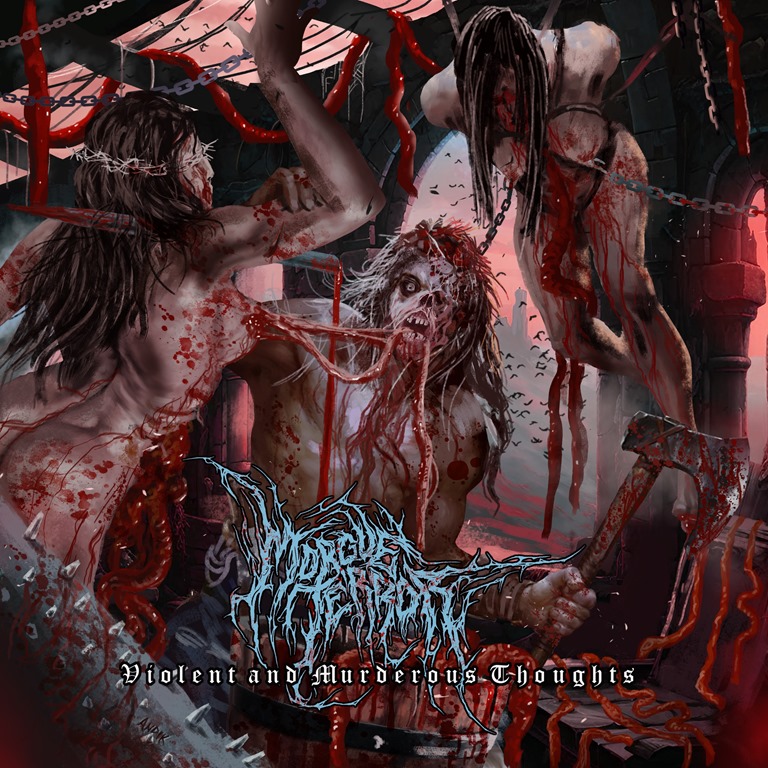
Violent and Murderous Thoughts is the second EP from ‘Horror-themed death metal act Morgue Terror’, and this one is all about ‘chronicling the atrocities of four sadistic serial killers and a debauched, abusive sect’ across its five tracks. In this sense, it broadly represents a thematic continuation of its predecessor, their eponymous debut, which was ‘all about the murders and characters in the Terrifier movies’. Nerds. However, it also marks something of a departure, being their first release ‘to have an actual drummer, with Dustin Klimek (ex-Full of Hell) behind the kit’.

His presence has certainly brought a new dynamic to the sound, with (full of) hell-for-leather pedalwork bringing relentlessly powerful beats to propel the furious fret frenzy and guttural grunting vocals. I mean, it’s impossible to determine by ear who any of the sadistic serial killers might be, and serial killers really have been done to death – if you’ll pardon the pun – and have, thanks to Channel 5 and Netflix, become completely mainstream. Still, in terms of revelling in gore and death metal tropes, Morgue Terror deliver everything they promise, and this EP sounds exactly the way you’d expect it to based on the bloody, gruesome cover art. Sure, it’s puerile and way over the top – the cover and the music – but it works.

‘Chessmaster’ (inspired by Claude Bloodgood, perhaps?) showcases some well-conceived dynamics, with tempo changes and breakdowns aplenty and some interesting chord progressions, packing a lot of action into only a little more than three minutes. ‘Bludgeoned_Brutalized’, the longest of the songs and running past four minutes conveys the sentiment of the title as an aural manifestation, relentlessly battering the listener with punishing force. The vocals sound as if they’re being coughed through a cascade of blood while the guy’s entrails are being torn out through his abdomen. Make no mistake, this is nasty, and single cut ‘Neanderthal’, which features guest vocalist Cheney Crabb is punishing from beginning to end, three devastating minutes of raw intensity.

There is simply no let-up across the duration of Violent and Murderous Thoughts, and while the whole EP may only have a duration of around eighteen minutes, it’s a blunt forced trauma in musical form: hard-hitting and harrowing, it leaves you feeling battered, bruised and borderline concussed.

AA

397796

With every movement of American Standard, Uniform peels off a new layer and tells the story inside of the one that came before it.  It’s Uniform’s most intimate work to date, tackling themes of self-destruction and with a particular focus on vocalist Michael Berdan‘s lifelong struggle with bulimia nervosa. His lyrics sink down into the core of the innermost self, the small human being crushed in the grip of sickness. His bandmates join him, applying majestic droning that becomes both mechanical and omniscient. As the rhythms continually pulverise, Uniform gives themselves over to the grinding gears of an uncaring universe.

The thematic content behind American Standard can be divided down the middle into two distinct sections. While the A-side of the record deals with an individual who exists in a purgatorial state of physical and psychic crisis, the B-side serves to address how a lifetime of dealing with an eating disorder has impacted those around him.

Permanent Embrace,” available today, is the album’s final statement. Berdan tells, “It touches on a facet of the disease that I’m incredibly wary of facing. Built on a narrative foundation laid out by author and lyrical collaborator Maggie Siebert, the song revolves around the idea of a person holding a loved one as an emotional hostage. Seeing perverse beauty in a story about a car crash, the narrator relates the analogy of two automobiles twisted together to that of his last standing relationship. As he has broken down over time, so has the one who continues to stand by him. The object of his manipulative guilt trips remains locked in a hopeless situation, terrified of what he may do to himself if they were to finally leave.

The music reflects the psychic violence of the lyrics, as riffs and rhythms that wouldn’t feel out of place in the Unsane catalog careen into giant synth melodies before collapsing into itself. This is kind of our misguided interpretation of what Faith No More were doing on ‘Angel Dust’, and we hope that our tip of the hat to those masters of madness can hold a candle to their horrific splendor.”

For “Permanent Embrace,” Uniform teamed up with director Sean Stout on the single’s compelling visual. Stout tells, "Without sounding trite, when we first read Mike’s lyrics to the record our reaction was extremely visceral. They are brutally introspective and beautiful at times and we wanted to try visually to convey that range of emotion in a sequence of single images that unfold narratively and potentially shift their own meaning over time. Our concept was to intertwine images of an outer world-overgrown, rusting and moving on in its decay-with an inter-world that is largely going through the same process as a result, but is markedly separate as well. We never see one observe or interact with the other, yet they are the same and of the same world."

Watch the video for ‘Permanent Embrace’ here:

AA

Uniform wants to find what’s underneath. And what’s underneath the underneath. And what’s under that.
American Standard begins with a shock. A voice, a room, a face in a mirror. In the mirror stares a visage, doubled and staring back. Each line comes back to him: reflected and refracted in the unsympathetic glass. Forget for a moment that Berdan has been destroying his throat in Uniform for over a decade. Forget his highly stylised delivery on the band’s acclaimed collaborative work (alongside experimental doom titans The Body and Japanese heavy rock powerhouse Boris). Forget the entire tradition of abrasive vocals in aggressive music. Look for what’s underneath the songs, the form, and the style.

To help peel away this narrative of eating disorders, self-hatred, delusion, mania, and ultimate discovery, Berdan sought assistance from a towering pair of outsider literary figures. Alongside B.R. Yeager (author of the modern cult-classic Negative Space) and Maggie Siebert (the mind behind the contemporary body horror masterpiece Bonding), the three writers eviscerate the personal material to present a portrait of mental and physical illness as vividly terrifying as anything in the present-day canon. The result is an acute articulation of a state beyond simple agony, capturing the thrilling transcendence and deliverance that sickness can bring in the process.

American Standard is surely Uniform’s most thematically accomplished and musically self assured album to date. Sections spiral and explode. Motifs drift off into obscurity before reasserting themselves with new power. Genres collide and burst open, forming something idiosyncratic and new. There’s a grandeur, due in part to the addition of Interpol bassist Brad Truax alongside the percussive push and pull of returning drummer Michael Sharp and longtime touring drummer Michael Blume, marking his Uniform recorded debut here. However, this magnificence is most clearly attributable to the scale and power of guitarist and founder Ben Greenberg’s arrangements, matching ever elegantly to the intense lyrical subject matter.

Underneath it all, what remains is trust. A record of this range and depth, a piece of art so far out on a ledge, can only be attempted with an extreme and almost foolish amount of understanding between collaborators. American Standard stands firmly on the bedrock that Uniform’s two original members, Michael Berdan and Ben Greenberg, have been building on for over a decade.

In Greenberg’s words, “When we started this record, Berdan told me: ‘I trust you to come up with a solid foundation for this, however you envision this thing. I want you to realize it completely, because I believe in you.’ So I wanted to write something overwhelming and all-encompassing for Berdan to lead his narrative through… because I trust and believe in him.” For an album to defy simple genre exercises and become a work of art, the musicians behind it must push themselves so far beyond the frayed ends of an established comfort zone that they might never return. Without a shred of doubt, American Standard is a work of art, agonising in its honesty and relentless in its pursuit of sonic transcendence. It is hideous. It is beautiful. It is necessary.

240528_Uniform_Press-07-99028a051405143c

Press Photo By Joshua Zucker-Pluda & Sean Stout
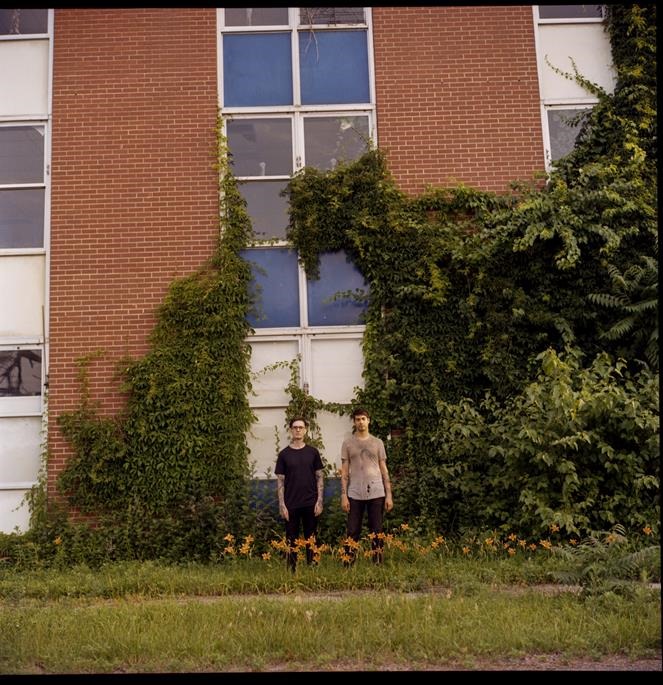
Pictured: Founding Members Ben Greenberg (Guitar), Michael Berdan (Vocals)
Not Pictured: Mike Sharp (Drums), Brad Truax (Bass), Michael Blume (Drums)

Transcending Obscurity Records – 19th January 2024

Christopher Nosnibor

Every day, every week, the world descends further into a pit of shit of human making. I feel as if I’m continually circling back to this same premise to frame almost every discussion, not just when writing about music, but any conversation I have about pretty much anything. The sad fact is that there is simply no escaping the fact that it’s not just me personally, but the whole of our existence which hangs under a cloud of gloom.

Only this afternoon, my mother texted me in her usual cack-handed typo-filled fashion bemoaning the succession of storms which has battered the country this week, commenting on how she can’t get over it and asking what we’ve done to deserve such crap weather. I simply couldn’t face pointing out that things have been heading in a bad direction since the industrial revolution and that we’re pretty much driven off a cliff at full speed in the last fifty years thanks to capitalism, and what we’ve done to deserve is fucked the planet with greed. She probably wasn’t really looking for an explanation, and likely wouldn’t have appreciated or even understood if I’d given one. Meanwhile, wars are raging around the globe, and escalating on a daily basis. And because we don’t have quite enough death and destruction, the state of Alabama has seen fit to pilot slow and painful executions by nitrogen gas. What the fuck is wrong with the world? And is it any wonder we’re experiencing a massive mental health crisis?

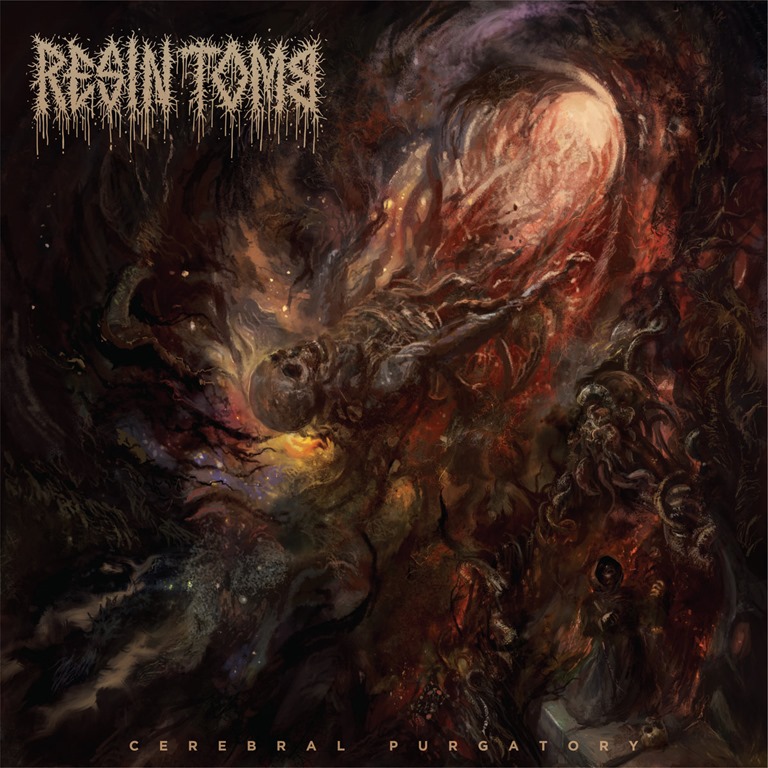
In the face of all of this, you do what you can to get by, and while many will advocate meditation and calming music as an alternative, or supplement, to medication, catharsis can also provide a much-needed means of release. And after releasing a couple of well-received EPs, Australian band Resin Tomb have dropped their debut album, Cerebral Purgatory. It’s a title which pretty much encapsulates the condition of living under the conditions I’ve outlined above – and purgatory is the word, because there is no escape and it feels neverending. The first track, ‘Dysphoria’ perfectly articulates the existential anguish of life in these troubled times. Again, the title is spot on: I frequently see – and have likely made my own – mentions of how we are seemingly living in an amalgamation of every dystopia ever imagined. But what is the psychological response to this? Dysphoria: ‘a profound state of unease or dissatisfaction’, the antonym of euphoria. Much as I do sometimes feel like cheering humanity to the finish line in the race toward self-extinction, for the most part, I feel not simply gloomy or pessimistic, but a deep sense of anguish and anxiety, not to mention powerlessness. And I am by no means alone – although it’s more apparent from time spent on line than conversations with friends, family, or colleagues, perhaps because people tend to shy away from heavy topics for the most part, and instead prefer to shoot the breeze about the weather. But ‘Dysphoria’ is a brief, brutal blast, gnarly mess of difficult emotions articulated through the medium of full-throttle guitar noise and vocals spat venomously in a powerful purge.

As their bio puts it, ‘They’ve forged their own sound which is a remarkably cohesive mix of dissonant death metal, gravelly grind and somehow even thick, blackened sludge.’ And yes, yes they have. And it’s a dense, powerful, racket they blast out. There’s little point in drawing on references or comparisons: there are simply too many, and they all tumble over one another in this cacophony of monstrous metal noise, a flaming tempest of gut-ripping heaviosity.

‘Flesh Brock’ packs tempo changes and transitions galore, packing more into three minutes and eight seconds than seems feasible. And in packing it all in, the density reaches a critical mass which hits with the force of an atomic blast.

Four minutes and twenty seems to be Resin Tomb’s sweet spot, with four of the album’s eight tracks clocking in at precisely that. And when they do condense so much energy and weight into every second, four minutes and twenty seconds affords a lot of room.

The title track comes on with hunts of Melvins, a mess of overloading guitars and a bass so fucking nasty and so forceful it could shatter bones, melding to deliver a colossal bastard of a riff. ‘Human Confetti’ comes on heavier still, pounding away with a pulverising force and playing with elements of discord and dissonance in the picked guitar line – and while the lyrics may be indecipherable, the title alone conjures a gruesome image.

If ‘Purge Fluid’ and ‘Concrete Crypt’ again convey their fundamental essences in the titles alone – and these are absolutely brutal, punishing pieces – the album’s final track, ‘Putrefaction’ absolutely towers over the murky swamp of black metal and grindcore with a dramatic, nagging picked guitar and a cranium-crushing wall of noise. Holy fuck. It hurts. And good. Angry is good, and better to channel that anger into art than knifing people in town on a Friday night. That’s one for another time, perhaps. At this particular moment, we have this – an album so heavy, so violent, it’s an exorcism.

AA

719914

Sacred Bones – 1st December 2023

Christopher Nosnibor

Released simultaneously with the reissue of their eponymous debut, Khanate’s second album originally released in 2003 – which is, incomprehensibly, 20 years ago further evidences just how far out they were at the time. And the time is worth assessing: in 2003, Nu-Metal was in its final throes, and Post-Rock was in the early arc of its ascendency. It was something of a wilderness time in many respects, with no real dominant trend: it was the year Avril Lavigne and Evanescence broke and Muse exploded, amidst an ocean of limp indie and even shitter commercial pop and r’n’b. The underground was the only place of interest, but even in those underground circles, there wasn’t anything quite like this.

The bio accompanying the release points us toward the darkness that pervades the album and does so from the start: ‘“Pieces of us in my hands, on the floor, in my pockets/red glory,” Dubin howls on opener ‘Commuted,’ setting the stage for Khanate’s second installment of existential dread. Dripping in death, murder and desperation, the album is somehow less forgiving than its predecessor. Which was probably the point”.

On this outing, they really do seem to have gone all-out to engineer an album that’s as stark and brutal as is possible, and the four tracks are drawn out to torturous lengths to achieve maximum discomfort. The aforementioned opener, ‘Commuted,’ is over nineteen minutes long, and the instrumentation is sparse, minimal and heavy with lugubrious atmosphere, while Alan Dubin howls like he’s having his fingernails pulled out slowly and painfully, one by one. It’s as bleak and harrowing as one of Derek Raymon’s ‘Factory’ series novels. It’s not pleasant, not even slightly, it’s not even enjoyable, but it’s perversely compelling. When a rhythm and guitars do coalesce, it’s at a glacial BPM, the kind of crushing, feedback-strewn, bludgeoning grind of Swans around the time of Cop, but with the more paired-back, spacious sound of Greed and Holy Money. But Khanate didn’t simply take these as templates – they scrawled all over them and then trampled on them in order to forge something even more challenging and even more fucked-up. There are lengthy passages where there is little more than crackle and hum, and the occasional burst of percussion. It may employ the tropes of avant-garde jazz, but it ain’t jazz. But what it is is hard to define. It’s not industrial, and it’s not doom. It’s not really metal in any recognisable form. But it is heavy. And it is unsettling, harrowing, and an absolute endurance test.

By the end of ‘Commuted,’ you feel utterly beaten and find yourself wilting from the sheer brutality of it all. And then ‘Fields’ crawls in, lower and slower, taking obvious cues from Earth 2 and marking clear parallels with Sunn O))). This is sinister, chthonic, demonic, not so much other-worldly as nether-worldly. It’s almost ten minutes before the bowel-juddering billows of overdriven, low-tuned guitar slides in like a slow-crawling river of lava. It’s monstrous, ugly, explicitly outright horrible. The hovering hum that takes hold around the fifteen-minute mark isn’t in any way a calming pause, but a nuclear wasteland of tension that pressurises the skull. Dubin raves maniacally like a psychotic locked in a soundproofed cell, and there’s a sense that the whole of Things Viral is a prison, whereby the listener is trapped within walls of sound. ‘I did this for you’, he screams murderously. It doesn’t sound like a kind favour, but like it’s time for payback. It’s chilling and grotesque. This is a fair summary of Things Viral overall. Even the quiet segments – and there are many – are occupied by sections of such weight that make your body feel as if its being dragged down, not by gravity, but by a darker force, one which will suck your very soul.

‘Dead’, at ten minutes, is but an interlude, but it radiates serial killer raving lunatic mania vibes for its entire duration, as the guitars throb and burn. It’s messy, and so, so heavy: you feel the pressure in your ribs, a weight in your limbs. The final track, ‘Too Close Enough To Touch’ is an absolute monster, which sits more closely alongside the harsh noise and overt extremism of Whitehouse and the point at which industrial strains its mangled way into power electronics than anything even remotely metal. ‘Stay inside… stay inside’ Dubin snarls, his vocals distorted and crazed. You barely dare move a muscle, let alone leave the house.

Things Viral goes way beyond darkness, and plunges into purgatorial depths that would have terrified Milton, and 20 years on, still sounds like the dankest, nastiest thing you could hear in any given year.

AA

a2725064236_10

1st September 2023

Christopher Nosnibor

Details around Scottish black metal act Euchridian and sketchy. They’re a trio, and the drums were recorded at a different studio from the rest of the instruments. And this is to the good. I don’t need to know, and ultimately, probably don’t want to know. What does it matter when they formed, where they live, what gigs they’ve done? The lack of social media presence is admirable: in the absence of corny posed photos and candid snaps and videos of them gurning away at their instruments, I have nothing to judge them on but the music and the enigmatic cover art. And a little enigma goes a long way.

The advent of social media has not been a great thing for many artists. Before social media, it was possible for the music and the record sleeves to represent, and promotion didn’t have to involve endless posts about pointless shit like pictures of the band’s takeaway delivery before a rehearsal. Social media says that bands now need to build a rapport with their fans, to interact, to engage, and frequently to keep them engaged. But acts like Sunn O))) and Khanate prove it’s possible to not do that and build an immense fanbase. Likewise, you won’t see JK Broadrick doing rounds of inane interviews, spouting pointless opinions on pointless subjects to flog a few more Godflesh albums, or GYBE raffling off drum skins and offering personalised hand-written lyric sheets for £75 or whatever.

Musicians by nature tend not to be as extrovert as the act of making and performing music may suggest – and there’s a world of difference from being a pop act with aspirations to performing arenas, to murky metal which channels all the pain and anguish of existence and is much less about reaching an audience than it is about having an outlet for all that shit.

Philia is, according to my light research, one of the four ancient Greek words for love, and compared to agape and eros, it’s perhaps the most obscure. This may in part be a reason for the choice for the EP’s title, but philia is usually translated as ‘friendship’ or affection, and this is what carries into the first track, the nine-and-a-half minute ‘Sweetness’.

Sweetness and black metal may seem unusual pairings, and sure enough, this absolute monster of a track. The guitar sound is quite bright, and it’s a solo riff that opens what starts a crunching slow-burner. The drums crash in slowly next, before Matt Davies’ manic mangled rasp of a strangled snake spitting venom enters the fray. There is a sense of pomp, a sense of ceremony, but above all, this feels maniacal, murderous, deranged and fucked up. The temp shifts here and there, and there’s the obligatory monster guitar solo, but it’s the driving riff that blossoms into something truly epic.

And on the subject of the truly epic, the second track, ‘The Rule Of Three’ is an absolute monster, clocking in at over thirteen-and-a-half minutes and built around a slow, trudging riff. The guitar may be bright, but it’s mangled as fuck and squirms in an agonised tandem with the raw, ruined vocals. Around the mid-point, it switches focus and embarks on a break that s beyond epic – but it’s not corny, either. It is, however, one of those chord sequences played in a way that makes you feel. And the it goes really dark.

Overall, Philia is properly nasty: this is the sound of a band fully committed to plunging the deepest depths of darkness, and ‘Philia’ doesn’t punch you in the guts, but pulls your guts out and squeezes them. Philia is full-on intensity, and hits where it hurts.

AA

a1811233614_10

Dret Skivor – 6th October 2023

Christopher Nosnibor

It’s been a few months since we’ve heard from Legion of Swine, one of my favourite vehicles for the intensely prolific Dave Procter – because LOS are noisy, abrasive, and unpredictable, and I have fond memories of numerous demented performances and a couple of collaborative sets together. Even when sadly sans pig-head mask, having developed an allergy to latex, the gnarly electronic noise Dave cranks out is messed up and often times hurts.

Dave, and the Swine, are both highly political animals, and once again it’s politics which have spurred him to clack his trotters into activity and snort his disapproval of current affairs.

L.H.S. is accompanied by uncharacteristically expansive liner notes, which prove useful, and so I shall quote in full:

‘This release pays credit to Värmland folk who campaigned to create a better society and are represented by the letter LHS.

L is Selma Lagerlöf who was heavily involved in women’s suffrage and received a Nobel Prize for literature in 1909.

H is for Gerda and Mauritz Hellberg who were central characters in the right to vote campaign.

S is for Torgny Segerstedt who took a stand against the Nazis in his role as editor at Göteborgs Handels- and Sjöfarts-Tidning.

The image used in this release is a reminder of how the free market is way more important than people in some eyes.’

It lays it all out there, and reminds us how failure to learn from history is guaranteed to doom the future. Admittedly, the way things are looking now, we’re doomed one way or another and likely sooner than anticipated due to sheer greed and a refusal to face facts. In the face of this, there’s a part of me that feels as if complaint or resistance is futile, because we’re already fucked. But we need to go down fighting. We need to at least die trying, to know we’re did our best.

L.H.S. is the sound of the fight. It’s a fucking racket, blasting in from the outset with overloading distortion, cutting in and cutting out, a blasting overload that just hurts and is an instant headache. It’s the harshest of electronica which only gets nastier and more intense and insane as it progresses. By three minutes in, it sounds like someone smashing a bin lid connected to a contact mic, recorded on a mobile phone. The treble is high all the way, and the sounds are metallic, distorting, like someone tearing the door off a garage in a gale or something similarly deranged. And deranged it is, from beginning to end.

We’re in Merzbow territory here. And it actually hurts. Ten minutes in, there are some vocals, but they’re impenetrable shrieking derangement, buried in feedback, before things get really gnarly.

L.H.S. is nasty, and I absolutely love it. I suspect most won’t. It’s one to file alongside Whitehouse, Merzbow, and Prurient. It’s brutal, and as niche as fuck, and Dave knows it. Embrace the pain. This is something else.

AA

AA

a3749396098_10

Human Worth – 13th October 2023

Christopher Nosnibor

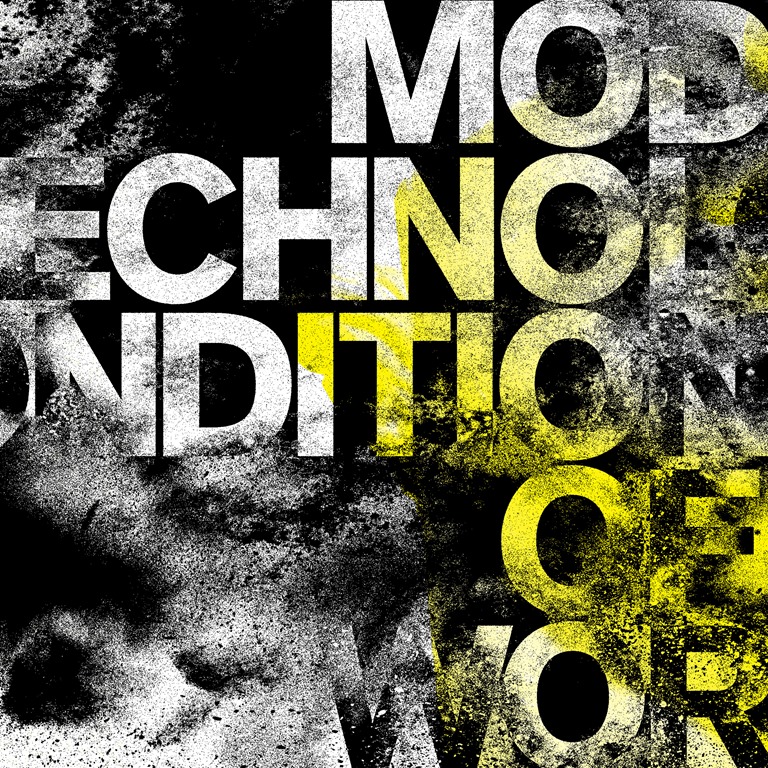
From the moment Modern Technology blasted in with their eponymous debut EP, simultaneously launching the Human Worth label, it was clear that they were special. The duo made the most fucking incredible, low-slung, dense mean-ass noise going. The lyrics were social, political, and sharp, paired down to stark one-line declarations dissecting with absolute precision the fucked-up situation in which we find ourselves. And with a percentage of proceeds of every Human Worth release going to charity, they’ve put their money where their mouth is. It’s not done in some crass, virtue-signalling way: this is their model, and they just get on and do it. And through Human Worth they’ve released some – no, many – absolutely incredible records, rapidly establishing HW as purveyors of quality product with a keen ear for quality noise. In an increasingly fragmented and challenging musical market, the trick for any label is to find a niche and excel within it. And that’s precisely what these guys have done.

And all the while, as a band, Modern Technology just get better and better. Any concerns that they had said all they had to say following the EP and debut album Service Provider (as if there ever were any!) are allayed with the arrival of Conditions of Worth.

Lead single ‘Dead Air’ opens it up with dense, grinding anguish. Chris Clarke’s bass and vocals seem to have got heavier. Then again, so does Owen Gildersleeve’s drumming. But it’s more than just brutal abrasion. In the mid-track breakdown, things go clean and the tension in that picked bass note is enough to spasm the muscles and clench the brain. It’s brutal start to a brutal album.

‘Lurid Machines’ begins in a squall of feedback and wracked, anguished vocals, and it’s harrowing, the sound of pain. The lyrics are comparatively abstract, and all the more powerful for it. Written out in all block caps, they’re in your face but wide open to interpretation and elicit the conjuring of mental images:

WHY ARE THEY SO ALONE?

THE LIES THEY ALL SHARE

LET GO

INSIDE NOTHING GLOWS

BENEATH A SHADOWED PHONE

The drums and bass crawl in and grind out a low, slow dirge, Clarke’s vocals are down in the mix and you feel yourself being dragged into a chasm of darkness.

These are harrowing times, and if the pandemic seemed like a living nightmare, it seems it was only the preface. The ‘new normal’ is not the utopia some commentators suggested it may be. For a moment, it looked as though we would achieve the golden goal of the work/life balance, that we may abandon the commute and save hours a week for ourselves and slash our carbon emissions in the process. But no. Fuck that. Get back to the office, tough shit that fuel prices are rocketing and bollocks to the anxiety you developed in lockdown and bollocks to the environment because power trumps everything. Government power, corporate power, media power… we are all fucked and have no hope of breaking this. And this is the backdrop to Conditions of Worth.

They pick up the pace and start ‘Salvation’ with an uncharacteristically uptempo stoner rock vibe, but around the midpoint they flip things, slowing the pace and opening up towering cathedrals of sound as a backdrop to painting a stark depiction of life on earth.

WIDESPREAD

FAMINE

WIDESPREAD

CONFLICT

WIDESPREAD

PANIC

WIDESPREAD

SHADOW

The song ends with just a spare, fragile but earthy bass that calls to mind Neurosis and Kowloon walled City. It’s this loamy, organic texture which defines the altogether more minimal ‘The Space Between’, the first of the album’s two longer pieces, with the second being the ten-minute title track. It’s here that their evolution is perhaps most evident, as they stretch the parameters of their compositions to forge such megalithic works and really push the limits of their two-piece arrangement. In contrast, there’s the super-concise ‘Fully Detached’, , and the last track, ‘ Believieer’, which are absolute hardcore ragers, clocking in with short running times, the former just making a minute and fourteen seconds. And the variety on display here only adds to the album’s impact. While each track hits hard, the overall impact is obliterating.

They crank up the volume and the shades of distortion in the explosive choruses of ‘Lane Control’ – because you can never have too many effects when it comes to bass played like guitar and blasting screaming noise to articulate feelings, and as for the title track… it’s an absolute beast, with heavy hints of latter-day Killing Joke in the mix as they flay mercilessly at a pulverising riff. The noise builds and the vocals sink beneath it all and you’re left feeling dazed.

But more than that, there’s something about the production on Conditions of Worth that’s deeply affecting. There’s a skull-crushing sonic density, but also simultaneously, remarkable separation and sonic clarity. These elements only make it his harder.

Conditions of Worth is more than just heavy. It leaves you feeling hollowed out, drained, weak. This is life, and this album is the perfect articulation.

AA

HW031_ModernTechnology_ConditionsOfWorth_CoverArtwork

7th July 2023

Christopher Nosnibor

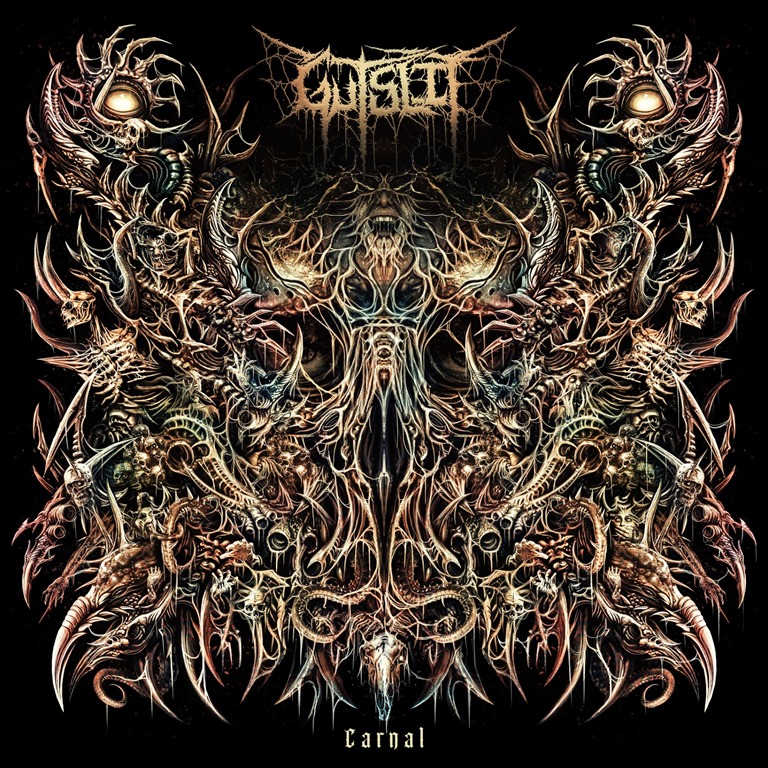
When it comes to band names, metal is one of those genres that has a unique way of throwing out monikers that mean you know it’s a metal band just from the name – unless, of course, you can’t read it because of the unintelligible spiky logo, in which case you absolutely know what to expect without even knowing the name. Indian deathgrind act are a quintessential example. Just look at that cover! It’s all the thorns – and it encapsulates the listening experience perfectly. Yes, it’s sharp, it’s a set of songs that snags and tears at your skin and your psyche.

Fifteen years into their career, Carnal is their third album, and if it sounds like that’s perhaps slow progress, the eight brutal cuts on here suggest that the time goes into compressing everything down to its tightest, densest form, honing it to the point at which its mass and velocity is absolutely optimal.

With the exception of the six-minute epic closer and the forty-one second blast of mid-album track ‘Insidious’, the songs range between around three-and-a-half and four minutes – and they pack everything into these compact sonic slabs. They don’t do fiddly, twiddly stuff, and there are no squealy notes or solos, apart from on ‘Bodysnatcher’ where they work -and wank – all the frets in a frenzy: this is music which sounds like it’s the output of a car-crusher – compacted, mangled, brutally fucked and as dense and weighty as it gets.

The album’s themes are clear from the song titles, with opener ‘Son of Sam’ setting the tone, ahead of ‘Bind Torture Kill’, ‘Body Snatcher’, and ‘Alter of Putridity’, which, like the font and everything else, pretty much speak for themselves. They’re well into their serial killer shit, but as I observed just the other day, this stuff is mainstream now. Pouring over mass murder and serial killing is no longer the domain of trenchcoat-wearing loners who aspire to wreak their own revenge on this cruel world; it’s David Tennent on ITV scoring eleven million viewers per episode.

That doesn’t mean that this kind of brutal tempestuous racket is mainstream, but people can no longer judge the work of a band like Gutlsit as sick or perverse when their subject matter is primetime. We’re all murder junkies.

‘The Killing Joke’ opens with a sample from an interview with notorious sadistic serial killer John Wayne Gacey (who makes Son of Sam with his seven victims look like a mere hobbyist), saying ‘The dead won’t bother you. It’s the living you gotta worry about’. Gracey may have been somewhat flippant in his remarks, but he had something of a point.

Gutslit sound neither dead nor living, their grating attacks sounding more like the undead on EST, a least vocally, and they go all out to deliver punishing intensity on a satanic level. It’s a churning mass of guitars that grinds at your guts as beats blast so fast as to blur to a flickering rattling sound rather than form an overtly structured rhythm. The obligatory guttural vocals growl and snarl, switching between styles fast and often between growl and barks, coughs and vomiting streams of vowels. It’s frenzied, demonic, furious. It sounds murderous, it sounds brutal, disturbed and disturbing.

‘Primeval’ is slow in terms of chords, but countered by a thunderous rush of beats, which renders it disorientating, harsh, and high on impact, and as a whole Carnal is pretty nasty – just as intended.

AA

407112

Lupus Lounge – 25th November 2022

Christopher Nosnibor

There’s catharsis and there’s catharsis. Extreme times heighten the tension and anxiety, and increase the urge to purge. This split release from Tchornobog and Abyssal – a truly international effort, with Tchornobog hailing from Portland, Oregon, and Abyssal representing the UK with their brand of Death/Black/Doom Metal that explores, according to Encyclopaedia Metallum, themes of oppression, and decay.

Tchornobog take this approach to catharsis and purging completely literally. As the press summary notes, ‘Any track opening with a multi-layered recording of a number of vomiting sessions is bound to continue on the darker side of the musical spectrum.’ And so it does, delivering on the threat / promise that “The epic song ‘The Vomiting Choir’ delivers 24:08 minutes that form a descending spiral into a bottomless pit filled with a mostly dissonant sonic miasma of pure negativity and surprising complexity.”

The sounds of regurgitation, guttural coughs and choking and spluttering echo on for a good minute and aa half before the band piledrive their way into an extended workout that finds them burrowing deep into the thick sods of the earth towards the molten pits of hell.

It’s relentless and brutal, and proper old-school: the lyrics are impenetrable and so are the guitars, as a thundering, grey blast of impenetrable distorted guitar blasts away hard and fast and dark and heavy against pummelling percussion, and delivered at a breakneck pace, there are rasping, dead walker noises. There are tempo changes, and mood shifts. And there is deep, dark, anguish and throbbing pain. ‘The Vomiting Choir’ is dark, dark, dark, heavy, and oppressive. Thirteen minutes in it feels like an eternity has passed, an entire album’s worth of anguish squeezed into an excruciating document of torture. But no: there is more, much more, as the next wave and the next movement crash in. For a moment, around the 14/15-minute mark there’s a feel of Joy Division being covered by a black metal band, and the piece drives on and on, ever harder, ever darker, toward the piece’s crushing conclusion with a heavy, throbbing riff of swirling hypnoticism.

Abyssal offer no relief whatsoever, not that you’d really want them to. ‘Antechamber of the Wakeless Mind’ could well be summary of my lifetime as an insomniac. There’s no chance of sleeping through this twenty-four minute barrage of jolting, jarring metallic rage, where everything blurs in a blizzard of fretwork and drums faster than an industrial knitting machine.

It’s a truly exhausting experience; after just five minutes of busted-lunch growling and wheezing against a screeding backdrop of mangled guitars and beats that explode like machine-gun fire, the experience is exhausting – but also exhilarating in the most primitive, purging, cathartic fashion. It’s an extended release, one that’s punishingly intense and physical as well as cerebral.

As a pairing, this split is truly harrowing, mentally and physically draining, dragging its way through the darkest depths.

AA

981549

Today industrial trail blazers Uniform have announced their return overseas. They’ll embark on a 27 date run across the UK and Europe in Spring 2022 with Pinkish Black along for support. In anticipation of this and their upcoming U.S. tour – their first since the release of the lauded 2020 heavy-hitter, Shame – they have released a new video, “The Shadow of God’s Hand"

Vocalist Michael Berdan explains, “The central theme behind ‘The Shadow of God’s Hand’ are the inherent contradictions present in conventional Christianity. I was brought up with this idea of ‘act right or you’re going to hell.’ I’ve listened to family members as they worried themselves to tears over the fate of a loved one’s soul. To me, the concept of a punitive God is antithetical to the comfort I derive from a spiritual practice. Does God serve to comfort or chastise? Does following Christ’s teachings serve to create a kinder, more equitable world or have those teachings become so perverted that they simply stand as tools of control? For many, there is a fine line in their belief structure between salvation and damnation. This song attempts to touch on these paradoxes.”

Watch the video, directed by John Bradburn here:

UNIFORM UK/EU SPRING 2022 (TICKETS)

05/04: Budapest, HUN – Aurora

06/04: Brno, CZ – Kabinet Muz

07/04: Wien, AT – Chelsea

08/04: Innsbruck, AT – PMK

09/04: Winterthur, CH – Gaswerk

10/04: Geneva, CH – Cave 12

12/04: Lille, FR – La Malterie

13/04: Paris, FR – Supersonic

14/04: London, UK – Electrowerkz

15/04: Manchester, UK – The White Hotel

16/04: Newcastle, UK – The Cluny

17/04: Glasgow, UK – Audio

18/04: Nottingham, UK – The Chameleon Arts

19/04: Ramsgate, UK – Ramsgate Music Hall

20/04: Brussels, BE – Botanique

23/04: Leipzig, DE – Soltmann

24/04: Berlin, DE – Kantine Berghain

26/04: Copenhagen, DK – Loppen

27/04: Goteborg, SWE – Skjulet

28/04: Stockholm, SWE – HUS7

30/04: St. Petersburg, RUS – Serdce

01/05: Moscow, RUS – Bumazhnaya Fabrika

02/05: Tallinn, EST – Sveta Baar

03/05: Riga, LV – DEPO

04/05: Vilnius, LI – XI20

06/05:  Warsaw, PL – Chmury

07/05: Prague, CZ – Underdogs

All shows w/ Pinkish Black