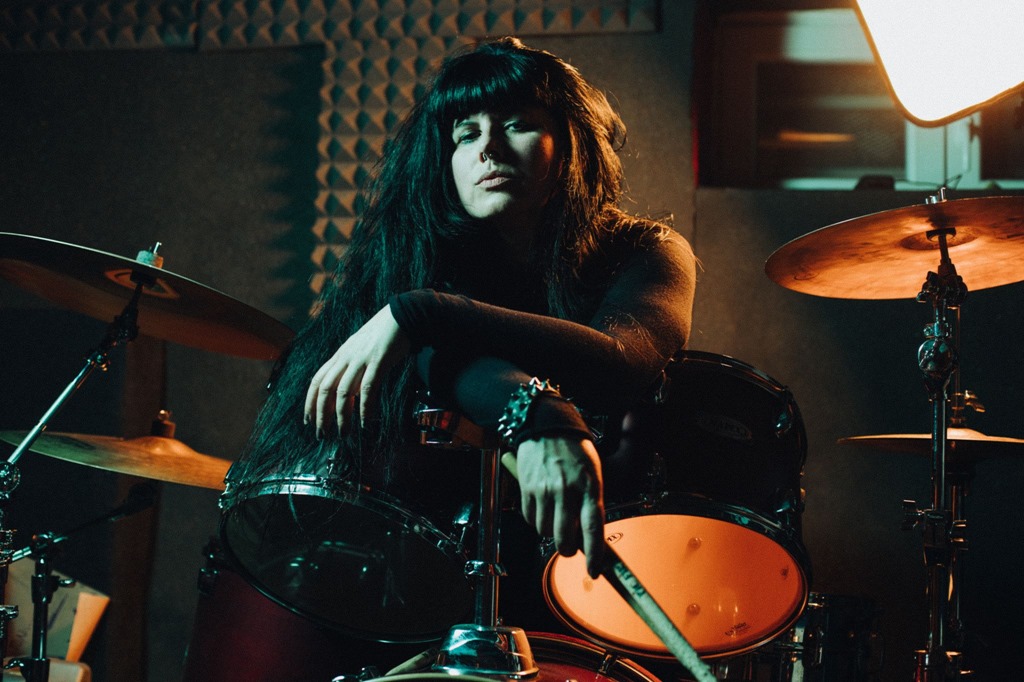
Further In Evil is the debut full length from one-woman metal band, Marthe, which is due via Southern Lord on October 20th. An atmospheric and aggressive blend of punk, Further In Evil is a shift in gears from her musical background in the anarcho-punk scene and inspired by riot grrrl, crust and d-beat. The lyrics are full of rage and the music is full of strength; it has the power of Bathory and the sadness of Tiamat, tinged with the stench of Amebix.
Marthe is, at heart, a solo bedroom project— born out of introversion and a desire to explore new horizons and landscapes alone. “Around 2012, I started feeling the need to express myself in a heavier and more atmospheric way,” explains Marzia, the woman behind the Marthe project. “I coincidentally started hiking more and more… getting closer to lonely soundscapes: my life, feelings and moods started being more introspective and introverted.” She continues, “Marthe suddenly became my comfort zone, my therapy, my shadow of loneliness, my book of truths, my mirror, my alter ego. Locking the door and disappearing in darkness recording music alone became something so powerful… I probably never really met myself before that.”
Further In Evil was composed and demoed over the course of a year during drives or hikes and, fatefully, the first look at the album – its title track – showcases the grandeur of Marthe’s surroundings. Self-filmed and edited between Italy and Iceland, the "Further In Evil" video boasts the beauty of nature contrasted by Marthe’s devastating sounds.
Southern Lord have today unveiled a video for the snarling blackened title track, and it’s a monster. Watch it here:
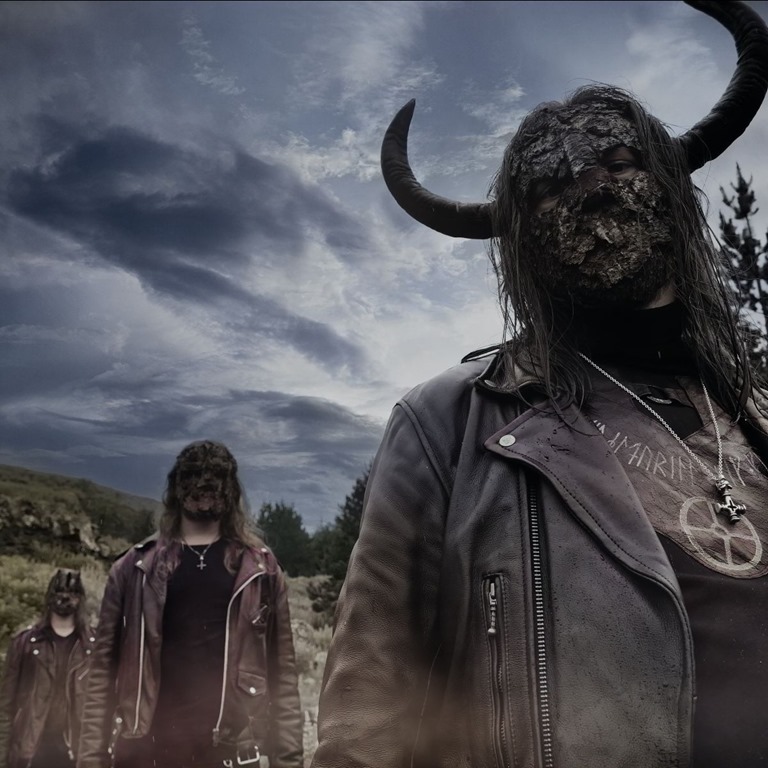
Icelandic metal trio FORTÍÐ reveal the video single ‘Þúsund þjáninga smiður’ (‘A Man of a Thousand Sufferings’), which is taken from the forthcoming full-length Narkissos. Narkissos is slated for release on October 13, 2023.
The video ‘Þúsund þjáninga smiður’ depicts the endless cycle of bloody feuding that lies at the core of most Icelandic sagas and continues with usually less physical violence until today.
Watch it here:
Parallel to Narkissos, a 3CD artbook entitled Völuspá, which is featuring all three albums of the original trilogy will also be released. Each album comes with three bonus tracks and the book includes among other items introductions by Einar "Eldur" Thorberg Guðmundsson and Kári Pálsson as well as all lyrics in original language and English translations.
FORTÍÐ comment: “The title ‘Þúsund þjáninga smiður’ is a play of words, which is derived from the common Icelandic term ‘þúsund þjala smiður’; but instead of referring to a ‘man of a thousand traits’, we have changed it into a ‘man of a thousand sufferings’ here", mastermind Einar Thorberg Guðmundsson writes. "The lyrics are more abstract than the video. They revolve around mankind’s thin outer layer of civilization and the pure animal instinct that lurks beneath the surface. It takes little effort to reveal our true nature. The clear cut story-line of the video shows Icelandic farmers fighting over a piece of land. Such family feuds have been very common in Iceland throughout the centuries and lie at the core of our saga literature. Coincidentally, the farmer that so kindly lent me his fence for this video also had a very rough land dispute with the neighbouring farmer. I cannot go into the details, because it is still an ongoing court case that will hopefully get settled in a more civilized manner than what you see in this video.”
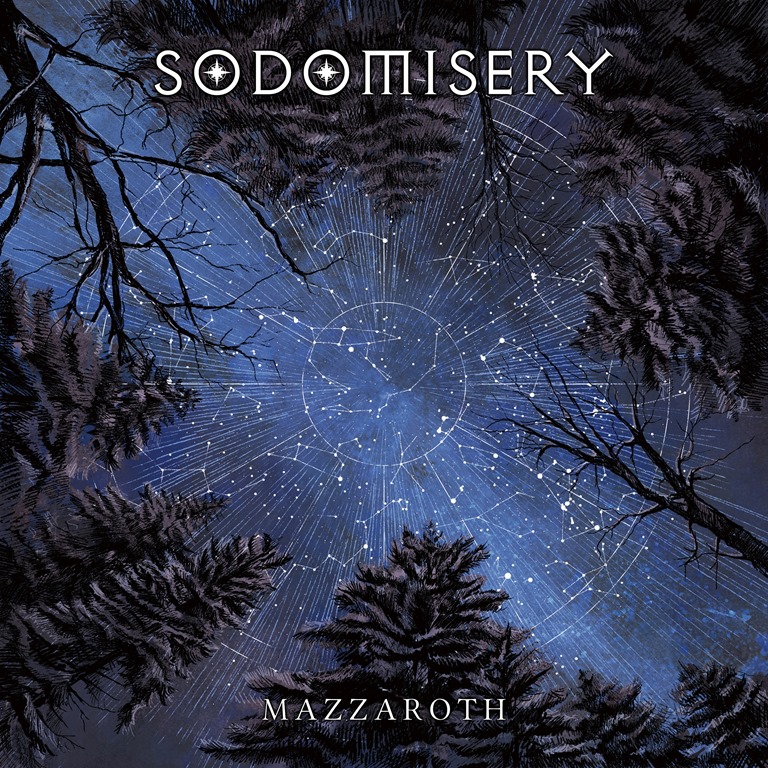
‘We are living in troubled times and it is hardly surprising that this is reflected in any form of art including music. On Mazzaroth, Sodomisery have spun a dark lyrical yarn about mental illness in society, religion, and the struggle of the individual, which is running like a red thread through their sophomore full-length. The Swedish melodic death four-piece are underlining their loosely conceptual approach with a remarkable musical evolution’, says the bio which accompanies this album.
There’s no misery like Sodomisery. At least, that’s what I’ve heard. For reasons I haven’t explored, while society has progressed – and I do mean this broadly and generally, being most aware of the fact that homosexuality and many things more widely accepted remain not only illegal but subject to severe punishments in a large number of countries – the word ‘sodomy’ carries brutal connotations which continue to hold currency in the circles of the
blackest of metal and industrial and power electronics. It’s true that Whitehouse’s Erector (with its blatantly unsubtle ‘cock’ cover) was released in 1981 and things have moved on a bit since then, but how much? Many of these bands are, as far as I can discern, less concerned with contemporary perceptions of anal penetration, whereby in permissive western society, it’s generally accepted regardless of sex or sexuality, and in pornography, it’s more or less considered essential, and more preoccupied with the harsh, perverse connotations of the writings of The Marquis de Sade – one of the few writers whose work still has the capacity to truly shock. And in this context, sodomy connotes the worst of sexual tortures, the infliction of pain, a statement of the ultimate power dynamics. It all seems appropriate given the band’s objectives.
This album had an interesting evolution, too: ‘When all the new tracks were written and pre-produced, SODOMISERY decided to create two versions of the album. One mix included keyboards and orchestration, while the other version had no such additions. After an extensive period of deliberation and many listening sessions, the Swedes decided that the new dimension and cinematic feeling added by the keyboards was exactly what their songs needed.’
Without hearing the two versions side by side, I’m in no position to comment, but the fact of the matter is that the keyboards certainly have not transformed this into some twiddly prog-rock effort: instead said keyboards are low in the mix but serve to fill out the sound with elongated droning tones against the relentless, thunderous fury of frantic fretwork and double-pedal drumwork that’s faster than the eye or ear can process.
There are some moments of such tunefulness that one has to take pause and breathe for a moment. We’re not just talking clean vocals or tuneful; there are moments, albeit brief, of outright pop sandwiched between the furious rage and overloading distortion. But rather than diminish the album’s power, I find myself respecting the band all the more. To have a softer breakdown in a song is one thing: to be so unashamedly clean and crisp and tuneful is bold.
‘Delusion’ balances all of the various elements nicely, coming together to forge a blasting yet grand and graceful dirty monster of a track which even packs in a heroic guitar solo near the end. Juvenile snickering ensues here with ‘A Storm Without Wind’, and I know it’s not funny and the delivery is entirely serious. Not least of all the lung-ripping bass that prefaces the throat-ripping vocals which snarl over guitars which alternate between old samples and snippets stolen from the present.
It feels scary, like being left alone on a platform and staring into the abyss. Any minute and it could retreat, and leave you falling into the void, and on the evidence here, you’d incinerate in seconds. Ultimately, we’re all scared. Mazzaroth is a worthy soundtrack to that fear.
‘A Cabin In Montana’, the glacial third single from Hexvessel’s Polar Veil album, is a paean to radical environmental advocacy and unflinching nature worship. Speaking to a “deeper sense of belonging” in the wilderness, ‘A Cabin In Montana’ draws from the eternal well of early nocturnal Black Metal, combined with hypnotic ritual chants and hypnotic synths and Hexvessel’s timeless themes of nature mysticism.
Main man Kvohst explains “You should all open this symbolic letter from a cabin in Montana. Step outside and get a deeper sense of meaning. Only then will life begin anew.”
Watch the new video, suitably cobbled together from vintage footage taken from Canadian adventurer, Tommy Tompkins’ wildlife films of the 1970s:
AA
Polar Veil is released on 22nd September (Svart Records).
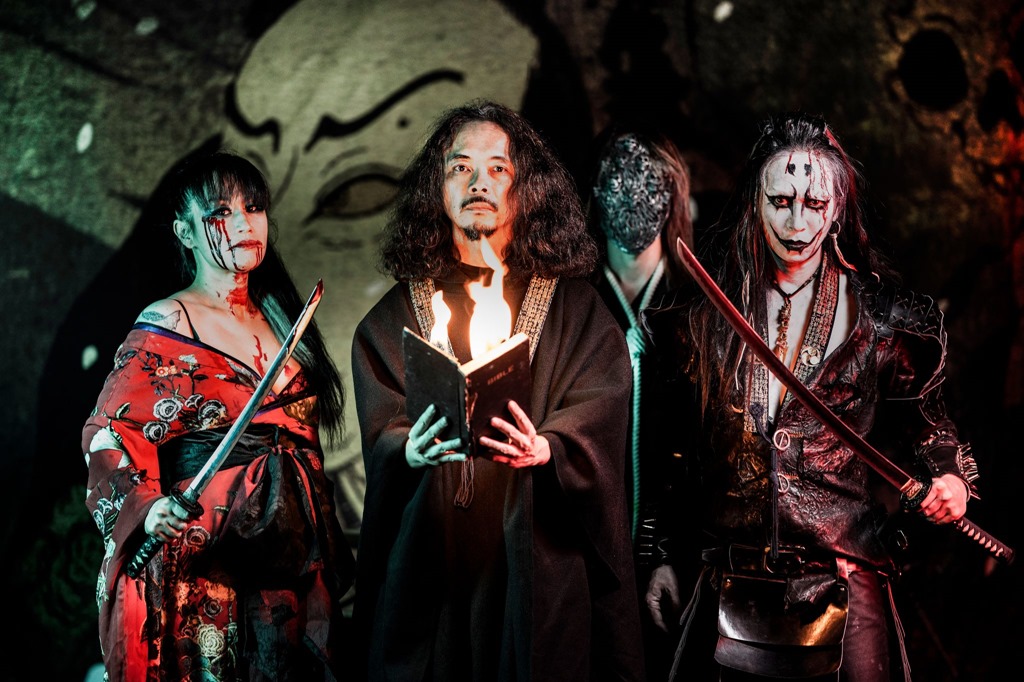
Following the announcement of the band’s new live album, ‘Live: Eastern Forces of Evil 2022’ and first single ‘Mayonaka no Kaii’. The band have unveiled their next track to come off the live album ‘A Victory of Dakini’.
The track is taken from the band’s visionary album ‘Scorn Defeat’, which the band will be performing in full, later this year at the UK’s Damnation Festival. The track, reminds us of the band’s beginnings and explores their more primitive style that would come to progressive into the fully fledged Sigh sound we know now.
The song details the story of a Japanese goddess ‘Dakini’ that rides on a white fox, according to Buddhist religion. Kujaku-Ou is a Japanese manga published around 1988 – 1991 and in it featured a lot of oriental occultism and were often the inspiration behind Sigh’s early material. Originally Dakiki is a goddess from India that would eat human flesh, however in Japan she is considered to be the goddess of sexual lust.
Mirai elaborates below:
‘A Victory of Dakini" is the opening track of our debut album "Scorn Defeat". I believe the first track of the first album is something special for most bands, and this is true to our case, too. Of course the song is way more primitive and simpler than what we are doing today, but obviously it’s got a magic feeling, which we will never ever recapture. "Dakini" is a goddess riding on a white fox in Buddhism. I wrote this song inspired by a Japanese manga, "Kujaku-ou".
‘A Victory of Dakini’ kicks off the live performance with ominous chanting before Sigh’s signature Death Metal crawl begins, conjuring all manner of otherworldly entities. The song itself is a masterful blend of Japanese culture with angular Death Metal precision, a style that has only been improved upon with each release right up until 2022’s ‘Shiki’.
The fascination with true crime has exploded in the last decade, and it’s hard to know what to make of it. Some true crime documentaries, like Making a Murderer and even The Staircase (the 2018 one, that is) have been hard-hitting and ultimately compelling. But then the dramatisations of not only The Staircase, but also David Tennant playing Dennis Nilsen, feel like perhaps a step too far into the macabre serial killer revelry that saw bands like Whitehouse vilified in the 80s. At some point, serial killers and all the dark gruesome shit that historically was the domain of weirdos and outcasts shot into the mainstream.
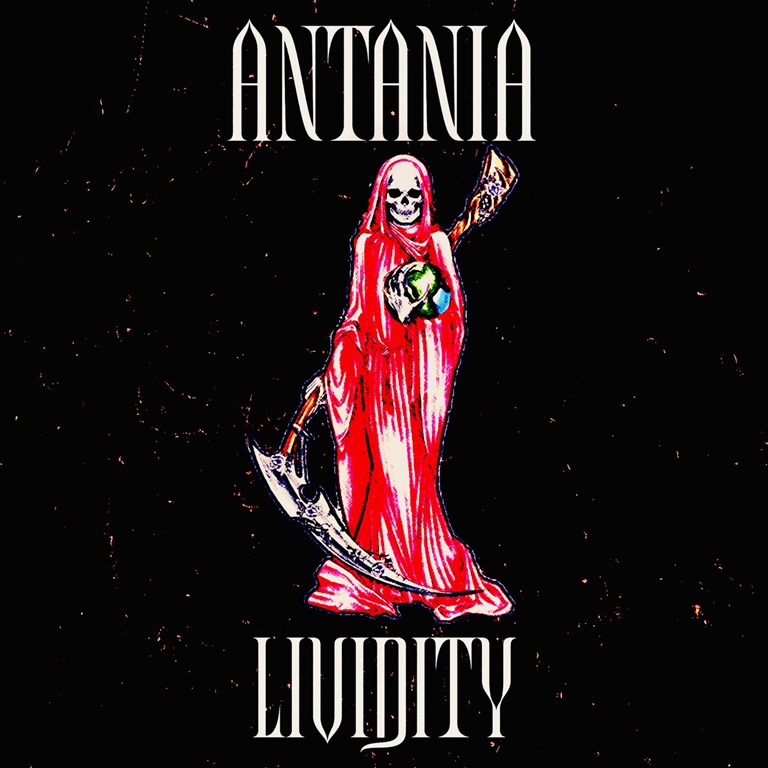
It’s a curious contradiction. While America is immersed in an existential crisis over the right to bear arms, quite literally hundreds of children and teens – and teachers – have been shot dead already this year – and bearing in mind it’s only early June it’s beyond terrifying. The anguish of killings is almost unspeakable… and yet it’s now great TV. What does that say about our society? As the accompanying notes explain, ‘The songs on Lividity were written right from true crime stories, Each song represents a true story of murder and violence as the Antania duo find their inspiration from real events.’
But then, this doesn’t have to be about sensationalism: the title of Antania’s album is pure Law and Order, and we could reasonably trace a lineage back to Ed McBain’s novels of the 60s, which saw pulp pave the way for the birth of the procedural crime novel.
And with this release, they promise a set that ‘mixes a “doom bass” sound with acid metal, for a ‘a slow, rhythmic bass-heavy release’. And that is precisely what they deliver, with ten tracks of rapid-fire drums and gnarly darkness bashing through mangled samples and snarling, swampy synths.
The samples on the first song, ‘3 Days’ are culled from recordings of Angela Simpson, who openly admitted to the torture, murder, and dismemberment of her wheelchair-bound victim: “I beat him to death… I killed him and cut him up,” Simpson told 3TV in a jailhouse interview shortly after her arrest in 2009. Hot on its dingy heels lands ‘Antania’, and it’s got that back metal sound to it, grainy, gritty, as if recorded on a 90s Walkman from the room next door.
This kind of production makes sense at times, but at others – at least for me – it doesn’t so much. Yes, to obfuscate the details creates an intrigue, and imbues the recordings with a quite literal obscurity. But if Bathory created a gnarly template that ploughed the deepest subterranean depths to drag the burning coals of Satan’s soul from the bowels of hell, most of those who followed in their grim wake have simply mined the seems of unlistenability.
The heavily processed vocals on here, which are so OTT cliché ‘scary’ that they actually emerge on the other side to be genuinely scary, are paired with swampy synths and creepy extranea. There are even some riffs happening here, as on the churning grind of ‘Angels and Demons’. It’s utterly fucked up and tormented, the sound of a soul in torture. There’s o clear indication, however, of what each of the individual tracks were inspired by. It’s a shame, because although Lividity is about the blacker than black atmosphere., given the context, it would be interesting to know whose vocal samples occupy the various songs, and which cases the songs are inspired by. I daresay there are clues for the hardcore true crime fanatics, but the rest of us would like to feel included, too.
That said, there aren’t many points of entry into what is a difficult and utterly brutal album. Every track feel like the soundtrack to the goriest, bloodiest, most brutal murder ever. Every track feels loser, slower darker, heavier, gnarlier.
‘August’ plunges yet deeper, darker depths, and Lividity just keeps on getting nastier and nastier. From whichever perspective you view it, it’s not a pleasant album: as the songs succeed one another you feel the life slowly ebbing from you, as one by one they pound away without mercy. You will it to stop, but no: Antania keep on bludgeoning away until you’re beaten, your head lolling with exhaustion.
As I felt myself being battered, tortured, by this most brutal racket, I felt myself sag, and also recalled the earlier days of the internet – specifically, the discovery of sites like gruesome.com where you could find a full reel of film of pics taken by a couple who had dismembered the body of the woman’s husband and posed the body parts to show him picking his nose and the like.
There’s little need for crime fiction when true crime is this sick, and Antania provide the perfect soundtrack to this gruesome shit.
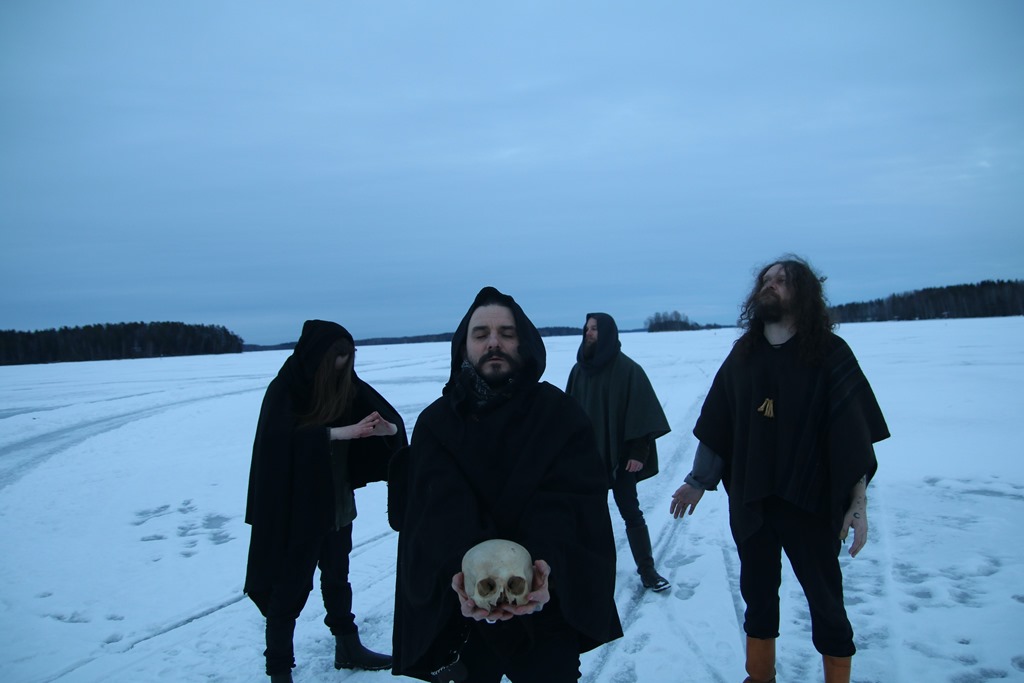
Finland’s Hexvessel return on 22nd September (Svart Records) with their sixth album, Polar Veil, a cold, metallic hymn to the Sub Arctic North. Haunted by primal forest spirits, Mat “Kvohst” McNerney summons the ghosts of his past in a jaw-dropping, unheard-of rebirth of style and sound. At once unmistakably Hexvessel, Polar Veil is also steeped in the nocturnal atmosphere of McNerney’s past, churned in the cauldron of Black Metal, Ritual Folk Psychedelia and Doom Rock, and echoing with shivering Gothic undertones.
From their inception in 2009, Hexvessel, created by Mat McNerney as what he described to Decibel Magazine as “a free spiritual journey and a musical odyssey with no boundaries”, have captivated audiences and listeners with their evolution.
Holed up in a home-made studio in his log cabin during the winter of 2022, McNerney drew on all the fundamental elements of his music career as a shamanic shapeshifter, with only the isolation of nature’s solitude as inspiration. Painting an aura with Polar Veil which resonates with solitary reflection and themes of personal spiritual transcendence, Hexvessel’s new album is a bold statement from an artist who continues to reinvent and explore nature mysticism through music.
“Nature represents freedom, darkness and the call of the wild. Black Metal has always been at the borders of my sound and playing, at the heart of everything I do. Tradition, nature, ritual, mythology, mysticism and philosophy, along with clashing and jarring chords have always been synonymous with Hexvessel. It was natural with Polar Veil, finally now as we reach the zenith of the journey, that these influences surface to the human ear, and with the freezing cold guitar sound that the climate here demands.”
A track such as ‘Crepuscular Creatures’, with unhinged, discordant guitar chords, as bassist Ville Hakonen’s hand snakes up and down the frets, is at the more avant-garde end of the album. Long term drummer Jukka Rämänen thundering the toms like never before, as McNerney croons Scott Walker-esque lyrics, somewhere between Edith Södergran and Ted Hughes.
Whereas ‘Listen To The River’ with its ominous M.R James/Folk Horror lyrics of perilous environmental warning, featuring Ben Chisholm main collaborator and multi-instrumentalist with Chelsea Wolfe on lush, haunting keys and strings, could have appeared on Hexvessel’s sophomore album No Holier Temple, albeit with a sound of that era, progressing out of Folk.
Polar Veil features Nameless Void from Negative Plane, performing the guitar solo on the song ‘Ring’ and on ‘Older Than The Gods’, Okoi from Bølzer provides guest vocals. At first an unlikely partnership but one that makes total sense as the album deepens, and threads can be drawn that reveal the place Polar Veil is coming from.
On the process of recording Polar Veil, McNerney explains:
“I built a studio at home in the log hut on our field, surrounded by large trees, called Pine Hill, to escape from everything and everyone. Polar Veil is what a spiritual home sounds like.”
When the components of the medicine are familiar but brewed in a completely novel concoction, the resulting side effects can be deliriously intoxicating. Peer behind this Polar Veil for a breath of fresh tundra air with the video for Hexvessel’s new single ‘Older Than The Gods’. Watch it here:
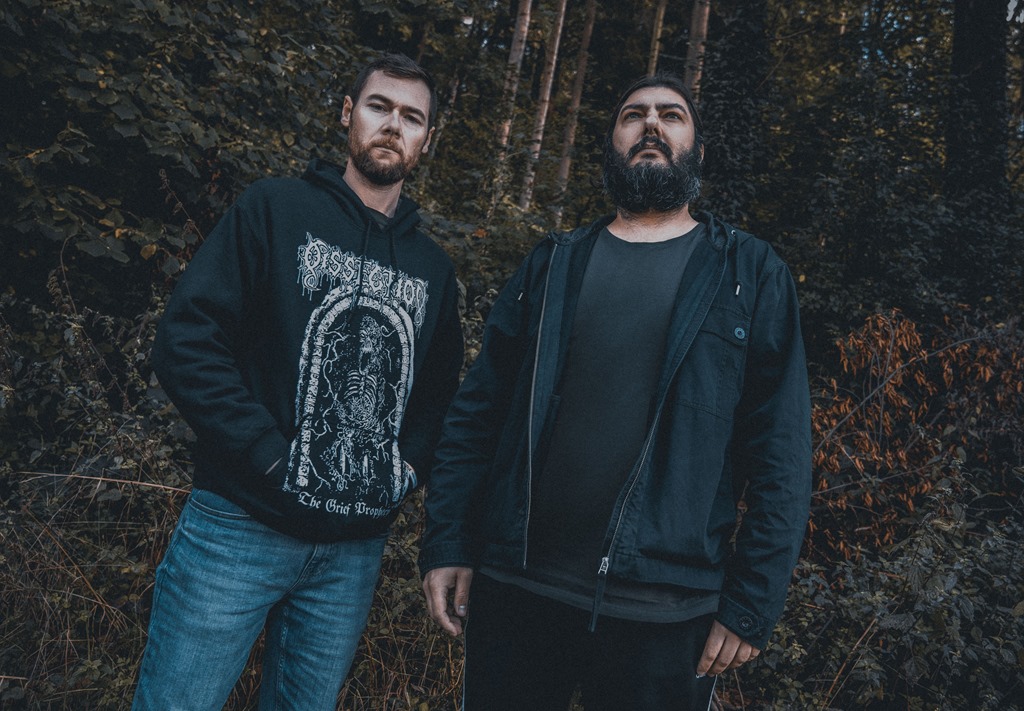
Austere are back. The Australians return with their third album – and they are as laconic and without any pretensions as when they went into extended hibernation after the release of their sophomore full-length To Lay like Old Ashes in 2009.
Entitled Corrosion of Hearts, the new tracks stay true to the path that Austere have carved for themselves out of solid black metal bedrock. The multi-layered and harsh yet often dreamlike guitar tapestries woven by Mitchell Keepin are complemented by the emotive drumming of Tim Yatras, who also contributes keyboard splashes and cinematic soundscapes. Both also contribute vocals that cover the full spectrum of their genre and range from throat-ripping growls via desolate screams to clear voices. In the typical manner of these Australians, their songs are still meandering, flowing streams of musical thought of epic proportions.
The sonic heritage of Austere is apparent. Their inspiration derives from the early Norse black metal scene and its depressive offspring, but also stretches further to the gentler and more emotional approach of blackgaze. Despite or maybe even because of the width of the influences, the Australians have found their own answers to the musical paradox inherent in this style, which is both fast and slow, aggressive and melancholic.
On Corrosion of Hearts, Austere ‘s brand of black metal has evolved into a more mature and defined form of expression, which is hardly surprising as both musicians were active in other bands during their hiatus. The duo also took more time to craft their new songs into exactly what they were supposed to sound like than before. With greater experience comes more determination.
As a taster, they’ve unveiled ‘A Ravenous Oblivion’.
After unveiling two singles of ‘Bortgang’ and ‘Tilbake Til Opprinnelsen’, Norwegian black-metal band MORK deliver a stunning video for ‘Forført Av Kulden’ to celebrate the release of their new album Dypet which is out now on Peaceville.
You can check out the video here:
Thematically, ‘Forført Av Kulden’ deals with the beguiling force of the cold, often portrayed as an omnipresent character within the world of Black Metal and a look into the natural beauty in death. On the single our protagonist enters a trance-like state to wander the forest and eventually freeze.
The song is also accompanied by a striking video, directed by Trond-Atle Bokerød, which echoes the primordial allure of nature, synonymous with the Black Metal subgenre, whilst exploring the unforgiving winter that is the song’s subject. After a veil of synthesizers are lifted MORK’s signature Black Metal tonalities are revealed for a mid paced rhythm that eventually gives way to Eriksen’s signature vocals and lachrymose lead lines.
Regarding the track Thomas Eriksen had the following to say:
“Forført Av Kulden’About being seduced into the cold hard weather outside by an unknown force. Wandering into the snowstorm at night and ending up freezing to death. It depicts a somewhat glorified theme of death as a beautiful and unavoidable thing.”
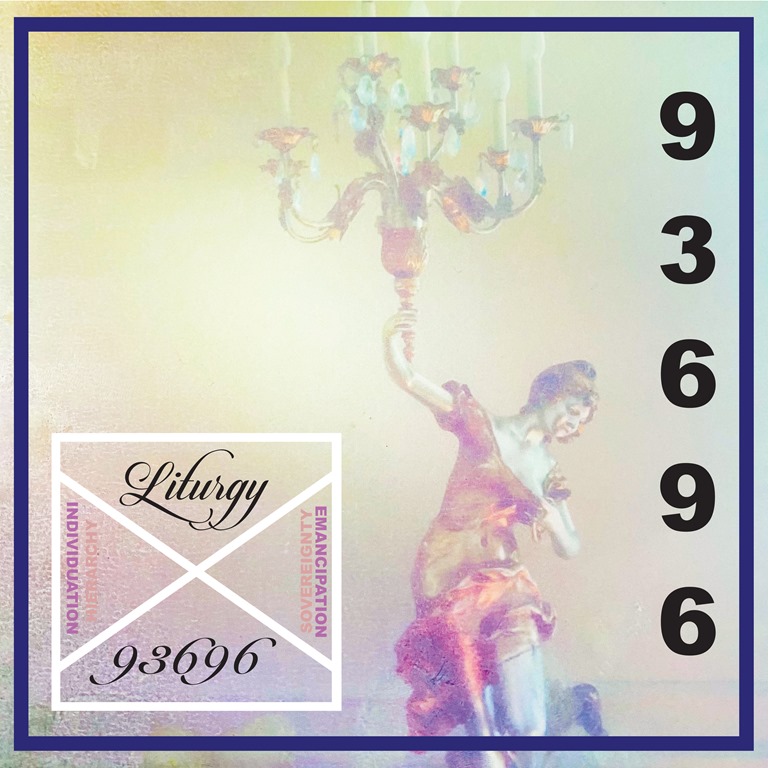
Wikipedia, and most other sources for that matter, will tell you that ‘Liturgy is an American black metal band from Brooklyn, New York’. The band’s own bio, which explains how their brand of ‘“transcendental black metal” exists in the space between metal, experimental, classical music and sacred ritual’ and that ‘The band is simultaneously a platform for fine art and theology’ is rather more illuminating in explaining how they have vastly expanded their horizons and those of the genre to create a form which is truly unique.
93696 is very much a concept-based work, which is best explained by quoting: ‘93696 is a number derived from the religions of Christianity and Thelema, a numerological representation of heaven, or a new eon for civilization. Hunt-Hendrix composed the album as an exploration of eschatological possibility divided by the four “laws” that govern her own interpretation of heaven, “Haelegen”: Sovereignty, Hierarchy, Emancipation, and Individuation. These laws constitute the four movements of 93696 which act as dramas all their own within the framework of the record.’
And what a record. ‘Epic’ barely touches it. It’s immense in every way, not least of all duration, with fifteen tracks spanning the best part of an hour and a half, this is expansive on a scale akin to SWANS (who they’ve previously supported). It’s also every bit as dynamically charged as latter-day SWANS albums, with tracks anything up to a quarter of an hour in length powering though a succession of crescendos, via sweeping choral soundscapes.
‘Djeennaration’ packs everything in early, presenting eight-and-a-half minutes of frenetic fretwork and thunderous percussion, over which vocals switch from angelic to demonic and back in the blast of a beat. It’s powerful, and quite bewildering in both its force and cinematic scope.
Done differently, this could feel overlong and pretentious, but the execution is so precise and the great ambition so focused on realisation that everything feels remarkably organic and despite making gigantic leaps between passages, changing tempo and tone here, there, an everywhere, it flows. Shuddering slabs of power chords that crunch like quartz while blasts off pure noise tear the air, but as ‘Haelegen II’ shows, with the incorporation of piano, there’s so much more texture and detail than plan fast-as-fuck fret attacks – then, from out of nowhere, things take a turn into folksy post-rock.
The savage squall of ‘Before I Knew the Truth’, released as a single a few weeks ago distils the potent force of the entire album into four and a half flooring minutes. There are some brief – and strange – moments of respite, such as the quavering woodwind tones of the brief interlude that is ‘Red Crown II’ and the delicate keys of ‘Angel of Emancipation’, and they’re most necessary, as the majority of 93696 is a force beyond nature.
The fifteen-minute title track is nothing short of an absolute monster, and as much as it’s n obliterative squally, it’s also a dynamic and wide-ranging sonic and cerebral experience, culminating in a vast orchestral sweep that’s nothing short of stunning.
This does feel very much like an absolute pinnacle and a definitive and exhaustive – and, it has to be said, exhausting – statement. Transcendental indeed.
 Aural Aggravation