Posts Tagged ‘Ambient’

Guide to Saints – SNT016

Christopher Nosnibor

The opposite of contrast. Absolute sameness. White on White, as a concept in visual terms, suggests invisibility. A white object in a white room, or a white brushstroke on a white background is ultimately camouflaged. However Dulux may sell it, white is an absolute. How does this translate to a sonic palette? An Infinity Room (AIR) is the vehicle – or durational sound project, if you will, of Australian artist and composer Julian Day. White on White collects three pieces

‘Intercessions’ takes the form of a continuous mid-range drone. It has a duration of 45 minutes. Three quarters of an hour. Listen to the tone… marvel at how it remains the same. Or does it? Just as the mind struggles to process images passed by the eyes when starring at a vast expanse of nothing – of white on white, or the imperceptible changes in colour as paint dries – so the messages from the ear become subject to the introduction of aural mirages when presented with a single, unchanging sound, or a sound which changes so gradually as to effect unchangingness. The pitch does, indeed, change, and additional layers are gradually phased in to bring new depths and dimensions, as skipping back and forth along the track at random renders clearly apparent. But being so, so gradual and so, so slight and subtle, the changes are imperceptible in real-time. The album’s shortest track at a mere seven minutes, ‘Rhetoric’ is also the most overtly rhythmic, the intertwining piped notes interweaving to render a dainty melody. But it’s more about the interplay between the notes and the way they interact in the air and in the ear than about making musical entertainment.

‘Void’, here in an edited form and with a running time cut down to twenty-seven minutes pulses gently for is duration a single note, throbbing for an eternity eventually graduates to a widescreen wavering drone, the texture and tone of which slowly changes, but again, slowly, so slowly.

White on White is an album which is likely to test the patience, and equally, the mental equilibrium. Focus on it too closely, it becomes tedious and frustrating. Focus on it too little, and it’s hard to appreciate its infinitely subtle progressions. Find that interzone and you’re in a place where its presentation of nuance upon nuance makes sense. Don’t force it, embrace it.

https://player.vimeo.com/video/102786092


Infiniy Room - White on White

Gizeh Records – GZH68 – 2nd September 2016

Christopher Nosnibor

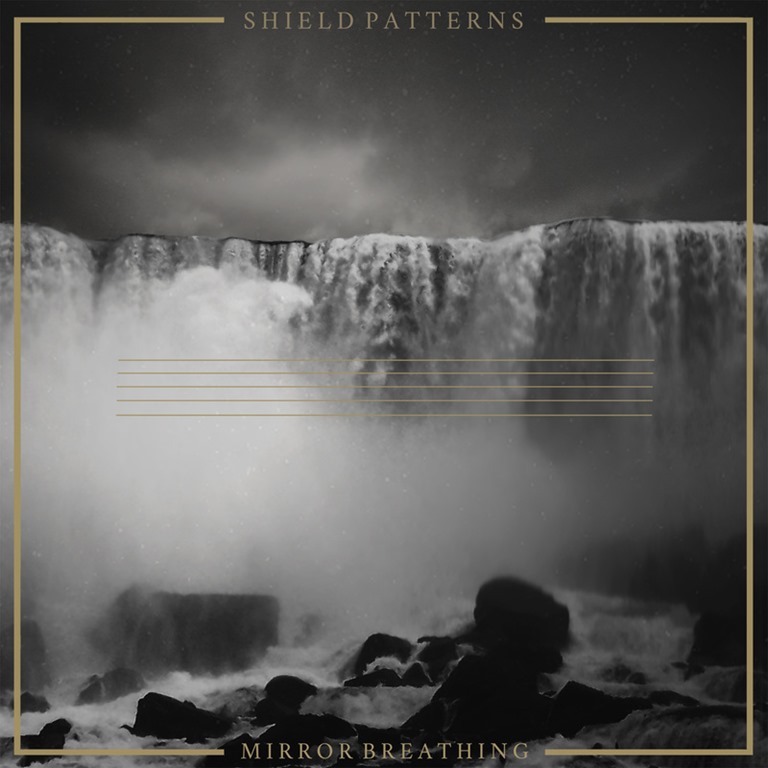
Richard Knox’s musical career is marked by works which are ponderous and atmospheric. Howeevr, his latest venture in colaboration with Claire Brentnall, is distinguished by a leaning toward material which feels more focused, compositionally, and more direct. It’s all relative, of course, and Mirror Breathing is, as the title implies, a work which is hazy, misty, the songs grasping, just for a second, at the ephemeral and reflecting the moments back, refracted and rarefied. Following on from debut album Contour Lines (2014) and 2015’s Violet EP, Mirror Breathing marks a step further into dark pop territory, although dark is indeed the operative word here, and it’s clear that in Brentnall he’s found the perfect collaborator: a person with not only an amazing voice, but an equal understanding of what it takes to forge ponderous, nuanced, atmospheric music. It’s not a matter of drawing out which each brings to each composition: Shield Patterns are built on collaboration and intuition, more of a case of a creative space emerging from a collective ‘third mind’ than the simple coming together to two musicians. 

The musical backing the pair create is atmospheric, and captures elements of light and shade which contrast magnificently; dark, rumbling low-end and industrial scrapes are tempered by ethereal ambient sounds of indeterminate origin. Claire Brentnall’s breathy vocal hangs, spine-shiveringly, over the drifting soundscape. The whole production is draped in a soft-focus feel, a mist which partially obscures the shapes and forms and renders them vague, unfamiliar and ambiguous. This ambiguity and unfamiliarity is an unsettling sensation, and while the graceful vocals superficially soothe, the emotional tension and overall sonic disquiet ultimately leave the listener pulled in different directions, peering into the shadows and wondering what lies just out of view. Arrhythmic percussion echoes in the dark, detonations which send shuddering vibrations through the ground. There’s a stark beauty to ‘This Temporary Place’ that calls to mind Zola Jesus, and elsewhere, dark industrial grumbling tremors contrast with the dreamy, otherworldly atmosphere of ‘Cerulean’.

Julia Kent is an artist who has a tendency to crop up in all sorts of places and with remarkable frequency: a respected solo artist in her own right, she is also a one-time member of Black Tape for a Blue Girl, as well as performing as a member of Rasputina and Anthony and the Johnson, he cello work on three of the tracks here adds further texture to the arrangements. Ultimately, though, it’s the balance of the instrumentation which really makes the album work: there’s a lot going on, with many incidental sounds blended in, but it’s seamless and no one aspect or sound dominates at any point.

Again returning to the connotations of the title, if the image of a steamed mirror can be read as a twist on the ‘smoke and mirrors’ metaphor, then there is an element of deception in the way the compositions seem sparse, but are in fact constructed from manifold layers which form strata of remarkable sonic depth and density. The drums may be distant-sounding and low in the mix, but they roll like thunder. In Claire’s vocals, you don’t hear every word, but you feel them. Sometimes she soars so high as to be barely audible to the human ear. Sometimes, it’s less about the actual lyrical content than the delivery, and her voice as of and in itself conveys more than mere words ever could. There’s a quality in Claire Brentnall’s voice which communicates on a subconscious, subliminal level. Her voice echoes in the recesses between the beats, drifts along, enveloped in the gauze-like textures, and occupies invisible spaces between the notes. Hers is a voice which is delicate, but by no means weak; yet the strength of her delivery lies in her ability to convey vulnerability.

From the alluring ‘Dusk’ to the dolorous chimes of ‘Blue Shutters’ and the sinister depths of ‘Balance & Scatter’ with its dark jazz intimations, via the tranquil and sedate(d)‘Sleepdrunk’, the songs conjure scenes of both anguish and ecstasy and often explore the pull of existing in both states simultaneously. Haunting, hypnotic and disquieting, Mirror Breathing is an impressive work that warrants time for thought and reflection.

Shield Patterns - Mirror Breathing

Front & Follow – F&F043 – 26th August 2016

Christopher Nosnibor

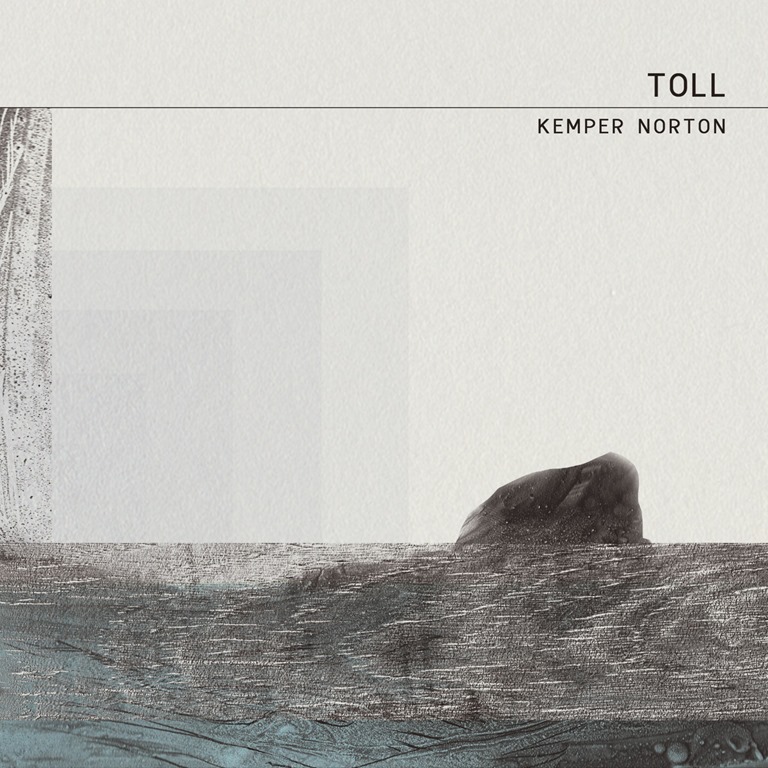
Kemper Norton’s previous releases, Carn and Loor were respectively located in specific rural locations and the city. In contrast, Toll heads off-shore, and it begins with a swell of sound as grand as the ocean, but very far from an attempt to recreate the sound of the tide, a vast, grating, rolling buzz. It soon becomes clear that this is neither an ambient album which strives to recreate and convey the kindness and cruelty of the sea, and nor is it an ocean-inspired drama (I would contend that The Christmas Tree Ship EP by I Like Trains is pretty much the ultimate in this field).

Toll is a complex work, which is inspired by – and interrogates – two very different pieces of history – specifically the lost Cornish kingdom of Lyonesse, and the 1967 sinking of the Torrey Canyon oil tanker. Both are stories set in the same geographical space, a stretch of ocean off the west coast of Cornwall. To bring together what could be considered a mythological disaster – and thus in the literary, classical sense, a tragedy – with a modern-day disaster, is a bold and ambitious project, and it’s the duality of ancient and modern which finds Toll pulling in different directions. And yet this is not an album built on conflict, but an attempt to reconcile very different histories, united by location.

Although a broadly ambient album for large segments, Toll deviates from this or any genre category frequently, and widely. Toll’s preoccupation is more with narrative and themes than with atmosphere alone, although this is not to say it isn’t a deeply atmospheric work. To this end, the album does not restrict its form to any one musical mode, and ‘The Town’ takes the form of a lyric folk song, but performed as a sonic wash that’s a cross between folktronica and ambientgaze. Meanwhile, the echo-blasted vocal of ‘Black Silk’, accompanied by a drone and distant percussion owes more to Suicide and Massive Attack than anything from the worlds of either ambient or folk. The instrumental passages hover and hum, sometimes intimating trepidation and others tranquillity, but oftentimes with darker undercurrent eddying beneath the surface.

Two-thirds of the way though the album, ‘Agnes and Louisa’ forges a deep, rumbling, rolling rhythm, a swell of sound which grates and wheezes, with electronic interventions, while the sparse, lilting electronic folk of ‘Coming Home’ is quietly menacing. The final track, ‘The Tide’ brings the album to a perfect conclusion: a magnificently balanced synergy of folk and electronica, traditional and contemporary, it builds a haunting surge of sound and emotion.

What Toll ultimately conveys, by oblique means, is a sense of the intrinsic nature the relationship between human geography and physical geography, community and place. History is every inch as integral to the shaping of a location and those who reside there as geography: past events etch themselves into the landscape and the collective conscious, however discreetly, and similarly legends are imprinted in the backdrop of local life. Toll is not an easy or immediate work, but it is one which is deeply evocative and highly thought-provoking.


Kemper Norton - Toll

Room40 – RM487 – 20th May 2016

Christopher Nosnibor

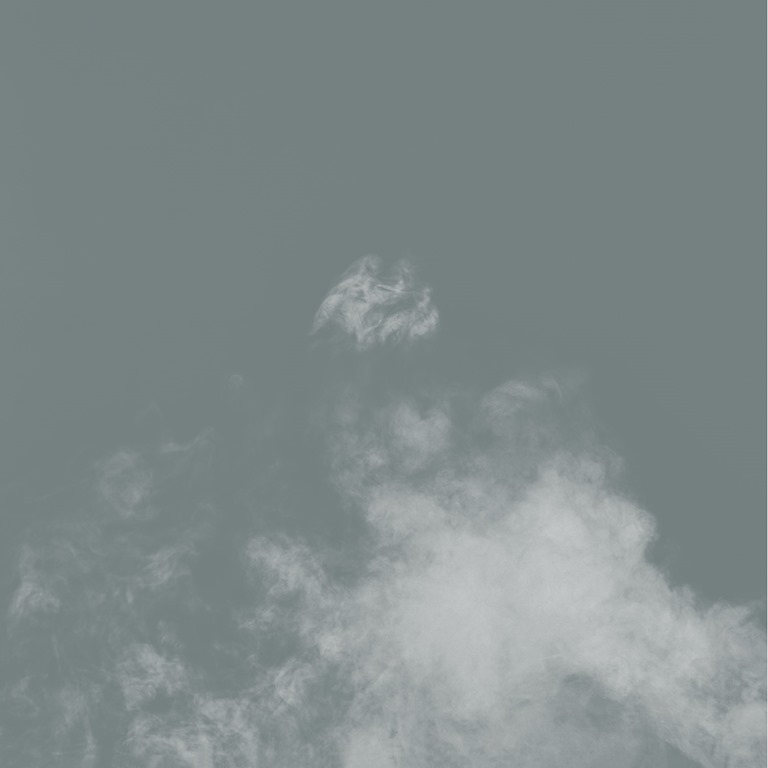
Location is a state of mind. The abstraction of the cover art – an image of clouds with the colour balance altered to give it a greenish hue – and a conspicuous absence of any text provides an indication of the contents it houses. In fact, it’s a nice-looking package overall: the back cover contains ink with only the words ‘New Rome’ and the simple but distinctive Room40 logo, both in small type. Embossed, white on white is the album’s title. It’s larger, but still easy to miss in the wrong / right light. And just as the attention to detail is what renders the initial engagement and the tactile experience special, so it is that the tactile elements of the music – the tone and texture and the significance of details all too easy to overlook while observing the bigger picture – make this album what it is.

To give some background: New Rome is the latest project from the Polish composer Tomasz Bednarczyk. He merged in the late 2000s with a succession of albums which proved somewhat groundbreaking, combining pastoral tonality with ‘grainy smears of pulse and rhythm’ and heavily imbued with a personal quality which was melancholic yet lilting in tone. Having explored other avenues with other projects, New Rome marks something of a return to this earlier territory.

The album’s ten tracks are comparatively brief, and in some respects have a certain sketch-like quality. But the fact they are brief and fade out where so many other artists would extend the pieces out for an eternity means that there’s a freshness about Nowhere: with each track presenting a different shade, texture and tone, there is a rare sense of movement about the album. Many of the soft and delicate, nebulous cloud-like drones which drift and turn are what one might call ‘conventional’ within the field of ambient and chillout music, but the undulating, interloping synth motifs and small but twitchy little rhythms give the pieces an underlying energy. ‘Venus’ hums, the note hanging for an age before flickering beats and extraneous sounds, like the wash of waves, disrupt the stillness. And yet, while the notes swell and sink, an air of tranquillity remains. ‘Dive’ is much dense, the deliberate, pulsating beats more pronounced, dominant even, but above all, Nowhere is defined by balance, with no one aspect of the sound taking primacy. And this is ultimately the most important detail of all. The bigger picture only exists because of its symbiotic relationship with the constituent parts, rendering Nowhere a magnificently realised work.


New_Rome_Nowhere

Monotype Records – mono102 – June 2016

Christopher Nosnibor

It’s been eleven years since Wolfram last released an album. But the gap between albums no longer seems to be such an issue as it was: the industry has changed and now that, beyond the mainstream, at least, labels have significantly less power, artists are generally free to release material when they’re ready. Or when they can find an outlet. Or when they have the time outside the day-job, or the funds to do it. There’s no long-winded explanation for the space between Wolfram’s releases, and ultimately, it has no bearing on the simple fact that there’s an album.

Said album begins with a long wash of sound which resembles the sea, swelling and swelling to a wash of fizz with ‘W:X:swarm’. From amidst the pink and white noise frequencies emerge small sonic details: a buzz, barely audible and yet distracting. In a sense, the importance of minutiae and detail is a key theme of the album. Small and seemingly insignificant in themselves, these features become impossible to unnoticed once they’ve caught the attention. So, the fact each track is a minute longer than the one before may not be significant in itself, particularly given that the tracks segue into one another to create on continuous track, Yet the designations of the individual tracks to correspond with sonic shifts between each passage and the increasing running times are indicative of an internal logic which overarches the album as a whole.

Beyond X (the album) being part of ‘a wider project consisting of miniCD-R, CD and audiocassettes on a special box, produced in limited runs of just 25 copies (budget is a factor, but there’s also a cult appeal in rendering work clandestine and unavailable to the masses), the significance of the album and individual track titles is not clear. But then, mystery is also part of the appeal. And of course, X is that unknown, indefinable quality.

‘exploded view’ is perhaps the strongest example of Wolfram’s interest in contrast and his ability to forge tonal conflict. Crackling static first brings light interference to tranquil drones, slowly but surely growing in intensity and volume, until an angry, angular, sawing buzz all but engulfs the soft tones beneath. ‘N:xizhe’ is a dark, sinister piece which rumbles and groans, distant inhuman sounds evoke fearful sensations as they rise and fall to silence again over a sustained, low drone. And, indeed, there is a definite progression and trajectory through the six-track sequence, with each piece being darker and more threatening, culminating in the bleak ‘Secret Humans’. Insect skitters flit across a low, undulating drone, straining mechanoid hums and grinds labour amidst the seething swarm. It isn’t human, but alien, burrowing into the brain through the ears and disturbing the cranial cavities and the ravines of the mind by pouring doubt and discomfort into every channel. It’s far from simple, but it’s highly effective.


wolfram_x_cover

Dronarivm – 18th July 2016

Christopher Nosnibor

Like most writers, and not just music journalists, I sustain myself financially with a demeaning, underpaid yet unduly stressful and arduous day-job in an office. The multinational firm who employ me, being fifteen years behind the times in terms of progressive thinking who have in the last year and a half decided halt the future is digital and that the place to pitch for market share in the coming years is on-line, have gone all blue-sky thinking and have fitted out a large rectangular room in each office with rising rows of seats, like some hideous postmodern parody of a colosseum in MDF. These ‘in the round’ meeting rooms, where the speakers stand in the middle (and consequently have their back to a quarter of the audience at any given time) have been preposterously named ‘agoras’. While throwing out quips about fluffy rabbits and jumpers, I’ve managed to decline all meetings in said room by claiming to be agoraphobic.

The reason for this preamble is that this album’s title is something of a play on words, a hybrid of ‘agoraphobia’ (a fear of public or open spaces) and the suffix ‘phone’, meaning sound. It only half works, in that phonia and phonic tend to refer specifically to speech. And, as anyone with access to a computer will likely know, ‘agora’ (in reference to either a space in an office or a word which simply means ‘public’ or ‘outdoor’) is a misnomer, in that the term ‘agoraphobia’, coined by the German psychiatrist Carl Friedrich Otto Westphal, was taken from the Greek ἀγορά, meaning ‘large public square/marketplace’ and -φοβία, -phobia, meaning ‘fear’. Still, based on the popular perception of the two terms, it makes an obvious punning sense which works in the context of what the album is about, in that it’s ‘a work which explores the relationships between people in given environments, and is specifically set in public spaces, namely the squares, or plazas’.

One might broadly classify this as a work of ‘ambient’ music, but in drawing together field recordings and manipulating the sounds and incorporating them into the rich sonic tapestry that constitutes samples and shimmering drones which form the material of Agoraphonia, Giannico and Aldinucci have gone far beyond the realms of background music and of atmospherics. Agoraphonia is a deeply evocative work, and one that requires a substantial degree of attention and focus.

Created using sounds submitted on-line, the album is a new kind of collaboration, and the end result is a work that requires attention and contemplation. Voices, passing cars and motorcycles and a low-level continuous chatter run through an indecipherable public speech seemingly made outdoors – at least judging by the trebly, tannoy echo – run through the first track, ‘Koutoubia’, as long, lingering drones simmer and eddy, building slowly in volume and intensity.

‘Plaza de Mayo’ finds the soft drones upscaled to vast, multitonal sonic washes which all but obliterate the voices audible at the start and end of the track. But this (im)balance is integral to the album’s purpose. In the world, the voice of man is not always dominant, and the relationship between human life and the environment it has created and inhabits is one which is infinitely variable and in constant flux.

There’s also the relationship between public and private, which at times is uneasy and for some extremely difficult and in some respects the recordings here are manifestations of that seemingly eternal fascination which surrounds the two states, which do not necessarily stand in diametric opposition or exist in binary formation. Giannico and Aldinucci do not offer answers here, but instead provoke thought as they lead the listener through the various locations.


agorophonia-500x500

Agoraphonia Online

Room40 – RM469 – 20th May 2016

Christopher Nosnibor

The liner notes describe Memory Fragments as ‘a collection of compositions from sonic fragments recombines, thinned, edited, rejected, re-listened to, improvised, forgotten, filtered, slowed, remembered, reworked, erased, detuned, undone, layered, cut, compressed, trashed, moved, accelerated, pasted, composed, played and exported – undergoing a slowly evolving transience and sedimentation to arrive at this fairly constant state.’ In other words, it’s a collage of fragments which have been utterly fucked about with and manipulated so as to render them unrecognisable. The notes also draw attention to the fact that as integral to the ‘finished’ work (and one must question when a work is the result of such a convoluted succession of processes, to what extent it can ever be truly considered finished) the process is, the listener cannot, and will never hear the process, and the process is something which the artist will only recall through the filter of memory.

These are extremely spacious compositions. To begin, a single note resonates…. And then silence. The notes are some twenty seconds apart. The listener becomes attentive to the silence. Gradually, subtly, but so quietly, the sounds build. The build, the delay… are these notes backwards, or is there extraneous noise loitering in the silence, which then becomes shrinking semi-silence? You listen. You need to listen. And then, to pause for thought. It’s not music to get down to, but to contemplate. It requires focus.

Elongated notes expand as they’re dragged and stretched across time and space. Heavy sounds hang and linger. The track titles are evocative rather than literal, cumbersome but descriptive. Again, some refer to the process, while others carry allusions to how either the artist feels or the sensation. ‘Built on Folds and Braids’ builds a densely-layered wall of tonalities, fizzing and hissing static tears through an ominous low-end and arrhythmic globular beats. ‘Sparseness Gave Way to Infinite’ carries the closest approximation of a tune, but it’s slowed to the point that the output is little more than a protracted groan. The thick, burr-edged electronic sawing of ‘Broadsided by Sudden Swells’ is a dank, fear-inducing sonic experience, bleak and weighty.

But with the seed of awareness sown, it’s impossible not to hear these sounds without returning to the process, and I found myself contemplating the original fragments, the source materials. Specifically, I wanted to unpick the recordings, to examine the ‘original’ Warnecke had done to them. But thinking backwards through the process only provides so much food for thought: as noted in the liner notes, the released version only represents a moment in time, a point at which the artist has deemed the material satisfactory for release. But where could the sounds be taken in future? Is this a ‘definitive’ version? What would the result have been had the project been continued? Such questions are of course unanswerable, but provide fodder to chew on while Memory Fragments unravel from the speakers to form a sonic cloud that’s almost impossible not to get lost in.


Pierce Warnecke - Memory Fragments


Piere Warnecke Online

Trace Recordings – 8th July 2016

Christopher Nosnibor

It’s virtually impossible to hear or read the word ‘Rothko’ without thinking of the abstract expressionist artist Mark Rothko – at least if you have any kind of cultural awareness. And if you didn’t immediately consider Mark Rothko on arriving here, then either kindly leave, or settle in for an education of sorts. I’d hate to be accused of elitism here, but equally, I anguish on a daily basis over the mass cultural ignorance of our supposedly educated society. Having not been taught something in school or the fact something predates one’s existence is no excuse since the advent of the Internet. ‘I don’t know any Beatles songs – they’re before my time,’ is something I hear depressingly often. They’re before my time, too, and growing up in the 80s and 90s there was no Google. Perversely, the same people who are clueless of their artistic cultural heritage know all about Star Wars and Scooby Doo and Marvel heroes created well before their time. These people are buying into nostalgia kitsch of years which predate their existence. But the chances are that while they’ll happily buy into marketed nostalgia, they won’ grasp real nostalgia or real history.

This, of course, is where the latest offering from guitar / bass duo consisting of Mark Beazley and Michael Donnelley comes in. Discover the Lost is an album out of time, and in many ways bereft of context. And yet, it’s important to orientate oneself in time and space before engaging with this album.

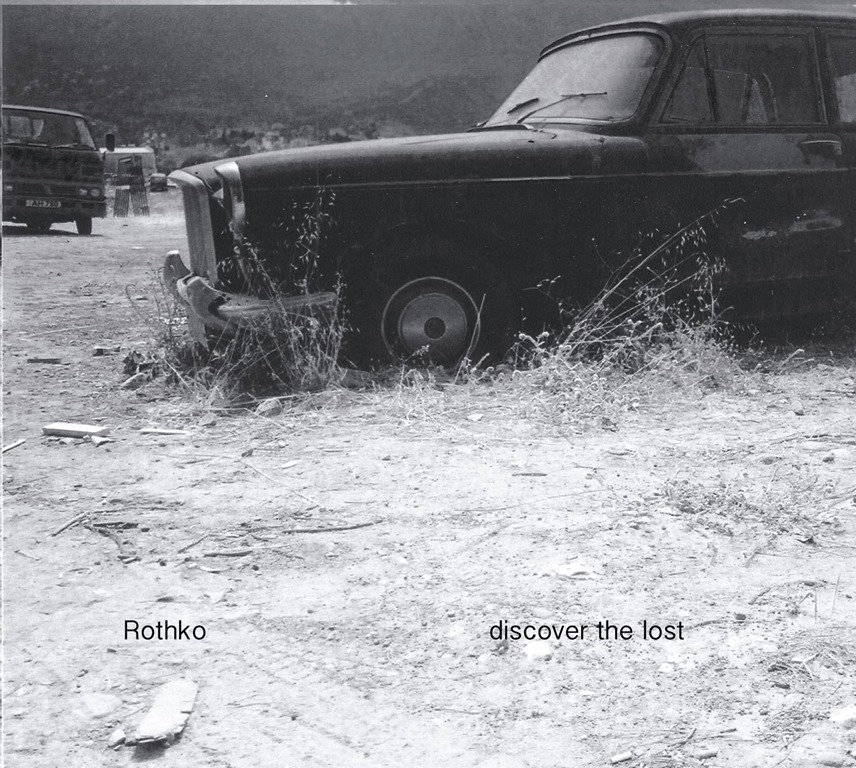
The black and white cover art is the very definition of nostalgia. It intimates the passage of time, the gradual decline of things made. The grass growing tall around the abandoned, rusted car is a representation of abandonment. Time moves on. The man-made world slowly degrades and is taken back by nature, But, during the process, the natural world is sullied by these once valued but now ugly, unwanted items, stains haunting the landscape with echoes of the past. But it’s important to distinguish between the kind of ersatz nostalgia of the mass-market, whereby the Rubik’s Cube and bigger Monster Munch are the focus of a widespread collective reminiscent sigh, and the kind of personal nostalgia which is altogether more difficult to communicate let alone package. Discover the Lost sees Rothko look beyond the consensus market-led strand of nostalgia and tap the vein of the latter in a work that’s evocative and intensely personal to the listener.

There is a grainy warmth to the instrumentation on the album’s ten tracks. The album’s intent may be upbeat, but the reflective atmospherics style of Rothkos’s music is thick with reflection, regret and missing. The analogue tonality of the guitar evokes through sound the sense of something old, worn to a deep patina by people long gone and forgotten. The music is slow, deliberate, haunting, the notes drifting into the air, carried on the echoes of empty rooms, as still as a tomb.

‘Thoughts for Tomorrow’ calls to mind the epic instrumental introduction to Her Name Is Calla’s ‘Condor and River’, but it would be erroneous to describe it as post-rock. It is, however, an evocative and subtly moving piece that resonates, and while the title suggests a forward-facing perspective, it’s nevertheless laced with melancholic retrospection. Strings sigh forlornly over ’Photographs of Then’. Of course, a photograph can only ever show the past, however recent, and often, the image only gains its full meaning or sense of place over time. Context reconfigures with hindsight. Nothing is fully fixed

The dark ambient drone of ‘Time that You Took’ marks a shift in tone. Upbeat it is not. A sinister bass prowls around ‘Truths and Signs’, before the closing couplet of ‘Way to Home’ and ‘You’ offer the light of hope.

The sequencing of Discover the Lost is integral to the listening experience: the tracks stand alone individually, but it’s only listening to them each in sequence that the full effect of the album really emerge. This is the beauty of Discover the Lost: it’s not about immediacy but a slow unfolding and realisation, the emerging discovery.


Rothko

Rock is Hell – RIP67

Christopher Nosnibor

This one’s been out a little while now but has only recently landed with me. I can’t feel too much guilt: Regolith aren’t exactly the fastest of movers, however you look at it. They’ve been going for a full decade, and despite having racked up a substantial catalogue of EPs and split releases, it’s taken until now to get around to a proper album (although, arguably, 2009’s Music for Hot Air Balloon, with its three tracks spanning a full hour, would constitute an album by most people’s reckoning). Musically, they’re not exactly about pace, either, trading in crawling ambient drone of almost incomprehensible proportions.

Their debut album proper isn’t exactly about the immediate hit, the hooks or the general accessibility, either, and necessarily requires time to engage, cogitate and digest.

I is a monster work: a double album comprising just four tracks. And the sound is as immense as the album’s duration, inching toward the 80-minute mark, with each of the tracks clocking in around 20 minutes in duration. But it’s not just about the length: feel the weight. The sounds may be produced electronically using analogue synths and a vast array of effects, and Regolith may describe themselves as ‘tech freaks’, but the material is heavily steeped in the tropes of doom. Having spent my childhood living on the flight path of the takeoff / landing of the RAF Vulcans, I feel qualified to make the analogy of the drones sounding like jet engines rumble and roar, a spectrum of lower-end frequencies that focus on the ribcage, the particle-splitting noise is also more than enough to terrorize the most dulled eardrums. ‘Platinum’ sounds like my young recollections of the Falklands War. The molecule-destroying, air-shredding sound engulfs the listener; the experience is immersive and annihilative.

‘Comet Tails’ is a far sparser affair, echoed beats decaying into the void, the space between the sounds comparable to the distance between planets. Gradually, as slowly as a planet on the outer reaches of a solar system orbits its sun, a low drone begins to rise and swell, a dark, large sonorous body of sound, a black hole cruising closer with inexorable determination. The hum continues to grow until its edges begin to distort and disintegrate and bleeds into ‘Star Trails’. One benefit of hearing this in a digital format is the two tracks do run together. Of course, the downside is simply that however enormous the sound, the full enormity can only really be conveyed via the medium of vinyl, and ideally on a decent set-up with a solid amp and some fuck-off powerful speakers. It’s an album that has the capacity to make the earth move.

The sound is more than fitting for a band named after ‘a layer of loose, heterogeneous superficial material covering solid rock, which includes dust, soil, broken rock, and other related materials and is present on Earth, the Moon, Mars, some asteroids, and other terrestrial planets and moons,’ and whose objective is to create ‘music on a geological scale; music of mountains, shifting like glaciers, slow and relentless processes on grand timescales’. The tracks on I are at once heavy on the ground, and beyond gravity, simultaneously tectonic in their movement and of galactic proportions.

Regolith

Regolith Online

Someone Good – RMSG – 18th March 2016

Christopher Nosnibor

Reading the info accompanying the album, I was relieved to learn that it has nothing to do with football. Granted, it says more about me than it does anything or anyone else, but I’ve never been a huge fan of sport. It probably never helped that apart from being quite a handy medium-pace bowler with a nifty Yorker, and a decent cross-country runner (I discovered early on that by getting a move on, I could be back in the changing rooms, showered and reading a book before anyone else got halfway round the course. I loved reading, and hated communal showers), I was shit at sport. It also happens that many of the kind of people who are big sports enthusiasts simply aren’t my kind of people, and I consider fantasy football leagues the biggest, stupidest waste of time going. But let’s not focus too much on the cover art (I’m thinking that despite Tuttle’s Australian background that it’s baseball rather than Aussie rules, but what do I know? And what do I want to know? It could be squash or lacrosse for I care. What matters is that Andrew Tuttle’s fantasy league is about a utopian environment. Said environment sets social interaction against total isolation, self-reflexivity against self-confidence.

It’s an interesting proposition, and Tuttle plays an interesting and rather unusual array of instruments in order to create the sonic structures by which to explore this concept: computer, synthesiser, banjo, and acoustic guitar. Hardly your average configuration for music making. But then, Fantasy League is not an average album, in any respect.

Broadly speaking, it’s an ambient work. Banjo and guitar are present, but woven subtly into shifting, drifting soundscapes of drones and undulating widescreen sounds. Bubbling, bleeping electronics, ripples and swishes are all fundamental parts of the album’s sonic fabric. The strummed and picked strings add a unique slant amidst the burrs of fizzing treble bursts which erupt, wibbling every which way: with hints of hillbilly blues over a static hiss on ‘Forgtten Username?’ and gentle folk motifs informing ‘Forgotten Password? before insect scutters scrabble all over and devour them, the resultant output sounds like country music from another dimension. Elsewhere, there are Tangerine Dream-like moments, notably on ‘Public League’, where multiple time signatures pulse and interweave to form a sonic latticework.

What renders Fantasy League so intriguing and compelling is the way in which Tuttle distorts the familiar: the sounds themselves are no challenge to compute or comprehend, but the way in which they’re juxtaposed and twisted together is uncanny, as if Fantasy League is a soundtrack from a parallel universe. And it sounds like a place well worth visiting.


Andrew-Tuttle_thumb.jpg