Posts Tagged ‘Ambient’

Anticipate Recordings – 17th March 2017

Christopher Nosnibor

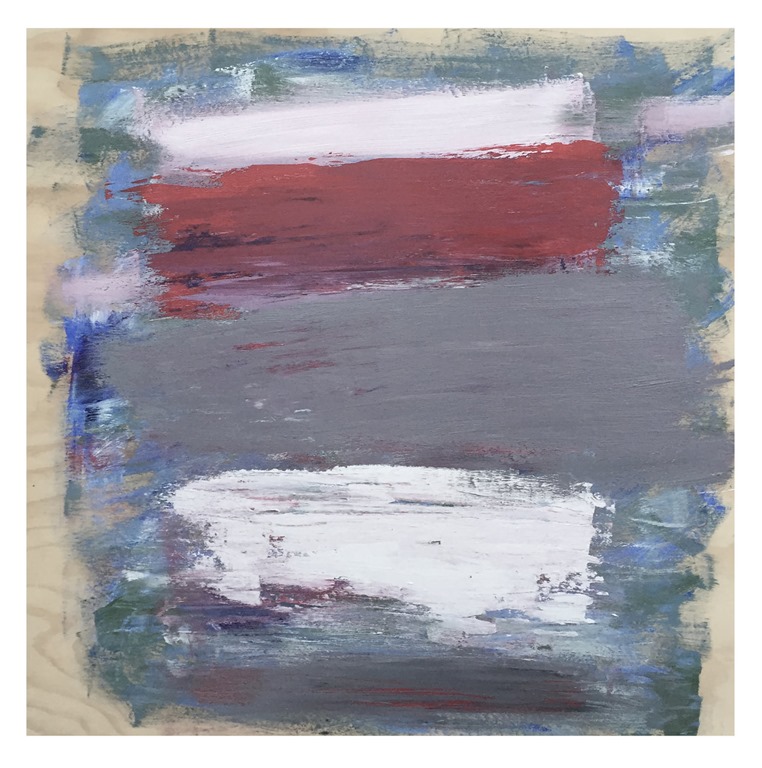
The cover art gives little to nothing away, but at the same time, it’s perhaps a remarkably accurate representation of the blurring, blending overlays of contrasting tones and textures which define the ephemeral pieces which form the abstract picture which is A Passage of Concrete.

The album pitch details how A Passage of Concrete ‘ebbs and flows across an electroacoustic narrative of fragmented memory tethered to the present moment, unravelling movement, location, distance in a story that cares about place as both texture and emotional notation. Honig’s sense of place and the way he utilises it is disparate and varied, from field recordings made in busy streets, to parks and empty apartments, via high-ceilinged spaces. One might say that  Honig is preoccupied with both sonic and psychological reverberations and resonance, and that A Passage of Concrete represents the coalescence of these things.

Scratchy and distant shuffling scrapes, flickering, arrhythmic beats provide the backdrop to a sparse delicate acoustic strum on ‘Apartment Workshop’. Steady, pulsing beats pin down the extraneous sonic ripples and segments of ambient audio captured in bustling crowds, while ‘Forest of Refractions’ wraps droning organ undulations around a glitchy beat. The mellow keys which radiate dappled light on the two ‘Fugue State’ pieces are pleasant but innocuous, and while ‘dark’ notes resonate across bouncing beats over the album’s duration, it’s not easy to get a handle on. Yet for all that, it’s not an album which possesses the deep draw of emotional engagement.

While the album’s fourteen tracks, many of which are fragmentary, and a number of which are but sketches of around a minute in duration, are exercises in the vague and the transitional, the percussion, fluid as it is, provides a certain solidity to the compositions in structural terms. The effect is to give A Passage of Concrete a greater sense of tangibility than an album which is purely abstract and ambient. As such, its capacity to connect with and conjure from the listener’s memory is reduced. It lacks that essential, if evasive and indefinable quality of being haunting and evocative. Ezekiel Honig may be a master at conveying his own mental geography, but A Passage of Concrete lacks the abstraction required to render it universal. So where do you go?

On ‘A Slow Expansion,’ the classic evocation of nostalgia, the crackle of a worn vinyl groove fleetingly emerges. I can’t be drawn. The crackle track, the ultimate cliché of nostalgia, has become Vienna: it means nothing to me, and stands as nothing more than a signifier of ersatz nostalgia. It no longer holds any emotional resonance.

A Passage of Concrete is not a bad album by any means. In fact, it’s an extremely interesting album, but one that’s difficult to appreciate on anything but an artistic or musical level. Sonically, there’s no questioning the accomplishment of the material on display. But to measure the extent to which Honig succeeds in his goal is entirely subjective: what will resonate with one individual won’t touch another. But at its best, music transcends everything: sound transcends language and sound attains absolute universality. A Passage of Concrete fails to achieve this ultimate goal of connecting the listener’s psyche through abstraction, because it feels somehow prescriptive. Honig’s structures steer the listener in the direction of his headspace rather than providing a conduit for the listener to interact fully by exploring their own. The end result, then, is a pleasurable listening experience, but one which lacks the capacity for full immersion and to truly move the listener.

Ezekiel Honig - A Passage of Concrete

Hallow Ground – HG1703 – June 2017

Christopher Nosnibor

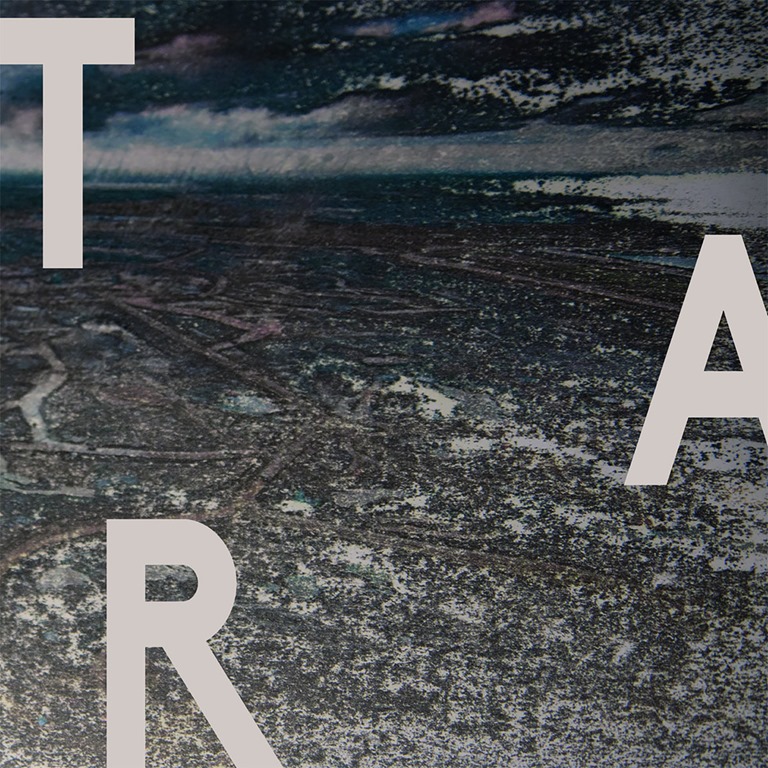
TAR is the fourth solo album by Tehran-based composer Siavash Amini, although he’s joined by Pouya Pour-Amin on electric double bass and Nima Aghiani on violin. Not that the individual instruments are readily recognisable in the thick sonic swirls which combine to forge the ever-shifting soundscapes of TAR at least in the main. But when Aghiani’s violin weeps and bleeds emotive from amidst the amorphous aural clouds which turn and taper, billowing and rolling, throbbing and pulsating.

‘A Dream’s Frozen Reflection’ begins droney but gentle, but inside the first two minutes breaks into a serrated sonic tempest. Music that sounds for all the world like a circular saw accompanied by a saw played more conventionally (does anyone play the saw any more? Or has it more or less gone the way of the comb and the washboard?) isn’t an easy sell, but Amini creates an intense aural experience that immerses the senses. But for all the harsh tones, there are contrasts in abundance, and through forging a shifting soundscape, the atmosphere changes, sometimes almost subliminally over the course of the piece.

‘Rivers of Tar’ plunges into murky, dark territory, but crystalline glissandos cascade through the eddying clouds of sulphur, while graceful strings rise and sweep expansively. It’s hard to determine whether or not it really carries an emotional resonance, but as a listening experience, it’s got more than enough range and features some passages which do have that vital drag.

At times, ‘The Dust We Breathe’ is barely there, delicate contrails of soft ambience washing in and out. There are periods dominated high-volume undulations of grating, snarling noise early on, but over the course of its fourteen-minute duration, the track drifts quietly and softly into the background.

It’s Amini’s ability to manoeuvre, effortlessly and almost untraceably, the trajectory of the four compositions from head-crushing abrasion to lulling calmness which is the greatest achievement of TAR. It’s an ambient album which carries a sting in the tail sharp enough to hurt, while equally massaging the mental receptors with its delicate tones.

The extent to which TAR translates Amini’s desire to explore ‘the fragile tensions between and individual and collective subconscious’ is largely irrelevant: TAR is an unexpectedly dynamic work, brimming with texture and contrast.

Siavash Amini – TAR

Front & Follow – F&F046 – 1st September 2017

Christopher Nosnibor

Having followed Mark Kluzek’s Doomed Bird of Providence for some time now, I was keen to hear the latest instalment. Over the last six years, he and his collaborators have produced a series of concept albums centred around Australian history, all using the medium of dark folk with heavy echoes of Nick Cave. Burrowed into the Soft Sky is very much an album devised as being suited to a vinyl release, and is perhaps the most challenging Doomed Bird release yet, consisting as it does of just two tracks each with a duration of some twenty minutes. While still pursuing what the bio refers to as ‘Kluzek’s obsessive and singular foray into early colonial history’, Burrowed into the Soft Sky discards the vocal element, meaning the narrative, such as it is, is purely musical.

To understand the objective and the context of the album and the individual tracks, it’s beneficial to quote liberally from the accompanying press release.

‘The underlying themes for each track are contrasting yet tie together via their historical context; a period where indigenous Australian belief systems and day-to-day lives were irrevocably assaulted. The song Burrowed into the Soft Sky is based on a passage from Patrick White’s novel Voss. The book is very loosely based on the final (and fatal) journey through the northern regions of Australia by German explorer Ludwig Leichardt. Kluzek took a passage from the book where a comet passes over and Voss, his team and a tribe of Australian Aboriginals engage with and interpret the experience until it is ‘burrowed into the soft sky’.’

How this manifests is in a piece which exits as a sequence of gradually-shifting transitions, sparse and haunting woodwind drifting across an urgent acoustic thrum, while percussion builds, and then draws back again. Around the mid-point it bursts into a sustained crescendo, with sweeping strings cascading over an insistent, energetic beat, but for the most part, it’s less about overt drama and more about the brooding. The closing segment is a dolorous fanfare, with nostalgia-evoking horns sounding out over a slow march that finally tapers to a twinkling glockenspiel that does evoke something approximating a soft sky.
Mark Kluzek- The Doomed Bird of Providence8

The press release provides the following explication for the track which occupies side B: ‘The Blood Dimmed Tide is Loosed takes a significantly darker turn shining a light on a pattern of atrocity that took place in the north east of Australia at a time where a dynamic of back and forth, invariably initiated by colonists, took place and culminating in a “dispersal” of a tribe, “by shooting them down – men, women and children, the object being to destroy as many as possible.” This is based on accounts of such events in the book Exclusion, exploitation and extermination: race relations in colonial Queensland (Raymond Evans, Kay Saunders, Kathryn Cronin). Attacks of this nature on tribes were commonplace.’

As indicated, the track immediately plunged into darker territory, uncomfortable, tense tones forging a claustrophobic atmosphere. Strings scrape like nails down a blackboard over ominous fear chords before a militaristic imperial march emerges from a tempest of percussion and screeding feedback. This in turn coalesces into a repetitious throb, imposing and intense, which bludgeons the listener’s senses as cymbals crash violently, and by the mid-point it’s collapsed into a wash of hums and drones, interrupted by clattering flickers and subterranean moans and skitters. The closing section again builds an oppressive mood, the thudding percussion partially submerged by a swell of ever-thickening noise.

A priori knowledge of the context is by no means essential to the appreciation of Burrowed into the Soft Sky. It does of course benefit the listener to have a sense of placement, but given that the correspondence between the tracks and their inspiration / meaning is far from obvious in any case, it’s an album which can readily be heard – if not necessarily ‘enjoyed’ – on its own merits. As a work which wanders through a number of instrumental musical territories, Burrowed into the Soft Sky is interesting and rewarding.
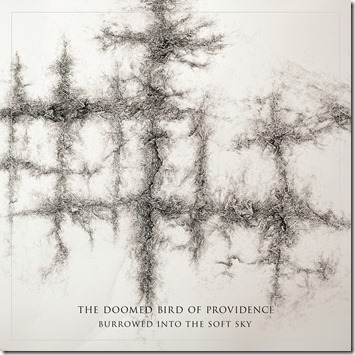
DBOP_coverFINAL

Christopher Nosnibor

Perhaps I need a break. I love music and I love reviewing it. But looking through my to-review pile and my groaning inbox, I feel overwhelmed and despondent, disinterested even. I look at the tiles and the artists, knowing instinctively that some will leave me cold and others will irritate me. Perhaps stirring my frustration with break the ennui, but it’s almost 11p, and

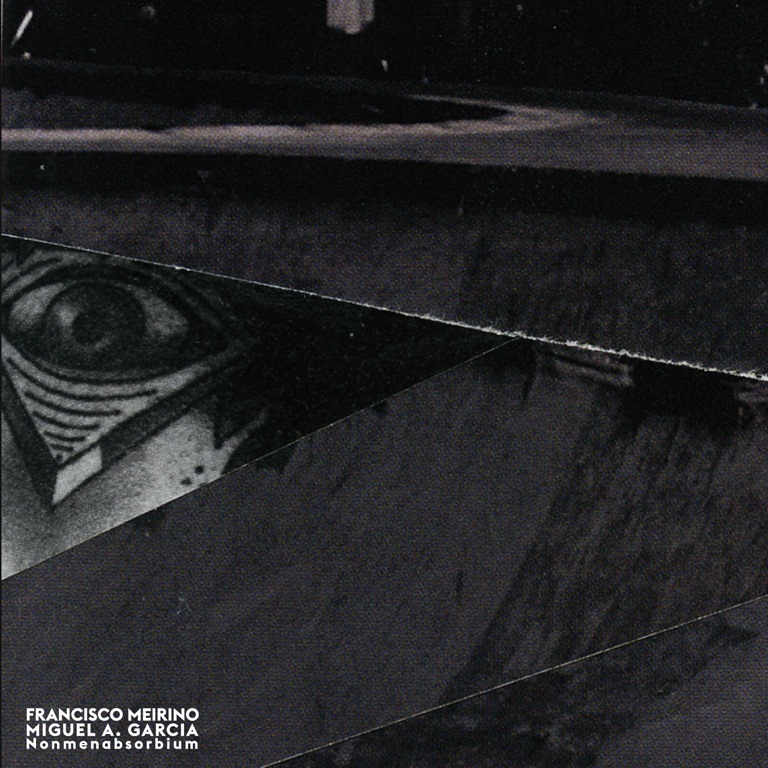
I pick up Nonmenabsorbium on a whim. The dark cover, not so much black and white as many shades of grey, from mostly within the darker end of the greys spectrum, tells me nothing. I can’t locate the accompanying press release. I’m flying blind, with only my senses and my instinct to guide me.

It’s pleasing to discover that Nonmenabsorbium contains no music in the conventional sense. No songs, no singing. No chords, no melodies, no tunes. No identifiable shapes or structures, no instruments or rhythms. Sparse, minimal drones and high-end tweets trill and hover. Thuds and thumps, sounds recorded seemingly too close to the microphone and booming through disproportionately loud against the barely-there backdrop jolt the senses. These are sounds without context and without overt structure or direct relation to one another. Often, the incidentals are disproportionate in volume to the ever-shifting grain of the backdrop, booming and crackling mic and speaker distortion as single notes ring out and resonate.

During ‘Abholicater’, the churning clatter coalesces to create a sort of arrhythmic percussive form, hammering and beating amidst a swirling swell of amorphous grey sound, which gradually dissipates to be replaced by the fizz and pop of electrostatic, shrieking diodes and the grumbling grind of low-end hum. #

‘2nd nalicii – 197degree5’ sounds very like R2D2 building for a breakdown, an electronic work based around rising frequencies which threaten to burst the tension. But it doesn’t happen. Sonar pulses radiate amidst the crackling clatter and wowing incidental of the eleven-minute closer ‘Horrorrydclowses’, as a rain of static pink noise showers down on electronic Catherine wheels. Monitor bleeps blast into cerebral flatlines amidst a relentless whupping churn and grind of static noise which owes a clear debt to the lineage which brought us early 80s Whitehouse, Prurient, Merzbow et al. Meirin and Garcia may belong to a different musical heritage, but Nonmenabsorbium is an intense sonic assault that requires a cautious approach.

The atmosphere is one of building expectation, and tension builds with the growing sense that there must be a point at which the threat of all-out noise is realised. But such cathartic release fails to materialise. Instead, the bumps and clanks are nerve-fraying after a time, and it becomes increasingly difficult to distinguish from the sounds on the disc the possibility of someone ascending the stairs, moving in the next room, stumbling around between plant pots and dustbins in the back lane or the yard outside. Consequently, the pleasure to be derived from listening to Nonmenabsorbium is perhaps a rather perverse one. Nonmenabsorbium provides an unsettling distraction, a removal from the humdrum and the sonic wallpaper of the everyday / mainstream. But, by way of escape, and also as an example of difficult but rewarding listening, Nonmenabsorbium offers an immersive and awkward sense of entertainment.

Francisco Meirin Miguel A. Garcia

Immediata – IMM010 – 3rd July 2017

Christopher Nosnibor

One track spanning fifty minutes. It’s one of those compositions which lacks explicit firm, and creeps and crawls and spreads itself like a low fog that drifts under doors and through cracks in windows. Much of The Slow Creep Of Convenience is quiet, to the point of near inaudibility. It’s most definitely background music, and ambient in the purest sense, in that it affects the mood subliminally, infiltrating the psyche almost completely imperceptibly. It is, as the title suggests, a slow creep, an album which slowly, invisibly reaches in and subtly massages the edges of the mental state, rather than affecting an overt and direct transformation.

It’s almost exactly a year since Anthony Pateras released to very different albums simultaneously, and the style of The Slow Creep Of Convenience is very different from either of those, revealing an artist capable of significant creative diversity. The Moment In and Of Itself and The Long Exhale, while contesting and in some respects complimentary, were both overtly experimental. The Slow Creep Of Convenience is infinitely more restrained, focused. It’s very much a minimalist work.

We’ve covered the slow creep, but what about the convenience? Reading this as social commentary, and perhaps as a quieter parallel to Arsenal’s Factory Smog is a Sign of Progress, The Slow Creep Of Convenience stands as a document referencing the less positive aspects of the endless tide of progress and development. Just as industrialisation heralded the onset of the modern age and a new mode of existence, which brought with it infinite benefits but also new and unprecedented problems, so the shift toward convenience, toward tertiary industry, the advent of leisure industries, heralded the arrival of the age of stress, anxiety and dysfunction. We now live in a culture of endless immediacy, centred around instant online transaction and interaction, around immediate dispatch. Amazon Prime is nothing to on-line banking and Hungry House. Everything I available immediately, at the click of a button. Smartphones may have only come to the market in 2008 – less than a decade ago – but the revolution has already happened and we’ve all been utterly engulfed by the pace of development. So just how slow has his creep been in real terms?

In some respects, it doesn’t matter: our perception of time has changed. Time is accelerating, and in the age of convenience, it’s easier than ever to evaporate time. But who noticed?

The undulating, intertwining drones and hovering, jangling, multitonal hums with the texture of dragonfly wings which forge extended passages of this multi-faceted work intimate a nagging unease, the underlying discomfort of anxiety. It’s more than difficult to pinpoint, of course: it’s simply there in the background, yet impossible to ignore.


By Norse – 23rd June 2017

James Wells

BardSpec is the ambient project / band from Enslaved composer/ guitarist Ivar Bjørnson. It’s certainly quite a departure from the snarling, gnarly but melodic metal he’s associated with. There isn’t a single bar of double-pedal bass drumming, one mangled, downtuned chord struck on a guitar with in excess of six strings.

How this actually translates is a series of compositions which incorporate electroacoustic elements for form a layered, atmospheric sound. Even so, Hydrogen is really not ambient in the strictest sense: the album’s six lengthy tracks are structured, sculpted, organised and arranged so as to be anything but background.

On ‘Bone’, a picked acoustic guitar occupies the foreground while howling electric guitar feedback hangs so far back in the distance as to be barely audible. Against bust bongos and a fleeting bassline, clouds of abstract electronic wing drift. There’s a linearity to the nine-minute piece as the percussion builds and everything layers progressively toward a rich, oceanic expanse of sound.

‘Fire Tongue builds a huge sonic cloud which drifts around a propulsive rhythm and serpentine guitar / synth motifs which intertwine to create a hypnotic, trance-like desert of sound.

‘Gamma’ is perhaps the album’s most truly ambient work: while there is a picked guitar echoing in the background it’s a piece which drifts and twists and actually calls to mind the introductory passage in the debut by The Psychedelic Furs, where the hum and circle of static gradually fade in before the throbbing bass and chiming guitars of ‘India’ kick in.

On the twelve-minute ‘Salt’, the combination of mesmeric beats and echo-soaked guitar create a deep, textured atmosphere.

This is intelligent, articulate music which explores an array of textures and styles to create a something nuanced and detailed and quietly compelling.

2LP-Gatefold-6mm-Spine

Consouling Sounds – 23rd June 2017

IIVII – pronounced ‘ivy’ as it so happens – is the musical vehicle for visual artist, multi-instrumentalist and composer Josh Graham. It’s actually quite fitting to the creeping ambience and gradually-expanding soundscapes which develop almost imperceptibly on Invasion. The bio bigs it up as being his ‘enigmatic inter-galactic solo project’, which focuses on ‘sonically engulfing and moody soundscapes, layered with a science-fiction edge.’

Graham has quite a resume: having worked as a designer and director, he has also collaborated with a variety of bands including Mastodon, Neurosis, Jesu, Shrinebuilder, ISIS and The Dillinger Escape Plan.

Invasion is pitched as a work which ‘traverses genre and explores elements of drone, classical, ambient, electronica, and vaporwave’, and it’s very much an album of tonal variety and texture, not to mention compositional and stylistic range – to the extent that sometimes one might wonder if the playlist has moved onto something else entirely.

Invasion is less a collection of individual pieces but a single set which forms an ever0shifting whole; from the lonely piano which echoes across the expansive atmospherics of ‘We Came Here from a Dying World’ through the creeping bassline and fear notes which hang hauntingly on ‘Unclouded by Conscience’, with its distant, rolling drum and post-rock intimations, and through the more overtly beat-driven.

There are extended minimalist moments, like the slow-pule hum which introduces ‘Hidden Inside’ to stark and chilling effect; the glitchy bass and glacial overtones do little to soften the icy bleakness of the funeral bells and amorphous sonic drifts which carry a chilly edge over the occasional bursts of subsonic thunder. Melodic arabesques rise from eddying pools of resonant bass hums and twirling contrails.

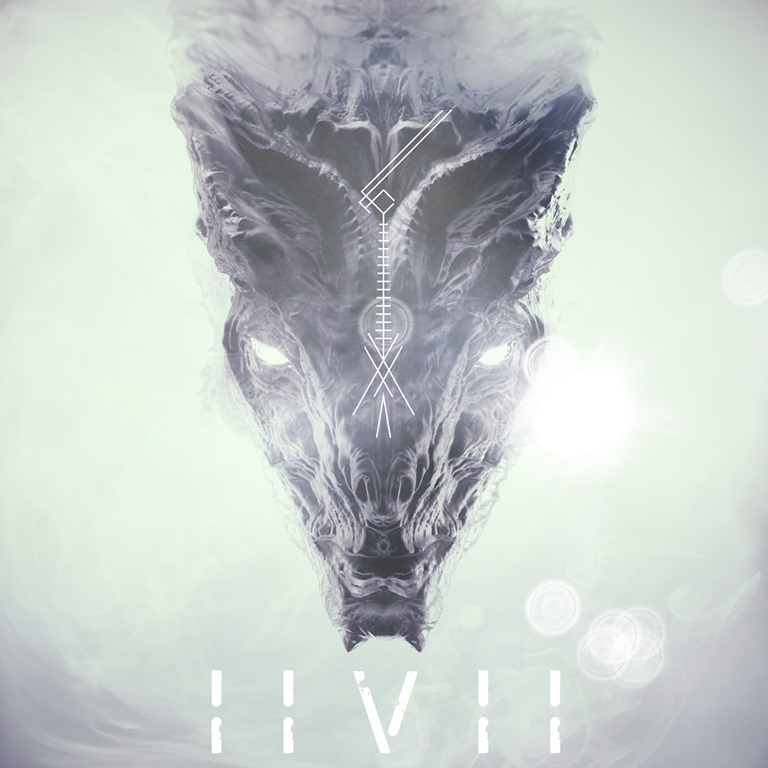
The tribal beats and throbbing synthesized bass, draped with icy synth notes, which define the dynamic drive of ‘No More Enemies’ call to mind Movement era New Order: it’s dark, detached, otherworldly, and corresponds with the album’s artwork, which depicts an invading species of alien origin (also completed by Graham, who, poignantly, served as Soundgarden’s art director at the time of the press release).

Nuanced has become one of those words, but there’s a rich detail and infinite texture to be found on Invasion that demands its application. This is an articulate, considered and meticulously-realised work which operates on multiple levels.


IIVII_INVASION_Cover_1500

Shhpuma – SS028LP

Christopher Nosnibor

Perihelion may be MIR 8’s debut, but the collective consists of respected veterans of the musical underground, with a lineup consisting of Andrea Belfi (drums, percussion), Tim Wright (computer, electronics), Werner Dafeldecker (function generators, bass) and Hilary Jeffery (trombone).

For those unfamiliar with the term, and / or too lazy to look it up, perihelion is ‘the point in the orbit of a planet, asteroid, or comet at which it is closest to the sun’. If the notion of translating the experience of such a journey into sound seems more than a challenge, then MIR 8’s approach is very much non-literal, with the album’s four expansive movements formed from spectral abstraction, leading the listener on a journey which is cerebral rather than physical.

Sparse notes chime, ringing out in the near emptiness. A mournful trombone note stretches out and elongates to near unrecognizability. This is a work of minimalism in terms of volume and spatial exploration, but in terms of things going on, a lot happens, just at distant intervals. Eerie, otherworldly notes ripple and ring into one another against indeterminate hums and drones. These are not linear compositions, the structures vague and informal and without regularity or definite shape. Everything exists within the incidentals, and everything is incidental.

The pace is sedate, but on ‘Scarborough Sky’ the various sounds rub together at an increased pace and affect a creeping tension with subtle dissonances and frequencies which touch – delicately but definitely – on the more sensitive ranges of the human ear, to discomfiting effect.

An interminably elongated note hangs through the first moments of ‘De Orbit’; subtle yet busy percussion begins to patter in the background, distant cymbal crash and as the depth of the sound builds, the effect is like listening to something very loud from a long way away. Heavy, single notes sound out like a ship’s horn from miles out to sea. At some point, the rhythm stops. Detonations rupture still air before bleeding into ‘Event Horizon’. The final track contains the most overtly conventional elements of rock and jazz, with a bas / snare beat underpinning some roaming, spaced-out freeform brass honks. But these elements by no means make for a conventional composition, as the elements exist with the sense of doing so independently of one another, before gradually being swallowed in reverb and muffling.

As a whole, Perihelion is a subtle, nuanced work. It’s distinguished by the attention to detail to the way in which the individual sounds relate to one another, and how their shifting places of divergence and convergence, create different sensations.


MIR 8 – Perihelion

SOFA – 7th April 2017

Christopher Nosnibor

I recall that in my teens, having read the word ‘ephemeral’ just once, I used it in conversation and mispronounced it, much to the amusement of one of my fellow students. My phonetic pronunciation is replicated in the title of Miguel Angel Tolosa’s album. There’s little relevance to this anecdote in the wider picture, but that’s actually the point. It was a brief moment in time, long past and irrelevant and inconsequential on every level but for the fact that it lives on as a moment of embarrassment in my memory. And herein lies the relevance. Moments only exist in the moment: any record or document of the moment may change the context, the complexion and the enduring recollection of the moment, but in the context of the ongoing continuum of time, once the moment has passed, it’s past.

There’s surely something of a contradiction in a recorded work centred around the concept of ephemerality. The very act of committing the sound to a recorded medium captures it in time, imparts a date stamp (literal or otherwise) and locks the moment for perhaps an eternity. Ephimeral exists within these contradictions. It doesn’t exactly explore them, but the compositions – individually and collectively – serve to create a fleeting atmosphere centred around transitions and contrasts.

While the majority of the album’s compositions are preoccupied with ambience – wide, sweeping sounds, building ever-shifting cloud formations in sonic form, with the threat of a storm always looming but never becoming an actuality – there are other pieces which break the mould of fleeting, fractal aural nebulousness to coalesce into something denser, if not necessarily more tangible or readily compressed into structured musicality.

The album starts dark, ‘Rio de Cristal’ dominated by an undulating low-end drone, which segues into ‘Tropismos’, on which a dark, murky swamp of sound is rent with barrages of grinding noise and attacks of snapping shrapnel akin to machine gun fire. It’s the kind of aural experience that makes the skin crawl and the nerves jangle.

Light and dark are juxtaposed throughout, often simultaneously, with menacing chords and notes which scrape like metal against fillings filtering beneath soft, expansive clouds of sound. And perhaps it’s in the experience and the sensations this music provokes within the listener that the ephemerality of Tolosa’s work is truly apparent. The listener is left chasing fragmentary thoughts and feelings, often conflicting, arising in response to the simultaneous aspects of the music.

So how does Ephimeral leave you feeling? By turns elated but tense, strained but calm, and ultimately confused and conflicted and adrift, at odds with oneself.


Miguel Angel Tolosa – Ephimeral

Svart Records – 2nd June 2017

Christopher Nosnibor

Depending on your perspective, drone metal masters Gravetemple are either a(nother) Sunn O))) offshoot, or a supergroup. Comprising Oren Ambarchi, Stephen O’Malley and Attila Csihar, the trio have many interconnecting threads, and s Gravetemple, they create something quite different – and arguably more overtly ‘metal’ than any of their other projects.

According to the press release, ‘on Impassable Fears, Gravetemple have refined and diversified their nuanced form of all-consuming, abstract death metal inspired heaviness. The essence of their other-worldly vocal exhortations, the maelstrom of frenetic beats and heavy guitar sounds are ever-present, as is the sheer power of their delivery. Yet Impassable Fears is far from unrelenting, there’s shifting dynamics, revealing an abundance of unexplored sonic detail, across all intersections, deftly balancing minimalist and maximalist sounds with finesse.’

It’s true: there is considerable range in texture and tone, and Impassable Fears is not an hour-long solid wall of excruciating noise. But there is a lot of excruciating noise and punishing volume, and the sonic density of the songs as they’re recorded is optimal for the most part.

Opener ‘Szarka’ begins by melding a strolling, subterranean bassline and blustering beat to a shattering guitar which very quickly goes sludgy, and from thereon rapidly descends into guttural brutality. Shrieking demons flee in terror at the depth of the darkness conjured by the thick, blacker than black guitar noise. Crackling distortion and scraping feedback grate against a rumbling percussive attack on the ten-minute ‘Elavúlt Földbolygó (which translates as ‘World out of Date’). A twisted mess of psychedelic metal dragged from the bowels of the earth, it builds relentlessly, growing ever louder, ever more frantic, and ever more dense over the duration.

The experimental and atmospheric ‘Domino’ offers respite, exploring a throbbing electronic ambient vein to disorientating and unsettling effect, and segues into ‘Áthatolhatatlan Félelmek’, which pulls back on the full-on aural attack, at least during the first minute or so. The track instead proffers forth a sparser, but ultimately more sinister, more subtly atmospheric vision of hell. But eventually, the rolling thunder breaks out, demonic drumming drives a searing scourge of molten guitars and a droning bass that’s so low and so thick it realigns every last inch of the intestinal tract – and then continues to twist malevolent for what feels like a most uncomfortable eternity.

The tranquility of the haunting drift that is ‘Az Örök Végtelen Üresség,’ which closes the album is welcome, but there are darker undercurrents which run through. The final notes are crashing chimes which echo into silence, leaving more of a hanging question mark rather than a resolution or serving the listener with a sense of closure and relief.


Gravetemple artwork (by Denis Forkas Kostromitin