Posts Tagged ‘Ambient’

Cruel Nature Records – 3rd December 2021

Christopher Nosnibor

It may have been the year of the Ox in the Chinese zodiac, but 2021 seems to have been more the year of the snake, especially in politics. This snake, however, is one you can trust, if only to be treacherous, particularly in winter: as the accompanying notes explain, ‘The Snake was loosely conceived as a soundtrack to driving along the mysterious, historic route through the Pennines which connects his hometown of Liverpool with his childhood city of Sheffield, and as such forms a bridge between family and friends.’ It’s perhaps not entirely coincidental that it shares its title with the track by Sheffield legends The Human League, also in reference to Snake Pass which carries the A57 to an elevation of some 1,680 feet.

Mitternacht – the solo vehicle for one of the members of Liverpool band Rongorongo – captures the mood in nine compositions, and it’s not just a linear journey, but a journey through time, with nods to aspects of the road’s history as well as it’s geography and geology.

‘The Turnpike’ refers to the original name of the pass, the Sheffield to Glossop Turnpike, and locks into a krautrock groove and it sets the tone, with some dark beats and squelchy, muddy bass frequencies along the way. The Bleaklow Bomber is a US Boeing RB-29A Superfortress which crashed on the gritstone moorland of Bleaklow, killing all 13 crew in 1948, the remains of which remain visible, and it’s a reminder that man is always at the mercy of the environment, and can never truly conquer it whatever advances are made. ‘Nowt But Horizon’ reflects the more ambient aspects of the album, and conveys the vast expanse of untamed wilderness that is the Pennines. It’s bleak, unforgiving, as stretches of the Pennine way more than abundantly evidence. The complex beats are muffled, the air deadened and murky.

Clocking in at over eight-and-a-half minutes, ‘Snowstorm’ is a real standout, flickering, fluttering synth arpeggios rippling, skittering and drifting atop deep, booming swells of bass. Retro loops scratch and cut in and out, and as the layers build, so it becomes increasingly disorientating, a kind of aural onomatopoeia.

For any vintage vibes about The Snake, there’s also a timelessness, which is never more present than in the closing ‘Temptress of the Hills’, a subtle piece that, like much of the album, is built around looping repetitions and granular textures. It’s an evocative work, but one that you can also nod along and mellow out to, and as such, Mitternacht has delivered an accomplished and accessible album.

AA

a1638021615_10

Room40 – RM4163 – 3rd December 2021

Christopher Nosnibor

Field recordings are rarely something one would consider ‘contemporary’, although if you think about it, they invariably capture a moment in time in some way or another, be it the morning of the dawn chorus or the grind of machinery which is firmly post-industrialisation; the sounds committed to tape all document history in sound.

Ian Wellman’s latest release is quite specific in its focus on present times. It is almost impossible to avoid the pandemic; it has, after all, affected all of our lives, and in myriad ways. As the accompanying text states, ‘If this past couple of years has taught us anything, it is that to hold someone closely is not something we may take for granted. The bonds of friends and of family are tenuous, as tenuous as the world that we find ourselves in.’ While most attention has understandably been given to the vulnerable, the bereaved, and the sufferers of long covid, there have been long—terms and slow-evolving effects on everyone. And this is what Wellman soundtracks with subtlety and care here.

The parenthetical ‘(Police Helicopter Activity Increased – Jul 2020)’ is brief, but it’s impactful. On the one hand, it’s a simple snippet of the sound of rotors; on the other, it’s the kind of conglomeration of low-flying helicopter buzz that makes you duck and look up and feel paranoid: police helicopters hovering or circling overhead always do, right?

The final moments of ‘It Crept into Our Deepest Thoughts’ bursts into shards on abrasive noise in the final moments. It’s on ‘The Toll on Our Daily Lives’ that Wellman really encapsulates the struggle. The first four minutes are dislocated ambience, which reflects the general sense of detachment and distance, but the last minute is dominated by a rising tide of noise, a surging swell. And it speaks because it really is the sound of swelling tension and anguish. The reality is that living through this is not something that belongs to a ‘model’, there is no fix by means of re-engagement. This resonates because it speaks to and of the building anxiety, and it builds because maintaining that level of alertness, that level of fear, actually has a cumulative effect in real terms, and we’re simply not designed to process life in the now. There is nothing normal about this, old or new, and ‘The Toll on Our Daily Lives’ encapsulates this perfectly, both in its title and the sonic smog that ambulates broodingly, again growing in density and becoming more oppressive and heavy and harsh as it progresses. You feel not only the weight, but the tension. It’s real, it’s palpable, and it’s a direct reflection of life as lived.

The interludes, too, are so very visual and evocative: a cock crows and what sounds like rainfall and passing cars crackle and splash on ‘(Ash Falling on Power Lines – Sept 2020)’ (the ash of wild fires burning), and there’s a post-apocalyptic feel to ‘(Wind Against Decaying Bus – Jan 2021)’, and they all combine to create what the blurb describes as ‘a devolving diary of unsteady moments and the assurance of change as the one constant in our collective times’.

‘As The Beast Swallowed Us Whole’ veers between ominous rumbling and near-ambience and surging, cracking textured distortion that borders on noise, and there is nothing comforting about this album. Even the final track, the optimistically-titled ‘The Light at the End’ is woozy and disorientating, and evaporates into a crackle of static that ends abruptly, and feels more like the light being snuffed out. You want to be wrong… but life… it’s a killer. Swear all you like, but whether or not it’s going to be okay remains to be seen.

AA

a0173304686_10

Despot – 3rd November 2021

Christiopher Nosnibor

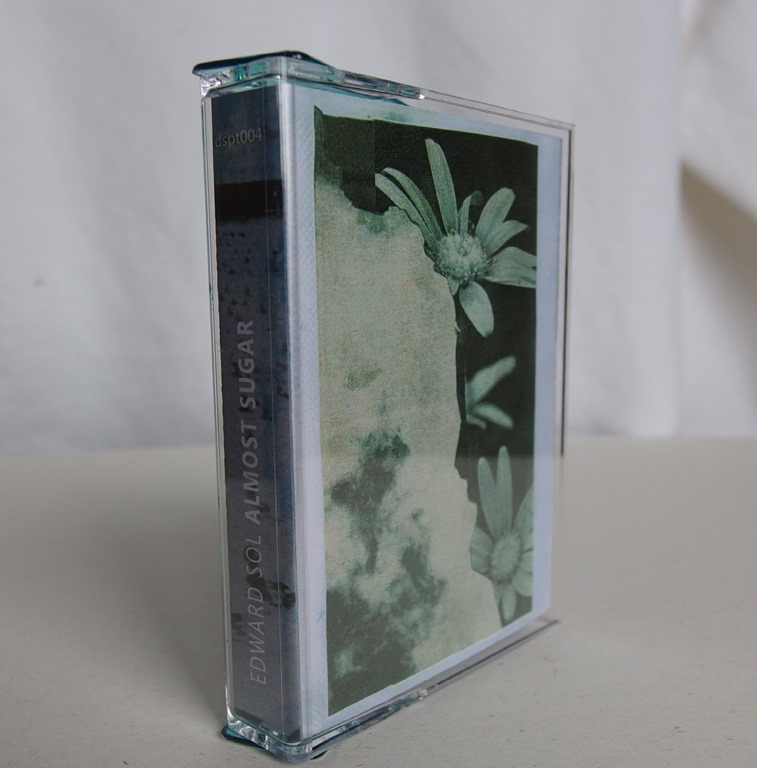
Ukraine continues to reveal itself as having a throbbing underground scene, producing some really high-quality nuggets of experimental and exploratory music. ‘Almost Sugar’ is one of those short albums, occupied with a single longform composition on each side of a cassette or 12” record – and with the wait times and increasingly prohibitive cost of producing short runs of vinyl die to myriad factors including but not exhausted by the pandemic, the cassette is becoming ever more the format of choice.

The cassette is something of an unexpected format to experience a renaissance, largely on account of some hipsterish nostalgia for a format that formed an integral part of the formative years for so many of us. It’s very much a rose-tinted hue: memes about pencils (I always used a Bic biro myself) fail to convey the anguish of a chewed tape that had spooled out, and never mind the hassle of endless hours rewinding and fast forwarding to locate specific tracks, and so on. Much of the cassette experience was centred around frustration, and it was simply something we accepted because that was the format we had, and the only recordable (and re-recordable) one at that. Still, it would be wrong to downplay the joy of the compilation (we didn’t all call them mixtapes back then). But also, there are now practical reasons for the return to the cassette as the physical format of choice, and that’s largely down to cost and availability.

However, as Neill Jameson recently wrote in Decibel Magazine, supply chain issues may soon prove to dent the demand for the cassette again, and while on a practical level, I can’t say I’m too disappointed, on a principal level, I very much am: the two sidedness of the format is closest to replicating the vinyl experience, and the limitations of length have a close relationship to duration of recordings. Format does matter; physical mediums to matter. Necessity isn’t only the mother of invention it’s also the driver of discipline. Two fifteen to twenty-minute sides require considerably more focus than a continuous seventy-two minute expanse.

Title track ‘Almost Sugar’ is fifteen minutes of bubbling analogue exportation, with a whole lot of hissing static and polytonal drones and hums combining to for a slow-twisting, heavily atmospheric work. It’s a high concept piece, constructed around the way in which the sugar crystal ‘changes its structure under any impact’. Consider this fact next time you’re stirring your tea or coffee, or tossing a couple of spoonfuls over your morning cereal, or maybe whipping up a cake batter.

‘Superdry People’, the piece which occupies side two, is darker, murkier, the sound of a slumbering beast awakening, an ominous dungeon rumble emanating from the some subterranean chamber or even the bowels of the earth. According to the accompanying notes, ‘Superdry People’ is ‘a play about «superdry people», who are heading to the pool, apparently to «soak off». Splashes of some substances, mechanisms, fragments of secular talks’, but the title simply makes me think of tossers in trendy expensive coats, and as a London-based brand feigning the exoticism of being from Japan with it’s ‘Superdry JPN’ logos and shit, it’s one that inspires ire that extends to the people who purchase their gear. I hope that this yawning sonic abyss is the conduit which will suck all the real Superdry people into its vortex, never to return. We can but hope.

But while we’re waiting for the tossers to evaporate, this is a perfect album to immerse yourself in.

AA

a0739924440_10

Cruel Nature Records – 3rd December 2021

Christopher Nosnibor

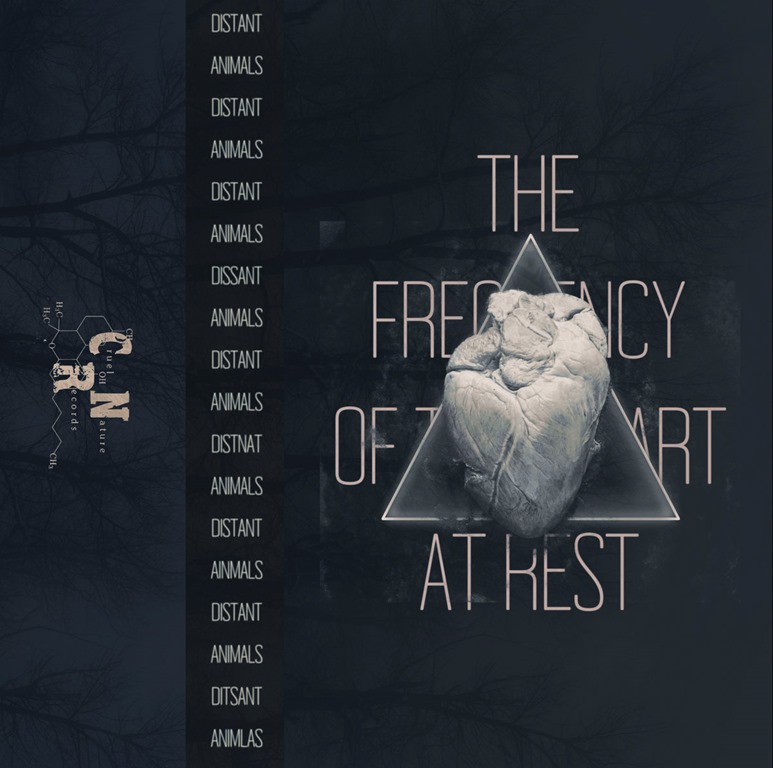
This is one of those albums where the approach to its creation is based around process and technical elements, and the title is not an abstract concept, but precisely the theme around which those technical aspects are centred. Specifically, as the accompanying notes explain, the album uses ‘a custom tuning system’ ‘based upon multiplications of the frequency of the human heart whilst sleeping’.

Or, indeed, not sleeping, as we learn of the composer’s own battles with ‘extreme sleep loss – waking as often as every 15 minutes throughout the night for a period of almost 3 years’ and how ‘the work encapsulates the haze of the perpetual tired’.

It’s relatable, as a near-lifelong insomniac myself, with my sleeping difficulties beginning at the age of five. And not sleeping is both traumatic and debilitating, and sleep deprivation can do awful things to the mind. The paranoia and hallucinations are real. ‘The Cats are Hiding and So Am I’ is a title that hints at this disconnection from the world that goes beyond the mind.

And so The Frequency Of The Heart At Rest is a curious compilation of sounds and sources, fleeting flickers of extranea in the mix beside powerful strings and dramatic drones, at times bordering on neoclassical, others something more industrial, others still folksy, and yet others still approaching ambience. In drawing on an array of sources, and then adapting and mutating them by means of overlays, adjustments of tape speed, this is very much a collage work, and the meticulous attention to detail – the way the sounds interact with one another, the slowing and the reverberations that contrive to create a rare and unique depth and density – is clearly the work of an artist who’s at once focused to the point of obsession, but also has found that point of detachment whereby the creation of such art becomes possible.

The result is incredibly powerful, in that it speaks to those who have occupied this space, where sleep and waking merge into a continuously blurry, bleary, fugue-like state. At times wistful, melancholic, or reflective in a more uplifting way, and yet at others bleak, The Frequency Of The Heart At Rest feels very much like an exploration, a work which strives to navigate this semi-real, half-lives, partially-cognisant existence.

‘6am, The Bathroom, Screaming’ is dark, ominous, heavy beats echo thunderously and captures the essence of the album, and the experience perfectly. No explanation as to why, what, if any story there is behind it, and it may be that the reason is unknown, but the piece transitions from bleak claustrophobia through a spell of ambient tranquillity before blossoming into a passage of soaring, string-led post rock with conventional percussion. The head is not so much a shed, as a cavern of chaos. The whiplash static storm of ‘The Hallways at Home’ is a synapse-blitzing crackle of electricity and fizz of pink noise over which gusts of nuclear wind drift with a desert emptiness. ‘Mealtimes at the Madhouse’ is Chris and Cosey in collision with Nine Inch Nails, a disorientating and hypnotic sketch built around a pulsing synth bass and thudding beat, while the final track, ‘Psalm of the Sleepless Child’ is an extended composition of dark shuffling and rumblings: it’s bleak, and feels very much like the soundtrack to being lost in an anxiety dream from which you can’t wake up, before veering into very different and positively Krautrock territory.

The Frequency Of The Heart At Rest is by no means restful, but is a work of rare intensity, one that prompts palpitations through its woozy, off-kilter other-worldly disorientations. It’s a restless jumble of tension and fatigue, where nothing makes sense, and it’s truly wonderful.

AA

a0578214927_10

DRET Skivor // Bad Tapes – 5th November 2021

Christopher Nosnibor

There’s niche, and then there’s microniche. Swedish cassette label Dret Skivor, this time in collaboration with Bad Tapes, present a split release that on paper doubles the audience, meaning they could probably shift a larger run. So is the run of just twelve copies of the cassette an act of wilful obscurantism? Or is it simply an awareness of market reach for what is, by all accounts, an obscure and difficult release?

Housed in some particularly (out of character) tranquil fine art depicting a rustic scene worthy of Turner, created by the ubiquitous one-man noise scene that is Theo Gowans, this collaborative effort was recorded to celebrate the midsummer of 2021 – released, appropriately just days after the end of British summertime, and also coincidental with November’s Bandcamp Friday.

Side A is occupied by ‘midsommar’, a celebration Scandinavian style. It’s not exactly a celebration in the sense of a carnival atmosphere, but it is a celebration of a momentary pause, the point at which the year hangs at its apex before its gradual retreat back towards darkness and autumn.

It manifests as fourteen minutes of ominously hovering drone during which almost precisely nothing happens. It’s ominous, and its power lies in its commitment. That is to say, it’s the Waiting for Godot of drones. Practically nothing happens. There is no discernible variation. There’s not even much to listen to for change; the texture is flat, the tone is flat. So many releases are referred to as exponents of drone, but this, this is the definition of drone. It’s not doomy, it’s not dark: it’s almost completely blank. Not so much sound pouring into a sonic void, but fourteen minutes whereby sound creates a sonic void.

Flipside ‘midsummer’ is typically Gowans; midsummer English style – some chatter over the setting up of mics and the loke, some field recording ambience, birdsong and a small choir starts things off gently if there’s a lot going on at once, and then a barrage of feedback and churning noise that obliterates everything. It gradually slides into a morass of interweaving drones that undulate and twist, with all sorts of extraneous fizzes and scrapes intersecting throughout. If ‘midsommar’ is a smooth drone, an endless stretch to a clear horizon ‘midsummer’ is an unsettled and unsettling experience dominated by disruption, there is discord and discontinuity, and a pervading air of discomfort.

Taken together, the two pieces provide contrasting perspectives which illustrate that experience is not fixed, but something which comes from perception.

AA

a1635961788_10

A Front Recordings – AFR01

Christopher Noosnibor

A paroxysm is either a fit, attack, or sudden increase or recurrence of symptoms, or a sudden violent emotion or action, an outburst.

This paroxysm – the act – consists of Werner Dafeldecker (double bass) and Roy Carroll (electracoustic media), and between them, they forge a paroxysm – the work – which is a sustained sonic spasm consisting of two longform compositions that each extend to around the twenty-five minute mark.

This is one of those works that doesn’t really feel or sound like the sum of its parts – partly because it’s difficult to disentangle precisely what the parts actually are. Especially when it comes to ‘electracoustic media’. That’s not a criticism, so much as a passing critique: this isa collection of soundscapes forged from sounds of non-specific origin. Ominous hums and drones and scrapes and hesitant feedback loops all toss and turn together to conjure an ever-shifting expanse of amorphous, mellifluous sound. Clunks and thunks and clatters provide a percussive element of sorts, but again, these sounds are non-specific in their origins. As notes hang, quivering, or otherwise scrawl and hover around certain frequencies, the way they resonate and rub against one another becomes the listening focus. Listen closely, and some notes just nip the side of consciousness, and they’re bearable until there’s a friction against other frequencies, other rates of resonance. Upper-frequency chimes and tinkles collide with lower-end clanks and thuds, the swing of heavy bells decay slowly over shivering, shuddering extranea. It’s a slow creep, and while the sound never settles, over time one grows accustomed to the whistling, the how, and the hum.

If side two’s ‘Basalt’ contains all of the same elements as ‘Tendencies’, that’s because Paroxysm is a work that’s very much focused on detail, and progressively delves deeper into it with cumulative effect. As such, ‘Basalt’ is starker, sparser, sonically harder in every sense – but particularly tonally, and as an experience. Around the mid-point things get really dark and murky, before the percussion dominates the final minutes of slashing, crashing, difficult sounds.

And this – THIS – is the point of paroxysm. For most of the album, it feels drony hummy scrapy, but it emerges climactic, dense, a physical force that is longer merely background. It comes by stealth but hits by force. Boom. Never underestimate the subtle, slow build.

AA

AFR01_sleeve

Hallow Ground – 10th September 2021

Christopher Nosnibor

Breathing is important. If this sounds flippant or facetious, well, perhaps it is a little, but there is a more serious undertone. It’s something we do subconsciously, and something we take for granted will just happen as our brain keeps the bellows pumping. We only really notice breathing when something disrupts it, it becomes laboured, or we’ve exercised hard.

And yet the importance and benefits of controlled breathing as part of meditation, for managing anxiety, and for dealing with panic attacks is widely documented and promoted. But even for those who have been taught the techniques, how often do we remember to deploy them at moments of peak crisis? Moreover, beyond those specific settings, breathing properly is something that’s chronically neglected as we slouch over our keyboards, taking short, shallow breaths that fail to fully expand the lungs and oxygenate the blood stream.

The ever-innovative and ever-intriguing Lawrence English’s Hallow Ground debut finds the composer working ‘exclusively with an organ for four compositions that are exercises in »maximal minimalism,« as their creator himself notes in a nod to Charlemagne Palestine, who coined this term.’ The liner notes explain further that ‘While it seems somewhat fitting that those four pieces based on a steady flow of air were conceived and recorded in a situation of accelerated standstill caused by a respiratory disease, the Room40 founder is not so much concerned with capturing the zeitgeist than rather incorporating the spirit of time itself. »It is a record about presence and patience,«’.

Patience is indeed required when listening to Observation of Breath. It stands to reason that there is a concerted focus on elongated, quivering drones, and the first of the four pieces, the ten-minute ‘The Torso’, with its dank, dark rumblings and extraneous interference carries sinister allusions, particularly when reflected upon in context of the album’s cover art. The torso may well house the lungs, the system of breathing, but all too often finds reference in stories of murder and dismemberment, and we’ve all wanted to strip off our own skin at some point, right?

The theme continues its trajectory in the titles of ‘A Binding’ and ‘A Twist’ which follow. These are short pieces, both sparse, droning works that are overtly organ, with the latter in particular taking the form of a gloomy funereal church recital. There’s nothing like a funeral to make you contemplate your breaths, and to consider how many you may have left in your body. Perhaps this is one of the reasons we ignore and avoid thinking about breathing: the moment we notice it, be it short or irregular, we worry, in the same way as we panic about palpitations. To become cognisant is likely to observe an irregularity, a difficulty, in a most fundamental function, and rightly or wrongly, doing so reminds us of our mortality. We hate to be reminded of our mortality: it terrifies us half to death. The irony.

In context, the album’s finale, the twenty-minute title track, which occupies the entirety of the album’s second side, on which all elements of the previous three compositions coalesce and distil into something monumental and epic. Not a lot happens: it’s simply a quavering continuum of sound that undulates and eddies slowly, unfalteringly, less like a stream than a crawling flow of larva. But to go with the flow is to fully engage with the album and its slow-shifting textures. It’s perhaps around halfway through ‘Observation of Breath’ that I finally realise I am becoming aware of my breathing at last. Conscious, I slow it, inhale to full expansion through the nose, hold, then equally slowly release out through the mouth.

Observation of Breath is a well-realised exploration of expansive territory in altogether smaller detail, and one that offers more the more you allow it to become a backdrop.

AA

HG2103_Cover_English_Final_def_def.indd

16th September 2021

Christopher Nosnibor

Instead of submitting to the endless flow of media panic and hunkering down in his house during the pandemic, Stuart Chalmers went rather more off-grid, spending the last year in a camper van, exploring the Pennines and North York Moors.

The Heart Of Nature is the last in the series of the Swarmandal-focused albums, a celebration of nature’s elements, inspired by this period of a closer proximity to nature. Stuart recounts how the experience brought him closer to ‘the natural world and its rhythms/cycles’, and given him ‘a sense that nature can be calm but also intense and full of violent energy’. He goes on to explain that ‘The making of this album through the autumn/winter with the change in weather along with my laptop dying, the heater failing and the van breaking down has been a tough experience,’, adding, ‘it’s been one of the hardest albums for me to finish’.

I’m no advocate of the training mantra ‘no pain, no gain’, but do often find – and I speak from experience here – that the art that emerges from the most challenging of conditions is not only the most satisfying to produce, but so often has the greatest impact and resonance. The heart and soul that goes into a work shines, amplified, in the output.

The six pieces on The Heart Of Nature are based on the elements and raw materials occurring in the natural world: earth, wood, metal, fire, water, air. The first of these, ‘Earth’, powerfully captures the turbulence and variability of nature, and is dominated by a grumbling, rumbling, the shuddering subterranean sound of tectonic displacement, that gradually fades as a slow-picked guitar emerges and a hesitant sun rises over a barren. Scene. Beneath the supple chimes and grating discord and scraping drones that lumber and lurch. It sounds, and feels, immense, something bigger than sound alone, than the artist alone, and it’s an intense and difficult seven minutes that introduces the landscape of the album.

‘Wood’ is more of a collection of found sounds, with animal calls and chattering birds, pattering feet, paired with extraneous sounds and a clattering, clanking beat that’s some way from nature. Things become quite tribal, the metallic chanking speaking more of humankind’s relationship with nature than of nature itself, while ‘Metal’ creeps into dark ambient / industrial territory, with ominous whisps drifting around and the clanking precision – but it’s on ‘Fire’ things intensify, with the crackle of flames yielding to the harsh clatter of industrial percussion. There are hissing surges of sound rushing like gas bursting from ruptured pipes, and it’s not until ‘Water’ that the album introduces some sense of calm following a long journey navigating troubled spaces.

This only highlights the idea behind the album, that of the violent energy of nature. We seem to have idealised nature as that idyllic country setting, as something that merely exists for our wellbeing or profit, and in doing so diminishing the forces of nature – typhoons, cyclones. tsunamis, earthquakes, blizzards, floods. We are in denial somehow over the extent to which we are at nature’s mercy. We build flood defences, structures to prevent longshore drift and the collapse of cliffs, but ultimately, we’re powerless against time and tide.

‘Nature doesn’t need us, but we need nature’, Chalmers remarks, and I can’t help but agree: nature would in fact be better off without us, and the acceleration of climate change is concrete evidence of this. If nature destroys us, it’s because we’ve brought it upon ourselves by fucking with nature – and if one thing is clear, nature will always win. Whatever damage we’ve wrought, it’s simply suicide. The planet will still exist long after we’ve vacated, long after it’s inhabitable by human life. Humanity will eventually go the way of the dinosaurs, but nature will still be here.

The emptiness of the final track, the seven-and-a-half-minute ‘Air’’ is the perfect summary. The wind buffets against everything in its way and sparse notes hang in post-rock drift. It’s a beautiful piece of music, but it’s also sparse and melancholy, and with a certain Western twang, it carries the bleakness of the wild frontiers, reminding us of the adversarial relationship between man and nature, and the need to respect the wonder.

AA

a0127569496_10

Anticipating Nowhere Records – 24th September 2021

Christopher Nosnibor

With the colossal five-volume ‘Isolation and Rejection’ lockdown compilation series and the one-off final final FINAL Front&Follow project, the compilation You Can Never Leave released in June, the eternally restless Justin Watson can put his label to bed and resume work with his current musical vehicle, the collective who operate as The Incidental Crack to deliver album number two. After all, it has been more than three months since second album Municipal Music.

The three – Justin Watson, Rob Spencer and Simon Proffitt – are still yet to meet, and their third album, like its predecessors, took form with ‘them exchanging field recordings, samples and random noise between Manchester, Wigan and North Wales’.

As the liner notes recount, ‘Detail contains within three new long-form pieces and a couple of shorter ones filling in the gaps. The adage goes that the devil is in the detail, and Detail brings exactly what the title promises, with the first composition, ‘We Might Bump Into each Other’ beginning with some muffled dialogue and an ominous hum, then hums, bubbles and slurps against a backdrop of echoic reverberations, before ‘Fish Dance Tank Track’ marks a shift in style, with more defined beats – an insistent bass bump occupies a different space from the glitchy fluttering woodpecker-type stammers and stuttering hi-hats which all make for something quite complex beneath the drifting drones and quavering hums. It’s an interesting and complex composition that brings together elements of ambient and minimal techno, and as birdsong flutters in toward the end, the piece takes on new aspects that juxtapose nature and artifice.

That the grating looping throb of the six-and-a-half minute ‘Waterfalls Per Capita’ should be considered a gap-filler is a matter of context, and it comes after the harrowing dark ambient collage of ‘I Lost It’, that is by no means a comfortable or easy listen.

The seventeen-minute ‘Morning Tram’ combines field recordings where the original source remains clear, but with subtle but insistent beats, and it’s perhaps there – the finale – that everything comes together. Fragmented samples and snippets of dialogue collide with tumbling trees and slow-turning washes of ambience to create remarkable depth. Passengers pass on and off, engines rumble past, there is endless chatter and a wall of extraneous sound. Assimilating it all may be difficult, but it’s rewarding. The beat is almost subliminal, but it’s relentlessly insistent and registers almost subliminally as the sound swells and voiced clamour and congeal among a rising tide of horns and other momentous sounds. And then it stops, abruptly.

It may be short in terms of tracks, but Detail has substantial depth – and much detail, all of which is very much worth exploring.

The Incidental Crack - Detail (cover)

‘Kalahari’ is the opening track on All Becomes Desert, an album of improvised analogue soundscapes by London based musician and composer Ian Williams that evokes the hostile beauty of the most spectacularly empty places on earth. The velvety warm, undulating tones of his Roland Juno 106 provide a perfect setting for the meditative sonic backdrop of the piece.

In regard to its video, Williams explains that “it was originally planned to be shot with a nine strong crew during a two week safari to the hostile climes of the actual Kalahari desert, honest, but due to circumstances beyond our control – scuppered by the pandemic, would you believe it – we had to improvise a Plan B, sticking a sand art picture in front of an iPad, which, we’re pretty sure, will be convincing to the vast majority of viewers. And it still looks really cool, so who’s complaining?”

Listen here:

AA

6e1a744efb1cddf29d2fbe8c84eeac4f401653ff