Posts Tagged ‘Album Review’

Rocket Recordings – 22nd February 2019

Christopher Nosnibor

Evolution – that’s perhaps the only word when considering Teeth Of The Sea. Their career is defined by it.

Their BandCamp biography gives some sense of context: ‘Since their formation in 2006, London-based Teeth Of The Sea have metamorphosized into the most adventurous psychedelic rock outfit in the UK. Taking on board influences like Morricone, Eno, Delia Derbyshire, Goblin, and the Butthole Surfers, they’ve arrived at an incendiary sound that marries the aural enlightenment of an avant-garde sensibility with the reckless abandon of trashy rock & roll.’

It was with Your Mercury that I joined the trip, sold instantly by ‘The Ambassador’ with its overloading noise intro, spiralling into a slow-paced desert rock weird out.

Each release has been different again, and so there’s nothing of that ilk to be found on Wraith, an album that’s slanted more toward the electronic end of the spectrum, although the guitars, while far from prominent, are very much integral to the texture and depth. But this being Teeth of the Sea, it’s a bit of everything all at once, and this is apparent from the very first track: ‘I’d Rather, Jack’ brings a sonorous bass and droning synth together over a thumping industrial disco beat with crashing snare that stutters and glitches all over, before jazz trumpet and a space-rock guitar fire off on different trajectories. It’s rare for such a maelstrom of ideas and forms to whip together into anything other than a horrible mess, but Teeth of the Sea manage to blend the ingredients into something far greater than the sum of the parts, the atmosphere shifting from oppressive to uplifting.

There’s some of the old Ennio Morricone vibe about the spaghetti western sunset guitar twang of ‘Hiraeth’, before snaking drums and twisted allusions to Asian musical motifs was in and out of expansive layers of brass on ‘Burn of the Shieling’.

There are hints of Tangerine Dream and expansive synthy electronica about compositions like the buoyant, spacey, retro-futurist ‘VISITOR’ and ‘Gladiators Ready’, which combines the tweeky, bleepy Roland sound that echoes Josh Wink’s remixed ‘Higher State of Consciousness’ with some gritty guitar noise off in the background. Equally, the forms belong equally to post-rock, and whereas peers Vessels have gone all-out techno and ditched any vestiges of their origins, TOTS succeed in creating the most dazzling hybrid, discarding nothing and instead assimilating an ever-widening range of elements into their work. There’s so much detail in every bar, from blurred, muttering voices buried in the mix to synth incidentals and shifting reverbs that it’s impossible to take it all in, and oftentimes, Wraith is an overwhelming experience.

The centrepiece of ‘Her Wraith’ and brief counterpart ‘Wraiths in the Wall’ explore more minimalist approaches, the forms vague and vaporous, as echoing piano notes hang in the air over mournful trumpet. Pulling back on the prominent beats and instead allowing ponderous strolling basslines to wander to the fore, they’re as intangible as the album’s title suggests.

An album this eclectic and uncategorizable rarely feels cohesive, but Wraith feels more like a psychotic mind-journey than an album. And it’s nothing short of epic.

AA
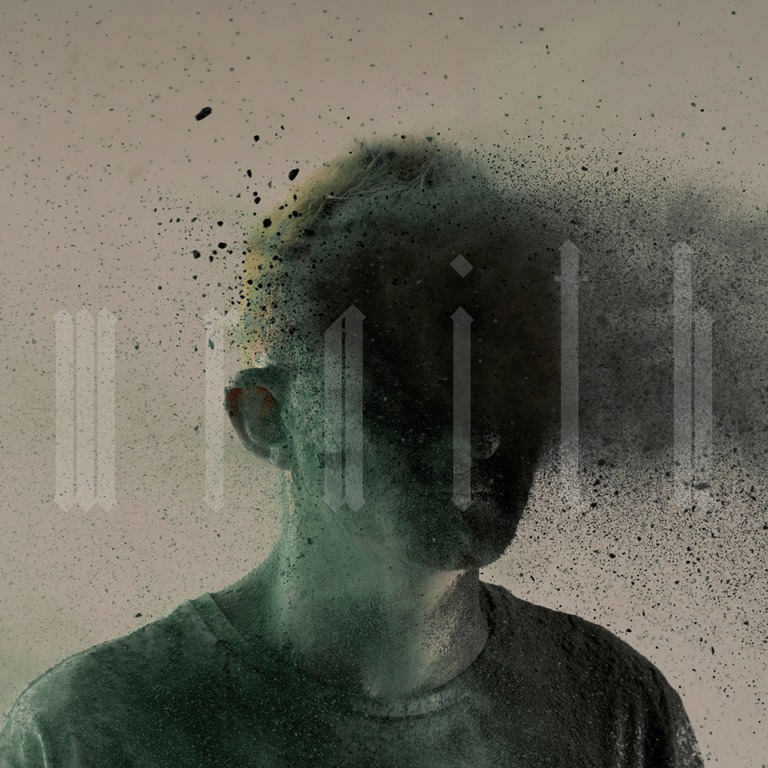
Teeth of the Sea - Wraith

Panurus Productions – 22nd February 2019

Christopher Nosnibor

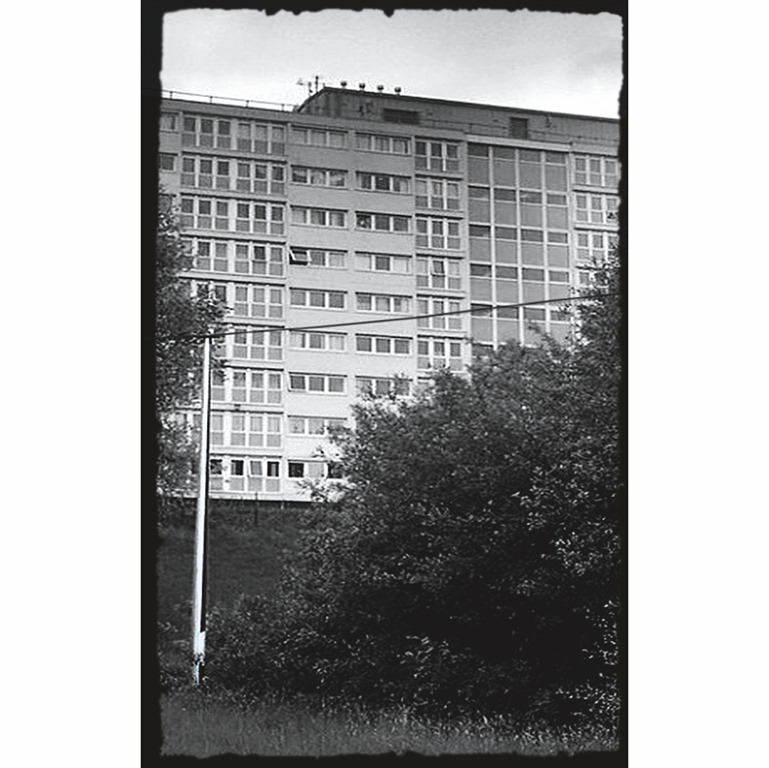
It promises ‘a voyeuristic excursion through the concrete labyrinth of Greater Manchester. A collage of the constantly evolving sensory barrage of the big city and it’s accompanying paranoia. The infinite possibilities of an adopted home and the entangled memories of the intrepid listener.’ It’s also pitched as a ‘prequel’ to Absolution – by which I’m assuming that the August – December 2017 recording of Burden predates that of Absolution, released in March last year.

It matters little. Chronology is a construct. While an individual’s actions may follow a simple chronology, events overall do not: things happen simultaneously, and in different locations. Those lines of time and location are distorted by real-time communication by such means as telephone and television, which can temporarily connect different time-zones and countries, even bridging periods of history. Letters, on the other hand, have an effective time delay. The idea that events can be charted by means of a simple chronological timeline is further discredited when thoughts and recollections, as well as dreams, can occur completely at random and in a fragmentary manner.

Supposedly combining ‘snippets of conversation and field recordings [filtered] through Kepier Widow’s digital ear’ and combined ‘with droning synth and bubbling glitches’, the two messy, disorientating, half-hour sound-collages (corresponding with the two sides of a C60 cassette) pay no heed to chronology or sequentiality. This, of course, is the beauty of the medium, in that it is non-linear, articulating instead the simultaneity of experience. And while it’s impossible to extract any semblance of narrative or even cohesion from the jumble of chatter, birdsong, car engines, grinding synths and wispy mists of ambient abstraction, often overlapping into one another, and occasionally all at once, Burden replicates – in a warped but intensely immersive way – the experience of traversing a large city. It’s loud, a collision of sound, uncoordinated, discordant, disorientating.

Some of the electronic intrusions penetrate with some pretty harsh noise. There are unsettling, hums and drones, and glitchy ruptures kink the flow of any attempts to create smoother, more linear flows. Sonorous, undulating ripples of sound weave in and out. There is no structure. There doesn’t need to be – nor should there be. Everything simply ‘happens’. And this is life.

cover

God Unknown – 22nd February 2019

Cristopher Nosnibor

The first sound is a murky, rumbling boom. Then silence, before another eventually follows. The stage is set, and it’s in darkness. The atmosphere is oppressive and laden with an air of uncertainty. What lies ahead?

When the first song proper, ‘In Amber’ arrives, it feels like a weight being lifted: the delicate, supple guitar notes cascade and hang in the air with room to breathe. The mellifluous tones unfurl softly. Sonically, there are certain parallels with recent Earth recordings and Dylan Carlson’s solo works, in that the compositions on Heaven In The Dark Earth are simple, sparse, and focus strongly on the tonality of the clean guitar sound.

This shouldn’t come as a complete surprise: Jodie Cox, who makes up one half of Markers, featured on Earth’s 2014 LP Primitive and Deadly. Along with Jason Carty another member of the London math rock scene in the late 90s / early 00s, the duo made a conscious decision to abandon all of the trappings of rock to produce something raw, honest, and with a are sense of focus.

The text which accompanies the release explains at length how the project is ‘an expression of their deeply seated need to challenge themselves in their natural inclinations through a radical departure from genre music and an attempt to exploit more nuanced musical realms, along with less obvious aspects of their artistic personalities. Having stripped their sound to the bare minimum by eliminating vocals and rhythm section, they are compelled to focus on every single note produced by their instruments. That, in turn, enables them to discover a whole new range of structural possibilities and, ultimately, achieve a higher degree of emotional expression’.

It’s in the exploration of structural possibilities that Markers place the greatest distance between themselves and Carlson / Earth: whereas the seminal Seattleite emphasises the power of cyclical motifs and repetition, Cox and Carty create compositions which slowly evolve, spreading forth like verdant tendrils in the freshness of spring.

The contemplative, considered, even hesitant string picks often reverberate for an age, and evoke simpler times way back in the mists of time, an arboreal world before the advent of cities and industrialisation. It’s evocative, not of anything specific, but conjures a vague sense of nostalgia for something just out of cognisance.

The sweetness, the light, is interspersed with brief interlude pieces which are darker, more ambient. These contrasts render the expansive explorations of string against fret all the more uplifting in their purity, and make Heaven In The Dark Earth an album which brings everything its title suggests: an album to explore, but also to bask in as light overcomes darkness not by force, but through purity.

AA

Markers

Protagoniste

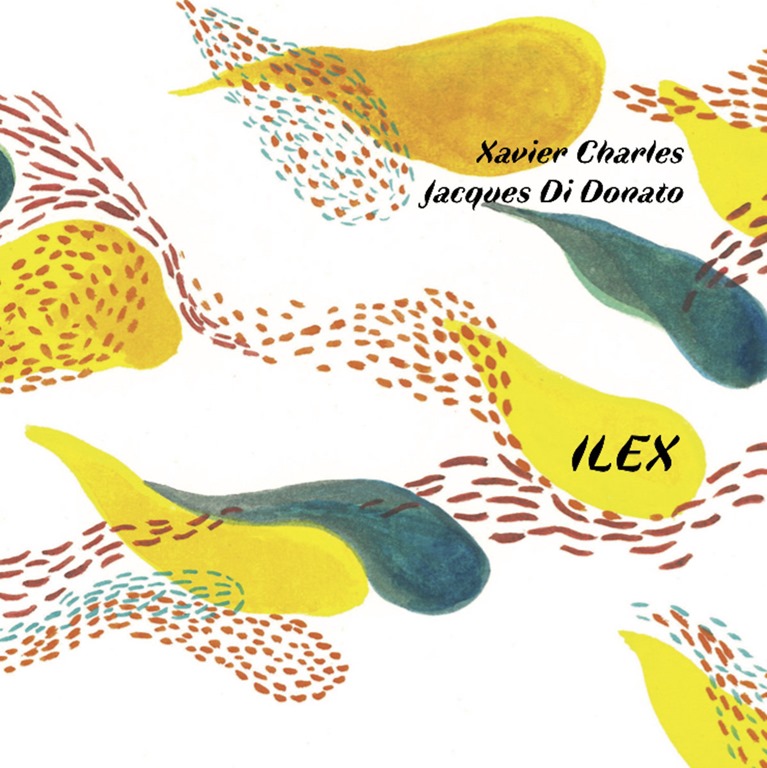
I love unusual instrumentation, and am often amused and entertained by the repurposing of non-musical items and objects for music-making purposes. The stranger and more overtly non-musical, the better, of course. But do we really believe the credits on Ilex, which sees Xavier Charles and Jacques Di Donato (whose 12 Clarinets in a Fridge I covered somewhere at the time of release) reunited for a follow-up to 1995’s Du slavon glagol listed as playing ‘clarinet, helicopter’ and ‘clarinet, lawn mower’ respectively? I wouldn’t like to completely rule it out: although there are no obliterative motorised walls of noise blasting away the speakers at any point on Ilex, there’s a lot of distant drones, hums and extraneous noise in the background on a number of the album’s fourteen pieces.

Born out of improvisation and subsequently evolved, each piece is different, if not entirely distinct, as the pieces often bleed together or are otherwise tightly packed. The lengths of the pieces vary considerably, too, from fragmentary, sub-two-minute interludes to complex, expansive compositions more than three times that. Collectively, they form a body of work which his often evasive in its ever-shifting form. In terms of mood or style, Ilex is neither one thing or another: it’s not even categorizable as experimental, really, slipping as it does from abstract to ambient to parping free jazz – although thankfully, there’s not of much of the latter.

From hesitant, clattering percussive sounds, resembling tabla or similar small hand drums to sighing drones, it’s often difficult to relate the sounds to the clarinet, or, in some instances, any instrument at all.

Ilex is, however, without question, abrim with clarinets. It pours, oozes and froths with a wash of clarinets. Clarinets that alternately trill and toots like The Clangers on a veritable cocktail of drugs, zipping from wired hyperactivity to opiate-slowed torpor. Often resembling strings rather than woodwind, elongated, woozy hums and drones abound, ominous hovering notes and scrapes and shards, whistles and tweets of feedback-like treble grate against one another, the resonances creating a subtle tension.

On Ilex, the performers push not only the parameters of their instrument of choice, but also their playing, combining a mix of conventional and innovative techniques to create something that balances the familiar and the strange. It’s this juxtaposition that ultimately renders Ilex not only a most interesting work, but an artistic success.

AA

Ilex

Exile On Mainstream – 22nd February 2019

Christopher Nosnibor

I hear this a lot, at work, at home. People tell me that I must relax. I disagree, of course. It’s not healthy to get too comfortable. To relax is to be vulnerable. You make yourself vulnerable, you’re open to attack, and also emotions. Who needs any of that? It’s not that sensitivity is undesirable in these times of dehumanised capitalist culture, as much as it’s dangerous, a risk to self-preservation. Taking a cynical view, relaxation and wellbeing are avenues which pave the way to exploitation. No, better maintain a hard exterior even while you’re breaking on the inside. Never relax.

There’s absolutely nothing relaxing about the squeal of feedback and distorted, tortured vocals that shred the speakers in the opening moments of the album’s first cut, ‘Hollywood 2001/Rollrost’. The closest comparison I can draw is to early Whitehouse: shards of treble and humming lower-end feedback provide a brutal, unstructured backdrop to vocals designed to inflict maximum pain.

Things to become overtly rock thereafter, with the grinding sludge riffery of ‘Old Overholt’ bringing maximum gnarly grind. The repetitive, barrelling bass trudges on remorselessly, while thunderous drumming explodes amidst a wall of obliterative guitar noise that’s very much about the texture rather than the tune. Ten minutes later, it bleeds into the title track, which sounds more or less the same, but half as slow again. The bass is so low and murky as to vibrate the bowels. The vocals are warped, distorted, a demonic howl from the pits of fiery hell. But it’s not unbearable; the heavy psychedelic leanings give both a kind of context and bring a certain groove. As whiplash whirls of flange fire in and it transmogrifies into some raging beast that’s half Hawkwind, half Sabbath on Ketamine, samples begin to echo around in the murk, adding further layers of suffocating sound on sound.

And as the album progresses, so the songs get longer and gnarlier, the riffs more cyclical and tightly wound and packed with a greater intensity. By the time they piledrive into the eighteen-minute finale, the volcanic assault of ‘CBD/Herinunder’, the earth has shifted on its axis under the sheer weight of the thunderous riffery, guitars so dense as to have created their own gravitational force.

There’s an agonising eternity between each beat, each driving power-chord, the grainy blast of distortion channelling down and re-emerging as a howl of feedback sustain. And on and on it grinds. And in its own perverse way, with its dense, rich wall of overdrive crawling at a tectonic pace, ‘CBD/Herinunder’ brings a certain cannabinoid comfort. It’s not the stoner mellowness of HTC, but the quiet delivery of a more settled underlying state.

It’s still by no means relaxing, but it is a superlative example of no-messing, slow-churning monster riffing.

AA

Bellrope

Drid Machine Records – 7th October 2018

Christopher Nosnibor

Fuck me. I was trying to remember what I’d thought of the previous eponymous Golden Oriole album, when I read the accompanying press release, which reminded me. Is it an ego thing? Perhaps. But there are times when music reviewing is a pretty thankless task, so to see your own words quoted provides a certain sense of validation. Admittedly, when this happens to me – and it does with moderate frequency and regularity – I find myself staring at the words and wondering if I rally wrote them. They sort of look like something I’d write… But better. Life’s too short to be precious about your words, and there’s just too much new music flying round to labour for a lifetime on every review.

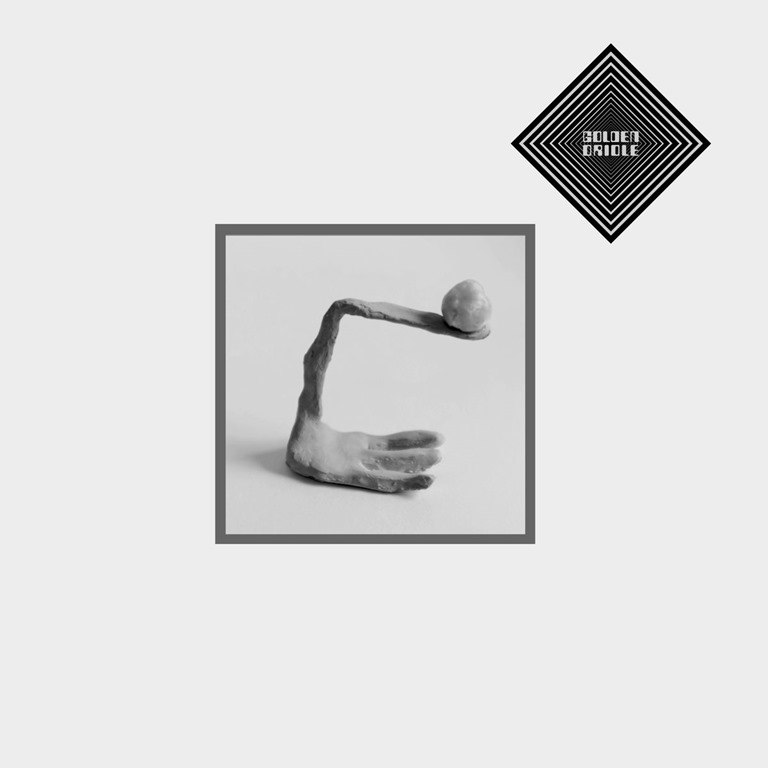
Norwegian experimental duo Golden Oriole – consisting of Thore Warland, Kristoffer Riis – know how to augment a hard-hitting sonic attack. And II continues the trajectory of its predecessor, with some thumping beats and a chaos of discord all around. II contains just two pieces, occupying a side of vinyl / cassette apiece, and given this much room to explore, they really do head every which way.

After an epic – and I mean truly epic – thrashing funk-driven workout that bumps and grinds an grooves and bounces on for about a quarter of an hour, ‘The Waxwing Slain’ crunches to a halt and leaves a painful trail of feedback, holding a single torturous note for a number of agonising, excruciating minutes. The fact I actively enjoy those minutes may indicate a hint of a masochistic streak, and I’ll live with that: the point is that the duo never bow to expectation or even soften toward accommodating any prospective audience’s listening tolerances. It’s the very definition of uncompromising. It’s the apex of angular. If brutal funk sounds like an oxymoron, then you need to get your lugs bent by this demented shit.

‘Až Přijde Kocour’ plunges even deeper – miles deeper – into a frenetic explosion of scratchy, scribbled guitars and spasmodic bass against a tumult of percussion. Just when you feel like your head might explode, they bring everything right down around the four-minute mark…. The quiet strains of distant feedback provide but a brief respite before the sonic mania of Beefheart on all the drugs ever made

The passage that almost contains a strolling bass doesn’t really contain a strolling bass, as much as a bass that tries to stay nonchalant, but can’t help but twitch and spasm like it has a wet finger in a live socket: it sounds like three songs at once as those squelchy low frequencies bounce beneath a rippling sonorous drone while the drums hammer out a rhythm somewhere between drum ‘n’ bass and a military march. It’s :

Of brain-pulping brilliance.

You can’t dance to this. You can’t even not knowingly. In fact, I’ve no real clue what a rational or sane response to this is. Truth is, I don’t even know what this is, other than that it’s deranged, loud, chaotic. If it’s one thing, it’s truly genre-defying.

AA

Golden Oriole – Golden Oriole II

Kasuga Records 022 – 5th February 2019

James Wells

Sometimes, less is more. Sometimes, less is genuinely less. The latest release from Syntax is sparse, impersonal, and keenly pursues the angle of ‘less’. In fact, Current is s sparse, so much ‘less’ that as times it’s barely there. So barely there I found that while working on this review of the album, I’d forget what I was doing and become side-tracked, distracted – by more or less anything. The fact it’s also being released as a limited-edition physical item -and SD card – that’s so much less you could easily lose it.

None of this is to say that Current is uninteresting: conceptually, it has substance and depth, and the accompanying blurb is a fascinating read, and it’s worth quoting at length:

‘Starting from the postulate that energy becomes form and form becomes energy, Current articulates — based on aesthetic rigor — the audible forms of electric current, seen as vital energy and the active principle of an artificial consciousness.

‘The analysis of sound phenomena from this perspective can be perceived as a source of meditation, which reflects a physical phenomenon on a philosophical field. Sonic details and structural artifacts (sic) are exposed to their own sonic value and examine — from a phenomenological perspective — the idea of flux, energy, artificial consciousness, self-direction and the capability of self-knowledge.

‘Within the sonic construct of Syntax, Laurian Bardoș draws strong influence from his study in medical psychology. From this perspective the evolution of his music has been greatly influenced by the study of perception and the Gestalt theory, which connects the spatial (geometric) form with the temporal form (sound).’

Sonically, Current manifests as a lot of wibbling drones and glitchy microbeats, sometimes so densely packed as to effect an almost scratching, crackling sound that creates interference against the almost subsonic low-end oscillations. Clicks, pops and hushed thumps draped in whispers and accompanied by sporadic modular pulsations that bleep, bloop, and bubble. Fizzing static, white noise, crackling distortion, whistles and sounds so fine as to create aural drizzle. Sonar echoes…. Everything is probing, exploratory, but the lights find only darkness and it’s impossible to find any sense of direction. And in this way, it becomes apparent how conventions of form and structure in music have a bearing on our bearings, so to speak, and cut loose from those conventions, Current presents something of a challenge.

AA

Kasuga022_front

Front & Follow – 22nd February 2019

Christopher Nosnibor

Front & Follow continue their ever-fascinating The Blow series of split / collaborative releases with an album by Dunning and Underwood, aka Graham Dunning and Sam Underwood, who’ve used this release to showcase their Mammoth Beat Organ project.

I’m mature enough to refrain from making any puerile quips about mammoth organs and instead get down to the business of reviewing an album which showcases the sound of a machine they describe as ‘a modular, mechanical music contraption, designed as a two-player, semi-autonomous musical instrument’ which ‘plays unusual, sometimes erratic compositions drawing on drone music, minimalist repetition and fairground organ techniques’.

None of this prepares me for the reality – which is, arguably, one of the strongest, and also the most far-out – releases of the series yet. I’ll focus here on the music rather than the machine – which has some kind of quirky steampunk look to its construction – because while in a live context, it’s no doubt quite a spectacle, in the medium of recorded sound, the sound is all you have to engage with. And the sound is rich in strange, unsettling atmospherics, a work that nether light nor dark but hovers uncertainly in the shadows of its own casting.

The first piece, ‘Song or Chimney Sweeps’ transitions from elongated, atonal drone to trilling fairground organ, although the notes waver and wheeze, and assonance and order are rapidly replaced by dissonance and disorder and the different notes play in different times, and what begins as something playful and lighthearted pretty soon becomes a horrible headfuck. This, of course, is a good thing. The headfuckier the better as far as I’m concerned. Clearly, this is an album that calls for more vodka. Lots more.

The peeping, parping, tooting, quavering atonality of ‘Blown Coda’ is constructed around droning not-quite chords which droop like deflating bagpipes. There’s an almost child-like naivete to the mismatched conflicts of key. The way young children have no concept of key and will simply play notes to hear a sound and will play randomly – and for protracted, torturous periods – comes to mind here. Only, these are long, slow nots that trickle and weep over erratic arrhythmia. Contrastingly, ‘Acorn Factory’ is largely percussive – or at least sounds that way. Tinny, irregular beats – the sound of something hitting the bottom of a metal bucket or something – peculiar, difficult to place in a musical context.

‘Demon’, one of the pieces that’s more overtly ‘structured’ or ‘composed’ sounds like some kind of primitive drum ‘n’ bass, with clattering, ramshackle rhythms proving the backdrop to honking horn and woozy drone, all muffled by a blanket or raw, barely-there-production.

Then there’s what anyone – even the most passionate avant-garde aficionado – would likely describe as ‘weird shit’, starting with the woozy atonal discordant mess of ‘Odd Duty’ placing the emphasis on ‘odd’ and ‘Padlocks on a Bridge’ bringing together wheezing bellows notes with off-kilter percussion.

All the vodka isn’t quite enough to make sense of this sonic derangement. It isn’t abstract, it’s just warped and wilfully perverse. And it’s little short of genius.

AA

Blow 5

Pelagic Records – 25th January 2019

Christopher Nosnibor

I’m something of a latecomer to the Mono party, although given their credentials, I can’t fathom for the life of me why I haven’t explored a single one of the nine albums they’ve released over the last twenty years. Too much music, too little time, is probably the only real reason. And, witnessing them live by way of an introduction, my initial impression was only middling: on the night, I found more in Jo Quail’s surging waves of cello and the gritty abrasion of A Storm of Light. But context matters, and I had gone for the other two acts, and so now, with a large gin and a candle for light, I’m ready to approach their latest, the Steve Albini-recorded Nowhere Now Here with fresh ears.

‘After You Comes the Flood’ lifts the curtain on a proggy post-rock crescendo that offers up every shade of grand. It’s a crescendo that doesn’t only sustain, but swell to even more monumental proportions, with layer upon layer of sound and richer, dirtier distortion filling the background.

Quite a deal was made when Mono featured vocals for the first time not so long ago, and the performance of songs with singing seemed to be a major topic of conversation when I caught them in Leeds last year. They’re used sparingly here, and on the vaporous, shoegaze drift of ‘Breathe’, they serve more as another instrument than a focal point.

The string-soaked epic that is the title track again follows what is by now a well-established post-rock formula of long, gradual builds and rapid drops that pull back from the precipice, but it’s so magnificently executed that it would be churlish to criticise. And herein lies the album’s success: much of the material does fall under the broad umbrella of ‘standard’ instrumental post-rock (although acknowledging that Mono were one of the bands who contributed to the creation of a genre whose tag they reject is important), the compositions and their performance are masterclasses in shifting dynamics and delayed gratification. As they lead the listener through ponderous passages of awe-inspiring grace only to reveal towering cathedrals of sound just around the corner, even the predictable forms hold unexpected twists, like the sonic supernova that explodes at 5’39” on ‘Sorrow’.

Steve Albini is perhaps more commonly associated with ‘noisy’ music, but his reluctance to be credited as a producer is a reflection of his abilities as a technician, and the fact he strives to capture the essence of any given band’s sound rather than impose his own vision on their work. With Mono’s method involving playing live in the studio, the pairing makes complete sense, and it’s fair to say that Nowhere Now Here very much captures not only the sound, but the feel of a live show, with the shifting tension, emotional resonance of chiming guitars brooding in the dark, and the exhilarating rush of catharsis that effuses through a truly blistering crescendo. It’s those indefinable, unmanipulable details which make Nowhere Now Here.

AA

Mono - Nowhere

Panurus Productions – 25th January 2019

Is it a supergroup if the members of a collective all belong to acts no-one has ever heard of? Shrimp is a project which represents the coming together of Jon O’Neill (The Smokin’ Coconuts, The Shits, Skronk et al), Chris Watson (Snakes Don’t Belong in Alaska, Forest Mourning), James Watts (Plague Rider, Lovely Wife, Lump Hammer et al),Rob Woodcock (Plate Maker, Fret!) and Ryosuke Kiyasu (Sete Star Sept, Fushitsusha, Kiyasu Orchestra et al). Initially converging to perform on the bill at a Ryosuke solo show in Gateshead, this eponymous release captures the intensity of that performance in a studio setting – at least, so they claim.

Listening to this, it’s probably a claim that’s justified: it is, indeed, intense. They promise ‘a maelstrom of clanging, shrieking guitar, relentless frenetic drum savagery and inhuman vocals’, and forewarn that ‘Shrimp, in direct contrast to the weakness implied by its moniker, is the sonic equivalent of being trapped within a chitinous storm of pincers and consists of a thirty minute studio onslaught and a live recording, featuring additional electronic noise.’

Yep. It’s brutal and harsh from the outset. A cacophony of guitar feedback and whiplash explosions of extraneous noise whirl into a tempestuous frenzy around smashing percussion. The first five minutes sound like the climactic finale of something immense. And it just keeps on going from there. On and on, notes and beats and crashing cymbals flying in all directions, slowly bringing things down only to resurge and burst into a raging sonic storm once more. Deranged shrieks lie half-buried in the mix amidst all kinds of chaos that combines stoned desert rock, psychedelia and free jazz.

Twenty-two minutes in and the speakers are melting with a blistering stream of frenetic noise, formless, atonal, punishing in its complete lack of shape or musicality. After half an hour it bleeds into second piece, ‘Light as Hell’. It’s more of the same – an ear-bleeding aural tidal wave that continuously threatens to break but never does. It’s dizzying, and difficult. And yet, supergroup or not, it is definitely super, in a wild, chaotic, insane way.

Shrimp