Posts Tagged ‘Album Review’

Bohemian Drips – BD10 – 30th August 2019

Christopher Nonsibor

January 2017: I was introduced to Microtub on receipt of their album Bite of the Orange.it prompted all kinds of tangential associations, few actually or specifically related to the album’s sonic contents. But then, that’s s often one of the great pleasures of music for me – the ideas and images it has the capacity to unlock. And while more conventional musical forms – especially lyric-orientated works – resonate on a more direct level in that sound and sentiment combine to connect with given emotional states, more abstract works have greater potential for far freer associations.

July 2019: I’m reintroduced to Microtub and reminded that I still don’t really grasp what a microtonal tuba is, and remain amazed by the idea of there being three microtonal tubas in existence, let alone musicians to play them. Because, yes, as the press release informs / reminds us, ‘Microtub is the world’s first and only microtonal tuba trio, exploring Just Intonation and the rich harmonic potential of the tuba. In collaboration with bohemian drips and Ace Tunes they bring us their new release Chronic Shift, featuring recorded material from the stunning “Großer Wasserspeicher” (large water tower) in Berlin-Pankow, mixed with analog synthesizers’.

It gets a bit technical after that: ‘Carefully recorded in binaural audio by the bohemian drips engineers, this unlikely combination of tubas and simple synth pitches provides a meditative and immersive experience, and an auditory glimpse into a truly unique acoustic space. By using Kunstkopf stereophony and the perspective of a so-called dummyhead microphone (Neumann KU-100), the acoustical scenary of the tank was captured in 3D-audio, relocating the listener into the actual recording situation’.

More usefully, we learn that ‘the title track ‘Chronic Shift’ is a rework based on the piece ‘Sonic Drift’, a Robin Hayward composition written specifically for Microtub. Not that I’ve heard ‘Sonic Drift’ to compare, or know if I’d be able discern the connections.

Still, the two pieces on Chronic Shift are yawning longform experiments in organic hum and drone that sound nothing like anything involving an actual tuba. Which is probably for the best.

BD010_front

Neurot Recordings – 2nd August 2019

Christopher Nosnibor

The best collaborations are greater than the sum of the parts, and transcend 2 + 2 = 4 equations of artists playing to type while rubbing up against one another in a predictable fashion. We often hope for more, but artists seldom really deliver.

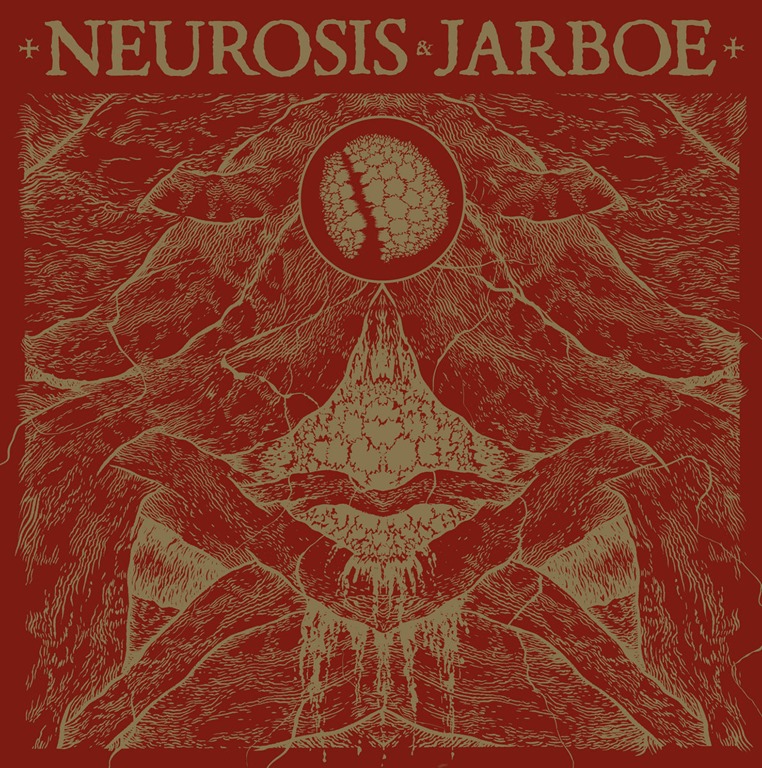
The self-explanatory Neurosis & Jarboe, originally released in 2003, now fully remastered and with entirely new artwork from Aaron Turner, and available on vinyl for the first time sounds neither like Neurosis nor Jarboe, nor 50/50 Neurosis and Jarboe, but something that draws on the best elements of both to forge something very, very different.

The lugubrious slow grind of Neurosis is present in the low bass churn and the more ethereal elements of Jarboe’s vocals, which have brought grace to Swans since 1986 and her own solo work over a good two decades now. Both artists’ work has a certain timelessness about it.

In context, this is both noteworthy and, if not exactly ironic, a point of cognitive dissonance. In my head, 2003 is recent and this reissue is shockingly close to the original release. But this is the point at which the passage of time and its acceleration comes screaming in my face to remind me that 2003 was sixteen years ago. There are kids who’ve been born and are now of a legal age to raise families and to vote since the album was first released, and yet Swans calling it a day the first time around in ‘96 with Soundtracks for the Blind still feels quite recent. How is this album sixteen years old? Nostalgia isn’t what it used to be, and Neurosis & Jarboe has very much stood the test of time, largely because it doesn’t sound quite like anything else.

‘His Last Words’ is perhaps the most overtly ‘modern’ cut on offer, and after a slow guitar grind, hits a groove that straddles dance and psychedelia. But there’s a deep, dark atmosphere that creeps over this and the album as a whole, with the majority of the tracks stretching out beyond seven minutes and pushing repetitive motives which worm their way under the skin and penetrate the skull by means of sonic bludgeoning.

The nine-minute ‘Erase’ brings some heavy, emotion-wrought doom-country with a distortion-tinged vocal that alludes to a dirgy Come, with Jarboe sounding more like Thalia Zedek in the song’s early minutes before the anguished howl emerges, culminating in a throat-tearing, raw-spewing roar by its uncomfortable climax.

Then, ‘In Harm’s Way’ recreates the woozy two-chord grating attack of early Swans when they were at their most gut-churningly jarring and abrasive, and it hits hard.

So why remaster, and why now? What does it add? According to Steve Von Till, ‘We recorded this ourselves with consumer level Pro Tools back then, in order to be able to experiment at home in getting different sounds and writing spontaneously. The technology has come a long way since then and we thought we could run it through better digital to analog conversion… This new mastered version is a bit more open, with a better stereo image, and better final eq treatment’.

And because they got Bob Weston of Shellac, and engineer at Electrical Audio to work on it, it does sound bloody great and lands with maximum impact. And the new artwork’s rather nice, too.

AA

Neurosis and Jarboe

Svart Records – 30th August 2019

Christopher Nosnibor

The Portland two-piece described as purveyors of ‘noisy metal’ haven’t wasted time on naming their third album, which lands five years on from 2014’s Here in the Deadlights, and have instead focused on the contents and rendering it as maximalist as possible. There are a fair few duos around at the moment who manage to conjure a full-band sound. It’s impressive, but how do they do it? Big amps and lots of pedals is the usual answer, but with these guys, there’s got to be something more. I mean, the sound is huge. In fact, no, it’s way bigger than huge. Alchemy. It’s gotta be.

The album’s five songs are all at least seven minutes long, and are, without exception, hefty as hell riffmongous monsters, the noisy metal style being very much of the sludgy stoner persuasion, with Melvins being the most obvious and appropriate touchstone. But they’re no half-arsed style appropriators: there’s a lot going on here, and there’s a slew of other elements in the mix. Punk and psychedelia may sound like an awkward combination, but they pull them together effortlessly, along with a dose of really gritty thrash.

‘Caveman Waltz’ doesn’t sound like it’s actually in waltz-time, but steps up from a lumbering knuckledragger of a riff to doubling the tempo halfway through and thrashing out an uptempo throb with spiralling lead fretwork weaving a sonic mesh over the thumping percussion as the vocals go full-throated holler mode.

And they’ve got tricks galore up their (wizard’s) sleeves. The twelve-minute ‘Funeral of the Sun’ melds black metal and prog to create an expansive piece that rages and snarls but also features moments of rich atmosphere and strong melody.

Closer ‘V’ drives in hard with the most overtly thrash riff, but the vocals go all psych and the lead line is mathy and then… my head’ spinning with all of it after just a minute and a half. Nine minutes in and it’s all over.

You’ll likely often read that metal is running out of ideas, and that doomy / stoner / sludge has become a predictable parody of itself. And it’s not entirely untrue. But then an act like Wizard Rifle will present themselves and completely smash all preconceptions with a blend of killer riffs and wild innovation. Here, Wizard Rifle prove that there’s still a lot of ground to be explored through permutation and hybridity, delivering an album that’s solidly rooted in familiar territories, but at the same time explores new ground and doesn’t sound quite like anything else. At least, nothing I’ve yet heard.

AA

Wizard Rifle – Wizard Rifle

Front and Follow – 2nd August 2019

Ever-evolving and always finding new angles Front and Follow’s latest release is the second in a new series celebrating the present and past of some of their favourite artists. The premise is simple, and in some respects, it’s remarkable it hasn’t been done before: ‘For each volume in the series we ask artists to create a new project of their own choosing and present it alongside a retrospective of their past output.’ Unusually for F&F, this release is available as a CD as well as cassette and download.

What this means is an album of new material, which comes with a bonus album (to download with all physical copies, and available separately to download) which for this release features tracks from Michael’s previous releases plus new remixes by Pye Corner Audio, Polypores, Kemper Norton, Psychological Strategy Board, Basic House and Elite Barbarian.

Longstanding Rothko member Donnelly has quite a career span and output to his credit, with myriad projects simmering simultaneously, and this latest offering promises ‘new worlds of beats and rhythm, sound collage, ambience and noise using random borrowed equipment, broken gear and household appliances’ – which it delivers, with gloopy synths and scratchy, insectoid microbeats paving the way for chunky disco grooves and funk-tinged minimalism.

Across the span of seven instrumental tracks, Donnelly explores a range of sonic territories, from semi-industrial gloom to stealthily-creeping dark ambient, with swathes of static and extraneous noise that shimmers, shudders, grates, grinds and crashes and bucks like tectonic plates in collision, occasionally propelled by hypnotic and unconventional rhythms.

‘Thick Skull’ closes off with a heartbeat drum and quivering, quavering stun drone with serrated edges and overloading frequencies played in 360˚ stereo.

The bonus album, Pardon Error contains eleven tracks, leading with seven remixes. The first four are various interpretations of ‘Mole Man’, which appeared on 2013’s I’ve Come to Love You Forever and also resurfaces later as both a remix and in its original form, but rather than reduce Donnelly’s extensive body of work to essentially one track, it serves to demonstrate the adaptability of his compositions. It’s hard to tell they’re the same track, and the spooky ambience of the ‘Basic House Mix’ couldn’t be further from the wheezing swirl of the Polypores interpretation, let alone the drilling drone assault of the Psychological Strategy Board Exercise of Impalement mix’, while the Elite Barbarian remix of ‘Laburnum’ goes full techno dance. ‘Behind the Laburnum’ sounds like a dub mix of Soft Cell on LSD crossed with ‘Carnage Visors’ by The Cure. It really is al going on here.

The gurgling ‘Root about the Carcass’ and minimal wooze of ‘Urge to Swarm’ again mark further departures as they bring the curtain down on the compilation. And once again, Front and Follow have given us something different – and of exceptional quality. Everything’s ‘curated’ now and 99% of it’s wank and cobbled together or otherwise simply misnamed, but F&F have developed a distinct style and now what works, and as such, they’ve established themselves as being dependable in the quality stakes. Why So Mute, Fond Lover? is no exception, and while Pardon Error may not be the expansive career summary one may have hoped for, it has a twist of innovation that makes for a listen that’s engaging and enlightening, offering a new insight into Donnelly’s work instead of cobbling together an easy best of.

AA

Michael Donnelly - Why So Mute, Fond Lover

Sacred Bones – 16th August 2019

Christopher Nosnibor

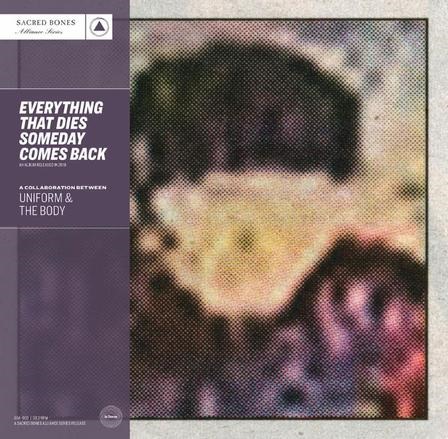
I’ve barely recovered from Uniform’s last punishing album and the gut-punching spectacle of hearing it played live when they land a second collaboration with The Body, only a year on from their first, the punishing noise-fest that was Mental Wounds Not Healing. An album that roughly ravaged and picked deep into the scabs and scars, it was everything you’d expect from two of the most uncompromising acts around right now.

NY purveyors of sonic violence Uniform carve their own trench of frenzied fury, and if they lack variety, where they excel is in their capacity to relentlessly attack, spitting and spewing their raging antagonism and venomous vitriol, while experimental noise duo The Body have largely forged a career from adding layers of abrasion to myriad collaborations – and this one is no exception.

The press release provides a fair summary of the kind of noise contained on Everything That Dies Someday Comes Back: ‘Comprised of an amalgam of abrasive influence that spans Swans-y dirge and purge, Whitehouse’s clenched-jaw noise, middle-period Ministry’s penchant for metallic post-industrial everything, New Order’s nose for melodic emotionality, and Juicy J-inspired beats.’ It’s all in there, and none of it’s pleasant, although somewhat ironically, when pressed against the full-tilt ferocity of Uniform, The Body serve more as a counterbalance, as if the two have a certain cancelling effect on one another’s most extreme aspects. The result, then, isn’t intensified – it simply wouldn’t be possible – but mangled and mutated into a different distillation of the component parts.

‘Gallows in Heaven’ is perhaps a misleading opener, stylistically, sonically, and in terms of mood, in that it’s goth to the core, a deep, surging three-chord bass sequence and thunderous mechanoid drumming at its core. With a wonky, fractal guitar line weaving over the top, it’s a vintage slice of post-punk – only there’s feedback and extraneous noise all over and backed off in the distance, Michael Berdan’s vocals, eternally petulant, the epitome of fucked off with everything.

If ‘Not Good Enough’ sounds a bit like standard Uniform but with additional electronic noise thrown over the top of it, the thumping disco groove that underpins ‘Vacancy’, which shudders, shimmers, and howls, is another kind of proposition altogether. A snarling electronic bass booms in along with a jittery sequenced synth rhythm, and this is something that’s got ‘80s dancefloor’ all over it – or would have were it not for the mess of noise all over it.

‘Patron Saint of Regret’ is little more than a mess of noise at first, evolving into some kind of fucked-up post-Wu-Tang trip-hop crossover that miraculously works, while ‘Penance’ takes the hybridisation a step further, a collision of thumping industrial beats and lumbering synth chords, with tinkling 80s synths worthy of mid 80s Cure or A Flock of Seagulls and impenetrable shrieking vocals by way of an interlude from the grating keyboard drone.

The stripped back ‘All This Bleeding’ brings the industrial clank of NIN and gentle cascading synth melody –paired with the raging rants – of Prurient together to forge something both anguished and atmospheric. Twanging guitars echo around punishing percussion and create an unexpected spaciousness amidst the claustrophobic intensity. The electronic inches to the fore, culminating in the sample-soaked ‘Day of Atonement’, which consists of little more than a droning synth bass over spiky drumming and Berdan’s distorted vocal amidst a howl of excruciating extraneous noise.

Instead of softening the relentless blows, the graded transition toward the album’s final cut only accentuates the unforgiving nature of the material: the churning maelstrom of dark ambience of ‘Waiting for the End of the World’ is the sound of the apocalypse as a jaunty tune plays in the background and ‘Contempt’ grinds into the desolation of nihilistic blackness.

This feels like the collapse of it all, the degradation of society, represented in sonic form. It sounds like the cover looks. Everything That Dies Someday Comes Back is nothing short of devastating.

#

AA

Uniform and The Body

Panurus Productions – 26th July 2019

Christopher Nosnibor

‘Prolific’ is the word. There are a number of artists, with a significant pocket being Japanese noisemakers like Merzbow and Kenji Siratori As Paraponera Clavata, released in March, marked his 41st release since his 2014 debut, it would be fair to place Osaka’s Takahiro Mukai in the ‘prolific’ bracket.

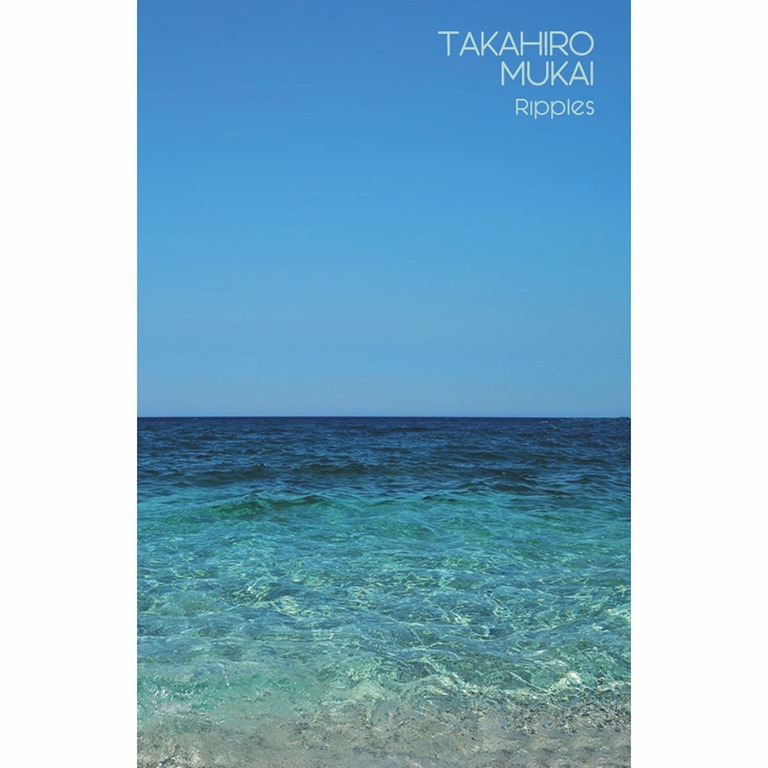
And while Ripples isn’t explicitly a ‘noise’ work, it does find Mukai drilling the listeners senses with some pretty shrill shards of treble atop whupping phased synths. The cover art may depict a perfect tropical ocean, clear and a glorious turquoise / blue washing softly over white sand, but delicate and gentle it isn’t, and Mukai’s approach to minimalism doesn’t equate to quiet or tranquil – simply that less is more.

The first of the album’s four tracks, ‘#437’ is reminiscent of Whitehouse around the time of Birthdeath Experience or Total Sex – only with better production and without the vocals. ‘#436’ follows, and draws abrasion from smooth surfaces. In the distance, a sound like a siren, while an oscillating synth bubbles along, its volume increasing as it moves to the foreground. More phasing pulsations bring a rhythm that stop and starts inconsistently to disorientating effect. The effect is the real achievement here: the compositions on Ripples work in such a way that the component sounds rub against one another to draw the listener’s attention to that peculiar tension that exists in the space in between.

Completely disrupting my sense of order with the non-sequential ‘#439’, Mukai stretches elongated, undulating drones out over some ten and a half minutes to create a deep disquiet, but it’s on the closer, ‘#438’ where Mukai steps up on the noise. Low in the mix, electronic fizzes like shooting stars whistle through the dense droning atmosphere. Over the course of almost nine minutes, the volume and intensity increase, revealing new textures and tones. Stuttering rhythms emerge like desperate messages in Morse code where every sound is a dot. Scrapes and squalls bore into the cranium in the upper frequencies, while a thunderous wind billows through the mid-range, expanding from a rumble to a roar like an approaching helicopter, or an avalanche.

Sitting in my office at home, writing on the hottest day of the year so far, and what may yet prove to be the hottest in the UK on record, the thought of an avalanche carries a rare appeal. But then, whether it be a literal avalanche or merely an avalanche of sound, Ripples fulfils that desire to be submerged and separated from one’s immediate environment.

Takahiro Mukai – Ripples

SN Variations – 5th July 2019

Christopher Nosnibor

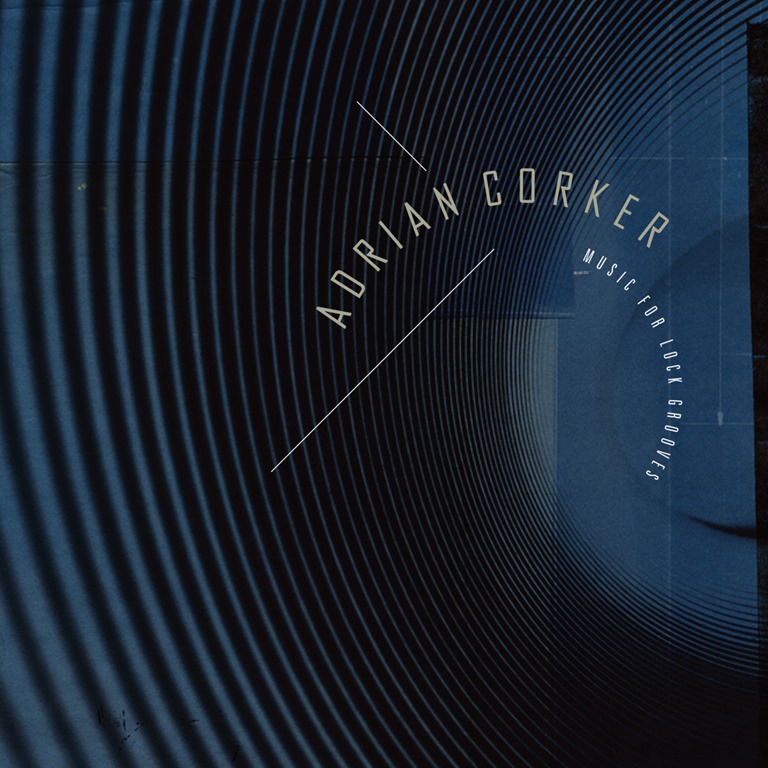
Having read the press release, and from my previous – albeit somewhat limited – experience of lock grooves, I had expected something overtly technical and perhaps somewhat tedious:

‘A lock groove is one cycle of one groove on a record. This is 1.8 sec cut at 33RPM and 1.33 cut at 45RPM. Having used lock grooves on film scores for British film Waiting for You and The Have Nots directed by Florian Hoffmeister, Corker wanted to explore their potential further in a standalone more percussive release. He used the cutting lathe currently residing in the living room of The Exchange mastering legend Graeme Durham to experiment with different sounds cut onto acetate and then recorded over different durations back into a computer. The process is similar to print processes in the visual arts where there is a high degree of unpredictability in how the eventual lock groove is recorded and then plays. Also because of the softness of the acetate the lock grooves break down as they are re re-recorded causing unexpected effects as the needle carves away the surface of the vinyl. This generative process adds layers of unpredictable noise culminating finally in white noise. These are combined forming frames for performances of violin, percussion and piano. The pieces reflect on the tension between the mechanical and the human gesture/expression and place where they merge.’

The album is split across two sides: ‘Inflow’ and ‘Outflow’, with each comprising three pieces. Rhythm is at the forefront of the pieces. Not solid, beat-built rhythm, but repetitive swells of sound. The close-packed humming loop that forms the foundation of ‘Inflow Part 1’ is gradually overlaid with a range of other sounds which repeat at varying regular frequencies, an immense, dramatic crash leading to a sustained crescendo. ‘Part 2’ pairs an echoing piano note and a picked string which vibrate off one another in a space between accord and discord, and it’s discord that marks the mood on ‘Part 3’. The album’s longest piece finds Corker develop tension through the juxtaposition of elongated drones and stabs of rumbling piano and sharp strings before building to a large swell of sound that fizzes and hisses white noise around the cavernous conglomeration.

‘Outflow Part 1’ creates a different kind of tension, with harsher sounds – buzzing, grating, distorted sounds looped in short, fast repetitions that get into your skull and raise the blood pressure. I’m actually typing visibly faster, and not for the first time I’m aware of the way music affects the listener in ways beyond subliminal mood adjustments. ‘Part 2’ is subtler, more subdued as an ominous drone hovers beneath scratches and scrapes. and leads into the slowly-shifting ‘Part 3,’ which transitions through a gentle pulsation to a wail of straining violin.

And however technical its construction, it’s far from tedious.

AA

Adrian Corker – Music For Lock Grooves

Buzzhowl Records – 26th July 2019

Left Limbs are Raul Buitrago (drums) and Jake Saheb (guitar), and Hexes is an album of two halves, two sides, two tracks, each sprawling over ten minutes apiece in duration. And they pack a lot of challenging noise into that timespan. At times uncoordinated, at times harsh, it’s very much a journey.

At the risk of infinite repetition, I’m a fan first and foremost and critic on the side, and of the many people I work with doing this, the PR and labels – and artists – who are clearly in it for the love are my favourites by miles. The passion invariably shines through. And so I’m disproportionately excited when, during a Twitter exchange, I’m told ‘In the second track, about half way through some kind of beat emerges and if you listen all the way through it’s a really great moment, but I just like the sound, distorted guitar and drums – but dismantled.’ And I get it. sometimes -often – the ‘ow!’ of a rack lies in a fleeting transitional moment, where something = often something random or incidental – happens. You notice it. And once you’ve noticed it, you can’t unnoticed it. But it something special and sweet and it’s a ‘moment’. Your moment, a personal insight and intersection between creation and reception. And it becomes everything, the moment on which the entire piece hangs and pivots from good to magical.

And so I’m on the edge of my increasingly-worn suede-covered chair, which I’ve sat in to write reviews for the best part of a decade now, squinting in the darkness at the screen as erratic, irregular beats clatter and clank and feedback screeches, howls and whistles among echoing unevenness. And ‘dismantled’ is the word. It’s spectacularly disjointed, difficult in the most glorious of ways.

Where is this all going? It’s a clash of experimentalism, avant-garde and jazz without the groove, a messy exploration of sonic incongruity, rich in atmosphere and angularity. It meanders, thumping and bumping and squawking and screeching… and then suddenly, there it is, crashing in around the nine-minute mark. A dolorous bass booms in and the drumming picks up and it’s like Filth-era Swans for a moment as things get frenetic and the sound rapidly descends into a distorted mess of speaker overload.

It’s the crushing, headache-inducing unprettiness that’s precisely the appeal: Hexes may not be remotely political or even engaged in anything about anything, existing in its own microcosmic sphere, but it’s an ugly album for ugly times. It helps release the pain.

AA

Left Limbs - Hexes

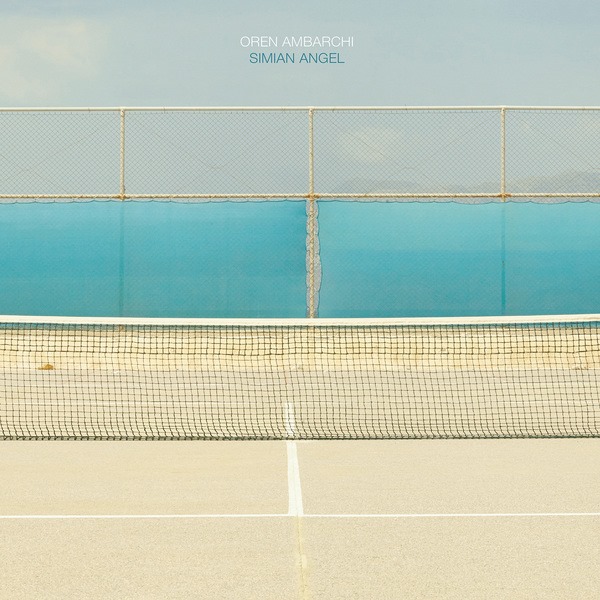
Editions Mego – EMEGO264 – 5th July 2019

Australian avant-gardist Oren Ambarchi has enjoyed a varied career spanning over three decades, and includes among his associations Sunn O))), Merzbow, and Burial Chamber Orchestra. To describe his output as ‘prodigious’ would be an understatement.

According to the press release, ‘Simian Angel finds Oren Ambarchi renewing his focus on his singular approach to the electric guitar, returning in part to the spacious canvases of classic releases like Grapes from the Estate while also following his muse down previously unexplored byways’.

It continues: ‘Reflecting Ambarchi’s profound love of Brazilian music – an aspect of his omnivorous musical appetite not immediately apparent in his own work until now – Simian Angel features the remarkable percussive talents of the legendary Cyro Baptista, a key part of the Downtown scene who has collaborated with everyone from John Zorn and Derek Bailey to Robert Palmer and Herbie Hancock’. Some of this has meaning: a lot of it doesn’t. I don’t know everything, and nor have the time or inclination to research. Jobbing reviewers crib from press blurbs and make like they know stuff. The majority are lying.

Neither Brazilian music nor guitar are overtly apparent on the two long-form tracks which make up Simian Angel: the sixteen-minute ‘Palm Sugar Candy’ consists of supple, trilling organ notes drifting across clopping, loping, irregular wood-based percussion which fades out to nothing leaving only soft, whisping tones which weave in and out of one another.

The title track is vague, piano notes rising into a rarefied air. It builds gradually into flurries of notes which flutter like snow in a breeze, skittering unpredictably. Baptista’s contribution is remarkable in its subtlety: a sedated heartbeat pulse which occasionally stutters and stammers. Around the mid-point of this twenty-minute mod-inspiring epic, the piano halts unexpectedly and an upward gliding drone alters the previously straightforward trajectory of the composition. Simmering down into twittering gentleness, subtly twisted with the slightest hints of dissonance and eventually transitioning into some mellowed-out semi-ambient reinterpretation of minimalist jazz – which isn’t nearly as bad as it sounds. Instead, the slowly insistent beats force something approximating a solid frame on which all the other abstraction hangs – and it works.

AA

Oren Ambarchi – Simian Angel

Sound in Silence Records – 29th May 2019

Christopher Nosnibor

What do we know? The press blurb says that ‘øjeRum is the ambient solo project of musician and collage artist Paw Grabowski, with previous releases on labels such as Fluid Audio, Eilean Rec., Shimmering Moods Records, Champion Version, Unknown Tone Records and many others,’ and his work is ‘recommended for fans of William Basinski, Brian Eno, Harold Budd and Tim Hecker’.

I have no idea what Alting Falder I Samme Rum translates as, but it contains six tracks numbered I – VI which are built on rippling, pulsating, almost subliminal rhythms. This is the kind of soft, fluid electronica that for me conjures images of deep-sea jellyfish, the likes of which pulse with luminescence as they surge smooth , silent, and with barely a hint of resistance through the dense waters drifting with plankton and minuscule creatures which hang, mote-like, in suspension. What is their purpose? On what do these near-microscopic organisms feed? It will never cease to bewilder me that we know less about both the deepest parts of the ocean, and the human mind, than we do about near space and even further afield.

Alting Falder I Samme Rum exists between space and the interior of the mind, and as such is an exploration into the unknown. It hovers and hums and slowly ebbs and flows. It feels otherworldly, far beyond this world. And I am transported.

AA

øjeRum – Alting Falder I Samme Rum