Posts Tagged ‘Album Review’

Panurus Productions – 5th March 2021

Christopher Nosnibor

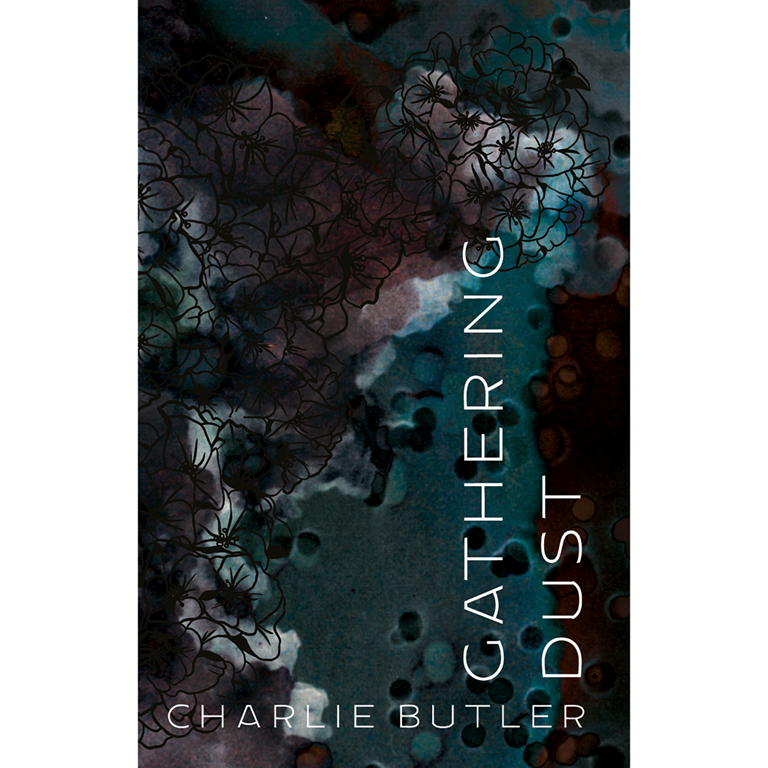
Charlie Butler’s Gathering Dust is something of a departure for Newcastle tape label, PANURUS Productions, in that it’s incredibly mellow. It’s not a complete departure, through: designed as a cassette release, it features two longform tracks, each fitting neatly onto one side of a good old C30 (the likes of which I used to get from Maplins back in the early 90s) – or, in an ideal world, perhaps one side of a 12” or 10” vinyl release. But we know that for a niche label like this, the cost of a vinyl run is prohibitive, and while their print runs are extremely limited, they do sell out – which is the perfect operating model: knowing the scale of their audience and sales reach, and catering to demand without massively overreaching, means costs are covered, and everyone wins. There’s a stream and digital download for anyone who wants it, after all. Everyone’s a winner.

The album title is in fact an amalgamation of the individual titles of the two tracks, and separated, the context shifts a little. Gathering dust connotes a lack of movement, a stasis, something that’s essentially furniture, something neglected, unused. This places the power of word association in sharp relief: together, the words suggest something very different in contrast to when they’re independent of one another.

And so ‘gathering’ brings connotations of collecting, bringing together, of hunter—gathering. And from the dense, swirling drone of a trilling keyboard on the fifteen-and-a-half-minute track that is ‘Gathering’ emerges a slow-picked guitar. The drone und strang approach, whereby echo and tube crunch coalesce to envelop the guitar in a soft sonic bubble is highly reminiscent of latter-day Earth and Dylan Carlson’s solo releases. It doesn’t ‘do’ much, and doesn’t need to: ‘Gathering’ is a long, slow, and expansive work that explores atmosphere.

‘Dust’ is a deep, sense drone that billows and booms, and is indeed reminiscent of the heavy drone of Sunn O))). Its effects are soporific, and for a time my notes are sparse as I drift and move beyond the immediate environs of my workspace to immerse myself in this thick fog of a composition as it slowly unfurls with its post-rock leanings and immersive atmosphere. There’s a tonal warmth that surrounds this, and it borders on ambience at times, and dust washes and drifts like particles descending. And over time, it builds… and builds, swirling into a dense, billowing sonic cloud. The final minutes are reminiscent of the eternal drone of Earth 2 – and being one of my all-time favourites, that’s very much a compliment and an indication of just how textured and enthralling Charlie Butler’s brand of drone is.

Gathering Dust is remarkably dense, but it’s not heavy per se. It’s one of those releases you can simply surrender to, and lose yourself in the enormity of the sound.

AA
cover

Alrealon Musique – 19th February 2021

Christopher Nosnibor

In the past I’ve struggled a bit with Pas Musique. It’s not that I don’t think it’s music, despite the project’s moniker – far from it. It’s simply a matter of taste: their music has often felt a bit easy, a bit contrived, in its gloopy synthiness, to my ears. It’s easy to judge, of course, but then that is the function of the music critic. We trade in opinions, and if everything was entirely objective there would be none. And there would be no art. Because art exists to tap into the emotions, into the psyche, to stir a response – and a negative response is a greater feat than eliciting a sense of complete indifference. Art serves to reflect and articulate life experience and those innermost thoughts. If art doesn’t connect in some way to the human condition, then it is worthless. So what does Psychedelic Talismans have to say? How does it connect?

I’m not sure. But then, in casting that seed of uncertainty, it succeeds in provoking some kind of engagement. So far, so good, I suppose.

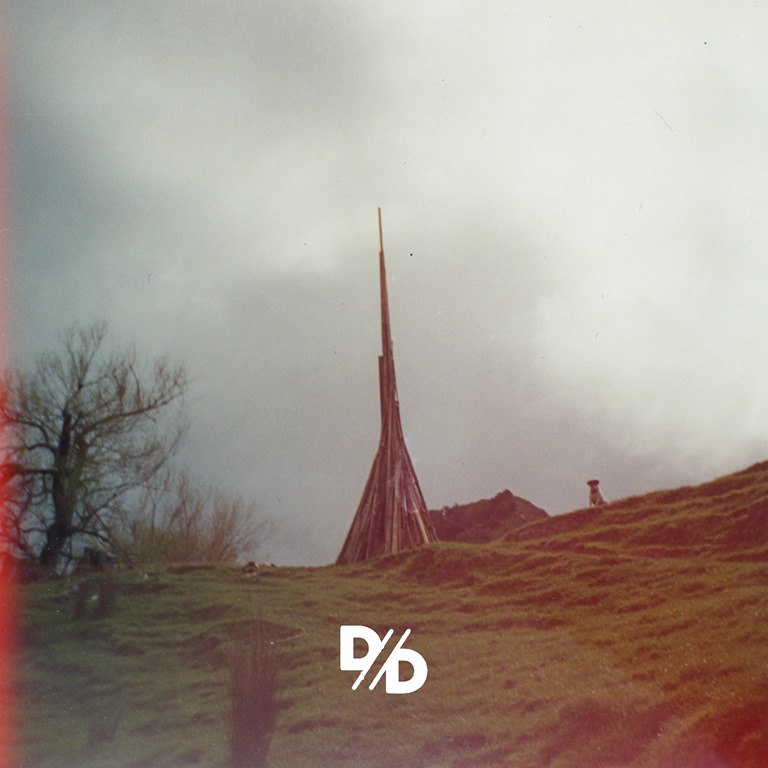
According to the liner notes, rather than being a collective effort, Psychedelic Talismans is actually a solo effort from project founder Robert L. Pepper, which was recorded during Covid-19 lockdown in Brooklyn, New York, and the music and drawings draw their inspiration from the Turkish archaeological site, Göbekli Tepe, which is said to be as old as 10,000 B.C. As such, there are deep currents running beneath the fabric of the album’s six compositions.

Opening the set, ‘Splash of Red Touch’ is gloopy, but also led by sparse, brittle, alien synth sound that sounds like it’s echoing down a long pipe, and as the layers build, there’s a low, almost subliminal thud of a beat and a guitar that sounds like twisted metal scraps. Then there’s twittering birdsong and disconnected voices and there’s a lot going on, and not all of the elements seem entirely complimentary or pinned to the tame time signature, creating a swimming, dizzying sensation, and it plunges onwards with ‘Collected Fictions Brightly’, by which time the style is becoming clearly set: insistent, urgent beats, thumping, monotonous, primitive in the Suicide sense, overlayed with wispy, experimentally-orientated Krautrock synth wibbles and drones.

The vibe is very much vintage here, and often the instrumental pieces, which by and large hover around the five-minute mark, are quite meandering, and despite the low-end density that dredges the depths at points, despite the tense guitar notes that emerge twisted and strangled on ‘In Likeness of Me’, and the impatient palpating beats, and an emerging sense of unease that surfaces in places, for the most part there’s a certain mellowness that permeates the album. Great sonic expenses unfurl in long-echoing reverberations, crackling snippets of sampled dialogue, and long, slow-turning drones.

‘Las Bas’ brings the curtain down in a haze of drones and drifts and with a dash of Eastern mysticism, trilling pipe notes which bounce off one another and turn and fade, and if the piece, and he album as a whole, seems to lack direction, then its points of interest all lie in the diversions, the distractions, the divergences. And when so little else is happening, those detours are most welcome. And finally, I feel I click with Pas Musique.

AA

v12jacketws

Buzzhowl Records – 12th February 2021

It had to be a limited run of 23 vinyl copies, didn’t it? The latest outing for the ever-intertextual, eternally reference-making anything-and-everything-goes melting pot of a project, Territorial Gobbing, is the first vinyl release in a jaw-droppingly prolific career.

For anyone familiar with Territorial Gobbing, Automatic For Nobody sounds exactly like Territorial Gobbing, only with a greater leaning toward some softer, more contemplative moments. Meanwhile, for anyone not familiar with Territorial Gobbing, it’s a good place to start, because it is wholly representative, but also – arguably – a shade more accessible. That is to say, it sounds exactly like the three different covers. Because yes, sometimes, you can judge an album by its cover.

And because T’Gobbing is a musical magpie of a thing, because Terry T Gerbs is the ultimate in postmodernism, indiscriminately drawing on everything and everything more or less at random, we arrive at REM brought to you by the power of 23, that mystical, magical number oft-referenced by fans and students of William S. Burroughs – myself included. The fascinating thing about the so-called ‘23 Enigma’ is that once you become aware of it, it becomes wholly inescapable. So it its ubiquity real, or a case of positive determinism? It’s hard to say, of course, but probability versus frequency makes it a fascinating thing to observe.

And, whether or not it’s knowing or intentional, the Burroughs connection is strong with Territorial Gobbing: the collaging / splicing / tape fuckery approach to audio which defines the entire catalogue can be traced to the cut-up technique devised by Burroughs and Brion Gysin in the late 1950s and extended to tape experiments in the 1960s, which in turn prefaced sampling and also begat the methods deployed by Throbbing Gristle and their peers in the late 70s and early 80s. It doesn’t matter whether or not it’s knowing or intentional, either: the nature of influence is so often indirect – but like a virus, once a concept is out, it becomes airborne and has the capacity to spread invisible, subliminally.

And while Automatic For Nobody may not be quite the sonic riot of many previous Territorial Gobbing releases, it does nevertheless manifest as a massive sonic tapestry cut from infinite and divergent sources.

Sirens and birdsong and field sounds drone and fade by way of a backdrop to the spoken word opener, ‘Spontaneous Bin Lake’. It sounds like having muttered a few observations into his phone on a windy day, Theo stops for a bite to eat and a drink, and, leaving the phone recording in his pocket, manages to record about seven different sources n top of one another, and it bleeds into the scratchy, scrapy scribblings of ‘Oxfam Tulpa’.

‘Tack Says Ski Meme Free Peas Soot’ forges an unsettling atmosphere that’s eerie in the uncanny, strange sense rather than being overtly creepy, sounding like something that was recorded under water, while the eleven-minute title track does go for the creepy vibe, coming on like the ‘original’ TG, Throbbing Gristle, at their most darkly experimental, as Gowans gasps and quivers just a handful of lines repetitively in a muttering, tremulous fashion that exudes a psychotic tension, the under-breath mutterings of someone in psychological distress. It’s dark and menacing, and utterly disturbed. The tape stutters and warps, and there are yells, yelps, and howls off in the background, with extraneous noises throughout, ranging from lilting piano of children’s tune’s to fragments of music warped and deranged. The lightness of those piano pieces only accentuate the deranged horror of the demonic whispering – the words barely audible, but the menace and threat conveyed transcends linguistic articulation.

While there may not be the explosions of noise that assail the eardrums and blast off in your face, the same sonic abrasions are present – just backed off, and toned down – which renders the material here all the more menacing – and on ‘The Ocean of Black Hair is Not Your Friend’, gurgling electronics spark and fizz by ay of a backdrop to a distorted, pitch-shifted vocal, and it’s somewhere between a ransom call and Whitehouse circa Twice is Never Enough. It’s pretty dark, but only a shadow against what’s to com with the closer ‘He’s Absorbing’, which features guest vocals from YOL and Freddy Vinehill-Cliffe. This six-and-a-half-minute mess of noise ratchets the discomfort and the volume up several levels – screeding shards of noise that stop and start blast through babbling gloops and grinding earthworks, which are interspersed with inchoate shouts and yelps, and there is nothing comfortable or pleasant about this. And as everything twists, warps, crumbles and fades into a melting mess in the final couple of minutes, it feels like the very world is disintegrating. It probably is – and this, ladies and gentlemen, is the soundtrack.

AA

TG COVER FINAL

Crónica 166 – 19th February 2021

Christopher Nosnibor

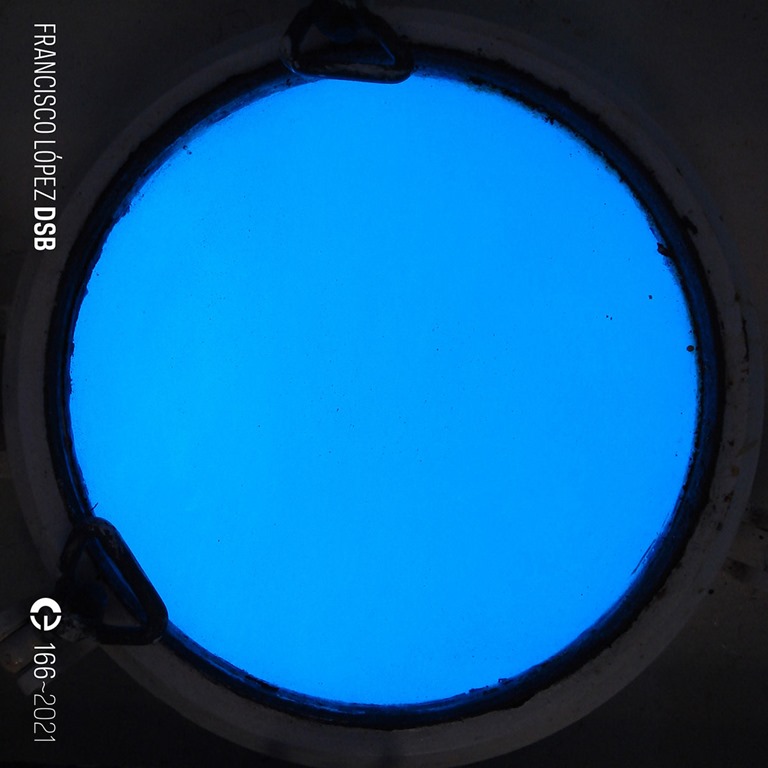
From the very opening seconds, Francisco López’s latest offering assails the ears and scorches the brain: the first track – which hits the magical running time of twenty-three minutes – is nothing short of explosive – literally. Opening with a roaring blast of brutal harsh noise, it soon separates into a series of samples and sounds, whereby propeller engines swoop low, spitting machine-gun fire and dropping detonations all around and bomb blasts tear the air. I’ve previously described certain noise works as sonic blitzkriegs, but this is actually nothing short of total war – captured in audio.

DSB is the accumulation of a decade’s work, which was, apparently, created at ‘mobile messor’ (worldwide), 2009-2019. Mixed and mastered at ‘Dune Studio’ (Loosduinen), 2020.According to the press release, López’s objective over the forty years of his career to date is to ‘Destroy boundaries between industrial sounds and wilderness sound environments, shifting with passion from the limits of perception to the most dreadful abyss of sonic power, proposing a blind, profound and transcendental listening, freed from the imperatives of knowledge and open to sensory and spiritual expansion’.

But with DSB, López doesn’t just destroy boundaries. It destroys everything in an obliterative sonic attack that’s sustained for some forty-five agonising minutes.

When it does pull back from the eye-popping extremes, it presents a dank, ominous atmosphere, and one minute you’re underwater, as if being drowned, the next, your head’s above water and you’re surrounded by a roaring sonic assault that lands blows from all sides. The quieter moments are tense and oppressive, and with unexpected jolts and speaker-shredding blasts.

A low rumble and clodding thuds and thunks, like slamming doors and hobnail boots create a darkly percussive aspect that dominates the start of DSB-B… but then you’re under water again and everything is muffled… you can’t hear or breathe, but all around there are bombs and you’re feeling the vibrations in your chest. It’s all too close and you’re terrified. It’s eighteen and three-quarter minutes of ominous atmospherics and tempestuous crescendos of noise, raging storms with protracted periods of unsettled turbulence in between as strong winds buffet away. The dynamics are extreme, as is the experience.

Something has clearly shifted here: López’s work a decade ago was predominantly experimental, wibbly, electronic ambient in its leanings, predominantly layerings of drones, hums, and scrapes. Interesting enough, exploratory, but not harsh. Yet DSB is so, so harsh, it’s positively brutal. But these are harsh times, and when everything is a grey monotony, same news on a roll on every outlet, the instinct is to slump into an empty rut.

DSB will kick you out of that and kick you around unapologetically, landing boots in the ribs, and then more. It will leave you dizzy and drained. But it will make you feel. And that’s essential.

AA

a2805823699_10

Ipecac Recordings – 26th February 2021

Christopher Nosnibor

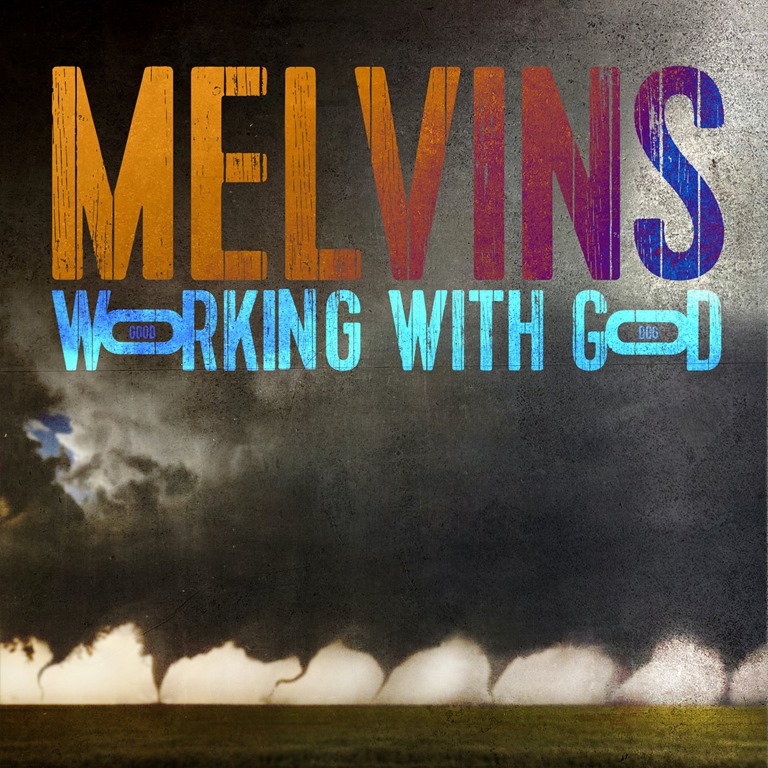
Another Melvins album? But of course! As the press release outlines, Working With God is the second release from their 1983 iteration featuring Buzz Osborne, Dale Crover and original drummer Mike Dillard and it follows the trio’s previous release, the 2013 album, Tres Cabrones. The sheer volume of Melvins releases, particularly with the trawling of the archives that’s been ongoing for some years now, paired with the infinite permutations of the various lineups means that the chronology has become increasingly muddy. But it seems the 1983 lineup is also the 2013 and 2021 lineup, at least on occasion. I think. Please, don’t correct me if I’m wrong. I can live with the confusion and factual inaccuracy. The point is, we have Another new Melvins album.

Working With God is a bit of a mixed bag, but then of course it is: it’s a Melvins album meaning it’s half serious, half twisted humour that’s likely to only make sense if you’re in the band.

Buzzo, of course, bigs it up spectacularly, coming on a shade Trumpian in declaring that ‘Working With God is a damn good record. It’s the album bands like Green Day and Metallica wish they could put out if they only had the guts. Foo Fighters maybe but probably not. Once again, no guts…’

He’s probably right, of course, but this does sound like a lot of ego as she calls out big-name bands. At least he’s punching upwards. As for the album, it’s hard to know exactly what to make of it at times. It sounds like Melvins, of course. Because whatever the lineup, Melvins always sound like Melvins. It’s got hefty drums, driving bass, and monstrous, overdriven guitars.

But on Working With God, it’s Melvins sounding better as the album progresses: ‘I Fuck Around’ is a pretty straight cover of The Beach Boys’ ‘I Get Around’ with the lyrics not-so-subtly changed, and it’s an underwhelming starter, and middling at best. They finally power into explosive riff mode on third track, ‘Bouncing Rick’, which is full-throttle and high-octane and sounds like early 90s Butthole Surfers – a good thing, and no mistake.

They’re in standard territory on the super-sludgy Sabbath-inspired riffcentric racket of ‘Caddy Daddy’ which is undeniably classic Melvins, and it’s by no means the only one. ‘The Great Good Place’ brings the guitars in heavy and ‘Hot Fish’ is low, slow, and deep, a squall of noise making a sonic mess all over the grinding, sludgy riff – but with vocals harmonies on the hook that lift it several pegs. ‘Hund’ is another churner, but delivered at pace, melding thrash with sludge, and calling to mind the material from the ‘Houdini’ and ‘Stoner Witch’ era, it really is Melvins distilled into a three-minute roiiff-laden package.

The off-kilter, comedic ‘Brian the Horse-Faced Goon’ is shit, but is equally classic Melvins – because if any band are masters of the mockery, of the pisstake, of the throwaway cut, it’s Melvins, and anyone who’s heard the ‘Cowboy’ single will attest. The corny Status Quo pub-rock glam stomp of ‘Fuck You’ only further reminds is that Melvins really aren’t a band to be taken seriously all the time.

To give any meaningful critique of a Melvins album is nigh on impossible. It’s impossible to measure it by any standards other than by those of other Melvins album, and the fact is that they don’t really care to be judged y anything but their latest output, even if said output is historical, and while the lineups have changes more often than I’ve changed by underwear, Melvins’ ethos hasn’t changes one iota.

So what’s to say? Working With God is a Melvins album. If you dig Melvins, you’ll like at least half it. If you don’t dig Melvins, you may still like about half of it. Who knows? Embrace the weird and embrace the riffery and see what you make of it.

AA

a0809219475_10

12th February 2021

Christopher Nosnibor

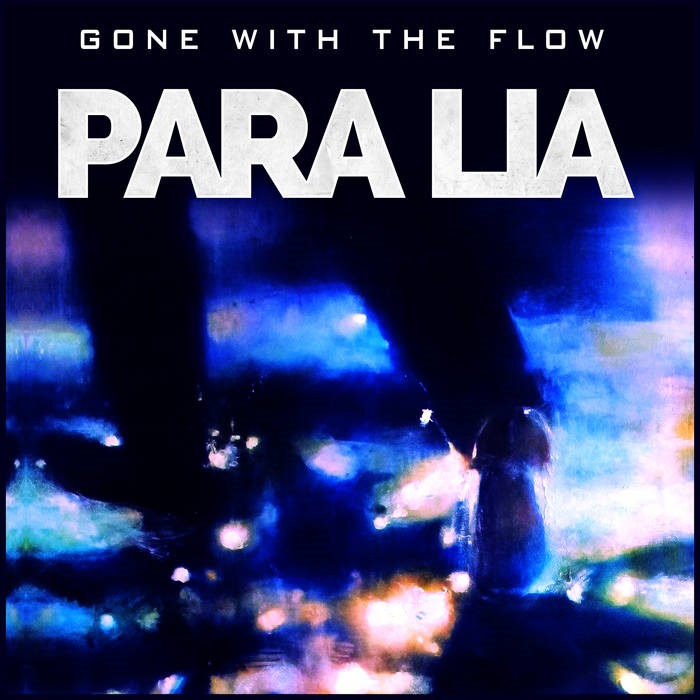
Released digitally last autumn, Para Lia’s Gone With The Flow gets a ‘proper’ physical release this month. The second album from the German duo, consisting of René and Cindy Methner, has already drawn comparisons to Dinosaur Jr, Arcade Fire, and The Mission, as well as referencing in the press release – the hearteningly specific – ‘early Editors’.

It all makes sense with the blistering opener, ‘My Muse’ – a post-punk influenced adrenaline shot that showcases some wild soloing that somehow manages not to sound wanky. See, I’m not one for guitar solos myself, but find that J Mascis’ best efforts are enough to reduce me to tears. ‘Kassandra’ hits that spot: it’s a cutty post-punk revival effort that’s got the pomp of The Mission, complete with the wordless backing vocals Julianne Reagan delivered to absolute perfection on songs like ‘Severina’, and topped with an absolutely melting solo that twists, turns and weeps all over it. I should probably be tired of this by now, but when presented with just the right blend of nostalgia and quality

They don’t always pull it off: ‘Riders on the Dike’ is more ramshackle punk-folk with a ragged vocal delivery reminiscent of Shane Macgowan that simply doesn’t quite sit, and ‘Time and Again’ follows a folksier bent that grates a shade, feeling slightly forces and off-track despite some soaring harmonies from Cindy.

But it’s more hit than miss, as the slow-burning ‘Fools’ brings swathes of mournful strings to the post-rock tempest that swells as the song progresses, and the tense jangle of ‘Fire’ evokes the spirit of 1985, not just instrumentally but with its thick production, where the bass and guitar clump together, cut through by a sharp-topped snare sound.

‘Kaleidoscope’ is every bit as shimmeringly layered as the title suggests, and notes of New Model Army and Red Lorry Yellow Lorry are present as they drive a forward trajectory with an insistent rhythm section and some choppy guitars pinned back in the mix. Last track, ‘No Time for Butterflies’ combines psych-hued 60s pop, folk, and 90s alternative to forge a pleasant and exhilarating finale, and if there’s little about Gone With The Flow that’s overtly ‘new’, it’s a unique combination of older forms rendered with real style and some solid songs.

AA

a1263001157_16

Atypeek Muzik

Christopher Nosnibor

Apparently France’s One Arm is a ‘mythical’ band, although the newly unveiled existence of Mysore Pak, their first album which gathers a fill twenty years of work, suggests that’s not entirely true. There’s nothing like a bit of mythology and legend to bolster the status of an obscure cult act – and this particular cult act has managed to score a number of other cult performers to contribute to the recordings here, most notably Little Annie, who adds ‘kosmic vocals’ to ‘Space is the Place’.

Mysore Pak is, it would seem, a collection of recordings made over the last twenty years, but try to delve into the band’s history and details are nigh on impossible to locate or verify. Who said that it was impossible to hide in the age of the Internet? Anyway, Mysore Pak has a truly vintage sound, with touchstones going back far more than two decades, taking grabs from 60s psychedelic, post-punk, and early industrial.

The first song, the vaguely baggy ‘Real’ is dominated by the heavy clatter of two drummers and duelling basses and with its thumping motorik repetition, it calls to mind vintage Fall. ‘ESG’, meanwhile, locks into a slightly psychedelic groove – and with the airy female vocals, I;’m reminded more of the careening drift of Stereolab, as well as the more contemporary Modeerate Rebels who similarly spin classic indie with a Krautrock aesthetic. The slowed down, sedated ‘Space is the Place’ creeps and squirms stealthy around a primitive percussive clatter, and ‘City’ is a standout with it’s locked-in groove and discordant howls of wailing feedback.

Elsewhere, things get murkier and harder edge, as exemplified by the cutty, scrapy, hybrid trudge of jittery noise that is the eight-minute ‘Top Tone’. The guitars are sharp, there’s all the serpentine esotericism and eastern promise you could dream of, making this a dreamy, delirious meandered, and similarly, ‘Step 3’, which comes on like a head-on collision between Suicide and The Jesus and Marty Chain is a deeply compelling mess of noise. Closer ‘Virgule’, too, harks back to Psychocandy while plundering a seem much deeper and darker with its rippling flyaway synths and low-riding bass that meanders as it pleases while vintage snares crack in every whichway.

For the primitive production feel and the simplicity of basslines that just loop endlessly, Mysore Pak is so much more than a hipsterish replica of real life that skips along nicely. As accessible as this album is, it’s got more depth and more instant biteback than you would ever imagine. An album that steps out of time and spans infinite time and space, it’s got a lot going for it.

AA

ALA1901CD_front

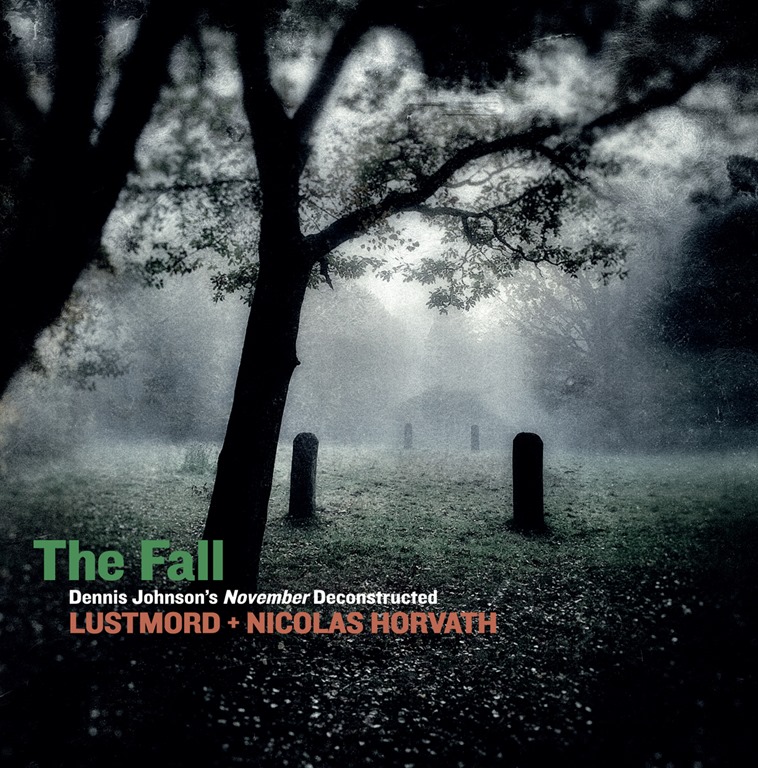
Lustmord + Nicholas Horvath – The Fall / Dennis Johnson’s November Deconstructed

Sub Rosa – 20th November 2020

Christopher Nosnibor

According to the press release and liner notes, The Fall is a deconstruction of November by Dennis Johnson. My knowledge of the source material is limited to the same, which explain that November was written for solo piano in 1959, and is the first example of minimalist music composition – and that it was also the inspiration for La Monte Young’s The Well-Tuned Piano (1964). This may or may not be useful information, as may or may not be the fact that this collaborative effort strives to ‘reduce Johnson’s original November to its core element and place it in a landscape of complimentary sound. And as such ‘echo’s [sic] November but with further resonance’.

It’s a sixty-six minute work split into four segments numbered I through IV, with classical pianist Nicolas Horvath playing the piano parts, while Lustmord brings the atmospherics. How that translates is that the album’s first piece is a full twenty minutes of instrumental piano work, played slowly and delicately, with an acre between each note as it drops and hangs in the air against a backdrop of a fierce gale that buffets against a microphone. If you’ve ever tied speaking to someone on their mobile phone on a windy day, you’ll be aware of how the gusting air’s buffeting creates a sense of disturbance, an interference. Around the midway point, the disturbance shifts from being breeze-like to a deep, surging groundswell, something dark and resonant, an amorphous sound that rumbles and expands, then fades and returns in waves, ebbing and flowing slowly, and all the while, the sparse piano plays on.

And that is pretty much it: slow, deliberate piano – individual notes, struck a bar apart – and a distant rumbling backdrop that fills the empty space, sometimes barely, leaving little but empty air, others more densely, a wash of sound filling the air with levels of abstraction. At times, like rumbles of thunder, and others, like unsettling fear chords and an ominous vibe, but never anything concrete or tangible.

It isn’t much to go on, and while it is atmospheric and intriguing, it’s not entirely enthralling either, and I suspect the same is likely true of the original, a work that’s more concerned with concept than reception – something that can be done, and so is done, and example of avant-gardism promoting the project for its own ends rather than a something to necessarily be appreciated. There are things to appreciate, as it happens: The fall counterpoints ominous and graceful nicely, while also paying tribute to and raising awareness of a seminal work that’s been largely forgotten, eclipsed by other works by other composers, with Dennis Johnson’s renown falling far short of the likes of John Cage and Philip Glass. And on that basis, and on the basis of the original work’s true significance, this is worth tuning into.

AA

SR502_front

Panurus Productions – 5th March 2021

Christopher Nosnibor

Bunker is pitched as ‘A heavy shelling from the York based two-piece’ and the drum and bass – and no, certainly not drum ‘n’ bass – duo offer up a monster that, despite having only seven tracks, runs to almost an hour in duration.

On a personal level, there’s a certain degree of pride here: for so many years, York sat under the shadow of Shed 7, as if they were the only band the city had ever produced. And while in terms of commercial success, there’s a certain truth to that, the dreary indie landfill merchants’ success eclipsed everything else – although again, for some years, everything else seemed to consist of largely acoustic blues, which is great for background on a night down the pub, but ultimately, variety is the spice of life, and the last decade has seen York’s diversity thrive – thanks in no small part to supportive venues giving truly alternative acts a platform. And the more diversity is showcased, the more breeds. And so, out of this melting pot emerged PAK40, mining a seam of stoner / doom, but with a keenly experimental edge that really set them apart.

This is all explored in full here, and it bulldozes in on a cascade of feedback that emerges into a lumbering riff on the deep psych grind of ‘Sausage Roll’, the first of three tracks which originally appeared on the ‘Crusts’ demo release a couple of years ago. When they take it down a notch, there’s a certain swagger to the strolling bassline, a subtle jazz swing to the percussion – nothing fancy, just a bit of groove. There are vocals and other details echoing away low in the mix, and it’s quite spacious and trippy. And when the distortion kicks back in, it’s fat and dirty.

‘Rain’ spreads out sedately over a whopping ten minutes, taking its time wandering an almost blues-tinged modern psychedelic territory (off the cuff references to Desert Mountain Tribe and Ghold come to mind) before bringing the weight. It’s a slow-burning, meandering effort that holds back more than it gives until the final couple of minutes.

When they do ‘proper’ vocal songs, as on ‘Hollow Man’, said vocals are all but buried by the grumbling, buzzing bass, and a shedload of reverb. And when they do shift from strolling psych to unleashing the riffs proper, they really do grind ‘em out. ‘U-96’ goers more post-punk minimal, but packs a massive kick at the end.

The heavy afterburn of ‘Pyramid’ is scorching, but it’s almost inevitable that the fourteen-minute ‘Elephant’ should be the album’s centrepiece, and it looms like a monolith in every sense, and encapsulates the entirety of PAK40’s sound and scope in one truly epic composition. It does low and slow, a crawling, stealthy intro taking its time and taking its time and taking its time, through a gradual build, with real suspense and atmosphere developing.. and when the riff crashes in – fuck yes, does it crash in, hard and heavy.

Closing off with the title track, a mere seven minute jaunt, they really step up the volume and it’s some weighty drone that drifts like a pea-souper fog from the speakers as they go full Sunn O))). And it’s absolutely glorious. These are the kind of crushing power chords you can simply bask in as they fill every inch of your being. It’s immense and borders on transcendental. You don’t just hear it, but you feel it.

Bunker feels like a full summary of the band’s range and vision, and it’s both accomplished and exciting, and creates a real anticipation of more to come.

cover

Invada Records – 29th January 2021

On the strength of a brace of tumultuous single releases, anticipation for Divide and Dissolve’s upcoming album was pretty hot. And with Gas Lit, they’re positively on fire.

With the aim ‘to undermine and destroy the white supremacist colonial framework and to fight for Indigenous Sovereignty, Black and Indigenous Liberation, Water, Earth, and Indigenous land given back’ Divide and Dissolve wear their difference from so much of the scene with pride: they certainly don’t look like your average doom duo. But then, nor do they sound like it either.

They may only be two in number, but Takiaya Reed (saxophone, guitar, live effects/ (Black & Tsalagi [Cherokee]) and Sylvie Nehill (drums, live effects/ (Māori) incorporate an array of unconventional instrumental elements into their immense sound, most notably saxophone. But it certainly doesn’t really lighten the tone with some groovy jazz notes, or even some wilder free-jazz, either.

Granted, the opening bars of the first track, ‘Oblique’ are gentle, soothing, orchestral and with hints of neoclassical or soundtrack music even, but it’s simply a lure before the barrelling drone of low, overdriven guitars so distorted as to melt into a drone, propelled by a frenzy of thunderously heavy percussion. And in the background, brass so mournful as to sound sadder and more lonely than a solitary burial in the middle of the Sahara. It’s a bleak and desolate sound, and one that’s utterly compelling.

‘Prove It’ is pure density, a heavy drone guitar with a sound that’s thick and grainy flows like a mudslide. The blank monotone spoken word vocal on ‘Did You Have Something to Do With It?’ is detached, and disconnected as it speaks of dark thoughts and actions against a sparse, minimal backdrop. It’s eerie and ominous, and sounds more like a segment lifted from a documentary about a serial killer – and in the context of the album, it serves as an unsettling interlude, which provides brief respite sonically only to exchange the aural terror with something sociopathic and equally disturbing.

Seven-and-a-half-minute single cut ‘Denial’ hammers in hard with a yawning drone of guitar that sounds more like a churning earthwork, the drum beats like detonations, before tapering away to leave a haunting scene, the serpentine scales full of an ancient ant elusive mysticism. But it becomes increasingly scratchy and more decayed… and then ‘Far From Ideal’ bulldozes in, obliterating everything in its wake, before things get even heavier, darker, and murkier with the trudging sludge of ‘It’s Really Complicated’.

‘Mental Gymnastics’ is another short piece, and another one which evokes distant lands in ancient times, unknowable wisdom lost in the sands of time, before single release ‘We Are Really Worried About You’, grinds its way to the end on a tsunami of a riff, and it leaves you breathless.

It’s clear that Divide and Dissolve really grasp the power of dynamics, but also have a unique way of rendering those dynamics, not just in terms off the all-important volume changes, but in how they explore mood. More than this, they transcend conventions and standard doom tropes and incorporate myriad stylistic and cultural elements, and so do astoundingly naturally. For all the weight, there’s a bold majesty about Gas Lit that may be difficult to pinpoint but which permeates its very fabric. And for all of these reasons, Gas Lit feels different – and hits so incredibly hard.

AA

931373