Posts Tagged ‘Album Review’

Karlrecords – 27th August 2021

Christopher Nosnibor

Well this is an interesting one, and it was, admittedly, Thurston Moore’s name that compelled me to give it some ear time. While listening to the first pounding space-rock psychedelic jazz freakout, it dawns on me that this isn’t actually my first meeting with Turkish free form ensemble Konstrukt, and that I was blown away and bewildered by their 2018 collaboration with Keiji Haino, A Philosophy Warping, Little by Little That Way Ahead Lies a Quagmire (Live).

It’s hard to tell what’s going on and who’s doing what on this first piece, especially what Moore brings to the mess of noise that is, ‘Yapayalnız (Gezerler Sokaklarda)’, which sees a motoric rhythm hold steady amidst a vortex of punk-infused chaos until, ultimately, everything collapses. There are some shouted vocals, but they’re muffled and drenched in so much echo that it sounds more like a riot than a performance, and it makes for an eye-popping, headache-inducing ten minutes. The fact that this was recorded live makes you wonder what it must have been like to witness first-hand: on the one hand, it’s exciting, unpredictable, while on the other, it’s vaguely frustrating, because you don’t know where it’s going – or where it will end.

Turkish Belly is the fifth and latest entry in the ongoing series of collaborations between the four-piece ensemble and an array of guests, and it’s certainly experimental and freeform, to the point at which one could question whether there really is much form at all, and it’s extremely difficult to extrapolate precisely what Moore brings to the chaotic party. Perhaps it’s simply another layer of chaos.

‘Kurtadam’ in two parts is very much percussion-dominated and almost hints at the conventions of rock – but it’s only a hint, and more to do with the solid rhythm section than anything else. It does nail a groove, which is welcome, but everything else especially the horns, are all over and flying every whichway.

The final track, the eleven-and-a-half minute ‘Uğultular’ is a braying beast of a tune – if you can call it a tune as such. The deadened drum beats thwack out a damp rhythm amidst a serpentine sway of seeping discord and disarray. There’s murky bass and some wild, reverb-soaked guitar work, and the whole thing lumbers and lurches, bleats and brays blindly. Wordless vocals growl and grunt amidst a buzz and a howl that yawns and churns and crawls its way to conclusion.

The audience’s applause and cheers after jolt the listener back to reality, and the fact that this a document of a live performance. Maybe you had to be there to fully appreciate it, as it seems those present on the night very much did, but on record, it’s interesting, but at times a bit of a slog.

AA

KR084_front

Anticipating Nowhere Records – 24th September 2021

Christopher Nosnibor

With the colossal five-volume ‘Isolation and Rejection’ lockdown compilation series and the one-off final final FINAL Front&Follow project, the compilation You Can Never Leave released in June, the eternally restless Justin Watson can put his label to bed and resume work with his current musical vehicle, the collective who operate as The Incidental Crack to deliver album number two. After all, it has been more than three months since second album Municipal Music.

The three – Justin Watson, Rob Spencer and Simon Proffitt – are still yet to meet, and their third album, like its predecessors, took form with ‘them exchanging field recordings, samples and random noise between Manchester, Wigan and North Wales’.

As the liner notes recount, ‘Detail contains within three new long-form pieces and a couple of shorter ones filling in the gaps. The adage goes that the devil is in the detail, and Detail brings exactly what the title promises, with the first composition, ‘We Might Bump Into each Other’ beginning with some muffled dialogue and an ominous hum, then hums, bubbles and slurps against a backdrop of echoic reverberations, before ‘Fish Dance Tank Track’ marks a shift in style, with more defined beats – an insistent bass bump occupies a different space from the glitchy fluttering woodpecker-type stammers and stuttering hi-hats which all make for something quite complex beneath the drifting drones and quavering hums. It’s an interesting and complex composition that brings together elements of ambient and minimal techno, and as birdsong flutters in toward the end, the piece takes on new aspects that juxtapose nature and artifice.

That the grating looping throb of the six-and-a-half minute ‘Waterfalls Per Capita’ should be considered a gap-filler is a matter of context, and it comes after the harrowing dark ambient collage of ‘I Lost It’, that is by no means a comfortable or easy listen.

The seventeen-minute ‘Morning Tram’ combines field recordings where the original source remains clear, but with subtle but insistent beats, and it’s perhaps there – the finale – that everything comes together. Fragmented samples and snippets of dialogue collide with tumbling trees and slow-turning washes of ambience to create remarkable depth. Passengers pass on and off, engines rumble past, there is endless chatter and a wall of extraneous sound. Assimilating it all may be difficult, but it’s rewarding. The beat is almost subliminal, but it’s relentlessly insistent and registers almost subliminally as the sound swells and voiced clamour and congeal among a rising tide of horns and other momentous sounds. And then it stops, abruptly.

It may be short in terms of tracks, but Detail has substantial depth – and much detail, all of which is very much worth exploring.

The Incidental Crack - Detail (cover)

Dret Skivor – DRET 009 – 3rd September, 2021

Christopher Nosnibor

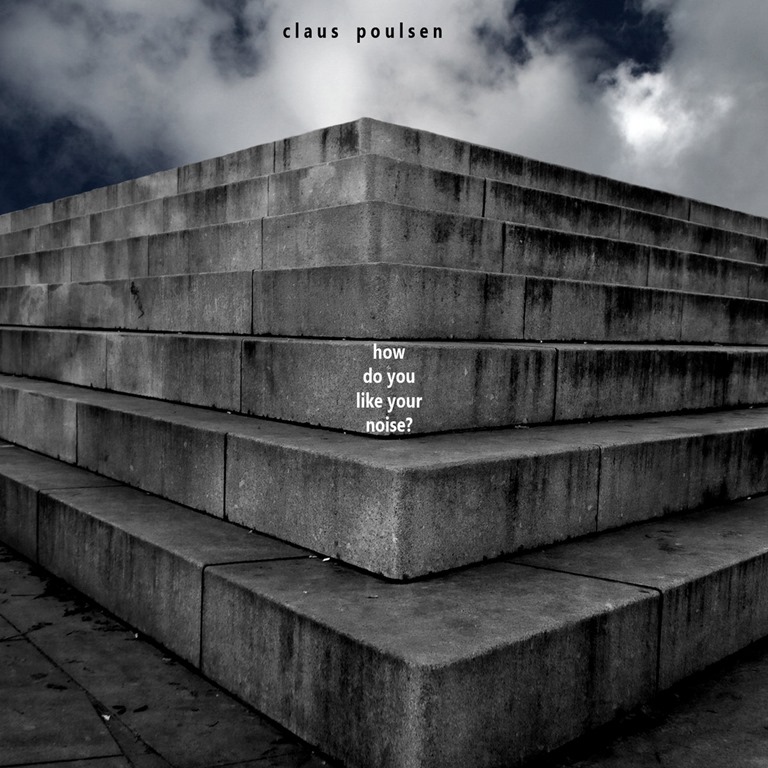
On the face of it, it’s a straightforward question. But chewing on it a little longer than is probably advisable, like a lump of gristle you can’t quite find an opportune moment to spit out discreetly at a family meal, it presents a range of different potential inflections, from the casual ‘how do you like your noise?’ delivered with the same intonation as ‘how do you like your steak / coffee / eggs?’ through to the rather more personal but interrogative ‘how do you like your noise?’

So while listening to the ten pieces on this short release, available digitally and as a C20 cassette, I gave this some consideration. It wasn’t necessary, but then, not a lot is, beyond the basic functions of eating, drinking, breathing, and sleeping. Then again, art has existed longer than civilisation, and perhaps it’s not so wild to think that giving an outlet to one’s thoughts and feelings which transcend verbalisation is also necessary in the most fundamental sense. Perhaps we need art to live. This act of consideration in itself made me realise that a lot of noise is something that’s possible to think alongside listening to. It isn’t that it’s necessarily undemanding: it’s often far from it. It’s just that noise has the capacity to free the mind in ways that more structured genres, and modes of music more geared towards beats and lyrics can often pull the brain waves into their structures instead of encouraging that certain mental drift. Of course, ‘noise’ can be subject to a host of interpretations, sometimes with an interchangeability with ‘sound’. Specifically, here, though, I’m talking about noise.

And ultimately, I can only conclude that I do like my noise harsh. For some reason, noise that makes me grit my teeth and chew the inside of my mouth while I’m listening is the noise that meets the needs of my inner workings. It excites me and sets me on edge. I suppose it’s because ultimately, when it comes to this shade of noise, all you can do is submit to it, and it’s a cathartic release to allow the sound to draw the stress from the mind and body.

How do you like your noise? is pitched as ‘a bunch of noises recorded live 2020 and gems from the archives’, and while it’s not always clear which represents which, there’s no shortage of nasty abrasion on offer here, and it’s clear that Pulsen ‘get’s noise – by which I mean, he has a handle on the effects of varying textures and frequencies, and how shifts between different ranges can trigger both physical and cerebral responses. The grating ‘metal massage’ and squalling electronic blitzkrieg of ‘urbanoise’ are exemplary of the kind of circuit-melting experimentation that many will find painful and torturous, and be grateful for their merciful brevity.

There’s range here: ‘dead man’ is a sparse and spacious guitar piece that borders on post rock, while ‘ringu’ does some glitchy warpy bendy note electronics tricks and teeters on the brink of some kind of electrojazz odyssey. There’s also some whimsical faffery, clattering and clanking around that’s more throwaway interlude than composition, with sub-minute snippets like ‘still haven’t found what i was looking for’.

And so, I changed my mind: I like my noise varied. On this release, Poulsen shows the full spectrum of his versatility, and the range of his noise. I like my noise, and I like this a lot.

AA

a3069066462_10

Cruel Nature Records – 27th August 2021

Christopher Nosnibor

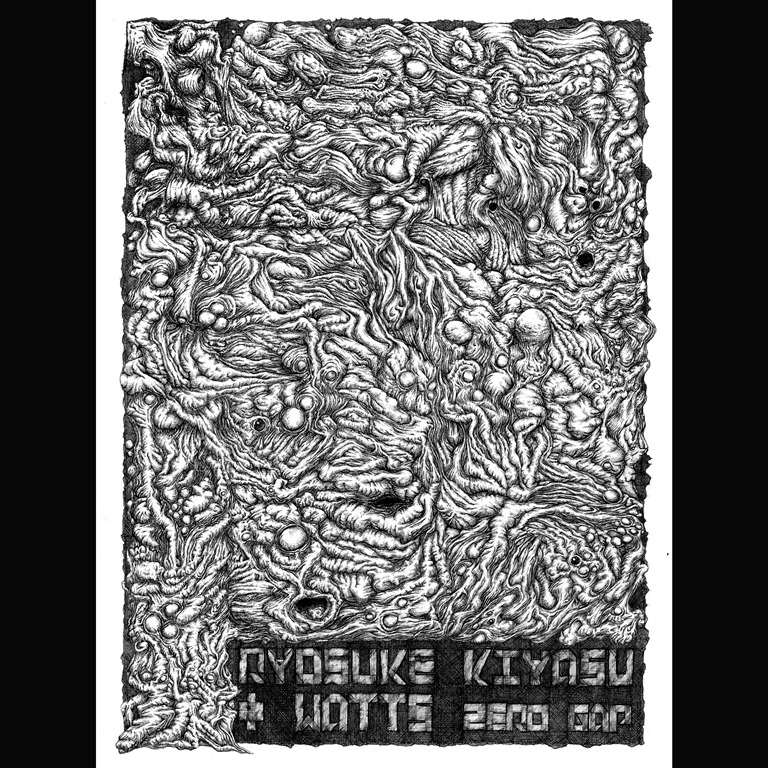
Zero Gap is a truly international collaboration between Ryosuke Kiyasu (SETE STAR SEPT, Fushitsusha, Shrimp, etc, aka ‘the Japanese guy with a snare drum’ and WATTS (Lump Hammer, Plague Rider, Lovely Wife, aka that beardy growly bloke) that proves that location is a state of mind. Recorded oceans and continents apart, there is zero gap between the two artists as they hammer out half an hour of sonic abrasion, created, as the accompanying notes explain, ‘entirely from one snare and one delay drenched throat’.

If on the surface the snare drum seems to have only limited potential, then Kiyasu doesn’t exactly disprove that, in that it sounds like snare drum throughout. But the guy finds every conceivable way of rendering that snare sound, from rapidfire hits and rolls and crashes through clattering blasts and builds, and the still finds ways beyond conception to conjure yet more dynamic range from the simplest of instruments.

Against this clattering, clanking, thunderous barrage of percussion, Watts delivers a vocal performance that quite simply doesn’t sound like a vocal performance for the majority of the time. From a whispering moan like a distant solar wind, to a gurgling drain to a chthonic babble, he’s got immense range. It might not quite be Mike Patton’s Adult Themes for Voice, but it’s still impressive – and I mean eye-poppingly wide-ranging and weird. Best of all, Watts grasps when less is more, at times uttering little more than barely audible grunts and burps at long intervals. Snarling and snapping like a zombie in The Walking Dead, one moment, to barking like a rabid dog the next, Watts is wildly unpredictable, and often quite simply doesn’t sound human. Perhaps he isn’t. At times unsettling, unnerving, others plein scary, he snarls, growl and gargles his way through the creation of some quite strange soundscapes.

Everything works well in context, too: at times, Kiyasu pulls back on the battery of beats to taper down to some barely-there hints of sound, and the two not only are incredibly egalitarian in the distribution of the prominence of their contributions, but they seems to intuitively grasp the need for ebbs and flows, crescendos and decrescendos, making Zero Gap a work that feels like a journey, and even if it’s a journey without a clear end point, it’s a journey punctuated by events and variations.

Zero Gap isn’t abstract as such, but it does, most definitely stretch the boundaries of music. It is ultra-niche, but in the global village it’s the kind of thing that has the potential for significant cult reach. The pair deserve it: Zero Gap is far out in the best way. Crazy, inventive, innovative, not giving a fuck for convention, it’s an album that carves its own niche.

Captured as a single track spanning thirty-two minutes, it’s unusually a release that works best digitally (and dare I even say it, it, could make a nice CD), but then this is an unusual release. My advice? Dive into the dark stuff.

AA

cover

12th June 2021

Christopher Nosnibor

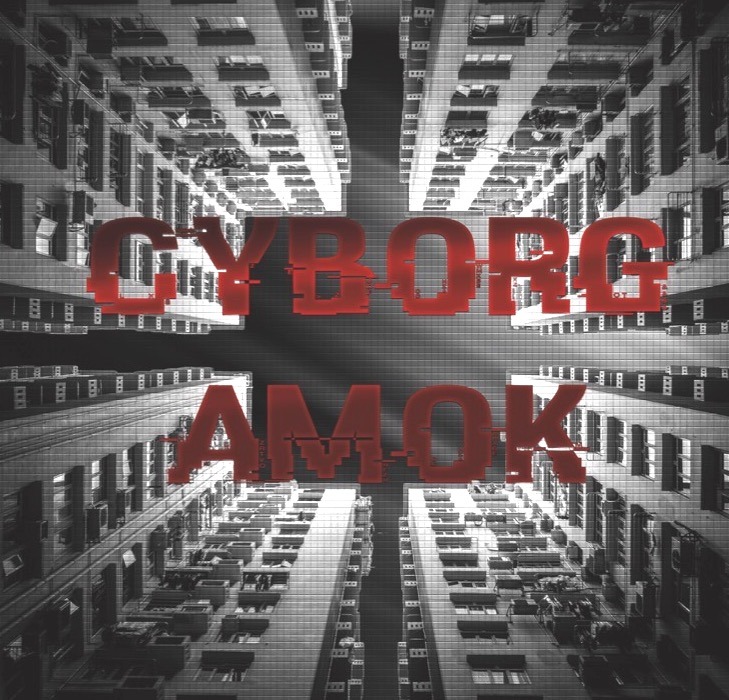
I wasn’t entirely sure what to expect from Cyborg Amok’s eponymous debut. Sure, there’s the press release, and no, it’s not lazy journalism to take cribs and pointers from press releases. This one forewarns that Cyborg Amok ‘resides somewhere between the brilliance of twilight and the apocalyptic darkness. Their gothic infused synth-rock sound delivers the listener to a panorama of synthetic waves, twisted organic tones and a slightly pop crust … the language angels speak in the darkness.’

I don’t entirely compute the implications of this, can’t even really unravel them, not least of all because I can’t always grasp what passes for ‘gothic’ these days having lost the thread some time in the mid to late 90s with the emergence of cybergoth, which sounded just like so much bad techno to me, and a million miles from the post-punk origins of the genre, and the subsequent ‘waves’ of goth which coincided with myriad hybrid mutant strains. Perhaps I am something of a pursuit in my personal tastes, but as a critic, I try to be more accommodating. But sometimes, you just have to accept that music is music and it’s either good or bad, because your audience are unlikely to share your prejudicial quirks.

Cyborg Amok is Greg Bullock (formerly the keyboardist with RealEyes and Shamen) and drummer Brydon Bullock (no relation as far as is obvious), and their debut album is in fact bringing together their first two (now deleted) EPs, so, if I’m being picky it’s not really a debut album but a compilation (which is also true of The March Violets’ Natural History among others. Not that it detracts from the force of these seven songs pulled together in one place. Oh no. Cyborg Amok kicks.

‘Burden Away’ brings bulldozing bass and stuttering mechanised drums. The rhythm guitar trudges and grinds, while Greg’s brooding baritone vocals registers in the ribcage – but while it’s so much industrial grind, the lead guitars are warped country, and there’s a twangy inflection in the vocals to match. It’s solid, but if you’re looking for a pigeonhole, you’re going to struggle. Things get even more complicated with ‘Still Too Far Out’, which straddles Nightbreed-flavoured second/third wave goth with its organ synth sounds evoking sepulchral gloom against guitars that fizz in a swathe of chorus and flange… and then there’s a fuck-off keyboard solo that’s B-Movie and Ultravox and it may be incongruous by 2020s standards, but perfectly in place in context of those precursors.

With its space-themed title and snarling, bulbous, electronics, ‘Dancing on the Floor of the Sea of Tranquillity’ provides more of the vibes the moniker and title perhaps evoke, and if it suggests extravagant prog enormity, it’s no criticism to say that after its dark, stark intro, it slips towards 80s electropop in the vein of A-Ha.

There are some Cure-esque moments scattered about the album, too, but then this is an album, that assimilated huge swathes of 80s that’s not exactly band-specific, but the zeitgeist.

There’s some overblown prog guitar that’s Yngwie Malmsteen overdone, but once they’re done with the moments of indulgence (‘Choice Not Taken’ is perhaps the greatest showcase of guilt), they deliver some impressive musical moments, where the ambition is equalled by the ability.

They’re at their best when they keep it minimal, sparse, nailed down: last track ‘Another Turn’ bears solid – and favourable – comparisons to Red Lorry Yellow Lorry, with its steely beats and grey, steely guitars backing a gruff, ragged vocal delivery. It’s a style that works well, and while this compilation must provide a point at which to assess the trajectory of their career, the evidence here is that they’re doing everything right and need to forge ahead and capitalise on their work so far, because this is a strong dark album.

AA

240381

6th August 2021

Christopher Nosnibor

It’s not always easy to remember – what you’ve said to whom, what you’ve written before, if you’ve really experienced something or simply dreamed it. You’d think it would have become easier with not really going anywhere or speaking to anyone for a year and a half, but in my experience, the opposite is true. Everything blurs. So if I’ve mentioned any off this before, if I’ve touched on how electrogoth releases often clump together, or how genre tropes can so often be so much meh, then I apologise, but only a little. Reviews are, after all, personal, a personal response to musical release, and objectivity only cuts so far., meaning that this personal response, well, it’s all spilling from a review-a-day brain, dayjob and parenting and the confusion of every day melting into the next. It’s been a relentless barrage of bad news in the media, as well as from friends and relatives. By no means has all of the anguish and suffering been attributable to the virus – more often than not it’s been collateral resulting from lockdowns and a sustained sense of panic. We’re biologically designed to experience fear in short bursts. Fight or flight. To be trapped, immobile, powerless, is beyond comprehension, and there is no space to process grief and trauma in a normal way.

It’s against this backdrop that Eric Kristoffer developed the new unitcode:machine album, Themes For A Collapsing Empire. It’s very much an example off utilising a creative outlet as a form of therapy, with the blurbage describing Themes For A Collapsing Empire as ‘a journey through the mind of Eric Kristoffer after a series of tragic events that 2020 brought. It explores a path of loss and regret, and struggling to cope with such stressful personal events while also trying to endure a global pandemic’.

Electro-industrial isn’t a genre one immediately associates with emotional resonance, but with Themes For A Collapsing Empire, unitcode:machine really strike a level that balances thumping beats and melodies that convey the human aspect of the lyrical content. That said, the stark, mechanised percussion and cold synths highlight the bleakness of it all – and by it all, I do mean it all. Step back and survey the scene: August 2021 versus two years ago. It’s a different world, and so many have lost so much – not just loves ones, but connections, livelihoods, sense of self and place in the world. Where is it all heading? Where will it end? Will it end? With climate change an inescapable backdrop to societies which have never been more divided, how do we return from here? Do we? Can we? It’s not just an empire that’s collapsing, but – not to be overly dramatic – human civilisation itself. Themes For A Collapsing Empire feels like an essential soundtrack to this existential anxiety. Stark and dark, it’s reflective, paranoid, gloomy, and it’s very much song-orientated, with kicking choruses being a defining feature.

‘Falling Down’ is a clear standout, but there are plenty of strong tracks and easy single selections alongside it: Themes For A Collapsing Empire packs in the hooks and solid choruses, but without being remotely lame or overtly commercial – and that’s a real skill. Everything just flows, while at the same time punching you in the face.

With nine tightly-structured songs all clocking in under four-and-a-half minutes, Themes For A Collapsing Empire feels like a concise statement, and an album with strongly-defined parameters and an intense focus, with the end result being all killer.

AA

035223

Room40 – RM4130 – 13th August 2021

Christopher Nosnibor

I’m still recovering from the last Celer release I covered – the four-disc Future Predictions, released only last summer. It wasn’t harsh or sonically challenging: it was just really, really long. This one, however, is rather shorter, comprising twelve tracks with a running time of just twenty-nine minutes.

It is, notably a departure. As the press notes detail, with In Light Of Blues, ‘[Will] Long pivots away from long-form works to create a series of vignettes that capture the essence of his aesthetics interests. The record condenses and refines his compositional methodologies forming each piece as an acoustic miniature speckled in hazy harmony and evocative tonality’.

As such, as much as In Light Of Blues is a departure, it is also very much a continuation of his previous work, while concentrating it down to shorter snippets – but with no loss of power or depth. Long’s comments on the reason for this departure are illuminating:

‘It was months ago, but it could have been weeks, days, or even hours since then. I stopped wanting to hear loops, I wanted to stop it. I added brass; trumpets, trombones, and more horns. I cut it out like words from a book, and sewed it back together. Burroughs. These movements are merely to stay alive, to stay moving.’

In citing [William] Burroughs, Long’s observation that ‘You wake up from a truck horn passing in the early morning hours on the nearby freeway, or from a dream that you can’t tell was a nightmare or a loving memory… Someone walks by on the street wearing the same perfume. I drew out each place, each scene, and put the story there. It might have been with you, or without you. All I know is that you were there somehow the whole time, even if you weren’t’ marks a striking parallel with some of Burroughs’ statements on the way the cut-up technique was an attempt to being art closer to life: “every time you walk down the street, your stream of consciousness is cut by random factors… take a walk down a city street… you have seen half a person cut in two by a car, bits and pieces of street signs and advertisements, reflections from shop windows – a montage of fragments”.

While the pieces on In Light Of Blues are composed from a montage of fragments, instead of jarring against one another and crossing over one another to replicate the blizzard of simultaneity that is life, they blur together to create a slow-creeping sonic mist. The details are obscured, the edges indistinct, the definition vague to almost absent. Some of the pieces are fragments in themselves: the second of the three ‘Melancholy Movement’ compositions is only fractionally over a minute long, and there are a number of pieces of similarly brief duration.

Time appears to be something of a leading preoccupation on In Light Of Blues, as titles including ‘Days Before the Change’, ‘In the Intimate Hours’, ‘After All Time’, and ‘Precious Past Hours’ indicate. The titles suggest a certain urgency, an anxiety, even, over the passing of time that’s not necessarily apparent in the music itself. But as is so often the case, with ambient / abstract musical forms, the music conveys only some aspects of the full meaning or intention, and beneath comparatively tranquil surfaces often lie more trouble currents, and there are numerous billows of darker, denser sound which rumble and stir, evoking brewing storms amidst the soft layers of the pieces here.

Perhaps this is the real pleasure – and perhaps also the purpose – of In Light Of Blues. It’s an album that can simply be allowed to drift along in the background, the darker clouds occasionally tugging the attention while, in the main, it may pass largely without the demand for focus. But closer attention yields greater rewards, in the sonic depths and subtle textures that reveal themselves through that engagement, and to seek the space beneath the surface, to explore its context and origins and consider what it may mean beyond the surface yields more still.

AA

RM4130_front

Dance To The Radio Records – 17th September 2021

Christopher Nosnibor

Between 2005 and 2011, Dance to the Radio was the label that wasn’t lonely synonymous with the Leeds scene, it practically was the Leeds scene, and contributed to putting the city and its bands back on the map, releasing The Pigeon Detectives, Forward Russia, This Et Al, iLiKETRAiNS, and Grammatrics, as well as a number of wide-ranging compilations featuring the like of Pulled Apart by Horses. Returning in 2017 after a six-year hiatus, they’ve focused on a small but carefully-curated roster, giving a home to Tallsaint, Aural Aggro faves Dead Naked Hippies, Jake Whiskin, and Hull’s Low Hummer, who may be relatively new but have established themselves quickly, showcasing an energetic alt-rock sound that incorporates elements of grunge, punk, postpunk, and electro-pop with potent results. Debuting in October 2019 with the single ‘I Choose Live News’, the band have marked a steadily upward trajectory in the profile stakes ever since.

Granted, over half the tracks on Modern Tricks For Living have been released as singles in the last couple of years or so, making this as much a compilation as an album proper, but nevertheless, it hangs together nicely, on account of its stylistic unity and lyrical themes, and it’s well sequenced too, with the ups and downs just where they need to be.

Classic themes of angst, anxiety, and alienation dominate, and they never grow tired or fade. They possess a universality and an eternal relevance. The power and passion of the emotions may fade with age, but they never go away: most disaffected teens still feel it, unless they sell out and become self-satisfied, complacent parts of the machine. And some do – I’ve lost friends that way – but many of us still burn with the anguish of adolescence. As such, despite the band’s youth, there’s a universality in their appeal.

‘These days I feel like I’m dead’: the drawling vocal on ‘Tell You What’ is pure grunge nihilism, but there’s a sparkly electropop aspect to it, too. And the more you delve into Modern Tricks For Living, the more detail and the more canny crafting it reveals: amidst the brashy, trashy surface, there’s a lot more going on. These songs aren’t superficial, rushed, three-chord thrashes – well, they are, but they’re a lot more besides, and that’s the appeal of Low Hummer.

‘Take Arms’ packs some attack and makes for a strong opener. It doesn’t waste any time in planting a powerful earworm, with a motorik beat and bubbling synth bass providing the spine of a spiky punky indie banger that’s pure 90s in its vibe – the guitars fizz and the shouty female backing vocals reactive the riot grrrl sound and it kicks hard.

One of the few tracks not to have been released previously, ‘Don’t You Ever Sleep’, is an exuberant, bouncy paean to boredom that powers through in a whirl of synths in two and three quarter minutes, and it’s exhilarating, and ‘I Choose Live News’ crashes in as the third track, and it’s another relentless rush.

The Curesque ‘Never Enough’ (one suspects the title isn’t entirely accidental either) brings a change of tempo and switches the full-throttle fizz for an altogether dreamier form. It’s well-placed, and proves they’re not one-dimensional or one-pace, hinting at a range that they’re yet to fully explore. Slinging lines like ‘I hate this place / I hate the world’ , they pack in the angst and nihilism

‘Sometimes I Wish’ has some neat bass runs and a cyclical guitar riff that builds, while a wild lead part tops it all off. The tempo change towards the end is both unexpected and well-executed. ‘Slow One’ isn’t all that slow, but these things are all relative, and ‘The People, This Place’, another previous single release provides a blistering finale. And what can I say? This is a cracking album from beginning to end, that presents a solid selection of songs. Modern Tricks For Living is exciting and exhilarating, and it’s as simple as that.

AA

313014

Room40 – 3rd September 2021

Christopher Nosnibor

This is a work that connects the event with the memory of the event, and exists in the space in between the actual and the recollection – and specifically, those things forgotten .

The material was recorded when David Toop and Akio Suzuki visited Australia, where Lawrence English resides, back in 2013. The pair engaged in creating a site-specific work during a residency on Tamborine Mountain, and were joined by Lawrence during the project. The release is accompanied by a book containing text written by Toop at the time documenting the visit.

And English writers, ‘Going back to listen again to these recordings of which I was a part with David and Akio, I was surprised by what elements had stayed with me and what others had slipped into the eternal greying of my mind. I have vivid recollections of listening to a Lyre bird before recording the pieces together at Witches Falls. I remember both Akio and David finding musicality in decaying palm fronds. I remember Akio’s voice, amplified through his Analpos, bouncing off the stones and trees. I remember David’s flute, so quiet in the pitch black of the night forest as to appear like a hushed tone of wind or a distant animal calling. I also remember trying to match my modest hand held electronics with the pulsing and pitching of the insects around me.’

Memory fades and distorts over time; but then again, is Toop’s contemporaneous document entirely factual and without bias? Nothing here now but the recordings… surely we can at least trust the recordings to be pure in their capturing of the event? Of course not: there are no facts, only representations, fragments. Everything is subject to some form of filter, and eyewitness accounts to crimes are notoriously unreliable, even immediately after the fact.

The album contains six tracks, each one a collage of sounds captured in and extracted from their environment to exist in distilled detachment in recording. Context counts, and while the drips and trickles, gurgles and chirps all sound familiar in a ‘natural’ setting, when set apart, things become less clear. You see, with the sounds of othjer / unidentifianblee origin blended in, it’s difficult to determine the origins of any of the individual sounds and they twist and blur together.

It sounds like running rivers and splashing waterfalls, merged with extraneous sounds doused in heavy echo. It sounds like finger-drums. It sounds like chattering primates, agitated parakeets. It sounds like barks and grunts and yammers, reverberating into the humidity. Amidst the drift of the breeze on ‘Night Drive’ a springing sound arrives as if from nowhere. It’s one of those cartoonish, novelty spring sounds. Surely it wasn’t in the original recording? There are strains of awkward, infiltered feedback, notes of a flute trilling and warbling without musical focus, as the notes yodel and wobble, or otherwise simply waver as quavering notes trailing in the air.

Ominous drones hover and hum, tweets hover and howl out into the air. There are extensive passages where there is little of note – that is to say, not lonely little remarkable, but few notes to speak of – and sparse sounds buzz and drawl seemingly endlessly, like the agitated bee sound that vibrates hard during ‘Small Holes in the Sky’. ‘Leaving No Trace’ again sounds like running water and returns to the sounds of wildlife and the jungle.

Set adrift, and with only the sounds to interact with, the listener finds their own memory triggered, perhaps first and foremost by sound association, having no likely connection with the location where the recordings took place. Just as distance in time leads to a slow decay, so layering if interpretation and association also diminish the link to the actual event, leaving only thoughts on thoughts.

A handful or sharp, trilling noises penetrate the bibbling babble, and then there is a stillness, and having awoken in Autumn, as night has fallen, it is indeed Winter already. Breathing Spirit Forms is a quite remarkable document – not of the actual event, but of something approximating it.

AA

a0762176011_10

Cold Transmission Music – 6th August 2021

Christopher Nosnibor

Sometimes, an album grabs you in just a matter of bars: The Cold Field’s Hollows is one of those rare records. Instinctively, the swathes of glacial synth draped over insistent, crisp and dominant drumming and paired with brittle, fractal guitars are pure Disintegration. So then it all cam down to the question of the vocals: would they spoil it? It’s a common thing, especially with goth bands. Musically, it’s on-point, but then there’s some bozo who can’t carry a tune in a bucket comes on like a cross between a baritone Morrissey and Kermit and ruins it. Not so here: Cold Field’s vocals are low in the mix and heavily processed, adding to the atmosphere and the mood, and it’s more Seventeen Seconds in terms of mix and it works so well.

As the press release details, ‘Conceived when hospitalized, songwriter and producer Ian Messenger wrote and produced a prolific forty-odd dark-minded songs the following year, of which ten were chosen for Hollows… Depressive themes of gloom and emptiness pervade the album but there is also a triumph against the darkness, a fist-waving into the void, and intimacy along with detachment.’

Drum machines and reverb are, I’ve found, the most precise routes to articulating darkness and detachment. It’s all in the way the drum machine strips away the human heart from the sound and the process, and reverb creates distance and separation. While most rock / metal-leaning genres shun drum machines (with notable exceptions including Big Black, Metal Urbain, Pitch Shifter and Godflesh, who harnessed the potential for immense power and relentless drive through sequenced beats), goth has embraced and run with it thanks largely to the way The Sisters of Mercy and The March Violets really took a grasp on how a tight bass welded to a mechanical rhythm has an effect that’s more or less hardwired. You don’t choose to dig this – it hooks you and becomes your life.

Hollows is faultless not only in its absorption and assimilation, but in its quality of songcrafting and performance.

‘Endless Ending’ ratchets up the mechanized bleakness, a full-on gonzoid goth groove, the guitars and synths blur together in an FX-laden wash while the bass drives hard against that non-stop, full-free rhythm that just thumps away hard. ‘Beauty—Expired’ is a bleak barnstormer, melding The Jesus and Mary Chain’s overloading guitars with the rockist tendencies of James Ray’s Gangwar with the psychedelia of A Place to Bury Strangers.

‘You Walk Away’ is more overtly electro, more New Order, but then again, with the heavy twang of a reverby guitar and blank monotone vocal, it’s Movement that it references above anything else, meaning it’s stark, bleak, and strangely affecting. It’s perhaps hard to explain without some sort of context or background, or a priori knowledge. You’re either in the headspace, or you’re not, but if you are, the you’ll know. And this speaks to that space, whether it’s comfortable or not.

The final track, ‘Into the Light’ stands out for its buoyancy, and the nagging guitar break again leans heavily on New Order – specifically ‘Ceremony’. But when executed with such panache, there’s no way to criticise this or any aspect of Hollows. It may be 2021, but this is an album that belongs to the early 80s. and in its mood, its atmosphere, its production, Hollows absolutely nails it.

AA

462100