Posts Tagged ‘Album Review’

Important Records – IMPREC511 – 29th April 2022

Christopher Nosnibor

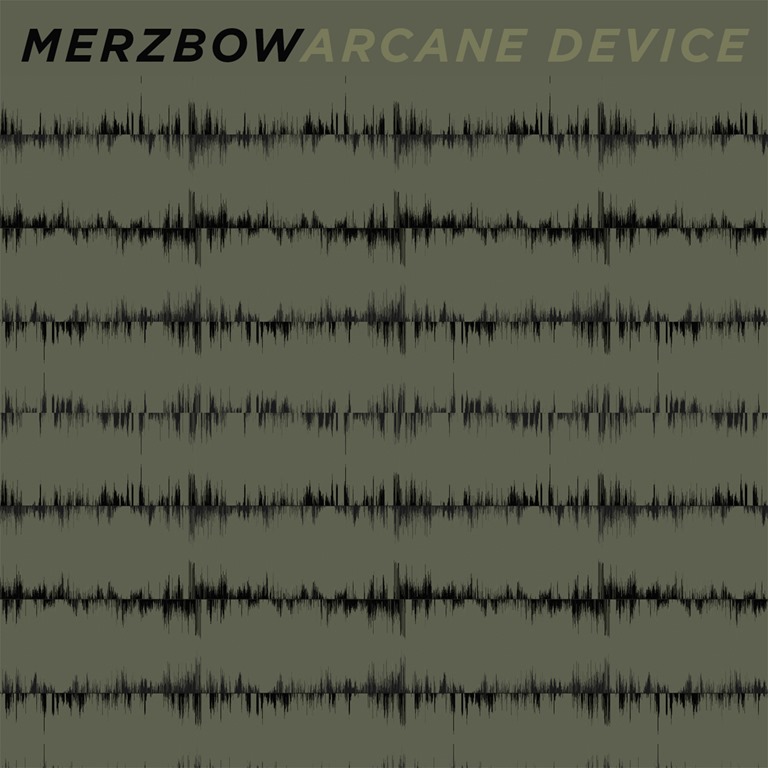
Merzbow releases are rather like proverbial busses, with this collaborative release with Arcane Device being releases simultaneously with a 20th anniversary reissue of his Merzbeat album and a CD reissue of his 1983 album Material Action, all on Important Records. The difference between Merzbow and busses is that you never have to wait long for a Merzbow album.

Merzbow & Arcane Device is a coming together of two very old hands at this experimental / noise stuff. David Lee Myers aka Arcane Device has been building electronics and creating feedback based electronic music since the late 70’s. Merzbow’s career also began at the tail end of the 70s, and the last forty-odd years has witnessed the release of a truly staggering body of work, with as many as twenty or more albums being released in a single year. It’s a daunting, overwhelming output, and the same is true of the music itself. Perhaps more than any other artist, Merzbow has pushed the boundaries of music – and even the boundaries of noise – to the absolute limits, and then continued to push beyond.

The premise of Merzbow & Arcane Device as a split LP is straightforward: each takes a piece by the other and remixes it, each presenting a longform piece correspondent with a side of vinyl.

The two pieces here are very slow, low, and drony, with the EQ geared toward the mid-ranges and lower, rather than harsh walls of treble. ‘Arcane Device Remixes Merzbow’ is particularly dense, murky, and unhurried in pace. Bubbles and pops blister the crinkled surface of churning sods. There are brief, momentary stalls to the crunching earthworks, filled with swarming hornet buzzes and wippling ripples of analogue synth sounds and skimming laser blasts. A Geiger counter crackle is pitched down and slowed to register around the gut and occasional trills of feedback break through the swampy soup. But for the most part, it’s half an hour of thick, wind-blown drone.

Merzbow’s treatment of Arcane Device’s sound is similarly given to bleeps and drones, but at a higher pitch and faster tempo; the laser bleeps are machinegun rounds by the barrage, and there are wailing siren cries of elongated feedback notes. As the drones drill deeper, the washes of static grow louder and harsher, and as the layers build, so does the volume and the tension. By the eight-minute mark, the tonal separation has become most pronounced, with barelling low-end underpinning a veil of squalling pink noise. Perhaps uncommonly for Merzbow, there are lulls, and they’re most welcome – but when the noise swells once more, the impact is amplified.

In the scheme of harsh noise, Merzbow & Arcane Device is not particularly harsh, but it’s tonally varied and its comparative subtlety is effective, as it gives the album a more considered feel, and it in no way diminishes its impact. The fact the two tracks are different – perhaps not so much for the casual listener, but to a noise enthusiast – the variations on a theme hold the attention, and draw the listener into the details of texture. These works are restrained, respectful, even, but not reverently so, and in offering two sides of a melted, battered, and pulverised coin, Merzbow & Arcane Device makes for a tough yet immersive listen.

22nd April 2022

Christopher Nosnibor

This seems to have been a long while coming – and that’s because it has. The New-wave / No-Wave gothy post-punk duo have been kicking out killer EPs for a decade already. Six EPs and a single to be precise, with each EP containing five, six, or even seven tracks. It’s a substantial body of work, however you look at it. And yet it’s only now that they’ve got around to an album proper.

They’ve made the most of the time and the previous releases to realty hone and refine their sound, and having done so, Admire feels like a proper album. It’s ten tracks, solid, packed, back-to-back, arranged with sequence in mind. It’s a sequence that finds things getting slower in the second half, and it would be interesting to hear how this pans over two sides of vinyl. Admire would likely be dissected as having a ‘fast’ and a ‘slow’ side.

As Admire demonstrates, GHXST have remained true to their original sound and ethos – scuzzy, reverb-soaked murkinesss, with a deep psychedelic twist. There’s a lot of twist and a lot of noise on Admire. Comparisons only go so far with these guys, and while The Jesus and Mary Chain is an obvious one, they’re probably closest to A Place to Bury Strangers in their shimmering wall of sound face-melting blast of FX and overdrive. I may have also mentioned Curve before as a comparison: it still stands, and I’m wondering why when people are whittering about various 90s bands

The build on the upward arc is fairly rapid to say the least: it’s just over two minutes into single cut ‘Pls, You Must Be a Dream’ that the extra level of distortion kicks in and blows the roof off everything. And for a time thereafter, you find yourself adrift in a wash of reverb and overloading distortion. Things simply drift: it’s dense, it swashes and coasts along, splashing against the shores as the waves splash the deck, and each song has a certain supple power.

‘Sonores’, the album’s seventh track, marks the first real spot of respite as they pare things back to a swampy synth and bulbous bass notes hang in the dense air, and ‘Nights of Paradise’ slows things to a crawling trudge that threatens to take the album down into a low-tempo slump, as if they’ve run out of steam and simply got stoned to a half-pace stoned sonic swamp. In context, recent single ‘Marry the Night’ is a bit of a crawler, and closer ‘Only Lovers’ is a murky slice of wistful melancholy. Of course, all the best albums conclude with a slow-burning epic, and this is definitive. Don’t ask me why, but this is one of those slow-burning min-epics with piano and a towering wall of rippling overdrive what tugs hard on the emotions and makes me want to cry without even understanding why. But it is, without question, an outstanding finale to what is, also without question, an outstanding album.

AA

AAA

173508

Human Worth – 13th May 2022

Christopher Nosnibor

I don’t often give advice or tips, but sometimes it’s appropriate, and this is one of those times. If you’re into noisy music that’s inventive and of a consistently high quality, make sure you get hold of everything Human Worth release. Ever. I’ve been vaguely amused by sponsored ads on Facebook recently for Vinyl Box, a subscription service that delivers pre-selected records and enables the clueless to amass a ‘cool’ collection of instantly collectable editions of ‘cred’ albums as selected by ‘tastemakers’. As if. You want a cool record collection, and one that’s worth listening to as well, start here.

Human Worth haven’t been going all that long, but they’ve very swiftly established, if not a house style, then an ethos and a sense of curation, and every release this far has been outstanding, both musically an in terms of product, with each vinyl release feeling, looking, and sounding special. What’s more, they don’t just talk about ethics and causes, donating a percentage of the profits from each release to a worthy cause. It’s a hell of a way from the greed that fuels Records Store Day – which so happens to be today, where I’ve spent the day at home not regretting spending £30 on reissues of albums I already have two copies of. Frankly, it stinks, when you can pick up, for £16, a brand new clear vinyl release – with only 200 copies pressed – of something new and exciting that you can cherish for being more than simply an artefact. Steve Von Till is a fan, and while I may not have as much clout, so am I.

The new eponymous from Bristol-based instrumental trio Olanza is a most worthy addition to the Human Worth discography. It’s kinda mathy, kinda post-rock, but it’s got all the crunch. The guitars chop and change, twist and bend, swerving between picked lead detail and chugging riffs, but if the focus is on the guitars, it only works because of the force of the rhythm section, which isn’t only solid but as heavy as hell.

The album’s first piece, ‘Accelerator’, packs in all of this into less than three and a half explosive minutes. But they have so, so much more up their sleeves, and this is why Olanza is such a magnificent album – they’re clearly not a band to set themselves up for pigeonholing, as they simply don’t conform to any one, or even any two or three genre forms.

‘Boko Maru’ is deft, light, even, jazzy, but also a shade country, and fun… and then crashes into discord when the overdrive slams in, while ‘Descent’ is a full-on riff-driven beast with a psychedelic twist. Then there’s the nine-and-a-half minute monster that is ‘Lone Watie’ which is more indie, with hints of early Dinosaur Jr, at lest before it goes angular crunching riff-racket. With its shifts of style and tempo over such a duration, it’s practically an album in its own right, and certainly packs in more ideas and solid chunks than many bands manage over multiple albums – but the beauty is that it isn’t too hectic, and every segment flows into the next without jarring or sounding forced. This is intelligent, articulate, and magnificently crafted. So many bands try to pack in loads of stuff into each song, with the end result being cluttered, awkward, lacking in cohesion and just that bit too much. Not so with Olanza. This is masterful and compelling stuff.

‘Navarone’ lands between Oceansize and Pavement, epic neoprog and jangling indie, and builds nicely through a cruising riff. Angular, sinewy guitars a la The Jesus Lizard or Blacklisters skew in on ‘Joust’, before the minor key dissonance of ‘Constant’ brings things to a tense conclusion.

Put another way, it’s got the lot, and there’s so much range and dynamic action here, it makes for a gripping listen the absence of vocals is such a non-issue you barely notice it. What you do notice, and can’t escape, is that Olanza have landed an exciting album, where the quality of the musicianship is matched by the passion and the channelling of energy through the medium of music. It’s pretty special.

AA

a3133248245_10

Limited Noise – 29th April 2022

Christopher Nosnibor

With a CV that lists near-multitudinous membership and participation in bands (notably his regular gigs with Snack Family and World Sanguine report, but also contributing to Sly ands the Family Drone and countless others), renowned experimentally-minded jazz drummer and percussionist Will Glaser has taken some time out to continue his solo album sequence with the fourth instalment of Climbing in Circles.

Over the course of three previous releases, Glaser has explored jazz, folk, and beyond, through an experimental prism and with a methodology that’s very much about improvisation. This outing features long-time collaborator, Matthew Herd, on saxophones and piano, alongside trumpeter, electronic artist and producer, Alex Bonney, and was assembled over the course of five day. While the album is loosely constructed around two overarching ‘acts’, they consist of eleven separate and distinct pieces, and bookended by ‘Beginnings’ and ‘Endings’, there’s a narrative arc of sorts, here.

It begins with crawing birds and a gentle piano playing what one could readily describe as a charming melody with a quite conventional structure, and ends with a genuinely pleasant lilting piano tune – and yes, I mean tune in that it has all the conventional features of one.

In between, there is slow decay and infinite space. Rumbling, echoes, notes reverberate off one another at distance. Sax and trumpet trill and drone, sometimes at one, at others as if duelling. The percussion rolls and crashes, but more often than not, at distance, and creating texture and atmosphere and colouring the pieces with expression rather than maintaining rhythm.

The combination of instruments is relatively conventional in jazz, and, similarly, there’s nothing particularly radical about the way they’re played and interact on here. But there’s considerable joy to be had in simply listening to the musicianship and the way the musicians themselves interplay on the pieces. ‘Spiral Dance’ is a hypnotic serpentine spin, while ‘Bad Dream Machines’ is a drifting mass of fragmentation, dissonant, discordant, and above all, a work that exists in the spaces between the notes and in the reverb and echoes as in the notes themselves.

There will be some – perhaps many – who are deterred by the very mention of jazz, and there is a perception of there being a certain elitism about jazz – the idea that random notes and borderline unlistenable chaos is somehow a superior art form, and anyone who doesn’t ‘get’ it is clearly a philistine. But Glaser is a remarkably positive showcase for jazz, with a focus on the listener rather than purely the musicianship. Climbing in Circles Pt 4 is about atmosphere, about vibe, rather than indulgent wanking: this is jazz you don’t need to be an aficionado to appreciate. It’s listenable, and it’s varied, too.

On ‘Dead Fly Disco’, he and his collaborators play completely straight, a song with structure and swing, something you could even dance to, or at least nod a long to its toe-tapping groove in a basement bar late at night. ‘Ballad in the Jazz Style’ almost feels like they’re playing with and working within the tropes as an example of discipline, and it’s highly restrained and wonderfully moody in that sad, smoky jazz melancholy way.

There’s plenty going on, and enough to maintain interest, but not so much as to be chaotic or to lose the listener. Whether these things make it a good access point to jazz, it’s hard to say, but what it does mean is that Climbing In Circles pt.4 is a jazz album that’s accessible and enjoyable simply as a musical work.

AA

Climbing In Circles cover 1000px CMYK

Editions Mego – eMego016X

22nd April 2022

Christopher Nosnibor

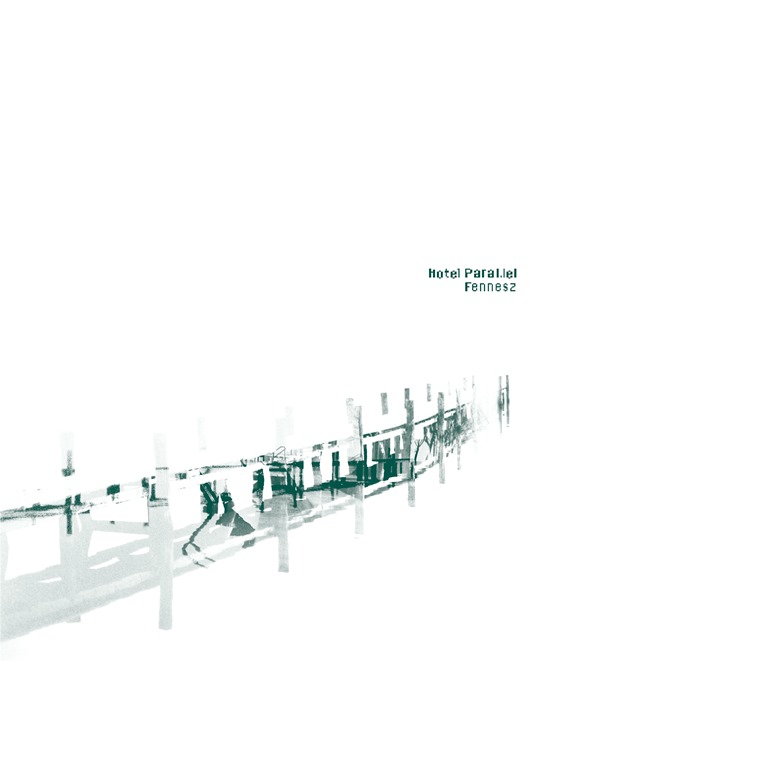
Context counts for a lot, particularly when evaluating works which represent the time in which they originated. This is no more true than when it comes to evaluating this reissue of Christian Fennesz’ Hotel Paral.lel, originally released in 1997.

For some of us – those of a certain age – 1997 seems recent. But then, there will be great swathes of the population who are actively listening to music -and who are fill-fledged adults, many with children of their own now – who weren’t even born in 1997. Stop and consider that for a moment. 1997 was twenty-five years ago. A quarter of a century.

Cast your mind back twenty-five years, if you can, and try to recall the musical landscape, what you were listening to, what was fresh and exciting, new and emerging. And cast your mind back, if you can, simply to life as it was back in 1997. Pre-millennium tension was beginning to slowly build around the end of days, and the millennium bug that would bring all technology to a halt. Nu-Metal was only just breaking, with the release of Limp Bizkit’s debut, Three Dollar Bill, Y’All. It was the year of The Prodigy’s The Fat of the Land and Portishead’s debut, as well as Radiohead’s OK Computer. It was also the year of Princess Diana’s death and here in the UK, there was a sense of hope as Labour won the election, deposing the Conservatives after eighteen years in power.

But it’s also worth remembering just how far technology has come in twenty-five years. As the liner notes remind us, Hotel Paral.lel was ‘recorded just before mobile computing devices became omnipresent’, and that ‘it was an investigation into the sonic possibilities residing in guitar based digital music. Sz launches the career with a constantly buzzing sound that resembles a fax machine encountering a G3 laptop for the first time, realising the game is up. ‘Nebenraum’ is the first foray into the style for which one would attribute to Fennesz. A glacial drone unexpectedly morphs into a gorgeous melody and microscopic groove. Adding pulse and melody was hearsay in the radical end of experimental music up until this point and with this single gesture, everything changed, for everyone.’

It seems hard to comprehend now, but Christian Fennesz’ debut full-length release really wasn’t so much ground-breaking as earth-shattering – only it wasn’t apparent at the time, and no-one was really paying attention anyway. There was a 2007 remaster to mark the album’s tenth anniversary, but this version isn’t only re-remastered buy boasts a bonus three tracks.

Listening to Hotel Paral.lel with the distance of time and the benefit of hindsight, it’s clear just how out of time it was. It’s a disturbing mess of static fizz, crackles, and hissing, clanks and rumbles, thuds and glitches. It’s an assemblage of dark ambient grating and griding, droning and grumbling., but then ‘Fa’ is more a gritty slab of bouncing heavyweight death disco: it’s got beats, it’s got groove, but it’s got some grainy bite to it.

If ‘industrial’ had become synonymous with Ministry and Nine Inch Nails, Hotel Paral.lel was a reminder – for those paying attention – of the roots of the genre, which lay with Throbbing Gristle and early adopters of emerging Technology like Cabaret Voltaire. And on Hotel Paral.lel, Fennesz exploits the latest emerging technologies to conjure alien soundscapes and strange forms.

There are moments, such as the closing couple of minutes of ‘Nebenraum’ which are surprisingly and incongruously mellow and melodic, in contrast to the warping, circuit-splintering dissonance of ‘Zeug’, one of a number of incredibly short experimental pieces.

Hotel Paral.lel also serves as a reminder that experimental is not a negative trait or a critical dismissal: without experimentation there is no progress, and in ‘97, Fennesz really was flying in the face not only of popular opinion, but, well everything. Now, of course, it doesn’t sound too radical, sonically or in terms of objectives. It does, however sound difficult, gnarly. It sounds dark. And it’s a beast.

AA

_ eMego016X_front

17th April 2022

Christopher Nosnibor

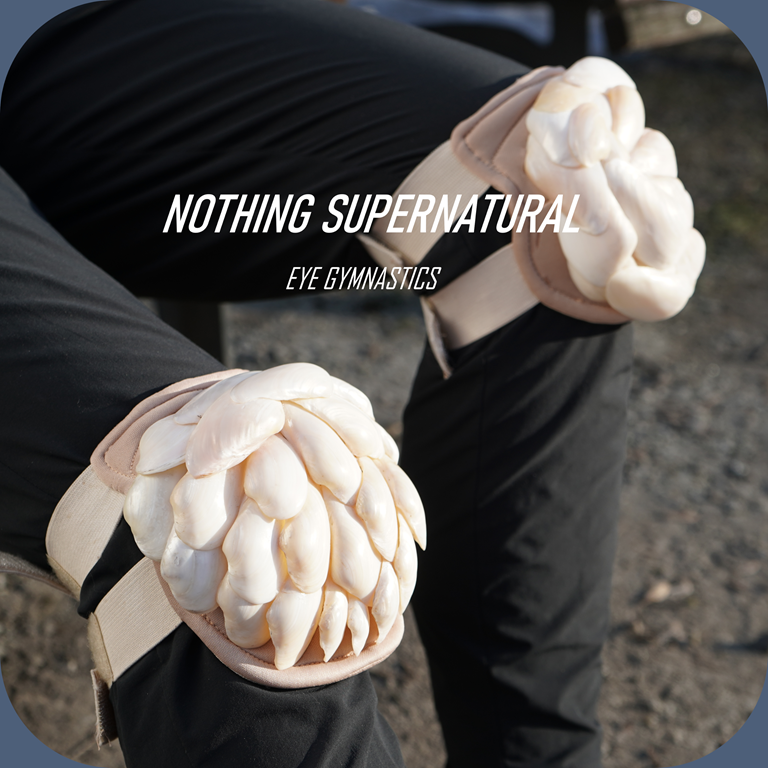
There’s something quite surreal about the imagery of ‘eye gymnastics’: it’s highly visual, yet at the same time, beyond physicality, and as such, it possesses a cartoon-like quality. This surrealism extends to the cover art, too: what exactly are we looking at here? It’s the debut album from a Lithuanian duo consisting of Viktorija Damerell and Gailė Griciūtė, who first came together in 2018.

And so it is that these clues are also representative of the music: the words are strange, fragmented, abstract – but also not, with improbable and incongruous images, and the album’s first piece, ‘Eye Gymnastics’ could be something of a signature tune for the pair. It’s sparse, the beats subtle, distant, subdued, yet insistent as they pulse through eddying swirls of semi-ambient synth drifts, through which a spaced-out, vocal dreamily intonates lyrical abstractions. If surrealism has a certain preoccupation with dreams and the subconscious, then on Nothing Supernatural, Eye Gymnastics plunder that inner realm for inspiration and render it in such a way as to remain to the vagueness, the indistinct focus of the fugue state, the disconnects and strangeness of dreams, and recreates the way those sensations and images echo, hauntingly, in the waking hours which follow those most vivid of nocturnal experiences.

The title feels vaguely ironic in the context of the disconcerting, dislocated vocal treatments of the ominous and eerie ‘Tree Tops’, where a glitchy, industrial beat clatters in thick and leaden. Then again, it’s dark pulsations feel as much the product of a troubled mind as of anything supernatural.

While there are some significant leanings towards ambience and hypnotic drifts imbued with an ‘otherly’ feel, elsewhere, snarling, growling electronics dominate a number of the tracks, with ‘Sadness and Joy’ being really quite heavy, with a gloopy bass that whips and whirs and fizzes. ‘You Destoy Me’ epitomises this industrial darkness: the murky drumming pumps away with the palpating tension of Nine Inch Nails’ ‘March of the Pigs’, while the multi-layered vocals whisper and echo dark thoughts, and the relentless pulse of ‘Let it In’ is harder and harsher still, the bass drum a booming throb, the snare – such as it is – a smash of distortion. You don’t want to let it in: no, you want to shut it out, make it go away. It’s not pleasant, it’s uncomfortable, claustrophobic, suffocating. Sparse and spooky, ‘Bitter Night’ bridges the territory between Young Marble Giants and Throbbing Gristle.

It’s unsettling, a creeping burrowing into the brain, as if overhearing someone’s internal monologue. This is not what you’d really call a ‘relatable’ experience, at least for the majority. It’s not full-on horror, but it is chilling, challenging, eerie, unsettling. But it’s also compelling, hypnotic, and a quite remarkable debut.

AA

Nothing Supernatural art

Prophecy Productions – 15th April 2022

Christopher Nosnibor

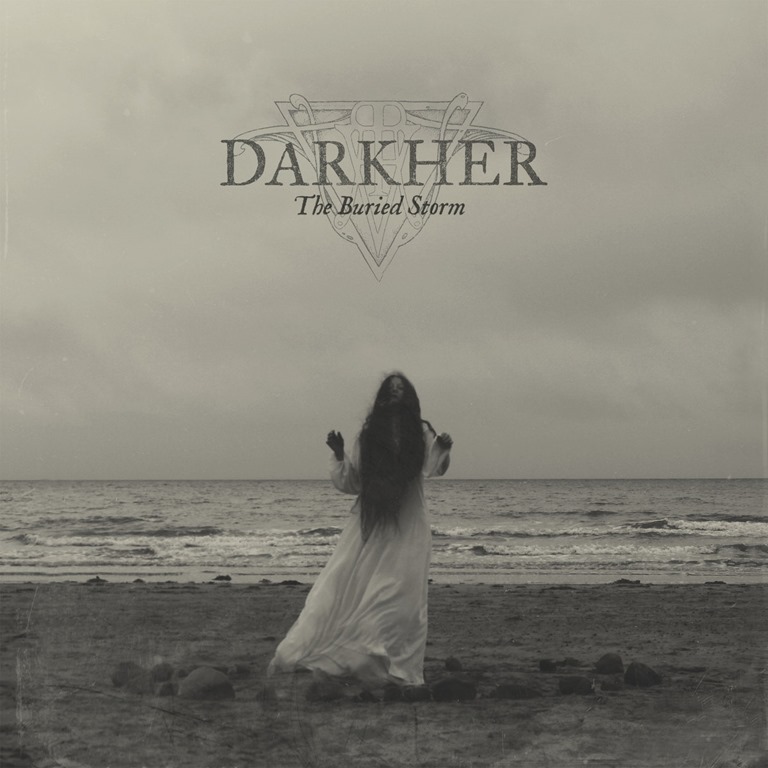
As Darkher, Jayn Maiven lives up to her moniker. Since beginning her career in 2012, progress has been slow but steady, with an eponymous debut EP in 2013 being followed by a second EP, The Kingdom Field in 2014 paving the way for her full-length debit, Realms in 2016. The Buried Storm, then, has been five years in the wait, but it was most definitely worth it.

‘Sirens Nocturne’ sets the bar with a low, slow, brooding drone of strings providing the backdrop to Jayn’s haunting vocal. That backdrop gradually swells with layers of tremulous violins, and her voice heads skyward, a glorious choral sound that’s spiritual beyond verbalisation.

What’s striking is just how deeply steeped in folk this is, the sparse, haunting melodies evoking rugged moorlands and windswept mountainsides. This isn’t a matter of cliché: this is music that touches the naked soul. A tribal drum thumps way off in the distance on the funereal ‘Lowly Weep’; it’s majestic and it’s moving, and over the course of its eight-minute duration, the swelling sound conveys so much more than mere words. Utilising post-rock tropes, it tapers down to quiet chiming guitar around the mid-point before bursting into a monumental thunder of slow, overdriven power chords, a slow-burning crescendo that’s both heavy and mesmerising in its graceful execution.

For its brevity and simplicity, built around a picked acoustic guitar and mournful strings, ‘Unbound’ is intense, but it’s on ‘Where the Devil Waits’ that we really feel a closer connection to Jayn; the vocals are more prominent, and we feel as it we’re riding the waves of a tempest – both literal and emotional – with her.

The true power of The Buried Storm lies in just how much Maiven does with so little. That said, ‘Love’s Sudden Death’ packs a dark density, and brings with it a slow, doomy trudge that invites comparisons to Chelsea Wolfe and Emma Ruth Rundle, and not simply because these are female artists exploring heavy terrain – although I suppose that is a factor, in that we have a crop of artists who balance weight and ethereality, all wrapped in a mist of gothic enigma.

It’s on ‘Immortals’ that everything comes together in a slow-building crescendo – the distant rolling thunder of drums and growing tension that finally breaks into a bold sweep of sound at around the mid-point of its eight-minute expanse.

The piano-led closer, ‘Fear Not, My King’ plods down into the darkest depths. It’s dolorous and dank, and sucks you down toward the depths of reflection, and places you may not want to go.

The Buried Storm is truly beautiful, elegant, with grace and poise and power – and for all its softness, its gentleness, it’s a difficult and at times harrowing album, and a magnificent artistic achievement.

AA

a0770914529_10

Kohlhaas Records – 22nd April 2022

Christopher Nosnibor

Simon Whetham’s notes which accompany (II)ntolerance – the sequel to his 2017 collection, InTolerance – are informative, albeit perhaps more so when reading between the lines: ‘InTolerance consisted of a selection of combined scenes and activities in various global locations. Through the process of constructing the piece, it became clear that it was as much about my ability and fortune to be able to travel and cross borders with relative ease as it was about the situations I was able to document. (II)nTolerance is a sequel and a response to InTolerance. It is a personal reaction to the global pandemic and its wide-reaching effects through suffering, fear, misinformation as much as confinement and curfews. It is a personal response to the (somewhat incorrectly named) United Kingdom leaving the European Union and all the resulting events that are continually unravelling.’ He continues: ‘Travel has been limited when not impossible. Cultural exchange is only possible through mobile, online, remote communication. Tactile contact is feared. Families and friends have been divided physically, mentally, politically.’

The pandemic but a block on everyone’s lives, but everyone was affected differently, and while I struggle to find sympathy for those bemoaning their inability to take their 204 kids on their half-term skiing holidays and the like, touring artists who depends on mobility for their livelihood, it’s a different matter, especially as that transit and a shifting geography is integral to the creative process. Reading Whetham’s notes, it’s clear that his obstacles have not been purely pandemic-related: The ‘United’ Kingdom has degenerated into a cesspit of division where not only ‘tactile contact’ is feared, but so is anything from ‘outside’. Never has this felt like a smaller, more isolated, island, and not just geographically.

Tolerance is something many of us – mostly those of us who wanted to remain – can now only dream of, as we hide our faces behind our hands as we peep at Twitter and Facebook, where it’s bordering on a virtual civil war.

Whetham describes (II)ntolerance as a personal response to all of this, and ultimately, that’s the only real response any artist can make. The idea that we’re all in the same boat has been proven untrue, for while we all endured the pandemic, everyone experienced it so very differently: home schooling while working from home was, for example, in no way comparable to living alone or in a shared house while on furlough. Similarly, the effect of Brexit for a container driver, versus that of, say, a hedge fund manager is simply not comparable. But this in itself is an issue: increasingly, it seems people have become unable to relate to experiences and situations which differ from their own.

As an artist, of course, one can really only represent oneself, and hope that through the personal there is an element of universal therein, and on this level, (II)ntolerance succeeds, containing as it does fourteen abstract compositions that state nothing explicitly, and yet convey so much implicitly.

There are a number of pieces that form sequences, namely the ‘Angry Earth’ pieces and the three ‘Kinetic Readymade’ pieces, which give the album a sense of cohesion and thematic unity (while making a small nod to avant-garde greats like Marcel Duchamp). And (II)ntolerance is an album of movement, of turbulence: the first piece, ‘Angry Earth Seething 1’ sounds like a harsh deluge of rain, and the lashing precipitation sets the tone for a stormy sonic journey, riven with growls and gulps and crashes of static and ominous drones and clicks and stammers.

(II)ntolerance marks a shift from field recordings and a focus on geography to shift the focus inward in a response to a shrinking environment, and the result is claustrophobic and uncomfortable. ‘Moving Sentry 2 – Angry Earth Seething 3’ is a gurgling mess of abrasion, while ‘Reception – Windpipes’ whips and gurgles in a fog of phase. Oftentimes, such as on ‘Angry Earth Seething 4’, Whetham conjures a dark, gravel-shunting grind of uncomfortable noise, while ‘Kinetic Readymade (Turbine)’ embraces all shades of difficult, dominated by churning, scraping noise – and as a whole, (II)ntolerance is not an ‘easy’ album. It’s noisy, with serrated edges and low-end growlings that unsettle the intestines. A difficult album for difficult times.

A

Simon W

Kranky – 15th April 2022

Christopher Nosnibor

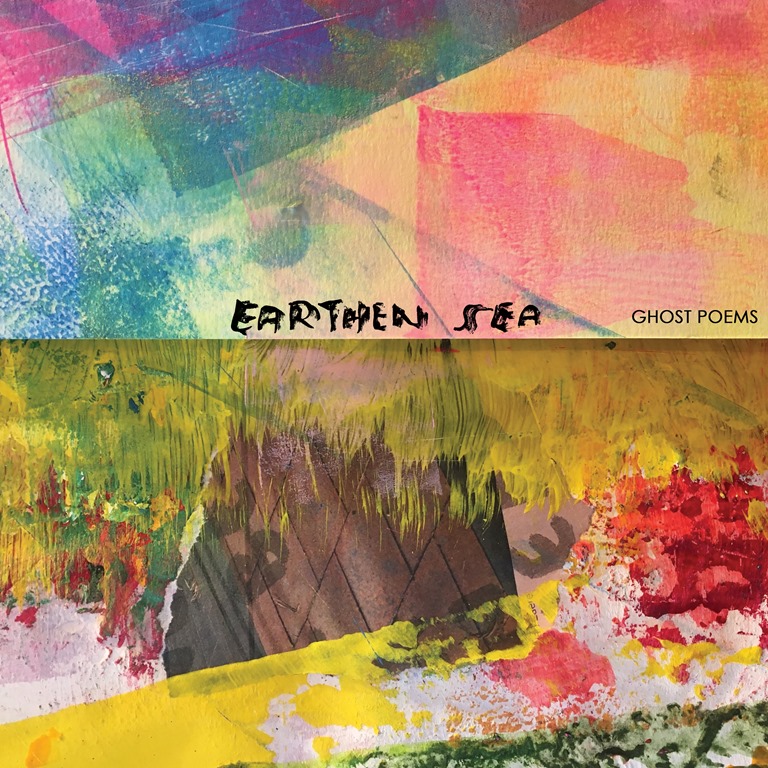
Well, this is nice. No, it’s not sarcasm or some kind of snide semi-criticism wrapped in a vague compliment. Jacob Long’s third Earthen Sea outing for Kranky, Ghost Poems, was composed and created in New York during the first wave of lockdowns, and conjures a sense of calm , of tranquillity, and captures a sense of the hush that descended over life during this time. For many, there as an underlying rush of panic, of anxiety, as we struggled to comprehend what the hell was going on. The rolling news was little short of terrifying, and from my own vantage over the pond, New York looked like a dystopian movie. People weren’t only dying, but there were queues around the block just to get people into hospitals.

And yes, while all of this madness was going on, all other aspects of life were on hold. This was true of every town and city around the globe, but New York, the city that doesn’t sleep, was held still by a giant pause button. The very idea of New York without bumper-to-bumper traffic, packed sidewalks and parks rammed with joggers and dog walkers seems inconceivable. And yet, it happened.

Ghost Poems soundtracks empty streets, slow air currents and a general absence of everything – people, activity, life. As the title suggests, this is a collection of works which are haunted by the echoes of life, of activity, or movement, and listening it reminds me of my ventures outside in those early days and weeks of lockdown here in (old) York, England, a city usually populous withy workers and tourists, reduced to a ghost town. Social distancing was no issue on leaving the house: you could walk for half an hour is see maybe three other people. It was eerie. It was weird. It felt apocalyptic, like I was one of the last people on earth.

Slow, vaporous synths ebb and flow like a slow tide, dragging back and forth against a sparse, heartbeat pule of a beat on ‘Shiny Nowhere’, and it sets the sparse tone perfectly, and ‘Felt Absence’, with its slow backward-swelling remind into deletion encapsulates the mood perfectly. It’s not about what there is, but what there isn’t: that absence, that lack. It doesn’t feel right; even the air quality is different, and listening through an open window, there is birdsong, there is stillness… and so little else.

Elemental themes run through Ghost Poems: ‘Snowy Water’; ‘Rough Air’, and similarly, the sky is at the heart of the vistas which present themselves: ‘Ochre Sky’; ‘Deep Sky’; ‘Slate Horizon’. Looking out, and looking up, there was a strange stillness, an emptiness, above as below. Where did the time go? Two years have evaporated into this expanse of sky, and life has returned. Talk of ‘the great pause’ and ‘new normal’ have drifted away on the breeze. For all the fear of the pandemic, there was a certain optimism that something fresh and new may rise from the silence, from the space; perhaps a new green dawn, perhaps a kinder capitalism, a world without endless traffic, where the work/life balance may lean more towards life. All of these contemplations are spun into the soft, gentle airiness of Ghost Poems, an album suffused with calm, with a quiet optimism. This may have already been lost, buried in the clamour of the return, but Earthen Sea has captured that moment when there was a reserved sense of hope.

Listening to Ghost Poems compels one to sat back, and breathe in, slowly, deeply, to fully expand the lungs, and then exhale, again, slowly. Perhaps there is still hope after all.

AA

888016

Young God Records – February 2022

For a good many years now, Michael Gira has been releasing limited-edition, hand-decorated CDs as stop-gaps and fundraisers, and many of these have offered skeletal previews of works in progress as part of the evolution of the next Swans album: indeed, some of these ‘demo’ CDs have served to raise funds towards the recording of the next Swans album. These hand-numbered, signed releases have become integral to the connection between the artist and the fans: while Gira may have long cultivated a reputation for being ‘difficult’ and ‘standoffish’, it’s become apparent, particularly since the post-millennial return of Swans that Gira has mellowed somewhat, but, more than anything, that he is truly appreciative of the continued support of a dedicated fanbase, and the effort that goes into these is apparent.

One friend of mine said he had stopped buying them because he wasn’t sure he felt the need for any more Gira solo acoustic demo discs, and it’s true that format in itself has become something of a standard: songs recorded solo by Gira with just acoustic guitar and voice, house in some permutation of woodstamp and hand-painted envelope, accompanied by liner notes and lyric sheets. But these aren’t just crappy CD-R efforts in a photocopied sleeve, but proper, lovingly-crafted artefacts that are more than simply about the music they contain, which may well explain the high prices they fetch on the secondhand market. But purely considering the music herein, to hear these demos while the songs are being developed is to gain an insight into not only the creative process, butt a glimpse of the future – or not.

Oftentimes, demos and outtakes are released as deluxe release bonus tracks or B-asides and the like, and one can compare the final version and see how it’s evolved, if at all; but to hear the demo before the song is finished means that the grand reveal when the album is released is an altogether different experience. Moreover, whole many artists’ demos don’t sounds radically different apart from having more fleshed-out arrangements and proper production, having been thrown together in a studio, these are raw, ragged sketches that are subsequently subject to vast revisions.

What with one thing and another, it’s taken me a while to get around to listening to Is there Really a Mind? It’s perhaps a hangover from the last few Swans albums, that were so long that even putting the disc in the player felt like an evening’s commitment. You can’t just leave, say, The Seer or To Be Kind rolling along as background music while you’re working, or think ‘I’ll just play half an hour of this while I’m cooking dinner’. This is, perhaps, the dichotomy of the album experience and the listening span of the modern listener, but then, concentrating long enough to listen to an album that lasts maybe forty-five minutes versus \an album that runs for the best part of two hours is an altogether different matter.

The compositions on Is there Really a Mind? feel more evolved than those on many of the previous demo discs – and a fair few of them are already pretty damn long. The opening triptych of ‘Paradise is Mine’; ‘The Beggar’; and ‘The Parasite’ runs for the best part of half an hour, with the shortest being barely shy of seven minutes, and they find Gira in his most drawling, droning, ominously spiritual mode. Lyrically, perhaps any shift is less obvious, with many of Gira’s longstanding themes being explored.

Across the ten songs on Is there Really a Mind? there’s a real sense of Gira building long, throbbing sounds that aren’t really riffs or motifs, and the three-chord repetitions that are his trademark have faded to even less overtly structured forms as he batters away at a single, indistinct chord that’s more of a drone than a tune, for the duration. It’s hard and harrowing, and while full arrangements will make an immense difference to how the songs actually work, these versions are like the darkest, bleakest country tunes, hewn from the bowels of hell – as if the evangelical elements of Children of God had been distilled by demons.

It feels like I’ve been listening to this all night, and still it’s only the third song, and truth be told, it is a slog and without the textures and layers of proper arrangements, it’s hard to imagine slapping this on to fill some time and air, ever.

It’s a measure of an album’s cheer level when a song entitled ‘Los Angeles City of Death’ is one of the more uplifting tunes. ‘Why Can’t I Have What I Want When I want It?’ isn’t a song demolishing the instant gratification of consumer culture, but another exploration of suppliance, dominance, and devourment, and it’s fair to say that whatever the musical progressions, Gira’s words remain focused on blood and bone and pain and the stuff that hurts.

Is there Really a Mind? may just be acoustic demos, but it’s immense.

'Is_There_Really_a_Mind '_cover