Posts Tagged ‘Album Review’

14th October 2022

Christopher Nosnibor

Our last encounter with Brighton band Dog of Man was on the release of the single ‘Hello MI5’back in the spring. A frantic, frenetic genre clash, it proved to be quite an eye-opener.

And how, here we have the album, which they describe as ‘music to lose your shit to, a ritual of intense catharsis’, ‘delves into neuroses, madness and breakdown, delivered with punchy grooves, spidery guitar lines and gloriously distorted accordion.’

Wait, what? Accordion? This is not an instrument one tends to associate with any kind of heavy psych / weird indie / thrashy (post) punk hybrid, but then, Dog of Man do their own thing and make music their way.

The title is, thankfully, ironic. Instead of jaunty indie or breezy upbeat yacht rock Everything is Easy, the band promise an album that ‘delves into themes of neuroses, madness and breakdown – all set to punchy grooves, spidery guitar lines and fizzing accordion.’ Well, if it’s fizzing, maybe it is the instrument of choice.

Single cut ‘Turpentine’ blasts in with some ramshackle guitar that’s rushed and urgent, and as much as it’s indie with hints of The Wedding Present and early Ash, as well as contemporaries Asylums, and sets the manic pace for the album, which sees them skidding into the skewed shanty, ‘Accidentally Honest’. ‘Have you ever been accidentally honest?’ they ask. Well, have you?

With ‘No Click, No Edits’, this is properly rough and ready, raw and immediate, seemingly growing in pace and intensity as the album progresses. ‘Stroudits’ is both punky and theatrical with a dash of The Stranglers in the mix, before ‘Lurking in the Overnight Bag’ goes blues metal with a roustabout pirate slant, and reading that description back makes it sound absolutely shit, but it’s a work of twisted manic genius condensed into aa sub-two-minute adrenaline blast. Doorsy keyboards and nagging guitars reminiscent of Orange Juice are pulped together on ‘Headonastick’ before it shifts from being a driving racket that calls to mind Pulled Apart by Horses before veering off into a hoedown for the break. Are these guys nuts? It seems probable.

There’s just so much going on here; the chaotic cacophony of Gallon Drunk played with the swagger of Led Zeppelin and harpooned by the energy and knowingness of Electric Six are all packed together to tightly it’s impossible to really pick it apart or really fathom why it works, let alone has any kind of appeal. But perhaps the mystery is the appeal. When something is so crazy it shouldn’t work but does, it’s both because and in spite of it. And they make it sound so effortless.

AA

Dog Of Man Artwork

Septaphonic Records – 7th October 2022

Christopher Nosnibor

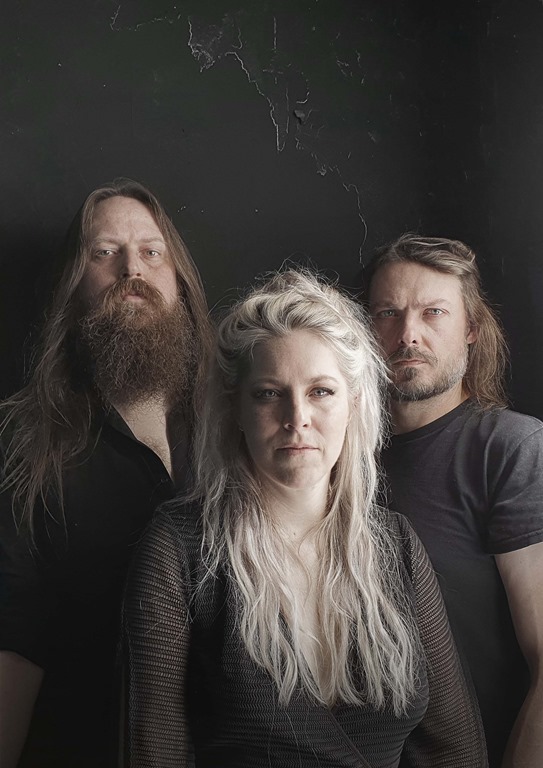
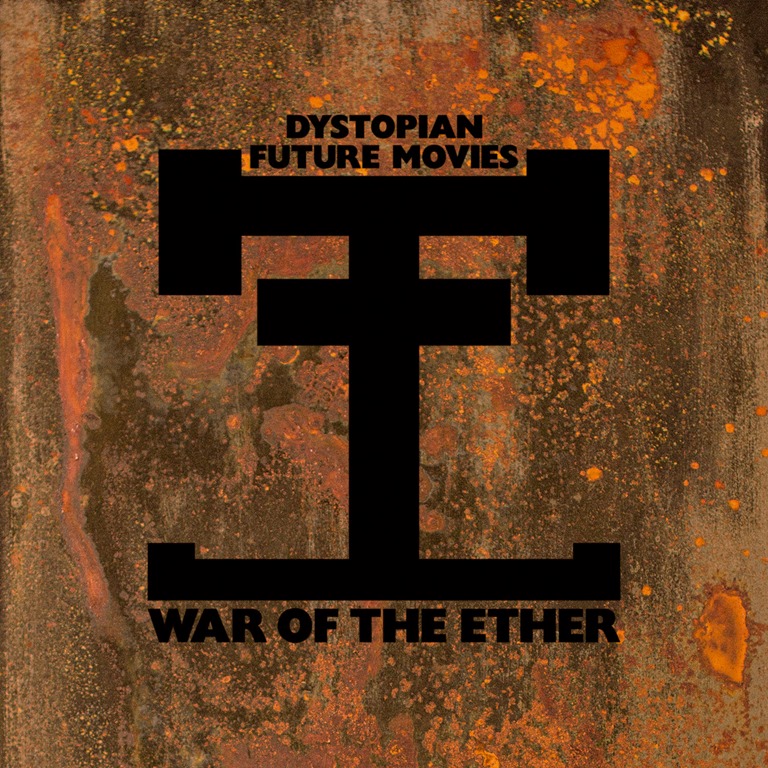
While Dystopian Future Movies’ ‘difficult’ second album, Inviolate, took a full three years to land after debut Time, their third, War of the Ether crashed in after just over two, and it’s an immense sonic documents that the Nottingham trio have compiled in this time.

Back in the spring of 2020, I wrote of Inviolate that ‘Everything about Inviolate is bigger, bolder, more pronounced and yet more nuanced, shaper and more keenly felt and articulated. And every corner of the album is imbued with a sense of enormity, both sonic and emotional: Inviolate feels major-scale, from the driving riffs to the heartfelt human intensity.’ That amplification is again true of War of the Ether. Dystopian Future Moves’ previous releases amply demonstrate a band with both an interest in and a knack for the cinematographic, the dramatic, so it stands to reason that they should extend these focal elements here.

This time around they’ve drawn inspiration from little-reported but truly horrifying events which took place at the former Catholic-run Tuam Mother and Baby Home in songwriter Caroline Cawley’s native Ireland, where 796 skeletons found in the grounds after suspicions were raised by a local historian in 2012. As the press release explains, ‘to hide the shame of pregnancy outside of wedlock, women were sent to homes like this all over the country – forcibly separated from their mothers, many of the children died in infancy due to neglect, and some were trafficked for adoption to the US. The country is still dealing with the fallout from these discoveries.’

War of the Ether is not a joyful record. It is, however, a record with real depth, and imbued with real emotion, as well as an aching sense of tragedy. And, as has been established as Dystopian Future Movies’ signature style, it’s an album which balances riffs and restraint, and is built on atmosphere and menace. They promise an album that ‘explores a wide range of genres from prog and shoegaze to doom-metal, noise-rock and folk,’ and don’t disappoint.

DFM 3 Portrait Photo 2000px WEBSIZE

War of the Ether opens – somewhat daringly – with the ten-minute spoken word crawler that is ‘She From Up the Drombán Hill’. For the most part, it’s sparse and spare, tingling guitars gently rippling behind the narrative – but there are bursts off noise, and it swells and grows and when it kicks in, it kicks in hard with piledriving riffage. The dynamics absolutely blow you away – exactly as intended. ‘Critical mass’ is appropriately titles, starting out with a haunting, echoed clean guitar and delicate drums rolling in the distance as a backdrop to Cawley’s aching, melodic vocal as it stretches and soars, and ‘The veneer’ is a magnificent slow-burner that builds to a shimmering sustained crescendo which unusually fades at the end. Against the weight of the subject matter and brooding instrumentation, it feels somewhat frivolous to focus on a fade, but it serves to highlight the many ways DFM are outside trends and exist in their own space. This is never more apparent than on the dreamy but serrated buzzing shoegaze of the title track.

For all its darkness, War of the Ether is a remarkably accessible album – not on account of its myriad hooks and killer choruses, but because it is simply so strong on melody and so utterly captivating. And because, as they demonstrate admirably on ‘No Matter’, the album’s shortest and most overtly structured song – they do have a real knack for snagging the listener with the combination of tunefulness and megalithic riffery. And then, the final track, the eight-and-a-half-minute ‘A Decent Class of Girl’ brings together all aspects of the album in a powerful accumulation of sedate, strolling psychedelia and climactic crescendos that optimise the impact of both.

Magical, majestic, and immensely widescreen, the scope of War of the Ether is simply breathtaking, and leaves you feeling stunned. Awesome in the literal sense.

AA

DFM 3 Album Cover Artwork 1500px

18th November 2022

Christopher Nosnibor

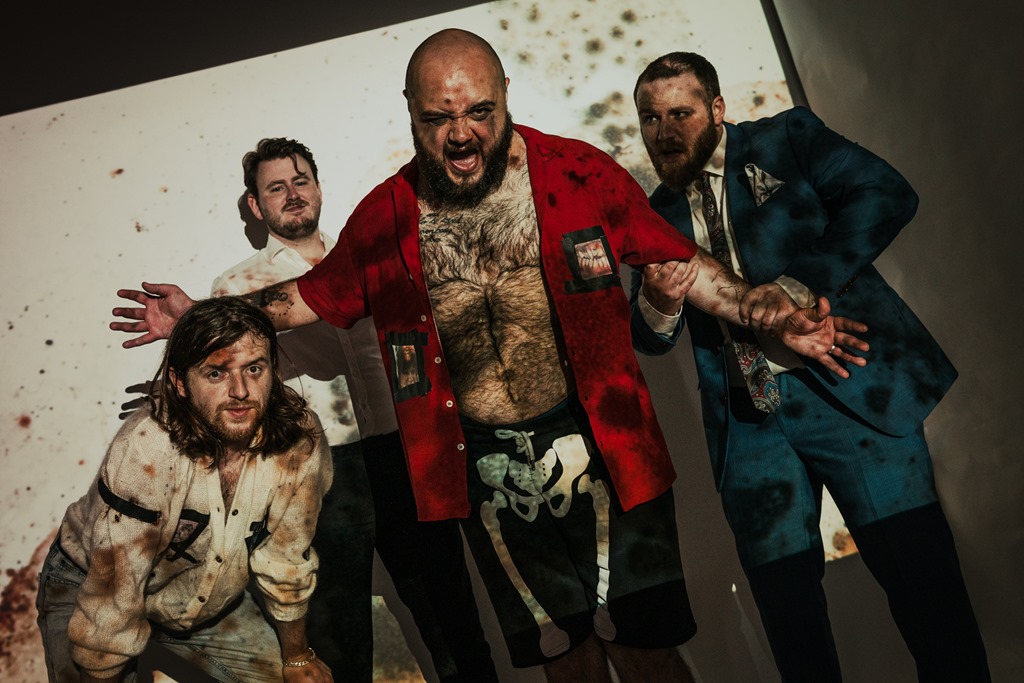
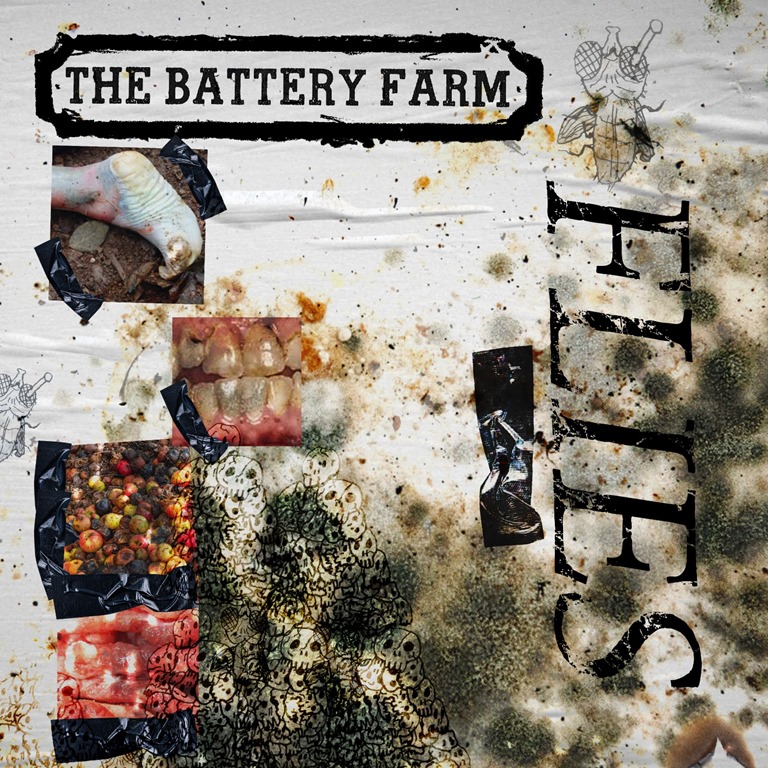
Following on from big-hitting introductions in the form of single releases ‘A Working Class Lad’, Manchester’s The Battery Farm hit us with their debut album, Flies.

They describe it a ‘an album about end times fear and societal breakdown. It is an album that tries to come to terms with the violent world we find ourselves in, and tries to reconcile with an uncertain future in world that we have decimated. It’s about the endless, screaming noise of 21st Century living and the squalid claustrophobia that entails. Driven by fury, black humour, compassion and a desire for hope.’

These are all things I’m on board with: it’s essentially a list of the top things that gnaw away at my psyche and my soul on a daily basis. Because to live in the world right now is to live and breathe all shades of anxiety.

Some people – mostly right-wing wankers and idiots on social medial, especially Twitter – like to jeer and poke fun at those who intimate any kind of panic over the state of things, laughing their arses off at those who perpetuated ‘project fear’ and the so-called ‘remoaners’ and scoffing at the idea that this year’s heatwave is anything to do with climate change citing the summer of ’76. But these are the same tossers who whine about health and safety and speed limits as being symptomatic of a ‘nanny state’, and also the same tossers whose kids will die after swallowing batteries or burn the house down lighting fireworks indoors.

What I’m saying is that anyone who isn’t scared is either beyond oblivious or in denial. The world is literally on fire and drowning at the same time. Fittingly, Flies is an album of contrasts, both in terms of mood and style. There are fiery, guitar-driven flamers and more introspective compositions which are altogether more subdued and post-punk in their execution.

BatteryFarm_Edits-7

The title track is but a brief introduction, a rushed, desperate spoken work piece set against – at first – a tense bass and a growing tide of swelling drums and guitars that in just over a minute ruptures into a full-on flood of rage. Distilling years of anguish into a minute and a half, it’s got hints of Benefits about it, and then we’re into the snaking groove of ‘A Working Class Lad’, that sees The 80s Matchbox B-Line Disaster collide with The Anti-Nowhere League in a gritty, gutsy punk blast with a surfy undercurrent.

It’s the combination of gritty synth bass and live bass guitar that drives the sound of the album. The former snarls, while that latter thuds, and in combination they pack some serious low-end punch in the way that Girls Against Boys and Cop Shoot Cop did. The synth gyrations also lend the sound a tense, robotic edge that gives it both a certain danceable bounce while at the same time heightening the anxiety of the contemporary, that sense of the dystopian futures so popular in science fiction are in fact our current lived reality.

‘In the Belly of the Beast’ is a stuttering blast of warped funk. In contrast, ‘Everything Will Be Ok’ is altogether more minimal, with hushed spoken word verses reminiscent of early Pulp, and tentative, haunting choruses which exude a subtle gothic vibe. And it all builds slowly, threatening a climax which never arrives. But then ‘Poet Boy’ drives at a hundred miles an hour and burns hard and fast to its finale in three and a half minutes.

‘DisdainGain’ comes on like Motorhead at their grittiest and most rampant, and again shows just how broad The Battery Farm’s palette is. By their own admission, they draw on elements of ‘Punk, Hardcore, Post Punk, Krautrock, Glam and Funk’, and one of the key strengths of Flies is its diversity – although its range does not make for a lack of coherence or suggest a band who haven’t found their identity, by any means. What’s more, the diversity is matched by its energy, its passion, and its sheer quality. Full of twists and turns and inspired moments of insight, Flies is a bona fide, ball-busting killer album. Fact.

AA

IMG-20221001-WA0006

Efpi Records – 18th November 2022

Christopher Nosnibor

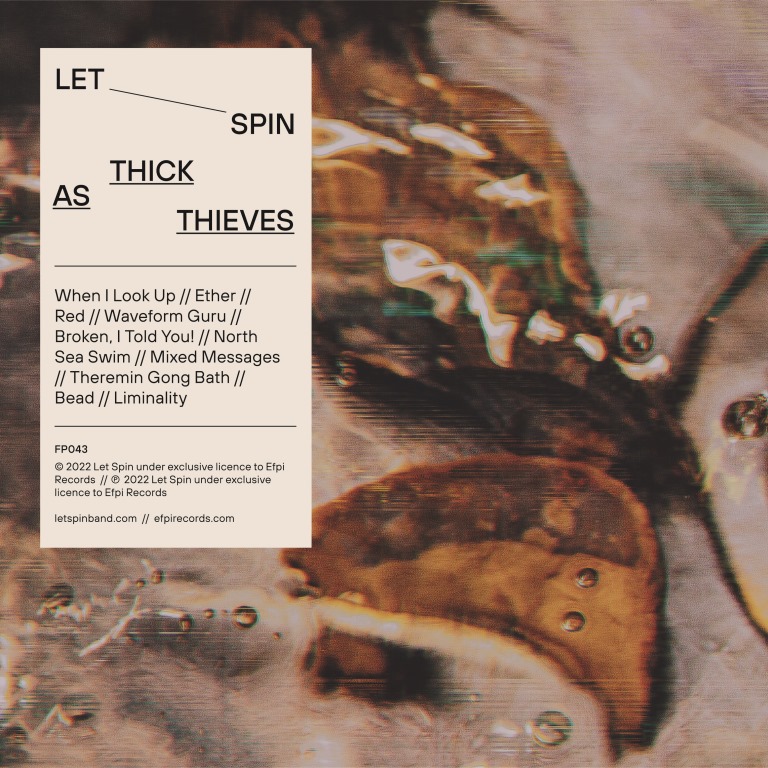
Time flies when… life. And especially when a pandemic and a series of lockdowns rob you of two tears of doing anything. And so it is that Let Spin are marking the ten-year anniversary of their fourth album, Thick As Thieves.

The band are something of a supergroup: Formed in 2012, Let Spin feature four highly acclaimed musicians: Ruth Goller (Melt Yourself Down, Vula Viel), Chris Williams (Led Bib, Sarathy Korwar), Finlay Panter (Beats & Pieces Big Band, Sound 8 Orchestra), and Moss Freed (Union Division, Spike Orchestra), and Thick As Thieves features ten segued tracks of what they describe as ‘adventurous post-rock, experimental jazz’.

Thick As Thieves may be a cliché, but the music it contains is anything but. In fact, quite the opposite is true. Much as it subscribes to aspects of both jazz and post-rock, it’s an exploratory instrumental set that doesn’t really conform to any specific genre trappings, instead borrowing from them in order to form a unique hybrid.

While it’s largely driven by some crunched-up, noodling guitar work, Thick As Thieves very much mines an overtly jazz theme, and while it starts out quite gentle and doodly, on the third track, ‘Red’ it takes a hard lurch into altogether nor challenging terrain, and not just because it gets louder and more percussive: it’s altogether more jarring, the tempos and signatures tumbling into stop/start confusion before the brass ruptures into a cacophonic maelstrom.

‘Broken, I Told You!’ brings a chubby, strolling bassline that’s got some serous groove in a stuttering sort of a way and packs in some deft runs that weave in and out of the wild woodwind and jittery guitar work that’s disorientating and discombobulating. It’s pretty much ok that this feels a bit weird and woozy: it needs to be. ‘North Sea Swim’ takes things down a way and meanders along before swerving into ‘’Mixed Messages’. ‘Bead’ is perhaps the most overtly post-rock / jazz hybrid work, an expansive succession of crescendos with a soaring sax undulating into waves of stratospheric reverb. Closer ‘Liminality’ is almost nine minutes long, and is a space-rock jazz monster that’s absolutely dizzying.

This is one of those albums that not only feels like its album status is essential – you don’t seek out or skip to particular tracks, but experience it as a whole – but there’s a keen sense it would lend itself nicely to being performed live, in its entirety. It flows from end to end, with judiciously-placed peaks and troughs. The ten songs may be marked out individually, but this really feels like a single continuous piece segmented out into ten slices, and it’s a listening journey. At times intrepid, at times curious, it’s got a lot going on, often all at once. Brace yourself!

AA

LS03 Thick As Thieves FRONT

11th November 2022

Christopher Nosnibor

Yorkshire based Mayshe-Mayshe’s bio references blending ‘dreamy art-pop and electronica with rich storytelling, skittering percussion and infectious melodies’, and how her ‘deceptively simple songwriting – at once universal and deeply personal – incorporates choral vocals, vintage synths and the occasional hairdryer.’

Said hairdryer was observed in a couple of live reviews I’ve penned in recent years, in catching her live in 2016 and 2021, but what always stands out during her performances is just how deftly she combines an array of elements, both stylistic and instrumental. She’s by no means just ‘another’ loop pedal artist, but a musical who judiciously uses the tools available to conjure textured, layered, detailed works which are, at the same time, simple and radiate aa unique sense of – for wont of a better word – naivete. But equally, her capacity for understatement is a defining characteristic. The fact that while playing a number of regional shows to launch Indigo, her second full-length album, her hometown show in York on the release date is in a record shop/café with a capacity of about 30 speaks for itself.

Performing as Mayshe-Mayshe, Alice Rowan presents as not necessarily shy, but introspective, considered, contemplative and as much as immersing her work in reservedness, there’s a certain sparkle of sass and levity in the mix, as titles like ‘You Throw Lemons, We Throw Parties’ from 2019’s Cocoa Smoke indicates.

Indigo is simultaneously simple and complex. As the lyrics to the title track demonstrate, she’s given to exploring emotional depths by balancing the direct and the oblique to create an obfuscating haze. And, in record, the same is true of her compositions.

‘But I Do’ kicks the album off in a style that’s minimal and poppy and kinda urban but at the same time ethereal and shoegazy, with busy fingerdrums and a crystalline distillation of mood that invites solid and favourable comparisons to The XX.

‘Dark Mountain’, released as a single in September, is really rather buoyant, with a bouncy bass and busy lead synth and twitchy urban vocal delivery that’s quite at odds with the tense lyrics and the ‘I’m drowning, downing’ hook which speaks to anxiety and panic. I suppose you might call it a sugar-coated pill, but it showcases Alice’s capacity to pen bleak yet buoyant pop tunes.

In contrast, ‘Moonflood’ is altogether darker yet dreamy, in a Curesque way, while ‘The Colours of Anxiety’, which originally featured on the 2019 Long Division compilation, is looping, lilting, and easy on the ear in a way that brushes over the tension it channels via a stuttering beat akin to a palpating heart. In this way, Mayshe-Mayshe conveys sensation beyond the words, beyond the explicit, and does so beautifully, in the most subtly resonant fashion.

In many ways, ‘Eczema’ speaks for itself, an itch that just won’t go away, sore and raw, uncomfortable and irritating, but presented in a palatable fashion, and ‘How to be Happy’ feels like a conscious attempt to be uplifting – which is it, but there are strong undercurrent which are less joyous. ‘Zachter’ is another previous release, having featured as the lead track on the two-track Zachter EP last year. With its lyrics in German and its instrumentation sparse and gloopy and with a hypnotic minimal dance groove, it’s something of an oddity which sits apart from the rest of the album.

The title track, released as a single only the other week, rounds the album off in a hazy, intricately detailed style. Accessible, and often breezy-sounding and easy on the ear, Indigo is an album that’s rich in depth and complexity. It’s thoughtful and emotive and dark and tense yet still extremely enjoyable. It’s a wonderful thing.

AA

su49355-Mayshe-Mayshe_2022-1_-_smaller_copy

Shows:

Nov 10

Cobalt Studios

Newcastle Upon Tyne, UK

Nov 11

FortyFive Vinyl Cafe

York, UK

Nov 12

Hatch

Sheffield, UK

Nov 14

Dubrek Studios

Derby, UK

Nov 15

The Holy GrAle

Durham, UK

Nov 17

Oporto Bar

Leeds, UK

Nov 18

The Peer Hat

Manchester, UK

Nov 19

The Studio

Hartlepool, UK

Nov 20

The Grayston Unity

Halifax, UK

Nov 26

Blues Night

Richmond (North Yorkshire), UK

The Circle Music – 9th September 2022

Christopher Nosnibor

Dakini, the debut album by Lisa Hammer (Requiem In White, Mors Syphilitica) was originally released back in 2009. It’s been described as ‘music for ritual, introspection and awakening of the senses’, ‘a complete manifesto of inner search in which a lot of influences from different genres of music’, and that it was ‘designed to carry the listener away from the manifest world and into a deeper space’.

Re-released here on limited coloured vinyl as an expanded release with three additional tracks, it provides an ideal opportunity for existing fans to re-evaluate, and reacquaint themselves, and for latecomers to be introduced.

It happens that I’m in the latter camp, and so am coming to the album with fresh ears, and only the facts that it’s pitched as being for fans of Dead Can Dance while promising ‘unprecedented vocals, sometimes angelic and sometimes damned as if they come from another period forgotten by the time.

Now, one might ask, if the original release was a ‘complete manifesto’, is the inclusion of additional tracks not gilding the lily? Especially when considering that ‘the Indian ragas correspond with times of the day, so the album represents a condensed 24 hours, which is perfect for ritual, or any emotional and spiritual trip.’ In context, there is the question off how to assimilate the additional material in the least obtrusive way, with the least impact on the flow that is so integral to the original concept?

Opening the album with a new, seven-minute ‘Alte Clamat Epicurus’ works nicely; it’s an evocative vocal incantation with a sparse droning backing. It sounds – in the mind’s eye, and with a small soupçon of imagination – like a sunrise, like an awakening. Hammer sounds both otherworldly and most incredibly earthy, which is no small feat – but then, I find that this is something particular to music, particularly vocalisations, which tap into echoes of ancient spirituality. While exalting the heavens, there feels as though there is a deeper connection with the ground, the rocks, trees, the elements. It paves the way perfectly for ‘In Taberna Quando Sumus’; simple, rhythmic, repetitive. As the album progresses, one becomes attuned to the sense of an arc, of a cycle, and Hammer leads the listener on a journey inside. Some of the musical arrangements are so minimal as to be barely there, the sound of the wind and cavernous reverberations, while others are centred around hypnotic percussion and wordless choral vocalisations, as on the powerful ‘Samsara’ and the lilting, ethereal ‘Vajra’.

That flow is disrupted somewhat with a dance mix of ‘Chant Nr 5’ dropped as the fourteenth track at the end of side three. In the sense that it bookends the side, which opens with the original version, it makes some sort of sense, but still… it’s incongruous, sweeping away the drifting incense with a busy beat and quavering organ tone. Perhaps this is why I’m always hesitant to use the term ‘world’ music: it’s such a western-centric view of the globe, where ‘the world’ is vast and the west occupies only a sliver of it, both geographically and culturally. In the west, the west is the world and perceives its cultural dominance as such. It’s a badly skewed perspective.

While Dakini incorporates elements of what would commonly be described as ‘world’ music, it’s really ‘world’ music in that it truly embraces music from the world in its full breadth, with the delicate sing-song of ‘Lullaby’ perhaps owing more to western traditions and showing that for Hammer, all sources are equal, and it makes for a rich and moving listening experience.

Side four ends, and closes the album, with the third and final bonus track, ‘Hurdy Gurdy Gavotte’. And there, it sits perfectly.

803437

Unsounds Records – 1st November 2022

Christopher Nosnibor

Andy Moor has been nothing if not prolific over the course of his career, which is now well into its fourth decade, and his collaborations are truly multitudinous. He’s one of those musicians who clearly thrives on this approach to working – as comfortable contributing as steering his own path.

I’ve covered a fair few of his efforts over the last decade and a bit, both here and elsewhere – with my belated introduction in 2011 arriving via his appearance on Anne-James Chaton’s ‘Transfer /2: Princess in a Car’ single release.

Moor’s style is by no means accessible or easy, and is as distant from mainstream as is possible, but it’s highly distinctive, and this is unquestionably a significant part of his appeal, both to listeners and fellow musicians.

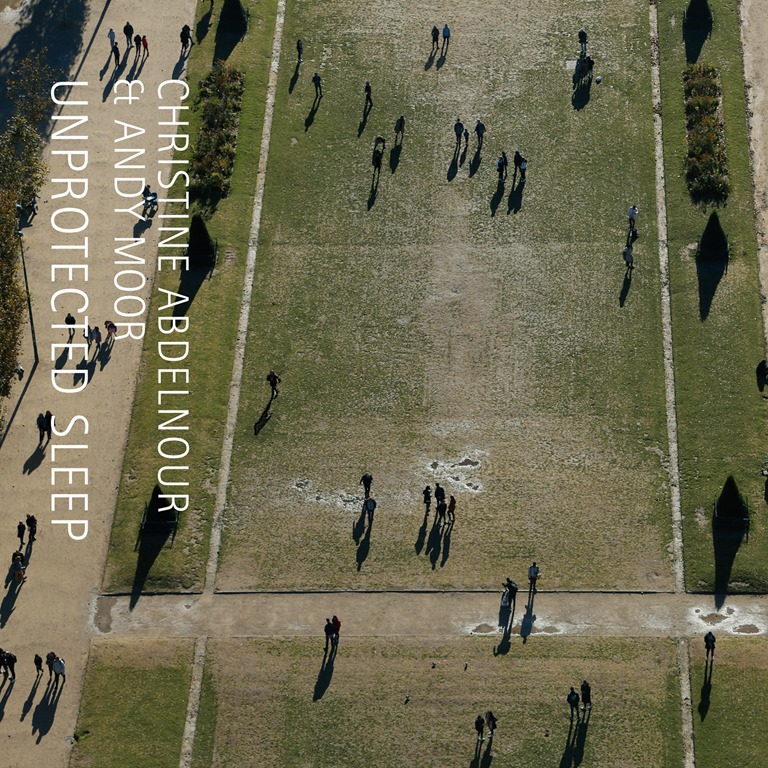
For this work, the accompanying notes explain how ‘Christine Abdnelnour and Andy Moor have explored the notion of hypnagogia or ‘unprotected sleep’ to drive their process for this improvised album, delving in their own experience and memories. Unprotected sleep is commonly defined as an altered state of consciousness that occurs beyond the proper or intended time of waking up, not sleeping in your own safe bed, or even sleeping without a blanket. Being slightly out of phase, one is vulnerable, fragile, but the mind is at the same time very fluid, ultra-associative with an extraordinary memory. In their music making Abdelnour (saxophone) and Moor (guitar) explore the possibilities of real and hallucination sounds and ranges that might come with deep dreaming.’

I had never known that this was a term before, but that it exists speaks on multiple levels, and on a personal level. Sleep is one of the most vital of human functions, but also the most neglected. I’m writing this at 11:30 at night after starting work at 6:30 this morning; five hours of sleep disturbed by lengthy anxiety dreams and broken by the occasional nocturnal anxiety attack is standard. I’m by no means alone in my difficult and often antagonistic and troubled relationship with sleep.

On Unprotected Sleep, Christine Abdelnour and Andy Moor soundtrack the traumas of troubled sleep magnificently. Moor’s scratchy guitar is both metronomic and agitatingly atonal, forging an aural representation of the head-nodding fatigue that so often sweeps over while challenged by needling thoughts that prick a way to wakefulness, or otherwise nag at the psyche

The heavy, grating drone of ‘80db is Loud if You’re Snoring’ ret with scraping guitars and squawks and scrapes if feedback before surging amongst the clattering of cans and escalating to a peak that will inevitably collapse. It drones and groans, and ultimately fades out.

On ‘Compartment 5’, the drone reaches an oppressive level, and it’s enriched by a blank, drony thrum. The density grows, as does the intensity, and it reminds me of the hours spent turning over and over, unable to find that right position, unable to get comfortable, and unable to that headspace conducive to settle to rest: instead, everything is an awkward, uncomfortable churn, accompanied by an unsettling sense off impending doom. The ‘Exchanging Oversize Chrome Objects’ brings a head-pounding crashing beat and uncomfortable churn that’s deeply unsettling, and there’s an uneasiness that permeates the album as a whole.

For many, the experience, if not necessarily the specific sounds, will resonate. Unprotected Sleep is a far from relaxing or soothing sonic experience, built on drones and dissonance, lurching atonal wandering guitar parts and inconsistent tempos that butt against low-key but uncomfortable saxophone drones and honks. Enjoyable is not the word, but compelling most certainly is.

AA

74U_front

Poole Music

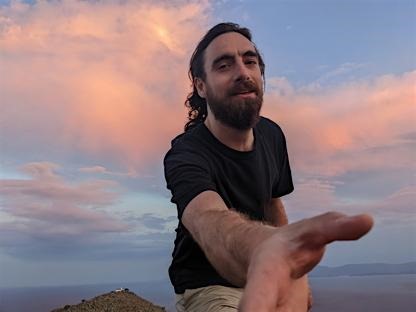
AB – Experimental musician John Also Bennett – may be absolutely nothing to do with COVID vaccines, although there is something of a pandemic element to his new album, which, as the accompanying notes explain, ‘emerged from a bicoastal pandemic road trip through the badlands of South Dakota’ before ‘relocating with his wife (Kranky composer Christina Vantzou) to the cliffside village of Livaniana on the island of Crete, [where] Bennett discovered a method of translating his minimalist lap steel phrases into live MIDI information, which he then used to trigger different waveforms to extend the resonance of the instrument. This multi-layered generative process resulted in a collection as vast and bewildering as the terrain that inspired it: Out there in the middle of nowhere.

It’s quite a backstory for quite an album. The first piece, ‘Nowhere’ is a fifteen-minute epic that’s ultra-sparse and also immensely evocative of… nowhere. It’s the sound of a lost, lonely desert twang: notes bend and hang in the overheated, dusty air. Anyone who’s seen that cover art to The Eagles Greatest Hits – and we’ve all seen that – will know what I mean when I say this sounds like the music that cover really should house. That hot, red sun, the eternal road, straight stretching toward a bewildering horizon, desert on either side… It’s not about tequila sunrises and living life in the fast lane. It’s an image of desolation, of isolation, or being lost and alone. ‘Nowhere’ is the soundtrack to that. A minimal twang that reverberates across the dunes says that in time, without water, without sustenance, you could die out here. You are lost. So lost. And not just geographically. Chords land, in time, but they’re still the sound of desolation, of isolation, and they exist out of time and out of space.

The album contains four tracks (or five if you have the digital-only bonus of the instrumental version of ‘Badlands’), three of which extend beyond the twelve-minute mark, alternated with briefer compositions, with the four-minute ‘Spectral Valley’ and seven-minute ‘Embrosnerós’ are both ambience embodies, and serve as interludes to the big pieces on here.

‘Badlands’ is a beast, but also a work where very little occurs. Notes hover like spectral shadows, ghostly glyphs riding above the solid realm while feet trudge through gravel. There’s something steadily mundane that contrasts with the immensely spatial single-note reverberations. And it’s extremely appropriate. This is not an album of action or movement.

JAB is clearly focused on atmosphere here, and less is very much more. It’s haunting, and leaves you wondering, feeling as though you’re wandering a deserted graveyard, wondering… wondering.

It’s an album that explores both time and space and leaves you wondering if you have either.

PM007_front

AAA

JABB

JAB. Photo: Christina Vantzou

26th September 2022

Christopher Nosnibor

Ever spend time scratching your head wondering what a song or band remind you of, and drawing eternal blanks? Yeah, I get it a lot: I put it down to exposure. Too much music to process.

This is by no means my first introduction to Arcade Fortress: we’ve featured three of their previous singles here on these pages, and I personally described ‘Sabotage’ as ‘a fully-realised anthemic beast of a tune’. And I stand by that, too.

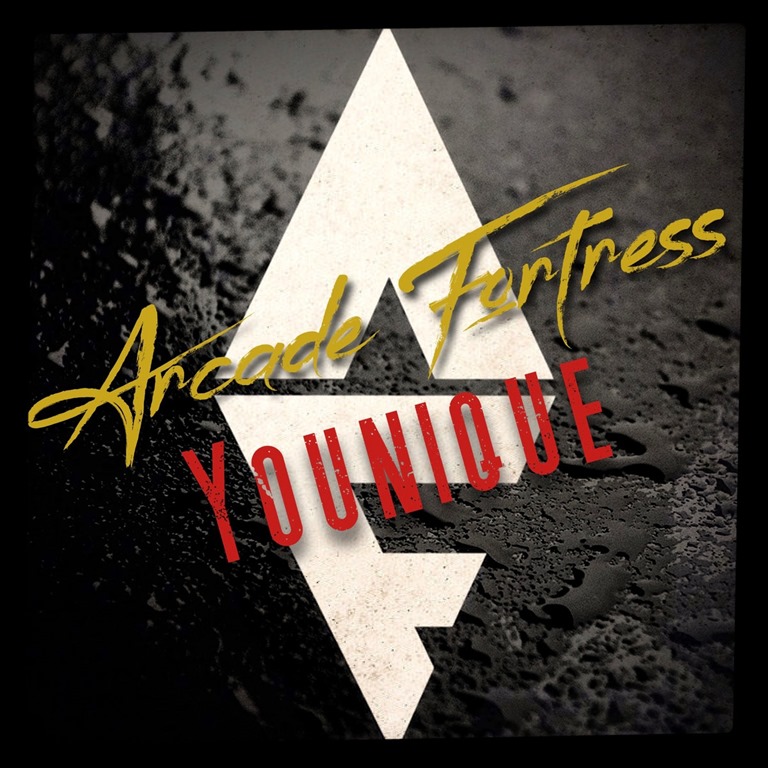
Younique the album finds them powering into the title track by way of an opener, there are samples seeping from the corners as they thrust away at a punk / rock / pop hybrid sound with incendiary energy.

Younique may not be unique by any stretch, but then nor is it derivative, and my ponderance for comparisons is a frustrating distraction but simply a habit of mine. I can’t help but try to place references, lifts, nods. It’s perhaps because there’s so much going on and Younique is such a melting pot of all things from 90s grunge to post-millennial punk-pop that placing any of it specifically is nigh on impossible, and as a result, what you’re faced with is the vibe, and it’s deep retro.

They encourage us, the listener, to sit back, relax and enjoy a rollercoaster of a ride over 12 anthemic rock tracks, but it’s not as easy as all that. The slow-burning Sabotage’ sits four tracks in and there’s no questioning its anthemic enormity, and I can’t help but think of a grungier take on the sound of Depeche Mode circa Ultra, perhaps, when they were grittier and more guitar-driven.

But there’s a lot happening here. It’s not all absolutely killer: ‘Alan Bell’ gets a bit emo and lightweight, and elsewhere, and ‘Killing Time’ sits between Weezer and 80s hair rock, while ‘Tangible’ throws an area-friendly curveball. In contrast, the driving ‘Uppercut’ is more reminiscent of Therapy? circa Troublegum and its tense, taut, and totally kicks arse, as does the riff-driven ‘Strontium Dog’. ‘Dark Seeds’ is more of a punky / hard rock crossover.

It’s not always easy to make a casting vote, and it’s not always fair to get off the fence when it comes to weighing up maters of opinion and taste. Ultimately, Younique finds Arcade Fortress packing some solid tunes, and that’s hard to argue, regardless of taste.

AA

a0586434423_10

Bearsuit Records – 21st October 2022

Christopher Nosnibor

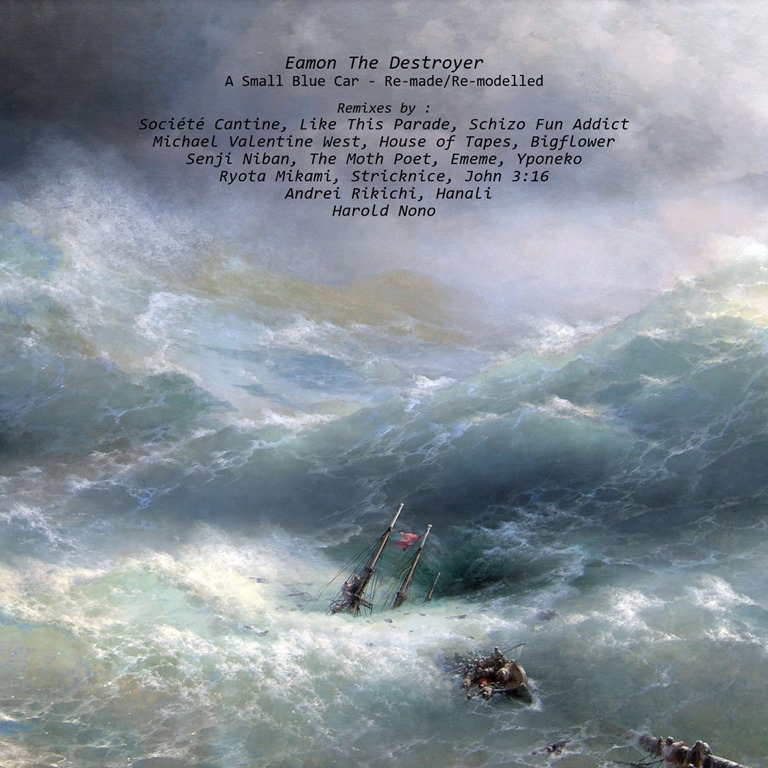
To recap on a long and often retold tale of mine: I love weird shit, but I’m not quite so mad keen on remixes – unless they’re inventive and interesting. So what to make of a remix album of Eamon the Destroyer’s A Small Blue Car?

When I reviewed the album on its release back in November of last year – which barely feels like three months ago, let Alone the best part of a year – I was perhaps ambiguous in my appreciation, describing it as ‘downbeat’, gloomy’, and ‘soporific’. It is very much all of these things, but these are reasons to appreciate this understated collection of songs, with their lo-fi bedroom production style being integral to the Eamon the Destroyer listening experience as he rasps away darkly to aa droning backdrop in a crackle of distortion

One frequent niggle with remix sets is the repetition, but here, only a handful of tracks appear twice, with three interpretations of ‘My Drive’, which is fair enough having been the lead single, and dispersed among sixteen tracks in total, it doesn’t feel like overkill.

The reimaginations of the original songs certainly capture their spirit and essence, from the stop/start glitchy gloopiness of the wandering Like this Parade remix of ‘Nothing Like Anything’ to the longer, more abstract reworkings, like the six-and-a-half-minute festival or reverb and cavernous slow-mo, downturned echo that is Société Cantine remix of ‘Tomahjawk Den’ that’s as experimental as you like and quite disturbing in places, to Michael Valentine West’s seven minute spin on ‘My Drive’, A Small Blue Car – Re-Made / Remodelled is the definition of eclecticism. There’s low-level pulsating electronica and swerves into electronic chamber pop, against ambient electro and scraping industrial noise.

Yponeko brings swirling synths and grating distortion together in a drowning space-rock drift, while MVW deconstructs ‘My Drive’ to a junkyard of spare parts that’s somehow elegant and delicate as well as a wheezing, droning hum that wheezes and groans.

There are no obvious rehashings here, no lazy no-effort remixes that do the usual thing of whacking a booming beat behind the original. In fact, there are absolutely no stonking beats, techno or disco remixes here: these are all most sensitive to the original intent. Sometimes there are beats – as on the thrumming Ememe remix of ‘Avalanche’, but it’s a stuttering wall of drilling noise, ploughing into a mess of glitching loops, a mangled cut-up collage of sound – and often there are not: The Moth Poet’s take on ‘Slow Motion Fade’ is nightmarishly dark, a whirling churn of sound, which drifts into sepulchral opera at the end

Across the course of the album, there’s a lot of cut-and-paste splicing galore, resulting in an ever-shifting sonic collage, and John 3:16 brings gloomy, stark industrial to ‘Humanity id Coming’. House of Tapes turn ‘My Drive’ into a throbbing grunge beast, with additional helium. It’s hard to imagine anything further removed from the original, and that includes Halai’s twisted tribal techno take on the same song.

Alongside one another, it should all amount to a horrible mess, but is, in fact, an absolute triumph, because this is exactly how it should be: Eamon the Destroyer’s original work was a kaleidoscope of darkly disorientating oddity, and this revisitation is more of the same, only different. It’s unlikely to land any spins in nightclubs across the land, and even less likely to find any of the tracks landing Radio 1 playlisting, and it’s even unlikely to win many new fans – but then again, Eamon’s acquired some admirably influential fans, and moreover, that’s not really the ambition for any artist releasing work through Bearsuit. And it’s so refreshing when so much emphasis is placed on not just sakes, but airplay, streams on Spotify, and likes and followers on various platforms, that there are still those who value artistic freedom and exploration above all else.

A Small Blue Car – Re-Made / Remodelled is a source of pleasure, not only because it’s genuinely interesting, but simply because it exists.

AA

a0817555736_10