Posts Tagged ‘Album Review’

Kranky – 13th October 2023

Christopher Nosnibor

One thing I’ve learned as I’ve grown older (apart from the fact you never grow younger, despite the fact that I was amused to recently stumble upon the ‘people also ask’ Google question prompt ‘Is Benjamin Button a true story?’), is that a diversified appreciation of music is particularly useful as you come to recognise the diversified nuances of mood. Adherents to a single genre: how do they deal? How do they find the right soundtrack?

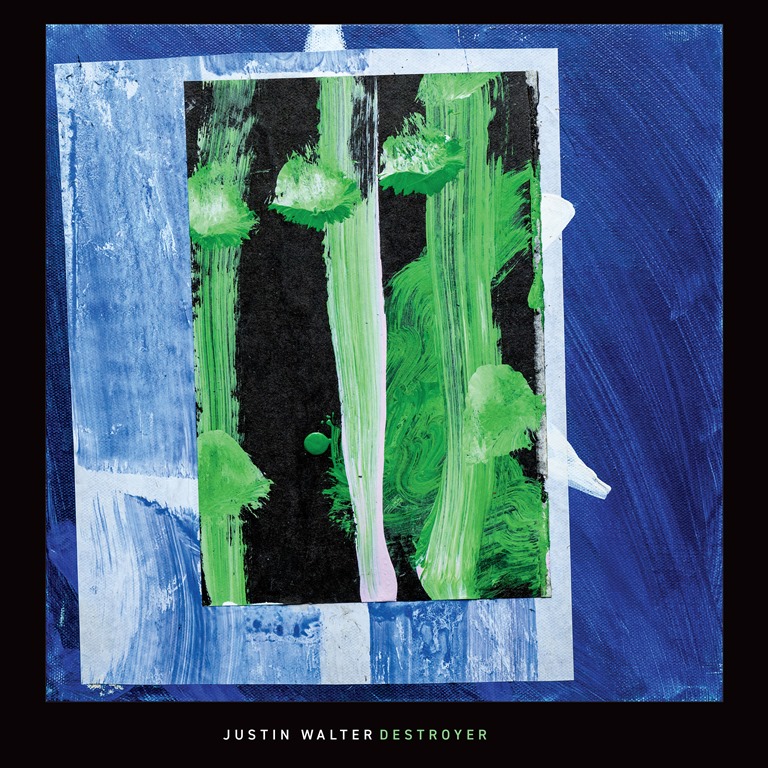
I’m not previously familiar with the music of Justin Walter, but the accompanying notes inform me that it ‘veers between nebulous and numinous, coaxed from the translucent tonalities of his signature instrument, the EVI (Electronic Valve Instrument)’ and that ‘Destroyer, his latest, and third for Kranky, marks his most multifaceted work yet. Inspired by minimalistic urges (evading grandiosity, condensing scope, embracing spatial restraint) tempered with the drama of triptychs (becoming, destruction, aftermath), the album’s 11 tracks thread.’

If the album’s title implies aggression and obliteration, it’s overtly organic analogue synth vibes are quite the opposite. That isn’t to say it’s all shades of mellowness, because Walter weaves in extraneous noise and all sorts and messes with the dials to render soft tones bent and broken, twisted and warped to create a less than silky-smooth air of tranquillity at times. But at others, there are some simply magnificent passages where you feel calm and at ease. The title track is exemplary: it’s an ambient work at heart, soft, supple, gentle, but with serrated edges and spiny burrs that occasionally break through the surface.

Walter obviously has a clear sense of flow. The eleven pieces on Destroyer flow seamlessly from one to the next, and as a consequence, Destroyer feels like an album, despite the contrasts which present themselves across the work. The flow begins with an instant attention-grab in the wibbly shape of ‘For Us’, which blasts in with a blaring drone over which phasey noodles tangle over in ever-increasing layers with adrenalizing effect. While the majority of the album is rather softer, a defining feature of the composition is the exploration of interplay between tones and timbres and the notes their timings gradually shift to create the subtlest of tensions. This is particularly noticeable duribg the second half of the album, which feels slower, softer, and more soporific than the first half. Close your eyes, exhale slowly, and you really start to absorb Destroyer. And you have every reason to do that.

‘Cliff the Cloudcatcher’ is a gentle, bubbling synth piece, while the eight-minute ‘Inner Voices’ is a mellifluous movement in many directions simultaneously, which pulls together to take form, becoming graceful, and in places the sounds mimic woodwind, but sculpted into something otherly… backwards, perhaps, and the sounds bend and push and pull – gently, but they do – before a darker turn around two minutes in brings shade, clouds thickening and becoming denser.

Destroyer distinguishes itself from so many other ambient-orientated works by virtue of its dynamics. There are some thick, tones and dense blankets of noise which present themselves, often emerging from cloud-like drifts of near-nothing. But these moments of rising tension resolve to easy washes and ripples of sound, to cloud-like softness.

And this is the album’s real accomplishment, in that is balances many shades, many tones, many textures. Those darker passages serve to remind that life isn’t all easy or plain sailing, and that plans can go wrong. You can set the controls for plain sailing, but there will always be disturbance, disruption. Whatever you plan or expect, there will always be deviation.

AA
114931

Neurot Recordings – 13 October 2023

Christopher Nosnibor

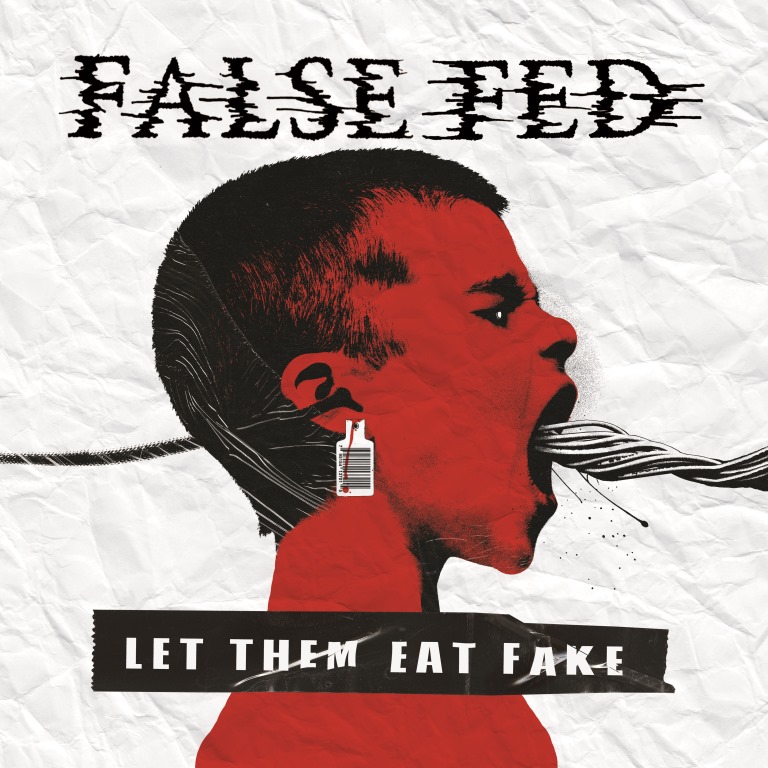
Let Them Eat Fake may be False Fed’s debut, but the members have between them a substantial catalogue of releases. The band comprises Discharge frontman Jeff Janiak, Amebix guitarist Stig C. Miller, Nausea, Ministry and Amebix drummer Roy Mayorga, and JP Parsons, and collectively, we’re told that this album sees them ‘all stepping outside their musical comfort zones to present an album of discomfort and rage in the face of reality’.

The solid, throbbing bass, glacial synth and squirming guitar that mark the album’s opening with ‘Superficial’ may come as something of a surprise given this preface: we’re deep in dark post-punk territory here, and it’s a huge shift from the hard, attacking pace of either Discharge or Ministry, as well as an immense stylistic departure. Janiak’s vocals, too, aren’t hardcore hollering, but a resonant baritone, at least unto he breaks our roaring and raging toward the end. The vibe is more UK goth circa ’86 than anything else, but this is fitting, given the many parallels between now and then. Yes, so much for progress: we’re right back to the 80s in a climate of fear and a new cold war… and not just a cold war. Instead of coming together to make some kind of effort to address the self-made catastrophe of climate crisis, we seem hell-bent on destroying one another.

‘The Tyrant Dies’ is more what you’d expect from this bunch: industrial-strength hardcore punk with a metal edge: the blasting punk fury of Discharge with the gritty heft of Ministry… but then the bridge slows things and we’re back in goth territory – well, goth as filtered through a strain of Rammstein – and the portentous refrain of ‘we will rise’ feels like a call to arms while at the same time calling on the ‘undead, undead, undead’ refrain of ‘Bela Lugosi’s Dead’: it’s time for a resurrection.

This album hits harder as it progresses: the guitars drive harder, the drums roll heavier, and goth, punk, and metal tropes melt together to forge something devastatingly intense. I haven’t heard anything that amalgamates these elements – and so successfully – since Alaric’s End of Mirrors, released in 2016 – also on Neurot.

‘The Big Sleep’ is all driving fury, hell-for-leather drums, chunky, chugging metal guitars, and high-pomp vocals echoing from the chest. Meanwhile, ‘Dreadful Necessities’ comes on like Killing Joke with its taut compressed guitar sound and driving beat. It’s dense, and probably more accurately described as steely grey than dark, since it brings a strong, melodic chorus.

The title – Let Them Eat Fake – may be light-hearted on the surface – but obviously has darker undertones in terms of its reference to class division, and that’s one of the major factors behind the album’s anger. And this is an angry album. Let Them Eat Fake is also an album that has a clear trajectory, and it builds as it progresses, becoming louder, faster, harsher, more angry with each song. By the end, it’s positively incendiary, a full-on roar of fury driven with guitars that burn. And ultimately, it makes sense as an articulation of ‘discomfort and rage in the face of reality’. We’re all feeling it. Reality is pain. Let Them Eat Fake tells is like it is.

AA

589049

Rocket Recordings – 6th October 2023

Christopher Nosnibor

Time was when I found a certain excitement and even a solace in a good dystopian novel. There’s always the question of nature vs nurture when it comes to the development of a child to adulthood, and my tendency to gravitate to the darker aspects is likely at odds with my incredibly mundane middle-class upbringing in the rural backwater of Lincolnshire. Or perhaps that was precisely its origin. What may present superficially as an idyll proves under scrutiny to be an inbred place with a smalltown mentality and has been a longstanding Tory stronghold. Being primarily agricultural, the county had the largest Polish population on account of the seasonal harvesting work. But the locals don’t like these foreigners coming over and stealing the jobs we won’t do, so… It’s probably best to start with the digression rather than veer off course later, and the purpose of the digression was to respond to the context of Teeth of the Sea’s latest effort, their sixth, and by their own claims, ‘most outlandish’ album.

To expand the detail of the context, it’s worth quoting from the accompanying blurbage rather than attempting to paraphrase it: ‘In Frank Herbert’s 1973 novel Hellstrom’s Hive, the Dune writer tells of a sinister narrative surrounding the maverick scientist Nils Hellstrom, who has created a meticulously constructed Hive underneath his Oregon farmhouse. Therein, he oversees a subterranean order of 50,000 insect-human hybrid life-forms. Ultimately his plan being for the inhabitants of the Hive to usurp humanity and take over the world. The decade thus far may not have seen anything quite so daunting, but it’s provided more than its fair share of challenges. Yet in such dystopian environments, Teeth Of The Sea flourish. This band has created a kaleidoscopic inner world all its own in Hive, their sixth and most outlandish album.

I spend the entirety of the first track, ‘Artemis’ being frustrated by my inability to place the origin of the nagging motif which is central to the tune, to the extent I stomp my feet and roar at the ceiling, neither of which helps. But things move on swiftly with the space-age stomp of ‘Get With the Program’, the vocals low in the mix beneath a conglomeration of a bubbling repetition and some gyrating dives, dominated by a sturdy four-four bass drum beat.

If ‘Butterfly House’ is overtly in the style of commercial dance circa 2005, it’s equally classic electro, reminiscent of Ladytron, but with frenzied fretwork dominating the midsection. Nevertheless, it’s dreamy, mellow – and quite the contrast from the quasi-industrial percussion-based attack of ‘Liminal Kin’.

No-one could accuse Teath of the Sea being predictable or derivate here, and the diversity of Hive spans post-rock ambience and progressive rock, and the nine-and-a-bit minute behemoth ‘Megaframa’ goes full Chris ‘n’ Cosey electro-driven dance. It’s beaty, it’s groovy, but it’s got weirdness woven through its fabric.

The final two tracks, ‘Powerhorse’ and ‘Apollo’ are both mellow, but once again couldn’t be more different, with the former bringing an ambient drift before the later fades into the sunset with melancholic picked guitar and unexpected but emotive trumpet. On paper, this probably bears the making of an incoherent mess, but nothing could be further from the truth: the contrasts are complimentary, and there’s a flow which brings the album together. It’s not mere crafting or composition, but a work of sonic alchemy.

AA

630014

Dret Skivor – 1st September 2023

Christopher Nosnibor

This twenty-two-minute continuous composition is ‘A consideration and contemplation of the stupidity of people who have more money they could ever spend and fritter it away on dick-waving projects instead of paying the tax they should be paying and contributing to society’, adding ‘Billionaires shouldn’t exist at all and we need to start having this conversation.’

Yes. Yes. And yes. It’s been something I’ve been silently raging and experiencing existential agony over in recent months. During the summer, half the planet was on fire. Meanwhile, tax-avoiding billionaires were jetting off into space and planning cage fights to settle the argument of who’s the bigger testosterone-fuelled egotistic manchild.

August saw Oregon flooded following hurricane Hillary and a billion-dollar plus restoration project in its wake: the same week, Virgin Galactic was jetting people into space for fun at a cost of around half a million dollars a ticket. If the ticket fees had been put towards the recovery operation, they’d be well on the way. But these cunts just don’t care. Fuck the plebs in their flooded homes: they’ve all got multiple penthouses well above sea level and they’ve earned their jollies – through the labour of the people who have so little, and some who have even lost everything.

I suffer corpuscle-busting rage at people who jet off on skiing holidays bemoaning the lack of snow. They’re one of the primary reasons there is no snow. How fucking hard is it to grasp? And if cars and planes are heavy polluters, launching rockets is off the scale. Not that they give a fuck. They’ll be dead before the earth becomes inhospitable to human life, and their hellspawn will have all the money and can go and live on Mars, so everything’s fine in their megarich world.

It begins with a grand organ note, as if heralding the arrival of a bride or clergy…and so it continues. On… and on. Five minutes in, and very little has changed. Perhaps some light pedal tweaks , a shift in the air as the trilling drone continues, but nothing discernible. The note hangs and hovers. It fills the air, with the graceful, grand tone that is unique to the organ, a truly magnificent instrument – and I write that with no innuendo intended, no reference to the Marquid de Sade submerged for my personal amusement here.

Admittedly, I had initially anticipated something which would more directly articulate my frothing fury at the fucked-up state of the world, but begin to breathe and relax into this rather mellow soundtrack… I start to think that this abstract backdrop is the salve I need to bring my blood pressure down, and think that perhaps this is the unexpected purpose of this release… but by the ten-minute mark, I find myself bathed in a cathedral of noise, and before long, it’s built to a cacophonous reverb-heavy blast which sounds like an entire city collapsing in slow-motion. And this builds, and builds. Fuck. I’m tense again. I feel the pressure building in my chest, the tension in my shoulders and back aches. It makes sense. This is the real point of this recording. Everything is fine until you log onto social media or read the news, and you see the state of things. Momentarily, you can forget just how fucking terrible everything is, how the world is ruined and how there is no escape from the dismalness of everything, and how capitalism has driven so much of this, creating a life stealing hell for those who aren’t in the minuscule minority.

Fact: 1.1% of the population hold almost 50% of the global wealth. A further 39% of wealth is held by just 11% of the population. 55% of the world’s population hold just 1.3% of the wealth between them. So remind me, how is capitalism working for the world? Trickle-down economics is simply a lie as the wealthy retain their wealth and simply grow it. Liz Truss may think that the UK importing cheese is ‘a disgrace’, but this statistic is mind-blowing.

Eighteen minutes in and my mind is blown, too. It feels like it could be part of the soundtrack to Threads. It’s a dense, obliterative sound, a blowtorch on a global scale, the sound not of mere destination, but ultimate annihilation. It seems fitting, given the future we likely face.

AA

a0916419313_10

Erototox Decodings

Christopher Nosnibor

Internationally, Kristof Hahn is best known as a member of Swans since their return in 2010, contributing electric guitar to My Father Will Guide Me up a Rope to the Sky and everything since (he was briefly a Swan in the late 80s and early 90s, becoming a touring member for The Burning World and appearing on White Light from the Mouth of Infinity and subsequently joining Gira’s Angels of Light. A lot has happened since then: My Father Will Guide Me was only forty-four minutes in total, whereas now they’ve evolved to have single tracks of that duration, and Hahn’s contribution on recent albums and tours has been lap steel. Witnessing his action on the last tour, while standing so close to him I could actually see the mud spattered around the ankles of his jeans, the significance of his contribution to the immense walls of noise the band create is clearly apparent. I’ve also been vaguely amuse by just how neat and dapper his presentation is, producing a comb to slick his hair back following particularly strenuous crescendos – although I also witnessed him taking said comb to the strings of his instrument in Leeds to yield some particularly unholy noise from an instrument more commonly associated with laid-back twangin’ country tunes.

What’s perhaps less widely known is that Kristof has enjoyed a lengthy career in music before joining Swans, as both a solo artist and a member of rockabilly garage acts The Legendary Golden Vampires, founded in 1981, and The Nirvana Devils (circa 1984). It’s with the former he’s back flexing his creative muscles despite an intense touring schedule with Swans.

Here, the Berlin-based core duo of filmmaker Olaf Kraemer (vox) and Kristof Hahn (guitars, organ, harmonica), reunited for the first time in many years, are joined by Thomas Wydler (drums), Achim Färber (also drums), and Chandra Shukla (sitar), to cook up a collection of ten songs.

The style is understated, country-leaning, occasionally folksy, with an underlying melancholy hue, with ‘Wohin Du Gehst’ crossing the language barrier to convey a low-level ache of sadness in its tone. Kraemer’s vocals are husky, almost croony, with hints of Mark Lanegan, and suit the low-key compositions well, conveying emotion and world-wearinness and a certain sense of sagacity, which is nowhere more apparent than on ‘White Horse Blues’.

If the reverby guitars of their Husker Dü’s ‘She Floated Away’ channels Chris Isaak, the song’s incongruously jaunty twist is in the vein of fellow German duo St Michael Front, while ‘The Rain’ is sparse and hypnotic and wouldn’t sound out of place on True Detective. The melancholy Leonard Cohen-esque ‘Sad Song’ speaks for itself, quite literally, self-referentially returning to the hook ‘this is such a sad song / and I sing it just for you’.

Discussing the songwriting ‘craft’ on an album feels pretentious and a bit wanky, but making songs this sparse – but also this layered – is a true example of crafting. Having mentioned Leonard Cohen previously, one thing that’s often overlooked is just how many incidental details there are on many of Cohen’s songs: The Songs of Leonard Cohen in particular is , on the face of it, acoustic guitar and voice, but there’s much more happening in the background, coming in and out of the mix, and this is something that comes through in attentive listening to Polaris. It’s subtle, keeping the overall sound quite minimal, but the attention to detail is what really makes it special.

AA

a3829215066_10

Dret Skivor – 6th October 2023

Christopher Nosnibor

It’s been a few months since we’ve heard from Legion of Swine, one of my favourite vehicles for the intensely prolific Dave Procter – because LOS are noisy, abrasive, and unpredictable, and I have fond memories of numerous demented performances and a couple of collaborative sets together. Even when sadly sans pig-head mask, having developed an allergy to latex, the gnarly electronic noise Dave cranks out is messed up and often times hurts.

Dave, and the Swine, are both highly political animals, and once again it’s politics which have spurred him to clack his trotters into activity and snort his disapproval of current affairs.

L.H.S. is accompanied by uncharacteristically expansive liner notes, which prove useful, and so I shall quote in full:

‘This release pays credit to Värmland folk who campaigned to create a better society and are represented by the letter LHS.

L is Selma Lagerlöf who was heavily involved in women’s suffrage and received a Nobel Prize for literature in 1909.

H is for Gerda and Mauritz Hellberg who were central characters in the right to vote campaign.

S is for Torgny Segerstedt who took a stand against the Nazis in his role as editor at Göteborgs Handels- and Sjöfarts-Tidning.

The image used in this release is a reminder of how the free market is way more important than people in some eyes.’

It lays it all out there, and reminds us how failure to learn from history is guaranteed to doom the future. Admittedly, the way things are looking now, we’re doomed one way or another and likely sooner than anticipated due to sheer greed and a refusal to face facts. In the face of this, there’s a part of me that feels as if complaint or resistance is futile, because we’re already fucked. But we need to go down fighting. We need to at least die trying, to know we’re did our best.

L.H.S. is the sound of the fight. It’s a fucking racket, blasting in from the outset with overloading distortion, cutting in and cutting out, a blasting overload that just hurts and is an instant headache. It’s the harshest of electronica which only gets nastier and more intense and insane as it progresses. By three minutes in, it sounds like someone smashing a bin lid connected to a contact mic, recorded on a mobile phone. The treble is high all the way, and the sounds are metallic, distorting, like someone tearing the door off a garage in a gale or something similarly deranged. And deranged it is, from beginning to end.

We’re in Merzbow territory here. And it actually hurts. Ten minutes in, there are some vocals, but they’re impenetrable shrieking derangement, buried in feedback, before things get really gnarly.

L.H.S. is nasty, and I absolutely love it. I suspect most won’t. It’s one to file alongside Whitehouse, Merzbow, and Prurient. It’s brutal, and as niche as fuck, and Dave knows it. Embrace the pain. This is something else.

AA

AA

a3749396098_10

Human Worth – 13th October 2023

Christopher Nosnibor

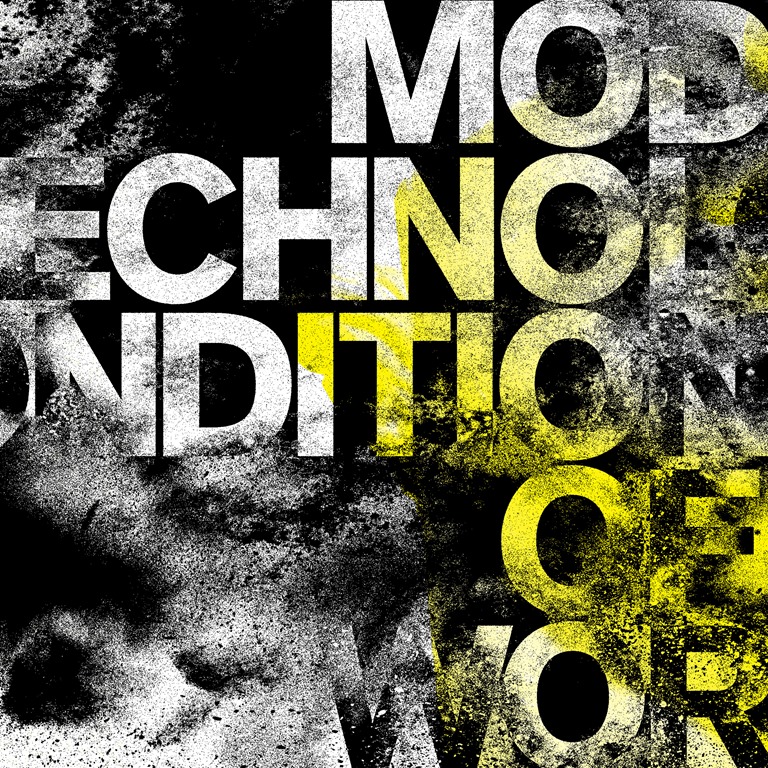
From the moment Modern Technology blasted in with their eponymous debut EP, simultaneously launching the Human Worth label, it was clear that they were special. The duo made the most fucking incredible, low-slung, dense mean-ass noise going. The lyrics were social, political, and sharp, paired down to stark one-line declarations dissecting with absolute precision the fucked-up situation in which we find ourselves. And with a percentage of proceeds of every Human Worth release going to charity, they’ve put their money where their mouth is. It’s not done in some crass, virtue-signalling way: this is their model, and they just get on and do it. And through Human Worth they’ve released some – no, many – absolutely incredible records, rapidly establishing HW as purveyors of quality product with a keen ear for quality noise. In an increasingly fragmented and challenging musical market, the trick for any label is to find a niche and excel within it. And that’s precisely what these guys have done.

And all the while, as a band, Modern Technology just get better and better. Any concerns that they had said all they had to say following the EP and debut album Service Provider (as if there ever were any!) are allayed with the arrival of Conditions of Worth.

Lead single ‘Dead Air’ opens it up with dense, grinding anguish. Chris Clarke’s bass and vocals seem to have got heavier. Then again, so does Owen Gildersleeve’s drumming. But it’s more than just brutal abrasion. In the mid-track breakdown, things go clean and the tension in that picked bass note is enough to spasm the muscles and clench the brain. It’s brutal start to a brutal album.

‘Lurid Machines’ begins in a squall of feedback and wracked, anguished vocals, and it’s harrowing, the sound of pain. The lyrics are comparatively abstract, and all the more powerful for it. Written out in all block caps, they’re in your face but wide open to interpretation and elicit the conjuring of mental images:

WHY ARE THEY SO ALONE?

THE LIES THEY ALL SHARE

LET GO

INSIDE NOTHING GLOWS

BENEATH A SHADOWED PHONE

The drums and bass crawl in and grind out a low, slow dirge, Clarke’s vocals are down in the mix and you feel yourself being dragged into a chasm of darkness.

These are harrowing times, and if the pandemic seemed like a living nightmare, it seems it was only the preface. The ‘new normal’ is not the utopia some commentators suggested it may be. For a moment, it looked as though we would achieve the golden goal of the work/life balance, that we may abandon the commute and save hours a week for ourselves and slash our carbon emissions in the process. But no. Fuck that. Get back to the office, tough shit that fuel prices are rocketing and bollocks to the anxiety you developed in lockdown and bollocks to the environment because power trumps everything. Government power, corporate power, media power… we are all fucked and have no hope of breaking this. And this is the backdrop to Conditions of Worth.

They pick up the pace and start ‘Salvation’ with an uncharacteristically uptempo stoner rock vibe, but around the midpoint they flip things, slowing the pace and opening up towering cathedrals of sound as a backdrop to painting a stark depiction of life on earth.

WIDESPREAD

FAMINE

WIDESPREAD

CONFLICT

WIDESPREAD

PANIC

WIDESPREAD

SHADOW

The song ends with just a spare, fragile but earthy bass that calls to mind Neurosis and Kowloon walled City. It’s this loamy, organic texture which defines the altogether more minimal ‘The Space Between’, the first of the album’s two longer pieces, with the second being the ten-minute title track. It’s here that their evolution is perhaps most evident, as they stretch the parameters of their compositions to forge such megalithic works and really push the limits of their two-piece arrangement. In contrast, there’s the super-concise ‘Fully Detached’, , and the last track, ‘ Believieer’, which are absolute hardcore ragers, clocking in with short running times, the former just making a minute and fourteen seconds. And the variety on display here only adds to the album’s impact. While each track hits hard, the overall impact is obliterating.

They crank up the volume and the shades of distortion in the explosive choruses of ‘Lane Control’ – because you can never have too many effects when it comes to bass played like guitar and blasting screaming noise to articulate feelings, and as for the title track… it’s an absolute beast, with heavy hints of latter-day Killing Joke in the mix as they flay mercilessly at a pulverising riff. The noise builds and the vocals sink beneath it all and you’re left feeling dazed.

But more than that, there’s something about the production on Conditions of Worth that’s deeply affecting. There’s a skull-crushing sonic density, but also simultaneously, remarkable separation and sonic clarity. These elements only make it his harder.

Conditions of Worth is more than just heavy. It leaves you feeling hollowed out, drained, weak. This is life, and this album is the perfect articulation.

AA

HW031_ModernTechnology_ConditionsOfWorth_CoverArtwork

Front & Follow / gated canal Community – 6th October 2023

Christopher Nosnibor

When Front & Follow called it a day as a label, it was a sad day, and their subsequent emergence from the mothballs for the Rental Yields series was extremely welcome. This was a project that came from the heart and really showed what F&F was all about – yes, music first and foremost, but also community. By working with a certain network of artists, the label built a community of its own, but there was always a sense of locale which was integral to this, and this is what compelled label-leader Justin Watson to resurrect the label to release a series of fundraisers to help raise money to tackle homelessness in Manchester.

This is a project which has clearly taken on a life of its own, and it seems unlikely that when first touting the idea, Justin could have ever seen the deluge of contributions which would pour in over the coming months. He writes, ‘Over 100 artists are involved (the spreadsheet is fun), each one tasked with creating a new track from the sounds created by someone else –we are then collating the tracks and releasing them over 2022 and 2023… This is VOLUME FIVE –THE FINAL VOLUME. 19 tracks, 38 wonderful artists. All money raised will go to SPIN (Supporting People in Need), whose purpose is to feed, shelter, clothe and generally support the homeless and people in need of Greater Manchester.’

This release simply shouldn’t exist. Homelessness shouldn’t exist, either. Levelling up my fucking arse. This government can’t even manage the basics, and while the imminent cancellation of the stretch of HS2 between Birmingham and Manchester is making all of the headlines and the government are refusing to comment on the ‘speculation’ about the inevitable, insisting that there are many other projects which are equally essential to the plan to provide the north with the same quality of life available to those in the capital, the fact that homelessness remains such a huge issue in Manchester is evidence that they’re not receiving the finding they need either. It’s not just Manchester, but charity begins at home and people can only do so much, so it stands to reason that F&F should donate to a local charity.

The one positive outcome of a truly depressing situation is that all five of the Rental Yields compilations is absolutely superb, and this fifth and final one is a glorious showcase of predominantly regional talent from a city with a long history of producing outstanding music, alongside Leeds. While it’s fair to say that much of this musical output has been born from frustration, it only serves to demonstrate just how much the north has contributed, and continues to contribute, to the nation’s creative output. And a nation without art… is simply dead. Over the last nineteen years, which I’ve spent living in York, I’ve often said that the best thing about living here is its proximity to Leeds. The city’s music scene is phenomenal, and where in London could you watch local / national / international touring bands while supping local ales for four quid a pint?

So, while the fact of the matter is that there should be no need for this album in terms of its social motivation, Rental Yields Volume Five is ultimately yet another essential release in terms of the fantastic music it showcases. More than any of the preceding editions, it’s a murky, atmospheric collection.

I’d been bobbing along nicely to the mellow drift before the penetrating feedback blast that heralds the arrival of ‘Rental Yields Weekend in Manchester Mix’ by Dan Gusset vs Omnibadger. Had to be these buggers, of course. Regular contributors / usual culprits, they bring another layer of discomfort to the party. It’s like Test Dept’s ‘Unacceptable Face of Freedom’ for 2023, a punishing, sample-filled industrial racket that tells it like it is, and without compromise. We live in harsh times, dominated by harsh language from government, and if ‘and then it was gone’ by gormless vs Distant Animals is superficially buoyant, the underlying stains of noise are dark and turbulent and this is the noise that fills our heads day in, day out, as we walk down the street. There is no escape, only the delusion. There is plenty oof harsh reality to be found on here, with thick bass blasts dominating Repeated Viewing vs Four Italian Pep Pils’

Most of the contributors on here are new to me, but as has been the case with all of the previous instalments, the quality of consistency is remarkable, and it’s incredible to think that this is a compilation assembled from open submissions. Rental Yields Volume 5 feels more like a film score than anything else, the tracks showcasing a cohesion and unity our government could only dream of. But then, this what happens when artists come together for a cause. And coming together is the crux here. The entire Rental Yields series is essentially about unity, and also about compassion. The government, and the capitalist world at large needs to learn from this. In the meantime, this glorious compilation provides a much-needed salve to the muscle-twitching rage the societal situation elicits. It’s yet another great album from Front & Follow, who deserve to hang up their virtual boots after this.

AA

dQGDqHAA

Panurus Productions – 6th October 2023

Christopher Nosnibor

Heavy music doesn’t have to be po-faced or excessively serious, and there have been a few comedy metal and noise bands through the years. Lawnmower Deth are one which swiftly spring to mind, but the likes of Municipal Waste, and lesser-known acts like Grindcore Cakemakers also make hard noise while being a far cry from the existential rage more commonly associated with their genres. And that’s good. The world needs variety, and there’s more than one way to alleviate the grimness of life on this sorry planet.

This album from Black Shape is perhaps the absolute antithesis of Godflesh’s seminal Streetcleaner. With the lumbering weight of a runaway bin lorry, Black Shape rumble their way through eleven tracks of bin themed absurdity, utilising their knack for writing material that is as colossally heavy as it is varied and comedic. Most of the tracks are around the two-minute mark, with just a couple of four-minute outliers. On the surface it’s a whole mess of noisy shit, but closer listening soon reveals a wildly varied album which incorporates jazz, spoken word, nu-metal, rap and thrash.

‘The Beast from the North East’ is a dirty, shouty punk effort – more Anti-Nowhere League than The Pistols. Dense, muscular, with filthy sludge guitars, pant-soiling bass, and a wild solo which occupies half the song’s duration. The production is rough and raw, and this works in its favour: the guitar on ‘I Wanna be a Binman’ positively tears from the speakers, and it’s like being at a gig and standing so close to the PA that your nostrils vibrate. If you’ve never done it, you need to at least once, although earplugs are recommended. You still feel the force without fucking your hearing for the rest of your life. It’s a throbbing stomper reminiscent of Ministry circa Psalm 69. Only instead of burning for the needle, it’s a hard craving for lugging refuse. They pillage every style going here: ‘Dogshit Bin Juice’ takes a turn for the choral in the verses between ball-busting glam stomp riff breaks. It’s hilarious, but also makes you think. You sometimes hear that binmen are pretty well-paid. But would you do this, for any money?

If ‘Put Me in the Bin’ is the most overtly old-school punk cut, the recording is again more industrial, which couldn’t be more at odds with the offbeat, off-the-cuff lyrics, while ‘Once a Binman, Always a Binman’ throws a curveball with a gentle intro and unlikely lift of ‘Love Lift us Up Where We Belong’ before going full-slugging nu-metal / grunge crossover, with the meaty heft of Tad bringing the blue collar grit to proceedings. There are some moments of astute observation and social critique which land quite unexpectedly, but it just goes to show that it’s a mistake to write of a so-called ‘comedy’ album – or indeed any comedy – as shallow, lacking in content, or emotional depth. ‘The Story of How I Died’ brings lilting harp and Pam Ayres style narrative.

Beyond bin-related themes, this is not an album that’s predictable in anyway, lyrically or stylistically, with piano ballads pressed against squalling hardcore assaults. And because of the punk / thrash / metal leanings, and the overall daftness of many of the lyrics and the overall concept, Black Shape’s musicianship is likely to be overlooked. But the range is a measure of immense versatility and competence. Black Shape are the Bill Bailey of dustbins, and BINS is a work of sheer brilliance.

AA

a2313098061_10

343 Collective / Broken Soundtracks / Jam Recordings –15th October 2023

The arrived of this album piqued my curiosity for a number of reasons, and one of the first things I felt compelled to do was unravel, or at least understand, the context of the title, since it seems to connote being the music which accompanies a movies. On my journey, I discovered that in film, a score is, at least according to Masterclass.com, ‘the specific musical piece or incidental music that accompanies a scene or moment in the film, and a soundtrack is the compilation of songs and sounds that comprise all of the film’s music. Scores are usually created by one or more composers, while soundtracks typically feature songs by different bands, artists, or musicians.’

But equally, a score is notation, usually in manuscript or printed form, of a musical work, believed to derived from the vertical scoring lines that connect successive related staves.

This album is neither notation nor featured as part of any movie – at least, not one that’s been produced yet.

The ensemble founded by Jon Dawson, and John Bundrick as a side project to Third of Never has expanded considerably, now standing as a six-piece, with this outing features additional contributions from Rabbit (The Who), Steve Kilbey (The Church) and Doug McMillan (The Connells), and was recorded alongside the forthcoming Third of Never album.

They describe the album as ‘a lysergic mood journey of epic proportions’, and advise that it be listened to ‘all at once, in the dark, accompanied by someone you trust, and a lava lamp.’ Well, it being a wet night at the end of September, it’s been dark since before 8pm. I’m alone in my office, and in the absence of a lava lamp, I have a couple of candles lit, and as such, my listening experience and ultimately my review are in the spirit of the album and its intentions – penned in a single sitting, straight through, no pauses, no rewinds, no munching popcorn. Just the quiet sipping of an Islay single malt.

To describe it as ‘epic’ isn’t hyperbole, but a statement of fact: the scope and impact of Original Score is vast. There’s no delicate, slow-building introduction: ‘Attention’ says a voice urgently but dryly, before a sound-collage begins to layer up before our very ears, and that rapidly evolves into a space-age jazz workout with rolling piano and hectic drums driving through fluttering cut-ins and cut-outs, and everything’s happening at once, for a time pinned together by a crunking, choppy bass before ethereal voices float in a chorus of reverb to carry it all away. Done differently, it could be a chaotic disaster, but it’s more Burroughs than Beefheart, and in filmic terms feels like the accompaniment to a three-way-split screen with rapid intersections and scene changes across all three.

Perhaps it’s the power of suggestion, or the potency of the whisky, but Original Score does feels like a very visual audio.

Because of the fact the eleven pieces are segued to form one continuous work, if you’re not actually looking at the CD display, there’s no way of really knowing when one ends and the next begins: because the individual tracks aren’t linear or overtly structured, the transitions between them are seamless.

There are some uplifting, light-hearted passages, and some incredibly dark, almost spooky ones, as haunting voices float hither and thither over wailing guitar feedback, undulating organ notes, and ponderous bass, fractured, treated vocals adding to the unsettling disorientation.

There’s a strongly proggy space-rock vibe, and the quavering keys and strolling bass segments lean heavily towards that seventies sound. I’m not well enough versed to differentiate Yes from King Crimson, but these are the touchstones that spring to mind, melted into Hawkwind wigouts. At times, the images it conjures are of spinning through space, hurtling headlong into the void; others, simply of a band on a massive stage with a drummer and three percussionists, multiple keyboardists with tassled sleeves delivering fifteen-minute solos to a Woodstock-sized crowd, with bearded guys in flares utterly losing their shit. It may be all of this and more, or none of these things when it comes to your own experience.

And this is, undoubtedly, the beauty – and artistic success – of Original Score. It’s the real-time unravelling soundtrack to the movie that you picture in your mind’s eye.

AA

a1597649542_10