Posts Tagged ‘Album Review’

Nonclassical – cnclss024

Christopher Nosnibor

Langham Research Centre originated through late-night experimental gatherings at the BBC studios, and have evolved to produce long-form radiophonic works, of which 2014’s Muffled Ciphers was inspiredby JG Ballard’s seminal novel -which challenged the very notion of the form – The Atrocity Exhibition. Created with an accumulation of rare and obsolete instruments and devices, and inspired by early electronic composers spanning John Cage, Alvin Lucier, and Delia Derbyshire, Tape Works Vol. 1 is pitched as ‘a collection of modern musique concrète.’

The first thing I noticed was that my copy is number 11 of an edition of 30 promos. This knowledge spurs me to get my finger out and provide some coverage. The second thing I notice, on scanning the track listing, before reading the biography containing the above, is that it features tracks with the titles ‘The Voices of Time’ and ‘The Terminal Beach’ – the former of which is a collection of short stories by Ballard, and the latter of which is the title of one of the stories in that collection, which first appeared in 1963 under the title The Four-Dimensional Nightmare.

On Tape Works Vol. 1, the Langham Research Centre (and doesn’t that sound so Ballardian in itself… I’ve spent hours scanning my collection to see if there’s a character named Langham in Ballard’s oeuvre and have drawn blanks before ultimately deciding it’s better to actually get the work done than disappear down another rabbit-hole of research) explore all the dimensions. And while at times it confirms to the template of so much experimental analogue work, at times it ventures in the truly weird.

‘LOL, Pt 1’ mixes monkey chatters and R2D2 bleeps with eerie abstractions, bibbling bloops, fractured vocal snippets and small samples of laughter enter the mix alongside the kitchen sink to from an uncomfortable, disorientating sound collage.

There’s a lot of stopping and starting, whistling and droning, woe and flutter and infinite disruption. This is the sound of dislocation, a soundtrack designed to induce maximum disorientation.

Bleeps and squiggles, trilling squeals rising to a high-pitched hum collide with woozy, groaning bass frequencies. Notes bend as if on a stretched tape, and tape whips back and forth through heads. There are moments which recall the head-spinning cut-up and drop-in tape experiments conducted by William Burroughs, Brion Gysin, and Iain Sommerville in the late 50s and early 60s.

Birdsong. New snippets. A plane roars overhead. A conglomeration of voices. Static. Interference. A howling wind. Sparse, arrhythmic beats clatter and clang. Yes, this is life: fractured discordant, difficult. Simultaneous. Overwhelming. This is essentially how I feel about it. I cannot compute. I feel dislocated, alienated. I feel tense. Nothing new there. But Just as reading Ballard makes me feel uncomfortable in my own skin, so Langham Research Centre’s fucked-up sampling of old adverts and blending them with minimalist dark ambient twists me into a state of discomfort.

At time gentle, at others abrasive and bordering on the attacking treble whistles and white/pink noise crackle of early Whitehouse and Merzbow, Tape Works Vol. 1 is at no point accessible, easy, cuddly. But it does push the senses and question linearity and accessibility and even the boundaries of musicality. And as such, it fulfils its objective.

AA

Langham

23rd August 2018

Stuart Bateman

How much review do you need of an album called Pain by a band called Immolated Moth? Look at the artwork. You already have an idea of what to expect musically, that’s pretty certain.

According to the blurb, ‘“Carefully constructed brutal fucking chaos” is an accurate description of the sound of Immolated moth. The work of Thom Bleasdale, who had his career as an audio engineer cut short by serious illness, misdiagnosis and mistreatment that should have killed him, Immolated moth is hybrid death metal with an old school feel that is a real expression of true anger, pain, fear and trauma. It does not get any more real than this.’

It’s real, alright. Really pounding, heavy. Really relentless, pulverizing percussion dominates a sludgy mix of really dirty guitars, finished with snarling, guttural vocals. From amidst the raging, uptempo tempest emerge frequent frenzied solos.

The songs may be fast, but they’re not short: opener ‘Suffer in Peace’ is almost seven minutes long and sets the tone. Brutal, dark, menacing and unswervingly relentless, it’s a complete juggernaut of a record. It judders, shudders, throbs and grinds without any real respite.

There’s some weird ZZ Top on speed riffery in the mix on ‘Anger’, before it explodes in a furious flurry or machine-gun drums and wild lead guitar work, and somewhere, a weird sort of groove emerges.

Overall, Pain isn’t an album you listen to for variety, or to admire the subtlety and detail of the production. The emphasis on the mid ranges add to the effect of the lack of variation and builds the cumulative effect of being hammered at a hundred miles an hour without mercy. In short, Pain delivers what it promises.

AA

immolated moth pain cover smaller

Grappa Musikkforlag – 24th August 2018

Christopher Nosnibor

I used to watch a fair few horror films when I was younger, but don’t get to so much these days: my wife isn’t a fan, and, moreover, I can’t watch movies and listen to music at the same time. Spending my evenings reviewing means it’s the movies that have had to give. But when I did have the time to watch horror movies, I always preferred the films that unsettled the mind rather than overloaded the senses with in-yer-face viscera and gore. It isn’t necessarily that I like to be scared: I just like to be mentally challenged, and the imagination is a powerful thing. For the same reason, I usually prefer to invest the time in a book rather than TV show or movie. Greater effort tends to yield greater reward, and what’s more, the mind can conjure scenes far beyond the scope of any film set and special effects.

The mind’s eye is a terrible thing, but also a wonderful thing. Just look at your dreams: they’ll likely present vistas beyond anything you’ve ever seen in any movie. And even if not, these scenes are your own, rather than something pre-presented, the product of someone else’s imagination.

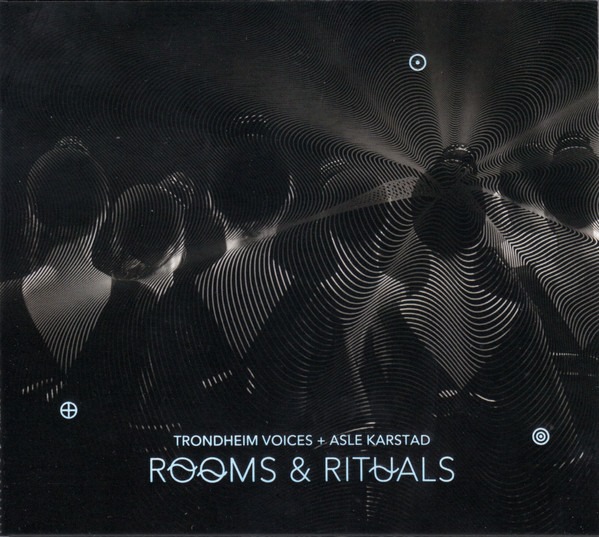
Rooms & Rituals is an album which engages the mind and encourages it to explore the darker recesses. The compositions are haunting, to the point of being outright scary. tapping into the deeper realms of the psyche, teasing out the horror of disquiet, and poking around in those dark, uncomfortable places. The voices are those of no less than ten female singers, although not necessarily at the same time. This is, indeed, a choir like no other.

‘Steamsaw’ sets the tone: dark, ominous, rumbling thunder and fear chords drifting almost subliminally… It’s minimal, and it’s a discomfort you can’t quite put our finger on. But it’s there, it’s real, and it gnaws at the pit of your stomach. ‘Pulser’ is eerie. Voices, disembodied, and as if rising from the grave, amidst unintelligible guttural utterances from the underworld, shrieks, and industrial pulsations and the occasional, sporadic clash of grating undifferentiated noise conglomerate to forge something stomach-churningly tense.

‘Ritual #3’ is a series of bleeps and tweets over a low-end rumble, and is reminiscent of some early Whitehouse, minus the trebly shouting. ‘Rise; is a voice lost in a gale, the sense of dislocation, distance and isolation rendered palpable in the drift. ‘Hymn’ pitches vocal melody that’s evocative, haunting, almost a Celtic folk piece, against a gnawing hovering synth hum, and elsewhere, ‘Gleam’ goes gloriously minimal, trilling organ pulses providing the backdrop to ethereal vocals that drift skyward.

Collectively and cumulatively, these pieces move and unsettle the listener, bringing a sense of dislocation, and disorientation. It creates a space for pondering. This is art.

AA

Trondheim Voices

Super Secret Records – 25th May 208

Given the album’s title, I wasn’t exactly expecting jaunty jubilance. But then, having heard a million albums since reviewing their 2014 debut, A Mothers Work is Never Done, I wasn’t expecting a wild hybrid of-hop hop and jazz at first.

They’ve upped the edge and intensity for this second outing, going all out with a strong start. An insistent groove, dominated by a relentless ‘vintage’ hip-hop beat, hammered out hard provides the backdrop to the jazz-rap crossover of the eight-minute ‘Attica Black’. Breaking from some nagging guitar and angry vocals, it breaks into a cacophony of discord, with brass honking like braying elephants tooting all over a collapsing barrage of percussion.

‘Black Tar Caviar’ mellows the pace and goes big on the sax and the sleaze in the opening bars. That sax… sax not in the smooth jazz sense, not in the café PA sense, but big bold, raucous, gutsy sax – before a thick, tearing bass grinds in, and… woah. Blackened hop-hop-jazz-metal? It’s like fur songs playing at once. It’s roaring and savage and intense and utterly bewildering. I don’t even know if it’ any good: it’s simply too much to take in. But if a derangement of the senses of the desires effect, then they’ve undeniably achieved it in around two and a half explosive minutes.

The weirdness abates for the start of ‘Bodiless Arms’, but only slightly, as a braying sax honks rudely to disrupt a delicately picked guitar piece that evokes pastoral tranquillity.

And yes, it’s ultimately all about the sax… it’s wild. The two short ‘untitled’ composition are bursts of noise without overt structure or form, but while the drums are all over and there’s

Ironically, ‘Jazz Oppression’ the least overtly jazz tune on the album, manifesting more as a full-throttle hip-hop metal crossover, a driving, two-and-a-half minute bass-driven barrage with throaty hollers and a sinewy lead guitar that’s swiftly buried amidst the chaos and screaming feedback. It’s swiftly followed by the equally attacking (and brief) title track: ‘Fuck all that weak shit’ is the half-buried refrain on ‘Morose’, which barrels headlong from a throbbing, insistent groove into screaming metal noise amidst a cascade of off-key xylophone.

If there’s a formula to be found, it’s a loose one based around shifting perceptions and expectations, the way in which a song can begin as one thing and end completely as another. The moments of accessibility lull and woo the listener, before s sharp left-turn and a sudden swell of noise annihilates all semblance of order and location.

But then, the crooning closer disrupts much of that: despite its extraneous additions, a swirling vortex of feedback in the background, and its awkward industrial trip-hop leanings, it’s a remarkably pleasant and smooth piece of soul-soaked hip-hop. To remark that it’s incongruous feels pretty redundant: everything about this album seems incongruous with the rest of the album. And somehow, it works.

AA

AA

Young Mothers - Morose

Cold Spring – CD 3rd August 2018 / LP 10th September 2018

Christopher Nosnibor

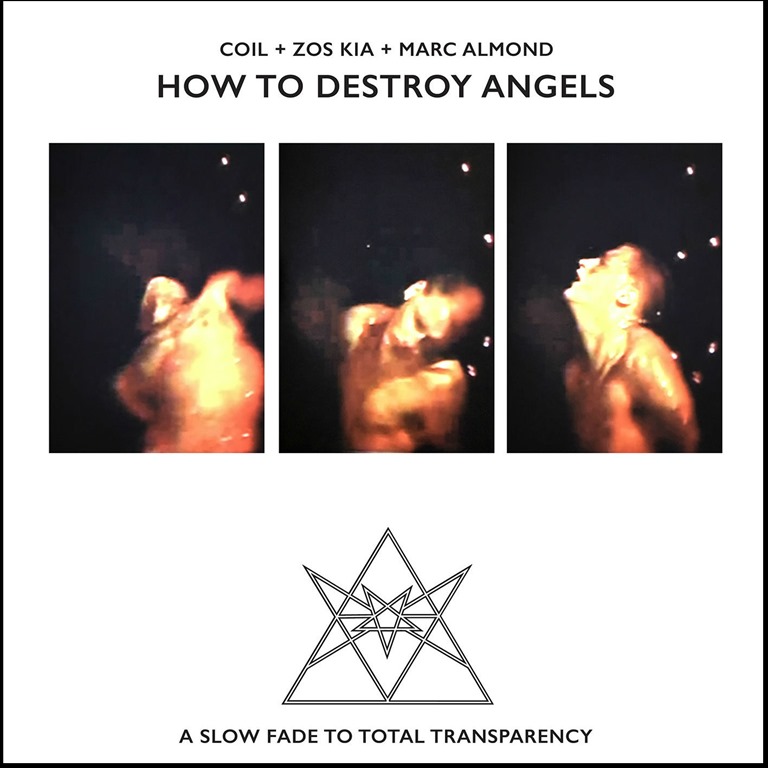
There are so many moments lost in the annals of history. This particular one has been languishing, unheard and unreleased for some 35 years. As collaborations go, this one is particularly special, and captures the spirit of the underground scene in the early 80s, with the original Coil lineup of John Balance and Peter Christopherson joined by John Gosling and Marc Almond. Although renowned as a pop singer, both solo and with Soft Cell, Almond has a raft of interesting collaborations to his credit: his work with JG Thirlwell as Flesh Volcano is a persona favourite, the pair amping up the sleaze and grime to deliver something quite dank and slimy. Better still, their live rendition of ‘Ghostrider’ for the BBC. And, lest we forget, undocumented save for some (painfully) ropey bootlegs, The Immaculate Consumptive, a short-lived live project (just three shows in three days in October / November ‘83) which featured Almond, Thirlwell, Nick Cave, and Lydia Lunch.

‘How to Destroy Angels’ was recorded shortly before The Immaculate Consumptive broke Brian Eno’s piano, on 24th August 1983, at the Air Gallery in London. And the recording has languished ever since, until now, emerging cleaned up and consumable. Although it’s still pretty raw, and if truth be told, sounds little better than some of the recordings of my own spoken word performances recorded on my phone. Of course, this has rather more cultural significance and wider interest.

As the liner notes observe, ‘the music bears only scant resemblance to the ‘How To Destroy Angels’ 12” that Coil would release as their debut vinyl the following year.’ And so the performance which would preface Coil’s studio debut was very much an experimental effort, a collaborative piece born of happenstance and a coalescence of creative fermentation that was bubbling around the time.

It’s Lunch’s influence that seems strongest on Almond’s contribution here: his narrative – a bitter tirade against an ex-lover – is full of bile and expletives as he spits the words quickly and abrasively against an eerie, unsettling dark ambient backdrop. Challenging is the word – but then, that’s entirely the point.

The Kos Kia remix of ‘How To Destroy Angels’, which whittles 23 minutes of audio to just over eight, feels a little redundant here. It’s not bad by any stretch: in fact, as weirdy ambient remixes go, it’s pretty good. It’s just a question of fit.

‘Baptism of Fire’ is an unreleased recording of Zos Kia and Coil at Recession Studios, London: dating from 12th October 1983, it’s contemporaneous with ‘How to Destroy Angels’. It’s the shortest piece here, and concludes the set with four and a half minutes of battering percussion, howling ululations and clanking, clattering noise that’s very Throbbing Gristle and very uncomfortable indeed.

While so many archival recordings and onus cuts on anniversary reissues – often of bands who were only of limited merit in the first place – feel like sloppy cash-ins, digging out second-rate demons , acoustic versions, remixes outtakes and live recordings of well-known studio tracks, this is a real rarity, which sheds new light on the origins of band whose effect has been significant and enduring. Moreover, it’s not only vastly illuminating in context of the nascent Coil sound, but a document which joints a number of dots in the wider context: and for that, this is an essential release.

AA

COIL ZOS KIA MARC ALMOND - Lo res album cover for web

Ici, D’ailleurs – 22nd June 2018

I find myself increasingly drawn to album covers that evoke a sense of desertion, emptiness, and which are oddly plain, bald. French avant-garde specialists Ici, D’ailleurs are particularly good in housing albums in covers of this type, with their ‘Mind Travels’ series, of which this is number eleven, being particularly noteworthy (and the tri-fold cover with a thick spine is especially nice). On the one hand, the cover art gives nothing away. On the other, it created a certain sense of emptiness and foreboding, which perfectly describes the music it houses.

Mysterium Coniunctionis – the product of a collaboration between Thighpaulsandra (who featured on many Coil albums) and Massimo Pupillo (who built his reputation as bassist with Zu, and has continued to expand it working with Eugene Robinson and as part of Triple Sun) – is dark and foreboding, and more.

The press blurb explains the album’s purpose neatly, so I shall quote: ‘Mysterium Coniunctionis makes direct reference to the eponymous and testamentary work of the psychiatrist Carl Jung, subtitled An Inquiry into the Separation and Synthesis of Psychiatric Opposites in Alchemy. It clearly reflect the duo’s intention to create particularly immersive and meaningful music from supposedly opposing materials’.

Mysterium Coniunctionis contains two tracks, each around the twenty-minute mark in terms of running time, and corresponding with one side of an album apiece. Halfway through the first, ‘Sagyria’, my wife wandered into my office and said she was worried there was something up with the motor on the dehumidifier before realising the uncomfortable humming was emanating from my speakers. Humming, throbbing, deep and resonant tones dominate both compositions.

There’s minimal movement across the album as a whole, and listening digitally the tracks bleed together to form an extended, expansive soundscape that pushes discomfort, a sense of disquiet and tension. Always tension. Some fourteen minutes into the second track, ‘Solve et Coagula’, the sounds reaches a shivering, spine-tingling level of intensity and density. It’s all in the frequencies, as the midrange and treble loom to the fore and get uncomfortable – really uncomfortable.

The ‘opposing materials’ which form the fabric of Mysterium Coniunctionis are the digital and analogue: in combination, they forge a dense and unsettling sound that eddies and whirls and tunnels into the inner regions by stealth.

AA

URUK

IHeartNoise – 16th July 2018

Christopher Nosnibor

What am I being sent now? Admittedly, I have some time for IHeartNoise with their championing and general backing – not to mention occasional releasing – of music that most would like file under ‘weird shit.’ As the label remind us, ‘rock music with oddly-tuned guitars, varied rhythms, clouds of dissonance, and bursts of energy wasn’t too hard to come by in the 1990s’.

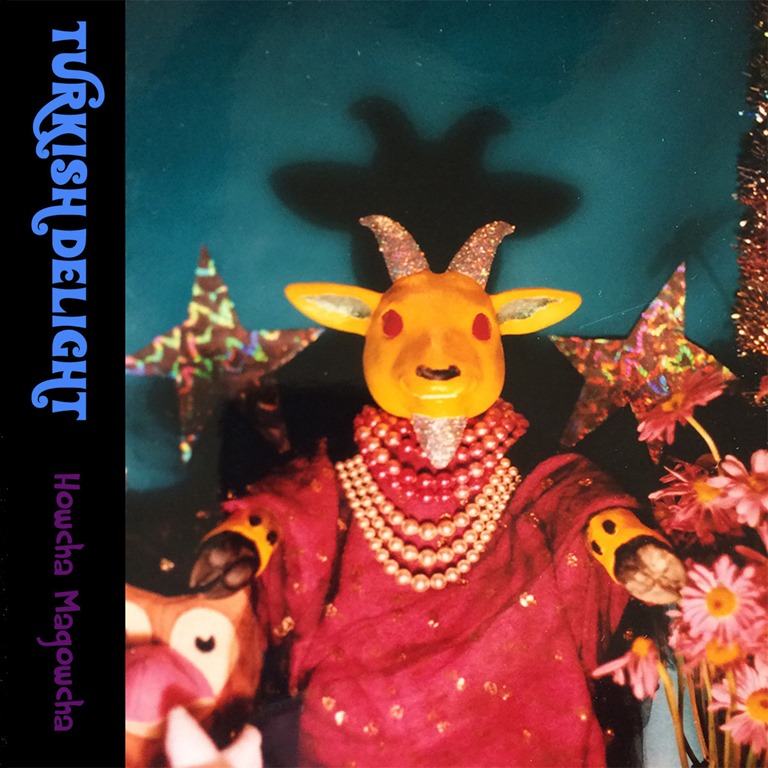
Howcha Magowcha, the second album by Turkish Delight, originally released in 1988 (and which follows IHeartNoise’s cassette rerelease of their 1996 debut last year), isn’t quite as weird as all that, but it’s hardy accessible or mainstream. In the main, it’s a high-octane, helium-filled punky thrashabout, and really rather fun. And while punk-pop has very clear connotations in contemporary terms, aspects of Howcha Magowcha belong to the time when indie bands like Voodoo Queens and Rosa Mota and Huggy Bear were cranking up the amps and revelling in the juxtaposition of ramshackle punky noise delivered with a pop sensibility. And Howcha Magowcha is bursting with tunes – all delivered with a spiky, angular energy.

The feel is very much of the era. We’re not talking grunge or nu-metal, but are deep in the domains of the weird underground that emerged and occupied the pages of Melody Maker and the NME for a while, and would often be found spun by John Peel. Reference points are likely pointless given this level of obscurity.

Anyway: let’s skip comparisons and get to the music, which is about jolting tempo changes, jarring key switches, contrast between pretty-pretty female vocals with throaty male vocals, as evidenced no more keenly than on ‘Smooth Karate’. ‘Li Cold Vas’ has the jangle of The Wedding Present and blends it with the angularity of The Fall and the obtuse oddness of early Pram, while ‘Sea Quest’ goes Slanted era Pavement with additional full-throttle US 90s noise. ‘Metronome’ creates new levels of angularity, and explores lyrical avenues of abstraction that twist the mundane and really mess with ideas of the ordinary. ‘No Sky’ slows the pace and goes all moody, before it erupts in all directions… extra points for the epic closer, appropriately entitled ‘Close’ that goes from nagging verses to explosive tornadoes of noise by way of choruses and veers all over the place over the course of seven minutes – in contrast to the three-minute blasts of the rest of the album.

There isn’t one song on here that stands out as a single: Howcha Magowcha is very much an album, and a discordant, noisy one at that. There’s no time to settle into any of the songs: mellow moments are torn in half with propulsive drumming and low-slung bass, while the guitars fire off in all directions. It’s music that keeps you on edge, engaged, exhilarated. And however big the 90s revival gets, they’ll never make ‘em quite like this again.

AA

Turkish Delight

Sacred Bones – 17 August 2018

Christopher Nosnibor

Of all of the bands to make an impact recently, Uniform’s arrival has to have been one of the most hard-hitting. Wake in Fright was appropriately-titled: a terrifying mess of industrial and punk compressed into a brutal explosion of unproduced noise, it was the kind of tinnitus-inducing horror that rang in your ears as you sat bolt upright at 4am in a sweaty state of anxiety after a bad dream. When I say ‘you’, I’m presenting the personal as universal.

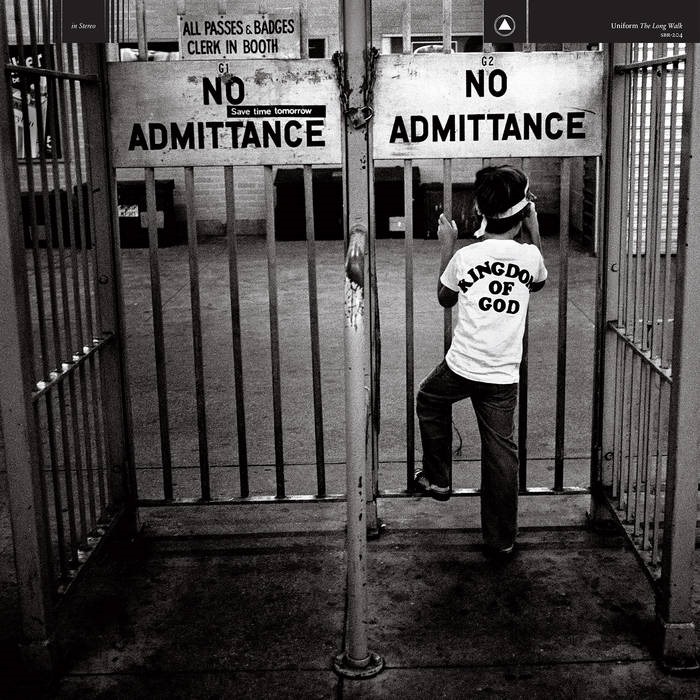
Yet none of this really prepares anyone for its follow-up. Whereas its predecessor was a ragged, raging sonic inferno, raw and trebly, having expanded to a three-piece with drummer Greg Fox (Liturgy, Zs) joining Michael Berdan (vocals) and instrumentalist Ben Greenberg, The Long Walk (the title of which references a Stephen King book) brings a newfound density to intensify the ferocity. That doesn’t mean they’ve toned it down: if anything, they’ve cranked it up and added new dimensions to the ear-bleeding brutality that defines the Uniform sound.

If I were being cynical, I might contend that Uniform only have one song, which they repeat with various minor adjustments. Michael Berdan’s vocals are hardy varied: a raging punk sneer smeared across a cyclical riff that grates and throbs amidst a tempest of overloading noise as the needles all quiver towards the top of the red. It’s a simple method, but often, simplicity is most effective, especially when the aim is to produce art that drills directly through the skull into the soft tissue of the brain. Maximum impact doesn’t require complex algorithms or theory. Maximum impact taps into the most primitive aspects of the psyche, targets the visceral, punches straight into instinct. And maximum impact isn’t necessarily about variety: that isn’t Uniform’s ambition: they’re out to batter relentlessly at the senses. The effect of The Long Walk is cumulative. And that effect, for those predisposed, is anxietising, stressful. Listening to The Long Walk actually raises my heart rate, and makes me perspire. And really, so it should: this is intense, claustrophobic, a different kind of aggression that speaks of derangement and blind rage.

The Long Walk is as raw as it gets, to the extent that its complete lack of refinement makes some of the most aggressive, antagonistic, and purposefully unlistenable songs even less appealing: you actually have to get through the jarring noise, the treble, the wilfully impenetrable mixing and what could safely be described as anti-production – to find the songs, let alone the appeal. The be clear: this isn’t just noisy: it’s fucking nasty, and is the work of a band deliberately pushing even the most accommodating of listeners to their limits, if not away altogether. It’s almost as if they don’t want any fans.

I can relate: as a spoken word performer, I discovered greater satisfaction in driving as many people from the room within the first couple of minutes than a smattering of polite applause from a full room at the end. Producing art is not about popularity. It’s about release, about channelling, about, catharsis, about being true to oneself or one’s aesthetic. If it’s commercial, it’s probably not art.

I know that in my writing I’m prone to revert to various ‘paint’-related tropes when reviewing work of a certain volume and / or intensity. But Uniform absolutely fucking decimate. Everything.

AA

Uniform - Long Wak

Svart Records – 31st August 2018

Christopher Nosnibor

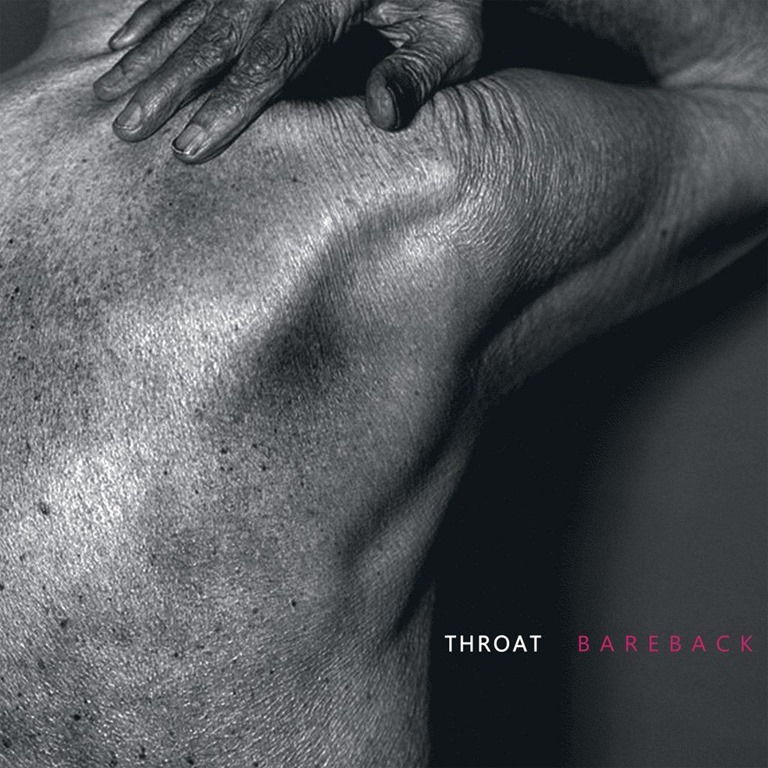
I read ‘ffo Unsane, Jesus Lizard, Shellac, Blacklisters’ and practically jazzed my pants before I’d even opened the email, let along downloaded the promo. That was before I read the slick, sleazy, fluid-dripping pitch for Finland-based Throat’s sophomore album, as seeing the band plunging ‘head first into unprotected encounters with musical elements hardly even hinted at on their previous releases.’

‘Safe Unsound’ opens the album with a sparse into: just guitar and baritone croon that invited comparisons to Glenn Danzig. But then the guitar goes to picked notes and the atmosphere builds into more Neurosis territory… but they keep pulling back. You’re waiting for it to break, for something to happen… How long is it reasonable to hold back? I recall seeing Shellac-influenced Glasgow act Aereogramme circa 2003 and being bored to tears: there simply wasn’t enough reward for the patience of enduring the build-up. But then, Shellac can be masters of frustration: just listen to Terraform.Thankfully, Throat cut loose and hit the distortion pedals around the three-and-a-half minute mark during this eight-and-a-half minute epic. And the song has a sort of coda which is a repetitive, grinding loop worthy of early Swans, which culminates of two minutes of screeding feedback and noise. So far, so punishing. And there are still another seven songs left to go.

‘No Hard Shoulder’ justifies the Jesus Lizard/ Blacklisters comparisons, with its driving guitar and bass welded together and glued to pulverizing drums that forge a Melvins-ish take on grungy stoner rock. Gritty, shouty, unpolished, it also evokes the Touch ‘n’ Go vibe while also hinting at favourable parallels with contemporaries like Pissed Jeans. So far, my jizzed pants are justified, and the rest of the album doesn’t disappoint.

Things go a bit Techno Animal / Godflesh / NIN on ‘Shortage (Version)’ with its hefty, crashing beats, straining digital noise and thickly distorted vocals which, in combination, carve out a lugubrious, funereal piece. Dense and dark I equal measure, it provides a mid-album interlude of crushing, neogoth intensity that stands quite apart from the other tracks. and the sonorous, subsonic bass just kills.

‘Born Old’ slams back into 90’s T&G territory and sounds like Tar at their best. Obscure? Sure, but if you get the reference, the album’s for you. If you don’t, but are digging Throat, you need Tar in hour life. Really. ‘Rat Domain’ slams and churns hard, the jarring grunge riffery whipping up a churn that resonates in the gut, before closer ‘Maritime’ hammers home six minutes of brutally jarring noise-rock, which is angular, sinewy, and relentless in its abrasion, and even brings a hint of the gothic before piledriving into the home straight with a remarkably accessible, melodic finale. If it seems at odds with the rest of the album, it’s hardly a weak finish, and instead demonstrates that Throat aren’t all about the gnarly noise… just mostly.

AA

throat_bareback-1024x1024

16th April 2018 – Riot Season Records

Christopher Nosnibor

For the love, not the money, Every time. I fell out of the loop, and missed out on the promo and wasn’t even aware that one of my favourite active bands had a new album out. And that’s reason to write about it. I feel I somehow owe the band for all of the killer music so far, and owe it to myself for posterity. So, I’m playing catch-up here with the Hey Colossus offshoot, and immediately, what strikes is the grit of the guitar and the murky production that renders The Making of Junio Bonner possibly their grimiest effort to date.

It’s the combination of spindly lead guitar lines that loop over the bowel-bothering bass frequencies before dissolving into overdriven sludge, coupled with the cool-as-fuck drawling vocals that does it. And yes, it’s pure 90s grunge, with big nods to Alice in Chains and Soundgarden, but with the dingy, greasy, rough-hewn raggedness of Tad. Do I like Henry Blacker for being an allusive throwback? Inevitably, grunge is in my DNA having immersed myself in all the bands of the day in my mid-late teens in the mid-late 90s. But no: Henry Blacker don’t evoke nostalgia. However much their template may be of an era, their music is timeless. Because good music is.

Initial spins don’t reveal any instant grabs like ‘Pullin’ Like a Dray’, ‘Cold Laking’, or ‘The Grain’, but then again, it’s time spent with Henry Blacker that allows the growers to emerge: over time, their previous two albums have proved themselves to be solid gold, albeit caked in mud and shit. And perhaps the lack of standouts is an indicator of its absolute consistency: all the songs are equal, and all are equally solid. And solid is the word. The back-to-back dispatching of songs centred around cyclical grooves and relentless riffery places it in the same space occupied by Nirvana’s debut. It grafts and grinds, hawks and chisels away, snarling, spitting, raging.

‘Shingles to the Floor’ is almost an accessible rock tune when you wipe it down. The classic rock intro on ‘Cellmate’ gives way to a panelling, thick, grungy riff that hits that sweet spot of optimum density, where the guitars fill the speakers with a distortion that threatens to overload them with a fuzz that sounds like tearing cardboard while the bass isn’t something you hear but feel. The mangled vocals, half buried, are the perfect addition.

‘Keep it Out of Your Heart’ locks into a thick, stoner groove that Queens of the Stone Age would likely kill to replicate these days. It has a certain overloaded smoothness and a swagger that chugs and chunks as it drives onwards. And maybe it’s one of those tracks that grows as a standout after just a few plays after all…

The density of sound, the way the riffs churn in on themselves and repeat as they snarl and grate, all combine to build a claustrophobic intensity. There’s no room to breathe here, and there’s no slow-tempo lighter-waving anthem at the end of side one: it’s truly end-to-end in conception and delivery.

AA

Henry Blacker