Posts Tagged ‘Aidan Baker’

Midira Records / Cruel Nature Records – 24th October 2025

Christopher Nosnibor

A new Nadja release is always cause for a pique of interest. Excitement doesn’t feel like quite the right term for an act who create such dense, dark, brooding soundscapes. Centred around the duo of Leah Buckareff and Aidan Baker, each release marks a shift thanks to the contribution of a range of guest performers, and cut is no exception – and this time, following the instrumental epic that was Labyrinthine (2022) – we have vocals, from not just Baker and Buckareff, but also Tristen Bakker, Oskar Bakker-Blair and Lane Shi Otayonii, among others. They certainly bring a lot of guests to a party which features just four tracks. But that is ’just’ four tracks which each occupy an entire side of vinyl on a double LP. As with Labyrinthine, these are compositions which span ten to sixteen minutes, and utilise that timeframe to maximum effect. They don’t hurry things, with slow, tapering drones interweaving, the emphasis on the atmosphere and the detail over the impact. And yet, despite this, or even perhaps because of this, the impact is strong, albeit in more subtle ways.

Their comments on the album are illuminating, explaining that ‘Thematically, cut explores trauma and physio-/psychological stress, as well as possible tools and means of overcoming these stressors, of which the music itself (sonic sublimation) might be one… Musically, while Nadja retains their signature wall-of-noise doomgaze sound, they also explore quieter, more introspective moments as well as new/different instrumentation, with harp, French horn, and saxophone featuring for the first time on one of the band’s recordings’.

‘It’s Cold When You Cut Me’ is stark, bleak, minimal. The air feels dead, it’s suffocating. The sparse percussion rattles along, but the drones are glacial. Five minutes in, rumbling bass and heavy beats roll in, and by the mid-point there are crushing waves of lugubrious noise worthy of Swans, but overlaid with trilling brass and woodwind, jazz in slow-mo, the honk of migrating birds and trilling abstraction.

But this is just a gentle introduction ahead of the thunderous grind of ‘Dark, No Knowledge’, which begins with atmospheric whirlings and even hints of Eastern esotericism, voices rising in the distance, atop wisps and rumbles, echoes and murmurings, before the dense, sludgy, post everything doom drone cascades in like a mudslide. It’s low and it’s slow, crawling like larva. buzzes and rumbles sustain for an eternity. You can actually feel your stomach drop in response to the bass frequencies.

The sound seems to get thicker and murkier as the album progresses, and if ‘She Ate His Dreams From the Inside & Spat Out The Frozen Fucking Bones’ isn’t nearly as abrasive as the title may suggest, its slow repetitious form is truly hypnotic as it trudges its way along.it possesses a rare density which matches its delicacy, and comparisons to latter-day Swans stand in terms of positioning the piece. There are thick, distorted tones grinding like earthworks through the airier overtones, and the contrast brings something magical and soothing. Then ‘Omenformation’ crashes in like a tsunami. The volume leaps, the density leaps, and you find yourself blown away by a sonic force strong enough to knock the air out of your lungs. The dingy, booming bass alone is enough to send you to the ground. The drums are immense. In fact, everything about this is almost inarticulable, as Nadja scale up the sound to beyond that of mere mortal beings. This is music with a physical force and a power beyond words, beyond contrivance. It’s archaic, occult, primal in its power. This is a track which treads through a series of movements, the last of which is crushing in its weight.

It’s true that cut possesses all of the sounds which are recognisable as being concomitant with Nadja’s distinctive dense, doomgaze stylings, and a lot of the vocals are as much additional layers rather than clearly enunciated words, and as such, add further depth – and a certain human aspect to the overall sound. The result is a work which speaks to that level of the psyche beyond words, which conveys trauma and physio-/psychological stress, and which offers a degree of relief through an experience which is wholly immersive and immensely powerful.

AA

a1598661613_10

Nadja2025

Photo: Hugues de Castillo

Gizeh Records – 28th March 2025

Christopher Nosnibor

I sometimes wonder if Aidan Baker has secretly mastered cloning, since he has seemingly pursued multiple careers simultaneously. He’s been active for some time, it’s true, but even the compressed version of his bio makes for quite the read:

As a member of Nadja, Hypnodrone Ensemble, Noplace Trio, Tavare and a host of other projects and solo endeavours, Baker’s prolific output remains vital as he continues to explore a vast terrain of sounds and genres across a 30 year musical career.

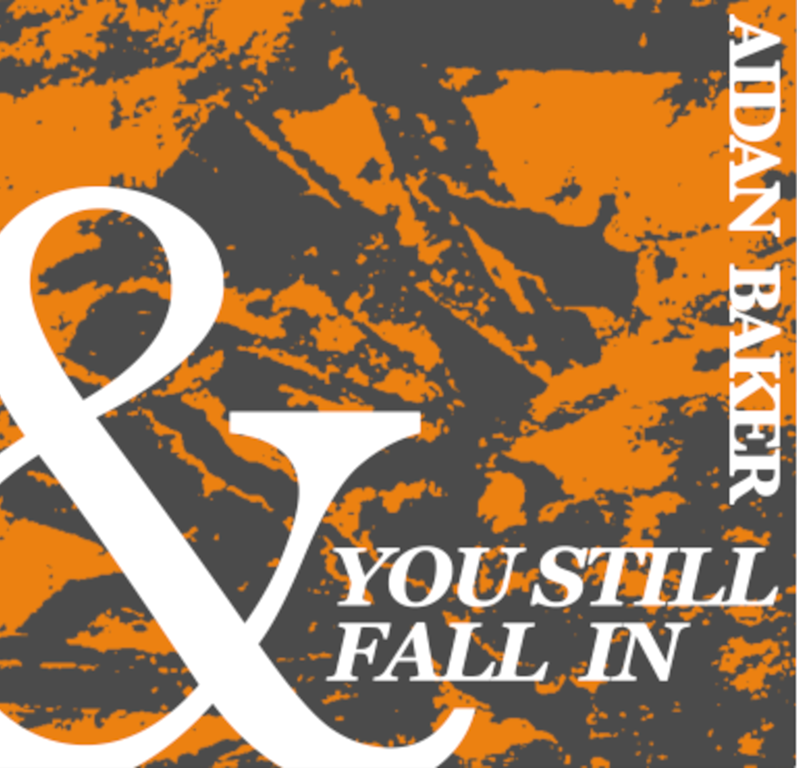
His latest work, & You Still Fall In, we learn, was recorded at Baker’s home studio in Berlin, and ‘hints at the mood and songcraft of the likes of Midwife, Hood, Stina Nordenstam and Movietone. The album is a compelling listen, stripped down to mostly electric guitar and vocals and moving at a distinctly glacial pace. The intimacy of the hushed tones and muted textures lean into a dark, hypnotic and gentle stillness that lingers in the air…’

That fact that this is a truly solo work, with Baker taking care of guitar, bass, drum machine, and vocals is perhaps key to its low-key, introspective atmosphere. Intimate is the word: on the title track which raises the curtain on this soporific sequence of compositions, the acoustic guitar strum hovers to a drone, wavering in volume, seeming to drift, seeming to warp, to fade, you can hear fingertips swiping on strings between frets, and Baker’s vocal is but a mumble; you hear sound, but the words don’t fall free to clarity.

‘Drowning Not Waving’ blends rumbling bass distortions with glitching drum machine and an air of uneasiness: the experience is every inch the struggle the title suggests. And that title… the phrase may have become a popular adaptation of the line from Stevie Smith’s 1957 poem and a metaphor for depression, but to momentarily reflect on the actuality of this all-too -common experience is to recognise the extent to which we, as a society, still – STILL – fail to identify a person in crisis. ‘Cheer up, it might never happen’, we hear often. But it does happen. Even well-meaning friends will diminish the spasms of crisis with ‘well, my life’s shit or probably worse, actually’ type responses. And each such response is like a hand on the head, pushing down. And yes, I speak from experience, and not so long ago I was out for a walk in an attempt to find some tranquillity, some headspace, some time with my thoughts. A dog, off lead, ran up to me and began barking and hassling. Its owners called it back and then groused at me for my failure to smile and thank them. “Ooh, someone’s lost their smile,” the guy said loudly, purposefully so that I could hear. No fucking shit. But you know nothing about my life. My wife died recently and I am not in the mood for being hassled by dogs, and I owe you twats nothing, least of all a smile. I continued on my way without a word, let alone a smile, and there was no point in waving. I was simply drowning. The moral? People may have stuff going on you know nothing about, so don’t be a twat. And anger is only a few degrees along from depression. Music has a boundless capacity to inspire the most unexpected responses.

Things stray into even more minimal, lo-fi territory with ‘You Say You Can See Inside Me’, which captures the spirit of Silver Jews and the soul of some of Michael Gira’s solo recordings. It’s muffled, droning, barely there, even. And yet, somehow, its sparsity accentuates its emotional intensity. There’s almost a confessional feel to this, but it’s a confession so mumbled, either through shame, embarrassment, or plain unwillingness.

On the surface, & You Still Fall In is a gentle work, defined by mellow, picked acoustic guitar and vocals so chilled as to be barely awake – but everything lies beneath the surface. And the surface isn’t as tranquil as all that: ‘When The Waves They Parted’ may be defined by a rippling surge but there’s discomfort beneath the ebb, and the reverb-soaked crunch of ‘Still Cold from the Rain’ is bleak and lugubrious.

Although presented as two separate pieces, ‘Thin Film Interface’ is a continuous thirteen-minute expanse of murky ambience with lead guitar work which soars and echoes over a shifting sonic mist. It hovers in the background, yet simultaneously alters the texture and colour of the air, relaxing but with an unresolved tension beneath.

& You Still Fall In is a difficult album to place – but why should that be necessity? A lot happens, an at the same time, it doesn’t. & You Still Fall In is sparse, drifting between acoustic and altogether simpler acoustic instrumentation. But instead of dissecting the details or reasoning, I’m going to point to the album, and simply say ‘listen to this’. Because it’s simply incredible.

AA

cover

Cruel Nature Records – 6th December 2024

Christopher Nosnibor

The ever-prolific Aidan Baker has been a frequent and recurrent feature on the pages of Aural Aggravation since its inception in 2016, and I’ve been listening to, and covering, his works since a fair few years earlier. He’s an artist who never fails to intrigue, and his manifold collaborations see him revealing new aspects to his creativity.

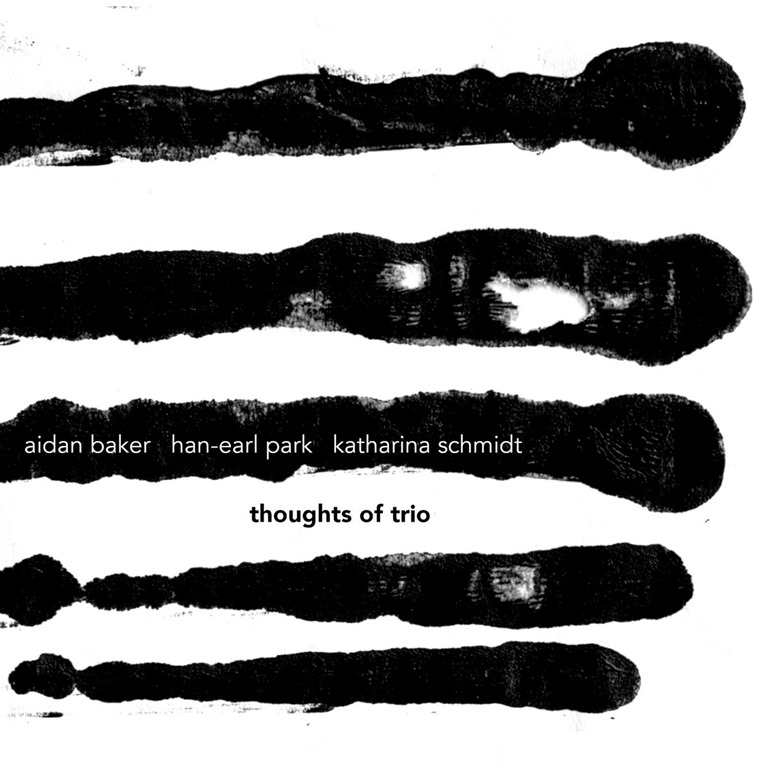
This three-way collaboration was, according to the accompanying notes, ‘recorded live at Morphine Raum in Berlin, Germany on February 21, 2024 by Canadian guitarist Aidan Baker, Korean-American guitarist Han-earl Park, & German drummer/percussionist Katharina Schmidt. The group brings together their respective, disparate musical backgrounds to explore the intersections of ambient music, improvisational (free) jazz, and musique-concrète.’

It’s worth noting just how many live releases of collaborations there seem to have been released recently: in fact, only yesterday I was delving into the dynamics of the latest offering by CEL. This may be a ‘cost-of-living’ matter, in part: economic circumstances really aren’t favouring anyone who isn’t two-homes-and-at-least-one-cruise-a-year rich, and this is a global issue, whereby post-pandemic the disparity between the wealthy and the rest has increased exponentially (a word I’m mindful of tossing about being aware of its actual meaning), and it’s never been a tougher time to be a musician, unless you’re Taylor Swift, or Ed Shearan or Elton John or Coldplay… you get the idea. And it’s certainly not (only) because of the shit streaming revenues paid (or not) by Spotify. Studio time is expensive: getting together for intercontinental collaborations is expensive… and when it comes to it, it’s not always easy, or even possible, to recreate the energy, the frisson, the immediacy of a live performance in the studio.

And so here was have Thoughts Of Trio, which captures a set from the start of the year, mastered as eight segments, simply titled sequentially ‘TOTone’ to ‘TOTeight’. The arrangements are often sparse, and combine nagging, regular repetitions with erratic irreglularities: ‘TOTone’ sounds like a pulsating wave or a slow alarm simultaneous with a game of ping-pong and some urban foxes foraging through bin bags. I mean, it doesn’t really sound quite like that, but the different elements belong to different places, and while it does work, it does not feel like a composition in any conventional sense. And this is very much the form of the album: there are no overt structures, there is no sense of cohesion or linearity.

But where Thoughts Of Trio evades the pitfall of being a discordant disaster is in just how they somehow keep things together, with an absorbing, if loose, sense of rhythm, which is both absorbing and bewildering, but, however subtly, ever-present. ‘TOTthree’ features springing guitar twangs and lurching grumbles, but a distinct sense of almost abstract rhythm. Clanking rattles and slow-bending, woozy drones hover and slowly wilt, with scrapes and subterranean bumps and nudges unpredictably rising and falling.

There’s no obvious shape to any of this, but amidst a set of pieces which are five or six minutes long, the eighteen-and-a-half-minute ‘TOTseven’ stands out a dominant track on the album, although one suspects that for those who were actually there, it was difficult to differentiate the pieces, which tend to bleed into one another. It rumbles and hums, tense and dense, simmering, without ever breaking through the tension that holds down the surface.

There’s little to no audience noise, no applause in the interludes or intersections, which works well in terms of the overall listening experience, but means that this doesn’t sound or feel like a live album. That’s by no means a criticism, and again illustrates how live recordings can replace studio recordings for so artists. This simply doesn’t sound or feel like a live recording, and that’s not only due to the lack of audience noise, but the way everything flows.

For all of the discord, the twists and knots and disparities, Thoughts Of Trio comes together somehow. While it’s is by no means overtly, jazz, Thoughts Of Trio sits between jazz and ambient, with an experimental / avant-garde. Ultimately, it does its own thing.

AA

AA

a4098448952_10

Midira Records – 5th May 2023

Christopher Nosnibor

Aidan Baker is one of those artists whose output is almost impossible to keep pace with – but the more remarkable thing is that for all of this hyperproductivity, the standard of work is of an unstinting quality. Recorded between 2020 and 2022, Engenderine – a double CD – lands almost simultaneously with Trio Not Trio, the first in a series of five albums on Gizeh Records, and just as Baker is gearing up for a tour with Nadja, the ‘ambient doom / dreamsludge, / metalgaze’ duo he is one half of.

To pause for breath for a moment, it’s worth stepping back and running through the context of this, which is worth quoting:

‘The neologism ‘engenderine’ comes from Lydia Yuknavitch’s The Book of Joan, a futuristic/dystopian/cli-fi retelling of the Joan of Arc story, and describes beings partially composed of pure energy capable of manipulating matter who, amongst a largely devolved human population, might be considered post-gender and a new evolutionary step.

‘Other song titles come from phrases and images from Tricia Sullivan’s duology Double Vision and Sound Mind, surrealistic fantasies about the nature of reality and perception and, like The Book of Joan, the possibilities of manipulating those.

‘Musically, the songs on Engenderine began as a series of slowly evolving ambient guitar loops – a bed layer of reality, so to speak – over which were layered bass, drums, and organ parts. These instrumental additions – the trappings of perception, signifiers, metaphorically speaking, our attempts to codify perception – incorporate traditional rock structures and progressions but are stripped down to a sort of somnambulant minimalism that might encourage introspection, a meditative background, uneasy listening, as much as they demand attention.’

It really is extremely uneasy listening. It’s perhaps as well it is, for the larger part, ‘background’, because the two CDs, while only containing eight tracks in all, span almost ninety minutes. We’re not quite in Sunn O))) or latter-day Swans territory, but still…

The first track, ‘Baby Dragon Slaughter’ pitches a long, unchanging organ drone note against a growling doom guitar and stop-start percussion which crashes hard. It’s hypnotic, paralysing, and I can imagine some might toss in a Doors comparison, but that’s only on account of the organ and the slightly trippy vibe, because it’s not only nothing like The Doors, but infinitely better.

If you want comparisons – because pretty much everyone seems to work on the premise that everything sounds like something else and recommendations – mostly algorithmic and based on purchases or streams, depending on the platform, Engenderine sits in the low, slow, doom-drone bracket of Sunn O))) and Earth 2. And this is indeed some ultra-low frequency shit. The first track on Disc 2, ‘Resurrection of the Child Army’ features some melodic, trilling pipe sounds around seven minutes into its nine-and-three-quarter-minutes gloomy, thick humming drone, is something you feel as much as you hear, and it resonates through the intestines and vibrates eternally.

The bass on ‘Calabi Yau Manifestations’ is pure dub, floor-shakingly dense, dark, minimal but quiveringly heavy, and it dominates the erratic drum clatters and rumbling roar of a drone that sounds like a jet engine warming up several miles away. Having experienced jet engines nearby, trust me., this is a good thing, but the rumble is unsettling. And then there’s ‘Dorvay’, which seems to take its cues from The Cure circa Pornography, with its hefty percussion dominating the sound.

Engenderine isn’t an album for a track-by-track, blow-by-blow critique: the tracks melt into one another and it’s an album that needs to be experienced as an album – and in context, that’s a continuous droning hum of murky noise without any clear sense of shape or form.

The second disc feels lower, slower, darker and more difficult: the erratic jazz drum-work on ‘Fear Sculptures’ is difficult to digest and assimilate – but then again, so is Engenderine as a whole. It’s just so much dark and difficult droning to chew on that it leaves you feeling low on energy, sapped, physically and mentally. But this isn’t about entertainment, and artistically, Engenderine is an outstanding exploratory / concept work.

AA

MD136_front

Cruel Nature Records – 20th April 2023

Christopher Nosnibor

Regular readers – or even more casual ones – will likely have noticed that Cruel Nature releases have received a fair bit of coverage here. The Newcastle-based cassette label, and brainchild of Steve Strode, are now celebrating a decade of their existence, releasing non-conformist, way-outside-the-mainstream music, and they’re celebrating with a compilation of 23 (of course, it has to be 23) exclusive tracks recorded specifically for this release, on a label who can now boast the tagline of ‘Channelling sonic diversity since 2013’.

Spectrum very much succeeds in showcasing that sonic diversity, presenting a collection that spans ambience to brutal metal. In times past, no-one who would listen to one would listen to the other, but my own musical journey over the last decade and a half means that whereas once I’d have sneered at one and hesitated over the other, I’m now on board with both. And why not? Cruel Nature Records has spent a decade now giving a home to music that doesn’t really fit, and doesn’t conform to a specific genre.

Of the 23 contributors, a fair few of them have previously featured on these pages, so new material from them is most welcome. VHS¥DEATH are among them, and ‘Sacrifice’ is a relentless industrial hardfloor disco banger, which couldn’t be more different from the mellow jazz ambience of Aidan Baker’s contribution, ‘Grounded Hogs’. And in a nutshell, the contrast between the two tracks instantly encapsulates the ethos of Cruel Nature. Anything goes as long as it’s different and interesting.

It’s great to hear snarking antagonists like Pound Land in the same space as Nathalie Stern’s haunting atmospheres and the spare folk of Clara Engel. Pound Land deliver a gloomy grinder in the form of ‘Flies’; despite its minimal arrangement, it’s dense and oppressively weighty, not to mention really quite disturbing in its paranoid OCD lyrical repetitions.

‘K Of Arc’ by TV Phase’ is a punishing, percussion-led trudge through darkness, while Charlie Butler’s ‘Eagle’s Splendour’ which immediately follows couldn’t be more different, it’s rolling piano and soft, rippling chimes providing six and a half minutes of mellow enchantment.

Petrine Cross bring a rabid howl of utterly crushing, dungeon-dark black metal that’s as heavy and harrowing as anything they’ve done, making for a most welcome inclusion here. Offering some much-needed levity, Empty House’s ‘Blue Sky Dreamers’ is a wistful slice of breezy indie with a hint of New Order, not least of all on account of the run-filled bassline, while Katie Gerardine O’Neill swings something of a stylistic curveball with some quirky deconstructed jazz.

Also worthy of mention (although in fairness, there isn’t a contribution on here that isn’t, had I the time for a track-by-track rundown) are Aural Aggravation faves Whirling Hall of Knives and Omnibadger, with the former whipping up a mangles mess of glitching distortion and the latter – these buggers get everywhere, having featured on the Rental Yields compilation I covered only last week – mixing up a collage of hums, thunderous drones, and a cut-up melange of feedback and miscellaneous noises to discombobulating effect. Then again, the final two tracks, courtesy of Lush Worker and Lovely Wife respectively bring some mangled reverb-heavy drone-orientated avant-noise and eight and three-quarter minutes of demented, downtuned, downtempo sludgy space rock. Both are truly wonderful, and this is a superlative compilation that perfectly encapsulates the eclecticism of Cruel Nature. It’s also the perfect illustration of why we need these small labels who aren’t driven by commercialism or profits or shareholder value. For disseminating all of this weird and wonderful music – music which often challenges the very idea of music – the world is a much better place.

Fans of the label with absolutely love this, and for those unfamiliar with the label, there couldn’t be a better introduction. Here’s to the next ten years of Cruel Nature.

AA

cover

Cruel Nature Records – 6th September 2022

Christopher Nosnibor

These are interesting times for Nadja, the ‘ambient / experimental / doom metal’ duo comprising Leah Buckareff and Aidan Baker. Luminous Rot was recorded during lockdown, and found a home on the legendary Southern Lord label. Released in the spring of 2021, it’s a veritable beast of a work, which combined metal with post-punk, cold-wave, shoegaze, and industrial.

Lockdown feels like something of not so much a distant memory as an unreality, and if by May 2021 it felt like life was returning to normal, the truth is that the wounds were still raw, and any attempt to move on as if life was back as it was before was simply a wilful act of delusion to stave off the effects of the trauma.

And with every trauma, there is some residual hangover, and you might say that Labyrinthine is the product of that. As the accompanying notes detail, the material was recorded during the pandemic and concurrently with Luminous Rot, and ‘explores themes of identity and loss, monstrosity and regret, extreme aesceticism, the differences between labyrinthes and mazes, taking inspiration from Haruki Murakami’s Killing Commendatore, Ursula K. LeGuin’s The Tombs of Atuan, and Victor Pelevin’s reinterpretation of the story of the minotaur and Ariadne, The Helmet of Horror.’

When a band chooses to self-release an album, it’s no longer an indication that it’s substandard or not worthy of a label release, and the case here is that Labyrinthine, which ‘this might be Nadja’s heaviest, doomiest album to date’, it’s clear that rather than consisting of session offcuts, it stands alone as a separate project from Luminous Rot, featuring as it does, a different guest vocalist on each track, and it’s worth listing them here:

Alan Dubin – legendary American vocalist from O.L.D. and Khanate and, currently, Gnaw

Rachel Davies – vocalist and bassist from the British band, Esben & The Witch

Lane Shi Otayanii – is a Chinese multi-media artist and vocalist in Elizabeth Colour Wheel

Dylan Walker – American vocalist from grindcore/noise band Full of Hell

With such a roll-call of contributors, it’s in no way possible to fee short-changed by the fact there are only four tracks, and ‘only’ is somewhat redundant when the shortest of these is almost thirteen minutes in duration. This is an album alright, and it’s an absolute fucking monster at that.

And while the CD release is on the band’s own label, Broken Spine, there are limited cassette versions by several different indie labels from around the world: Katuktu Collective (US), Cruel Nature Recordings (UK), Bad Moon Rising (Taiwan), Adagio830 (Germany), Muzan Editions (Japan), WV Sorcerer (France/China), Pale Ghoul (Australia), and UR Audio Visual (Canada) – and it’s perhaps noting that the running order differs between formats,  and I’m going by the Cruel Nature tape sequence here rather than the CD. It may be more intuitive from a listening perspective, but limitations off format and all…

This co-operative approach to releasing music is highly commendable, and seems to offer solutions to numerous problems, not least of all surrounding distribution in the post-pandemic, post-Brexit era where everything seems on the face of it to be fucked for any band not on a major label with global distribution and access to pressing plants and warehouses worldwide.

The title track is a lugubrious droning crawl: imagine Sunn O))) with drums crashing a beat every twenty seconds in time with each pulverising power chord that vibrates your very lungs. And those beats are muffled, murky, and everything hits with a rib-crushing density, that’s only intensified by the squawking, anguished vocals that shred a blasted treble in contrast to the thick billows of booming bass sludge, and it’s a truly purgatorial experience.

And then, here it comes, and it all comes crashing down hard over the course of the most punishing nineteen minutes in the shape of the brutal behemoth that is ‘Necroausterity’. In a sense, the title speaks for itself in context of a world in lockdown, and it’s sometimes easy to forget just what terrifying times we endured, watching news reports of bodies piling up in New York and elsewhere while governments and news agencies fed a constant stream of statistics around cases and deaths. It felt truly apocalyptic. And ‘Necroausterity’ is the sound of the apocalypse, tuned up to eleven and slowed to a crawl, the writhing torture of a slow, suffocating death soundtracked by guitar and drums do dense and dark as so feel like a bag over the head and a tightening grip on the throat. The recording is overloaded, distorting, and it’s a simply excruciating experience. And it simply goes on, chord after chord, bar after bar, slugging away… and on in a fashion that makes SWANS feel lightweight in comparison. It’s relentless, unforgiving, brutal, and punishing.

‘Rue’ broods hard with dark, thick strings and a heavy atmosphere, but it’s light in comparison. It’s dense, and weighty, but Rachel Davies’ ethereal vocal drifts gloriously within the claustrophobic confines and conjures another level of melody that transforms the thick, sluggish drones into something altogether more enchanting. It builds to a throbbing crescendo that is – perhaps not entirely surprisingly – reminiscent of Esben And the Witch or Big | Brave.

Wolves howl into the groaning drone of ‘Blurred’ and the guitars slowly simmer and burn: no notes, just an endless am-bleeding distortion before the power chords crash in and drive hard, so low and slow and heavy so as to shift tectonic plates and shatter mountains. Amidst the raging tempest, Lane Shi Otayanii brings an otherworldly aspect that transcends mere words, making for a listening experience with a different kind of intensity as it trudges and churns fir what feels like a magical eternity.

The sum total is the sound of hellish desperation, and while Labyrinthine may offer absolutely no solace in the bleakest pits of deathly despair, you’ll be hard-pressed to find an album that better articulates perpetual pain and anguish better than this.

AA

cover

Cruel Nature Records – 27th May 2022

Christopher Nosnibor

Aidan Baker – classically-trained multi-instrumentalist from Toronto (now resident in Berlin), who specialises in electric guitar works – using treated and otherwise non-conventional playing methods – is an artist who I seemingly can’t escape from. His ever-shifting styles and labels may be as difficult to keep pace with as his ever-expanding catalogue, but it seems that whoever’s releasing his work, I’m on their mailing list. This is very much a good thing, as Baker is one of those artists who, despite – or perhaps because – of being impossible to pigeonhole, never disappoints.

Baker’s second release on Cruel Nature, following 2021’s Stimmt, marks something of a shift, from what the accompanying notes ‘was big on atmospherics and abstraction’ to a sound that ‘shoots a bullet straight into the heart of the riff and explodes it, in all its scorching white-out fuzzed-up glory’.

On listening to the album’s grunt and growl guitar assault, the specific meaning of the album’s title remains unclear: ‘tenebrous’ is either obscure, or murky, or otherwise causing gloom, while ‘tenebrism’ refers to ‘a style of painting especially associated with the Italian painter Caravaggio and his followers in which most of the figures are engulfed in shadow but some are dramatically illuminated by a beam of light usually from an identifiable source’. ‘Tenebrist’ seems to lack a specific definition. So is Baker casting himself in the role of an artist whose musical compositions follow in the shadow-casting tradition of Caravaggio, or is this a nod to obscurity, darkness, gloom?

It’s perhaps an amalgamation of all of the aforementioned meanings. The title track, which comes in two parts, lifts the curtain, with a heavy overloading trudge of massive distortion, the guitar too loud of the mics recording, while the drums plod, half-buried but strangely crisp and clear, down in the mix. Unexpectedly, I’m reminded of the production and mix of Moby’s Animal Rights, although the guitar here is much less trebly, angled instead toward the mid and lower ranges, with ‘Tenebrist II’ really plunging deep into psychedelic sludge. The speakers positive crackle with the thick distortion, wrapped in swathes of feedback.

‘Turgid’ is a crackling, buzzing, math-rock explosion: it’s busy and blistering, and somewhere towards the end, the sound thickens, become denser, darker, more abrasive, culminating in a spark-flying meltdown.

The blurb describes Tenebrist as ‘low-down and heavy, and serving up ‘swathes of grunge, pummelling the senses and scattering rhythms through its maximalist energy’, but this is an understatement that only goes so far in conveying the massive sonic impact. ‘Violet Contrast’ is missing an ‘n’: driven by thumping, thunderous drums in a mist of low, slow, smoggy synth drones, it builds gradually to a monumental, percussion-driven climax over the course of a sustained crescendo of drums on drums.

‘Dramatic Illumination’ – in two parts – seems to cast a nod to Caravaggio, and this thirteen-minute suite cuts a dark sonic furrow, as clattering percussion and drones of low, low frequency feedback moan in an avant-jazz mess of calamitous noise, whereby the entire song sounds like the slow wind-down at the end of a set. You wonder when and where it will end… but it doesn’t. Finally, on ‘Dramatic Illumination II,’ the guitar glides in, but it still feels like the end.

The eight-and-a-half-minute closer ‘Chiasroscurious’ is a culmination of the album’s journey; a shuddering, juddering, wall of noise that makes you momentarily think your stereo’s fucked and your speakers are knackered with it’s massively overloading distortion that’s absolutely ruinous, swelling to a sonic tsunami that redefines devastation.

Tenebrist hurts. It’s immense and devastating on every level. The volume hurts. It’s a beast, and exactly the exercise in punishment we all need.

AA

cover

Bankrecords – blank037 – 12th March 2021

Christopher Nosnibor

In his everyday work, Tobias Vethake composes music for theatres, installations, radio plays, television and film, and while also participating in various collaborative projects, including Mini Pops Junior, his primary outlet for his experimental explorations is Sicker Man. With electric cello at the heart of the compositions, Vethake incorporates myriad additional sound sources and draws on a vast cultural spectrum spanning jazz and industrial, from east and from west to forge expansive and quite intense works of range and depth.

Like Jo Quail, Vethake plays the cello in ways that rarely sound recognisably cello-like: it’s apparent that the instrument’s versatility is severely underrated. So while there are certainly orchestral elements present on Dialog, it’s by no means an overtly orchestral album, and by absolutely no means an overtly ‘cello’ album. It’s more of an abstract, ambient, (post) rock work. Moreover, collaboration has a way of drawing different ideas and methods out of artists, with the potential to realise works which are infinitely greater than the sum of the parts, the product of the ‘third mind’, if you will.

Dialog contains a collection of pieces recorded in collaboration with different artists – all improvised and unarranged. The dialogs therefore represent the musical exchanges between the musicians in the moment as they respond, spontaneously and intuitively, to one another, often as they meet and ‘converse’ for the first time.

The album’s first track, ‘dialog with Manuel Klotz’ begins with a weaving air of eastern mysticism (a Turkish marriage orchestra Tobias would pass as they played on his way to the sessions), and I’m reminded of the Master Musicians of Joujouka, only with more prominent percussion – but before long, a yawning swell of noise engulfs it, the wave finally breaking to a heavy tidal drone with an instant beat. Eventually, everything collapses to a buzzing drone.

Each piece has its own distinctive style, indicating not only the merits of what each collaborator brings, but also Sicker Man’s versatility. There’s a swampy swagger to the piece recorded with Lip Smh, where drill-like drone buzzes vibrate against serpentine scales that twist enigmatically into a desert haze.

Aidan Baker gets everywhere, and here he is bringing brooding shadows of melancholy the a mournfully lugubrious piece, which is, for my money, one of the standouts. Of the others, there are lengthy passages of gentle, abstract ambience in succession, but the dialog with Kiki Bohemia brings all the dingy bass, as well as all the shimmering space-rock synths, while Scheider TM goes all out on the electro pulsations. Clocking in at over nine and a half minutes, it makes for one mighty finale, building into an immense wall of overdriven guitar that’s absolutely crushing in its weight and density. It has the elements of Earth 2 and Sunn O))), but played at pace, a swirling black metal vortex of overloading distortion. It’s absolutely punishing, and its relentless.

After the curious journey that is the rest of Dialogs, this is just a devastating finisher. There is nowhere to go from here, other than to turn out the light and stare at the ceiling.

AA

blank037_front

Cruel Nature Records – 5th March 2021

Christopher Nosnibor

Aiden Baker’s releases have become a regular feature here at Aural Aggravation. His prodigious output, not only as a solo artist, but through innumerable collaborations, often released through Gizeh Records, have given us no shortage of material to contemplate and ruminate over. It’s often hard to keep up with his output,

Stimmt was first released digitally back in 2015 on Broken Spine Productions, and has been was remixed and remastered for its first physical format outing via Cruel Nature in a limited edition of 60 cassettes (as well as digitally again).

Baker is to guitar what John Cage and Reinhold Friedl were / are to piano, with the ‘prepared’ guitar being a prominent feature of his musical arsenal, along with an array of other ‘alternative’ methods of playing, across a genre span that incorporates elements of rock, electronic, classical, and jazz, within his broadly ambient / experimental works

Stimmt sits at the more overtly ‘rock’ end of Baker’s stylistic spectrum, launching with the heavy riffology of ‘Dance of the Entartet’ that’s got a prog vibe but comes on with a heavily repetitious throb that owes more to Swans than Pink Floyd or Yes. The percussion crashes away hard but it’s almost buried in the overloading guitar assault that’s cranked up to the max and is straining to feed back constantly throughout, before it wanders off into ‘Atemlos’, where it’s the strolling bass that dominates as the guitars retreat to the background and sampled dialogue echoes through the slightly jazz-flavoured ripples. It’s here that things begin to feel less linear, more meandering, and the chiming post-rock sections feel less like an integral part of a journey and more like detours – pleasant, appropriate detours, but detours nevertheless – and it culminates in a climactic violin-soaked crescendo.

Veering between hazy shoegazey ambience that borders on abstraction, and mellifluous post-rock drifts, Stimmt is varied, and, oftentimes, rich in atmosphere. ‘Mir’ is very much a soporific slow-turner that casts a nod to Slowdive, but with everything slowed and sedated, wafting to an inconclusive finish.

The lumbering ‘Staerken’ stands out as another heavy-duty riffcentric behemoth: it’s low, it’s heavy, and finds Baker exploring the range of distortion effects on his pedal board, stepping from doom sludge to bolstering shred and back, and there’s a deep, crunchy bass that grinds away hard, boring at the bowels and hangs, resonating at the end.

After the full-on overloading ballast of ‘Quer’ that really does go all out on the abrasion, with squalling guitar paired with a nagging bass loop that’s reminiscent of The God Machine (the track as a while, calls to mind ‘Ego’ from their debut Songs From the Second Story), closer ‘Resolut’ is eight minutes of semi-ambient prog.

It’s a lot to digest, and it’s certainly not an easy pigeonhole, but it’s an intriguing album that stands out as being quite different both musically, and in the context of Baker’s output. Unusual but good, and offering much to explore.

AA

cover

Gizeh Records – August 28th 2020 – GZH98

Christopher Nosnibor

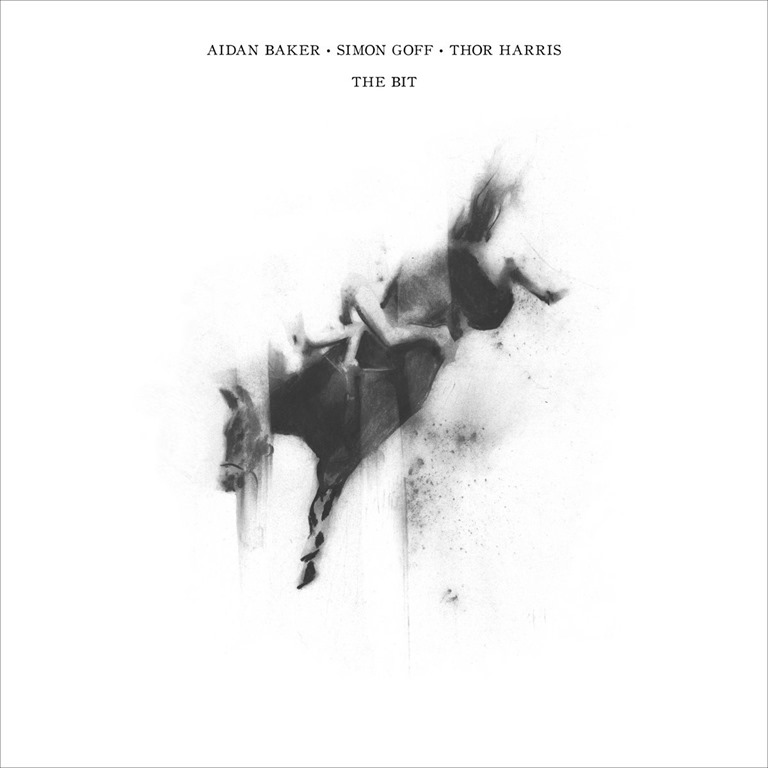
Three years on from Noplace, the unassuming supergroup known only by their actual names, comprising Aidan Baker (Nadja / Hypnodrone Ensemble), Simon Goff (Jóhann Johannsson / Hildur Gudnadottir) and Thor Harris (Swans, Shearwater, Thor & Friends) reconvene for a second instalment of improvisational work created in just a single day. On this occasion, they took advantage of a day off while on tour to record at Voxton Studios in Berlin

The Bit is an edited rendition of that session.

According to the press release, ‘The Bit finds the trio painting with a lighter touch than on its predecessor. Thor Harris’ motorik beats still underpin the music but the atmospherics take a more prominent role and there is a pure and cohesive path to be found throughout the record. Much like on Noplace, Baker’s guitar and Goff’s violin weave together beautifully, forming a deep bed of melody, ambience and reverb.’

There’s an equine theme to many of the titles, specifically ‘The Bit’, ‘Canter’ and ‘Gait’, but the loping drums and slow-moving ambient drone that defines the sound isn’t particularly evocative of the theme.

Of the six real-time compositions, the first five are quite succinct, around the three or four-minute mark, with only ‘Gait’ – a sparse, minimal piece that slowly throbs and pulsates while feathery notes drift down gently in a wide space – drawing out past seven minutes.

‘Springenden’ is a beautifully detailed piece, ostensibly a modern classical work consisting of rippling piano, quavering strings and a soft background wash of synth, which prefaces the twenty-two-minute finale, ‘Wild At Heart’. It’s essentially an expansive ambient work, which whispers, wisps and turns with an understated grace, twisting and turning as a slow beat booms into the rarefied atmosphere. It’s an expansive, exploratory piece that’s murky, ominous, and suspenseful. And the thing about suspense is that you never know what’s around the corner. There is no revelation in the rumbling low tones and wailing, dawning drones that emerge and taper down during this longform piece which descends to distortion and dissonance as the sound thickens and grows grainier. It’s a gradual dilapidation and makes for an intriguing and subtle listening experience.

AA

a2947139286_10